
Choosing the Right Unifrost Ice Maker Machine for Your Business
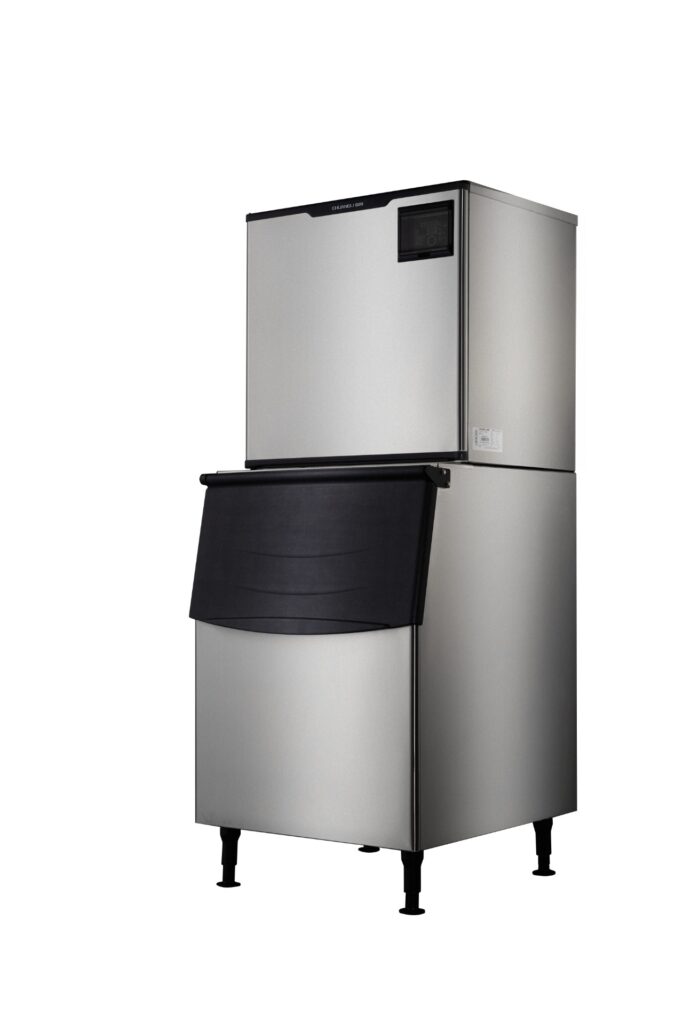
Select the ideal Unifrost ice maker for your Irish business. Understand production capacities and venue requirements in our comprehensive guide.
Choosing the Right Unifrost Ice Maker Machine for Your Venue
You buy an ice maker machine to protect service speed, drink quality, and margins, but the wrong size or format quickly shows up as warm cocktails, rushed staff, and emergency bagged ice. This guide helps you choose the right Unifrost ice maker for how you actually trade in Ireland.
You will compare the two main routes in the Unifrost range: self contained undercounter units such as U40-15 and UB25-15 for tight footprints, versus modular cube machines such as U165-125 and U230-175 paired with B175, B275, or B375 storage bins for higher peak demand. You will also learn the practical checks that decide real world output, including water supply and drainage, ventilation and ambient temperature, and how storage capacity should match your 24 hour production so you do not run out at the worst time.
Finally, you will work through sizing by venue type, common buying mistakes to avoid, and when it makes commercial sense to add matched water filtration like I40002-CN, SA30007, or SA950750 to protect ice quality, stabilise production, and reduce breakdown risk.
Importance of Choosing the Right Commercial Ice Maker
Choosing the right commercial ice machine comes down to two numbers: 24-hour production and bin storage, sized for your busiest service window, not a quiet weekday. Get it wrong and you either run out mid-shift or you end up leaning on bagged ice, which is expensive and messy in a working bar.
In Ireland, ice is treated as a food input. It must be made from potable water and handled to prevent contamination, as set out in FSAI guidance referencing Regulation (EC) 852/2004 (“Ice which comes into contact with food… is to be made from potable water”). That makes capacity a food safety and service issue, not just a convenience.
One practical point buyers miss: the “kg per 24 hours” rating is a best-case figure. Real output drops in warm back bars, at higher ambient temperatures, with poor airflow, or when the machine is offline for cleaning and descaling. Build in headroom.
Why capacity mistakes cost you money and service speed
Undersize it and the failure mode is predictable: you hit a rush, the bin empties, and service slows while staff run for bagged ice, borrow from another station, or ration cubes. In a pub or hotel bar that usually means fewer drinks out per hour. In a café it often becomes “no iced drinks” right when lunch and take-away traffic peaks.
Oversizing isn’t free either. Bigger units generally mean more heat rejected into the room, more standing energy use, and more time spent cleaning and maintaining a machine that is producing ice you do not need. In a tight back bar or small kitchen, that extra heat and space can also make other equipment work harder.
Production vs storage: the bin is what protects peak service
Production rate tells you what the head unit can make across a full day. Your demand is not flat. The bin is what carries you through spikes: cocktail rounds, a function drinks reception, ice buckets on a match day, or a busy terrace when the weather turns for an hour.
That’s where modular cube machines with a separate storage bin can make sense in higher-volume venues. You can pair a head unit such as U165-125 or U230-175 with a bin like B175, B275, or B375 to buffer peak demand while production ticks along in the background.
Where space is tight, self-contained undercounter units like U40-15 or UB25-15 can be a better fit, as long as the built-in storage comfortably covers your peak drawdown.
Reliability is capacity: water quality and filtration decide real-world output
In Irish sites, the gap between “rated” and “actual” output is often driven by water condition and maintenance, not the machine itself. Scale and sediment reduce efficiency, cause faults, and increase downtime. The end result is simple: you have less usable ice in the weeks you most need it.
If consistent production matters, filtration is part of capacity planning. Unifrost filtration options such as I40002-CN, SA30007, and SA950750 are worth treating as operational protection rather than an optional add-on.
Capacity planning depends on venue type, not just covers
Two venues with the same number of seats can have completely different ice demand. A cocktail-led late bar will pull ice constantly. A restaurant that mostly serves still or sparkling water may only spike at the start of service and during desserts. Hotels add their own pattern again: breakfast juice stations, room service, banqueting, and multiple bars can stack peaks that the “24-hour” number will not reveal unless you plan for them.
That’s why it pays to step back and look at the practical selection factors: where the machine can sit, what services are available, and what in your premises will reduce real-world output.
Key Considerations in Selecting an Ice Maker
Start with your real daily and peak ice demand, then choose a machine whose 24‑hour production and storage match how you actually trade. Pick the ice type that suits your drinks or food display, and make sure the unit will work in your space with the ventilation, water and drainage you have on site. Water quality and cleaning are not add-ons either. They are what protect output, reliability and ice quality. If you size off the brochure production number alone and ignore bin size, ambient heat and incoming water temperature, you often end up buying bagged ice at the worst possible time.
1. Estimate your true production requirement (not just “kg per 24 hours”)
Size for the busiest window, not the average day. A hotel bar may draw steadily and recover overnight. A late bar, nightclub or function room can burn through most of a day’s ice in a short service period, so it needs more headroom.
Be cautious with stated 24‑hour output figures. They’re typically based on controlled conditions. In a warm bar with doors opening, glasswasher heat and higher incoming water temperatures, output drops. If the machine has to run flat-out just to keep up, you have no buffer. That is when shortages and service calls become “Friday at 9pm” problems.
2. Match storage bin capacity to how you trade
Production rate tells you what the machine can make over time. The bin tells you what you can have ready to scoop during peak service. In busy venues, bin capacity is what prevents staff from raiding freezers or running to the cash-and-carry mid-shift.
This is where modular heads and bins make sense commercially. In the Unifrost range, head units such as U165-125 / U230-175 paired with B175 / B275 / B375 bins let you choose storage separately from production. That is useful if your demand spikes at weekends but you can recover overnight.
3. Choose undercounter vs modular based on footprint and workflow
Undercounter self-contained units (for example Unifrost U40-15 and UB25-15) suit tighter bar stations, cafés and smaller restaurants where ice needs to be close to the service well and demand is steady rather than explosive. They’re straightforward to place because storage is built in, but you’re locked into that bin size and format.
Modular head-and-bin setups suit busier bars, hotels and event spaces where you want higher storage without giving up undercounter space. They also let you put the bin where staff actually work, which reduces steps and delays during service.
4. Check installation realities that affect capacity and running cost
Before you pick a model, confirm the conditions that decide whether you’ll see anything close to the rated output and whether the unit will run efficiently day-to-day:
Water supply, an accessible shut-off, and a drain route that will not back up during busy periods.
Ventilation and heat load, especially in enclosed bar cabinetry or beside a glasswasher.
Ambient room temperature and incoming water temperature, both of which directly affect output and energy use.
Clearance for cleaning and filter changes, so maintenance doesn’t get skipped when you’re under pressure.
If your supply is hard water, scale management becomes part of capacity planning. Limescale is a normal Irish reality, and Uisce Éireann notes that cloudy or white water can be linked to limescale in hard water areas (Uisce Éireann: cloudy or white water and limescale).
5. Choose the right ice type for the job (and size the machine accordingly)
Not all ice behaves the same. Cubes suit most bar and restaurant drinks service because they handle well and melt predictably. Other ice types are often chosen for specific uses like seafood display or blended drinks. That choice can change your “kg per day” requirement because melt rate and handling losses differ.
If you’re unsure, decide based on what creates pressure in your operation: speed of service, presentation, or food display. Once the ice type is fixed, sizing becomes more accurate because you’re not asking one machine to cover conflicting jobs.
6. Treat filtration and cleaning as capacity protection, not optional extras
Ice is a food. Reliability is not just avoiding breakdowns. Poor water quality and missed cleaning will reduce output, increase service calls, and can lead to softer, wetter ice that disappears faster in the glass.
Unifrost filtration options such as I40002-CN, SA30007 and SA950750 are worth specifying with the machine to help stabilise ice quality and protect internals from scale and debris. Once you’ve agreed production rate, bin size, format and water treatment, sanity-check the choice against your busiest hour, not your quietest day.
Common Mistakes and How to Avoid Them
Most ice machine issues in Irish venues come down to planning for an average day, then expecting the unit to cope with peak service and less-than-ideal site conditions. Ice is treated as food. If water quality and cleaning slip, output drops and hygiene risk rises. The FSAI is clear that potable water should be used for making ice in food premises (FSAI guidance).
“The right size” is not just the 24‑hour figure on the label. It depends on how you trade (cocktails, terraces, functions) and where the machine sits (hot kitchen, tight cupboard, poor ventilation).
Peak demand gets underestimated (and that is what empties the bin)
If your busiest 60 to 90 minutes can empty the bin, you will feel it immediately behind the bar. Most venues use ice faster than the machine can produce it during service, so you only recover later.
Size for the rush, not a quiet Monday lunch. Match days, summer terraces, weddings, and a new cocktail list are the usual causes of “we never have enough ice”.
Where you have high peaks, modular head units paired with a separate bin can suit better than an undercounter format, because you separate making from holding and give yourself a bigger buffer. If you are looking at the Unifrost range, that is typically the logic behind options such as U165-125 or U230-175 with B175, B275, or B375 bins.
Buyers focus on 24‑hour production and forget storage bin reality
A common mistake is choosing a machine with a strong quoted daily output, then pairing it with too little storage or putting it where staff cannot keep the bin managed during service. In real terms, the bin is what protects you at 8pm, not the spec sheet.
When you are choosing between a self-contained undercounter unit (for example U40-15 or UB25-15) versus a modular head and bin, decide based on service pattern:
A steady, smaller draw for coffees and soft drinks usually suits undercounter.
A big “reserve” for cocktails, buckets, and functions usually suits modular with a larger bin.
Installation constraints quietly reduce real output
Ice machines are sensitive to site conditions. Common Irish fit-out problems include tight joinery, poor ventilation gaps, warm plant rooms, and compromised drains. If the machine cannot vent properly, cannot dump water reliably, or sits beside heat, production drops and faults become more likely, even if the unit is technically “big enough”.
Before you commit, check the basics on site:
Correct water feed
A compliant drain route with reliable fall
Service access for cleaning and maintenance
Ventilation that suits the format (undercounter units need clear airflow within the cabinet space; modular units need sensible plant space around the head and bin)
Water filtration gets treated as optional, then scaling and call-outs follow
Hard water, sediment, or poor taste shows up as scale on the evaporator, sticking cubes, slow harvest, and inconsistent ice. In practice, you pay for capacity but you do not keep it.
If you are running a Unifrost ice maker daily, treat filtration as part of the system, not an add-on later. Matched filtration options such as I40002-CN, SA30007, and SA950750 are there to protect consistency and reduce avoidable breakdowns, particularly in high-throughput bars and hotels.
Cleaning and maintenance gets underestimated, so performance drifts
Many operators plan for “it makes ice” and overlook the ongoing reality. Regular cleaning, sanitising, and condenser hygiene are what keep output stable and ice safe. When cleaning slips, machines often get slower and noisier before they fail, which is exactly when you need them most.
If you want predictable capacity, build ice machine cleaning into your HACCP routine with clear ownership on shifts. Also plan access so staff can do the job without dismantling half the back bar. That practical detail should influence whether you go undercounter or modular, and how much bin storage you need for your trading pattern.
A spec that matches your peak service, storage buffer, site conditions, and water quality turns ice capacity from a guess into a dependable part of bar and kitchen workflow.
Matching Ice Makers to Different Business Types
For most Irish venues, choosing an ice maker comes down to format: a self-contained undercounter unit or a modular head unit with a separate storage bin.
Undercounter machines are easier to fit and simpler to install, but you give up output and storage.
Modular setups take more space and planning, but they suit sustained, high-volume service and let you size storage properly for rush periods.
An undercounter unit like the Unifrost U40-15 or UB25-15 can sit neatly behind a bar or under a café counter. It will do steady day-to-day work, but you will feel the limits quickly if you get a run of cocktails, jugs, or function traffic. A modular cube machine like the Unifrost U165-125 or U230-175 paired with a B175 / B275 / B375 bin is usually the safer option when you need enough stored ice to cover peak service, plus overnight recovery without staff watching the machine.
Whichever format you choose, performance still depends heavily on water quality, cleaning routines, and sensible bin sizing. Ice is food, so treat the machine, bin, and scoop like any other food-contact equipment. The FSAI guidance is a useful reference point: water and ice in food premises.
How do undercounter and modular ice makers compare in practice?
Think about your demand pattern, not just “daily output”.
Steady-draw sites (cafés, delis, daytime trade) tend to take small amounts of ice throughout the day for iced coffees and soft drinks. Here, the priority is a machine that keeps ticking over and holds enough ice to get through the lunch rush without hassle.
Spiky-demand sites (busy bars, late venues, functions) can burn through a lot of ice in a short window. The problem is not only running out. It’s service slowing because staff are waiting for the next drop.
That’s why storage matters as much as production. Production is what the machine can make over time. Storage is what you can actually use at 9:30pm when five orders land at once.
Undercounter self-contained units (U40-15, UB25-15)
These suit tight footprints and straightforward installs, especially behind a bar where you want ice close to the well and you do not have space for a separate bin. They’re generally a good fit for coffee shops, small cafés, deli counters, and quieter pubs, where ice is used for soft drinks, iced coffees, and occasional spirits rather than high cocktail throughput.
They also make sense where you want simpler day-to-day operation, but they still need regular cleaning and a basic filtration approach to reduce scale and taste issues that can quickly affect real output and reliability.
Modular head units with separate bins (U165-125 / U230-175 with B175/B275/B375)
If you run high-volume drinks service, this is often the more robust option: wet-led pubs, cocktail bars, nightclubs, hotels with functions, and event spaces. The bin is your buffer. You build ice during quieter hours and draw it down during the rush without compromising service.
Modular also gives you more room to plan for growth. If you’re adding cocktails, expanding outdoor seating for summer, or dealing with match-day spikes, it’s usually better to size the head and bin honestly for peak draw than to push an undercounter unit beyond what it’s designed to do.
Which is best for your venue type?
Coffee shop, deli, small café: undercounter U40-15 or UB25-15, prioritising footprint, easy access, and consistent all-day top-ups.
Traditional Irish pub (steady pints, moderate spirits): undercounter can work if ice is secondary, but modular is safer if you regularly do jugs, parties, or terrace trade.
Cocktail bar, nightclub, function room: modular U165-125 or U230-175 with a B175 / B275 / B375 bin so storage covers rush periods and the head can recover overnight.
Seafood display or prep-heavy kitchen pass: confirm the ice type you need and how it’s handled, then size for continuous use and hygiene controls, not brochure figures.
Healthcare or controlled settings: start with site hygiene and handling requirements, then match the ice format and filtration to suit. Reliability and contamination control usually matter more than peak volume.
Once you’ve picked the format, you can make a better call by factoring in installation constraints, water filtration options (I40002-CN, SA30007, SA950750), and site conditions that can pull real production below the headline number.
Practical Steps for Decision Making
Work out your real daily ice demand and when it peaks, then choose a machine that covers the peak with some breathing room. Decide early whether you need a self-contained undercounter unit (tight footprint, single point of use) or a modular head with a separate bin (higher volume, quicker recovery, easier to buffer for rushes). Then match production to a bin that holds a busy service window’s ice, not just “whatever fits”. Finally, sanity-check water quality protection and site conditions. Those are the usual reasons machines underperform in real venues.
1. Measure demand the way your venue actually uses ice
Start with what burns ice fastest in your operation: cocktails, post-mix, water jugs, cold brew, seafood display, functions, or takeaway cups. In a pub or hotel bar, the problem is often the two-hour rush, not the 24-hour total. Track when you run out and how often staff are borrowing ice from buckets or other stations.
Do this for 7 trading days (including your busiest day) and record two numbers:
total ice used per day
the single worst hour (or busiest two-hour block)
If you cannot weigh ice, use a consistent container and count refills. It is not perfect, but it gives you a reliable comparison.
2. Choose undercounter vs modular based on service pressure and space
If you need a compact setup and the draw is steady, a self-contained undercounter unit (for example, Unifrost U40-15 or UB25-15) is often the most practical route, provided you have proper airflow and a sensible fall or pump option for the drain.
If you need higher volume, faster recovery, or you are feeding multiple service points, a modular cube machine head with a separate bin (for example, Unifrost U165-125 / U230-175 with a bin) usually makes life easier. You can build a buffer for peak periods, and you are not relying on a small internal bin during a rush.
As a basic food safety point, ice that contacts food should be made from potable water. The FSAI references this in Guidance Note No. 16. In practice, the “right format” is the one you can install correctly and keep clean and protected, not the one with the biggest headline output.
3. Match the head unit to a bin that protects peak service, not just storage
A common sizing mistake is choosing a strong head unit and pairing it with a bin that is too small for service. That forces constant topping-up and more open-lid time when you can least afford it.
For Unifrost modular setups, think of the head unit (U165-125 / U230-175) as production and the bin (B175/B275/B375) as your service buffer. A simple way to approach it:
size the bin for your busiest service window
size production so the bin can recover during quiet hours and overnight
That is how you avoid the “ran out at 10pm” problem even when the 24-hour production figure looks fine on paper.
4. Allow for Irish seasonal peaks and a realistic resilience plan
Irish trade can swing quickly: quiet midweek, then terraces, match days, weddings, and corporate functions. If you expect higher volumes in the next 2 to 3 years, future-proof by:
choosing a modular head and bin combination that can absorb peaks, or
leaving space and services to add a second unit later
If downtime would stop trading (cocktail-led bars, late licences, event spaces), two smaller machines can be a safer operational choice than one large unit. It also helps workflow if you can position ice closer to the points of use.
5. Protect capacity with filtration and a cleaning routine you will actually follow
Treat filtration as part of capacity, not a nice-to-have. Scale and poor water quality are among the quickest ways to lose output and end up with call-outs. Within the Unifrost range, matched filtration options include I40002-CN, SA30007, and SA950750. Choose based on your local water conditions and how critical ice clarity and taste are to your offering.
Keep this grounded in what your team can maintain under pressure:
clear access to clean the bin and machine area
a proper place to store the scoop
a cleaning schedule that fits your weekly routine
Once you have a shortlist, it becomes much easier to check the practical details that trip up installations: ventilation, drainage, and whether staff can use it without fighting the layout every night.
Ice maker machine FAQs
How much ice can Unifrost ice makers produce in 24 hours?
Unifrost ice maker machine output depends on the model family and how it’s installed:
Modular cube heads (e.g., U165-125, U230-175) are designed for higher 24-hour production and are typically paired with a separate storage bin (e.g., B175, B275, B375) to cope with peak service.
Self-contained undercounter units (e.g., U40-15, UB25-15) suit lower-to-mid daily demand where you want production and storage in one compact footprint.
In practice, the real 24-hour yield can drop versus the stated figure if the room is warm, the incoming water is warm, ventilation is restricted, or limescale builds up. If you tell us your venue type and busiest trading pattern, we can help you size the right Unifrost unit and bin combination.
What is the ideal Unifrost ice maker for a bustling bar?
For a bustling bar, the “ideal” setup is usually the one that protects you at peak hours rather than just meeting an average daily number:
If you run a high-volume cocktail or mixed-drink bar, a modular cube head such as U165-125 or U230-175 paired with a B175/B275/B375 bin is typically the best fit because it gives you higher output and more buffer storage.
If you have a smaller bar, lounge, or secondary service station, an undercounter unit like U40-15 or UB25-15 can be a practical choice when space is tight and demand is steadier.
Two quick sizing checks that matter in bars:
Bin storage vs. rush demand: your bin should comfortably cover the busiest period, even if production can’t keep up minute-by-minute.
Recovery time overnight: make sure the machine can rebuild stock after a heavy night, especially on weekends and match days.
How does water filtration affect ice quality and machine longevity?
Water filtration is one of the most cost-effective ways to keep an ice maker machine reliable and the ice looking and tasting right.
Better ice quality: filtration reduces off-tastes, odours, and visible impurities so cube ice looks clearer and drinks taste cleaner.
More reliable production: scale and sediment can restrict water flow and affect freeze performance. Keeping water cleaner helps the machine hold closer to its intended daily output.
Fewer callouts and longer service life: limescale and debris are common causes of breakdowns in busy venues.
Unifrost offers matched filtration options such as I40002-CN, SA30007, and SA950750. The “best” choice depends on your local water conditions and usage, so it’s worth matching the filter to your site rather than choosing purely by price.
What are the ambient temperature considerations for ice maker placement?
Ambient temperature and airflow have a direct impact on how well an ice maker machine performs.
Heat reduces output: placing the unit in a hot room, near ovens, fryers, or in direct sun typically lowers real-world 24-hour production and can lead to soft or slow-forming ice.
Ventilation matters: undercounter units need clear airflow around their vents, and modular heads need sensible spacing and a well-ventilated plant area. Blocked vents or tight cabinetry can cause high running temperatures and stoppages.
Water temperature matters too: warm incoming water can reduce production and increase running costs.
Practical tip: plan the location first, then choose the model. If the only available spot is warm or poorly ventilated, it can be smarter to step up capacity or switch to a modular head with an appropriately sized bin to protect peak service.
Next step: shortlist the right Unifrost ice maker machine
If you’re ready to narrow it down, explore Unifrost’s ice maker machine options by format (undercounter vs modular head) and by demand (steady daily use vs peak bar service), then match the head to a bin size that protects you during the busiest hour.
Once you have a shortlist, compare it against your real service pattern, available space, and whether adding a water filtration kit makes sense for your site.
Related Unifrost guides
Compare models, maintenance advice and support information related to this topic.
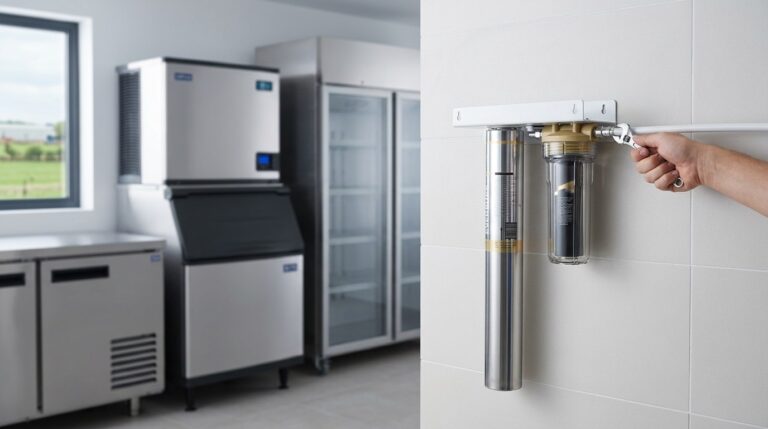
Unifrost Ice Machine Water Filter Scale Prevention Guide
Discover optimal water filter maintenance for Unifrost ice machines to prevent scale and enhance performance.
Read guide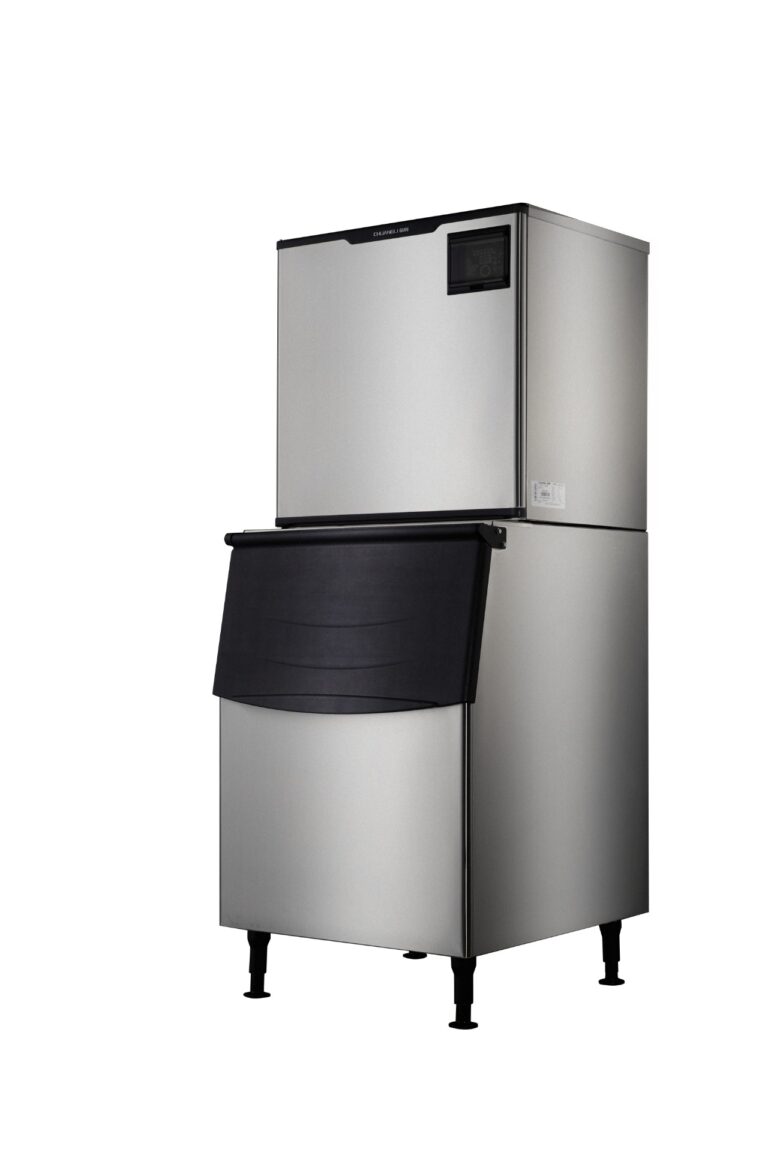
Unifrost Compact Ice Makers: A Comprehensive Guide
Discover efficient Unifrost compact ice makers for Irish bars. Learn about capacity, installation, and maintenance needs.
Read guide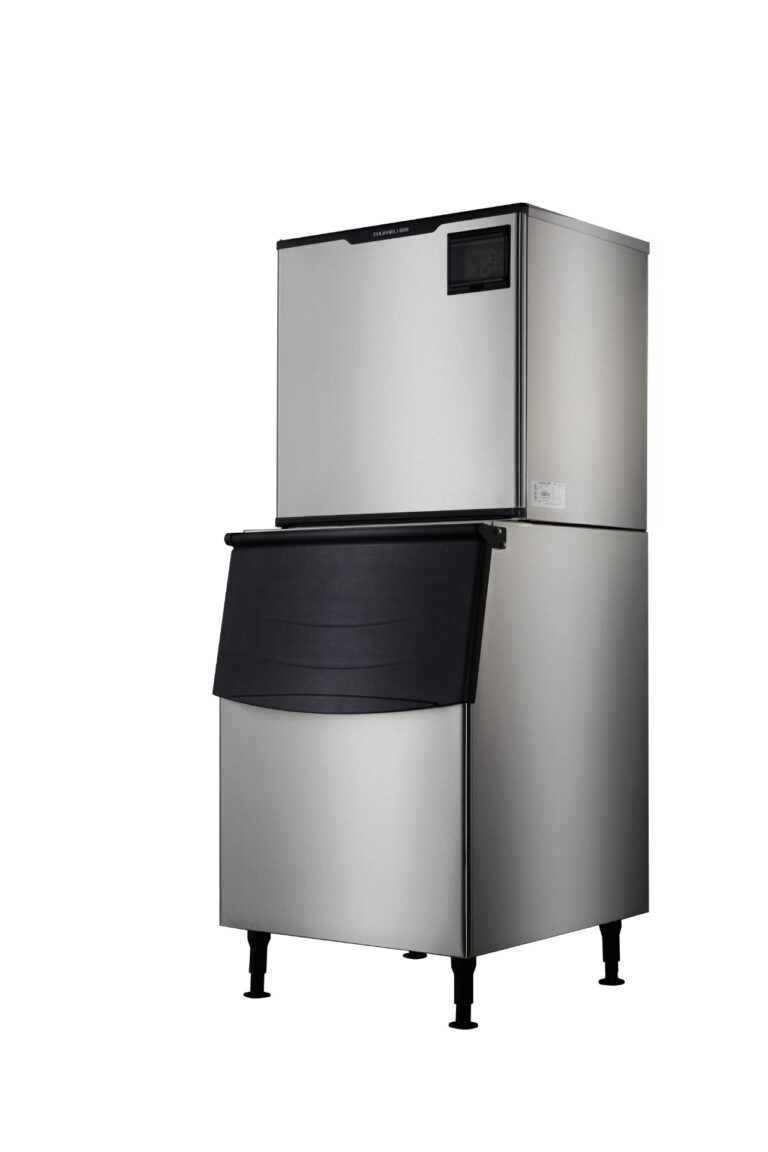
Choosing a Unifrost Ice Machine for Your Irish Hospitality Business
Discover the best Unifrost ice machines for Irish bars and hotels. Learn about sizing, installation, and running costs.
Read guideView Unifrost ice machines at Caterboss
For current product options, pricing and availability, continue to Caterboss.