
Choosing the Right Unifrost Undercounter Fridge for Irish Businesses
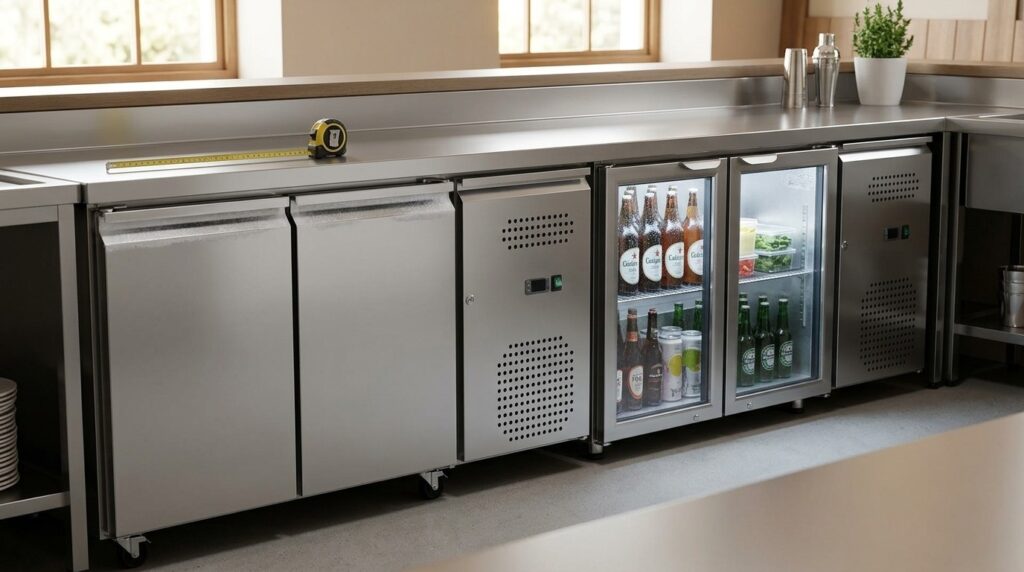
Discover the best Unifrost undercounter fridges for your Irish business. Learn about sizing, cooling types, and energy efficiency.
Choosing the Right Unifrost Undercounter Fridge in Ireland (R200SN vs R200SVN)
If you are buying an under counter fridge in Ireland for a café, bar, hotel, or restaurant, you are usually trying to add reliable chilled storage without giving up prep space or service speed. The wrong choice shows up fast as warm spots, excessive icing, higher running costs, or a unit that simply does not fit under your 850mm worktop.
This guide helps you choose between the Unifrost R200SN (static) and Unifrost R200SVN (ventilated) stainless undercounter fridges, both designed for tight hospitality sites and typically around 150L. You will learn what to measure, what to ask your supplier, and what trade-offs matter, including:
Whether static or fan-assisted cooling suits your menu and how you load the cabinet day to day
How to confirm the unit will slide under standard counters, with enough clearance for airflow, door swing, and plug access
What to look for on energy use and operating costs, and the practical steps that keep consumption down
The maintenance checks that prevent common issues in Irish kitchens and bars, like ice build-up, poor temperature holding, or noisy operation
How to store food safely and stay aligned with FSAI expectations, including temperature settings and good loading practice
By the end, you will know which Unifrost model fits your workflow, and what to verify before ordering a plug-and-play 13A unit with a lockable door.
Why Undercounter Fridges Are Essential for Irish Businesses
Undercounter fridges earn their keep because they put chilled storage where the work happens. That cuts steps, speeds up service, and reduces the time high-risk foods spend outside temperature control. In Ireland, that links directly back to HACCP routines. The FSAI temperature control guidance expects chilled food to be held between 0°C and 5°C.
<https://www.fsai.ie/business-advice/running-a-food-business/caterers/temperature-control>
They are not a “mini cold room”, though. If you overfill the cabinet, block internal airflow, or squeeze it tight into a counter run with no ventilation, performance will dip at the exact times you need it most.
Space is the real constraint in Irish cafés, bars, and takeaways
Most sites are short on floor area, not ambition. An undercounter fridge uses the space under a standard 850 mm worktop, so you add chilled capacity without losing a prep surface, pass space, or a bar station.
That matters in tight kitchens where staff are crossing paths during a rush. Keeping core items at the point of use reduces trips to an upright fridge, and it also reduces the “door held open while you think” habit that creeps in when service gets busy.
Faster service, fewer temperature swings
The busiest periods are when fridges get punished: repeated openings, warm deliveries being dropped in, and stock being pushed in front of vents. An undercounter placed correctly lets staff grab what they need and close the door quickly, which helps temperature stability and reduces recovery time.
Behind a bar, it’s the same logic. If garnishes, dairy, and open bottles are within arm’s reach, you avoid the half-open door during rounds. That’s good for product safety, and it usually shows up in running costs too.
A practical format for plug-in replacements
A lot of undercounter sales happen when a unit fails midweek and you need a replacement that fits the existing counter run. That’s when basics become decision-critical:
overall height (so it actually goes under the worktop)
door swing and handle clearance
plug location and cable reach
whether a lock matters in your setting
If you’re comparing cooling types, treat it as a workflow choice rather than a spec-sheet argument: static units can suit stable storage and lighter opening patterns, while ventilated (fan-assisted) units tend to cope better with frequent door openings and faster pull-down. The right answer depends on how hard the fridge will be worked, and where it sits in the line.
Features of Unifrost R200SN and R200SVN Models
Choosing between the Unifrost R200SN and R200SVN comes down to cooling type and how the fridge will be used during a normal Irish service. The R200SN is static cooled. The R200SVN is ventilated (fan-assisted). That difference shows up most when the door is opened repeatedly and when staff are loading the cabinet in a hurry.
Both are stainless undercounter commercial fridges (around 150L) designed to sit under a standard 850mm worktop, with 13A plug-and-play power and a door lock as standard. In practice, you are choosing between a more traditional cabinet (static) and a more “service-line friendly” cabinet (ventilated).
How do the R200SN and R200SVN compare overall?
Both suit tight kitchens where you want chilled storage at point of use without giving up floor space to a full-height upright. Fit is rarely just about height. Check:
Door swing and pinch points (dishwasher doors, bins, returns, tight corners)
Socket access for the 13A plug
Ventilation space so the unit can reject heat properly, especially under a hot counter run
From a HACCP point of view, either model can support safe chilled holding, but your routine still needs verification. The FSAI guidance is that fridges should be set so food stays between 0°C and 5°C, and that in general setting the fridge to 3°C or 4°C achieves this in practice (see the FSAI temperature control guidance for caterers).
R200SN (static cooled): where it fits best
Static cooling makes sense where the fridge is opened less often and you can be a bit more deliberate about stock placement. It typically suits:
Back-of-house storage where access is steady rather than constant
Covered and sealed items (prep tubs with lids, dairy, cooked meats, desserts)
Teams who will actually stick to “don’t overload it and don’t block airflow”
With static cooling, internal temperatures can vary more from top to bottom. That is not a deal-breaker, but it does mean you need to organise shelves sensibly and avoid stuffing containers hard up against the back.
R200SVN (ventilated): where it fits best
Ventilated (fan-assisted) cooling is usually the better operational choice when the fridge is part of the service line. It is designed to keep cabinet temperature more even and to recover faster after door openings, which helps in:
Busy café passes (milk, desserts, ready-to-go prep)
Bar garnish stations and high-traffic undercounter positions
Kitchens with multiple staff using the same fridge, where stock discipline is not always perfect
It is not a substitute for good habits, but it can be more forgiving when the door is opened frequently and the cabinet is loaded quickly.
Which is best for you?
Pick R200SN if you want a straightforward undercounter for back-of-house storage, with fewer openings and you can keep stock placement disciplined.
Pick R200SVN if the fridge will be opened all through service and you want more consistent cabinet temperatures and faster recovery.
If this is a quick replacement, confirm the real-world constraints first: 850mm undercounter height, 13A socket location, and whether the door can open fully without clashing.
Once you decide on static vs ventilated, sanity-check your busiest hour. If the fridge will be raided constantly, ventilated usually feels calmer in day-to-day service. If it is mainly storage with orderly access, static can do the job without fuss.
Choosing Between Static and Ventilated Cooling Systems
Static vs ventilated cooling is one of the choices that genuinely affects how an undercounter fridge performs in a working Irish kitchen or bar.
Static cooling relies on natural air movement inside the cabinet. You normally get colder and warmer zones, so where you place food matters.
Ventilated (fan-assisted) cooling uses a fan to circulate air. You tend to get a more even temperature and faster recovery after door openings, but you need to protect airflow.
Both formats can work under a standard 850 mm counter, but the right one depends on service pressure, what you store, and whether the unit will be opened constantly during rushes.
How do static and ventilated undercounter fridges compare overall?
In a tight undercounter position beside ovens, dishwashers, or a coffee station, the differences show up quickly.
With static cooling, you are managing temperature zones. Loading discipline matters more, especially if you store mixed products.
With ventilated cooling, you are managing airflow. Overpacking shelves or blocking the internal air path can undo the benefit of the fan.
Whatever system you choose, food safety is about product temperature, not just the controller reading. FSAI guidance for caterers states that chilled food should be held between 0°C and 5°C, and that setting the thermostat around 3°C to 4°C is commonly used to achieve this in practice (see the FSAI temperature control guidance). You still need routine checks and records as part of HACCP.
Static cooling (example: Unifrost R200SN)
A static undercounter fridge like the Unifrost R200SN tends to suit moderate opening frequency and situations where you can keep stock organised.
It is often a practical fit for cafés, smaller restaurants, staff kitchens, or as a dependable secondary fridge where you are not in and out every minute.
To get the best from static cooling:
Use the colder areas for higher-risk chilled items and keep more robust items in warmer zones.
Avoid loading in warm product straight after prep if you can.
Keep doors closed between grabs. Static units are generally less forgiving if doors are left ajar during plating.
Ventilated (fan-assisted) cooling (example: Unifrost R200SVN)
A ventilated undercounter fridge like the Unifrost R200SVN is usually the better option where the door is opened repeatedly and you need the cabinet to pull down temperature quickly after interruptions. That makes it a strong choice for busy bar service, high-turnover prep, or a tight line where ingredients are taken out all service long.
The main operational watch-outs:
Do not pack product hard against the back or block any internal vents.
Avoid using it as an overfilled “temporary landing zone” for covered prep. Ventilated cabinets work best when air can move freely around the load.
Which is best for you?
Choose based on how the fridge will be used in your day, not on what sounds “more commercial” on paper.
Choose static (R200SN) if: access is steady rather than constant, you can manage shelf zoning, and you want straightforward general chilled storage.
Choose ventilated (R200SVN) if: the door is opened repeatedly during service, you need faster temperature recovery, and you want more even conditions across shelves for mixed items.
Once you have the cooling type decided, compare what’s included as standard on each model and what matters most in your layout, loading habits, and service flow.
Energy Efficiency and Cost Management
Start with a realistic baseline for what the undercounter fridge is costing you on your own tariff, then check what efficiency information is actually available for that unit. After that, focus on reducing the “work” the fridge has to do: sensible temperatures, less heat gain from doors and hot product, and clear airflow under the counter. Finally, keep those savings with simple checks, because even a technically efficient cabinet will waste energy if it is installed or maintained poorly.
1. Measure your real running cost on your Irish electricity tariff
An undercounter commercial fridge runs 24/7. The number that matters is what it uses in your kitchen, not what a brochure figure suggests.
Use one of these practical approaches:
Dedicated plug: use a plug-in energy meter and log kWh over 7 days (include your busiest service period).
Shared circuit: do a short plug-meter test during quiet periods to estimate typical load, then combine that with how often the compressor runs (its “duty cycle”) during normal trading.
Convert kWh to euro using your bill’s unit rate (€/kWh). For internal site comparisons, be consistent about whether you include VAT and standing charges.
2. Understand what “efficiency rating” means on commercial undercounter fridges
Commercial refrigeration can fall under EU energy labelling and ecodesign rules, but what you see on a listing or datasheet varies by cabinet type, age of the model, and whether the supplier has the label/figures to hand. Treat “efficient” as something to verify, not assume.
If the unit comes with an energy label or a declared annual energy consumption figure, use it to compare like with like:
similar cabinet size and temperature class
similar door type (solid vs glass)
similar intended use (storage vs display)
Don’t expect it to match your bill exactly. Your layout, ambient temperature, ventilation, loading and door openings will move the needle.
3. Set temperatures that protect food safety without over-chilling
Over-chilling quietly increases running cost and often creates headaches in service, from iced-up product to wet packaging.
Set the cabinet so the food stays between 0°C and 5°C, in line with FSAI guidance for fridges and chill storage cabinets. In general, a 3°C to 4°C setpoint is commonly used to keep product within that range during normal door openings and busy periods.
Source: https://www.fsai.ie/business-advice/running-a-food-business/caterers/temperature-control
4. Reduce heat load in day-to-day use (where most savings come from)
Undercounter fridges in Irish cafés and bars often sit beside hot equipment, get opened constantly, and end up overfilled. That drives compressor run time.
Stick to the basics:
Keep hot food out: cool first. Don’t use the undercounter as a blast chiller.
Don’t prop the door: even “just during prep” adds up over a week.
Keep air paths clear inside: avoid packing product tight to the back or blocking fan outlets on ventilated cabinets.
Keep the front grille clear: undercounter units need breathing space. Watch for kickboards, packaging, cloths, or anything stored in front “temporarily”.
5. Maintain the cabinet so it stays efficient
On small commercial fridges, wasted energy is often maintenance-related rather than design-related.
Build a simple routine:
Clean dust and grease from the condenser/ventilation area (more often in busy or greasy kitchens).
Check door seals weekly: if they’re torn, warped, or not gripping, you are paying to cool the room.
Keep the cabinet level: helps doors self-close and seals sit evenly.
Deal with ice build-up: if you are seeing frost where you shouldn’t, performance and running cost will suffer.
Once you have a baseline cost and you know what’s driving it in your kitchen, the choice between a static and ventilated undercounter is easier to judge on service behaviour and operating conditions, not guesswork.
Maintenance Tips for Longevity and Efficiency
Start with temperature control, then protect airflow and door seals so the compressor is not working harder than it needs to. Clean the condenser area regularly, manage loading and door opening during service, and defrost before ice build-up starts to hurt performance. Finally, log temperatures and act early on warning signs. Undercounter units are often squeezed into tight runs, so small issues escalate quickly.
1. Set temperature, then verify against product temperature (not just the display)
For compliance and efficiency, the real target is the food temperature, not the number on the controller. The FSAI advises holding chilled food between 0°C and 5°C, and notes that a 3°C to 4°C thermostat setting generally achieves this in practice (FSAI temperature control guidance).
In a café, deli, or bar where the door is opened constantly, confirm product temperature at the warmest point in the cabinet (often the top shelf near the door) as part of HACCP checks. A display reading can look fine while warm spots develop due to poor loading, blocked airflow, or a weak seal.
2. Keep the unit “breathing”: ventilation, levelling, and access
Undercounter fridges struggle when they are wedged in with no room for air movement. Level the unit so the door closes properly, and keep the kick area and any vents clear of flour dust, cardboard and packaging. In a busy Irish kitchen or bar, a door that does not close cleanly will show up first as temperature drift, then higher running hours, then component wear.
Also plan for safe access to power. Many undercounters are plug-in, but you still want the socket or isolator reachable without dragging the unit out during service.
3. Clean the condenser area little and often (your best running-cost win)
If you do one routine that protects efficiency, make it this. Dust, lint and grease on the condenser restrict heat rejection and push run-time up, especially beside a hot pass or in a tight bar back.
Build it into a weekly close-down: isolate power, clear the base area, then gently brush and vacuum the condenser intake and surrounding void. In takeaways and burger kitchens, shorten the interval. Airborne grease loads up quickly.
4. Look after door seals and hinges, because they control recovery time
Wipe door gaskets daily with mild detergent and warm water, then dry. Check for splits, hardening, or gaps at the corners. A tired gasket turns a busy service into a constant warm-air leak, which is why problems often appear as “it was fine until the weekend”.
If your unit has a lock, make sure staff are not pulling the door open by the lock. It is a common habit that twists hinges and stops consistent closing.
5. Match defrosting and loading to the cooling type (static vs ventilated)
How you operate the cabinet should suit how it cools.
Static-cooled undercounters are more prone to ice build-up on the back wall, especially with frequent openings or uncovered, moist product. Plan a defrost before ice gets thick enough to steal space and insulate the evaporator.
With ventilated or fan-assisted units, keep air pathways clear. Do not pack containers tight against the back and sides, and avoid overloading shelves during prep. Even temperature depends on circulation, and circulation needs gaps.
6. Spot issues early, and know when to stop troubleshooting
Most undercounter faults start as small operational annoyances. Train a supervisor to notice the basics during quieter periods and deal with them before a Friday night failure.
Ice building quickly on the back wall or cabinet floor
Front items seem fine but the top shelf runs warmer
The unit is louder than normal or runs almost constantly
Water pooling under the door or inside the base
The door only closes properly if you lift or push it
If you have cleared ventilation, confirmed the door is sealing, and verified temperatures with a probe but it still will not hold, stop there and book service. Repeated warm holding or forcing the unit to cope with hot loads is when small faults become expensive faults, and it is also when you risk drifting outside HACCP limits.
Handled properly, a compact stainless undercounter can be a dependable workhorse in a tight Irish kitchen. In practice, the cooling style and how the unit behaves day to day often matter as much as the stated capacity.
Ensuring Compliance with Irish Standards
The R200SN and R200SVN can be used in a compliant way in Irish kitchens and bars, provided they’re set up and operated to consistently hold chilled food at safe temperatures. In Ireland, the practical benchmark used for cold holding is 5°C or below in line with FSAI guidance on temperature control: https://www.fsai.ie/business-advice/food-safety-controls/temperature-control
The important bit: compliance isn’t a badge on the model, it’s the outcome of how you install it, load it, use it during service, and record temperatures under your HACCP system. Most “compliance” issues with undercounter units come from poor ventilation, heavy door-opening, and overstocking, not from the name on the door.
What “compliance” looks like in a real Irish kitchen or bar
For an undercounter fridge, the day-to-day test is simple: does it hold temperature during busy periods, not just first thing in the morning.
To stay on the right side of HACCP checks:
Use it for chilled storage, not for pulling down warm food.
Keep door openings short and planned during service.
Check product temperature with a probe as well as reading the cabinet display.
If you’re storing higher-risk foods (cooked meats, dairy, prepared salads, sauces), treat the unit like a critical control point: log, react to drift, and don’t rely on “it feels cold”.
What the unit does (and does not) guarantee
A commercial undercounter fridge should be suited to routine foodservice use, but it won’t “solve” a bad fit-out.
What can undermine temperature performance quickly:
Tight undercounter slots with no airflow.
Heat sources beside the unit (dishwasher, coffee machine, glasswasher).
Stock packed hard against the back wall or blocking air paths.
Constant door-opening during peak service.
In practice, an undercounter fridge is only as reliable as the airflow around it, the team’s door discipline, and how well stock is organised for quick access.
Practical HACCP habits that keep an undercounter fridge within spec
If you want this to stay boring in the best way, focus on the controllables:
Agree a site setpoint and acceptable range.
Verify with a calibrated probe (don’t rely solely on the display).
Record checks consistently and act on trends early.
Train staff to report drift, rather than turning the thermostat down and hoping.
Undercounter fridges are opened more often than uprights, and they sit in warmer, tighter spaces. That’s why small changes in layout, loading, or service routine can make the difference between stable temperatures and repeated drift.
Before you call it a “like-for-like replacement” in a breakdown
On a rushed replacement, the compliance risk is usually the install, not the model.
Before delivery, confirm:
It will fit under your worktop without trapping the plug or crushing ventilation space.
The door can open fully without hitting bins, legs, or neighbouring equipment.
The unit has enough breathing room to reject heat.
Get the fit and ventilation right first. Then you can choose between models based on how you actually use the station, including how often the door is opened and how sensitive the area is to heat during service.
FAQs: Unifrost under counter fridge Ireland
How do I choose the right size and capacity of undercounter fridge for my kitchen or bar?
Start with the space you actually have, then work back to capacity:
Measure the bay: height under the counter (most sites are built around an 850mm worktop), plus the width and depth available, including skirting and any pipework behind.
Allow breathing room: even if the unit is designed to slide under a standard worktop, leave sensible clearance so warm air can escape and the door can open without fouling handles, walls or legs.
Match capacity to service pattern: a ~150L undercounter is usually ideal for grab-and-go mise en place, bar garnishes, milk, desserts, or backup stock. If you are trying to hold full daily stock, you will normally be better with an upright or additional undercounter.
Choose your cooling type to suit the job: static is often fine for steady storage; ventilated suits faster recovery and frequent door openings.
If you are replacing an existing unit, take a photo of the rating plate and your available measurements. It speeds up choosing the right Unifrost model first time.
What’s the difference between static cooling and fan-assisted/ventilated undercounter fridges?
Static cooling (e.g. Unifrost R200SN) cools naturally, so you get colder and warmer zones inside the cabinet. It is typically quieter and can suit delicate items, but you need to manage placement (put the most sensitive foods in the coldest zone) and keep airflow paths clear.
Fan-assisted or ventilated cooling (e.g. Unifrost R200SVN) uses a fan to circulate air for more even temperature and quicker pull-down after door openings, which is useful in busy bars and compact kitchens.
Practical rule of thumb:
Choose static for steady back-up storage with fewer door openings.
Choose ventilated when the fridge is opened constantly, restocked often, or you want the most consistent cabinet temperature across shelves.
How do I look after and maintain an undercounter fridge so it runs efficiently and lasts longer?
A few routine checks make the biggest difference to reliability and power use:
Keep the condenser area clean: dust and grease build-up makes the compressor work harder. Vacuum or brush the intake and condenser area regularly (more often in kitchens).
Protect airflow: do not box the fridge in tight or block vents. Avoid storing cartons, cloths or bins against the intake.
Check door seals weekly: clean the gasket, look for splits, and make sure the door closes firmly. A poor seal is one of the most common causes of high running costs and temperature drift.
Defrost when needed (static models especially): ice build-up reduces usable space and cooling efficiency.
Load correctly: cool food before loading, avoid overfilling, and leave gaps so cold air can circulate.
Level the unit: a slight tilt back can help doors self-close and reduces wear on hinges.
If you notice persistent warm temperatures, excessive ice, or the unit running constantly, address the basics above first. These fixes solve a large share of service calls.
Does the Unifrost undercounter fridge comply with current FSAI food storage temperature regulations in Ireland?
Compliance is mainly about how you operate and monitor the fridge, not just the badge on the door.
Unifrost undercounter fridges like the R200SN (static) and R200SVN (ventilated) are commercial units designed for chilled storage, but to stay aligned with FSAI guidance you should:
Set a chilled target that keeps food safely cold during normal service (many operators aim to hold chilled food at 5°C or below).
Verify with a probe: check product temperatures, not only the cabinet display.
Record temperatures at least daily (more often in busy sites) and keep a simple corrective-action note if a reading is out of range.
Avoid loading hot food and manage door openings so you maintain safe temperatures at peak times.
For the exact controls and operating range for your model, use the product manual and commissioning checks when the fridge is installed.
What running costs should Irish operators expect from a 150L Unifrost undercounter fridge, and how can they minimise electricity use over its lifetime?
Running cost depends on the model’s energy consumption and your electricity tariff, plus site conditions (ambient temperature, ventilation, door openings, loading habits).
To estimate cost for a ~150L under counter fridge in Ireland:
Find the unit’s kWh per 24h or annual kWh figure (from the product listing, datasheet, or rating label).
Multiply by your €/kWh rate.
Example formula:
Daily cost = (kWh/24h) × (€/kWh)
Annual cost = (annual kWh) × (€/kWh)
Ways to reduce lifetime electricity use:
Give it ventilation space and keep the condenser clean.
Keep setpoints sensible (do not run colder than you need for compliance and product quality).
Limit door-open time and avoid leaving the door ajar during restocking.
Replace worn door gaskets promptly.
Keep it away from heat (dishwashers, ovens, direct sunlight) where possible.
If you share your tariff and how the fridge is used (bar service vs prep kitchen), we can help you sanity-check expected running costs before you buy.
Next step: pick the right Unifrost undercounter fridge for your site
If you are choosing an under counter fridge in Ireland for a tight kitchen pass or a busy bar, the quickest way to narrow it down is to confirm your available bay size and decide whether static (R200SN) or ventilated (R200SVN) cooling best matches your service pattern.
You can browse current options and availability in Caterboss’s undercounter fridge category, or contact Unifrost.ie for straightforward advice on fit, cooling type, and replacement planning for your business.
Related Unifrost guides
Compare models, maintenance advice and support information related to this topic.
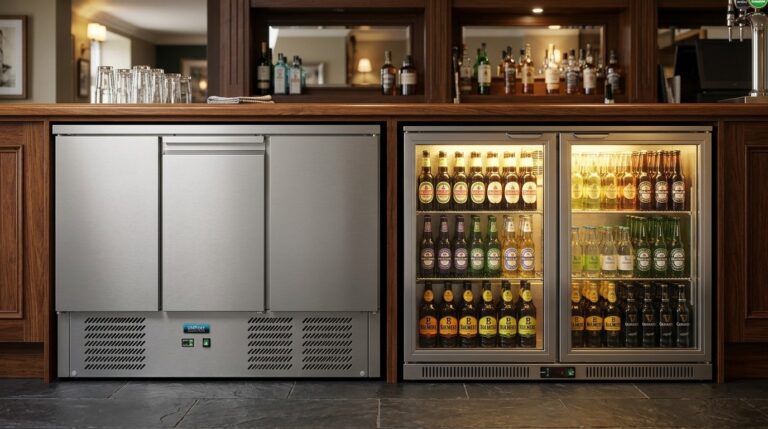
Unifrost R200SN/R200SVN Undercounter Fridge vs. BC20 Bottle Cooler: Back-Bar Storage Planning for Irish Bars
Explore the differences between Unifrost undercounter fridges and bottle coolers for back-bar planning in Irish bars. Practical support for choice and layout.
Read guide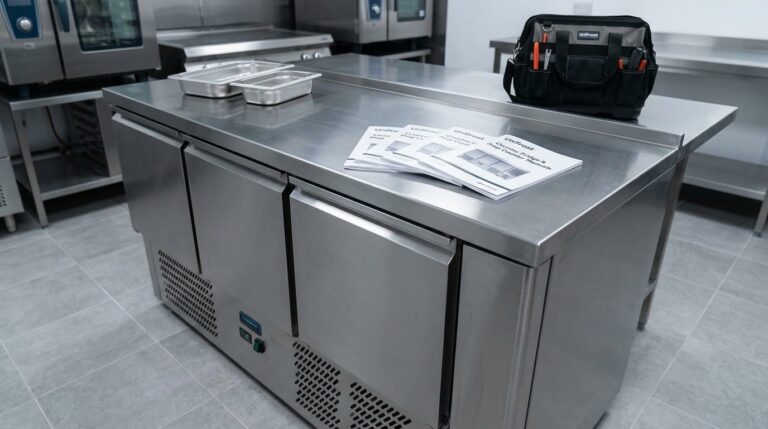
Unifrost Counter Fridge Prep Counter Saladette Manuals and Installation Support
Manuals, controller guidance, setup checks and troubleshooting help for Unifrost counter fridges, prep counters and saladettes.
Read guide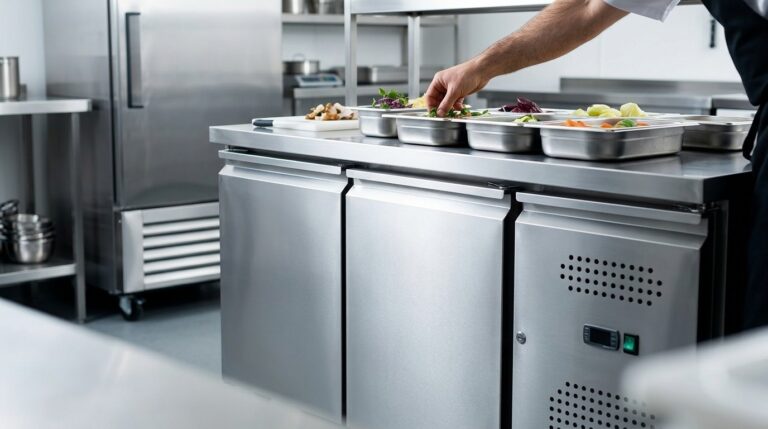
Choosing the Right Unifrost Under Counter Fridge for Your Business
Explore Unifrost under counter fridges, ideal for busy Irish kitchens where space and efficiency are vital.
Read guideView Unifrost fridges at Caterboss
For current product options, pricing and availability, continue to Caterboss.