
Choosing the Right Unifrost Under Counter Fridge for Your Business
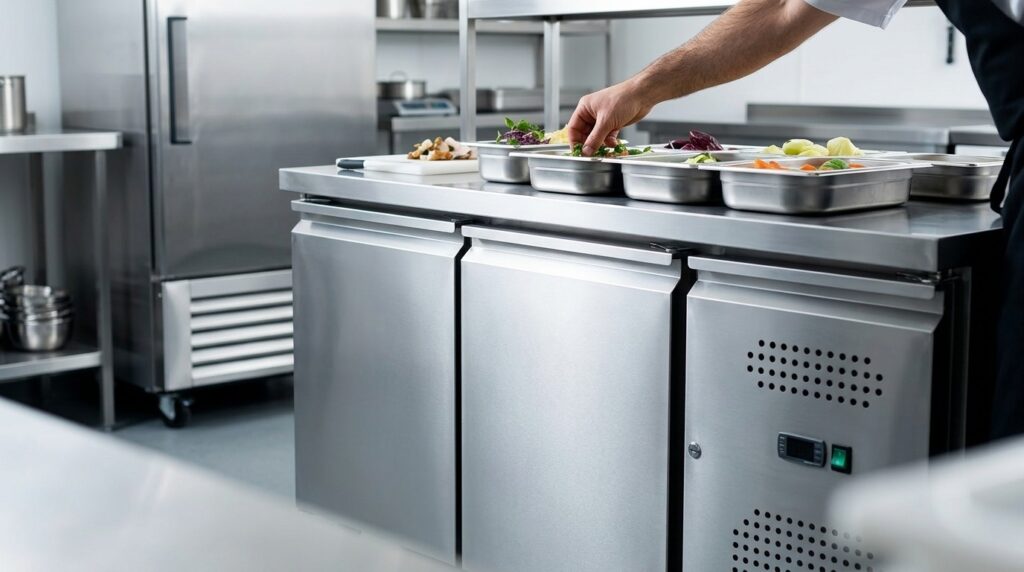
Explore Unifrost under counter fridges, ideal for busy Irish kitchens where space and efficiency are vital.
Choosing a Unifrost Undercounter Fridge: R200SN vs R200SVN for Compact Commercial Kitchens
You choose an Unifrost under counter fridge when you need reliable chilled storage right where the service happens, but you cannot afford to lose floor space, prep area, or speed in a busy kitchen. The right unit protects food quality, reduces waste, and helps you stay on top of temperature control without slowing staff down.
This guide walks you through the practical buying checks that matter: how to confirm an undercounter fridge will actually fit under your counters, what size and internal capacity makes commercial sense for your menu and delivery pattern, and when to pick static cooling (Unifrost R200SN / R200SNOG) versus ventilated cooling (Unifrost R200SV / R200SVN / R200SVNOG). You also get a planning checklist for installation in tight spaces, the key features to look for day to day, and the maintenance routines that keep performance consistent and running costs predictable. If you are buying as an emergency replacement, you will know what to verify fast so you minimise downtime and food loss.
What Unifrost under counter fridges are best for
Unifrost under counter fridges suit space-restricted professional kitchens where you need compliant chilled storage right at the point of use. Keeping ingredients within arm’s reach cuts door-open time, staff steps, and delays during service.
Food safety still comes first. The FSAI advises setting fridges so food is held between 0°C and 5°C, and notes that a 3°C to 4°C set point typically achieves that in practice (see FSAI temperature control guidance for caterers). In day-to-day terms, the “best” undercounter choice depends on how often the door is opened, the ambient heat around the unit, and whether your priority is gentler holding for certain foods or quicker recovery during busy bursts.
Where they earn their keep in Irish hospitality setups
Undercounter fridges come into their own when an upright is the wrong footprint, but you still need dependable chilled storage beside the line, the pass, or a coffee station. In the Unifrost undercounter range, you are typically choosing between static cooling options (R200SN / R200SNOG) and ventilated options (R200SV / R200SVN / R200SVNOG). That choice is really about how the fridge is used: steady day-to-day holding versus coping with frequent opening and faster pull-down.
Common Irish use cases include:
Small cafés and deli counters holding milk, desserts, sandwich fillings and garnish close to service
Busy restaurant lines where chefs need quick access to prepped produce, sauces and proteins without walking to the cold room
Pubs and bars that want backup chilled storage for garnishes and mixers without losing floor space
Food trucks and kiosks where the undercounter cavity is often the only workable refrigeration position
Satellite prep areas in hotels, function rooms and staff canteens where an upright would be overkill but a local fridge reduces errors and rework
Choosing ventilated vs static for a busy station
If the undercounter is a high-traffic “grab fridge” during peaks, a ventilated model is often the safer bet in practical terms. More frequent opening means cabinet temperature can swing, so quicker recovery and more even temperatures matter more than they would in a quiet prep room.
Static cooling can suit lower-traffic areas where the door is opened less often and the fridge is mainly holding stock rather than being raided every minute. The key is matching the cooling type to the workload, not just the available space.
When an under counter fridge is the wrong tool
An undercounter fridge will not solve every storage problem. If you need large-volume capacity, regular batch loading with the door held open, or clear separation for allergens and raw versus ready-to-eat storage, you may be better served by an upright fridge, a prep counter with integrated refrigeration, or a different workflow.
A simple check: if you are stacking product because you have run out of shelf space, or constantly moving items to reach what you need, the issue is usually capacity and layout rather than the brand. That is where most commercial buying decisions are won: sizing the unit for how you actually prep and serve, not just what fits under the counter.
Choosing the right size and capacity
Start with the physical space, then work backwards from how you actually use refrigeration during service. The right undercounter fridge is the one that fits, holds temperature during constant opening, and stores your day-to-day mise en place without becoming a game of Tetris.
1. Measure the space you *actually* have
Work with hard limits, not best-case assumptions:
Width: clear gap between units, including any trim or pipework
Depth: to the front edge of counter legs and any kickboards
Height: to the underside of the worktop, allowing for ventilation clearance and adjustable feet
In plenty of Irish premises, floors are not perfectly level. Levelling matters because it affects door alignment and seals. A unit that is slightly twisted will never close cleanly, and you will feel it in temperature stability and running costs.
Also measure the route in. A fridge that “fits the gap” can still fail at delivery if it cannot get through a back door, down a corridor, or around a tight turn by the wash-up.
2. Decide what needs to live under the counter for speed
Undercounter refrigeration earns its keep when it holds the things you reach for constantly:
milk, cream, and café prep
garnishes and salad mise en place
portioned proteins for the line
open sauces, prepped veg, dairy, desserts
If staff keep leaving the line to use an upright or cold room, you lose time and you increase the risk of food sitting out too long during a rush. Treat undercounter as your service fridge, not your main store.
3. Convert your menu and delivery rhythm into “working capacity”
Ignore litres for a moment and think in usable shelf space for the containers you run every day. Capacity is only helpful if you can load it in a way that stays organised and lets air move.
A useful reality check:
What must be in the fridge at 11am pre-service?
What still needs to be there at 9pm after a full day of openings?
Daily deliveries can allow a smaller service unit. Fewer drops, or a site that cannot easily do emergency top-ups, usually needs more chilled holding on-site.
4. Choose a size that helps you stay compliant, not just stocked
An undercounter that is packed too tightly struggles to pull down temperature and recover after frequent door openings. Plan space so food can be stored properly without blocking airflow.
For Irish food safety practice, set up and verify that chilled food is held between 0°C and 5°C, in line with the FSAI guidance on temperature control for fridges and chill storage cabinets:
https://www.fsai.ie/Business-Advice/Running-a-Food-Business/Caterers/Temperature-Control
If you can only make your stock fit by stacking to the ceiling or blocking vents, that is usually a sign you need more capacity or a different format, such as an upright fridge or a small cold room allocation for bulk items.
5. Match the footprint to real workflow: door swing, loading, cleaning access
Before committing, test it mentally from the staff position during service:
Will the door swing clash with a bin, dishwasher, or pass?
Can a tray be loaded without shifting half the shelf?
Is there enough space to open fully without blocking the walkway?
Finally, allow room to pull the unit out for cleaning and to reach the plug. Poor access tends to mean poor cleaning, and that is a fast route to performance issues and higher running costs, even with a solid commercial unit.
Ventilated vs Static Cooling: Which to choose?
Choosing between ventilated (fan-assisted) and static cooling in a Unifrost undercounter fridge is really a choice between temperature consistency and recovery speed versus simplicity and steady storage. Both formats can be used safely for chilled food, but they suit different day-to-day realities in Irish kitchens.
Static cooling relies on natural air movement inside the cabinet. Ventilated cooling uses a fan to push cold air around the shelves, helping the cabinet recover faster after door openings.
How do static and ventilated compare overall?
Undercounter fridges take more punishment than most people expect. They are often wedged beside hot equipment, opened mid-service, and installed with limited clearance at the back or sides. In that setting, the cooling style matters less for “can it chill?” and more for how evenly it holds temperature and how quickly it pulls back down after the door has been opened repeatedly.
Static cooling can run with small temperature differences from top to bottom, especially when heavily loaded or when warm stock is added.
Ventilated cooling is designed to reduce warm spots by circulating air, which helps when you are storing mixed items across shelves and need consistent results.
For HACCP, check the food temperature, not just the controller read-out. The FSAI advises keeping chilled food between 0°C and 5°C, and notes that setting the cabinet to around 3°C to 4°C will usually achieve this in practice (see the FSAI temperature control guidance for caterers).
Static cooling (Unifrost R200SN / R200SNOG)
Static suits undercounter fridges used as steady storage rather than a constant “open, grab, close” service fridge. It typically makes sense where the door stays shut for longer stretches, for example:
smaller cafés and low-volume prep areas
staff kitchens
backup storage for sealed product, dairy, desserts, or prepped items
The trade-off is operational. You will get the best out of static cooling if you load it with a bit of discipline:
avoid overpacking shelves
don’t block internal air paths
avoid adding warm product during service if you need the cabinet to stay tight on temperature
Ventilated cooling (Unifrost R200SV / R200SVN / R200SVNOG)
Ventilated cooling is usually the better fit when the undercounter unit is part of the production line, with frequent door openings and staff expecting the same chill on every shelf. It’s also the safer choice when you are storing a mix of items and you cannot rely on perfect loading habits during peak service.
This format also tends to suit the “replacement fridge” scenario, where a new unit is immediately loaded, opened, and reloaded from day one and you need it to settle back quickly.
To keep performance consistent, treat airflow as part of the job:
allow the ventilation space required at install
keep vents clear
plan regular cleaning so airflow and heat rejection do not tail off over time
Which is best for you?
Go static (R200SN / R200SNOG) if the fridge is mainly steady storage, door openings are limited, and you can load it neatly without cramming.
Go ventilated (R200SV / R200SVN / R200SVNOG) if it sits on the service line, sees frequent openings, or you want more even temperature across shelves for mixed storage.
If space is tight, match the cooling type to your workflow first, then confirm fit, door swing, ventilation clearance, and cleaning access before you commit.
If the goal is simpler HACCP and less waste, pick the option that staff can run correctly on a busy shift, with the least special handling.
Once the cooling type is decided, sizing is usually straightforward: work back from what you need to hold at peak, where the unit will sit in the line, and how often you want to replenish stock.
Key features of Unifrost under counter fridges
Choose a Unifrost under counter fridge on the features that keep temperature stable during busy service, speed up cleaning, and stand up to constant door openings. For food safety in Ireland, you need to be able to hold chilled food between 0°C and 5°C and monitor it as part of your routine, in line with the FSAI temperature control guidance for caterers.
Within the Unifrost undercounter range, the most practical day-to-day decision is usually static cooling (R200SN / R200SNOG) versus ventilated cooling (R200SV / R200SVN / R200SVNOG). It affects how evenly the cabinet chills and how quickly it pulls temperature back down after repeated door openings.
Shelving and internal layout (what makes it workable on a busy shift)
Shelving is what makes an undercounter fridge usable in real service, not the brochure specs. A good layout helps you keep product organised, maintain airflow around food, and separate raw and ready-to-eat items in a way that matches your HACCP routine.
Look for shelves that adjust easily, feel stable under load, and wipe clean without awkward corners or grime traps.
Plan your layout around how staff actually work: high-turn items at the front, heavier pans supported properly, and enough space so tubs are not jammed tight against the back wall.
Temperature controls and day-to-day monitoring
Controls should be clear enough that any staff member can check them quickly and spot an issue before stock is at risk. In practice, that means a readable temperature display and simple adjustments.
For higher-risk chilled storage, do not rely on the cabinet display alone. It is good practice to verify product temperatures with a calibrated probe as part of your HACCP checks, especially after deliveries, deep restocks, or a busy service.
Static vs ventilated cooling (why it matters operationally)
A static-cooled undercounter fridge (for example, R200SN / R200SNOG) tends to suit steadier storage where the door is not constantly opening and closing. It is a straightforward option if the fridge is mainly holding pre-chilled stock and staff are not in it every couple of minutes.
A ventilated (fan-assisted) undercounter fridge (for example, R200SV / R200SVN / R200SVNOG) is often a better fit for high-traffic stations because it typically:
recovers temperature faster after frequent openings, and
helps reduce warm spots caused by uneven loading.
You feel the difference most in compact Irish kitchens where the unit sits beside hot equipment, or where staff are repeatedly grabbing milk, garnish, veg, desserts, or portioned proteins through service.
Build quality details that affect reliability and cleaning time
Build quality is mainly about what reduces downtime and labour. Focus on the basics that affect performance over time: doors that close properly, seals that stay tight, hinges that hold alignment, and internal surfaces that are easy to sanitise quickly.
Poor seals and awkward internal seams are not just annoying. They lead to temperature drift and extra cleaning time, and you end up paying for it in spoiled stock and staff hours.
Practical extras that can matter in hospitality
A few “small” details can make a unit far easier to live with:
Locking can be useful in shared kitchens, front-of-house storage, or where you need tighter stock control.
Levelling feet matter on older floors where counters and tiles are rarely perfectly true.
Door swing and handle clearance can make or break an undercounter install, especially near a pass, bin station, or dishwasher area.
Once you are clear on the features that suit your service flow, the next step is making sure the size and capacity fit your space and your stock levels without blocking airflow or forcing staff to overfill the cabinet.
Installation and maintenance considerations
Plan for two things: the fridge has to fit, and it has to shift heat. Most reliability and temperature issues with undercounter fridges in Irish kitchens come back to tight clearances, hot ambient conditions, and rushed loading, not a mysterious “fault”.
1. Measure properly and plan the space before the fridge arrives
Measure the opening width and height, then check the practical snags that catch people out on site:
Adjustable feet range and the finished counter height
Skirting boards, pipe boxing, cable trunking and door architraves
Whether the door can open fully without hitting a wall, bin station or adjacent equipment
Space to pull the unit out for cleaning and service access
If it only just squeezes in, it will be awkward to maintain. Plan access to the plug and the condenser area from day one, not when the first heat-related alarm happens mid-service.
2. Choose a location that supports ventilation and service flow
Avoid direct heat and steam where you can. In real-world Irish kitchens, the toughest positions are tight corners beside fryers, combi ovens, dishwashers and hot pass areas, where warm air and grease build-up make an undercounter run longer and recover slower.
If you’re choosing between static cooling and ventilated (fan-assisted) cooling, match it to how the section is used:
Ventilated units generally cope better with frequent door openings and faster recovery at busy stations.
Static units can suit steadier storage where the door isn’t being opened constantly.
What matters most is your workflow. If the fridge is part of an active prep or service station, plan for higher heat load and heavier door traffic from the start.
3. Install safely: level the cabinet, power it correctly, and do a first-run check
Level the cabinet so the door seals evenly and the unit drains as intended. A cabinet that rocks on an uneven floor nearly always turns into a door-seal problem, then you’re into temperature drift and icing.
On power:
Use a safe, correctly rated supply.
Avoid multiway adapters and trailing leads, especially around wash-up areas.
Before you load food, let the cabinet pull down to temperature. Then verify the internal temperature with your own calibrated thermometer or probe and record an “as installed” reading for your HACCP file. The display is useful, but it is not your only check.
4. Set and monitor temperatures in line with Irish food safety expectations
Set a target that suits what you store and how often the door is opened, then validate it with independent checks. The Food Safety Authority of Ireland advises refrigerated food should be maintained at 0 to 5°C: https://www.fsai.ie/News-and-Alerts/Latest-News/Advice-on-the-importance-of-maintaining-food-tempe
For day-to-day monitoring, checks that reflect reality are more useful than a single quiet-time reading:
Pre-service
Peak service
Close-down
If temperatures creep up during rush periods, look at loading and behaviour first: warm stock going in, overfilling, blocked air paths, or doors being left ajar are the usual culprits.
5. Run a simple maintenance routine that staff will actually follow
Undercounter fridges in cafés, bars and compact kitchens are often overworked. Keep the routine simple and focused on airflow and sealing, because that is what prevents breakdowns and food loss.
Every day: wipe spills, keep air paths clear, don’t pack product tight against the back, and make sure the door closes cleanly every time.
Every week: deep-clean shelves and door gaskets, check hinges and closers, and watch for early signs of icing or unexplained water.
Every month: remove dust and grease from the condenser area (where accessible), check the door seal grips evenly all the way round, and review temperature records for patterns that suggest overloading or excessive door openings.
If you’re using an undercounter as a stop-gap during a breakdown elsewhere, avoid the “plug and stuff” approach. Prioritise high-risk chilled items, don’t load warm food, and keep door openings tight for the first hour while the cabinet stabilises.
Once you understand your real loading and access pattern, you can size and configure your next unit with fewer compromises, and avoid turning an undercounter into an overpacked warm-running bottleneck.
Making the Unifrost choice: Static vs Ventilated
Choosing between the Unifrost R200SN (static cooled) and R200SVN (ventilated) comes down to one thing: how hard the fridge will be worked during service.
In a compact kitchen, an undercounter often ends up beside a hot pass, near a dishwasher, or on a section where the door is opened constantly. In that kind of spot, a static cabinet can see wider temperature variation and slower recovery after repeated openings. The knock-on effect is operational: more temperature checks, more stock rotation, and less headroom in your HACCP routine if the unit is being hammered at peak. The Food Safety Authority of Ireland’s guidance on temperature control is a useful reference point for what you’re trying to maintain day to day in a catering setting: https://www.fsai.ie/business-advice/running-a-food-business/caterers/temperature-control
When the R200SN (static cooling) makes more sense
Static cooling is usually the better fit when the door stays shut for longer stretches, for example:
back-up dairy in a café
dessert mise en place that is accessed occasionally rather than continuously
a small hotel pantry where usage is steady, not frantic
Because airflow is gentler, static cabinets can also suit products you do not want exposed to constant moving air. The discipline piece matters: avoid overpacking, keep air space around product, and keep raw and ready-to-eat foods properly separated inside the cabinet.
When the R200SVN (ventilated) is the safer operational bet
Ventilated (fan-assisted) cooling tends to suit service fridges where access speed and temperature recovery are the priority. If the fridge is on a busy line and gets opened every few minutes, fan circulation helps keep cabinet temperatures more even after door openings, which supports more consistent chilled storage in practice.
The trade-off is housekeeping. Ventilated cabinets are less forgiving if airflow is blocked, so you need to:
keep product off the back wall
avoid blocking air paths with gastronorms, trays, or boxes
resist the temptation to cram it full at peak
A quick way to decide in a compact kitchen
Choose R200SVN if it’s a service fridge that will be opened repeatedly during peak, or if it’s in a warmer-than-ideal position and you need faster recovery.
Choose R200SN if it’s mainly storage with fewer openings, and you prefer a calmer cabinet environment for more delicate items.
If you’re still on the fence, base it on the station: what needs to live there every day, how often the door opens between 12 and 2, and whether you have the time to manage stock and temperature checks when service is flying.
Connect with the Unifrost ecosystem
The “right” refrigeration format depends on what you are trying to protect: day-to-day storage, service speed, or consistent temperature control when the kitchen is flat out. In Irish operations, the best choice is usually the one that keeps you inside your HACCP controls even when doors are opening constantly and staff are under pressure. That is where an undercounter fridge earns its place. It is close to the work, but it is not a substitute for proper bulk storage.
How an undercounter fridge fits alongside the wider Unifrost range
Treat an undercounter fridge as a workflow tool first, and a storage tool second. Unifrost’s R200SN / R200SNOG (static cooling) and R200SV / R200SVN / R200SVNOG (ventilated) are designed to sit beside the pass, prep benches and plating areas, so staff are not walking to an upright during a rush.
Use this quick filter when you are choosing within the wider Unifrost range:
Undercounter fridge: when you need “grab-and-go” chilled ingredients at the point of use, or when floor space and traffic flow rule out an upright.
Upright fridge: when the main problem is volume, delivery frequency, and keeping bulk items organised on shelves.
Prep counter / saladette: when the bottleneck is the worktop and pan access (assembly speed), not just chilled holding.
Display refrigeration: when the priority is customer selection and merchandising, not kitchen mise en place.
Bottle cooler: when the access pattern is bar service, with rapid openings and fast restocking.
That ecosystem view matters because undercounter units are an expensive way to “build volume” if the real gap is bulk storage elsewhere.
Picking between R200SN (static) and R200SVN (ventilated) in a compact kitchen
The first decision is static cooling (R200SN / R200SNOG) versus ventilated cooling (R200SV / R200SVN / R200SVNOG).
Ventilated units are generally the better fit for frequent openings and for keeping cabinet temperatures more even across shelves.
Static can work well where access is steadier and you are disciplined about not blocking airflow around product.
A useful way to decide is to be honest about the job you are giving the cabinet. If it is a true service fridge for dairy, garnishes or prepped veg that is opened repeatedly through service, ventilated is usually the safer match. If it is effectively an overflow hold for sealed packs with fewer openings, static can be perfectly workable, and you may be better putting budget into your main upright capacity.
Food safety compliance: using the undercounter as part of your HACCP system
Undercounter fridges only help if they support consistent control. Many Irish HACCP systems work to 5°C or below for chilled storage, and the FSAI HACCP guidance for food businesses is a good reference point when you are setting checks and corrective actions. Practically, the undercounter cannot become the “out of sight, out of mind” fridge just because it is under a bench.
In most kitchens, the undercounter is the cabinet that takes the most punishment: more openings, more loading during service, and more temptation to overpack. Plan the basics before it becomes a weak link:
who logs temperatures and when
where you take probe checks (and what product you use as a reference)
what you do when readings drift during service
Emergency replacement and continuity planning (without wishful thinking)
If a unit fails midweek, an undercounter fridge can be a straightforward way to stabilise a section because it can often slot into a line with less disruption than reworking an upright layout. But “emergency replacement” is rarely about the badge on the door. It comes down to lead time, whether the footprint and door swing work in your space, and whether you can keep stock safe during changeover.
A sensible approach is to decide in advance what your fallback format is for each area (bar, dessert, garde manger, main line). When something breaks, you are not making a cold decision in the middle of a warm crisis.
How this ties into size and capacity decisions in the real world
Once you have the format right, sizing becomes simple arithmetic: how much stock must live at the point of use, how often you want to restock during service, how many deliveries you are planning around, and what bench space you can realistically give up. If you want a second pair of eyes on that trade-off, browse the Unifrost commercial fridge ranges and compare formats before you lock in a footprint.
Unifrost under counter fridge FAQs
How do I choose the right size and capacity of under counter fridge for my kitchen layout?
Start with the available footprint and the service workflow.
Measure the bay properly: width, depth, and height under the counter, then allow a little extra for door swing, airflow around the unit, and adjustable feet on uneven floors.
Map where it will be used: place the fridge closest to the section that needs it (pass, prep, bar, deli) to reduce walking and door-open time.
Match capacity to peak service: aim for enough chilled storage to cover your busiest shift without over-stocking. A good check is whether today’s most-used items (dairy, prepped veg, sauces, proteins) can be stored without blocking vents or overpacking shelves.
Plan shelf space, not just litres: bring a list of your common containers (GN pans, gastro trays, milk crates) and check that the internal layout will actually suit how you store food.
If you are deciding between Unifrost models, note that the undercounter range in scope includes R200SN / R200SNOG (static cooling) and R200SV / R200SVN / R200SVNOG (ventilated), so you can choose the cooling style as well as the footprint.
What are the benefits of a ventilated versus a static cooled under counter fridge?
It mainly comes down to temperature consistency, recovery speed, and how you load the fridge.
Ventilated (fan-assisted) cooling (e.g. Unifrost R200SV / R200SVN / R200SVNOG) circulates cold air for more even temperatures and typically faster pull-down and recovery after frequent door opening. This suits busy service and frequent access.
Static cooling (e.g. Unifrost R200SN / R200SNOG) cools more gently, which can suit quieter kitchens or situations where you want less air movement. You may notice more natural temperature variation from top to bottom, so good organisation and not overfilling matters.
If your unit is opened constantly during service, a ventilated model is usually the safer choice for maintaining stable chilled conditions.
What temperature range should a commercial under counter fridge operate at?
For chilled food storage in a commercial kitchen, you generally want the cabinet operating so food is held at 5°C or below.
In practice, many operators set the controller around 2°C to 4°C to provide a buffer for door openings and busy periods, while avoiding freezing delicate items. Always verify with a calibrated probe thermometer (food or product simulant) rather than relying only on the display.
Is the Unifrost R200SVN suitable as an emergency replacement unit?
It can be a strong option for emergency replacement because it is positioned for busy Irish commercial kitchens where space is at a premium and quick access to chilled produce is needed.
For a true emergency swap, confirm these points before you commit:
Stock status and delivery lead time for the R200SVN on the day
Exact fit in your counter bay (including clearance for ventilation and door opening)
Power and plug location so you can install immediately
A plan to stabilise temperature before loading high-risk food
If next-day delivery is essential, check the live availability and delivery options at the time of ordering rather than assuming.
How does fridge capacity help reduce costs in a business setting?
More usable undercounter capacity can reduce operating costs in a few very practical ways:
Fewer supplier runs and deliveries: you can buy staples less often, which cuts delivery charges and staff time.
Better purchasing: extra chilled space makes it easier to take advantage of case deals without risking unsafe storage.
Less waste and fewer emergency buys: having room for properly organised stock helps you rotate product and avoid last-minute top-ups at higher prices.
Smoother prep and service: you can hold prepped ingredients safely near the workstation, reducing labour and mistakes during peak periods.
The key is “usable” capacity: a well-organised undercounter fridge that is not overpacked will maintain temperature more reliably and protect stock value.
Next step: compare Unifrost under counter fridge options
If you are ready to shortlist a Unifrost under counter fridge by cooling type (static vs ventilated) and day-to-day workflow, it helps to compare current availability side by side.
Browse the live listings in Caterboss’s undercounter fridge category to check models, pricing, and what is available when you need it.
Related Unifrost guides
Compare models, maintenance advice and support information related to this topic.
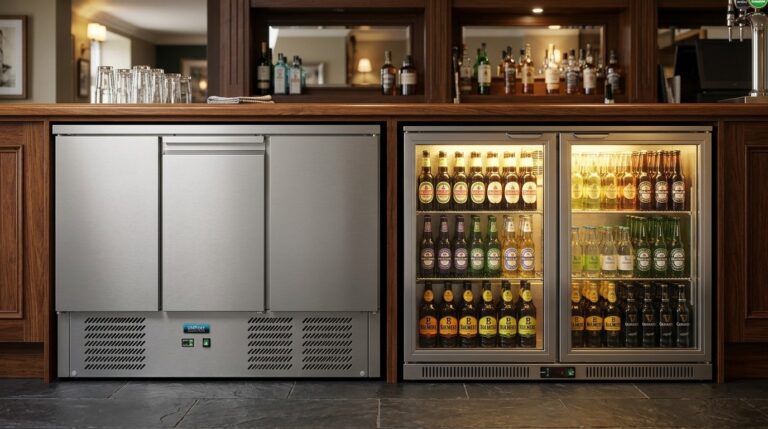
Unifrost R200SN/R200SVN Undercounter Fridge vs. BC20 Bottle Cooler: Back-Bar Storage Planning for Irish Bars
Explore the differences between Unifrost undercounter fridges and bottle coolers for back-bar planning in Irish bars. Practical support for choice and layout.
Read guide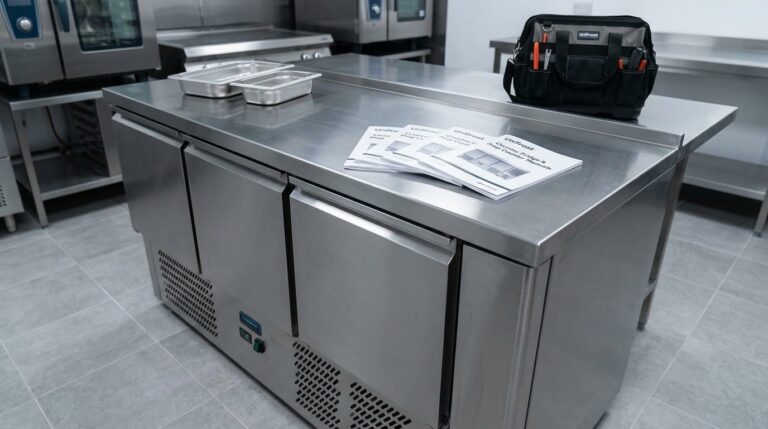
Unifrost Counter Fridge Prep Counter Saladette Manuals and Installation Support
Manuals, controller guidance, setup checks and troubleshooting help for Unifrost counter fridges, prep counters and saladettes.
Read guide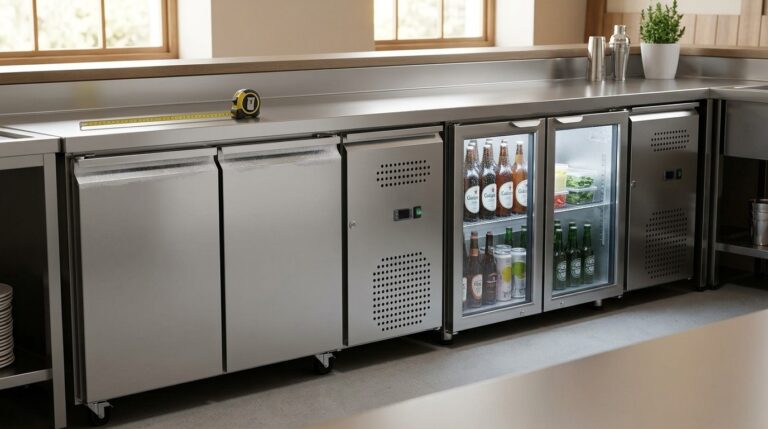
Choosing the Right Unifrost Undercounter Fridge for Irish Businesses
Discover the best Unifrost undercounter fridges for your Irish business. Learn about sizing, cooling types, and energy efficiency.
Read guideView Unifrost fridges at Caterboss
For current product options, pricing and availability, continue to Caterboss.