
What chemicals or cleaners are safe to use in an ice machine?
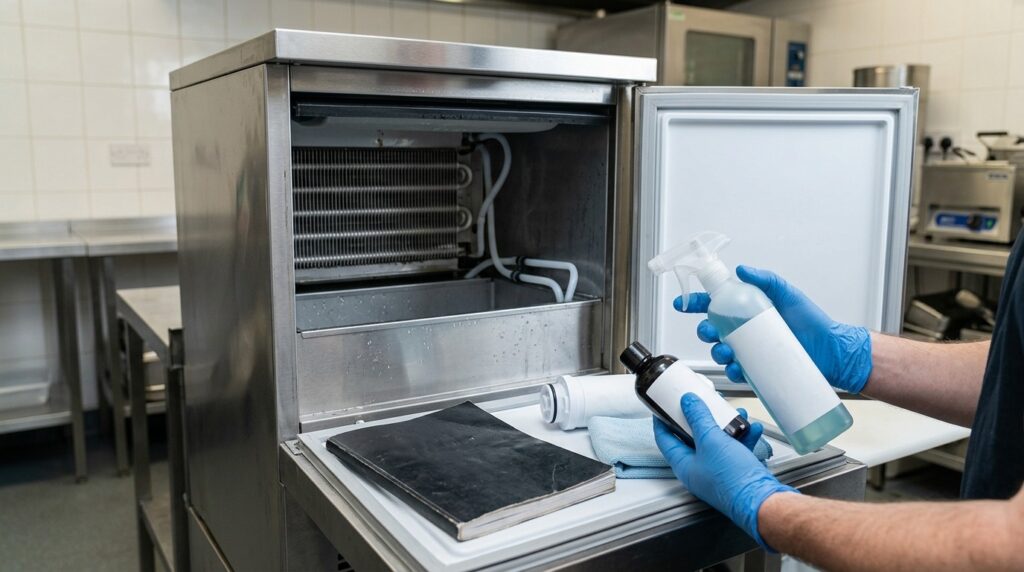
Stick to products intended for ice machines and food-contact areas:
Need more detail? For model comparisons, setup steps and troubleshooting, see the related guides below.
Stick to products intended for ice machines and food-contact areas:
Use a dedicated ice machine descaler for limescale.
Use a food-safe sanitiser suitable for food-contact surfaces for the bin, scoop and internal surfaces.
Avoid:
Bleach/chlorine in the ice-making circuit unless the manufacturer explicitly allows it for your model.
Abrasive pads, strong acids, caustic cleaners or unapproved chemicals that can damage surfaces, seals and coatings.
Always follow the chemical label (dilution and contact time), wear PPE, and flush/rinse as instructed before returning the machine to service. If you are unsure what is approved for your specific unit, use the cleaning products and method recommended in the Unifrost documentation or contact support before proceeding.
Read the full guide: Unifrost Ice Machine and Storage Bin: Cleaning and Maintenance Schedule.