
Choosing the Right Unifrost Undercounter Fridge or Freezer for Your Business
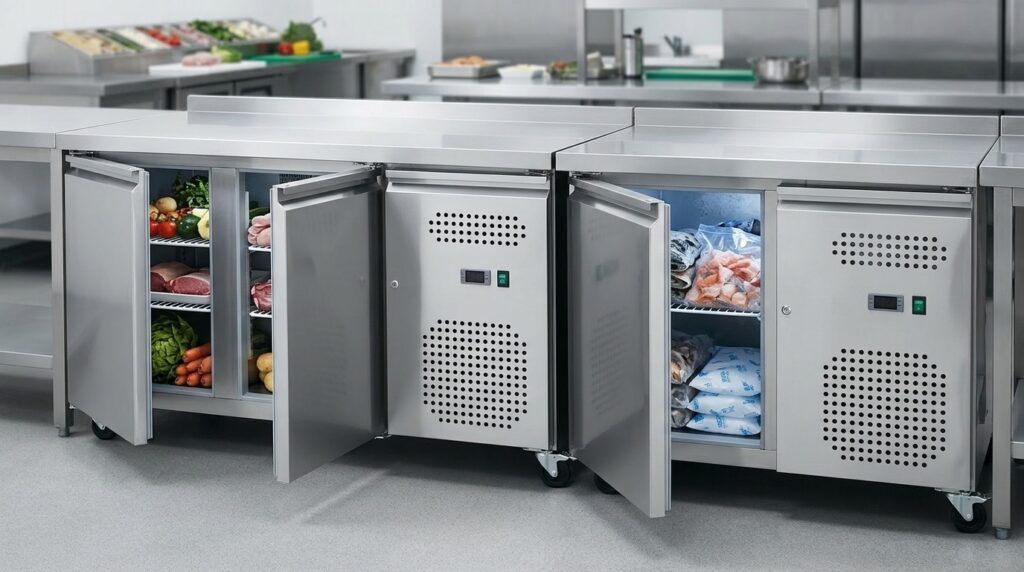
Choose the right Unifrost undercounter fridge or freezer for your Irish business with our practical guide.
Choosing a Unifrost Undercounter Fridge or Freezer (and the Best Alternative to a Fridge Freezer Combo)
If you are searching for a Unifrost under counter fridge freezer, the first thing to know is Unifrost undercounter refrigeration is supplied as separate fridges and separate freezers, not a single combined fridge–freezer cabinet. That matters because your real buying decision is whether to fit an undercounter fridge (R200SN / R200SNOG, R200SV / R200SVNOG), an undercounter freezer (F200SN / F200SNOG), or to pair one of each to create mixed chilled and frozen storage under the counter.
This guide helps you make that choice in commercial terms. You will compare what works best for your menu and workflow (chilled vs frozen demand, raw vs cooked segregation), the space and access you actually have under a 600 mm bay, and the practical checks that affect day-to-day running such as plug and play 13A power, typical around 150L per cabinet storage expectations, food safe fridge temperatures (for example 0 to 5°C in line with FSAI guidance), ventilation and heat load near cooklines, and what happens operationally if one cabinet goes down versus spreading risk across two dedicated units.
Understanding Unifrost Undercounter Options
Unifrost undercounter refrigeration covers compact commercial cabinets that sit under a standard worktop, keeping chilled or frozen stock where prep and service happen. In the Unifrost range, undercounter units are separate machines: undercounter fridges (R200SN / R200SNOG, R200SV / R200SVNOG) and undercounter freezers (F200SN / F200SNOG). There is no single combined undercounter fridge-freezer cabinet in this line-up, so you are always choosing one temperature function per bay.
That matters in real kitchens. Undercounter space is limited, but putting the right type at the point of use can reduce door openings on uprights, speed up service, and make stock rotation easier to keep on top of.
Why Unifrost does fridges and freezers as separate undercounter units
A search for “undercounter fridge freezer” often implies two zones in one cabinet. With Unifrost undercounters, the decision is simpler but more rigid: fridge or freezer.
A dedicated undercounter fridge suits high-access chilled items like dairy, cooked meats, desserts, garnish and ready-to-eat mise en place.
A dedicated undercounter freezer is designed for frozen holding, where temperature stability during door openings is the priority.
If you need both at the line, plan for two undercounter positions, or decide what truly needs to live under the counter versus what can stay in an upright elsewhere.
Picking the right type for your business needs in Ireland
In day-to-day Irish trading, the “right” choice is usually driven by service pressure, delivery cadence and HACCP routines rather than what looks neat on a spec sheet. For chilled storage, a sensible working target is 5°C or below, in line with FSAI guidance on temperature control. That makes an undercounter fridge the more straightforward option when staff are in and out of it constantly.
If you are deciding how to use one 600 mm bay, a practical rule of thumb is:
Choose an undercounter fridge if you plate cold items, prep daily, or need quick access to open products and ready-to-eat foods during service.
Choose an undercounter freezer if you portion and hold core menu components, need frozen backup at the line, or rely on frozen stock between deliveries.
Choose one fridge plus one freezer if you are currently juggling chilled and frozen storage across unsuitable units and finding recovery time and stock control slipping during busy periods.
Placement under worktops and cooklines: ventilation, heat load and access
Undercounter units work best close to the point of use, but poor placement can undo the benefit. Two things usually cause problems: heat and airflow.
Keep units where air can move. If a cabinet is boxed in tight or vents are blocked, you will see worse temperature stability and more strain on the system.
Be realistic about cookline heat load. Freezers, in particular, suffer when they are beside grills, fryers or hot passes, especially with frequent openings.
Design for easy access. If staff have to step back from the pass, dodge a bin station or move trays to open the door, the unit gets overloaded, doors get left ajar, and “small refrigeration” becomes a daily maintenance issue.
Once you have the right type in the right place, you can compare undercounter cabinets more meaningfully against alternatives like prep counters or drawer bases, based on your layout and menu flow.
Comparing Performance and Suitability
Choosing a Unifrost undercounter setup usually comes down to a simple question: do you want separate chilled and frozen cabinets, or do you need one mixed-temperature unit from elsewhere because you only have a single bay?
Unifrost undercounter models are single-purpose units. In other words, you plan for an undercounter fridge position and an undercounter freezer position, rather than expecting one cabinet to cover both jobs. In day-to-day service, that tends to suit busier kitchens because chilled prep stock and frozen back-up stay physically separate, and staff are not constantly juggling one door and one compartment.
A combined fridge-freezer can look like a space win on paper, but in a commercial setting it often means you feel short on either chilled space or frozen space during peak periods. Both approaches can work in Irish cafés, pubs, and smaller hotel kitchens. The right choice depends on your service pressure, deliveries, and where heat and airflow constraints sit along your line.
How do separate undercounter fridges and freezers compare overall?
Unifrost’s undercounter range (R200SN / R200SNOG, R200SV / R200SVNOG for fridges and F200SN / F200SNOG for freezers) is built around a common reality in commercial kitchens: you rarely need “a bit of each” under one door. You need reliable chilled holding in one spot and reliable frozen holding in another, with as little disruption as possible when the kitchen is under pressure.
Splitting functions also reduces knock-on risk. If a freezer fails mid-service, you have not lost all your undercounter cold storage in one hit. That matters in smaller back-of-house spaces where there is nowhere obvious to move stock at short notice.
Unifrost undercounter fridges paired with Unifrost undercounter freezers
A paired setup is usually the better fit if you run a clear split between chilled mise en place and frozen back-up. Typical examples include cafés with high sandwich and dairy turnover, pubs with steady food through a tight service window, and smaller hotels where breakfast prep and evening service are competing for the same counter space.
It also generally makes HACCP routines easier because chilled storage targets are straightforward to check and record. National guidance commonly referenced in Ireland is that chilled food should be held at 5°C or below, as outlined in the FSAI guidance on chilled storage and temperature control:
https://www.fsai.ie/business-advice/food-safety-guidance/food-storage-and-distribution/chilled-food-storage
Placement is where you make the most of the setup, or accidentally make it work too hard:
Put the undercounter fridge closest to the prep area where it will be opened repeatedly.
Put the undercounter freezer where it is opened less often, and away from heat sources like grills, fryers, ovens, and dishwashers.
That reduces recovery time issues and avoids the cycle of nuisance alarms, soft product, and icing that can show up when a cabinet is fighting heat load and poor ventilation.
A single “fridge-freezer” cabinet from another brand (or mixed-temperature alternatives)
A combined unit can be the practical choice when you genuinely have one undercounter bay left and you need some chilled and some frozen without moving other equipment. The trade-off is that you are committing to a fixed split of chilled versus frozen space, even if your menu changes week to week or your delivery pattern shifts in busy periods.
In many kitchens, the real comparison is not “combined cabinet vs separate cabinets”, but whether undercounter storage is the right format at all for the job. If the unit is meant to support cooking during service, purpose-built counter refrigeration (for example, chef bases or prep counters) can be a better fit because they are designed around cookline access and frequent openings, rather than acting as general storage under the hottest part of the kitchen.
Which is best for you?
Use the job the cabinet does during peak service, not what it looks like at 10am:
Choose a dedicated Unifrost undercounter fridge plus dedicated Unifrost undercounter freezer if you want clean separation for HACCP routines, predictable capacity at each temperature, and less operational risk if one unit goes down.
Consider a single combined cabinet only if you have one physical bay, low-to-moderate service pressure, and a stable chilled-to-frozen split that does not change much week to week.
If you are trying to feed the cookline rather than store back-up stock, consider purpose-built counter refrigeration formats instead of forcing a fridge-freezer compromise into the hottest area of the kitchen.
Once you are clear on the workflow, it is easier to choose between the Unifrost undercounter fridge options (R200 series) and the undercounter freezer options (F200 series), and to place them where they will hold temperature reliably in real Irish service conditions.
Operational Considerations
Undercounter fridges and freezers take more day-to-day punishment than uprights or coldrooms. They usually sit under a worktop, close to heat, steam and grease, and they get opened constantly during service. That is why small issues like restricted airflow, a dirty condenser or a tired door seal show up quickly as temperature drift, higher running costs and avoidable call-outs.
Food safety is the other reason to take the detail seriously. The FSAI guidance is clear that chilled food should be held so the food temperature stays between 0°C and 5°C. That is harder to protect when a cabinet is heat-loaded under a counter on a busy line, overfilled, or boxed-in with no ventilation route.
Maintenance that actually prevents downtime
With undercounter refrigeration you are typically choosing a dedicated fridge or a dedicated freezer. Reliability then comes down to two basics: the system must be able to reject heat, and the doors must seal properly. In Irish cafés, pubs and restaurant kitchens, the most common problems are practical rather than mysterious: blocked vents, condenser fins clogged with dust or grease, and doors not fully closing during peak.
Daily: Wipe and check door gaskets. Make sure doors close firmly after service, especially on pass stations where staff are working one-handed.
Weekly: Keep stock off internal air paths. Don’t ram product hard against vents, and clean up spills before they become odour and hygiene problems.
Monthly: Clean accessible condenser and ventilation grilles. Do it more often beside fryers, grills, or a bakery prep line where flour dust builds up.
If performance drops: Check ventilation space and confirm the top is not being used as a landing zone for hot trays. Heat going in at the top forces longer compressor run time and slows pull-down.
Efficiency and running cost drivers in real kitchens
Undercounter cabinets save steps and save space, but they only save money if they are not fighting the environment. The big drivers of run time are predictable: frequent door openings, warm product going straight in after delivery or prep, and positioning beside radiant heat. You get hit twice when that happens, through higher electricity use and increased wear on components.
If you are adding undercounter capacity to reduce the number of deliveries or the pressure on a main fridge, it works best when the undercounter unit is treated as line top-up storage, with bulk stock kept in steadier conditions elsewhere. In practice, a dedicated undercounter fridge plus a dedicated undercounter freezer is easier to manage than expecting one cabinet to cope with mixed use patterns. Each unit can be loaded, opened and set to suit its job, which helps temperature recovery and running costs.
Food safety and HACCP routines that suit undercounter use
Undercounter units are easiest to control when you keep them task-based. For example, keep dairy and ready-to-eat items together, segregate raw proteins properly, and avoid the “everything in the drawers” approach. The benefit is practical: shorter door-open times, less cross-handling, and temperature checks that mean something because the cabinet is not constantly recovering from service.
If your team relies on undercounter storage at peak, agree in advance where probe checks are taken and what “normal” looks like for that station. You are not just checking a display, you are checking that the food stayed in control when the kitchen was under pressure.
Positioning under worktops and cooklines without performance issues
“Undercounter” does not mean “sealed into a box”. Placement is part of the refrigeration system. The cabinet needs a clear path to dump heat, and the hotter the local ambient, the more recovery time matters after each door opening.
In tight city-centre kitchens where every 600 mm bay is fought over, you will usually get better day-to-day results by:
Keeping freezers away from direct cookline heat where possible
Leaving a clear airflow route for both units, even if it costs you a bit of boxing-in or shelving
Avoiding tight enclosures that trap warm air around the cabinet
Once you are clear on how the unit will be used and where the heat load sits in your layout, it is much easier to compare configurations and choose the setup that will hold temperature consistently for your service style.
Venue-Specific Recommendations
Choose based on what you need at hand during service: chilled prep access, frozen back-up stock, or both. Unifrost supplies separate undercounter fridges (R200SN / R200SNOG or R200SV / R200SVNOG) and undercounter freezers (F200SN / F200SNOG), so the decision is really about the right split for your workflow. Then place each cabinet where it can actually hold temperature during peak door openings, and sanity-check the plan against HACCP routines and delivery frequency.
1. Map your undercounter “jobs” (not just your menu)
Start with what the unit needs to do during a busy hour.
Cafés: milk, cream, desserts, sandwich prep, open packs you reach for constantly.
Pub kitchens: garnishes, dairy, sauces, cooked items that need fast access during peaks.
Small hotels: breakfast prep, function mise en place, controlled storage between shifts.
If most openings are quick, frequent “grab chilled”, bias towards an undercounter fridge (R200SN or R200SV variants) and keep frozen stock in a separate freezer elsewhere if possible. If you regularly depend on frozen items to protect availability, portion control, and margin, a dedicated undercounter freezer (F200SN variants) is usually a better fit than trying to make a small split compartment work under pressure.
2. Pick the split that matches service pressure
Cafés and deli counters: an undercounter fridge is usually the first buy because it supports speed and consistency for high-touch items. Add an undercounter freezer only if staff are constantly trekking to a main freezer or you’re overloading an upright during rushes.
Pubs and late-licence bars serving food: pairing one undercounter fridge plus one undercounter freezer often works better than relying on a single combined cabinet from another range. You also avoid putting both chilled and frozen at risk if one unit goes down.
Small hotel kitchens: give each cabinet a clear role. Put the undercounter fridge where the door is opened all the time (breakfast prep, pass support). Put the undercounter freezer somewhere calmer so it can recover properly between pulls.
For food safety targets in Ireland, the FSAI notes refrigerated food should be maintained at 0 to 5°C and frozen foods at -18°C. Use those as your practical benchmark when setting monitoring and corrective actions in your HACCP checks, as outlined in FSAI guidance on maintaining food temperatures.
3. Place each cabinet for heat, ventilation, and real access
“Undercounter” is a footprint, not a performance guarantee. Any unit will struggle if it’s boxed in with no airflow, and freezers are typically less forgiving because they’re working against a bigger temperature difference in a hot kitchen.
In tight Irish kitchens:
Keep the undercounter freezer (F200SN / F200SNOG) away from the hottest part of the line where you can. Heat and constant openings slow recovery and can increase running costs.
Put the undercounter fridge (R200SN / R200SNOG, or R200SV / R200SVNOG) closest to the station that uses it most. Shorter reach usually means shorter door-open time and steadier temperatures.
Avoid sealing either unit behind tight plinths or hard against walls unless you have allowed for ventilation. Poor airflow is a common cause of warm product, noisy running, and preventable call-outs.
If you’re weighing “one combined undercounter fridge-freezer” versus “one Unifrost fridge plus one Unifrost freezer”, placement is where separate cabinets often win. You can put each unit where it performs best, instead of forcing one compromised cabinet into the worst spot.
4. Check food safety workflow and downtime risk before you commit
Do a quick workflow test: are you trying to store raw and ready-to-eat foods in the same small undercounter space because you’re tight on room? If so, separating roles is usually easier to manage and audit: keep ready-to-eat prep items in the undercounter fridge, and boxed frozen stock in the undercounter freezer.
Then do the downtime check. A dual-temperature cabinet can become a single point of failure. Two dedicated cabinets can mean two assets to look after, but they also reduce the chance that one fault takes out both chilled and frozen capacity on the same day.
If you want to get more exact, the next step is comparing how undercounter fridges and freezers behave in real kitchens, particularly recovery with frequent door openings and how sensitive they are to placement and heat.
Integrating with Existing Unifrost Systems
Integrate undercounter refrigeration as part of your cold chain, not as a “spare fridge”. The right setup depends on how food moves from delivery to storage to prep to service, and where temperature pinch points show up during a busy run. In practice, cafés and pubs use undercounter storage for speed at the pass, while hotels and higher-volume kitchens often use it to cut door openings on uprights and keep zones clearer for HACCP.
Use undercounter to take pressure off uprights and stabilise temperatures
If you can, plan undercounter as dedicated chilled or dedicated frozen, rather than asking one cabinet to cover both. Operationally, that matters: when your main upright is being opened constantly during service, a well-placed undercounter unit reduces traffic, shortens door-open time, and helps keep frequently used items in a steadier temperature range.
Undercounter works best as point-of-use storage. Keep working stock close to where it’s used (milk, desserts, garnishes, cooked proteins, portioned mise en place) and keep bulk stock in the larger cabinet. On the frozen side, an undercounter freezer near the dessert station or fryer can save steps and reduce the temptation to overload one main freezer with mixed duties.
Match the undercounter job to your HACCP workflow (not just the empty bay)
Positioning should follow your raw vs cooked separation and your temperature-check routine. The Food Safety Authority of Ireland advises chilled food is kept at 0–5°C and frozen food at -18°C (see FSAI guidance: https://www.fsai.ie/news-and-alerts/latest-news/advice-on-the-importance-of-maintaining-food-tempe). Clear roles make it easier to train staff, keep logs consistent, and take corrective action when something drifts.
A simple approach that works in most small Irish kitchens is to standardise what lives where and stick to it, especially with part-time teams.
Put the undercounter fridge nearest the main prep area for high-turn chilled items. Keep raw storage assigned to a separate zone to support segregation.
Put the undercounter freezer where it saves the most steps, but away from high radiant heat so it isn’t constantly fighting ambient load.
Keep bulk and back-up stock in uprights. Treat undercounter as working stock so date rotation stays visible.
If you need secure storage for controlled items outside service, choose a setup that matches your site policy and closing routine, rather than relying on memory.
Positioning in tight kitchens: heat load, ventilation, and access
Undercounter units often end up in the hardest locations: tight voids, dead air, right beside hot equipment, or boxed in by joinery. That’s when you see slow pull-down, higher running costs, and temperature nuisance during busy periods.
If you’re fitting under a worktop, allow the unit the breathing space it needs, keep ventilation areas clear of flour and grease, and avoid placing a freezer directly beside high-heat kit where possible.
Access matters as much as ventilation. If staff have to crouch, move bins, or open a door into a walkway, doors stay open longer and shelves get overloaded. Both reduce airflow and make temperature control harder during service.
Reduce downtime risk by splitting duties across cabinets
From a continuity point of view, relying on one mixed-purpose cabinet concentrates risk. If it fails, you lose capacity in one hit. Separating chilled and frozen across two cabinets spreads that risk and gives you more options on the day, particularly if you don’t have spare cold storage.
It also makes fault-finding more straightforward. When a cabinet has one job, it’s easier to trace whether the issue is placement, airflow, loading, or user behaviour.
When a different Unifrost format integrates better than “fridge-freezer under the counter”
If undercounter space is your only cold storage, you can end up forcing a standard cabinet to do a prep counter’s job. In that case, a different format can integrate better with service flow, such as counter fridges for prep runs, saladettes for garnish access, or refrigerated bases designed for cookline use where door openings are constant and product is portioned for speed.
The deciding factors are usually peak service pressure, how many times per hour the doors are opened, and whether the team can realistically keep airflow clear inside. Once you’re clear on the workflow, you can choose undercounter options on suitability rather than guesswork.
FAQs about Unifrost under counter fridge freezer options
How much usable storage capacity do undercounter fridges and freezers provide, and what are their external dimensions?
Unifrost undercounter cabinets are built to make the most of premium kitchen space and typically offer around 150L of usable storage per unit.
Exact external dimensions vary by model (for example R200SN / R200SNOG, R200SV / R200SVNOG fridges and F200SN / F200SNOG freezers). If you are fitting into a tight undercounter bay or under a specific worktop height, use the model spec sheet to confirm overall width, height, depth and door swing clearances before ordering.
Are these undercounter units ‘plug and play’ on a standard 13A socket, or do they need special electrical provision?
In most commercial kitchens, Unifrost undercounter fridges and freezers are plug-and-play on a standard 13A socket.
To avoid nuisance trips and performance issues, it is still best practice to provide:
A dedicated socket (avoid sharing with high-load appliances)
Easy access to the plug for isolation
Adequate ventilation around the unit (especially near the condenser area)
If your site has strict electrical policies or you are installing several units together, confirm the final electrical requirements from the specific model documentation and your electrician.
What temperature range do commercial undercounter fridges and freezers hold, and are they compliant with food safety regulations?
Commercial undercounter fridges are commonly used to hold 0 to 5°C, which aligns with typical FSAI chilled storage guidance for many food types.
Freezers are designed to hold frozen storage temperatures (commonly at or below -18°C, depending on product and workflow), but the exact setpoint range can vary by model.
For compliance in day-to-day use:
Use a calibrated probe thermometer to verify product temperature, not just cabinet display temperature
Avoid overloading and allow air circulation
Log temperatures to match your HACCP routine
If you need a specific operating band for high-risk foods, confirm the target range on the exact Unifrost model you are considering.
What are the pros and cons of separate Unifrost undercounter units versus a combined fridge-freezer?
Unifrost’s undercounter range is based on separate fridges and separate freezers, rather than a single combined fridge-freezer in one cabinet. In practice, that gives you a choice: pair dedicated Unifrost units (for example an R200 fridge plus an F200 freezer) or buy a combined unit from another brand.
Pros of separate Unifrost undercounter units
Better temperature control: each cabinet is optimised for either chilled or frozen holding
More predictable workflow: clear separation of chilled vs frozen reduces cross-traffic during service
Reduced single-point failure risk: if one unit is down, you do not lose both chilled and frozen storage
Flexible layout: add fridge or freezer capacity where it is needed most
Cons / considerations
Requires two undercounter positions (or sacrificing another base) if you want both chilled and frozen under the counter
Two cabinets can mean more plugs, more ventilation planning and more routine cleaning points
If your goal is an “unifrost under counter fridge freezer” setup, the usual approach is two dedicated cabinets side by side, rather than one dual-temperature unit.
How does undercounter unit energy consumption affect long-term costs?
Energy use is one of the biggest lifetime costs for undercounter refrigeration, especially because these units often run 24/7.
What changes your long-term cost most:
kWh consumption of the exact model (check the product data sheet)
Heat and airflow at the install location: units beside cooklines or in tight voids typically use more energy
Door opening frequency during service and how quickly stock is rotated
Maintenance: dusty condensers, damaged door gaskets or blocked vents can significantly increase running cost
A practical buying tip: if two models both meet your storage needs, the one with lower verified kWh consumption (and a layout that reduces door-open time) generally delivers the best total cost of ownership.
Next step: match the right Unifrost undercounter unit to your kitchen
If you are deciding between an undercounter fridge, an undercounter freezer, or a paired setup to achieve an unifrost under counter fridge freezer layout, start by mapping what must be kept chilled vs frozen and where it is accessed during service.
Then browse Unifrost’s options and shortlist the models that fit your undercounter bays and workflow: Commercial Fridges.
Compare Unifrost freezer options on Caterboss
For current product options, pricing and availability, continue to Caterboss.