
Unifrost Mini Freezer: Compact, Efficient, and User-Friendly
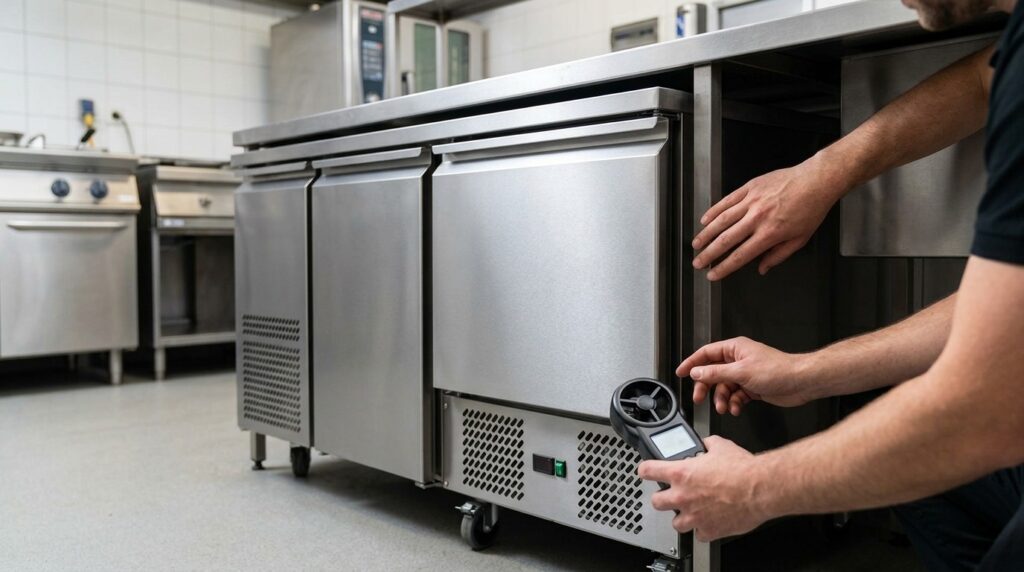
Explore the Unifrost F200SN mini freezer: ideal for compact commercial spaces in Ireland. Perfect for caterers, cafes, and small kitchens.
Unifrost F200SN Mini Freezer: How to Choose, Site, and Run an Undercounter Freezer
If you need reliable frozen storage but you cannot spare floor space, a mini or undercounter freezer is often the difference between smooth service and constant restocking. The Unifrost F200SN sits in the Unifrost Undercounter Freezers family and is designed to give you compact, upright frozen storage that fits into tight kitchens, coffee counters, food trucks, and prep lines.
On this page you work through the buying checks that matter in real operations: whether an undercounter format suits your menu and service volume, what to look for in internal layout and day to day usability, and the tradeoffs versus going to a larger upright or a chest freezer for better storage per cm of frontage. You also get practical guidance on siting the unit away from heat and wash areas, allowing ventilation clearances, planning door swing and counter height, and keeping performance stable with simple cleaning and defrost routines.
If you are pairing refrigeration, we also cover what to confirm before matching this mini freezer with a compatible undercounter fridge setup, plus the early warning signs of a tightly installed unit struggling and the first troubleshooting steps to take before you call for service.
What this Unifrost product type is best for
A Unifrost F200SN-style undercounter freezer is a good fit when you need dependable frozen storage close to service, without sacrificing the floor space and door swing of a full upright. In Irish foodservice, that usually means keeping par stock at station level for quick picks, while your main frozen storage sits in a store room or cold room.
From a food safety point of view, the target is straightforward: frozen food should be stored at -18°C or colder, as set out in the FSAI guidance on chilling, freezing and cold storage. The unit still needs sensible placement and ventilation to hold temperature reliably under real service conditions.
Why an undercounter mini freezer makes sense in real Irish kitchens
In many Irish kitchens, the limiting factor is layout, not demand. An undercounter freezer earns its keep when you need frozen items within a step or two of the pass or prep area, but you cannot justify an upright in a narrow galley, coffee counter, kiosk, or food truck. It also works well as a dedicated “service freezer” for high-turn items, reducing trips to the back freezer and keeping staff on the floor.
Best-fit use cases for an F200SN-style freezer
This format works best when you’re clear on what must live at station level versus what belongs in bulk storage. Typical examples include:
Cafés and delis: pastries, portioned desserts, ice cream tubs, breakfast backups
Small restaurants: limited par of chips, seafood portions, prepped components near the cookline
Bars and function spaces: overflow frozen garnish, purées, event stock without leaving the bar
Caterers: a compact “top-up” freezer for prep days and tight service runs
Where it should sit so it stays reliable (and doesn’t inflate running costs)
Treat an undercounter freezer like line equipment, not a gap-filler. Keep it away from heat and moisture sources such as cookers, fryers, hot-holding, or the warm exhaust from a dishwasher. Extra heat load means longer run times and a higher risk of icing.
If it’s going under a counter, check two practical points before you commit:
Airflow: don’t block vents or box the unit in tight
Door access: make sure it opens fully without clashing with bins, knees, or adjacent equipment. If staff have to fight the door, they will leave it open during service, and compact freezers feel that quickly.
When a mini freezer is the wrong tool
If you need bulk frozen storage, long holds with infrequent access, or you’re constantly trying to fit gastro trays and boxed product, you’ll usually get better storage-per-euro (and less hassle) from a larger upright or a chest freezer.
Also be cautious if the unit is destined for an unheated store, garage, or other variable-temperature space. Many commercial cabinets are designed for stable indoor kitchen conditions, and performance can suffer in colder or fluctuating Irish environments. Check the intended operating conditions before you install.
What “compact” really means for stock planning
An undercounter freezer is for par stock and fast picks, not bulk buying. It works best when pack sizes are predictable and door-open time is short. It will feel small quickly if you’re trying to store bulky cartons, wide tubs, or awkward packaging.
The smoothest setups are planned in advance: decide what must fit, how it will be organised, and what gets replenished from the back freezer. At that point, usable shelf space and internal layout matter more than the headline idea of “mini”.
What capacities, layouts, or outputs matter most
With a mini upright freezer, the decision is rarely about the headline litres. It’s about how much usable frozen storage you get for the footprint, and whether staff can get in and out quickly during service without leaving the door open. Food safety guidance from the Food Safety Authority of Ireland is a good baseline because it reflects day-to-day storage practice, not brochure language. Two cabinets with similar external dimensions can perform very differently depending on internal layout, basket or shelf set-up, and how easily packaging blocks airflow. So it’s more reliable to assess an undercounter model like the Unifrost F200SN by workload and workflow first, then by the quoted capacity.
Capacity that matters in a real kitchen is “usable”, not “quoted”
An undercounter upright like the Unifrost F200SN is rarely treated as a static storeroom freezer. In Irish cafés, pubs and smaller restaurants it’s often a high-turnover “line support” unit for chips, goujons, wings, ice, gluten-free back-up, or portioned desserts. In that context, usable capacity is what you can load while still leaving space for air to circulate and letting staff grab stock without shifting half the contents onto the floor.
Packaging shape is what catches people out. Awkward cartons, tall ice cream tubs and bulky bakery boxes can make a compact upright feel much smaller than expected because you lose space to dead gaps and the need to keep vents clear. If your stock is mostly uniform bags or gastronorm-friendly packs, the same cabinet feels larger because it stacks cleanly and supports FIFO without constant rearranging.
Layout and access are what decide service speed
In a busy kitchen, an undercounter freezer earns its keep by shortening steps and reducing door-open time. The key layout question is simple: can you organise it so peak-time items are always to hand, without rummaging.
Focus on the practical details that affect daily use:
Put high-turnover items at the easiest reach height. Keep slower-moving stock lower down so you’re not holding the door open in the rush.
Plan for the packaging you actually buy. If product arrives in tall cartons, check whether you’ll end up storing it sideways, which wastes space and slows service.
Make FIFO easy. Undercounter freezers turn into “miscellaneous storage” quickly unless labelling and rotation are straightforward.
Allow for decanting. If you portion and decant, keep space for sealed, stackable tubs rather than open bags that spill, frost up, and restrict airflow.
This is also where pairing chilled and frozen storage at the same station can help. It reduces steps, but only if both doors open cleanly and the footprint doesn’t pinch your plating area.
“Output” for a mini freezer means temperature stability and recovery
For an undercounter freezer, “output” is less about freezing power and more about holding temperature despite frequent openings, warm kitchens and tight installs. Frozen storage is typically expected to be held at or below -18°C, which aligns with Food Safety Authority of Ireland guidance on temperature control and is a sensible benchmark when you’re judging whether a compact unit is coping.
What usually hurts performance isn’t cabinet size, it’s the environment: cookline heat, poor ventilation when the unit is pushed tight under a counter, and repeated door openings during peak service. If your operation is high-frequency access, treat recovery time after opening as a deciding factor. Site the freezer away from radiant heat and steam where possible, and make sure it has the ventilation space it needs to cycle normally instead of running flat-out.
If you’re weighing up a mini upright like the F200SN versus a larger upright or a chest freezer, the trade-off is straightforward: how much of your frozen stock needs fast service access, and how much can live in bulk storage that won’t be opened all night.
Which features make a real day-to-day difference
It depends on whether your undercounter freezer is just holding backup stock, or taking constant openings during service. The baseline in Irish food businesses is straightforward: frozen food should be kept at -18°C or colder, in line with the FSAI’s temperature control guidance for caterers: https://www.fsai.ie/business-advice/running-a-food-business/caterers/temperature-control. Once you’re trying to hold that target in a tight undercounter space beside heat, footfall and poor ventilation, the “small” features start to matter more than the headline spec.
Temperature control you can actually manage
Temperature performance is not only what the cabinet can reach. It’s how quickly it recovers after repeated door openings and whether you can set and verify the temperature as part of your HACCP routine.
A built-in display is useful for day-to-day checks, but it is not the same as a calibrated probe check of product or pack temperature. Use the display for quick monitoring, and use a probe when you need to confirm compliance or investigate issues like softening ice cream, freezer burn on pastries, or stock thawing near the front.
Energy use: what actually shifts the bill
Running costs are usually driven by the working conditions around the unit, not the fact it’s “small”. The unglamorous bits make the difference:
Door gaskets that seal properly
Decent insulation
Airflow around stored product, so the evaporator isn’t fighting a solid block of cardboard
If the freezer is wedged into an undercounter void with no breathing room, it tends to run longer and louder because it can’t dump heat properly. That shows up in electricity use and often in temperature drift during busy periods.
A simple buyer check is whether you can install it with the clearances the manufacturer specifies and keep it away from obvious heat sources. In a coffee counter, compact kitchen or food truck, treat ventilation as an operating requirement, not a nice-to-have.
Shelving and storage layout: less “capacity”, more usable space
Undercounter freezers often fall down on usability rather than litres. What matters is whether the layout suits how you actually work: bags of chips, pastry trays, tubs of ice cream, or pre-portioned prep stock.
If staff have to unload half the cabinet to reach the back, you’ll see the cost in temperature swings, ice build-up, and wasted time. Aim for an internal layout that supports your flow, such as keeping high-turn service items closest to hand and separating service stock from bulk backup so the door is open for seconds, not minutes.
Construction and durability: hygiene is the point
In Irish kitchens, “durable” usually means surviving cleaning chemicals, daily wipe-downs, and the odd knock from trays and GN pans. Stainless steel can help for keeping the exterior presentable, but the service-pressure failures are usually more basic: hinges staying aligned, handles staying tight, and door seals holding their shape.
For hygiene and performance, prioritise surfaces and corners that are quick to clean and dry. Dirt around the door gasket, and dust in any accessible air path, becomes a slow efficiency leak that presents as “it doesn’t seem as cold as it used to”.
Small features that prevent big headaches
When you’re comparing undercounter freezers, the details that tend to matter after a few months are the ones that support routine control:
A thermostat you can set and check easily, and that you can back up with HACCP monitoring, keeping frozen storage at -18°C or colder in line with FSAI guidance: https://www.fsai.ie/business-advice/running-a-food-business/caterers/temperature-control
Once you’ve narrowed the feature list, the decision usually comes down to how much stock you genuinely need on hand, and whether the internal layout matches your service pattern, rather than what looks best on a spec sheet.
What installation, maintenance, or running-cost issues to check
Measure the bay properly, confirm ventilation and door swing, and keep the unit away from heat and steam before you commit. Then build a simple routine for cleaning, defrosting and temperature checks so performance does not drift in a tight undercounter space. For running cost, think workload and installation quality, not brochure numbers. If the freezer is boxed into a sealed void or parked beside a hot line, expect higher energy use and more call-outs.
1. Measure the space and plan airflow before you slide it in
Undercounter freezers fail early for boring reasons: no breathing room, blocked vents, or a counter that pinches the cabinet and door. Measure the full bay width, height and depth. Then check the back and sides for anything that will choke airflow, including wall boxing, pipework, kickboards, plinths and tight joinery.
A common trap in Irish kitchens is the “perfect fit” under a fixed counter with no route for warm air to escape. If the condenser cannot dump heat, the compressor runs longer, energy use rises, and you see more icing and temperature swings. If you cannot guarantee airflow, treat that as a layout problem, not a freezer problem.
2. Check door swing, workflow, and service pressure points
Before installation day, stand at the bay and mimic service. Can you open the door fully without clipping a bin, a dishwasher door, or someone working the section? In a galley kitchen, food truck or coffee counter, door swing and clear “grab space” in front of the freezer matter as much as footprint.
Also be realistic about duty cycle. If the door is opening constantly for chips, desserts or pastry, you are using it as a service freezer. That can work, but it increases frost build-up and run time, so you will defrost and clean more often.
3. Position it away from heat, steam, and wet-cleaning zones
Mini freezers behave best when they are not fighting the cookline. Avoid placing the unit beside fryers, chargrills, combi ovens, or under a hot pass where radiant heat lifts the local ambient temperature. Keep it away from dishwashers and glasswashers too, as steam and warm damp air drive icing and shorten the time between defrosts.
If you have no choice, plan mitigations you can maintain: a heat shield, a small layout change, or moving the freezer one bay away from the hottest equipment. That is often cheaper than paying for higher electricity and dealing with stock risk later.
4. Set food-safe temperature checks into your HACCP routine
A compact freezer only stays “commercial reliable” if you monitor it like commercial equipment. Use a probe thermometer for spot checks and keep a simple log, especially after deliveries or deep cleans when the door is open longer than usual.
For frozen storage, you should be aiming to keep food below -18°C. The FSAI uses -18°C as a practical benchmark in its guidance on power outages and frozen food, and it is a useful reference point for your day-to-day checks too (FSAI guidance on power outages and frozen food temperature). If you are regularly seeing warmer readings, look first at install and loading habits before assuming the freezer is faulty.
5. Maintain it for lower running costs: clean, defrost, and avoid overloading
Running cost is mostly about how long the compressor has to run. The main things you control are cleanliness, airflow and door discipline. Keep intake and exhaust areas free of grease and dust, and do not let cardboard, cling film or tray liners creep into vents inside the cabinet.
Defrosting matters more in mini freezers because ice steals already-limited space and reduces heat transfer. If drawers or shelves start sticking, or you see heavy ice on interior surfaces, do not wait for a breakdown. Plan a quiet-hour defrost, move stock to another freezer, and return items only once the cabinet is clean, dry and back at temperature.
6. Watch for early warning signs and troubleshoot the basics first
In a tight undercounter install, the first signs of trouble are usually operational: longer run times, noisier operation, warm cabinet edges, excessive frost, or product softening near the door. Start with checks you can do without tools: make sure the door is closing cleanly, seals are intact and clean, vents are not blocked, and the unit has not been shoved hard against a wall during cleaning.
If the basics are fine and performance is still drifting, stop loading new deliveries until temperatures stabilise and get it assessed. An undercounter freezer is often used for high-value stock in small volumes, so one bad weekend can cost more than doing the install and maintenance properly.
Once those practicalities are sorted, choose capacity and internal layout based on what you genuinely need to hold through an Irish service, not what you hope will fit.
Which Unifrost setup is the best fit
If you’re looking at the Unifrost F200SN mini freezer, the key decision is whether an undercounter freezer suits how your kitchen actually works day to day. You’re swapping storage and “recovery” headroom for better access at the point of use.
An undercounter unit typically suits tight galley kitchens, coffee counters and prep stations where you need frozen stock within one step of service. The trade-off is that these units are more likely to struggle if they’re boxed in with poor ventilation or pushed into a hot corner. A full-height upright freezer gives you more capacity and usually less day-to-day topping up, but it needs clear floor space and can create awkward routes if it ends up in the wrong place.
Both formats can work commercially if they’re installed properly and used within their limits. Your best fit comes down to layout, how often the door is opened, and whether the freezer is for service stock (high-turnover items) or bulk back-up (reserve storage).
How do an undercounter mini freezer and a full-height upright freezer compare overall?
In an Irish café or bar, an undercounter mini freezer is often a workflow choice. It keeps core items close to the pass or coffee station, so staff aren’t crossing the kitchen during a rush. A full-height upright is usually a capacity choice. You get better stock depth, fewer re-fills, and more breathing room when deliveries slip.
The biggest differences show up in the practical details:
Undercounter units are more sensitive to poor airflow. They’re commonly squeezed under a counter, beside a dishwasher, or near a hot line where heat and moisture build up.
Full-height uprights can also suffer in high-ambient areas, but they’re less often trapped in a dead-air cavity where heat has nowhere to go.
From a food safety point of view, whichever format you choose should be treated as a monitored control point in your HACCP routine. The FSAI’s HACCP guidance highlights the need to monitor temperatures and take corrective action when equipment faults or operating conditions push storage out of limits: https://www.fsai.ie/business-advice/running-a-food-business/food-safety-management-system-(haccp)/principles-of-haccp. In practice, ventilation problems tend to show up faster on undercounter units as longer run times, soft product, or heavier ice build-up.
Undercounter mini freezer (Unifrost F200SN)
The F200SN makes sense when you need frozen storage exactly where the work happens. Typical examples include a small restaurant keeping chips, frozen sides and desserts near the fryer line, or a café holding pastries and dietary-specific items under the counter to protect speed of service and reduce staff steps.
It also works well when you deliberately split service stock from bulk stock. A common setup is an undercounter freezer at the station for high-frequency items, with a larger freezer elsewhere for reserve. That way you’re not hammering one door all day.
Where buyers get caught is nearly always the physical fit. Before you commit, check:
Counter height and clearance (including levelling feet and airflow space)
Door swing into walkways and work zones
Ventilation once installed, not just on day one. The unit needs real breathing space, not a gap that disappears when the joiner closes it in.
Full-height upright freezer
A full-height upright is usually the better choice if you want a single, organised “back-of-house frozen bank” that staff can run consistently. For hotels, busy pubs doing food, and kitchens with batch prep, the extra capacity often prevents mid-week shortages and reduces the pressure to constantly reorganise.
It’s also the cleaner expansion path. If you start with a mini freezer and later add a full-height unit, the mini can still earn its keep as a station freezer, while the upright becomes your delivery-day buffer and longer-term holding.
If you’re deciding between “one big upright” versus “mini plus something else”, think about where the door openings happen. Keeping high-traffic access at the station and low-traffic bulk access away from heat and congestion generally improves performance and reduces complaints about inconsistent freezing.
Which is best for you?
Choose an F200SN-style undercounter setup if frozen items are part of your service rhythm and you’re short on floor space, especially in a food truck, tight galley, or coffee-led operation where every step costs time. Choose a full-height upright if you need fewer deliveries, higher par levels, and less risk of running out, or if your menu depends on a wider range of frozen SKUs that need clearer organisation.
If you’re unsure, decide based on stock movement rather than litres on a spec sheet: what must be within arm’s reach during service, and what can live in bulk storage? Once that’s clear, it’s much easier to choose capacity and layout that match your menu and your peak trading pattern.
Unifrost mini freezer FAQs
What is the capacity and overall size of an undercounter / mini freezer?
Most undercounter (mini) upright freezers are designed to fit beneath a standard catering worktop, so the overall height is typically in the worktop-under zone (around 850 mm), with a compact footprint that is commonly about one door wide.
Capacity varies a lot depending on insulation thickness and internal layout, but as a practical guide, many commercial undercounter freezers fall into the ~100 to 200 litre bracket. If you are specifying for a tight counter run, confirm three things on the product datasheet: overall height (feet/castors included), door swing clearance, and usable internal volume rather than just gross litres.
Is this mini / undercounter freezer suitable for commercial kitchens or just light-duty use?
The Unifrost F200SN sits in Unifrost’s Undercounter Freezers family and is positioned as a compact unit intended to maximise premium kitchen space while providing reliable frozen storage, which is exactly what most cafés, takeaways, prep kitchens and small restaurant stations need.
For suitability, focus less on the word “mini” and more on your working conditions:
Commercial use case: frequent door openings during service, hygiene cleaning routines, and being built into a line-up.
Where undercounter units are not ideal: very high-volume frozen storage (you may outgrow it quickly), or harsh locations with poor ventilation or high ambient heat.
If your operation needs bulk frozen holding, a larger upright or chest freezer usually delivers more storage per euro and per kWh.
How energy-efficient is the freezer and what are the running costs likely to be?
Running cost depends on three variables you can control: energy rating/kWh figure, ambient temperature, and how it is installed and used (door opening frequency, loading patterns, and ventilation).
A practical way to estimate cost before you buy is:
Annual cost (€) = (kWh/year from the energy label or spec sheet) × (your electricity unit rate)
To keep an undercounter freezer efficient in day-to-day use:
Leave the recommended ventilation gaps and do not box the unit in tight.
Keep the condenser area clean (dust and grease forces longer run times).
Avoid placing it beside ovens, fryers, dishwashers, or direct sunlight.
Let hot food cool before loading, and avoid overpacking so air can circulate.
Is there a matching undercounter fridge version to pair with this freezer?
Yes. Unifrost typically offers matching undercounter fridges designed to sit alongside undercounter freezers as a consistent pair under the same counter run.
When pairing, confirm that both units match on:
Overall height (so the worktop line stays level)
Frontage width (so doors and handles align)
Ventilation requirements (so neither unit is starved of airflow)
If you tell us your available space and what you are storing, we can point you to the closest like-for-like Unifrost undercounter fridge to match the F200SN footprint and workflow.
What are the key installation steps and common mistakes to avoid?
Key steps for installing an undercounter mini freezer:
Measure the opening properly: width, depth, and height, plus the door swing and handle clearance.
Plan airflow: follow the manufacturer’s ventilation guidance and keep the air path to the condenser unobstructed.
Level the cabinet: adjust feet/castors so the door seals evenly and closes reliably.
Use a dedicated power point: correct plug type, no overloaded extension leads, and keep the socket accessible.
Commission before service: allow it time to pull down to temperature before loading stock.
Common mistakes that cause poor performance and call-outs:
Pushing it fully tight under the counter with no breathing room.
Installing beside heat and steam sources (fryers, ovens, dishwashers).
Blocking the condenser area with packaging, cleaning chemicals, or kickboards.
Overloading shelves/baskets so cold air cannot circulate.
Ignoring cleaning: grease and dust build-up makes the unit run longer and can shorten component life.
Next step: match the right Unifrost refrigeration to your layout
If you are comparing a Unifrost mini freezer with other undercounter, upright, or chest options, the quickest way to narrow it down is to start with your available footprint, door swing clearance, and the stock you need to hold between deliveries.
When you are ready to compare current buying options across freezer formats, browse Caterboss’s Frozen Storage category or contact Unifrost.ie for tailored advice on selecting the best fit for your kitchen line-up.
Related Unifrost guides
Compare models, maintenance advice and support information related to this topic.
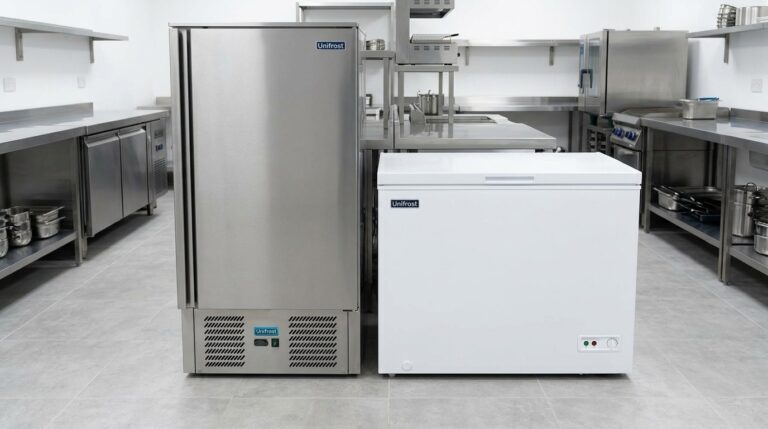
Unifrost F410SS vs CF500HS: First-Time Buying Layout Guide for Irish Kitchens
Discover the right Unifrost freezer for Irish kitchens. Compare the F410SS upright and CF500HS chest models for layout and efficiency options.
Read guide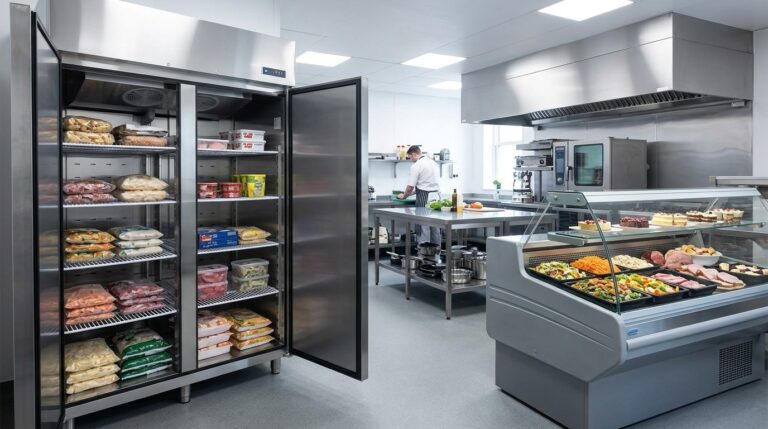
Unifrost Upright Freezer and DCF Deli Counter Workflow Planning for Irish Hotel Kitchens
Efficient planning of Unifrost freezers and deli counters for Irish hotel kitchens. Optimize workflow and service.
Read guide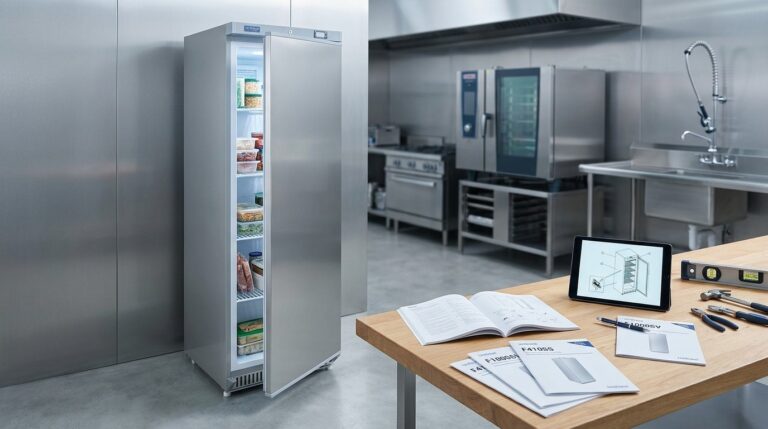
Unifrost Upright Freezer Manuals & Installation Support
Task-first manual downloads, controller help, startup checks, and troubleshooting routes for Unifrost upright freezers.
Read guideCompare Unifrost freezer options on Caterboss
For current product options, pricing and availability, continue to Caterboss.