
Household Ice Machine vs Commercial: Key Differences and Considerations for Irish Businesses
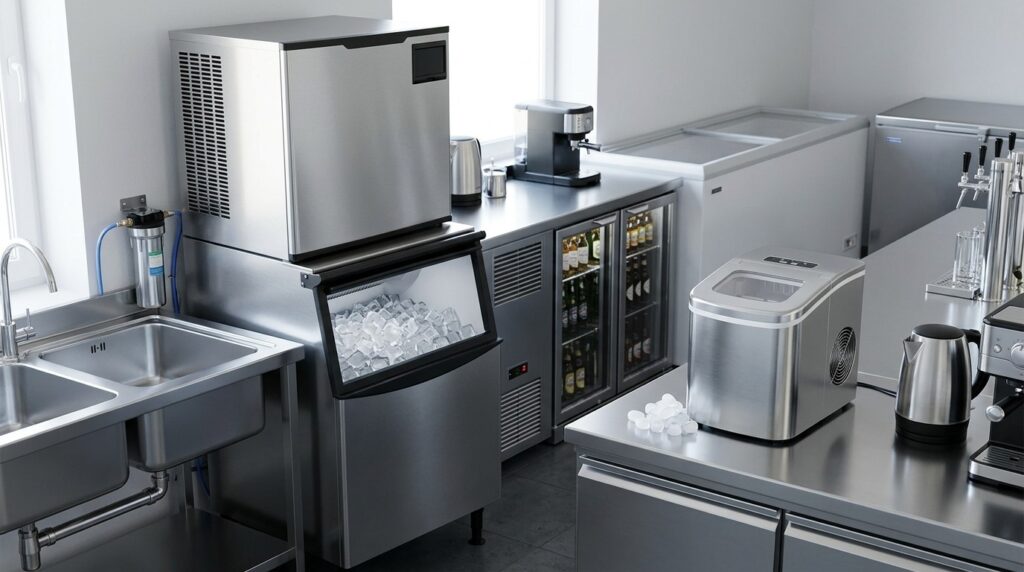
Discover the key differences between household and commercial ice machines for Irish hospitality. Practical buying advice included.
Household vs Commercial Ice Machines: What Irish Hospitality Buyers Need to Check (Unifrost Guide)
If you run a bar, café, restaurant, hotel, or event setup, choosing between a household ice maker and a commercial ice machine affects service speed, drink consistency, hygiene controls, and total cost of ownership. A domestic unit can look like a quick fix, but peak demand, recovery time, cleaning routines, and support expectations are very different in a trading environment.
In this guide you compare the real-world differences that matter on shift: daily ice demand, duty cycle and recovery during rushes, storage requirements, noise and placement, and what changes when you move from plug-in countertop units to plumbed-in commercial machines with proper water filtration. You also get practical checks on food safety risk, warranty and insurance implications, and how to shortlist a Unifrost option for your venue, from self-contained cube makers (U40‑15, UB25‑15) to modular cube heads (U165‑125, U230‑175) with matching ice bins (B175, B275, B375) and filtration kits (SA30007, I40002‑CN, SA950750).
The Core Differences Between Household and Commercial Ice Machines
A household ice machine is a light-duty appliance for small, occasional batches. It is usually a plug-in unit with a small reservoir and a short run time. A commercial ice machine is built to produce and hold ice reliably through long trading hours in bars, cafés and restaurants, typically with a fixed water supply, drainage, and a higher duty cycle.
In day-to-day terms, the difference shows up in three places: how quickly it recovers during peak service, how it copes with warm rooms and restricted airflow, and how straightforward it is to clean and manage as a food item.
Duty cycle, recovery, and peak service reality
Countertop domestic units can be fine for a few rounds at home. In a busy venue they tend to fall down when the room is warm, the lid is opening constantly, and ice is being pulled every few minutes.
In Irish hospitality, the real question is not “will it make ice?”, it’s “will it keep up from 8pm to close on a Friday without someone minding it all night?”.
Unifrost’s current commercial ice machine range includes modular cube makers (U165‑125, U230‑175) with matching B175/B275/B375 ice bins, and self-contained cube makers (U40‑15, UB25‑15). The format matters:
Modular head + bin tends to suit steadier, higher-volume demand where storage and continuous production matter.
Self-contained machines suit simpler installs and tighter spaces, where volumes are more predictable and you want the bin and machine in one footprint.
Installation and services: plug-in convenience vs plumbed-in control
A household ice maker is generally “plug in and fill the tank”. A commercial ice machine is normally installed like any other piece of service equipment: a proper water feed, a suitable drain, and enough ventilation space so it can dump heat properly.
That is not extra hassle for the sake of it. Stable services are what keep production consistent, reduce nuisance faults, and make ice production something you can rely on during service rather than a constant workaround.
Hygiene and food safety expectations in Irish premises
In a bar or kitchen, ice is food. Your controls need to reflect that, including potable water, clean ice-contact surfaces, and handling practices that avoid hand and glass contamination. The FSAI guidance is clear on basics such as using potable water for making ice, as set out in the FSAI Guide to Good Hygiene Practice.
Domestic units often end up used in ways that are hard to stand over in a HACCP routine when things get busy: topping up by hand, storing the scoop in the bin, or letting cleaning slide because “it’s only ice”. Commercial machines are not self-cleaning either, but they are designed to be cleaned and maintained as part of normal closing and weekly routines.
Water quality, limescale, and why filtration matters more than people think
Water hardness varies around Ireland. Limescale and sediment are not just a “taste” issue, they directly affect reliability by building up in water circuits and on heat transfer surfaces.
Unifrost supports the commercial range with matching filtration kits such as SA30007, I40002‑CN and SA950750. In practical terms, filtration is about protecting the machine, keeping output more consistent, and reducing the frequency of scale-related callouts.
If you are currently using a domestic unit in a pub or café, this is often the point where the numbers stop adding up. When you are descaling more than you are serving, the machine is usually mismatched to the job.
What “commercial” means in day-to-day use
Capacity and recovery: built to produce steadily under continuous draw, not make a small batch then pause.
Build and serviceability: designed to be cleaned, maintained and repaired in place, rather than treated as disposable.
Tolerance for real conditions: expected to run in warm back bars and kitchens, as long as ventilation and services are right.
Process control: plumbed water, drainage and filtration make hygiene and output more consistent when staff are under pressure.
Once you are clear on the differences, the useful next step is matching the machine type to your service pattern: peaks, trading hours, available space, and where the unit will actually sit.
Performance by Venue: Household vs. Commercial Ice Machines
Choosing between a household and a commercial ice machine comes down to one thing: is ice an occasional extra, or a core part of service that has to keep up for the full trading day?
The practical difference is duty cycle and recovery. Domestic units are built for light, stop start use. Commercial machines are built to produce consistently, with enough storage to protect you during a rush. In real venues, household machines usually fall short on two fronts: peak output and holding capacity. That is when staff end up waiting, rationing ice, or buying bagged ice to get through a weekend.
Both types can make usable ice. The right choice for an Irish bar, café, or restaurant is usually about peak hour demand, available space for storage, and whether you can commit to proper cleaning and water treatment.
How do household and commercial compare overall?
In a café doing mostly takeaway coffee, ice can be a summer driven add on. In a cocktail bar, hotel bar, or busy pub, running out of ice mid round is more like running out of clean glassware. It stops service.
Most domestic countertop machines work in small batches with limited onboard storage. That can be fine for a few buckets a day, but it struggles when you need a steady flow and a reserve that will not disappear in one peak.
Commercial ice machines are designed around continuous production and safer day to day handling. From a compliance point of view, remember ice is treated as food. It should be made from potable water and handled hygienically under your HACCP controls, as set out in FSAI guidance on good hygiene practice, including “use only potable water for making ice”.
Household ice machines (where they do and don’t work)
A domestic countertop unit can be a workable stopgap for very light ice use, or a short term backup if your main machine fails in a heatwave.
Where they tend to let operators down is predictable: limited storage, slower recovery when service ramps up, and the reality that a domestic unit still needs regular cleaning, refilling and minding. In a live service environment, that job often falls between stools.
A small café may cope outside peak summer. A pub on a sunny bank holiday, or a restaurant selling soft drinks, cocktails and iced coffees, will usually outgrow a household unit quickly. Fridge freezer ice makers are even more vulnerable, because they are competing with normal freezer recovery and constant door openings.
Commercial ice machines (Unifrost context for bars, cafés, restaurants)
Unifrost’s current commercial range includes self-contained cube makers (U40‑15, UB25‑15) and modular cube makers (U165‑125, U230‑175) that pair with dedicated ice bins (B175/B275/B375).
In practical terms:
Self-contained units suit smaller footprints and simpler installs, where you need production and storage in one box.
Modular head plus bin setups suit higher volumes, because you can build in storage capacity rather than relying on a small internal bin.
Operationally, the bin matters as much as the ice maker head. The real question in a busy bar is not just “how much can I make per day?”, it is “how much can I have ready at 7pm when the place fills up?”. A proper bin gives you a buffer when demand spikes faster than any machine can recover.
Water treatment is also part of the commercial reality, especially where downtime costs you sales. Unifrost supports matching water filtration kits (including SA30007, I40002‑CN, SA950750). The logic is straightforward: more consistent water helps reduce scale and off tastes, and it makes cleaning schedules easier to stick to.
Which is best for you (by venue pressure and storage needs)
Base the decision on your busiest hour and whether you need a buffer of stored ice, not on what a machine can do on a quiet day.
If you only sell the odd iced drink and you can tolerate waiting for batches, a household unit can cover light, occasional needs. Treat it as a workaround, not a long term equipment choice.
If you run a pub, cocktail bar, hotel bar, or a restaurant with steady soft drinks and cocktails, you will usually want a commercial machine with proper storage so you are not trying to make ice in real time during the rush.
If you are upgrading from a household machine, the choice is often between a self-contained cube maker (U40‑15, UB25‑15) where space is tight, versus a modular head and bin setup (U165‑125 or U230‑175 with B175/B275/B375) where volume justifies dedicated storage.
If you rely on ice for events, high volume drinks, or food display, treat storage as a layout constraint early. The footprint of a bin, plus ventilation and access for cleaning, will dictate where the machine can realistically go.
A quick sanity check: work backwards from your busiest hour, estimate how many drinks need ice in that window, then decide whether you want to cover that peak through production alone or production plus stored reserve.
Operational Considerations for Day-to-Day Use
In a busy Irish bar or café, a household ice machine quickly turns into a staffing and food-safety pinch point. It needs frequent manual top-ups, more hands-on cleaning, and it becomes a shared touchpoint during service. That is awkward to control because ice is treated as food. The FSAI notes (in guidance referencing Regulation (EC) No 852/2004) that ice in contact with food must be made from potable water and handled hygienically, which is harder to guarantee when staff are repeatedly opening lids and scooping during a rush.
Source: FSAI GN 16 (Rev 2)
Over time, the practical impact is usually predictable: inconsistent ice supply at peak, and more time spent “keeping it going” instead of serving. You see it most in warm back bars, tight undercounter spaces, or where different staff rotate through the same station.
Cleaning and maintenance reality (and who ends up doing it)
With a domestic countertop unit, the pattern is lots of small interventions: refill, empty meltwater, wipe, restart. None of that is difficult, but it is constant, and it tends to land on whoever is already under pressure.
Commercial ice machines still need cleaning, but the work is easier to plan into your HACCP routine because the setup is usually more appropriate to the job: plumbed-in water, proper drainage, and the option to manage water quality with filtration. If you are running in a hard-water area, filtration and scheduled descaling are not “nice to have”, they are what keeps output and hygiene consistent. Unifrost supplies matching filter kits (SA30007, I40002‑CN, SA950750) where filtration is part of the spec.
A simple baseline routine that suits most Irish hospitality sites:
Daily: keep the scoop clean and stored hygienically; wipe high-touch areas; quick visual check of the bin for spillage or foreign objects.
Weekly: empty and wash the bin interior and contact surfaces; sanitise in line with your chemical supplier’s instructions.
Periodic (site-dependent): descale and sanitise the water system more often in hard-water locations; change filters on schedule so the machine is not “protected by wishful thinking”.
Service flow at peak (why recovery time matters more than “rated output”)
In service, the key difference is not just how much ice a unit can make on paper. It is whether you can access it quickly and hygienically without breaking your rhythm behind the bar or on the pass.
Household machines tend to create friction at peak because they produce in small batches and need attention. Commercial units are built around continuous duty and a simple workflow: open bin, scoop, close, back to service. That difference matters more than you think when tickets are stacking and the floor is full.
If you are currently “getting away with” a domestic unit, the tipping point is usually when someone is being pulled off coffees, pints, or cocktails to babysit ice, or you start buying emergency bags because the machine cannot recover between rounds.
Food safety, compliance, and accountability (including warranty and insurance risk)
Because ice is treated as food, the practical question is whether you can consistently show potable water use, hygienic handling, and documented cleaning when asked. The more manual handling your setup forces, the more the risk moves from equipment failure to process failure. That is exactly the kind of gap an inspection will highlight when looking at cross-contamination controls and cleaning frequency.
A commercial machine also makes it easier to standardise “how we handle ice here” across different shifts. In real venues with turnover, part-timers, and late-night closes, the safest system is the one that does not rely on perfect habits.
That is why the household vs commercial decision usually comes down to service pressure and workflow, not just the price tag or countertop convenience.
Choosing the Right Ice Machine for Your Business Type
Choose an ice machine the same way you choose any piece of back-of-house kit: size it for peak service, match it to how you actually use ice, and make sure the building can support it (water, drainage, ventilation). Then put cleaning and filtration on a rota. The best machine on paper will still let you down in a busy Irish bar if it is treated like a kettle.
1. Measure demand the way your venue really trades
Start with service reality, not a brochure number. A cocktail-led bar burns ice very differently to a café doing a few iced americanos and the odd bottle bucket.
Do a simple 7‑day check:
Count ice drinks at your busiest hour and busiest day.
Add non-drinks use (seafood display, ice baths for quick chilling, event buckets).
Note your pattern: do you run out mid-service, or do you find you are empty the next morning because production never catches up?
If the issue is “we always run out between 9pm and 11pm”, you need better recovery and more storage. If it is “we only run out when someone forgets”, fix the workflow before you buy a bigger machine.
2. Match the machine format to workflow (not just daily volume)
Within Unifrost’s current commercial range, you are typically choosing between:
Self-contained cube makers (e.g. U40‑15, UB25‑15)
Modular cube maker heads (e.g. U165‑125, U230‑175) that sit on a dedicated ice bin (B175/B275/B375)
Think of self-contained as the simplest install with a compact footprint. Think of modular as the scalable option when storage buffer and peak recovery matter.
Typical fits:
Coffee shop, deli, small daytime café: a self-contained cube maker (U40‑15 or UB25‑15) is often the sensible step up from a household unit because it is designed for continuous trading, not occasional use.
Neighbourhood pub, food pub, modest cocktail menu: if you are regularly filling wells and buckets and Fridays/Saturdays expose the shortfall, a modular head (e.g. U165‑125) with a correctly sized bin (B175/B275/B375) gives you a working buffer.
Cocktail bar, late-licence venue, hotel bar, function load: modular usually makes life easier. The bin becomes your “ice bank” so the bar is not relying on real-time production mid-rush.
Event operators with portable bars: a household countertop machine can act as a small back-up for one station, but it is not a reliable plan A. For repeatable output and safe storage, you plan around commercial production and proper bin storage or insulated transport.
A practical rule: if ice is going into every second drink for a sustained period, you need a machine that can keep producing while you are pulling from storage, not one that only catches up after closing.
3. Confirm water, drainage, and who is responsible for what in the building
Commercial ice machines are normally plumbed in. That is a big operational advantage, but only if the basics are right.
Check before you choose a model:
Water supply: a reliable feed you can isolate with a shut-off valve.
Drainage: a safe route for waste water that will not back up during trading.
Water quality and responsibility: in Irish commercial premises, the owner must maintain the building’s internal pipework so it does not create a water quality risk under the European Union (Drinking Water) Regulations 2014.
Filtration: plan filtration from day one rather than waiting for scale, taste issues, or blocked circuits. Unifrost support matching filtration kits such as SA30007, I40002‑CN and SA950750.
If your “water point” is currently just a domestic under-sink feed, you may still be able to connect a commercial machine, but only if you can isolate it properly, keep pressure stable, and provide suitable drainage. If you cannot, you will spend on installation and still be stuck with downtime.
4. Choose an upgrade path that actually fixes household-machine problems
When venues upgrade from a household unit, the pain points are usually consistent: inconsistent output at peak, manual filling, poor storage hygiene, and staff time lost babysitting it.
Use this logic:
Household countertop is only acceptable as a short-term stopgap or a very light-demand back-up. Manual filling and poor storage practices are where trouble starts.
Unifrost self-contained (U40‑15, UB25‑15) is the usual first “proper bar machine” step when you want plumbed-in supply and predictable output without the complexity of a separate bin.
Unifrost modular head plus bin (U165‑125 or U230‑175 with B175/B275/B375) is the step when running out has a real trading impact, or when you need a larger ice bank ready before service.
If you are torn between self-contained and modular, decide based on storage buffer. If you need ice ready before the rush, modular wins more often than not.
5. Put cleaning and monitoring into the rota, not “when we get a chance”
An ice machine is a food-contact appliance. The risk is not just taste. The risk is that nobody owns it until there is a smell, slime, or a complaint.
Make it routine:
Daily: keep the scoop clean, store it out of the ice, and keep hands and glass out of the bin.
Weekly: wipe external air intakes and check around the bin area for spills and sticky residue.
Scheduled deep clean: follow the manual’s cleaning and sanitising steps and record it as part of HACCP.
If the machine will sit near customers, factor noise and heat into the choice and location. Front-of-house can work, but only if ventilation is protected and cleaning access is realistic for your team.
Once you are clear on venue type, storage buffer, and install constraints, it becomes much easier to compare options on how they perform under pressure, rather than getting stuck on “domestic vs commercial” as a label.
Integrating Unifrost Ice Machines into Your Refrigeration Strategy
Choosing an ice machine is a workflow and risk decision, not just a “kilos per day” calculation. In Irish hospitality, ice sits inside your HACCP controls in the same way as chilled food does. It is made from potable water, handled during service, and can be a contamination route if the basics slip.
Ice demand is also spiky. That means your machine, your storage bin, and the cold storage around it need to be planned as one system. Get it wrong and you do not just run out of ice. You create heat, water on the floor, and extra cleaning in areas that are already under pressure.
Where an ice machine fits in the cold chain day to day
In a busy bar or café, the ice machine is a production appliance feeding front-of-house. Plan it like a key fridge: access route, peak-time reach, cleaning access, and heat rejection.
A practical way to think about it:
Ice production is the supply
The bin is the buffer
Your service fridges and bottle coolers dictate the draw-down during peaks
If you rely on trays or domestic countertop units, you often end up “storing” ice wherever there is space. In practice that can mean a freezer drawer beside open food, or bags being opened and handled too often. FSAI guidance treats water intentionally incorporated into food as a food ingredient, which includes ice. That is why controls around water source, handling and contamination prevention matter, not just temperatures on a probe sheet (FSAI potable water factsheet).
Choosing the Unifrost format that matches your site constraints
Unifrost’s current ice machine range covers two common Irish hospitality setups:
Modular cube makers (U165‑125, U230‑175) paired with matching bins (B175/B275/B375) when you need higher output and more buffer for peaks.
Self-contained cube makers (U40‑15, UB25‑15) when footprint and simplicity matter and you want production and storage in one unit.
Let the format be driven by your layout, not just capacity. A modular head plus bin is often easier to scale and can suit high-volume service, but it needs enough space and airflow, particularly where it sits beside heat-producing kit (glasswashers, coffee machines, underbar refrigeration). A self-contained unit can be the cleaner fit where space is tight, but you still need practical clearance for ventilation and for hygienic access to the bin.
Water supply, filtration, and why it affects reliability as much as hygiene
Treat a plumbed-in ice machine like any equipment that depends on consistent potable water quality and pressure. Filtration is not just about taste. It helps reduce scale and sediment that drive breakdowns and increase cleaning frequency, particularly in hard-water areas.
Unifrost supports this with matching water filtration kits, including SA30007, I40002‑CN, and SA950750. The point is operational: a cleaner, more consistent feed helps keep ice quality steady and makes maintenance more predictable.
If your premises is affected by a Boil Water Notice, you also need a plan for ice production and any drinks service relying on it. Food businesses are expected to follow public health advice in those scenarios (Uisce Éireann Boil Water Notice guidance).
Installation planning that stops ice becoming a hot-corner problem
Commercial ice machines reject heat into the room and can run for long stretches. If a unit is boxed into a tight back bar void, it can raise the local ambient temperature and make nearby fridges and bottle coolers work harder. You will see it later in higher running costs and slower recovery during peaks.
Keep the integration simple and realistic:
Place it for service, so staff can scoop without crossing the busiest path, but also so the bin can be emptied and sanitised without dismantling half the bar.
Allow ventilation clearance, so heat can escape rather than cycling back into your back bar refrigeration.
Plan drainage properly, including meltwater and cleaning water, so you are not washing down across the same floor area used for kegs, crates and deliveries.
Keep service items reachable, especially the water feed, filter head and isolator. If an engineer cannot access them quickly, downtime usually lasts longer than it should.
How this ties back to domestic vs commercial decisions
The biggest operational change when you move from domestic ice to commercial is that you stop batching and start producing continuously, with a proper buffer in a bin. That is what a good refrigeration strategy is meant to do: reduce last-minute labour, reduce risky handling, and protect service at the busiest hour of the week.
In practice, the usual step-up is a self-contained cube maker (U40‑15 or UB25‑15) where space is tight, or a modular head plus bin (U165‑125 or U230‑175 with B175/B275/B375) where you want higher duty and fewer emergency runs for bagged ice. Once you treat ice as part of the cold chain, the domestic vs commercial comparison becomes clearer in real venues under real pressure.
Frequently asked questions
What is the difference between a household ice maker and a commercial ice machine?
A household ice maker is built for occasional, low-volume use and convenience. It is typically a small, plug-in unit with limited storage and a light-duty cycle.
A commercial ice machine is designed for 24-hour, high-duty operation in hospitality. The big differences that matter in practice are:
Duty cycle and recovery: commercial units are built to keep producing through peak service, not just “top up”.
Foodservice build and hygiene: components, access for cleaning, and drain/overflow handling are designed for commercial environments.
Installation: many commercial machines are plumbed-in and intended to be paired with proper filtration and drainage.
Serviceability and support: commercial machines are built to be maintained, descaled, and serviced rather than treated as disposable.
In the Unifrost range, examples include self-contained cube makers (e.g. U40‑15, UB25‑15) and modular cube makers (e.g. U165‑125, U230‑175) that sit on matching bins (B175/B275/B375).
How much ice do I actually need per day for my bar, café, or small restaurant?
Start with your peak-service reality, not an average day. A practical way to estimate is:
Count cold drinks during the busiest 2–3 hours (soft drinks, spirits + mixer, cocktails, iced coffees, water jugs).
Multiply by a “typical ice use” guide:
Spirits + mixer / soft drink: about a full glass of ice
Cocktails: often more than one glass worth (shaker + serving)
Iced coffee / frappe style drinks: typically heavy ice
Add 10–20% buffer for spillage, melting, and staff usage.
Check whether you also need ice for display/seafood, bucket service, or events, which can change the number completely.
If you regularly run out on Fridays and Saturdays, you usually need more production or more storage (bin capacity), not just “faster” ice. For many venues, moving from a countertop unit to a plumbed commercial machine is mainly about consistent recovery and enough stored ice for peak bursts.
Can I use a domestic/household ice maker in a commercial bar or café?
You can physically use one, but it is rarely a good operational choice.
In practice, domestic units tend to fall down in three places:
Peak demand: they struggle to keep up when several staff are pulling ice constantly.
Hygiene control: it is harder to maintain a consistent cleaning schedule and documented routine on appliances not designed for commercial cleaning.
Downtime risk: if it fails mid-weekend, you often have no quick fix other than buying bagged ice.
If you are only using ice occasionally (for a small number of drinks per day) a domestic unit can act as a temporary stop-gap. For any regular bar or café service, a commercial machine with the right storage and filtration is usually the more reliable and cost-effective route.
What kind of water filter or treatment do I need for a commercial ice machine?
For most Irish hospitality sites, you want a filter setup that addresses two issues:
Taste/odour and sediment: helps keep ice clear and improves drink quality.
Scale control (hardness): reduces limescale that can shorten service intervals and cause breakdowns.
Unifrost supports matching water filtration kits, and the correct choice depends on your incoming water and how much ice you make. Examples of compatible kits used with Unifrost commercial machines include SA30007, I40002‑CN, and SA950750.
Practical buying guidance:
If you do not know your water hardness, start by getting a water test or asking your service installer what they see locally.
Choose a filter system that is sized for your expected usage, not just the machine model.
Treat filtration as part of the installation, not an optional add-on. It typically pays back in more consistent ice quality and less scale-related downtime.
What are the risks to food safety, insurance, and warranty when using a household ice machine in a commercial setting?
The main risks are about control and compliance, not just performance.
Food safety and hygiene: Ice is a food product. If a unit is difficult to clean properly, has inconsistent cleaning routines, or is being topped up by hand from unknown containers, you increase the risk of contamination.
Documentation and inspections: In a commercial premises you may need to show cleaning schedules, maintenance records, and that equipment is suitable for foodservice use.
Insurance exposure: If there is an incident (illness allegation, slip from meltwater, electrical issue), insurers may look at whether equipment was fit for purpose and installed appropriately (including drainage and water supply).
Warranty limitations: Many domestic appliances are warrantied for household use. Using them in a business setting can lead to warranty refusal if something fails.
If you are operating commercially, a purpose-built commercial machine plus filtration, correct installation, and a simple written cleaning routine is the safest route.
How should I size a Unifrost ice machine for different hospitality operations?
Size for two things: (1) how much ice you need during peak periods, and (2) how much you need to have stored to ride through rushes.
A practical way to choose within the Unifrost range:
Lower-to-moderate ice demand, limited space: consider a self-contained cube maker (e.g. U40‑15 or UB25‑15) where production and storage are in one footprint.
Regular cocktail service, busy bars, or venues that repeatedly run out of ice: consider a modular cube maker head (e.g. U165‑125 or U230‑175) paired with a matching ice bin (B175/B275/B375). This is often the best path when you need more stored ice and better peak resilience.
Operational tips that prevent undersizing:
If you host events, add capacity for those nights, not just weekday trade.
If you are buying modular, choose the bin based on how much ice you need “on hand” at 6pm Friday, not just daily production.
Always include the correct water filtration kit (e.g. SA30007, I40002‑CN, SA950750) in the plan to protect output consistency and reduce scale issues.
If you share your busiest-hour drink count and whether you need bucket service or events cover, you can usually narrow it down quickly to self-contained versus modular plus the right bin size.
Next step: shortlist the right Unifrost ice machine
If you are weighing up household ice machine vs commercial for day-to-day hospitality use, the quickest way to decide is to shortlist by service style (coffee, mixed drinks, cocktails, events) and whether you need self-contained storage or a modular head + bin setup.
Browse the current range of Unifrost Commercial Ice Machines to compare the available Unifrost models and matching ice bins and filtration options, then build your shortlist for install.
Related Unifrost guides
Compare models, maintenance advice and support information related to this topic.
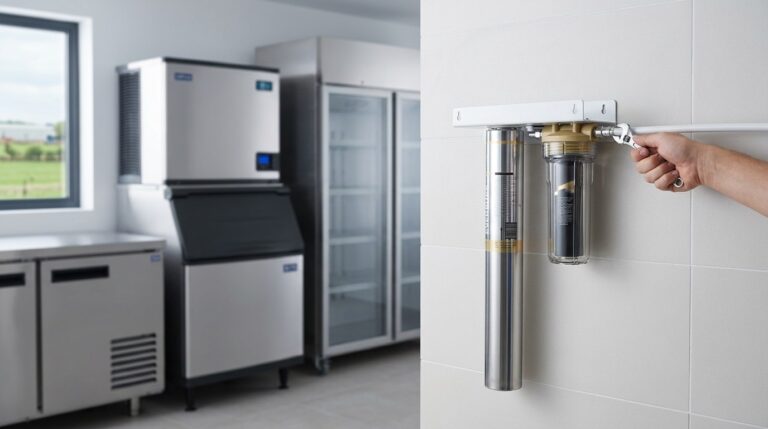
Unifrost Ice Machine Water Filter Scale Prevention Guide
Discover optimal water filter maintenance for Unifrost ice machines to prevent scale and enhance performance.
Read guide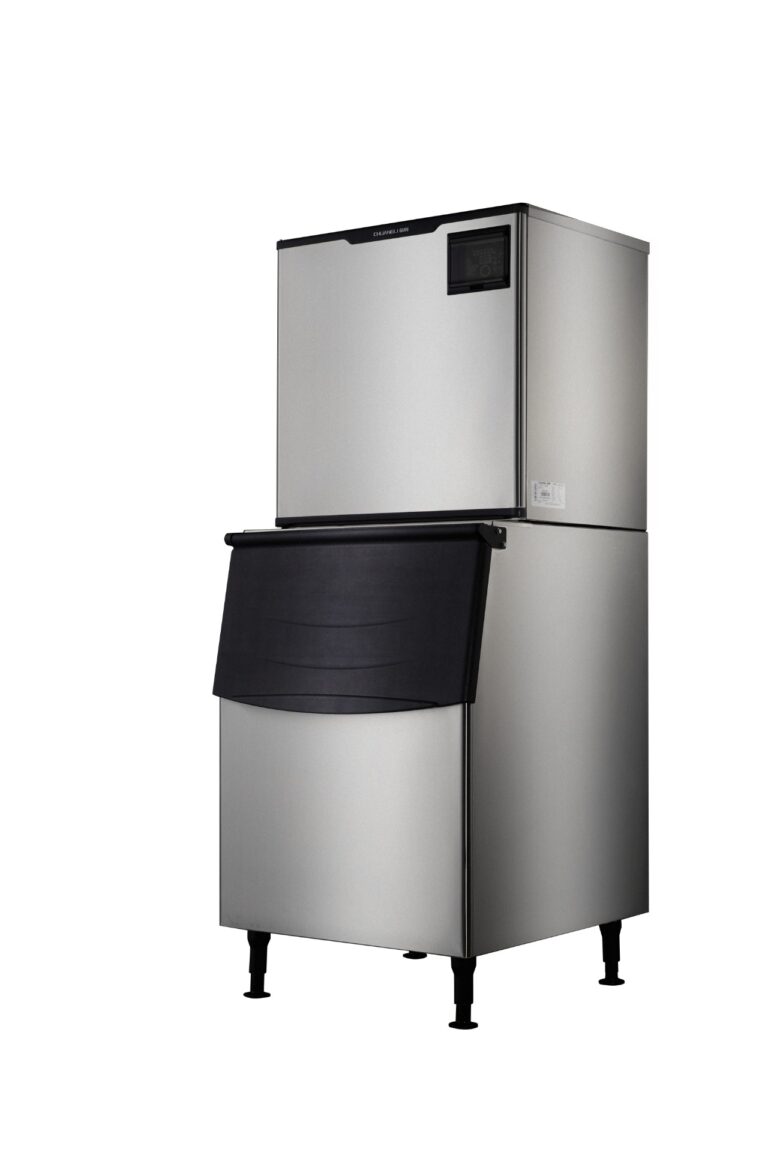
Unifrost Compact Ice Makers: A Comprehensive Guide
Discover efficient Unifrost compact ice makers for Irish bars. Learn about capacity, installation, and maintenance needs.
Read guide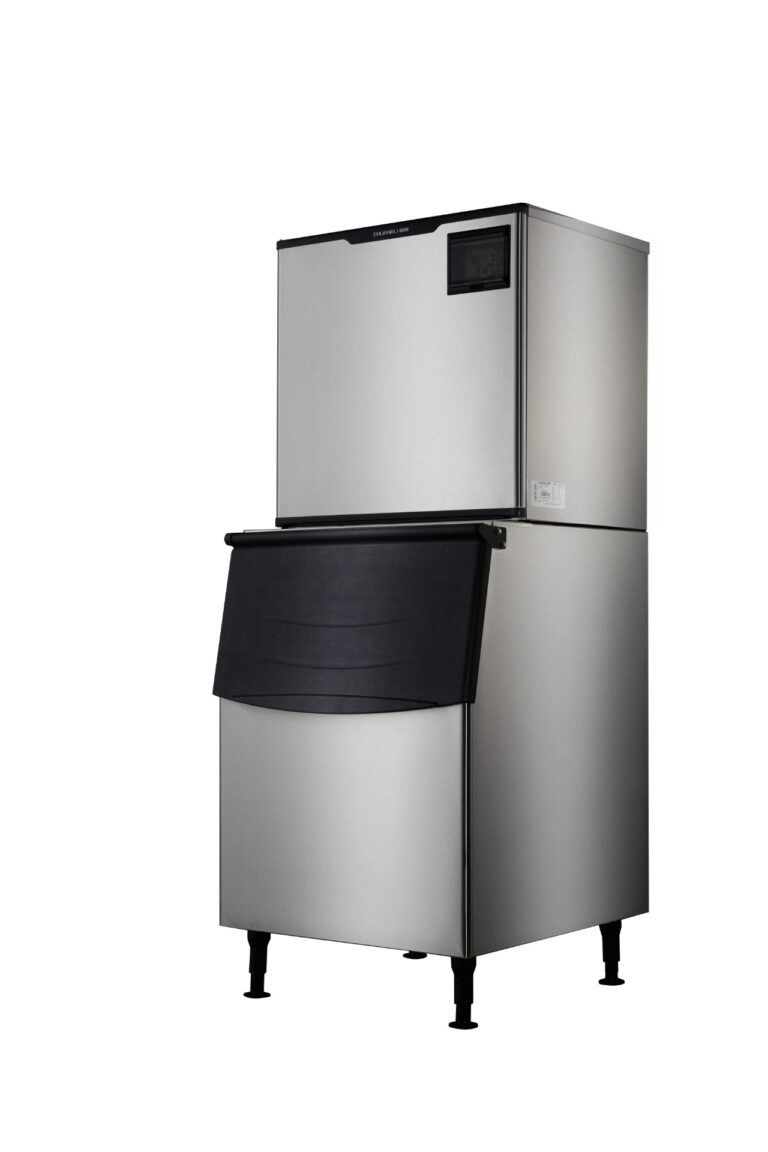
Troubleshooting: Unifrost Ice Machine Not Making Ice
Learn how to diagnose and troubleshoot common issues if your Unifrost ice machine stops making ice.
Read guideView Unifrost ice machines at Caterboss
For current product options, pricing and availability, continue to Caterboss.