
Choosing the Right Unifrost Bottle Cooler for Your Bar or Cafe
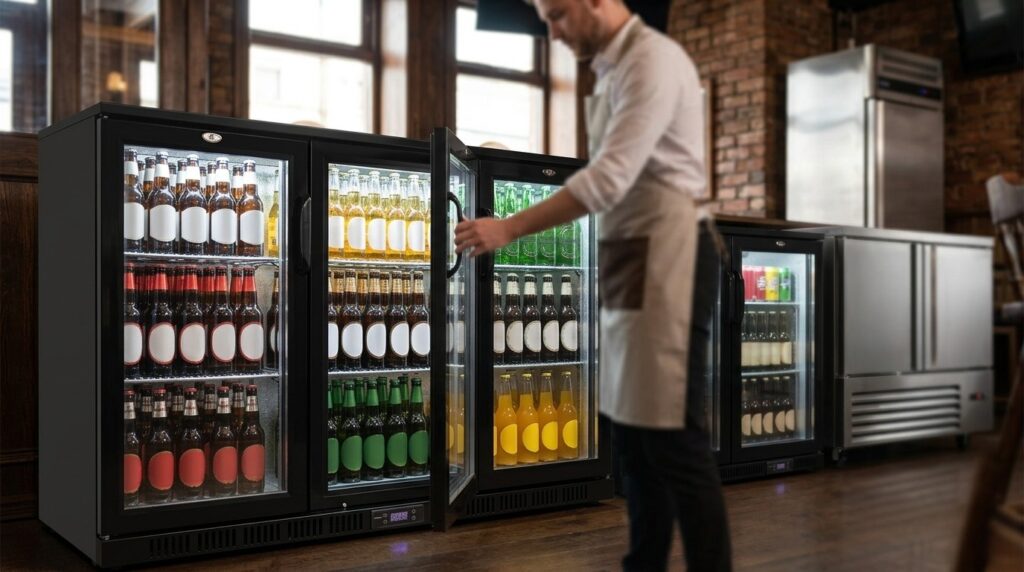
Find the perfect Unifrost bottle cooler for your bar or cafe. Explore capacities, door options, and energy efficiency for optimal performance.
How to Choose a Unifrost Bottle Cooler for Your Bar or Cafe
Choosing a Unifrost bottle cooler is not just about getting drinks cold. You are deciding how quickly you can serve, how much stock you can hold at peak, how your back bar looks to customers, and how much time you spend on cleaning and callouts.
In this guide, you work through the practical buying checks that matter most in real venues, including how to match the Unifrost range (BC10HBE and BC10HBEOG, BC20HBE and BC20HBEOG, BC20HSE and BC20HSEOG, BC20OG, BC20SBE, BC30HBE) to your layout and trading style.
You will learn how to:
Pick the right capacity and door count for your busiest service periods and your restocking routine.
Choose between hinged and sliding doors based on aisle space, speed of access, and customer facing display.
Prioritise features that affect day to day performance, like shelving flexibility, temperature control, lighting, and door glazing.
Confirm installation basics before you buy, including power location, ventilation clearance, levelling, and first start up checks.
Plan how your bottle cooler fits alongside other Unifrost back bar refrigeration so your workflow stays consistent as you grow.
What makes Unifrost bottle coolers ideal for commercial use?
Unifrost bottle coolers suit bars, cafés and hotel lounges because they are built for fast, repeated access to chilled bottled drinks, while keeping stock visible and organised behind the counter. That lines up with how most Irish operators manage chilled storage under HACCP, where fridges should be set so food is kept at 0°C to 5°C (see the Food Safety Authority of Ireland guidance on temperature control).
What matters in practice is how the unit is used. Performance will always depend on siting and day-to-day habits: ventilation, loading, and how often doors are opened, especially in a warm, busy bar.
Reliability under Irish service pressure
On a peak night, a back-bar cooler can be opened hundreds of times by different staff. A commercial unit earns its keep when it pulls temperature back quickly after openings and keeps stock consistently chilled without constant babysitting. That means fewer “these aren’t cold” moments, and fewer panic moves of bar stock into a kitchen fridge that was never sized for that turnover.
Unifrost’s range covers the common back-bar formats, including single-, double- and triple-door options such as BC10 models (including BC10HBE / BC10HBEOG), BC20 variants (including BC20HBE / BC20HBEOG, BC20HSE / BC20HSEOG, BC20OG, BC20SBE) and BC30HBE. The value of that spread is simple: you can fit the cooler to the space you actually have and the volume you actually sell, rather than forcing an awkward compromise that shows up as warm product or constant restocking.
Merchandising and speed of service
A bottle cooler is not just storage. It is part of how you keep service moving. Glass-door back-bar coolers let you check stock at a glance, keep best sellers in the fastest-reach spots, and maintain a tidy display that reduces “door open” time during a rush. Over a night, that usually translates into quicker rounds and fewer wrong grabs when you are switching between beers, mixers and soft drinks.
The same applies in cafés and deli counters. You want bottled drinks visible, easy to top up, and separate from undercounter fridges that are doing a different job (milk, desserts, prepped items). If you are choosing between door styles, hinged doors tend to suit straight-on access where you have clearance, while sliding doors can work better where the bar aisle is tight and staff are constantly passing.
Consistent bar layouts and easier operations
Most sites end up with a mixed back-bar: bottle cooling, undercounter refrigeration, and possibly an upright display elsewhere. Sticking within a consistent family of equipment helps make the layout more predictable for staff and can simplify routines like cleaning, stocking and basic troubleshooting.
It also makes upgrades more straightforward. Starting with a smaller unit, then adding a second cooler later for throughput and redundancy, is often easier than trying to live with one oversized unit that never quite fits the counter run. The right choice comes down to your capacity needs, your bar workflow, and where the heat loads are (glasswashers, coffee machines, tight enclosures) around the cooler.
Choosing the right capacity and layout
Choosing the right Unifrost bottle cooler is mostly about two things: how much usable bottle space you need, and how quickly staff can get stock during peak service. In practice, single-door units suit tight back-bars and lower turnover. Double and triple-door layouts suit higher volume, faster service, and better separation of products.
A single-door cooler is easier to fit into a small café, deli counter, or a snug pub back-bar. If you carry a wider mix of beers, mixers, and premium soft drinks, you can hit the limits quickly and end up stacking bottles behind bottles. Multi-door units give you more “zones”, so staff can grab what they need without reshuffling shelves mid-service. The right choice is the one that fits your counter run, your restocking routine, and whether you want one strong display area or several clearly organised sections.
How do smaller and larger back-bar coolers compare overall?
In a small café or light-touch bar, the advantage is usually footprint and simplicity: one door, one section of shelving, and a straightforward restocking pattern that matches quieter peaks.
In a busy bar, the advantage is throughput. More doors generally means more stock visible and reachable, and less time with a door held open while someone searches for a specific SKU.
If the cooler is customer-facing (hotel bar, visitor centre, lobby, or any retail-style offer), width also helps with facings. People choose with their eyes, and your team needs to keep the front row presentable without constant rearranging.
Smaller / single-door layout (typically BC10 range)
A single-door bottle cooler is a sensible starting point when your back-bar is short, power points are limited, or the unit must sit under a specific section of counter. It also suits sites where most chilled sales are a handful of fast movers, with reserve stock kept elsewhere and topped up little and often.
Within the Unifrost range, this is typically where BC10 models sit (for example BC10HBE and BC10HBEOG). At this size, the decision tends to be about placement and workflow, rather than trying to store every line in one unit.
Larger / multi-door layout (typically BC20 and BC30 range)
If staff are regularly opening the cooler to hunt for different brands, or you’re forced to stack bottles behind other bottles, you’re losing time and making stock rotation harder. A double-door layout is often the most practical step up for Irish pubs and restaurant bars, because you can split the cabinet into clear zones (for example: beer, zero-alcohol, mixers) and keep each section faced up.
A triple-door layout is usually less about “more stock for the sake of it” and more about service speed and presentation. With more uninterrupted display space, you can keep more lines visible and avoid overpacking shelves.
In Unifrost terms, that usually means comparing the BC20 family (with variants by model code, such as different door formats) versus stepping up to a BC30HBE when you need more display width and quicker access.
Which capacity and layout is best for your venue?
If you’re choosing between one larger unit and two smaller ones, the deciding factor is typically how your bar is set up, not the headline bottle count. One long cooler can look tidier and merchandise better. Two smaller units can give you redundancy if one goes down, and they can be positioned closer to where staff actually serve.
Before you settle on a model code, pressure-test the choice with these practical checks:
Where will staff stand when grabbing bottles, and will doors clash with knees, tills, or undercounter storage?
Do you need separate zones for beer, wine and mixers to stop stock getting mixed and forgotten?
Are you restocking from a nearby cold room, or from ambient storage that forces frequent top-ups?
Is this mainly staff-service, or customer-facing merchandising where clean facings matter throughout the day?
Once you’re clear on the layout and how many “zones” you need behind the bar, the hinged-versus-sliding door decision is usually straightforward, especially in tight Irish back-bars under real service pressure.
Key features and their impact on daily operations
The bottle cooler features that matter are the ones that affect service speed, temperature stability, and how easy the unit is to restock and keep clean. In a busy Irish bar or café, the practical differences usually come down to door format, airflow and control, shelving layout, and how the unit behaves for heat and noise behind the counter. A spec that looks great on paper can still be a nuisance if it clashes with your space or staff flow.
Door type: hinged vs sliding in real Irish back-bars
Hinged doors give the quickest, widest access. That helps when you are restocking crates, grabbing multiple bottles in one go, or setting up before a rush. The trade-off is clearance. In tight back-bars or narrow service aisles, hinged doors can get in the way, take knocks, and they are easier to leave slightly ajar during a busy stretch.
Sliding doors suit narrow counters where staff are shoulder-to-shoulder. You are less likely to block the pass, and the door is rarely “left open” by accident. The trade-off is access. If your best sellers are not positioned properly, staff end up sliding past slower-moving lines to get what they need, which adds seconds that you feel during peak service.
Temperature control and airflow: what keeps drinks consistently cold
Day to day, you are looking for two things: even cabinet temperature and quick recovery after frequent openings. Fan-assisted circulation helps keep temperatures more consistent across shelves, but it only works if airflow paths are not blocked. Over-packing, pushing stock hard against vents, or letting the interior get cluttered can create warm spots and slower pull-down after a restock.
If you ever store anything other than sealed drinks in a bottle cooler, treat it as chilled storage and apply your normal HACCP discipline. The FSAI temperature control guidance is a solid reference for monitoring and limits: https://www.fsai.ie/business-advice/running-a-food-business/food-safety-and-hygiene/temperature-control
Shelving and merchandising: speed, capacity, and fewer breakages
Adjustable shelving is practical, not cosmetic. It lets you build a layout that matches how you serve: separate “lanes” for beer, soft drinks, mixers, and wine minis, with enough headroom that staff are not forcing bottles in and catching labels or necks.
The operational win is organisation that supports rotation. If staff cannot pull older stock forward quickly, you end up with out-of-date product hidden at the back and a cabinet that looks full but does not actually make service faster.
Noise, heat, and placement: the customer-facing reality
In cafés, hotel bars, and open counters, bottle coolers are part of the room. Noise that would be ignored in a back store can be distracting near a coffee machine or till point, especially if the unit is boxed into a dead-air corner.
Heat and placement matter just as much. Put any cooler beside a glasswasher, under a hot gantry, or in direct sun, and it will run harder to hold temperature. You usually see that as more temperature swing, longer run times, and higher running costs. Leave sensible ventilation space and avoid trapping warm air around the unit.
Daily-use details: lighting, glazing, locks, and cleaning access
LED lighting and glazed doors help customers see what is available, but they also reduce “browse time” with the door open, which is a common cause of temperature drift during busy periods. A lock is useful where you close parts of the premises (function rooms, student nights, seasonal areas) but keep stock on display.
The unglamorous bit is cleaning access. If shelves, door seals, and the intake area are awkward to reach, cleaning gets skipped, airflow suffers, and the cooler becomes the unit everyone complains about, usually at the worst possible time.
Taken together, these features come back to one decision: how much stock you can hold in real terms, how quickly staff can pick from it, and whether the cabinet format suits your counter space and movement behind the bar.
Installation and maintenance tips
Place your bottle cooler on a level, well-ventilated spot away from heat, let it stand before switching on, and confirm it pulls down to temperature before you load it for service. Day-to-day reliability in an Irish bar or café usually comes down to three basics: airflow, sensible loading, and staying on top of dirt and door sealing. If you notice unusual noise, icing, or temperature drift, treat it as an early warning, not something to limp through until Monday.
1. Check the location before you unbox it
Back-bar bottle coolers often struggle for very ordinary reasons: too much heat, not enough airflow, and being pushed tight into a void behind a busy bar.
Keep it away from obvious heat sources such as glasswashers, coffee machines, hot pipework, and areas where warm air gets trapped under counters.
Think about service flow: hinged doors need clear swing space; sliding doors need clean, unobstructed tracks so they do not fight staff during a rush.
2. Set the cooler level and protect airflow
Get the unit sitting solid with no rocking. If it is twisted on an uneven floor, doors can sit slightly out of line, seals do not seat properly, and you end up chasing “temperature issues” that are really an installation fault.
Do not box it in. Bottle coolers dump heat into the room. If you trap that heat behind joinery, performance drops and running costs rise. If the bar design forces a tight void, plan ventilation routes and cleaning access from day one. “We’ll pull it out later” rarely happens in a working pub.
3. Power it correctly and do a sensible first start-up
Use a proper permanent socket, not a shared extension lead buried under the counter alongside wet lines and cleaning chemicals.
Once it is in place, let it stand before switching on, then run it empty long enough to confirm it is cooling normally before loading it. If your cooler has internal lighting or display features, check them at the same time. It is far easier to sort a door switch or light issue before it is full of stock and the bar is open.
4. Load and stock it to avoid warm drinks and temperature swings
Do not use a bottle cooler as a rapid chiller for warm deliveries. If you load a warm drop at 4 pm for a 6 pm peak, the unit has to remove a lot of heat quickly and your already-cold stock will often warm up while it recovers.
Load with airflow in mind:
Leave space for air to circulate.
Do not pack bottles tight against vents or fan outlets, which creates hot spots and uneven temperatures.
For high-turnover bars, it often works better to keep a small buffer of pre-chilled stock elsewhere and top up little and often, rather than dumping a full warm case in one go.
5. Keep to a simple cleaning and maintenance routine
Most “breakdowns” are maintenance debt: dust-blocked condensers, damaged gaskets, and doors that do not fully close. Your aim is simple: keep heat exchange efficient and keep doors sealing properly, especially behind Irish back bars where it is dusty, humid, and constantly wiped down with chemicals.
Daily: wipe spills, make sure doors close fully, keep tracks and thresholds free of grit and sugar.
Weekly: clean shelves and interior surfaces, inspect door seals for splits or gaps, check the unit has not been pushed back into a no-airflow position.
Monthly: vacuum or brush accessible condenser intake areas, and keep any drain and evaporator tray areas clean to avoid smells or overflow.
6. Troubleshoot common symptoms before they become downtime
If drinks are not cold enough, start with the fixes that take minutes: doors not closing properly, airflow blocked by overstocking, or the unit pushed tight against a back wall after a busy night.
Icing: commonly linked to doors being left ajar, poor seals, or humid air being pulled in during constant openings.
Unusual fan noise or vibration: often means the unit is out of level, something inside is touching a fan area, or it is rattling against bar joinery.
Sort those early and you often avoid the more expensive call-out that happens after the unit has been running hot for weeks.
Getting installation and upkeep right makes the cooler predictable. That is the foundation you need before you start comparing capacity, door layout, and whether a back-bar bottle cooler is enough on its own or needs support from additional cold storage.
Integrating Unifrost bottle coolers with your bar setup
How you integrate a bottle cooler depends on what’s driving your bar: speed (busy pub nights, hotel lounge peaks) or space (small café counter, tight back-bar). In Ireland, your overall refrigeration plan is still anchored in food safety and HACCP routines. The FSAI’s guidance on temperature control for fridges and chilled storage is a solid reference when you’re deciding what must stay in food fridges versus what can sit in a drinks-only cooler.
Bottle coolers are typically about fast access and visibility. Your undercounter and upright fridges do the heavier lifting for storage, prep flow, and temperature recovery when the doors are opening constantly.
Use the bottle cooler as the service face, not the whole cold store
A Unifrost bottle cooler works best as the last step in your cold chain, not your only chilled storage. Treat it as working stock that staff can reach without opening a larger fridge that’s doing food duty.
In practice, that means you replenish little and often from a dedicated storage fridge elsewhere. Service stays quick, the main fridges spend less time open, and the bottle cooler doesn’t turn into a catch-all for “anything that’s cold”.
Build a simple back-bar cold line so staff don’t trip over each other
On a busy Saturday, layout matters as much as the model. Common Irish back-bar pressure points are predictable: limited depth, staff passing behind each other, heat from a glasswasher, and stock landing in a rush.
The simplest way to make bottle coolers earn their keep is to give each cabinet a job, then place them in the order staff actually move. A workable setup might look like:
Bottle cooler for bottled beer, mixers and other high-pick lines at hand height
Separate undercounter fridge for garnishes, dairy and open product (sealed and managed as food)
Front-of-house display fridge only if you genuinely need customer self-selection and can keep door-open time under control
Keep your highest-pick items closest to the main pour point. Keep garnishes and open food away from customer reach. Avoid placing a cooler hard against a heat source (including other equipment’s warm air). Leave enough working space so two people can restock without blocking the till or the glasswasher.
Choose door style to suit your bar depth and traffic flow
Unifrost’s bottle cooler range includes multiple door configurations across models such as BC10HBE / BC10HBEOG, BC20HBE / BC20HBEOG, BC20HSE / BC20HSEOG, BC20OG, BC20SBE, and BC30HBE. In a real bar, door choice is a workflow decision.
Hinged doors suit back-bars where you have clearance to open into the working area and want quick visibility.
Sliding doors suit tight pub back-bars where space is limited and staff are shoulder-to-shoulder. They also reduce the risk of doors being left open during a rush.
Plan power, ventilation, and cleaning access as part of the layout
Most bottle cooler headaches are caused by access, not mysterious faults. If a unit is boxed in with no breathing room, pulling in dust from a floor void, or sitting out of level on an uneven bar floor, it will struggle to hold temperature consistently and it can get louder and more expensive to run.
When you’re planning positions, leave enough space to pull the unit forward for cleaning and service access, and make sure shelves can be removed for a proper wash. It also makes the routine jobs easier: wiping door seals, keeping drainage clear, and stopping the cabinet from fighting heat coming off a glasswasher or coffee machine.
Decide between one large unit vs multiple smaller units for resilience
One larger bottle cooler can keep the back-bar tidy, but it’s also a single point of failure. Two smaller units let you split stock by function (beer in one, soft drinks in the other), reduce door-open frequency per cabinet, and stay trading if one unit needs attention.
The trade-offs are footprint, plug space, and the discipline to keep each cabinet to its role. Once stock becomes “anything cold, anywhere”, you lose the operational benefit and staff end up hunting during service, which is usually when temperature control slips and wastage starts creeping in.
In the end, the two decisions that matter day to day are simple: how much chilled product you need within arm’s reach, and whether your layout lets you restock without interrupting service.
Unifrost bottle cooler FAQs
What is the ideal capacity (bottle count) for my establishment?
Choose capacity based on peak service, not quiet periods.
Small cafe or low-volume bar: a compact single-door back-bar (for example BC10HBE / BC10HBEOG) is usually enough for your best-sellers and quick access.
Busy pub or mixed drinks range: a two-door unit (for example BC20 variants such as BC20HBE, BC20HSE, BC20SBE, BC20OG) gives more facings and faster restocking without overfilling.
High-volume or late bar: a larger three-door option like BC30HBE helps keep core lines chilled even during rushes.
Practical sizing tip: list the top 10–20 SKUs you need cold at all times, estimate how many bottles you sell in your busiest 2–3 hours, then add a buffer for deliveries and promotions. If you share your menu, service style, and available underbar width, you can size it accurately.
Are Unifrost bottle coolers energy efficient?
They can be, but real-world running cost depends more on how the cooler is installed and used than the badge on the front.
To keep an unifrost bottle cooler efficient day to day:
Keep it away from heat sources (glasswashers, hot pass, direct sunlight) and allow the recommended ventilation clearances.
Clean the condenser regularly and keep door seals in good condition.
Avoid overstocking so air can circulate, and set the thermostat to a sensible serving temperature for bottled drinks rather than “as cold as possible”.
If you want to compare options, check the product listing for the model’s published energy figures and match them to your opening hours.
How do I maintain consistent temperature with frequent door openings?
Frequent openings are normal behind a bar, so focus on recovery and airflow:
Pre-chill stock where possible. Loading warm bottles forces long pull-down times and causes bigger temperature swings.
Merchandise for speed: put fastest movers at hand height, and keep one “working row” topped up to reduce open time.
Don’t block internal air vents with bottles or cardboard trays.
Keep door gaskets clean and confirm the doors self-close properly (a door left slightly ajar is the biggest cause of warm product).
If the bar is extremely busy, consider two smaller units or a multi-door model so staff are not constantly holding one door open.
If temperature is still inconsistent, the quickest checks are ventilation around the unit, condenser cleanliness, and whether the cooler is level so the doors seal correctly.
Should I choose a model with hinged doors or sliding doors?
Pick the door type based on space and service style:
Hinged doors (for example BC10HBE, BC20HBE, BC30HBE) typically give full access to shelves and are often the best choice where there’s clear space in front of the unit.
Sliding doors (for example BC20HSE) suit tight back-bars where staff are working close to the counter edge and a door swing would get in the way.
Rule of thumb: if your staff regularly work within a narrow aisle behind the bar, sliding doors can reduce collisions and keep service flowing. If you restock often and want easier access for cleaning and rotation, hinged doors are usually more convenient.
Are Unifrost bottle coolers suitable for customer-facing bars?
Yes. Unifrost bottle coolers are commonly used in customer-facing back bars for chilled merchandising and quick service.
To make sure it works well front-of-house:
Choose a layout that gives enough product facings so the cooler still looks full during service.
Plan for noise and heat management: good ventilation and routine condenser cleaning help keep operation smooth.
Use consistent shelf spacing and clear labelling so staff can replenish quickly without leaving doors open.
If your bar is very quiet (hotel lounge, restaurant bar), prioritise models and placement that minimise disruption to guests while still showcasing your best-sellers.
Next step: match the right Unifrost bottle cooler to your bar layout
If you already know your available underbar width and whether you need hinged or sliding doors, you can narrow down the right unifrost bottle cooler in minutes.
Browse Unifrost bottle coolers and bar refrigeration on Caterboss to compare the current range and choose the best fit for your service speed and back-bar space.
Related Unifrost guides
Compare models, maintenance advice and support information related to this topic.
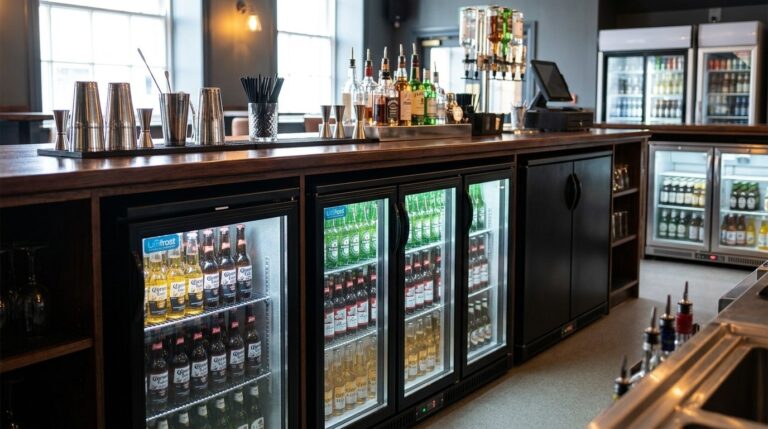
Unifrost Under-Counter Bottle Coolers: A Comprehensive Guide
Explore Unifrost under-counter bottle coolers for efficient bar setups in Ireland.
Read guide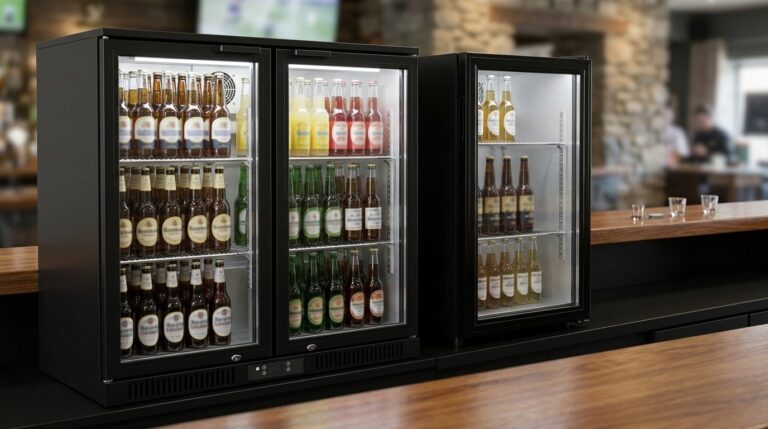
Unifrost Beer Cooler vs Bottle Cooler: How to Choose
Discover the key differences between Unifrost beer and bottle coolers for optimal bar operations.
Read guideView Unifrost bottle coolers at Caterboss
For current product options, pricing and availability, continue to Caterboss.