
Unifrost Beer Cooler vs Bottle Cooler: How to Choose
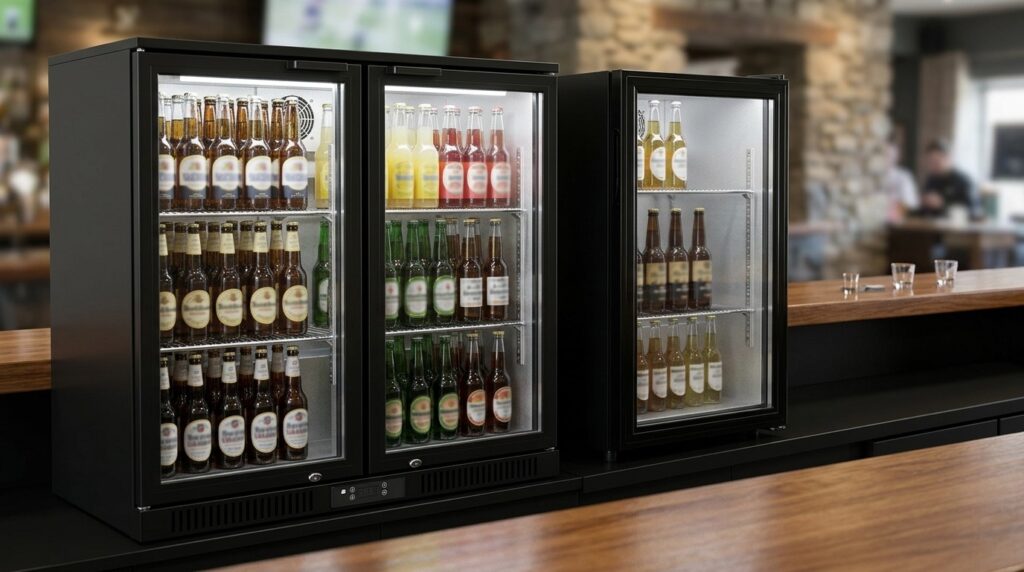
Discover the key differences between Unifrost beer and bottle coolers for optimal bar operations.
Unifrost Beer Cooler vs Bottle Cooler: How to Choose for Your Bar
If you are fitting out a bar or upgrading your back bar, choosing between a Unifrost “beer cooler” and a Unifrost bottle cooler affects more than bottle count. It changes how fast you can serve at peak times, how well drinks hold temperature through constant door openings, how your range looks to customers, and what your running costs look like over the year.
On this page you will compare the practical differences between dedicated back bar bottle coolers such as the Unifrost BC20HBE and BC20HSE families and other cooler formats you might label as a “beer cooler”. You will learn what to prioritise for your venue: undercounter fit vs taller display capacity, hinged vs sliding doors for tight bar spaces, recovery and access during busy service, and how to set and maintain the typical +1°C to +10°C operating range for bottled beer and soft drinks.
You will also get a checklist for day to day operation including placement behind the bar, loading and zoning by drink type, cleaning routines that protect temperature consistency, and how to integrate multiple Unifrost units so your team spends less time with doors open and more time serving.
Core Differences Between Beer and Bottle Coolers
In Irish bar buying, “beer cooler” and “bottle cooler” get used interchangeably, but they are not always the same thing. In practice, a bottle cooler is a back-bar, glass-door drinks merchandiser built for bottles and cans at point of service. “Beer cooler”, depending on who you are talking to, can mean that same back-bar unit, or it can mean keg/cellar cooling for draught.
Your first decision is simple: are you chilling packaged drinks, draught, or both? Once that is clear, the right format usually follows.
How do beer coolers and bottle coolers compare overall?
A back-bar bottle cooler is typically aimed at drinks service rather than food storage. If you are storing food on the same bar run, remember chilled food needs tighter control. The FSAI guidance is to keep chilled food at 5°C or below (commonly managed as 0°C to 5°C in practice) and to monitor temperatures as part of your HACCP routine: FSAI temperature control guidance.
“Beer cooler” (what operators usually mean on the floor)
When staff say “beer cooler” in a pub, they often mean “the fridge behind the bar with the bottles visible”. Most of the time, that points you towards a back-bar bottle cooler.
It only becomes a problem when “beer cooler” is being used to mean keg cooling or cellar cooling. That is a different job with different access, different failure consequences, and different planning. Before you look at specs, agree the stock format you are chilling: packaged-only, draught-only, or mixed.
Bottle cooler (back-bar unit) and what it is built to do
A bottle cooler is an undercounter, glass-door merchandiser designed to make bottled and canned drinks easy to sell. In day-to-day terms, it should let you:
See stock quickly during service
Open and close fast without disrupting the flow behind the bar
Cope reasonably well with frequent door openings in peak trade
Capacity is rarely just the headline bottle count. Usable space depends on how you load it. If you mix bottle sizes, carry bulky cans, or keep open wine and mixers in the same cabinet, capacity drops and the cabinet works harder. For service speed, the most valuable “capacity” is often keeping best sellers in the easiest-to-reach zone so the door is open for seconds, not a full conversation.
Which is best for you?
If you mainly sell packaged beer and soft drinks, choose a bottle cooler and size it around peak-hour door openings and the back-bar space you actually have.
If you are trying to solve draught storage, keg cooling, or cellar temperature stability, treat that as a separate requirement. Do not assume a back-bar bottle cooler will cover it.
Before you commit, do a quick reality check that avoids the usual “it can’t keep up” complaint later:
Measure the usable back-bar run, including door swing and staff clearance
Decide whether you need hinged or sliding doors based on aisle width
Plan where warm deliveries will be staged so you are not constantly loading ambient stock mid-service
If service is heavy, consider splitting stock across two cabinets to reduce door-open time
Those workflow details matter as much as the fridge itself, especially on a busy Friday or Saturday night.
Performance and Suitability
Behind a busy Irish bar, a “beer cooler” and a “bottle cooler” are not always the same thing in practice. If you put in a cabinet that is not designed for frequent, short door openings, you typically feel it at peak times as slow recovery and drinks that are more “cool” than properly cold.
Unifrost bottle coolers in the BC20HBE and BC20HSE families are marketed in Ireland as back-bar bottle cooler beer fridges for rapid access and quick chilling, typically across a drinks-friendly range of roughly +1°C to +10°C. The key point is not the headline temperature. It’s whether the unit can pull product back to setpoint quickly and hold it there through constant door openings.
Even if you are mainly cooling drinks, it is still worth keeping food safety temperature discipline in mind. The Food Safety Authority of Ireland notes fridges should be set so food stays between 0°C and 5°C, which is a useful benchmark for why steady cabinet control and basic monitoring matter day to day (FSAI temperature control guidance).
Cooling performance in real service (recovery and “keeps up” factor)
A back-bar bottle cooler is usually the safer choice when staff are repeatedly grabbing bottles and cans. It is built around that workflow, rather than being a general-purpose storage fridge pressed into bar duty.
What you notice in service is recovery. After dozens of openings, does the cabinet get back to temperature quickly, or does it gradually drift up and stay there until the rush eases? If you are regularly restocking warm deliveries straight into the unit mid-shift, that recovery gap becomes more obvious.
If you use an upright display fridge instead, you can gain capacity and front-of-house visibility, but it changes the workflow. Even with strong refrigeration performance, an upright can slow speed-of-service if it sits away from the pour point or forces staff to step out of the well.
Accessibility (door style, pick speed, and staff flow)
Undercounter back-bar bottle coolers tend to win on pure pick speed when they are installed where the bartender naturally works. Door swing, handle height, and shelf layout all affect how long the door stays open. Less “searching with the door open” usually means steadier temperatures and less strain on the system.
Be careful with the label “beer cooler”. It can refer to anything from a glass-door back-bar merchandiser to a solid-door storage cabinet. If fast pick and clear product ID matter, a glass-door back-bar unit is often the more predictable option because staff can see stock without opening the door.
Suitability by bar size and format (what fits, and what scales)
In small pubs and tight cocktail bars, undercounter bottle coolers are often the best performance-per-square-metre option because they keep cold stock at hand without adding an extra upright footprint.
In higher-volume venues, you usually scale by splitting the load: multiple bottle coolers by product type (beer, zero, mixers) so each door is opened less often and staff can work in parallel.
A practical rule:
If the fridge is mainly “serve from here”, a back-bar bottle cooler format is usually the better fit.
If it is mainly “store extra stock”, an upright display fridge or a separate stock solution (including a cold room, where available) is often the better pressure-release valve for Friday and Saturday trading.
That split makes it easier to choose the right format for your layout, keep temperatures steadier during service, and avoid buying a cabinet that looks right on paper but struggles in real trading conditions.
Operational Considerations
How you run a back bar matters as much as the label on the door. When you’re choosing between a Unifrost bottle cooler, a back-bar “beer cooler”, or an upright display fridge, focus on three things: where it will sit, how often it will be opened, and whether it can reject heat properly.
Start with layout. Match door type and loading height to your service flow so staff are not holding doors open during a rush. Set a sensible operating temperature for what you’re actually storing, and use the cabinet display as a quick reference, not as proof of product temperature. Then put a simple routine in place for airflow, door seals, and hygiene. A lot of “can’t keep up” complaints come down to heat, dust, and door habits rather than a cabinet fault. Finally, check noise, heat rejection, and access for servicing before you commit. A boxed-in back-bar unit that’s starved of air and full of fluff will cost more to run and struggle at peak.
1. Plan placement and ventilation before you compare formats
In most Irish bars, the real difference is not “beer cooler vs bottle cooler”. It’s whether the cabinet can breathe and whether staff can load and grab stock quickly without hanging around with the door open.
Back-bar bottle coolers earn their keep when they are within a step of your pour point and garnish area. If bottles are where the work happens, you cut walking, speed up service, and reduce door-open time. Upright display fridges make sense for customer-facing floor sales or a dedicated self-serve zone. Behind the bar they can add extra bending, turning, and longer openings, which shows up as temperature swing during busy periods.
Avoid boxing any back-bar unit tightly into a dead space unless you have confirmed there’s proper ventilation for the refrigeration system and a realistic way to pull the unit for service. Even if it “fits”, trapped warm air behind the bar means longer compressor run time, more heat dumped into the bar area, and slower pull-down after repeated openings.
2. Set temperatures for service, then manage stock so the cabinet isn’t doing impossible work
For bottled beer, the operational win is consistency and recovery after frequent openings. Soft drinks are generally more forgiving on temperature than beer, so if you’re trying to run beer colder than everything else, it’s often easier to separate products by cabinet (or by zones, where a unit supports that) than to ask one cooler to keep everyone happy.
If you store any perishable items in the same cabinet, food safety takes priority over “drinks cold enough”. The FSAI advises setting fridges so food is held between 0°C and 5°C, and notes that fridges set at 3°C or 4°C generally help achieve that range, in its temperature control guidance for caterers.
The biggest “keeps up at peak” improvement is usually stock discipline:
Don’t load warm deliveries straight into the back-bar cooler just before service.
Rotate properly so the front row is always fully chilled, and treat newly loaded stock as “later” stock.
If you run multiple units, split by product type and speed. Put the fastest movers closest to the main service position to minimise door-open time.
3. Reduce running costs with repeatable maintenance that suits bar reality
Bottle coolers live with spills, sugar, broken glass, dust and lint, plus constant door openings. Simple maintenance is not optional, and it’s one of the few things that reliably reduces call-outs and running costs.
Keep heat exchange areas clear and keep doors sealing properly. SEAI notes that poor maintenance can increase energy use from refrigeration by up to 10% in its SME Guide to Energy Efficiency. In a back bar where dust and fluff build up quickly, that tracks with what you see on the ground.
A routine that works in a busy bar:
Weekly: wipe door gaskets, clear any blocked vents, and clean spills before they turn into sticky air leaks.
Monthly: vacuum dust from accessible intake areas and grilles, and check doors are closing cleanly (no “hip-checking” them shut and leaving them ajar).
Ongoing: keep shelves and base areas clear so airflow isn’t blocked by packaging, crates, or overstacked bottles.
If a cabinet struggles during heavy service, check the basics before blaming the format: overstocking, blocked airflow, high ambient heat behind the bar, and doors being held open are the usual culprits.
4. Choose finishes and lighting based on wear, cleaning time, and visibility
In a high-wear bar, finishes are an operational decision. Stainless-style finishes tend to hide scuffs and wipe down quickly. Black finishes can show scratches and sticky marks more clearly under bright lighting. If you rely on visual merchandising, also remember that darker interiors or tinted glass can make stock harder to see unless the lighting is strong.
LED lighting and good glazing are not just “nice to have”. If staff can identify stock quickly and customers can see options clearly, doors stay open for less time. Less open-door time means better temperature stability and fewer compressor hours on busy nights.
This is often where an upright display fridge loses out behind a bar. It may hold more, but if it slows the serve or encourages “browse with the door open” behaviour, two smaller back-bar units placed where the work happens can perform better in real service. If you’re unsure, it’s worth browsing the Unifrost commercial fridge and bottle cooler ranges with your bar layout in mind, or getting advice based on your service volume and available ventilation.
Venue-Specific Recommendations
The right choice varies by venue because the real constraint is rarely “beer vs soft drink”. It is how often doors open during service, and how quickly the unit recovers back to temperature. In Ireland, you also need to think in HACCP terms around temperature monitoring and consistency. Chilled storage control is a core expectation in food businesses, including bars handling garnishes and open mixers, as set out in FSAI guidance on temperature control and chilled storage.
In day-to-day terms, “beer cooler” and “bottle cooler” usually mean the same back-bar role. What decides the best format is service pressure, bar footprint, and how you replenish stock.
Pub bar (steady trade, mixed drinks, limited back-bar space)
An undercounter back-bar bottle cooler is often the best fit when you need fast access at working height and you are serving from behind the counter all day. It keeps stock visible, reduces steps, and avoids staff turning away from customers to reach an upright unit elsewhere.
If you are choosing between a bottle cooler and a standard undercounter fridge for bottled beer, the bottle cooler format generally suits bar work better. It is built around frequent opening and easy picking. A plain undercounter fridge can work well for reserve stock, but it slows you down if you are constantly opening a solid door and searching during a rush.
High-volume club or late bar (peak-time surges, rapid turnover)
In a club, the question is not “will it get cold”, it is “will it recover under pressure”. A practical approach is using multiple back-bar bottle coolers spread across serving points. That way, each bartender hits a smaller section more often, instead of one unit being opened continuously.
Where space allows, a mix can work well: back-bar bottle coolers for immediate grab-and-go, plus an upright display fridge elsewhere for bulk stock and pre-chilling. It reduces emergency restocking mid-rush and stops the back-bar units becoming the only cold store on site.
Hotel bar (all-day service, quieter periods, premium presentation)
Hotels often benefit from bottle coolers as the front line behind the bar because presentation matters and you can keep a neat, consistent display. If the bar also serves food and uses chilled garnishes, a stable setpoint and a clear temperature display make daily checks easier, especially in quieter periods when problems can go unnoticed.
If you have multiple outlets (bar, lounge, function room), consider standardising the cooler format per outlet. It reduces handover confusion, improves rotation, and helps prevent warm bottles being pushed to the front when shifts change.
Restaurant with a small bar or café with evening drinks (tight footprint, lower volume)
If the bar is small and you cannot afford to lose undercounter food storage, a compact undercounter bottle cooler is usually the least disruptive option. An upright display fridge can make sense if you are deliberately creating a customer-facing drinks wall, but be realistic about who restocks it and how often. If it becomes “someone will do it later”, it quickly turns into a front-of-house headache.
In these venues, layout matters more than raw capacity. Keep best-sellers in the closest cooler to the pass or till so the person taking payment is not also doing a lap of the bar for every round.
Quick decision rules that work in Irish venues
Choose an undercounter back-bar bottle cooler when drinks are served from one bar line and speed of access matters more than total capacity.
Choose an upright display fridge when you need bulk visibility and you have the floor space and staff routine to restock and rotate properly.
Choose multiple smaller back-bar units when peak-time opening is relentless and you need to reduce open-door time per unit.
Use a standard undercounter fridge for bottled beer when it is mainly backup storage, not the unit being opened every minute of service.
These choices feed directly into real performance. The same unit can look perfect on paper but struggle or shine depending on door-opening patterns, recovery time, and how you spread stock along the bar.
Integrating with the Unifrost System
In day-to-day bar use, “beer cooler” and “bottle cooler” usually mean the same thing: an undercounter, glass-door back-bar cooler built for fast access and quick recovery during service.
Where “integration” actually pays off is in how you run the checks. The FSAI temperature control guidance is clear that you should be monitoring and recording temperatures as part of HACCP using a calibrated probe thermometer. Drinks do not need the same setpoints as high-risk foods, but your process should be consistent: same logging routine, clear ownership, and a repeatable way to verify actual product temperature, not just the display reading.
Back-bar bottle coolers vs the rest of your Unifrost cold storage
Unifrost bottle coolers (including the BC20HBE / BC20HSE families) are typically used as back-bar units. Think of them as the “service fridge” rather than your main stockholding. They earn their keep on speed and visibility, not capacity.
A practical flow in a busy bar looks like this:
Reserve stock sits in a back-of-house upright fridge or coldroom.
Merchandising stock might sit in an upright display fridge where you want customers to see it.
Fast-pick stock sits in the back-bar bottle cooler for peak service.
That division matters. Once a bottle cooler becomes a mini storeroom, door-open time goes up, recovery suffers, and the lines you sell most often are the first to creep warm.
Standardising controls and day-to-day checks across multiple cabinets
Unifrost units will not feel “joined up” because they are networked. They feel joined up when your team treats them as a set.
If you run multiple back-bar coolers, standardise:
Labelling (so staff record the right unit every time)
Setpoint intent (what each cabinet is for, not one temperature for everything)
Verification (spot-check product temperature with a probe, not just air temperature)
A routine that holds up in Irish service is a simple daily log with cabinet air temperature plus a quick product check on one bottle. Then watch for patterns. “Warm every Friday at 9pm” is usually a behaviour issue (loading warm stock, constant door opening, blocked vents) rather than a sudden mechanical fault.
When to use a bottle cooler instead of an undercounter food fridge
An undercounter kitchen fridge can hold drinks, but it is rarely a good fit behind a bar. The workflow is different.
Bottle coolers are built for repeated access, visibility through glass doors, and quick selection during peak.
Undercounter food fridges are built for food storage discipline, fewer door openings, and keeping contents out of view.
If you are currently using a kitchen undercounter for bottled drinks, the cleanest “system” improvement is to move drinks into a dedicated back-bar bottle cooler and return the kitchen unit to food. It reduces cross-traffic, supports clearer HACCP habits, and usually speeds up service without changing your footprint.
Layout planning: making multiple coolers work like one system
If you are running two or more back-bar units (for example, multiple BC20-family coolers), layout is what turns them into a workable system.
Put fastest-moving SKUs closest to the main pour point.
Group products so a single order does not require opening multiple doors.
Avoid positions where staff have to step back into the walkway while holding doors open.
Also be realistic about heat and ventilation behind the bar. Tight joinery, glasswashers, and blocked grilles are common issues in Irish bars. Any of them will reduce recovery at peak. Even a well-specified cooler will struggle if it cannot reject heat properly.
Maintenance integration: one cleaning standard across all Unifrost bar refrigeration
Back-bar refrigeration lives in a dusty, sticky environment. The maintenance that prevents most “not cold enough” complaints is basic, regular, and easy to miss:
Keep door seals clean so doors actually seal.
Keep the condenser area free of lint and dust.
Keep internal air paths clear. Do not pack bottles hard against vents.
If you apply the same cleaning cadence across all back-bar units, you will see fewer peak-time temperature issues. Many of those issues are airflow and heat-rejection problems that only show up when the bar is flat out.
This is where choosing between bottle coolers, uprights, and general fridges stops being about labels and starts being about how each format will perform under your service load and layout constraints.
FAQs: Unifrost beer cooler vs bottle cooler
What is the difference between a beer fridge, a bottle cooler, and a general commercial display fridge?
Beer fridge / bottle cooler (back‑bar): In Ireland, Unifrost bottle coolers are commonly sold as “bottle cooler beer fridges” for bars, clubs, restaurants and hotels. They are typically undercounter, glass‑door merchandiser fridges built for fast access and strong product visibility behind the bar, usually running in the +1°C to +10°C drinks range.
Bottle cooler: In practice, this is the same category as the “beer fridge” above. The key idea is high‑frequency service (doors opening constantly) with stock organised for quick grabs and rapid recovery.
General commercial display fridge (upright merchandiser): Usually a taller, front‑of‑house cabinet designed to hold more volume and present a wider range. It can be great for self‑service and visibility, but it is not always as efficient behind a tight bar where speed, reach and door-opening time matter most.
How does bottle cooler height affect capacity and service efficiency?
Low undercounter back‑bar coolers prioritise service speed. Everything sits within arm’s reach, so staff spend less time bending, stepping away, or leaving doors open. That usually helps the cooler hold temperature better during peak pours.
Taller units (including upright display fridges) generally give you more storage and more facings, which can reduce restocking runs. The trade-off is often slower pick speed behind the bar and potentially longer door-open time if staff are selecting from more shelves.
A practical rule: choose undercounter where bar speed is the priority, and go taller where you need extra capacity or a broader range of drinks on display.
What Unifrost maintenance routines help maintain consistent beer temperatures?
To keep bottled beer consistently cold during heavy service, focus on the items that most often cause temperature drift:
Clean the condenser/air intakes regularly (frequency depends on dust and grease levels behind the bar). A clogged condenser is a common cause of poor pull-down and warmer cabinets.
Keep door seals and door alignment in good shape. Worn gaskets let warm air in and make the unit work harder, especially on high‑traffic doors.
Don’t block airflow inside the cabinet. Avoid overpacking against vents, and leave space so cold air can circulate around bottles.
Keep shelving organised for “first pick” bottles. Reducing door-open time is one of the biggest real-world wins for temperature stability.
Clean spills and keep drains clear (where applicable) to prevent odours, icing and service issues.
If you see frequent temperature swings, check that the unit is not pushed tight against walls and that it has enough ventilation in its installed location.
Are Unifrost stainless steel coolers more durable than black finish units?
In most bar environments, the durability difference is mainly about how the exterior holds up, not cooling performance.
Stainless steel finish tends to be more forgiving for chips, scratches and scuffs, and it is often preferred in higher-wear service areas.
Black finish can look great front-of-house, but it may show knocks and abrasion more clearly depending on cleaning practices and traffic.
If you expect heavy contact from kegs, crates, bottle bins and staff movement, stainless is often the safer choice for long-term appearance. For performance, choose based on layout and use case rather than finish.
How can Unifrost digital controls enhance temperature settings for different beverages?
Where fitted, Unifrost digital controls make it easier to run different drinks at sensible serving temperatures without guesswork:
Accurate setpoints and clear temperature display help you dial in a consistent range for bottled beer versus soft drinks.
Faster checks during service: staff can confirm the cabinet is on-temperature at a glance rather than relying on “feel.”
Better consistency across multiple coolers: you can standardise settings across a back bar so the same product tastes the same wherever it is picked.
A practical approach is to keep a dedicated cooler for beer and another for soft drinks if your turnover is high, then use the digital display to keep each cabinet steady in the right part of the +1°C to +10°C drinks range.
Next step: compare Unifrost cooler options for your bar
If you’re deciding between a back‑bar bottle cooler and a general display fridge, it helps to compare door style, format, and how the unit will sit behind your counter in real service.
Browse Our commercial fridges to shortlist the Unifrost cooler types that best match your space, speed-of-service needs, and drinks range.
Related Unifrost guides
Compare models, maintenance advice and support information related to this topic.
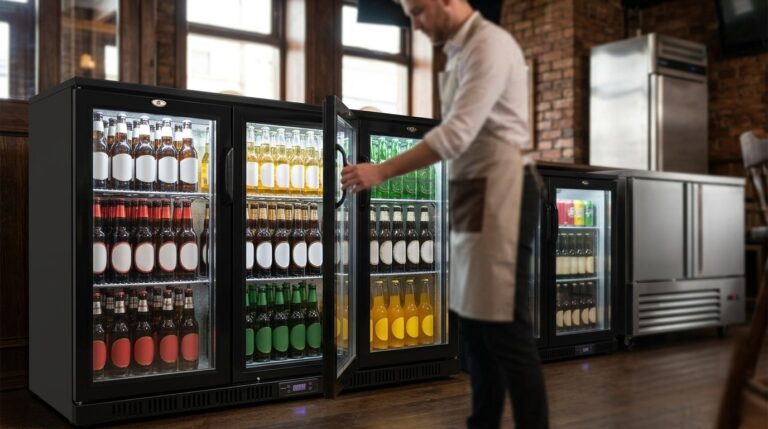
Choosing the Right Unifrost Bottle Cooler for Your Bar or Cafe
Find the perfect Unifrost bottle cooler for your bar or cafe. Explore capacities, door options, and energy efficiency for optimal performance.
Read guide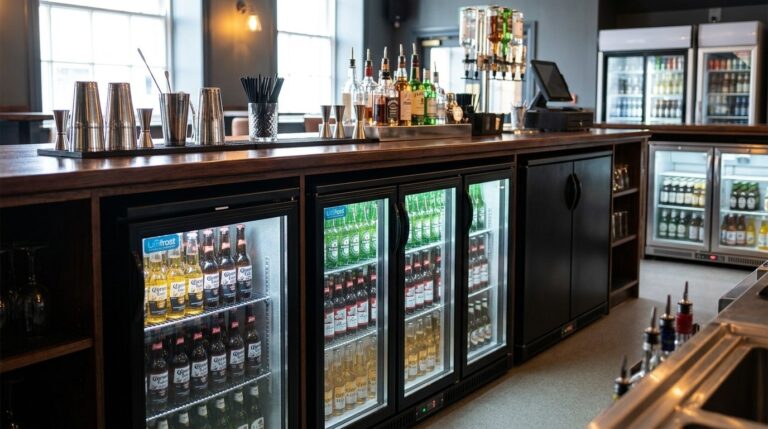
Unifrost Under-Counter Bottle Coolers: A Comprehensive Guide
Explore Unifrost under-counter bottle coolers for efficient bar setups in Ireland.
Read guideView Unifrost bottle coolers at Caterboss
For current product options, pricing and availability, continue to Caterboss.