
Unifrost Commercial Fridge Installation in Ireland: A Guide
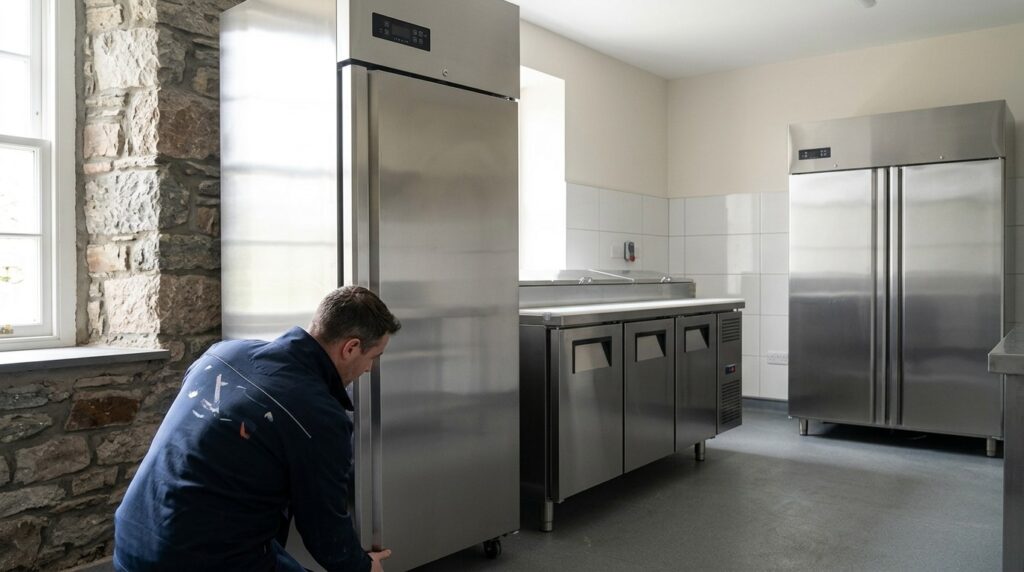
Learn about Unifrost commercial fridge installation in Ireland: site setup, power needs, ventilation, and more.
Unifrost Commercial Fridge Installation in Ireland: What to Check Before Delivery, Power-On and Sign-Off
Installing a commercial fridge is not just getting it through the door and plugging it in. In an Irish kitchen, bar, café or deli, the way you position, power and commission your Unifrost cabinet directly affects pull-down time, running costs, food safety and whether you end up calling an engineer in week one.
On this page you will work through the practical checks that matter most: delivery access and handling, where to locate the unit away from heat and dead air zones, the clearances and ventilation you need around the cabinet and condenser area, and the power supply basics you should have ready so you are not relying on extensions or shared sockets. We also cover the easy-to-miss steps on installation day, including letting the fridge stand upright after delivery (always follow the specific model manual), levelling and stabilising the cabinet, and setting initial temperatures.
You will also see what to expect from a basic drop-off versus a full installation and commissioning service in Ireland, plus the first checks to complete before you call Caterboss if your new Unifrost upright, counter, undercounter, display fridge or prep counter is not cooling as expected.
Why Proper Installation Matters in Commercial Use
Proper installation matters because airflow, levelling, and the power supply all affect how efficiently a cabinet pulls down to temperature and holds it through a busy service. That feeds directly into food safety and running costs.
Temperature control is a core HACCP control point. The FSAI’s guidance on chilled food storage temperatures is clear that you need to be able to keep food at safe temperatures in day-to-day operation, not just when the kitchen is quiet: https://www.fsai.ie/business-advice/food-safety-controls/temperature-control
Even so, installation is only part of the story. A correctly installed fridge will still struggle if it is boxed into a dead-air corner, sited beside a cookline, or loaded with warm stock immediately after delivery.
Why installation errors show up as higher bills and weaker performance
Most “mystery” performance issues come back to heat rejection and airflow around the condenser. If an upright, undercounter, counter or display cabinet cannot get rid of hot air because it is pushed tight to a wall, penned in by shelving, or trapped under a counter lip with no breathing room, the system runs longer to do the same job. In practice, that means:
slower recovery after door openings during peaks
higher electricity use
more heat dumped back into an already warm kitchen
Levelling matters too. A cabinet that rocks on an uneven floor can lead to poor door sealing or doors that do not close cleanly. Over time, that shows up as icing, warm spots and constant cycling. In a café or bar where the fridge is opened all day, it becomes a daily nuisance rather than a once-off snag.
Why correct siting reduces breakdown risk in real kitchens and bars
Commercial refrigeration does not cope well with extra heat load. Placing a unit beside grills, fryers or combi ovens, or in direct sun through a front window, forces it to fight room heat and radiant heat at the same time. You usually notice it first as warmer top shelves or a unit that seems to run continuously.
The practical approach is unglamorous but effective: keep the cabinet away from heat, keep the ventilation path clear, and avoid corners where hot air recirculates back into the condenser area.
Display fridges and merchandisers are particularly sensitive to poor siting. Put one in a tight alcove or against a warm wall and you can end up with uneven product temperatures across shelves, which is awkward during trading and a pain during temperature checks.
Why commissioning discipline protects warranty and service outcomes
When you need support, the quickest route to a proper diagnosis is being able to confirm the basics were done right. That typically means the unit was transported and positioned correctly, left standing upright for the period stated in the manual before powering on, connected to a safe supply, and started with sensible initial temperature settings.
Those steps reduce avoidable call-outs and make it easier to separate a genuine fault from a site issue, which matters when you are trying to protect stock and keep service moving.
With that “why” clear, you can focus on the practical factors that make installation straightforward in Irish premises.
Key Factors for Installing Unifrost Commercial Fridges
Install problems are usually avoidable. If you get access, siting, ventilation and power right, you protect the cabinet, your stock, and your service. Use the model manual for any clearance or start-up specifics, and treat commissioning as part of your HACCP routine rather than a “plug in and hope” job.
1. Check access, positioning, and a level base before the unit arrives
In Irish sites, the installation often falls over on access, not electrics. Measure the full route from kerb to final position, including the narrowest pinch points, tight turns, ramps, service corridors and any steps or thresholds a pallet truck cannot manage.
Once it is in place, aim for a stable, level cabinet. A fridge that is out of level can affect door closing and seals, and drawers or counter doors can drift open during service. Leave enough room to open doors fully without clashing with pass-through traffic, and avoid placing the unit where doors will be held open at peak.
2. Choose a sensible location for heat, sunlight, and day-to-day workflow
Commercial fridges struggle beside heat sources or in direct sun. The usual problem spots are beside fryers or ovens, under heat lamps, in a sunny bar window, or tight under an extract canopy where hot air builds.
If you cannot avoid a warm area, expect longer run times, slower recovery after door openings, and higher running costs. Also factor in cleaning access. Grease, flour dust and cardboard stored against vents steadily reduce performance and turn small issues into recurring “mystery” faults.
3. Allow ventilation and clearances based on the manual, not guesswork
Ventilation is not optional. The condenser has to reject heat, and different cabinet formats (uprights, undercounters, counters and display units) have different airflow designs and clearance requirements. The manual is the correct reference point.
For day-to-day reliability:
Don’t box the cabinet in.
Don’t block kick plates or rear vents with stock or packaging.
Don’t push the unit tight to a wall just to win back a few centimetres.
If the footprint is tight, it is usually better to plan around service access and airflow than accept ongoing temperature issues and avoidable call-outs.
4. Get the power supply right and avoid extension leads
Plan for a suitable, correctly rated supply, with a socket you can reach without dragging the cabinet out. Avoid daisy-chained adaptors and extension leads. They are a common cause of nuisance trips, overheating plugs and intermittent power loss that can look like a refrigeration fault. The Health and Safety Authority advises avoiding extension cords and having an outlet installed by a qualified electrician where needed: https://www.hsa.ie/eng/topics/fire/fire_prevention/
Think practically as well. You want a reachable isolating point, but not a plug that can be kicked loose behind a bar or snagged during cleaning.
5. After delivery, let the cabinet stand upright before switching on (as per the model manual)
If the cabinet has been tilted in transit, oil can migrate within the refrigeration system. Many manufacturers require the unit to stand upright for a period before power-on, and the correct timing will be stated in the individual Unifrost model manual.
Build this into the delivery plan. It is an easy step to miss during a fit-out, and it can save you from avoidable start-up trouble.
6. Commission properly: set temperatures, verify with a probe, and record first checks
Don’t judge success by the display alone. Set the controller to a sensible chilled setpoint, then verify the actual storage temperature with a calibrated probe as part of HACCP. The FSAI notes fridges should be set so food is held between 0°C and 5°C, and that setting the fridge at 3°C or 4°C typically achieves this in practice: https://www.fsai.ie/business-advice/running-a-food-business/caterers/temperature-control
Allow pull-down time before loading heavily, and avoid loading warm stock straight after power-on. Keeping a simple commissioning record (setpoint, probe reading, ambient, location) makes it far easier to separate an installation issue from a genuine fault when you are under pressure mid-week.
7. If it’s not cooling, do the basic installation checks before you call support
Most “day one not cold” reports come back to installation basics. Before you log a call-out, check:
It is definitely powered and not on an extension lead.
It is not sharing a socket that trips when another appliance starts.
All ventilation openings are clear of packaging and not blocked by stock.
Doors are closing and sealing properly.
The unit is not jammed so tight to a wall that it is recirculating hot air.
If temperatures still will not stabilise after a reasonable pull-down period, take a probe reading, note the ambient conditions and where the cabinet is installed, and have that information ready for your service provider. It speeds diagnosis and helps avoid wasted visits, which matters when downtime quickly turns into stock loss.
Common Installation Mistakes to Avoid
Poor ventilation, an unlevel cabinet, or placing a fridge beside heat sources or in direct sun will nearly always show up in performance. The unit struggles to pull down and hold temperature, runs longer than it should, and you start seeing the usual tell-tales: warmer-than-expected product, icing, louder running, and nuisance alarms.
This is not just about efficiency. In Ireland, your HACCP checks rely on stable chilled storage temperatures, and the Food Safety Authority of Ireland is clear on the importance of temperature control in day-to-day food safety management. When a fridge is fighting its environment, it is harder to keep temperatures consistent, especially during busy periods.
Most “mystery faults on day one” are basic setup issues rather than a defective cabinet. The common ones we see are:
Not leaving the required airflow clearances around the unit (especially at the back and top).
Not levelling properly, which affects door seals and drainage.
Putting the fridge too close to ovens, fryers, dishwashers, or hot pipework.
Power supply issues (wrong circuit, loose plugs, or unreliable sockets).
Switching on too soon after delivery, before the refrigerant has had a chance to settle.
Get those fundamentals right first, then compare formats and features. If you are unsure about placement or clearances for your site, it is worth checking the manual and getting advice before the unit is signed off and stocked.
Optimising Fridge Placement in Various Commercial Settings
Pick a spot that stays as cool as possible, keeps the unit’s air intake and discharge clear, and suits your service flow so doors are not being held open at peak. Keep the fridge away from cooklines, dishwashers, and sun-facing glazing. Make sure you can still clean behind and underneath it without dismantling half the kitchen. Once it’s in position, level it properly and plan your loading so chilled food can be held at 0 to 5°C, in line with Food Safety Authority of Ireland guidance on maintaining safe chilled temperatures: https://www.fsai.ie/news-and-alerts/latest-news/advice-on-the-importance-of-maintaining-food-tempe
If the location only works on a drawing but gets hammered by heat and traffic during service, move it now. It’s easier than chasing temperature alarms later.
1. Map heat and service pressure first
Most placement problems come from underestimating how localised heat and congestion get during a busy service, especially in tighter city-centre units where extraction is working hard.
Walk the space at peak trading and mark:
The hot wall: cookline, combi, fryers, grills
The wet wall: dishwasher, pot wash, glasswasher
The sun wall: front glazing, beer garden doors
Place upright fridges where staff can grab core mise en place quickly without “parking” the door open. In bars, avoid putting display or bottle fridges where a queue forms right in front of the cabinet. If staff or customers are constantly blocking vents or opening the door every 30 seconds, you’ll see warmer stock and longer compressor run times.
2. Protect the cabinet’s airflow and ventilation path
Commercial fridges need a clear path to move air around the condenser and reject heat. If airflow is restricted, the unit ends up recycling warm air and performance drops. In practice, that looks like:
Slower pull-down after deliveries
More temperature swings during service
Higher running costs
More nuisance alarms and avoidable call-outs
Don’t guess clearances. They vary by model and by how the unit vents. Use the specific Unifrost manual for the required gaps and ventilation rules, and make sure the final position still allows access to panels or kick plates for cleaning. A simple test: if you cannot comfortably vacuum the intake area as part of routine cleaning, the location is not genuinely serviceable.
3. Avoid common heat sources and dead spots in Irish fit-outs
Cooklines are the obvious one, but these are the repeat offenders in real sites:
Dishwash areas: warm, moist air tends to sit low and drift into undercounter units and prep stations.
Boxed-in “fridge alcoves”: tidy on drawings, but they trap hot air and make condenser cleaning awkward.
Front-of-house glazing and doors: direct sun on display refrigeration drives temperature swings and forces longer run times.
For undercounter fridges, prep counters, and saladettes, keep them out of direct radiant heat (grills, planchas, ovens) and don’t let trays, boxes, or cloths end up against ventilation areas. In a busy kitchen, “temporary storage” has a habit of becoming permanent.
4. Position it so it can be used and cleaned properly every day
Placement isn’t only about cooling. It’s about whether your team can work with the unit without fighting it.
Make sure:
Doors can open fully without hitting walls, bins, trolleys, or the person passing behind you
The door swing suits the workflow, especially for high-frequency ingredients
There’s realistic access for cleaning behind and underneath
Blocked condensers and grime build-up are preventable faults. If you’re running a pub kitchen or hotel breakfast service, plan a routine where the unit can be pulled forward safely when needed without damaging flooring or turning into a two-person job that never happens.
5. Reality-check delivery access and the final position before it arrives
Larger uprights and many display cabinets can be easy to specify and awkward to install in older Irish buildings. Measure the full route, not just the front door:
Door widths and heights
Corridor turns and tight corners
Steps, thresholds, ramps, and basement access
The final clearance once skirting, pipes, and wall protection are accounted for
If access forces you into a tight nook, be honest about the impact on ventilation and cleaning. It’s usually better to choose a cabinet format that genuinely fits than to shoehorn a bigger unit into a corner where it can’t breathe, can’t be serviced, and struggles under service pressure.
Good placement prevents most “new install” cooling complaints and makes commissioning and day-to-day temperature control far more straightforward.
Understanding Unifrost Installation Services in Ireland
What’s the difference between basic delivery and a full Unifrost commercial fridge installation service in Ireland?
Basic delivery usually means the cabinet is brought to your premises and left with you to position, power, and set up. A full installation and commissioning service goes further. The unit is placed correctly, levelled, checked for ventilation clearance, powered safely, and verified to pull down and hold temperature in normal operating conditions.
One important point: any new or altered fixed electrical work is not “part of delivery”. Depending on what’s required, it may need a qualified electrical contractor and certification. The HSA sets this out in its guidance on Controlled Works and certification.
What “basic delivery” usually means (and what it often doesn’t)
Delivery-only can be fine if the space is already prepared, access is straightforward, and you have a suitable socket exactly where you need it.
In real Irish sites, the hassle is often access rather than the fridge itself: narrow doors, steps, tight turns, upstairs store rooms, basement runs, or getting a tall upright into place without damaging flooring, walls, or the cabinet.
Basic delivery also typically does not include:
allowing time for the unit to stand upright after transport (as per the manual)
door re-hinging
shelving adjustments or fitting neatly into a run of equipment
any changes to electrics
If the unit is plugged in immediately after transport, pushed tight to a wall, or installed beside a hot pass, you can end up with slow pull-down, nuisance alarms, higher running costs, and avoidable stress on components.
What a “full installation and commissioning” service is for
A proper installation service is less about lifting and more about avoiding the early problems that show up once the kitchen gets busy. You are paying for someone to take ownership of the basics that affect performance and longevity: airflow, heat load, stability, and safe power.
Commissioning also protects workflow. In a working bar or restaurant kitchen, you want the unit positioned so staff are not constantly fighting door swings, propping doors during service, or stacking boxes where they restrict condenser airflow.
The practical difference on installation day
A simple way to frame it: delivery gets it on site, installation makes it ready to trade.
Delivery: unit arrives, is moved into the building (where access allows), then left for you to site, level, power, and set.
Full installation and commissioning: unit is sited and levelled, ventilation clearance is checked, electrical supply is confirmed as suitable, first switch-on is managed after the stand-up period stated in the manual, controls are set, and basic operation is verified so you are not discovering issues mid-service.
When you should not treat it as “plug and go”
If the fridge is going into a hot cookline, a tight back bar, a small prep kitchen, or a corner with poor airflow, treat installation as part of the spec, not an afterthought. The same applies if the only available socket forces you into extension leads, multi-plugs, or trailing cables through wet areas.
This is where real sites catch people out. High ambient heat, cramped layouts, and older electrics can turn a straightforward cabinet into a problem unit unless you plan clearance, ventilation, and power properly.
Once those basics are covered, you can make a sensible call on the best location, power point, and cabinet format for how you actually trade day to day.
Integration into the Unifrost Ecosystem
How well a cabinet performs in service usually comes down to installation and handover, not the spec sheet. In Ireland, Food Safety Authority of Ireland (FSAI) guidance is the practical backdrop: a fridge only “works” operationally if it supports safe storage and straightforward monitoring as part of your HACCP routine. A lot of early issues blamed on the cabinet are really integration problems such as siting, ventilation, power supply, loading habits, or control settings.
Installation is where reliability and running cost are decided (not in the brochure)
With upright, undercounter, counter and display cabinets, the small choices on day one are the ones that tend to drive call-outs later. Tight clearances, hot corners of the kitchen, blocked condenser airflow, or “temporary” extension leads show up as slow pull-down, warm spots, icing, nuisance alarms, and higher energy use.
If you need the cabinet to behave like a commercial unit in a busy Irish kitchen or bar, aim for consistency. Give it proper ventilation, keep it away from heat sources, and commission it properly before you rely on it on a Friday evening.
Commissioning and documentation should fit your HACCP routine
Your fridge is part of your food safety system, not just storage. The handover should support the checks your team will actually do. The FSAI notes that fridges should be set so food is held between 0°C and 5°C (many sites target 3°C to 4°C in practice), per the FSAI temperature control guidance.
A simple way to integrate a new cabinet into day-to-day checks is to capture a clean baseline on install day and keep it with your kitchen records. Useful items to record include:
Cabinet location and any clearance notes
Levelling and door seal check
Power supply details (socket location and whether it’s a dedicated supply)
Initial set temperature and controller settings
First probe readings once the unit has stabilised
That baseline makes it easier to spot genuine drift later, versus normal recovery after a busy service.
Use the manual as the authority when something feels off
Unifrost covers a mix of cabinet formats, so avoid assuming one set of installation rules fits everything. Use the model manual as the authority for stand time after delivery, required clearances, and any commissioning steps.
It also helps when you need support. If you can confirm the unit is level, has the recommended ventilation, stood upright before power-on, and is on the correct supply, you clear the common avoidable causes quickly and get to a real fault faster if there is one.
Know the boundary between a drop-off and an installation you can run with
A drop-off gets the cabinet into the building. A proper installation and commissioning is what makes it dependable in service: positioned away from heat and dead air, levelled so doors close and seal properly, powered correctly, and left to stabilise with a verified product temperature before you load it for a normal trading day.
This matters most in tight Irish setups: coffee shops with limited back-of-house space, pubs with warm bar areas, and takeaway kitchens where refrigeration is often squeezed beside cooking kit. In reality, the “ecosystem” is your workflow: how stock moves, how often doors open, and how temperatures are checked when it’s busy.
Troubleshooting is faster when you frame it like an engineer will
If a new unit isn’t cooling properly, you’ll get further by working through the same basics a service engineer will ask about: ambient heat load, airflow, power, loading, and settings. Even without getting model-specific, being clear that the unit isn’t beside a grill or in direct sun, has breathing room at the condenser side, and has had time to stabilise after delivery removes guesswork.
That approach also sets you up for the installation details that typically make the difference in Irish kitchens and bars: clearances, socket positioning, levelling, and first-day temperature set-up.
Commercial fridge installation in Ireland: FAQs
What commercial refrigeration services are offered by Unifrost in Ireland?
Unifrost supports Irish businesses across the full commercial refrigeration lifecycle, including:
Pre-sale guidance to match the right cabinet type to the job (upright, counter, undercounter, display, saladette/prep).
Delivery and installation coordination so the unit is positioned, levelled, and ready for commissioning.
Commissioning support such as basic setup checks (power, ventilation, temperature set-point) in line with the product manual.
Aftercare like troubleshooting guidance and help sourcing the correct parts or service route if an issue develops.
If you need a specific service (for example, removal of an old unit, timed delivery, or multi-unit fit-outs), it’s best to outline the site details in advance so the right plan and resources are arranged.
Why is professional installation recommended for Unifrost fridges?
Professional installation is recommended because it reduces the most common causes of poor performance and early call-outs:
Ventilation and airflow are set up correctly, which helps the fridge pull down temperature and run efficiently.
Correct positioning and levelling improves door sealing and drainage behaviour and helps prevent vibration or noise issues.
Safe electrical connection to an appropriate socket or dedicated supply helps avoid nuisance tripping and overheating from unsuitable extensions.
Commissioning is done in the right order (including allowing the cabinet to stand upright after transport as per the manual), which helps protect the refrigeration system.
For many businesses, paying for a proper install is cheaper than losing stock or downtime from an avoidable setup mistake.
Do you provide installation services for non-hospitality sectors?
Yes. While many Unifrost installations are in hospitality (restaurants, cafés, pubs, takeaways), the same cabinet families are also used in other settings where controlled chilled storage is needed, such as:
Retail and convenience (display fridges and back-of-house storage)
Catering production and food prep units (prep counters and saladettes)
Offices and staff canteens
Healthcare, labs, and similar environments where site rules, access, and hygiene requirements may be stricter
The key is confirming the site conditions, access constraints, and operating temperature range before delivery so the correct model and installation approach can be selected.
How should I prepare the installation site for a new Unifrost fridge?
Before the fridge arrives, run through this practical checklist:
Confirm access: measure doorways, corridors, turns, and any steps. Plan how the unit will be moved into position.
Choose the location: keep the fridge away from cooklines, fryers, dishwashers, radiators, and direct sunlight.
Provide a solid, level base: the floor should be flat and capable of supporting the loaded cabinet. If on castors/feet, ensure it can be stabilised.
Plan the power point: have an accessible socket close to the final position so the plug is not strained and the unit can be isolated quickly if needed.
Allow ventilation space: don’t box the unit tightly into joinery unless it’s designed for that use and you can maintain airflow.
On delivery day: keep packaging until the unit is checked for transit damage, then let the cabinet stand upright before switching on for the period stated in the model manual.
If you’re replacing an old fridge, plan for safe disposal, cleaning behind the old footprint, and checking the new unit’s door swing and loading workflow.
What clearances do Unifrost fridges require for optimal performance?
Clearance requirements vary by model and condenser layout, so the manual for the specific unit is the source of truth. In practice, good performance depends on two rules:
Keep the condenser air path clear: don’t block rear or front grilles, and don’t push the cabinet tight against walls or other equipment where it will recycle hot air.
Allow heat to escape: leave breathing space around the cabinet and above it, especially for upright and display fridges, and avoid enclosing the unit in tight cabinetry unless ventilation is designed in.
Also allow practical clearance for door opening, cleaning around the unit, and routine maintenance like condenser cleaning. If you share the model (for example CR1800G, R1000SV, GDR1000, SA136G), you can confirm the correct installation clearances from its manual before the unit arrives.
Next step: choose the right Unifrost fridge for your site
If you’re planning commercial fridge installation in Ireland, the easiest way to avoid access and ventilation issues is to pick the right cabinet format first, whether that’s an upright, counter, undercounter, display fridge, or prep/saladette.
Browse the full Unifrost range and shortlist models that fit your layout, workflow, and installation space: See our full range of commercial fridges.
View Unifrost fridges at Caterboss
For current product options, pricing and availability, continue to Caterboss.