
Unifrost Ice Machine Water Filter Scale Prevention Guide
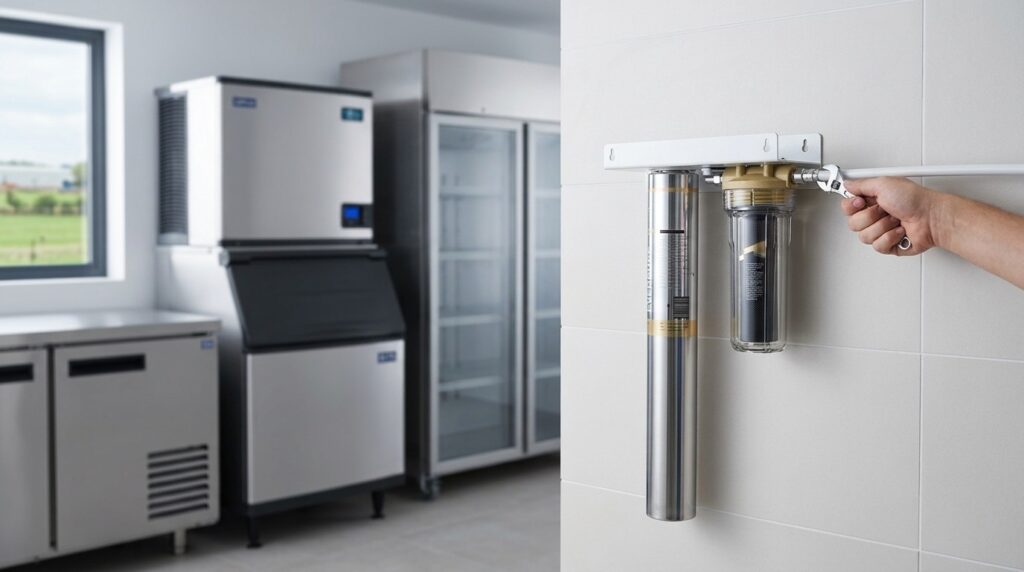
Discover optimal water filter maintenance for Unifrost ice machines to prevent scale and enhance performance.
Unifrost Ice Machine Water Filter Guide: Choosing, Installing and Preventing Scale
If you run a Unifrost ice machine in Ireland, the water you feed it is a direct cost and quality driver. Hardness, sediment and chlorine affect cube clarity and taste, but they also accelerate scale in the water circuit, cut daily output and push you into more frequent callouts.
This guide helps you make the practical choices that matter: whether you need a full Unifrost purifier kit or just a cartridge change, which Unifrost ice machine water filter option fits your setup (I40002-CN main cartridge, SA30007 complete purifier kit, or SA950750 PP cotton pre-filter pack), and how to lay out the install to avoid leaks and pressure loss. You will also get a straightforward replacement and check schedule for busy sites, plus quick troubleshooting steps when you see cloudy or soft ice, slow production, or recurring scale, across undercounter models like U40-15 and UB25-15 and modular units such as U165-125 and U230-175 with bins like B175 and B275AIB.
Why Water Filtration Matters for Ice Machines
Scale and sediment in Irish mains water can build up inside an ice machine’s water circuit and on the freezing surface. Over time that reduces ice output, pushes up the risk of breakdowns, and leaves you doing more cleaning and descaling to stay on top of hygiene.
Uisce Éireann notes that limescale from hard water can cause cloudy or white-looking water in a glass. That same mineral load is what ends up depositing onto cold surfaces inside equipment, including ice machines (Uisce Éireann guidance on cloudy water and limescale from hard water).
Filtration also helps with day-to-day ice quality. It can reduce taste and odour issues linked to chlorine and catch grit that can clog valves and strain pumps. The key point is sizing and discipline: a filter is not a set-and-forget fix. If your site has very hard water, high ice demand, or older pipework shedding sediment, you still need a proper maintenance routine and a filter setup that matches your volume, not just the occasional cartridge swap.
How scale cuts performance in a busy bar or kitchen
When an undercounter cube maker is running flat-out on a Friday night, it needs to freeze efficiently and harvest reliably, cycle after cycle. Scale acts like insulation on the evaporator surface, so freezing takes longer. In practical terms, you can see lower daily output and inconsistent cubes, and the machine struggles to recover after peak service.
On modular head-and-bin setups, the same problem tends to show up as “the bin never gets ahead”. The machine runs, but it cannot build reserve ice for the rush because each cycle is less efficient than it should be.
Scale can also narrow internal water paths and interfere with level control. The operator impact is straightforward: more call-outs, more downtime, and more staff time spent firefighting shortages with bagged ice, which is rarely ideal in a pub, bar, or hotel banqueting operation.
Why filtration improves ice quality, not just the machine’s lifespan
Ice is an ingredient. If your incoming water has noticeable chlorine, intermittent cloudiness, or visible grit after waterworks, those issues do not magically disappear when you freeze it.
Ice machines effectively concentrate problems because they freeze and flush water repeatedly. Anything that does not freeze cleanly either ends up as deposits in the system or shows up as off-flavours and inconsistent-looking ice.
Filtration helps in two practical ways:
Reduces sediment and solids that can contribute to cloudy ice and blocked inlets.
Supports more consistent taste and clarity, which matters for spirits and mixers, cocktail service, and anywhere guests can see the cube in the glass.
Why bins and drainage make water quality more critical on modular setups
If you are running a modular cube maker with a storage bin, you are storing ice for peak demand, not just producing it. That bin becomes a hygiene pressure point. Poor water quality increases residue and fines in the system, and any slip in bin cleaning, drainage, or scoop handling tends to show up quickly as off-ice and a higher contamination risk.
Filtration will not fix a poor install. If drainage is slow, backing up, or not correctly trapped, you can end up with standing water and smells around the bin area. Scale also tends to take hold faster in “always damp” conditions. In practice, the filtration conversation usually turns into a wider decision: what filtration suits your local water conditions, and how you will maintain it in line with your weekly covers and drinks volume.
Choosing the Right Unifrost Water Filter Kit
Choosing between the Unifrost ice machine water filter options comes down to one question: are you fitting filtration from scratch, or keeping an existing setup working?
SA30007 is the complete purifier kit for a first-time install, a new machine, or any site where the existing filter arrangement is missing or unclear.
I40002-CN and SA950750 are consumables. They only make sense when the correct housings and fittings are already in place.
All three are aimed at the same outcome: cleaner incoming water to help reduce scale build-up, taint, and avoidable maintenance. The right choice depends on your local supply, whether you ever see discolouration after works, and whether you are commissioning or simply maintaining.
How Unifrost filter options compare overall (I40002-CN vs SA30007 vs SA950750)
SA30007 is the practical “start here” option when you need a complete filtration setup. It’s the safer pick for refurbishments, change of ownership, or any kitchen where you have an ice machine but no confidence in what’s been fitted previously.
I40002-CN is the routine cartridge change for sites that already have the filtration hardware installed. It’s the sort of part that gets forgotten until ice starts to look off, the machine struggles to keep up, or you are seeing more scale-related cleaning than you should.
SA950750 is a PP cotton pre-filter pack. It earns its keep where sediment is the issue: grit, sand, or discolouration at the tap. If you want a grounded view of local water parameters, Uisce Éireann publishes results by Water Supply Zone via their drinking water quality results search.
If you are in a hard-water area, filtration still helps, but it does not replace a proper cleaning and descaling routine. Hardness is driven by local geology, and Geological Survey Ireland notes groundwater hardness arises mainly from limestone in many areas: Preliminary Groundwater Total Hardness Map.
I40002-CN main filter cartridge: where it fits
Use I40002-CN when the purifier hardware is already installed and you are keeping the system working as intended. It suits steady, high-throughput sites like pubs, hotel bars and busy cafés where you want a predictable maintenance rhythm rather than a new install.
Where exact compatibility depends on what’s already fitted on site, the sensible approach is to treat I40002-CN as a system consumable for Unifrost ice machine filtration setups that already have the correct filter head and housings in place, rather than as a machine-specific accessory.
SA30007 complete purifier kit: when to choose the full kit
Choose SA30007 when you are:
fitting filtration from scratch,
taking over a machine with unknown history,
dealing with missing parts or no paperwork, or
commissioning a new ice machine and want a known baseline from day one.
It is also the more sensible option where ice quality is part of the product, for example cocktail bars, whiskey bars and hotels, where taste, clarity and consistency get noticed quickly.
SA950750 PP cotton pre-filter pack: when a pre-filter is the difference-maker
SA950750 is for sites where sediment is the real problem, not just scale. Think older buildings with disturbed internal pipework, venues that get discolouration after local mains works, or any site that regularly sees debris in tap aerators.
A pre-filter helps protect the rest of the filtration and the machine’s water circuit from clogging. In day-to-day terms, it can prevent the gradual slide into poor fill, smaller cubes and inconsistent harvests that tends to show up when you’re busiest.
If you’re weighing up “change the main cartridge” versus “add a pre-filter”, this is a practical rule set:
Fit SA30007 if you have no existing filtration, you cannot confirm what is installed, or you are commissioning a new Unifrost ice machine or bin setup.
Change I40002-CN if filtration is already installed and you are focusing on routine maintenance and scale control rather than visible debris.
Add SA950750 if you are seeing sediment, repeated blockages, or performance dips after water interruptions, then review whether your cleaning and descaling schedule also needs tightening.
Once you’ve picked the right option, the operational win is in the install details: a leak-safe layout, proper isolation valves, and a change routine that matches Irish water conditions and your weekly ice volume.
Installation Best Practices
Shut off and isolate the cold mains feed first. Then plan the route so the filter is easy to reach for cartridge changes and the pipe run stays short. A simple, reliable sequence is: isolating valve, optional sediment pre-filter, main filter cartridge, then the ice machine inlet. Flush new cartridges before feeding the machine, then check for leaks and confirm the machine fills normally.
If your site needs backflow protection, agree the approach with your plumber. Potable water systems in Ireland are expected to follow relevant requirements such as IS EN 1717, as referenced by Uisce Éireann’s Code of Practice for Water Infrastructure.
1. Choose the location and keep the pipework sensible
Put the filter assembly somewhere you can service it without dragging the ice machine out during a busy shift. In a pub or hotel back bar, that often means inside the cabinet beside an undercounter cube maker, or wall-mounted beside a modular head and bin set-up.
Keep the run from the filter outlet to the machine as short as your layout allows. Avoid unnecessary elbows, tight bends and kinks in small-bore tubing. You want steady flow to the inlet valve and fewer joints that can weep and quietly rot a kickboard.
2. Isolate the cold mains feed properly before you start
Turn off the dedicated cold feed to the ice machine, if you have one. If not, isolate the nearest upstream valve and depressurise the line by opening a cold tap briefly. The aim is a controlled, dry install, not a slow drip behind a bin that nobody notices until there’s damage.
If there isn’t already an isolating valve on the ice machine supply, fit one now. It keeps cartridge changes and future servicing straightforward, and reduces downtime when something needs attention.
3. Mount the filter so it can be serviced properly
Fix the filter head or purifier kit to a solid surface so the weight is not hanging off the pipework. Leave clearance underneath to remove the cartridge straight down, and enough slack in the tubing that you are not twisting fittings during service.
In practice, you may be fitting a complete purifier kit (SA30007), with replacement elements such as the main cartridge (I40002-CN) and an optional PP cotton pre-filter pack (SA950750). Treat the filter like plant equipment: accessible, secure, and protected from knocks during cleaning.
4. Use a straightforward flow layout: inlet, pre-filter, main cartridge, machine
Build the layout in the direction of flow from the cold mains feed:
Cold mains supply → isolating valve → PP cotton pre-filter (if used, SA950750) → main filter cartridge (I40002-CN, typically as part of SA30007) → ice machine water inlet.
Two rules keep you out of trouble:
Keep the filtration train linear. Avoid teeing off to other equipment, as inconsistent draw can affect an ice machine’s fill behaviour.
Don’t bury the filter behind the bin or cram it into a spot where staff will catch it with a mop handle.
5. Flush the filters before feeding the ice machine
Before connecting the outlet line to the ice machine, flush the installed filters to a bucket or a suitable drain point until the water runs clear. This helps clear carbon fines and any installation debris that would otherwise end up in the machine’s water circuit.
Once flushed, connect to the machine inlet, open the isolating valve slowly, and let the machine complete its fill cycle. A slow open reduces the chance of fittings shifting under a sudden pressure change.
6. Leak-test, then confirm the machine behaves normally
Dry off all joints. Then check each connection while the machine fills, and again after it has sat pressurised for 10 to 15 minutes. Small drips behind undercounter units are easy to miss and can cause serious damage long before anyone calls it in.
Finally, check the practical signs that the install is right: the machine fills in its normal time, the inlet valve isn’t chattering, and you’re not seeing unusually small or hollow cubes after the first few cycles. If something looks off, fix it now while access is easy.
7. Label the install and set a cartridge change routine from day one
Put a date label on the cartridge or inside the service panel beside the filter, and log it in your HACCP maintenance records. In Ireland, water hardness and sediment can vary widely by area and by older building pipework, so change intervals should reflect what you see on site, not just the calendar.
If you’re unsure whether you need only the main cartridge (I40002-CN), a complete purifier kit (SA30007), or the PP cotton pre-filter pack (SA950750), decide based on your local water conditions and service volume, not the badge on the front of the machine.
Maintenance & Replacement Schedule
Set a diary schedule for quick checks, then replace components based on time, volume, and what the machine is telling you (ice quality, fill speed, recovery after peaks). Check the filter head and housings for leaks and pressure loss, and keep cleaning and descaling on a written plan. Ice is treated as food, and the bin is a high-risk contact point, not just “storage” (FSAI guide to good hygiene practice). If you’re in a hard-water area or you run a modular head and bin flat-out at weekends, plan on shorter intervals than a quiet café.
1. Put filter changes on the calendar (then tighten the interval if needed)
In most busy pubs, hotel bars and function venues, a “change by” date is safer than waiting for symptoms. As a baseline, plan to replace the main filter cartridge (for example, the Unifrost I40002-CN) every 6 months, then shorten the interval if scale returns early or the machine struggles to recover after peak service. Many commercial cartridges in this category are commonly set up around a six-month service cycle in normal use (Aquasoft Ireland Everpure ES06 listing).
Water hardness varies around Ireland. If you’re on a harder supply, filtration and descaling are about protecting output and avoiding downtime, not polishing the ice. Expect more frequent attention (Geological Survey Ireland hardness map).
2. Check the pre-filter first because it clogs before the main cartridge
If you’re using a purifier kit such as SA30007, treat the sediment stage as your early-warning system. In busy sites, do a quick monthly check of the pre-filter housing and any PP cotton pre-filter pack (SA950750) for visible discolouration, slime, or debris. Don’t stretch it if staff are reporting slower ice-making or inconsistent cube size.
A blocked pre-filter usually shows up as reduced water flow before you notice taste or odour issues. On modular head units feeding storage bins, that reduced flow can mean slower fills and weaker production, which is how you end up short of ice during service.
3. Watch for blockage symptoms that show up during service
In real life, the first sign is usually “we’re running out of ice earlier than normal” or “the cubes look off”, not a tidy fault code. Treat these as water-supply and filter checks before you assume a refrigeration fault:
slower production and longer recovery after a busy round
smaller, softer, hollow, or increasingly cloudy cubes
more frequent bin-empty moments at the same trading level
Also check the basics that cause pressure loss or air ingress: a kinked inlet line, a partly closed isolation valve, loose push-fit connections, or a housing that’s pinched an O-ring. Five minutes here can prevent a call-out and a weekend relying on bagged ice.
4. Match cleaning and descaling to the filter schedule (and document it for HACCP)
A filter reduces incoming scale and sediment, but it doesn’t replace cleaning. Keep bin cleaning, water circuit cleaning, and descaling on a written schedule you can produce if asked, because ice-contact surfaces need the same discipline as any other food-contact equipment (FSAI guide to good hygiene practice).
Day to day, think of it like this: filters help control what comes in; cleaning controls biofilm, odours, and contamination risks inside the machine and bin. If you’re pairing a modular head with a bin, pay attention to drainage and standing water around the bin area. Poor drainage accelerates scale and turns “clean ice” into an avoidable hygiene job.
5. Keep spares on-site and change filters at the right moment (not mid-shift)
Busy trade rarely gives you the quiet window you’d like. Keep at least one spare main cartridge (I40002-CN) and, if you run the SA30007 layout, a spare SA950750 pre-filter pack on-site so you can swap immediately when symptoms appear.
Do the change when the machine can be taken out of use without compromising service, and leave time afterwards to check for leaks and proper flow. If you’re unsure which Unifrost filtration layout you have, or whether you need a cartridge-only swap versus a full purifier kit approach, it’s worth getting advice before ordering. It’s a practical decision about uptime and output, not just a parts list.
Troubleshooting Water Quality Issues
Cloudy, soft, small or bad-tasting ice is usually a water and maintenance issue, not a refrigeration failure. Before you assume the machine is “gone”, work through the simple causes that drive most call-outs in Ireland: changes in mains supply, low or unstable pressure, blocked filtration, scale, and poor drainage around the bin.
A sensible order is:
confirm it looks like a water-quality symptom
check flow and filtration first (most common)
clean and descale properly
only then decide if you need to move up to a full purifier kit
If you are on a boil water notice, or you have persistent odour or slime, stop serving ice until the machine is sanitised and the water supply is confirmed safe.
1. Confirm it’s a water-quality symptom (not just “normal” ice)
Cloudy ice is not automatically “dirty”. Most cube machines freeze from the outside in, so trapped air and dissolved minerals can show as a white centre, particularly with harder water or an aggressive freeze cycle.
Do a quick check at the tap feeding the ice machine:
If the cold water looks cloudy, smells off, or has changed recently, treat it as a supply issue first. Your ice will mirror the incoming water.
If you’re seeing a change in the water supply, follow local public advice and updates, for example Uisce Éireann’s guidance on water quality issues: https://www.water.ie/help/water-quality
If the water at the feed tap is fine, move on to flow, filtration and cleaning. Those are still the most likely causes.
2. Match the ice symptom to the most likely filter-related cause
Don’t swap parts at random. Use the symptom to narrow the most probable cause:
Cloudy cubes or white flakes in the bin: commonly minerals and scale, or a filter element at end of life that’s passing fines.
Soft/wet cubes, small cubes, or hollow cubes: often restricted water flow from a blocked pre-filter or cartridge, or inconsistent supply pressure.
Chlorine taste or a “chemical” smell: carbon filtration likely exhausted, or the local supply has been dosed differently.
Musty smell, slime, or “dirty” ice: more often a cleaning and sanitising problem than a hardness problem, but neglected filtration can make it worse by reducing water turnover and encouraging build-up.
If you’re running a Unifrost filtration set-up, check where the restriction is:
sediment stage: SA950750 PP cotton pre-filter pack
main cartridge stage: I40002-CN main filter cartridge
Replace the element that’s actually loaded up, not just the one that’s easiest to reach.
3. Check for restriction, bypassing and pressure loss at the filter head
A lot of “bad ice” is really “not enough water getting through”. In a busy pub or hotel, it often shows up as smaller cubes and slower recovery during peak service, then a timed-out machine and a service call.
Practical checks:
Fill rate: if the flow into the reservoir drops off, you have a restriction or an incorrectly fitted cartridge.
Valves and bypass: after a clean-down or refit, make sure isolation valves are fully open and any bypass isn’t left half-on.
Leaks and air ingress: any weeping or staining around fittings needs attention. Small leaks can pull air into the line, causing inconsistent fills and odd-looking cubes.
If you can’t get stable flow back with a pre-filter or cartridge change, you may be better moving to a complete purifier kit (Unifrost SA30007) rather than repeatedly replacing only the main cartridge.
4. Deal with scale properly (and don’t ignore the bin and drain)
Scale hits you twice in day-to-day trading: it reduces output and forces the machine to work harder. If you’re finding white grit in the bin, it may be scale breaking loose, which you do not want ending up in a customer’s drink.
Clean and descale is not just “the ice maker head”. The bin and drainage matter as well:
Bins such as B175, B275AIB and B375 still rely on good drainage and clean internal surfaces.
If the drain is slow or backing up, you can end up with standing water around the bin area, higher humidity, and faster contamination.
Make sure the drain run has proper fall and the waste connection cannot back-siphon.
5. Sanitise and manage shutdowns if there’s any hygiene risk
Ice is food. An ice machine is also a water system, so neglect can become a hygiene issue quickly, especially after seasonal closures (hotels, golf clubs, schools) when a machine is left warm and wet.
If you have odour, slime, or visible build-up:
do a full clean and sanitise routine
stop serving ice until you’re satisfied it’s safe
For higher-risk buildings, it’s also worth remembering the workplace risk angle. The HSA notes infection can be caused by inhaling droplets of contaminated water in the context of Legionella control, which is why written control measures and records matter in some settings: https://www.hsa.ie/eng/topics/biologicalagents/specificbiologicalagentsdiseases/legionellosis/
Once water flow is stable, the correct filter element is changed, and scale and hygiene are under control, you’re in a position to choose the right Unifrost filter kit for your machine and your local water conditions, rather than guessing.
Extending Ice Machine Life Through Filtration
A properly sized filter and pre-filter, changed on schedule, keeps scale and sediment out of the water circuit. In day-to-day terms, that helps your Unifrost ice machine hold its output and cube quality more consistently through busy service.
It also cuts down on avoidable call-outs. Scale and debris are common causes of blocked inlets, poor harvest performance, and early wear on valves and pumps. In Irish conditions, the difference is most noticeable in harder-water areas, where limescale builds quickly and forces more frequent descaling.
Intermittent filtration is a false economy. The machine can run well for a few weeks, then drop production at the worst possible time, usually when demand is highest. If you want predictable output, choose a filter kit that matches your model and your local water conditions, and stick to the change interval as part of your HACCP routine.
Integrating with Wider Unifrost Ecosystem
Ice machine filtration tends to pay for itself only when you treat it as part of the full Unifrost setup, not an afterthought. In Ireland, scale risk is very site-dependent because water hardness varies by local geology and supply. Geological Survey Ireland’s groundwater hardness mapping is a useful starting point when you are deciding how hard to go on filtration and descaling.
It is rarely just “hard or soft”, though. Even moderate hardness can come with sediment, or taste and odour issues after treatment works. That is why filtration, cleaning, drainage, and storage hygiene need to line up. If one piece is weak, you usually see it in cube quality, slower recovery, or avoidable call-outs.
How the filter fits with Unifrost machines, bins, and day-to-day workflow
A filter is really protecting three parts of your ice set-up at once:
The ice maker. Whether you are running undercounter cube makers (U40-15, UB25-15) or modular heads (U165-125, U230-175), the water circuit is where scale and sediment do the most damage. If incoming water is poor, the ice-making components suffer first.
The bin. Unifrost bins such as the B175, B275AIB, B375 and the “OG” variants are designed to pair with modular cube makers, but the bin still depends on clean incoming water and correct drainage. If filtration is neglected, you often end up cleaning the bin more often, not because the bin is at fault, but because the water is.
Service flow. In a pub or hotel, ice demand spikes hard. If filtration helps keep output consistent and reduces unplanned downtime, you avoid the usual knock-on problems: buying bagged ice, moving stock between stations, or trying to deal with soft, small cubes mid-shift.
Installation layout and what it means for maintenance access
Filtration only helps if it is installed so you can service it quickly, without turning a cartridge change into a kitchen shutdown.
A practical layout is: incoming mains water → pre-filter stage (if needed) → main filter stage → ice machine. In Unifrost terms, that might mean an SA950750 PP cotton pre-filter pack upstream, then either the SA30007 complete purifier kit or the I40002-CN main filter cartridge, depending on what your site needs.
Two practical rules make the difference in real kitchens:
Leave proper clearance to swap cartridges and isolate the line.
Keep the filter visible and reachable. In hospitality, “out of sight” becomes “never changed” quickly.
Treat drainage as part of the same decision. Modular heads on bins still rely on correct falls and an unrestricted drain. A slow or poorly run drain can look like a “water quality” fault when you are troubleshooting because standing water makes hygiene harder and can cause smells around the bin area.
Joining filtration to a routine you can actually run in Ireland
To make filtration stick long-term, tie it into routines you already run, like HACCP checks, cellar schedules, and planned deep cleans.
Monthly (quick checks): check the filter housing is dry (no weeping or sweating), watch for a drop in water flow, wipe down accessible bin areas, and make sure the condenser area is not clogged with dust or grease.
Quarterly (preventative work): replace pre-filters where fitted, change the main cartridge if usage is heavy or cube quality is drifting, clean and sanitise the bin and scoop, and run the machine cleaning and descaling routine suited to your local water conditions.
After plumbing works or water interruptions: flush the line before the ice machine. Expect pre-filters to load up faster, as sediment after works is common, especially on older pipework.
The aim is not perfection. It is to avoid the familiar pattern of running the unit until scale is obvious, then having to descale in the middle of a busy week.
Troubleshooting water-quality issues using the Unifrost parts you already have
When cube quality changes, start with the filter and water path before assuming the machine is failing.
Symptoms like cloudy cubes, soft cubes, smaller cubes, or inconsistent harvest can come from:
Water in (filtration, pressure, sediment, hardness),
Water out (drainage),
Heat out (condenser airflow and cleaning).
Your filtration parts help you narrow it down. If a fitted pre-filter blocks early, you are likely dealing with sediment rather than pure hardness, and it is a prompt to flush the supply and look at what is coming down the line. If the pre-filter stays clean but scale returns quickly after descaling, hardness is usually the driver, and you may need a more complete purifier approach rather than relying on cartridge swaps after the fact.
This is where the wider setup matters. A modular head on a correctly matched bin, with decent drainage and a maintained filter arrangement, is typically easier to keep consistent than a machine that is constantly fighting water issues and hygiene fall-out.
From a buying point of view, the sensible question is: which Unifrost filter kit and consumables match your machine, your local water conditions, and how heavily you run the unit at peak service?
FAQs: Unifrost ice machine water filters and scale prevention
Which Unifrost ice machine water filter kit should I use for different models?
Use the kit choice to match what needs filtering at your site (sediment vs. scale and taste) and whether you’re fitting a full new setup or just refreshing an existing one.
U40-15 and UB25-15 (undercounter cube makers): Start with the SA30007 complete purifier kit when installing filtration from scratch or when water quality is variable. If you already have the kit body installed and you’re simply due a change, replace the I40002-CN main filter cartridge. Add the SA950750 PP cotton pre-filter pack if you’re seeing sediment or frequent cartridge blockages.
U165-125 and U230-175 (modular head units) and complete sets (U165-125+B175, U230-175+B175): These higher-demand machines benefit most from a full, stable filtration setup. Use the SA30007 complete purifier kit as the baseline, then plan ongoing cartridge changes with I40002-CN. If your incoming water carries visible particles or you have recurring flow/pressure issues at the machine, include the SA950750 PP cotton pre-filter pack to protect the main cartridge.
If you’re unsure whether you have an existing filter head and housing on site, check for a filter body and fittings on the water inlet line before the ice machine. If it’s present, you likely need I40002-CN (and possibly SA950750), not the full SA30007 kit.
How does Irish water hardness affect Unifrost ice machine performance?
Hard water accelerates limescale formation inside the water circuit and on ice-making surfaces. In practice, that can lead to:
Slower or inconsistent ice production as scale interferes with heat transfer.
Smaller, cloudy, or misshapen cubes and more “slushy” ice in the bin.
More frequent cleaning and descaling, plus a higher risk of valves and water paths restricting over time.
Across Ireland, hardness can vary widely by county and even by town. If you’re in a harder-water area, a complete purifier kit (SA30007) is typically a better starting point than only swapping a cartridge, because it gives you a consistent filtration setup you can maintain on schedule. If your site already has the kit installed and you’re mainly controlling ongoing scale and taste, replacing the I40002-CN main cartridge on time is usually the key step.
Practical tip: if your machine needs descaling more often than expected, or you notice falling output and “chalky” residue, treat that as a sign that your filtration and service intervals need tightening for local water conditions.
What routine maintenance prevents ice quality problems?
A simple routine prevents most ice quality complaints (taste, odour, cloudiness, soft cubes) and reduces scale-related callouts.
Weekly: Empty and wipe the bin area and scoop, then store the scoop hygienically. Check the bin drain is flowing freely, especially on modular setups with bins like B175/B275AIB/B375, where poor drainage can lead to contamination and scale build-up.
Monthly: Inspect the filter area for leaks, kinks, or pressure drop. If cubes are getting smaller or the machine fills slowly, the pre-filter (SA950750) or main cartridge (I40002-CN) may be clogging.
Quarterly (or more often in hard-water sites): Perform a proper clean and descale following your Unifrost instructions and your chosen chemical routine. Clean around air intakes and keep the machine area dust-free so it can run efficiently.
On schedule: Change filtration components before performance drops. A busy pub or hotel can hit filter capacity quickly, so plan proactive changes rather than waiting for ice quality to deteriorate.
If ice quality changes suddenly, treat it like a water issue first: check incoming water, the filter condition, and drainage before assuming there’s a mechanical fault.
Next step: match your Unifrost ice machine to the right filtration
If you’re choosing a new machine or tightening up your unifrost ice machine water filter setup, it helps to select the ice maker first, then match the purifier kit, cartridge, and any pre-filter to your site’s water conditions and workload.
Browse the range here: Explore Unifrost Ice Machines.
Related Unifrost guides
Compare models, maintenance advice and support information related to this topic.
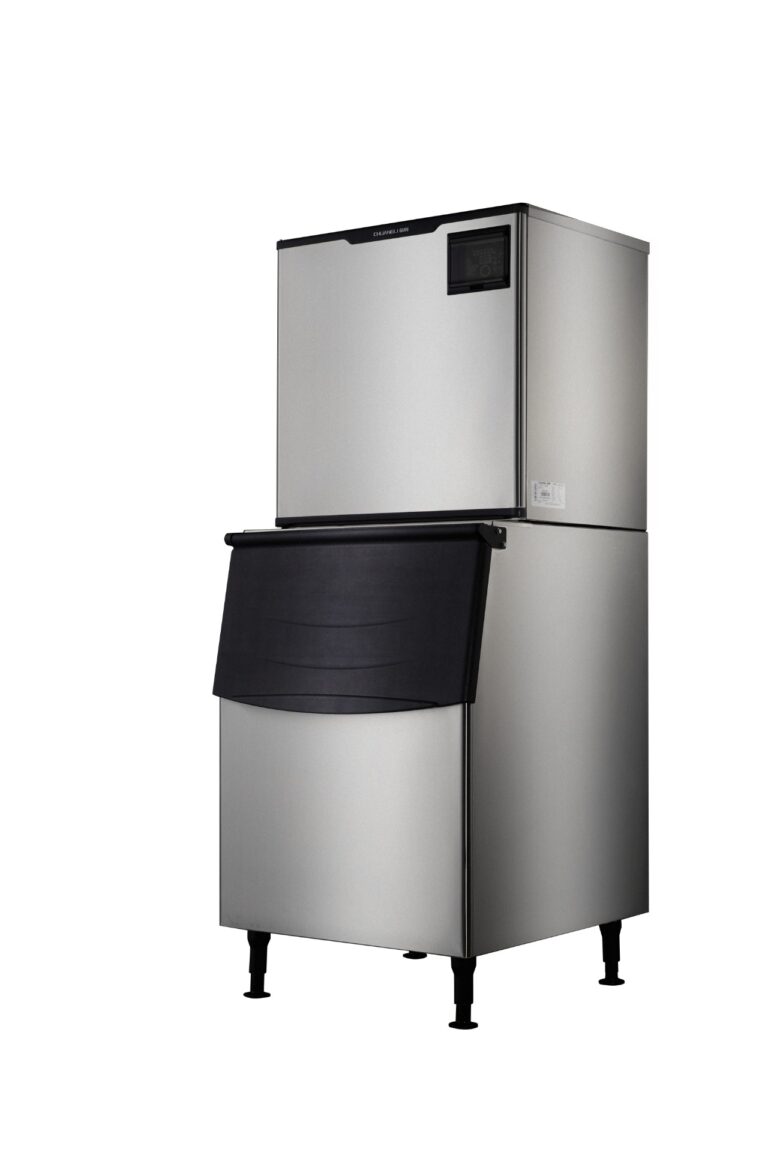
Unifrost Compact Ice Makers: A Comprehensive Guide
Discover efficient Unifrost compact ice makers for Irish bars. Learn about capacity, installation, and maintenance needs.
Read guide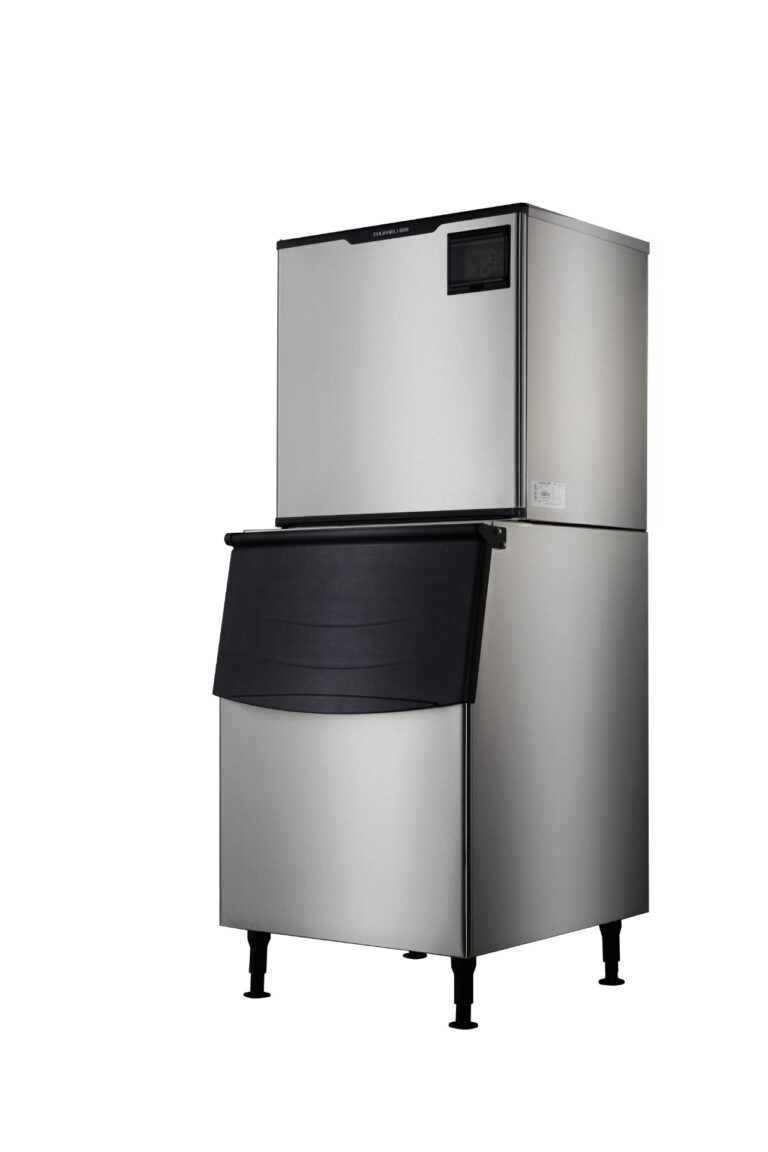
Choosing a Unifrost Ice Machine for Your Irish Hospitality Business
Discover the best Unifrost ice machines for Irish bars and hotels. Learn about sizing, installation, and running costs.
Read guide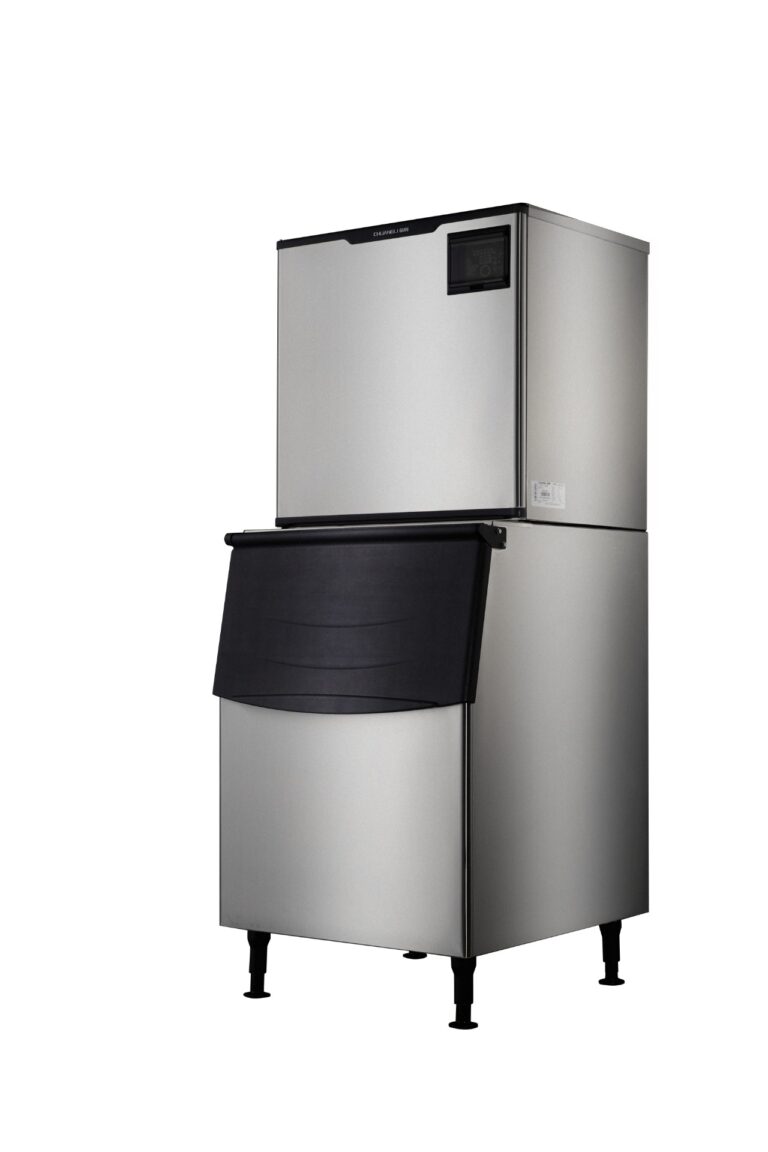
Choosing the Right Unifrost Ice Maker Machine for Your Business
Select the ideal Unifrost ice maker for your Irish business. Understand production capacities and venue requirements in our comprehensive guide.
Read guideView Unifrost ice machines at Caterboss
For current product options, pricing and availability, continue to Caterboss.