
Unifrost Upright Freezer and Ice Storage Bin Service Planning Guide for Irish Kitchens
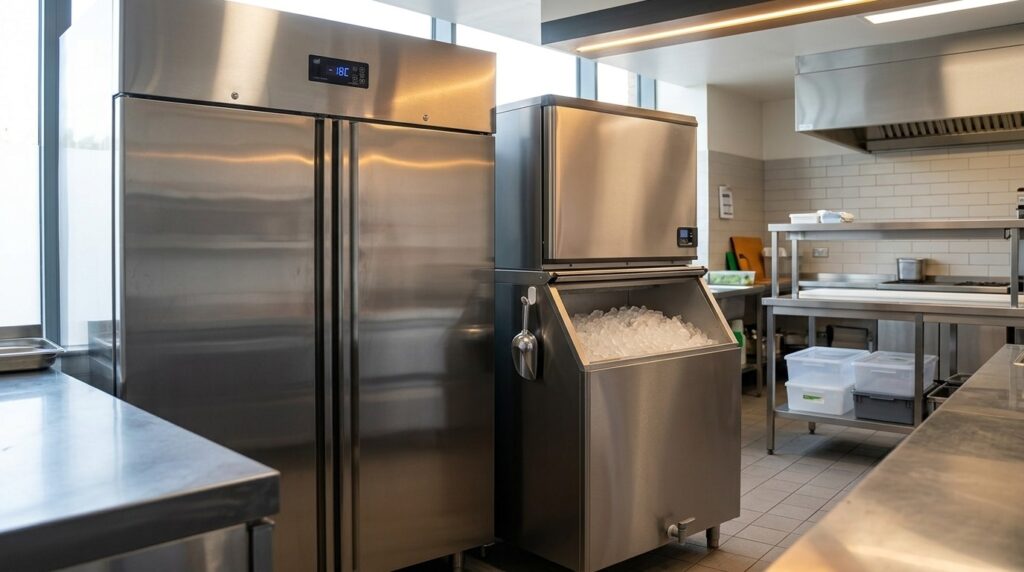
Guide for Irish kitchens on planning ice storage with Unifrost upright freezers and bins, focusing on service, hygiene, and business needs.
Need more detail? For model comparisons, setup steps and troubleshooting, see the related guides below.
Unifrost Ice Storage Service Planning: Upright Freezers vs Ice Storage Bins for Irish Venues
If you run a bar, café, hotel, or restaurant, your ice setup affects speed of service, HACCP compliance, and waste. The key decision is whether you rely on an upright freezer for ice, or you build your day to day drinks service around a dedicated Unifrost ice storage bin matched to your ice machine.
This guide helps you plan a practical split between hygienic, high frequency loose ice at point of use and longer term frozen backup. You will work through:
When a Unifrost Ice Storage Bin (for example B175, B275AIB, B375 or ice machine and bin sets like U165-125+B175 and U230-175+B175) is the right primary vessel for loose service ice.
Where Unifrost Upright Freezers (for example F1000SV, F1300SVN, F1310SV, F410SS, F620SV) fit best for bagged ice, contingency stock, and seasonal spikes.
The hygiene checks that matter in Ireland for scoops, lids, handling routines, cleaning schedules, and documentation.
How to size storage and access for your peak service so you do not run out mid rush or create risky workarounds.
Why This Topic Matters in Commercial Use
Loose service ice is a ready-to-eat food. In practice, the main risk is contamination from high-frequency handling, poor segregation, and awkward storage during a rush, not the ice “going off”.
Irish food hygiene rules are clear that ice which may contaminate food must be made from potable water and handled and stored to protect it from contamination, as set out in the FSAI summary of Regulation (EC) 852/2004 water and ice requirements. Many venues can keep ice frozen in an upright freezer, but day-to-day access, scoop discipline, and cleaning practicality are usually where standards slip. That’s why a dedicated storage bin often makes more sense in real service.
Service pressure is where “freezer ice” falls down
In a busy pub, hotel bar, or high-turnover café, ice is taken little and often, by multiple staff, with wet hands and glassware nearby. Upright freezers are designed for longer-term frozen stock and fewer door openings. Using one as your main loose-ice store tends to create a clumsy workflow: the door is held open, bags get torn, the scoop ends up inside, and ice sits too close to other products and handling.
A dedicated ice bin is built for quick, cleaner access at the point of use. During peak, the job becomes simple: open, scoop, close. That sounds minor until you’ve seen 10:30pm on a Saturday when the ice is running low and everyone is competing for the same freezer.
Hygiene, HACCP, and inspections are simpler when ice has its own zone
If ice is treated as “just frozen water”, it typically shares space, tools, and cleaning routines with general frozen goods. That’s when HACCP controls get woolly and staff practices drift.
A dedicated bin paired with a modular ice machine (for example Unifrost head units like U165-125 or U230-175 matched to a bin such as B175) creates a clear, inspectable system: where ice is made, where it’s stored, how it’s accessed, and how it’s cleaned. Even if you keep an upright freezer for emergency bagged-ice backup, separating day-use loose ice from frozen stock and backup reduces cross-contact risk and makes training easier. It also makes it simpler to show control during an EHO visit because your ice routine doesn’t depend on “which shelf, which bag, which scoop”.
Poor ice planning shows up as waste, slow service, and avoidable costs
When storage is undersized or in the wrong place, you feel it quickly: ice half-melts and gets dumped at close, staff waste time walking for refills, and you end up buying retail bagged ice at short notice.
Relying on an upright freezer for frequent ice access can also push it into an operating pattern it isn’t optimised for, with constant openings that increase frost, mess, and temperature recovery time, especially if it’s already carrying frozen food.
Get the storage format right first, then plan where backup sits and how ice moves to the bar. That’s what turns ice from a nightly irritation into a controlled utility: clean, fast, and easier to manage under pressure.
Key Decision Factors for Ice Storage
Decide this first: are you storing loose “service ice” that will be scooped all night, or sealed bagged ice that only gets opened when needed? In most Irish bars and busy drinks operations, the cleanest, easiest system is:
Ice storage bin + modular ice machine for loose service ice at point of use
Upright freezer for sealed bagged ice only as backup and contingency
That split keeps handling under control and makes your day-to-day hygiene routine achievable, even on a hectic Friday night.
1. Separate loose service ice from bagged backup ice
If you do one thing, do this: decide what ice is handled with a scoop versus what stays sealed until it is opened.
A dedicated ice storage bin is designed for frequent opening and fast scooping while reducing contact with hands, glass, bar tools, and splash. Once ice is being served in drinks, the main risk is not the holding temperature. It is exposure and handling.
An upright freezer is great for keeping sealed stock hard frozen, but it is a poor setup for routine scooping. Door swings, mixed storage and “quick grabs” make it difficult to keep loose ice genuinely separate from other items during service, particularly in pubs, hotels and late bars where several staff will be in and out of the same freezer.
2. Choose based on hygiene and inspection reality, not just temperature
In Ireland, ice used in food and drinks must be made from potable water and handled to prevent contamination. The FSAI summarises the hygiene expectations around potable water and ice handling under Regulation (EC) 852/2004 in its guidance on drinking water and ice:
https://www.fsai.ie/enforcement-and-legislation/legislation/food-legislation/water/drinking-water
Your equipment does not replace HACCP. It either supports it or makes it hard to follow in real service.
Use this quick test. If you cannot confidently answer “yes” to each point, avoid storing loose service ice in an upright freezer as your normal method:
Can you keep loose ice away from uncovered food, open packaging, or staff drinks in the same freezer?
Is the scoop controlled properly: not touching hands, glass rims, garnish stations or freezer shelves, and stored in a clean, dedicated place?
Can you avoid repeated door-open time during service, with wet surfaces and mess that become harder to keep hygienic?
Can you clean and sanitise the storage area as often as a high-touch food contact zone needs, rather than treating it like a monthly stock-freezer job?
This is why, in practice, a bin setup is usually the right answer for loose service ice. Unifrost ice storage bins (for example B175, B275AIB, B375) paired with a modular head unit (for example U165-125 or U230-175) are built around that day-to-day handling pattern, while the upright freezer stays in the “sealed backup” lane.
3. Decide based on service pressure, footprint, and who’s using it at 11:30pm
The best argument for an upright freezer is space and flexibility. In a small café, takeaway or rural bar, you may already have an upright freezer in place and want it to cover every job.
The trade-off is service pressure. When it is busy, staff need a workflow that is fast and repeatable, and does not invite shortcuts. With a bin beside the bar the routine is simple: open lid, scoop, close. With an upright freezer it tends to become: open door, reach in, move items, deal with frost, manage bags and cross-traffic. That friction is exactly when standards slip.
A practical split that works in many Irish venues is:
Bin = day-use loose ice for speed and hygiene at point of use
Upright freezer (for example F1000SV, F1300SVN, F1310SV, F410SS, F620SV) = emergency bagged ice only, sealed and clearly separated from food stock
It also makes staff training easier because “where ice lives” is unambiguous, and it is easier to explain during an EHO visit.
4. Use the failure-mode test: what happens when something goes wrong?
The better setup is the one that fails safely.
If your ice machine goes down on a bank holiday weekend, an upright freezer is ideal for bagged ice because the ice stays sealed and handling stays controlled. You open bags as needed and tip ice into a clean, dedicated service container or into a clean bin, rather than having staff scoop loose ice out of a mixed-use freezer beside frozen food.
If your normal approach is “we keep loose ice in the upright freezer and scoop from there”, the failure is usually hygiene, not supply. Common warning signs include wet cardboard, broken bags, frost build-up, loose ice in contact with shelves, the wrong scoop being used, and the freezer turning into a mixed-purpose dumping ground.
Once each piece of kit has a clear job, you can size storage sensibly and set a simple routine that staff will actually follow.
Common Pitfalls in Ice Storage Planning
Planning “service ice” around a standard upright freezer instead of a dedicated ice machine and bin usually shows up quickly in day-to-day trading: slower service, more waste from clumping, and harder hygiene control. Ice is treated as a ready-to-eat food in practical HACCP terms, so you need cleanable equipment, controlled handling, and a routine you can actually keep up during busy shifts. The HSE’s Environmental Health guidance on food business oversight is a useful starting point for what inspectors expect to see in practice: clear controls, not ad hoc workarounds.
<https://about.hse.ie/environmental-health/notify-the-hse-about-starting-a-food-business/>
The mistakes that cause the most trouble in real service
Using an upright freezer as the main source of loose ice
Upright freezers are built for storing frozen stock, not repeated door openings and constant scooping. You get slow temperature recovery, more clumping, and a hygiene headache because the space is shared with other foods and packaging.
Sizing for production, not storage (the “we still ran out” problem)
Even if the ice machine can make enough ice over 24 hours, you can still run out mid-service if the bin cannot buffer peaks. This catches pubs, hotels, and event-led sites where demand is spiky rather than steady.
No defined “ice zone” in the workflow
If staff are moving between glasswash, garnish prep, floor-level storage, and the ice point with the same scoop or bucket, control slips fast. The early warning signs are practical ones: cloudy ice, off smells, and bins that never look properly clean.
Treating the bin like a freezer
An ice bin is for holding and dispensing, not long-term deep-freeze storage. If you overfill and compact the ice, you increase bridging and end up breaking it apart with whatever is to hand, which creates waste and undermines handling controls.
Storing backup bagged ice in the wrong freezer
Bagged ice kept beside strong-odour foods, or in a freezer that is constantly opened for chips and nuggets, often ends up tainted or fused into a block right when you need it most.
Skipping a written cleaning routine (and an owner)
If there is no named person, frequency, and basic record for cleaning the ice machine and bin, it becomes a “when we get a minute” job. That is how you drift into scale, slime, and complaints.
These are avoidable if you decide up front what your primary service-ice setup is (machine and bin, or bagged ice and freezer), what your backup is for peak nights, and what you will check daily to confirm you are keeping up on volume and hygiene.
Matching Ice Storage Solutions to Business Needs
Choosing between a dedicated Unifrost ice storage bin setup and using a Unifrost upright freezer for ice comes down to service speed, hygiene control, and how consistent your demand is.
Ice bins are built for frequent opening and clean scooping at the point of use. Upright freezers are built for frozen storage behind a door that should stay shut as much as possible. You can use both on the same site, but the best split depends on how often ice is accessed, how far it has to travel, and what happens to handling when the bar gets busy.
How do Unifrost ice storage bins and Unifrost upright freezers compare overall?
Unifrost ice storage bins (B175, B275AIB, B375, plus modular sets like U165-125+B175 and U230-175+B175) suit high-frequency access. Staff can lift the lid, scoop, and close up again without turning ice into a bottleneck. That matters in Irish pubs, hotels and cocktail bars where the queue builds quickly and “quick fixes” appear under pressure.
An upright freezer can store ice, but it often creates the wrong workflow for loose service ice: doors held open mid-rush, scoops left on boxes, and ice being handled alongside general frozen stock. The issue is rarely temperature. It’s what the setup encourages people to do during service.
From a compliance point of view, treat ice as food. EU food hygiene rules require ice used in contact with food to be made from potable water and handled hygienically under Regulation (EC) No 852/2004 on the hygiene of foodstuffs. In practice, that means planning for clean storage, clean handling, and avoiding cross-contamination.
Unifrost ice storage bins (and modular ice machine + bin sets)
Pick an ice bin when loose ice is part of normal service rather than an occasional extra. Typical examples include cafés doing iced drinks, food-led pubs with busy drinks trade, hotel bars with functions, and cocktail-led venues.
The practical benefit is speed with better control. When the bin is beside the serving station, staff are more likely to use a dedicated scoop, keep the lid closed between uses, and keep hands and glassware away from the ice.
If you’re comparing modular options, matching a head unit such as U165-125 or U230-175 to a bin like B175 also gives you a straightforward system to standardise across one site or multiple locations.
Unifrost upright freezers for bagged ice backup and overflow
Use an upright freezer when the main job is frozen stock, and ice is secondary, seasonal, or strictly backup. It’s a sensible place to keep sealed bagged ice for heatwaves, event nights, or when the ice machine is being cleaned or serviced.
It can also be the pragmatic choice where the footprint at the bar is tight and there’s nowhere to place a bin at point of use. The trade-off is that you are relying on staff behaviour to keep ice handling separate from general frozen goods, and that gets harder as service volume rises.
If you do rely on an upright freezer for ice backup, keep the rule simple:
bagged ice only
keep it sealed
don’t use it as your day-to-day source of loose service ice unless you’ve put proper controls around scoops, clean containers, and door-open time
Which is best for you?
Small café with light iced-drink demand and limited space: a smaller dedicated ice machine + bin setup is usually easier to keep consistent than “loose ice in the freezer”. Keep the freezer for sealed bagged backup.
Busy pub or cocktail-led bar: prioritise a modular head unit (for example U165-125 or U230-175) paired with a bin like B175 near the serving station. Treat any upright freezer ice as contingency, not day-use.
Hotel with functions and unpredictable peaks: plan for a bin at point of use plus an upright freezer holding sealed bagged ice for events. Travel distance and refill frequency are what typically cause run-outs mid-service.
Food-led restaurant with a modest bar: if ice is handled often, a bin is usually the cleaner, easier-to-manage option. If ice is occasional, a freezer-backed bagged approach can work, provided handling is kept tight and reflected in your HACCP routine.
Once you’ve chosen the right storage format, the decision becomes practical: where the unit can sit, how it fits into service flow, and who is responsible for cleaning and daily checks.
Practical Steps for Effective Ice Management
Plan ice the same way you plan food flow: from water supply to ice machine, to storage, to point of use. Decide what lives as loose “service ice” in a dedicated bin, and what stays as sealed bagged backup in an upright freezer. Then put simple handling rules in place, assign daily and weekly cleaning to named roles, and keep a basic log so you can show control to an Environmental Health Officer without scrambling during an inspection.
1. Define your “service ice” zone and your “backup ice” zone
Start by deciding where loose ice will live during trading. In most Irish bars, cafés, hotels and function rooms, the service zone is ice that gets scooped repeatedly for drinks. That is exactly what a dedicated ice storage bin is for.
Use an ice bin as the primary vessel for loose service ice at point of use. Keep your upright freezer for sealed, bagged ice as backup, not as the main place you scoop loose ice during service. You will reduce cross-contamination risk and avoid disrupting frozen storage every time the bar is busy.
2. Put the ice bin where it saves steps, without creating hygiene problems
A bin that is 10 seconds closer to the bar saves labour all night, but placement matters. Aim for a spot that is close to drink build, away from mop sinks, away from open food prep, and not directly beside a handwash basin where splash can land on the lid or scoop.
If you are fitting a modular ice machine head on a bin, allow enough clearance to open the lid fully and to service the machine without having to drag it out. Keep the top of the bin clear. No cloths, chemicals, garnish trays, glass racks, or “temporary storage” during a rush.
3. Build water and ice hygiene controls into HACCP (because ice is food)
In Ireland, ice used in drinks is treated as food. Your controls should cover water quality, handling and storage. Regulation (EC) 852/2004 requires that ice which may contaminate food is made from potable water and is handled and stored to protect it from contamination (Annex II, Chapter VII).
Source: FSAI summary and legislation links: https://www.fsai.ie/Enforcement-and-Legislation/Legislation/Food-Legislation/Water/Drinking-Water
A dedicated bin helps because you can keep the lid closed, control scoop storage, and limit the number of contact points. Scooping from an upright freezer during service usually adds avoidable risk: mixed storage, frequent door opening, staff reaching past frozen stock, and more “unknown hands” interacting with a food item in the middle of a rush.
4. Write a loose-ice handling SOP staff can follow under pressure
Keep the SOP short enough to be remembered, and strict enough to stop the common bad habits. Post it where ice is used and cover it during induction.
Use a dedicated scoop. Never use a glass, jug, or your hand.
Store the scoop clean and off the ice.
Keep the bin lid closed between scoops.
Use a dedicated, lidded container to move ice between stations.
Do not top up wells or buckets with melt water or part-used ice from another station.
If ice is dropped, treat it as waste.
If using bagged ice backup, keep bags sealed until needed and decant with a clean scoop into a clean container.
5. Set daily and weekly cleaning routines, and keep “bin cleaning” separate from “freezer checks”
A bin holding loose ice is high-touch and needs frequent, predictable cleaning. An upright freezer holding sealed bags is a different job. The main risks there are torn packaging, spills, and cross-contamination from other frozen stock.
For the bin, assign:
Daily close-down to a named role (often the closing bar lead, or kitchen porter in a hotel set-up).
Weekly deep clean to a manager-owned checklist.
Daily checks should focus on obvious risk points: sticky lids, where the scoop is stored, damaged seals, and any visible residue. Weekly, do a full clean and disinfection of the bin interior and contact points, and a quick reality check that nothing is being stored on, behind, or above the bin.
For the upright freezer used for bagged backup, run a weekly check for torn bags, leaks, or open bags kept “for later”. If backup ice is regularly being opened and re-frozen, that is a workflow problem. You either need more storage at point of use, better refill discipline, or both.
6. Assign ownership so ice does not become “everyone’s job” (and therefore nobody’s)
Even in a small venue, define three responsibilities in writing:
Hygiene owner: cleaning, checks, and sign-off.
Supply owner: refilling, stock rotation, bagged backup control.
Service discipline owner: making sure the SOP is followed during trading.
In a busy pub this may be a close-down lead, shift supervisor and bar manager. In a hotel it might split between bar, kitchen porter and duty manager depending on where the kit sits.
Make one person responsible for calling the switch to bagged backup during spikes. If it is left to “whoever notices”, bins tend to run too low, staff start scooping from wherever is nearest, and you get the hygiene and consistency issues inspectors focus on.
7. Keep simple documentation that matches inspections and real-world questions
You do not need a folder of paperwork. You do need proof your ice system is controlled. Keep a single page that records:
equipment details and location
daily and weekly cleaning sign-off
any water filter details if fitted
who is responsible for each task
If there is an incident (water advisory, breakdown, suspected contamination), log what you did: isolate the machine, dispose of ice, clean the bin, and switch to sealed bagged ice. When you can show clear separation between day-use loose ice and sealed backup ice, the conversation usually moves from blame to control, which is where you want it.
These steps also make buying decisions easier. Once you can see your service flow on paper, it becomes much clearer whether you need more bin capacity at point of use, a better layout, or simply tighter routines.
Connecting Ice Storage Decisions to the Unifrost Ecosystem
The right setup depends on whether you need hygienic, high-turnover ice for drinks service, or frozen storage for contingency stock. In practice, ice is treated as food, so it should sit inside your HACCP-based food safety management system, as set out in the FSAI’s HACCP guidance). That’s why it usually makes sense to separate service ice from general frozen storage. The workflow, access pattern, and contamination risk are different.
Treat it as an “ice system”, not a single product decision
When ice storage is specced in isolation, the common mistake is relying on a freezer as an “ice cupboard”. It works on a quiet day, then falls apart at peak service.
A practical way to plan it is three zones:
Production and primary storage at point of use: a Unifrost modular ice machine head (for example U165-125 or U230-175) paired with a dedicated bin such as B175 for covered, high-frequency access to loose ice during service.
Secondary backup: a Unifrost upright freezer from the Upright Freezers family (for example F1000SV, F1300SVN, F1310SV, F410SS, F620SV) holding sealed, bagged ice for events, busy weekends, and supplier top-ups.
Front-bar holding: ice wells or smaller lidded containers that are replenished from the bin, so staff are not living out of a freezer door all night.
That split keeps “scoop and serve” in equipment designed for it, and lets the freezer do what it’s best at: stable long-term frozen storage without constant warm-air exposure.
Why an ice storage bin suits drinks service better than an upright freezer
For loose service ice, a dedicated bin generally makes day-to-day control easier because it is built for fast, repeated access. In Irish bars and hotels, the problems tend to be operational: missing scoops, open containers, hands in the ice, or a freezer door being opened every two minutes until it frosts up.
A bin helps you run cleaner routines because it supports:
quick lid-up, lid-down access without warming the entire store
one controlled scoop point that can be monitored and cleaned properly
a defined “ice zone” instead of ice travelling around the venue in buckets, wine coolers, and open containers
An upright freezer can still be part of a sensible plan, but it is a poor primary option for loose ice. High-frequency door openings and mixed frozen storage make hygiene control and consistency harder than it needs to be.
Combining head units and bin sizes without creating a bottleneck
The modular approach is useful because you can match a head unit (for example U165-125 or U230-175) with a bin size from the Ice Storage Bins family (for example B175, B275AIB, B375) based on how you actually trade, not just a headline “per day” figure.
A practical rule is to size for the peak window. Undersized storage causes service pressure even if the machine’s daily output looks fine, because you can run out during the rush and not recover until later. Oversized storage is not automatically better either. If ice sits longer than necessary in a high-touch environment, you tend to see more handling and mess. Your best input here is simple: track peak drawdown on busy nights, event patterns, and how often you can realistically top up.
Using upright freezers properly in an ice plan (bagged backup, not the main supply)
If you want an upright freezer to support ice without creating a hygiene headache, treat it as sealed stock storage only.
keep bagged ice sealed, dated, and segregated from raw foods and open packaging
decant into the bin using a clean, controlled method rather than “scooping from the freezer”
This keeps your decisions aligned across the range. Choose upright freezers for frozen-stock storage density and access. Choose ice storage bins for the service-facing side, where lids, scoops, and staff habits decide whether you stay consistent on a Saturday night.
Operational documentation that fits HACCP and typical Irish inspections
Environmental Health Officers generally want to see that you understand the hazard and can show workable controls, not paperwork for its own sake. If your setup is an ice head plus bin (and any filtration), capture it in your HACCP file as a simple process, in line with the FSAI’s requirement to operate a HACCP-based food safety management system).
Keep it usable:
list the equipment by model family and location
assign cleaning responsibilities and frequency
note where scoops are stored between uses
record filter changes and planned servicing
When each component has one job and one routine, you reduce the chances of running out mid-service, wasting labour, or creating avoidable food safety risk.
FAQs: Upright freezers vs ice bins for loose ice service in Ireland
Is it safe and compliant in Ireland to scoop loose service ice from an upright freezer?
It can be done, but it is usually the harder option to keep consistently compliant under HACCP, because a standard upright freezer is designed for sealed, long-term frozen storage, not high-frequency open-and-scoop service.
If you do use an upright freezer for loose “service ice”, your HACCP controls need to be tight:
Treat ice as food: document it in your HACCP plan (storage, handling, cleaning, verification).
Dedicated food-only area: loose ice must be separated from raw foods, open foods, chemicals, and packaging debris.
Closed, food-grade vessel: keep ice in a lidded, food-grade container inside the freezer, not loose in a crate or on shelves.
Scoop control: use a dedicated scoop stored hygienically (never buried in the ice), and assign responsibility for cleaning and checks.
Cleaning access: build in a routine for defrosting, cleaning, and disinfecting the freezer interior and the ice container without disrupting service.
In practice, most Irish bars, cafés, and hotels find a dedicated Unifrost ice machine paired with an ice storage bin is easier to manage hygienically for “day-use” loose ice at point of service, while the upright freezer is best reserved for bagged ice backup and other frozen stock.
How can I estimate the combined capacity of Unifrost ice machines and bins?
Use a simple planning split: production (per day) plus buffer storage (ready-to-serve) plus backup (emergency).
Start with your peak demand window
Estimate how much ice you need during your busiest continuous period (for many venues this is a 2 to 4 hour service peak).
Map supply sources
Ice machine head (for example, Unifrost modular units such as U165-125 or U230-175) covers ongoing production.
Ice storage bin (for example, B175, B275AIB, B375) provides the practical “ready” buffer for fast scooping.
Upright freezer (Unifrost Upright Freezers such as F1000SV, F1300SVN, F1310SV, F410SS, F620SV) is best counted as bagged-ice backup, not primary loose-ice service.
Avoid double-counting
Don’t add “ice machine daily output” and “bin capacity” as if they are separate pools. The bin is where the machine’s ice lands, so the combined system behaves like: Machine production rate + Bin buffer.
Decide your target buffer
Many operators plan so the bin can cover the peak even if production lags briefly (busy door openings, warm kitchen, heavy draw).
Build in a contingency layer
Keep a defined number of sealed bags in the upright freezer for events, heatwaves, or machine downtime. Count this as your emergency reserve, and rotate it.
If you tell Caterboss your service style (cocktail heavy vs soft drinks), peak covers, and whether you already have a bin (for example B175) or need an ice-maker-and-bin set (for example U165-125+B175 or U230-175+B175), they can help you sanity-check the sizing without guessing.
What are pros and cons of keeping loose ice in bins vs frozen bagged ice in freezers?
Loose ice in a dedicated ice storage bin (day-use)
Pros
Designed for fast, frequent access during service.
Easier to keep a consistent scoop-only workflow with a clear cleaning routine.
Pairs naturally with modular Unifrost ice machines (for example U165-125 or U230-175) to keep ice replenishing during busy periods.
Cons
Not intended for long-term storage. Ice can bridge, clump, or lose quality if it sits too long.
Needs disciplined cleaning and a clear “first in, first out” service habit.
Frozen bagged ice in an upright freezer (backup and events)
Pros
Good for emergency reserve and seasonal spikes.
Bags provide a physical barrier that can reduce handling contamination when managed properly.
Fits the upright freezer’s strengths: closed-door, long-term frozen storage.
Cons
Slower and more awkward for continuous service. More door-opening and handling.
Higher risk of cross-contamination if the freezer also holds mixed stock (raw foods, open items, packaging debris).
Quality can suffer from freezer burn or crushed bags if stock isn’t rotated.
For most Irish hospitality setups, the strongest workflow is: bin for loose service ice at point of use, plus an upright freezer holding sealed bagged ice as a defined backup, rather than trying to run your main drinks service from loose ice inside the freezer.
Next step: choose the right Unifrost ice storage setup for your service
If you are planning a new bar pass, upgrading a kitchen, or trying to stop mid-service ice shortages, start by matching your workflow to the right storage type: a Unifrost ice machine plus bin for hygienic, high-frequency loose ice, and an upright freezer for bagged-ice contingency.
For a quick overview of Unifrost options and typical pairings, Explore Unifrost ice storage solutions. If you want sizing help for your venue, Caterboss can also advise on a practical machine-and-bin combination based on your peak service and space constraints.