
Commercial Fridge Cleaning Checklist for Irish Businesses
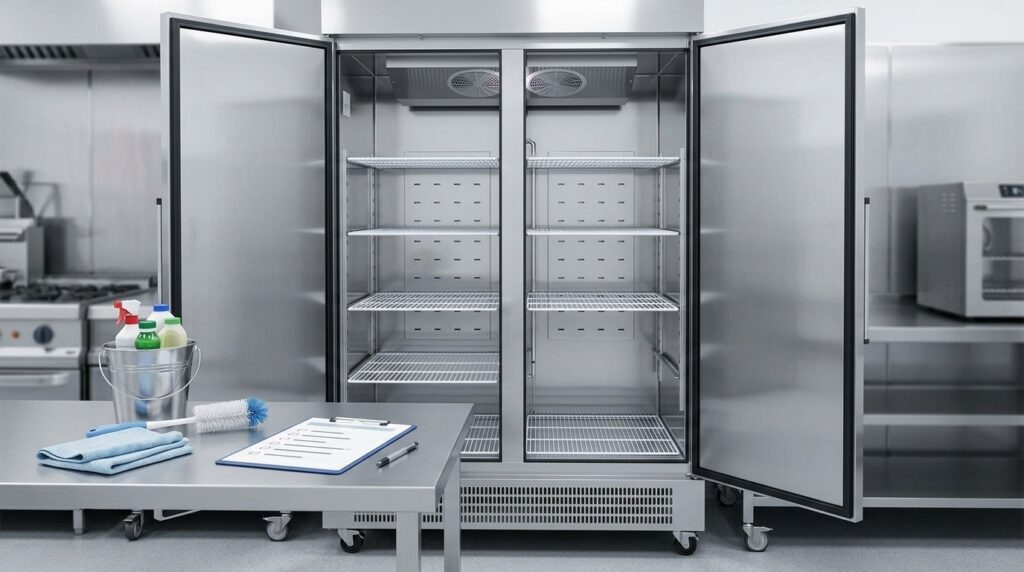
Explore our commercial fridge cleaning checklist tailored to Irish hospitality. Ensure food safety and efficient operation.
Unifrost Commercial Fridge Cleaning Checklist for Irish Foodservice
If you run a café, pub, restaurant, or catering kitchen, your commercial fridge cleaning routine affects food safety, audit readiness, energy use, and avoidable breakdowns. This checklist helps you clean Unifrost commercial refrigeration properly without wasting labour time or taking the unit offline longer than necessary.
You will work through what to clean and when, how to shut down and restart safely for a deep clean, and which areas you should never spray directly. You will also compare safe cleaning and sanitising products for food contact surfaces versus external panels, set a practical daily, weekly, and monthly schedule for different fridge types, and build simple records that support FSAI expectations around hygiene and temperature checks. Finally, you will see the common mistakes that lead to odours, ice build-up, poor door seals, higher running costs, and service calls, so you can extend the working life of your Unifrost equipment.
Introduction to Commercial Fridge Cleaning
Commercial fridge cleaning is part of food safety control and part of keeping the unit reliable. In Ireland, the Food Safety Authority of Ireland (FSAI) expects food businesses to have cleaning procedures and records, and to check and record fridge temperatures as part of demonstrating control to an inspector. See the FSAI Safe Food Handling guidance.
The key point is that a quick wipe-down often misses the areas that cause most problems in service: door seals, drain points, shelf supports and corners. Those are the places where odours, mould and biofilm can build up, particularly in busy kitchens.
Why cleaning matters for food safety in Irish kitchens
In a café, pub kitchen or restaurant, fridges are opened constantly, restocked on the fly and handled by multiple staff across shifts. That makes them a common cross-contamination point.
Spills in an upright or undercounter fridge are not just cosmetic. They can transfer onto hands, cloths, packaging and ready-to-eat food, especially where raw and cooked items share the same cabinet because space is tight. A simple checklist helps you keep standards consistent across teams, so hygiene does not slip midweek and show up as a problem on a Saturday night.
Why cleaning also matters for efficiency and call-outs
A fridge that is dirty or poorly maintained will typically work harder. Air needs to circulate inside the cabinet to recover temperature after door openings and restocking. Anything that blocks airflow, restricts vents, or stops the door sealing properly makes the system run longer to achieve the same result.
In practical terms, routine cleaning reduces the kinds of issues that trigger unnecessary call-outs: warm spots, icing, persistent odours, doors that do not close cleanly, and alarms caused by temperature drift during service.
What “good cleaning” looks like in practice
Good cleaning is a process, not a single product. In most commercial kitchens you:
remove visible soil with a detergent first
then apply a suitable sanitiser or disinfectant where needed
allow surfaces to dry before food goes back in
This sequence matters. Disinfectant on a dirty surface is unreliable, and heavy chemical residue inside a food cabinet can lead to taint and staff avoiding the job because it is unpleasant.
The step-by-step guide below sets out a practical approach for Irish service conditions, including how to keep downtime short and what to prioritise when you cannot take a fridge out of action for long.
Step-by-Step Commercial Fridge Cleaning Guide
Clean a commercial fridge by planning around the cold chain, emptying and stripping the cabinet, washing removable parts separately, then cleaning top-to-bottom with detergent followed by a food-safe sanitiser. Give extra time to door seals, drain areas, and any fan guards or air intakes, as these are common odour and mould hotspots in busy kitchens. Finish by restarting properly, checking temperature pull-down, and recording the clean for HACCP. If you cannot hold food at safe chilled temperatures during the clean, move stock into another working unit or insulated boxes and keep door-open time to a minimum.
1. Plan the job around service and the cold chain
Do the deeper clean when the fridge is naturally quieter, typically after close or before prep ramps up. Decide in advance where stock is going while the cabinet is open, and set a realistic time window.
Treat this as a cold chain job as much as a cleaning job. In day-to-day catering practice, chilled food should generally be kept at 5°C or below. The FSAI guidance is a useful reference point for temperature control routines and checks:
https://www.fsai.ie/business-advice/running-a-food-business/caterers/temperature-control
If you do not have spare capacity in another fridge, use chilled insulated boxes with ice packs and work in batches. Avoid leaving food on counters “for a minute” during service pressure.
2. Get the right kit and check chemical safety before you start
You need two steps:
Neutral detergent to remove soil and grease
Food-safe sanitiser to disinfect (follow label dilution and contact time)
Avoid strongly perfumed products in food storage areas, particularly in display fridges and bottle coolers where odours can linger.
If you use concentrated chemicals, keep the Safety Data Sheet (SDS) to hand and follow it. The HSA guidance explains SDS and safe handling under REACH:
https://www.hsa.ie/eng/yourindustry/chemicals/legislationenforcement/reach/safetydatasheets/
In practice, that usually means the right gloves for the chemical, eye protection when decanting, and decent ventilation in tight back-of-house spaces.
3. Empty the fridge properly and protect stock
Move food out quickly, keep raw and ready-to-eat separate, and cover items as needed. Do not park trays on the floor or near waste areas, even briefly.
While it is empty, look for spill trails down the back wall and under shelf supports. They show you where residue is building and where smells are often coming from.
4. Shut down safely (or do a short, controlled clean without a long switch-off)
For a proper deep clean, switching off is usually the safest approach, but keep downtime tight. Turn the unit off at the controller. If you are working close to electrics or panels, isolate power. Leave the doors open briefly to reduce condensation, then start cleaning.
If you cannot afford the downtime, do a short hygiene clean instead: remove visible soil, sanitise high-touch areas and spill points, and schedule the deep clean for a quieter window. This is often the realistic option in cafés and pubs mid-week, but it only works if you still plan proper deep cleans to stop residue and dust becoming a bigger problem.
5. Remove shelves, drawers, and runners and wash them separately
Remove shelves, drawers, and any removable runners or clips. Wash them in hot water with detergent, rinse, then sanitise and allow to air-dry before refitting.
Edges, underside lips, and runner tracks are difficult to clean properly in place. If these stay sticky, you will get odours, mould, and badly seated parts that stop doors closing cleanly.
6. Clean the interior top-to-bottom, then deal with drain and “hidden” areas
Clean from the top down so you do not re-soil already cleaned areas. Use a soft brush for corners, shelf supports, and textured liners where film builds up.
Pay close attention to the base, corners, and any drain area. Pooling water or slime usually means the drain path needs more than a wipe. If you leave it, you are more likely to see water inside the cabinet, icing, and avoidable callouts.
7. Sanitise correctly and let surfaces dry before food goes back in
Sanitiser is not a substitute for cleaning. Apply it only after detergent cleaning (and rinsing where required), then leave it for the correct contact time as per the label before wiping or air-drying.
Avoid lining shelves with paper or cloth. In practice, liners trap moisture and spills and make it harder to spot problems early.
8. Clean door seals and edges, and check the seal is still doing its job
Door gaskets are where hygiene and performance meet. Clean the folds gently with a soft brush or cloth, then wipe dry.
After cleaning, check for splits, hardening, or corners that no longer sit flat. Poor sealing makes the fridge run longer, struggle in warm kitchens, and produce more condensation. That increases cleaning frequency and increases the chance of service issues.
9. Clean exterior surfaces and keep water away from the wrong parts
Wipe handles, fascia, and exterior panels with a damp cloth and mild detergent, then dry. If the unit sits in a tight aisle or under a pass, clean kick-plates and the floor around it so dust and debris do not restrict airflow.
Do not spray water or chemicals directly onto:
electrical housings, controllers, display panels, plugs, or sockets
fan housings and motor areas inside the cabinet
condenser coils and rear ventilation grilles (use a brush and vacuum instead)
open joints, seams, or insulation edges where liquid can wick in
This is a common way to turn a routine clean into a breakdown, especially on undercounter units where electrics and airflow paths sit low and are exposed to mop water.
10. Restart, verify temperature recovery, and record the check for HACCP
Refit all parts, ensure shelves are properly seated, close the doors, then power back on. Let the cabinet pull down before fully restocking, and keep door openings short until temperature is stable.
Record the clean and a temperature check in your HACCP paperwork. The FSAI Safe Catering Pack includes refrigeration recording forms that suit day-to-day operations:
https://www.fsai.ie/publications/safe-catering-pack-record-books
If the unit repeatedly struggles to recover temperature, ices up, pools water, or will not hold a seal, treat it as a maintenance issue to resolve, not something to “clean away” every week.
Choosing Safe Cleaning Products
A reliable approach is nearly always two steps: clean first, then disinfect or sanitise. Grease and food residue can stop disinfectants working properly, as set out in the FSAI’s “6 Stages of effective cleaning” guidance. What counts as “safe” inside a Unifrost commercial fridge depends on the surface (stainless, plastics, coatings), the type of dirt (dairy fat behaves differently to sugary spills), and how quickly you need the unit back in service.
If you’re changing chemicals, factor in staff handling and consistency. The HSA points to labels and Safety Data Sheets (SDS) as the key sources of hazard and safe-use information for workplace chemicals.
What “food safe” means inside a commercial fridge
For fridge interiors, “food safe” is not about finding a magic brand. It’s about using a product suitable for food-contact areas when used as directed, and following a repeatable method.
In practice, EHO expectations tend to come back to process and records: remove debris, wash with detergent, rinse, disinfect or sanitise for the stated contact time, then air dry or rinse if the label requires it. That aligns with the FSAI cleaning sequence.
Where people get caught is skipping steps. A disinfectant is not a degreaser. A “sanitiser” may combine detergent and disinfectant, but it still needs correct dilution and enough time on the surface to work.
Practical selection rules for Unifrost fridge interiors and externals
For routine cleaning of liners, shelves and racking, use a non-perfumed detergent suitable for food areas. When you need a hygiene kill step, follow with a sanitiser or disinfectant suitable for food-contact surfaces, using the stated dilution and contact time, in line with the FSAI process.
Avoid aggressive solvents or highly caustic products on plastics, shelf clips and door gaskets. The failure you feel during service is a seal that hardens, doesn’t close cleanly, and leads to condensation and poor temperature recovery.
Be cautious with chlorine-based products on stainless or aluminium parts, particularly if you’re not rinsing properly. Staining and pitting quickly turn into a maintenance issue rather than a once-off cosmetic problem.
Stick to products you can train staff to dose consistently. “A glug more for luck” is how you end up with taints, irritated hands and wasted time. The HSA notes labels and SDS are the primary sources for safe handling and precautions.
Detergent, disinfectant, sanitiser: what to use and when
For many cafés, pubs and restaurants, detergent plus a separate disinfectant is the easiest system to manage across shifts. It also maps cleanly to HACCP routines: “cleaned” and “sanitised” are not the same, and the FSAI separates detergent cleaning from disinfecting in its recommended stages.
A combined sanitiser can work well for high-touch points like handles and door edges, but it still needs the right dilution and contact time. If a supplier can’t provide an SDS and clear dosing instructions, treat that as a red flag. The HSA explicitly points you back to labels and SDS for hazard and safe-use details.
Chemicals and areas you should not spray directly on a commercial fridge
Even when the chemical is appropriate, the application method can cause avoidable faults. As a rule, don’t spray liquids directly into controller housings, light fittings, fan guards, vents, or any opening where mist can be drawn into airflow.
A better habit is to spray onto a cloth away from the unit, then wipe. It gives you more control, uses less chemical, and reduces the chance of residues affecting high-taint products like butter, cream, desserts and prepared garnishes.
Matching product choice to service pressure and downtime
If you need the fridge back on the line quickly, choose products that cut through fat efficiently and don’t require prolonged rinsing, but don’t cheat the disinfectant contact time. The FSAI sequence is designed for effectiveness and consistency, and it’s a solid anchor for staff training in Irish kitchens, as set out in the FSAI “6 stages” guidance.
It also helps to separate display from storage use. A display fridge in a busy deli, café or bar sees more hand contact, more spill risk and more door openings, so it often needs more frequent sanitising of touch points. A back-of-house storage fridge may need less touch-point sanitising, but more attention to shelving, drains and odour control.
What to log for inspections and to protect the equipment
From a food safety point of view, keep cleaning records and temperature records that you can produce quickly. The FSAI Safe Catering Pack includes refrigeration temperature forms and hygiene checklists designed for Irish operators, as shown on the FSAI Safe Catering Pack record books page.
From an equipment point of view, it’s worth logging the chemical used, who completed the clean, and any issues spotted (split gasket, cracked shelf, iced-up back panel, signs of a blocked drain). It speeds up service calls and helps you catch patterns before they turn into downtime.
Cleaning Schedules for Unifrost Fridges
Set your cleaning schedule based on how the fridge is used, not the badge on the door. High-touch front-of-house and bar units need frequent wipe-downs to prevent sticky build-up and blocked grilles. Back-of-house storage fridges often look fine day to day, but still need planned cleans of shelves, corners and door seals to prevent odours, mould on gaskets, and avoidable temperature issues.
Keep cleaning checks tied to temperature checks so your HACCP records reflect what actually happens on shift. If a unit is slow to recover after cleaning, treat it as an operational warning. Shorten door-open time, clean in sections, and move deep cleaning to a quieter trading window.
1. Categorise your Unifrost unit by use, not by model name
Group each unit into a practical bucket based on service pressure and contamination risk.
Front-of-house display fridges and bottle coolers (pubs, cafés, grab-and-go) pick up spills, sugars, fingerprints and dust quickly. They also suffer more from doors being opened constantly.
Back-of-house uprights and undercounters used for sealed or covered prep stay tidier, but still need scheduled cleaning of shelves, shelf supports and seals.
Use your HACCP routine to define what “clean enough” looks like during service versus after close, and keep it consistent across staff. From a food safety point of view, your day-to-day target is simple: keep chilled food in the safe range. The FSAI notes fridges should be set to keep food between 0°C and 5°C, typically by setting the cabinet around 3°C to 4°C (FSAI temperature control guidance).
2. Apply a daily, weekly, monthly schedule that matches service intensity
Use this as a baseline, then tighten it where trade is heavy, where you store sticky products (milk, syrups, sauces), or where the unit sits near grease and dust (fryers, grills, coffee grinders).
Where you see “clean grilles/air intake”, treat it as a dry, careful job. Restricted airflow is one of the most common avoidable causes of poor performance in busy kitchens. If access is awkward or unsafe, make it a planned service task rather than poking around with wet cloths or improvised tools.
3. Build temperature checks and cleaning records into one log your staff will actually complete
A schedule only works if it is recorded in a way that survives a busy shift and stands up to an inspection. The easiest approach is to pair the cleaning tick with the daily temperature check so the person closing the unit also confirms it is holding temperature after cleaning.
If you use FSAI templates, the Safe Catering Pack includes a refrigeration record for fridge and freezer temperatures (FSAI Safe Catering Pack record books). Keep your own log straightforward:
date
unit location or ID (for example “Bar bottle cooler” or “Prep undercounter 2”)
temperature reading
what was cleaned
issues spotted (torn gasket, heavy dust on grille, standing water, door not closing properly)
This also helps when something does go wrong. A basic record showing routine cleaning of seals and ventilation areas makes it easier to separate avoidable maintenance problems from genuine faults when you need support.
4. Plan deep cleaning so you do not leave the fridge warm for too long
For daily and weekly cleans, you usually do not need to switch the fridge off. The aim is to keep door-open time short, clean in sections, and avoid soaking the interior so the cabinet pulls back down quickly.
For monthly deep cleans, pick a low-risk window in the trading week and plan the food move first. Shift stock into another working fridge, a cold room, or insulated food-safe containers with ice packs. Keep food covered to reduce cross-contamination and temperature rise.
Cleaning method matters:
Avoid spraying chemicals directly at controls, vents, fans, lights or electrical areas.
Apply cleaner to a cloth and work from clean to dirty.
Keep moisture out of seams and corners where it can sit.
After cleaning, let the unit pull down to temperature before loading it heavily. Do not load it with warm food. The FSAI specifically warns against overloading fridges with warm food because it raises the overall cabinet temperature and increases food safety risk (FSAI temperature control guidance).
5. Adjust frequency using real signals: odours, door seals, recovery time, and callouts
If you see recurring condensation, pooling water, ice on the door frame, or slow recovery after restock, treat it as a scheduling and habits problem before assuming the unit is at fault. In pubs and cafés, the usual culprits are:
seals that are never properly cleaned and dried
vents blocked by packaging or poor stock placement
“quick wipe-downs” turning into wet cleans that leave moisture behind
Make one person responsible for a quick monthly review: which unit needs a tighter schedule, which is stable, and which tasks are being skipped because they are awkward. Once the schedule is realistic, cleaning gets quicker, less disruptive during service, and easier to keep consistent across staff.
Safety Precautions in Fridge Cleaning
Protect food first, then protect your staff and the unit. A proper clean in a working Irish kitchen has four main risks: slips, electric shock, chemical exposure, and manual handling injuries from shelves and heavy stock. Plan the job so the fridge is safely isolated, food stays within safe temperatures, and nobody can restart or restock the cabinet halfway through. If you see damaged wiring, loose controls, water ingress, or anything that looks unsafe, stop. That is a service call, not a cleaning task.
1. Prepare the area and protect food first
Create a clear working space around the fridge so you are not cleaning while staff squeeze past with hot pans, trays, or glass racks. Move stock into a backup fridge, coldroom, or insulated boxes with ice packs. Keep time out of refrigeration to a minimum and manage it around your HACCP routine. The FSAI guidance is clear that chilled food should be kept so the food temperature stays between 0°C and 5°C.
Put a simple “cleaning in progress” note on the door so nobody adjusts settings or starts restocking mid-clean.
2. Isolate power properly before any wet work
For anything beyond a quick wipe, isolate the fridge at the plug or local isolator and make sure it cannot be turned back on by mistake. In a busy kitchen, “someone plugged it back in” is a common, preventable incident.
The HSA’s approach to isolation and lockout is straightforward: isolate from the power source, lock off where possible, use signage, and verify isolation effectiveness by a competent person. See the HSA isolation guidance.
3. Wear the right PPE for the chemicals and the job
Use gloves suitable for the detergents and sanitisers you are using. Add eye protection if there is any risk of splashback from shelves, drain channels, or spray bottles. Non-slip footwear matters because wet floors around refrigeration are a regular slip hazard, especially behind bars and in tight prep areas.
If you are using stronger products for mould or heavy build-up, follow the label for ventilation and contact time. Do not mix chemicals. Bleach mixed with acids can release chlorine gas, a risk highlighted in Irish safety guidance such as this code of practice from the University of Galway.
4. Keep water and chemicals away from “no-spray” parts of the fridge
Avoid spraying liquids directly into control panels, light fittings, fan housings, or any area with exposed wiring. Do not flood the base of the cabinet. Use a damp cloth rather than a dripping one, and watch for sharp edges when working around panels and fittings.
If you can access the condenser area, keep it dry. A soft brush or vacuum is usually the right approach. Wet cleaning here tends to turn dust into stubborn build-up and can create avoidable breakdowns.
5. Prevent manual handling injuries when removing shelves and loads
Empty shelves before lifting them out. Carry one shelf, drawer, or rack at a time rather than stacking awkward loads. Most injuries in real kitchens are not dramatic. They are back strains and jammed fingers from rushing when service is on.
If a shelf is stuck or iced in, do not force it. Allow the unit to defrost as needed. Forcing it can crack liners, damage runners, and turn a cleaning job into a repair.
6. Reassemble, restart, and do basic safety checks before restocking
Once cleaning is finished, use a proper clean-and-sanitise sequence with rinse and air-dry steps. The FSAI sets out a structured method in its six stages of cleaning (detergent, rinse, disinfect, rinse, air dry).
Refit shelves securely, check door seals sit correctly, and restart the fridge. Confirm it is pulling down to normal operating temperature before loading it heavily. When the unit is stable again and food is protected, the rest of your cleaning routine becomes repeatable and low-risk.
FSAI Compliance for Fridge Cleaning
Most Irish inspectors are not looking for a “perfect fridge”. They are looking for proof you control food safety risks with a routine your team actually follows. The FSAI is clear that HACCP relies on appropriate documentation and records that are readily available, not on memory or verbal assurances, as set out in the FSAI Principles of HACCP/principles-of-haccp).
In practical terms, fridge cleaning needs to link back to temperature control, corrective actions, and who signed off the work. The level of paperwork should match your risk, your menu, and how busy service gets.
What “compliant” looks like in a real café, pub, or restaurant
A cleaning checklist is part of your HACCP controls. It is not a standalone poster on a wall.
In a busy café (sandwiches, dairy, grab-and-go), the risks are frequent door openings, spills, and cross-contamination on handles, seals, and shelves.
In a pub or restaurant kitchen, the risks are raw and ready-to-eat separation during peak periods, when the fridge becomes a traffic junction.
Compliance usually comes down to two things you can show on demand: a cleaning schedule that fits how the unit is used, and records that prove it was done. The FSAI’s Safe Catering Pack includes practical refrigeration temperature recording forms that reflect what inspectors commonly expect to see, even if you use your own format. See the FSAI Safe Catering Pack record books page.
How to align cleaning with temperature monitoring and corrective actions
Cleaning disrupts service flow, especially on undercounter, bar, and display fridges that are opened all day. The aim is to avoid turning a clean into a temperature problem.
HACCP is straightforward: you monitor, you record, and if readings are out of spec you take corrective action and document it. The FSAI sets this out under monitoring and corrective actions in the FSAI Principles of HACCP/principles-of-haccp).
Plan cleaning windows around quieter trading times, and treat deep cleans as a controlled job. If you need to move stock into another fridge while cleaning, note that movement in your temperature records and any corrective-action notes. “We moved it during cleaning” is not a defence unless it is recorded and managed.
What to record so you can pass inspections and protect equipment
Records need to be quick for staff and useful for you, otherwise they will be skipped when the kitchen is under pressure. A workable approach is one log sheet per unit, plus a separate deep-clean record (date, person, findings).
For each fridge or display unit, record:
Daily temperature check
Weekly internal clean sign-off
Monthly seal and drain check
Condenser area dust check (where accessible)
Any corrective action taken when temperatures or condition were not acceptable, in line with the FSAI’s emphasis on monitoring, corrective action, and evidence in the FSAI Principles of HACCP/principles-of-haccp)
This also helps with reliability. Repeated notes like “door not sealing”, ice build-up, or slow pull-down after cleaning are early warnings. You can adjust loading and use, or book a service call before you lose stock mid-service.
Cleaning chemicals, contact surfaces, and what not to soak
From a compliance point of view, the big risks are chemical contamination and poor rinsing on food-contact parts like shelves and liners. From an equipment point of view, the risk is moisture getting into controls, fan areas, lighting, or sensor locations if staff spray aggressively inside the cabinet.
Keep it simple: use food-safe products as directed, allow the correct contact time, and rinse where the product requires it. When cleaning a commercial upright, undercounter, or display fridge, avoid direct spray onto controls, lights, and vents or openings. Use a cloth-led approach around those areas to reduce the chance of a fault caused by cleaning.
These compliance points only work if the method is realistic on a live kitchen schedule. That is where a clear, repeatable step-by-step routine matters.
Common Mistakes to Avoid
Most poor commercial fridge cleaning comes down to treating it as a quick wipe-down. That leaves food soil and chemical residue in the corners that drive food safety issues, odours, and avoidable breakdowns. The FSAI’s hygiene guidance is clear: equipment needs proper cleaning and disinfection or sanitising, following label instructions and rinsing where required, not just a spray-and-go approach (FSAI Guide to Good Hygiene Practice).
What “good” looks like also depends on how the fridge is used. A display cabinet opened constantly will need a different routine to a back-of-house storage fridge holding raw ingredients.
Cleaning around food (or leaving the fridge overloaded)
Cleaning with stock still inside usually means you miss the worst areas: shelf supports, corners, door frames, and the base. It also increases the risk of cross-contamination from cloths and spray drift, especially around ready-to-eat items like garnishes, desserts, dairy, and prepared salads.
Overloading is the quieter problem. A packed upright or undercounter struggles to circulate cold air properly. Even if it looks spotless, you can end up with warm spots, wet shelves, icing in corners, and faster odour build-up between cleans.
Using the wrong chemicals, or using the right ones the wrong way
A common mistake is skipping detergent and going straight to “disinfectant”. Disinfectants are far less effective when grease and food soil are still present.
The opposite mistake is using harsh degreasers or bleach-type products on the wrong surfaces. That can cloud plastics, damage liners, and dry out door gaskets, which then affects the seal and running costs.
Keep it simple:
Use food-safe chemicals intended for food premises.
Mix to the correct dilution and allow the stated contact time.
Rinse if the label requires it.
If a cabinet smells strongly of chemical after cleaning, it usually points to over-dosing, missed rinsing (where required), or chemical trapped in crevices like shelf supports and door seals.
Spraying water or chemicals into the wrong parts of the fridge
A lot of call-outs start with “we just gave it a quick spray”. Avoid spraying into electrical housings, controllers, light fittings, fan areas, or vents. Don’t hose out a fridge like it’s a floor drain.
Use controlled moisture: a damp cloth, not a soaking one. Keep liquids away from wiring and moving parts. Water ingress can lead to nuisance tripping, corroded connections, noisy fans, and temperature swings during service.
Forgetting the parts that drive running costs (seals, drainage, and air paths)
Door gaskets and frames often get a half-clean, or none at all. Once seals are sticky or distorted, the unit runs longer to hold temperature. In a busy bar or takeaway, even a small air leak shows up quickly as condensation, frosting, and “the fridge never seems to stop”.
Drain points are another blind spot. When they block, you get pooling water and smells, and staff end up wiping symptoms rather than clearing the cause.
Airflow matters too. Shelves pushed tight to the back wall, or product blocking internal vents, reduces circulation. That slows pull-down after deliveries and can leave warm product sitting in the cabinet longer than your routine allows.
Not controlling downtime and not proving your checks (temperatures and records)
Deep cleans go wrong when the fridge is left off too long, then restocked before it’s back on temperature. You can end up with a clean cabinet and food held above target temperature longer than your HACCP plan would allow.
The other issue is doing the work but keeping no record. The FSAI refrigeration record form prompts regular temperature checks and documentation (FSAI refrigeration records SC2). In practice, that same discipline helps you spot patterns like a failing door seal, iced airflow, or slow recovery before it becomes a disruption.
Doing a “deep clean” without a safe shut-down and restart routine
Pulling plugs or switching off at the isolator without a plan leads to rushed restocking, defrost water where you don’t want it, and doors left open while staff hunt for shelf clips and tools.
Keep shutdowns short, keep doors closed as much as possible, and only restart once surfaces are dry and shelves are correctly seated. If you’re unsure what panels should not be removed or where electrics are exposed on a particular unit, treat it as a service question rather than a trial-and-error job. A consistent routine is what makes the clean repeatable on a busy week.
Extending the Life of Unifrost Fridges Through Cleaning
When grease, dust, spillages and tired door seals build up, a commercial fridge has to work harder to hold temperature. That usually means longer run time, higher electricity use, and a higher chance of a callout at the worst possible time. It also makes it harder to show consistent control under your HACCP checks, because the cabinet becomes slower to recover after loading or heavy door opening. The problem tends to creep in quietly, then shows itself when you hit a warm spell, a busy weekend, or the fridge is opened constantly during service.
The good news is that cleaning is one of the few maintenance jobs you can do in-house that genuinely improves temperature stability and reduces disruption.
Why cleaning improves energy efficiency in day-to-day Irish trading
A fridge can only remove heat efficiently if it can move air properly. In a working Irish kitchen or bar, it is normal for flour dust, fryer grease, cellar dust and bits of packaging to end up on vents and around airflow paths. Once that build-up starts, the unit runs hotter and longer to achieve the same cabinet temperature.
Door seals are the other quiet drain on performance. If gaskets are dirty and sticky, split at the corners, or the cabinet is loaded in a way that stops the door closing cleanly, you pull warm, damp air into the cabinet. Over time you will see more condensation, more icing, longer recovery after restocking, and more temperature drift. That hurts most in cafés, pubs and takeaway prep where doors open constantly.
How better cleaning prevents service issues (and the awkward mid-service failure)
A lot of “not cold enough” problems come back to basics: restricted airflow, icing caused by warm air leaks and frequent door opening, or drains that are partly blocked so water pools and re-freezes. Keeping interior surfaces clean, wiping seals properly, and keeping any accessible drain areas clear helps the fridge run as intended, rather than constantly trying to overcome moisture and dirt.
On the outside, ventilation matters just as much. In many Irish sites, space is tight and units end up boxed in by cardboard, kegs or storage. If the fridge cannot breathe, it runs under higher strain and you are more likely to see nuisance faults and breakdowns at peak times.
What to avoid spraying, and what to log for food safety and support
Do not spray water or chemicals directly into vents, fan areas, electrical panels, control displays or exposed wiring. Avoid power-washing any cabinet. Water will find its way into places it should not, and that is an easy way to turn a cleaning job into a repair.
If you want your routine to stand up to inspection and help later if performance slips, keep one simple log alongside your usual checks. Include:
Daily temperature readings
Notes on spillages, odours, or icing
Weekly seal wipe-down and quick inspection
Monthly external vent and intake area clean
Any time the unit was emptied, switched off, or slow to pull down after loading
If you need a method the team can follow without leaving the fridge off for longer than necessary, the step-by-step guide below breaks it into a realistic shut-down, clean, sanitise, dry, and restart sequence that suits service pressure.
Connecting Fridge Cleaning to Unifrost Product Ecosystem
You get better reliability from commercial refrigeration when cleaning is treated as routine maintenance, not just a hygiene tick-box. In Ireland, that fits how the FSAI expects you to manage temperature control and verification within your food safety management system. In day-to-day operation, “clean” and “cold” are linked.
Your cleaning routine also needs to match how the unit is used. A front-of-house display fridge with constant door openings will need different attention to a back-of-house storage fridge that stays closed most of the shift. Timing matters too. Cleaning at the wrong point in service can create temperature spikes, even if the clean itself is done properly.
How fridge cleaning fits your Unifrost ownership routine (not just a kitchen task)
Think of a fridge as a working system: cabinet, door seals, airflow paths, drainage, and the refrigeration components all have to do their job to hold temperature in a busy Irish kitchen or bar. Cleaning is the part you control day to day, and it affects temperature stability, energy use, odours, and how often you end up needing a call-out.
Build your checklist around:
What staff touch every day: handles, gaskets, shelves, spill areas.
What the unit needs to “breathe”: vents and airflow paths.
It’s also worth linking cleaning checks to your temperature records, so the routine sits in the same place as the controls you actually use. The FSAI’s approach is based on ongoing monitoring and corrective action, not a once-off check, which is why these tasks work best as one joined-up routine (FSAI guidance on temperature control and monitoring).
Using Unifrost support assets properly: manuals, parts, and service, in the right order
Your cleaning checklist should tell staff when to stop and refer to the unit’s manual. A good rule in most Irish kitchens is simple:
Use the user manual for shutdown and restart steps before any deep clean.
Treat anything behind panels as maintenance, not cleaning, unless staff are trained and authorised.
Standardise this internally: if a task involves electrics, fan guards, control housings, or removing panels, it becomes a logged maintenance job. That reduces the risk of water or chemicals getting into places they shouldn’t, and it gives you cleaner information if you do need support. “What was done, when, and by whom” is often the difference between a quick fix and a slow back-and-forth.
What to log so cleaning supports food safety inspections and protects you commercially
Cleaning only supports reliability if you can show it happened and the record helps when something goes wrong. In practice, logs matter for two reasons: inspections and fault diagnosis. If a unit struggles to pull down temperature after cleaning, a basic record helps you tell the difference between an operational issue (door left open, unit reloaded too fast) and a developing fault.
Log the basics:
Date/time cleaned, and unit ID/location (for example “bar bottle cooler” vs “prep undercounter”)
Pre-clean and post-clean temperatures, and who checked them
Cleaning method (quick wipe vs deep clean) and any downtime
Door seal condition (tears, gaps, sticky residues) and whether it was cleaned
Vent/airflow area noted as clear (not blocked by boxes, dust, liners)
Drain/drip area checked for standing water or odours
Any abnormalities (noise, icing, alarms, repeated condensation) and the corrective action taken
Keep wording consistent. If you ever need technical support, these notes shorten diagnosis time and reduce repeat visits caused by the same underlying issue.
Cleaning actions that reduce service calls on Unifrost fridges (and what not to spray)
Most avoidable issues in busy sites are straightforward: restricted airflow, doors not sealing, poor loading after cleaning, and moisture getting into the wrong areas.
A simple “do not spray” rule helps:
Don’t spray water or chemical directly onto controls, electrical housings, light fittings, fan areas, or any exposed wiring.
Don’t soak door gaskets or force water into seal channels.
Apply cleaner to a cloth instead, wipe with control, and rinse carefully. Put extra focus on gaskets and hinges. That’s where doors start failing quietly, and where small residues cause big temperature problems.
Also plan for recovery after a deep clean. If you reload too quickly with warm product, or the door is held open during peak prep, the unit may look like it has a refrigeration fault when it’s simply not being allowed to stabilise. Adding a “recovery time” step and a loading check to the cleaning routine prevents that confusion.
Adapting the checklist across Unifrost formats without rewriting it from scratch
You don’t need a different system for every unit, but you do need small tweaks depending on where and how it’s used.
Display fridges and bottle coolers: more frequent front-of-house wipe-downs, fast response to spills, and discipline around door openings.
Storage uprights and undercounters: more focus on shelf hygiene, gasket cleaning, and keeping airflow space around the cabinet so heat can be rejected properly in tight kitchen lines.
If you keep one checklist structure and adjust frequency and “watch-outs” by station, training stays simple. It also helps staff follow the same step-by-step method whether they’re on café service, behind the bar, or in prep.
Commercial fridge cleaning checklist FAQs
How do I clean a commercial fridge step by step?
Here’s a practical commercial fridge cleaning checklist you can follow in a busy Irish kitchen:
Plan the window: Clean at a quiet time so food is out of refrigeration for the shortest possible time.
Move food to safe chilled holding: Use another fridge or insulated boxes with ice packs. Keep raw and ready-to-eat items separate.
Switch to cleaning mode: Turn the unit off only if needed for a deep clean. If you can clean quickly, keep the door closed between steps to protect temperature.
Remove parts: Take out shelves, racks, drawers, and removable door seals (if designed to be removed).
Pre-clean: Wipe spills and crumbs with disposable towel to reduce grease and biofilm.
Wash removable parts: Warm water with a mild detergent, then rinse.
Sanitise: Apply a food-safe sanitiser at the correct dilution and leave the required contact time (per label), then air-dry.
Clean the interior: Use a soft cloth or non-scratch pad. Focus on corners, drain channels (if fitted), and around fan covers.
Door gaskets and handles: Clean folds of gaskets thoroughly. Dry them to reduce mould and improve door sealing.
Exterior and airflow areas: Wipe the outer surfaces and clear dust from vents and the area around the unit.
Reassemble and restart: Refit dry parts, turn the fridge back on, and allow it to pull down to operating temperature.
Return stock correctly: Use FIFO rotation, keep airflow gaps, and record the clean on your log sheet for inspections.
What cleaning products are safe for Unifrost fridges?
To stay safe for food contact surfaces and avoid damaging finishes, use:
Mild detergent (non-perfumed if possible) for general washing.
Food-safe sanitiser suitable for commercial kitchens (follow dilution and contact time).
Non-abrasive cloths/pads to prevent scratching stainless steel and plastics.
Avoid:
Bleach used neat, or strong chlorine mixes on stainless steel and gaskets (can pit metal and degrade rubber).
Abrasive powders, metal scourers, and scrapers.
Solvent-based cleaners (can haze plastics and weaken seals).
High-pressure spray inside the cabinet.
If you have a Unifrost-specific care label or manual for your unit, follow that first, especially for display cabinets and units with electronic controls.
What is the recommended cleaning schedule for Unifrost fridges?
A workable schedule for most Unifrost commercial refrigeration in cafés, pubs, and restaurants is:
Daily: Wipe spills immediately, clean handles and door edges, check gaskets for debris, quick shelf wipe if needed.
Weekly: Empty one section at a time (where possible), wash and sanitise shelves/drawers, clean door gaskets thoroughly, clean around drain areas.
Monthly: Deep clean the full interior, pull the unit out and clean behind/under it, check for blocked airflow from overstocking.
Quarterly (or more often in greasy kitchens): Condenser and ventilation dust clean (a key cause of poor performance and callouts). If access is restricted or you’re unsure, book a service technician.
Display fridges typically need more frequent glass, shelf, and drain-channel cleaning because they are opened more often and show marks quickly. Storage fridges benefit most from routine spill control and condenser hygiene.
How does cleaning impact the energy efficiency of Unifrost refrigerators?
Cleaning has a direct effect on running costs because it helps the fridge move heat efficiently and maintain stable temperatures:
Dirty condensers and blocked vents make the system work harder and run longer, increasing electricity use.
Worn or dirty door gaskets leak cold air, forcing longer compressor run times.
Ice build-up and blocked drains can disrupt airflow and cooling, leading to temperature swings and wasted energy.
Overstocking and poor airflow after cleaning can undo the benefit, so reload with space for air circulation.
As a rule, if your fridge is noisier than usual, running constantly, or struggling to recover temperature after door openings, a thorough clean of airflow paths and external dust areas is one of the fastest fixes to try before booking a callout.
What safety precautions are required for fridge cleaning?
Use a simple safety process that protects staff, food, and the equipment:
Food safety: Keep food out of the temperature danger zone as much as possible. Use a temporary chilled holding plan and record any temperature checks required by your system.
Power and electrics: If you’re cleaning near controls, fans, lighting, or any electrical area, isolate power first. Never spray water or chemical directly onto electrical components.
PPE: Wear nitrile gloves and eye protection when handling sanitiser. Use a disposable apron if splash risk is high.
Chemical control: Label and dilute correctly. Never mix chemicals (especially chlorine and acids).
Manual handling: Shelves and glass components can be awkward. Use two-person lifting where needed.
Slip and trip hazards: Mop spills immediately and keep doors and walkways clear during the clean.
If a unit must be left off for deep cleaning, plan to restart early so it reaches safe operating temperature before service begins.
Next step: compare Unifrost refrigeration options
If you are updating equipment or adding capacity, it helps to match the right Unifrost format to your workflow and your cleaning routine (storage vs. display, undercounter vs. upright).
Browse Caterboss’s Chilled Storage category to compare commercial refrigeration solutions and shortlist the right style for your kitchen.
View Unifrost fridges at Caterboss
For current product options, pricing and availability, continue to Caterboss.