What does “climate class” mean on a fridge/freezer, and what ambient temperature range is it designed for?
 FAQ
FAQ
Climate class is the manufacturer’s declaration of the room temperature conditions a fridge or freezer is designed to operate in while maintaining performance.
Need more detail? For model comparisons, setup steps and troubleshooting, see the related guides below.
Climate class is the manufacturer’s declaration of the room temperature conditions a fridge or freezer is designed to operate in while maintaining performance.
In commercial catering, you’ll commonly see classes such as 3, 4, and 5 (often aligned with typical EN/ISO test conditions). As a practical rule of thumb:
Class 3 is for standard indoor environments.
Class 4 is for warmer commercial kitchens.
Class 5 is for very hot kitchen conditions.
Because exact limits can vary by model and standard, treat the label/manual on your specific unit as the source of truth. If you are unsure, note the model number and check the data label before you commit to an installation location.
Read the full guide: Understanding Ambient Temperature Conditions for Unifrost Undercounter Fridge/Freezer Use in Commercial Kitchens.
More help with this question
Compare models, maintenance advice and support information related to this topic.
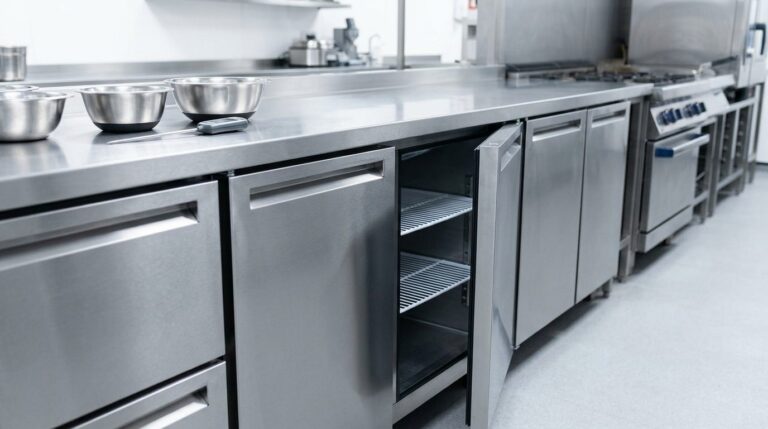
Understanding Ambient Temperature Conditions for Unifrost Undercounter Fridge/Freezer Use in Commercial Kitchens
Learn how to position Unifrost undercounter fridges/freezers for best performance under typical Irish kitchen conditions.
Read guide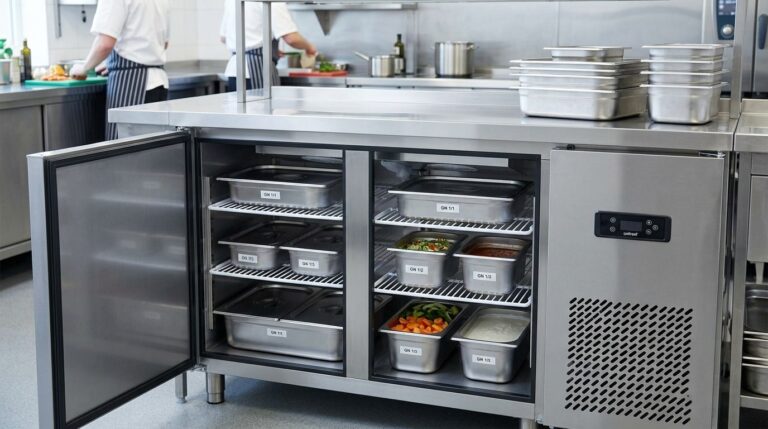
Setting Up Unifrost Undercounter Fridge & Freezer with GN Pans
Optimize your Unifrost undercounter fridge/freezer by using GN pans efficiently in Irish kitchens.
Read guide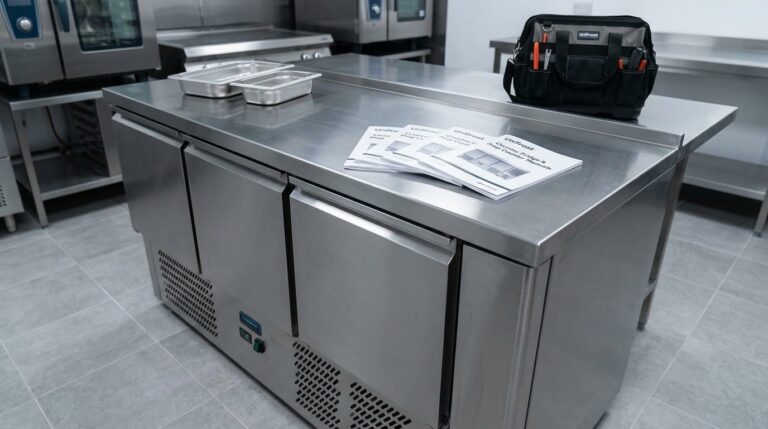
Unifrost Counter Fridge Prep Counter Saladette Manuals and Installation Support
Manuals, controller guidance, setup checks and troubleshooting help for Unifrost counter fridges, prep counters and saladettes.
Read guide