
Mini Bar Fridges for Commercial Spaces: A Comprehensive Guide
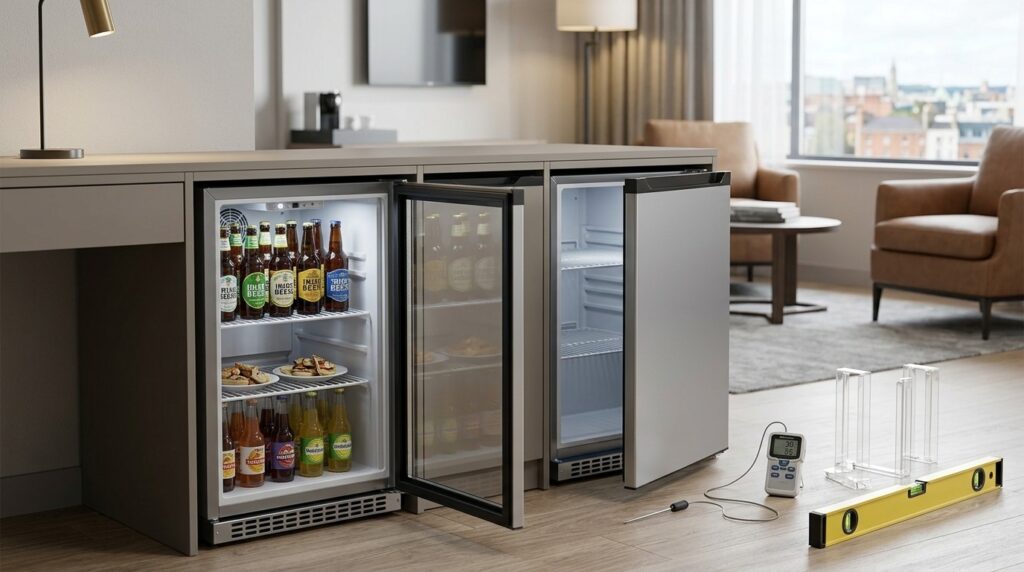
Explore mini bar fridge options for Irish commercial settings. Understand cooling types, maintenance, and space planning needs.
Unifrost guide to choosing a mini bar fridge for hotels, offices and guest spaces
You choose a mini bar fridge to improve guest experience and reduce day-to-day hassle for your team, but the wrong unit creates noise complaints, warm drinks, or higher running costs across multiple rooms. This guide helps you pick a commercial mini bar fridge that suits how you operate in Irish hospitality, from single executive suites to whole-room rollouts.
You will work through the practical buying checks that matter:
Capacity and fit: how to size a compact 30 to 60L unit to your intended stock and measure for under-desk or cabinet installs.
Cooling technology tradeoffs: when to choose absorption, thermoelectric, or compressor based on noise sensitivity, ambient temperature, and duty level.
Installation and ventilation: the clearances and positioning that prevent poor cooling and unnecessary noise.
Features that affect operations: locks, reversible doors, LED lighting, and adjustable shelving, plus solid-door vs glass-door considerations.
Maintenance and energy control: a simple cleaning and checking routine that keeps performance stable and helps you manage running costs across multiple minibars.
The Importance of Mini Bar Fridges in Hospitality
Mini bar fridges earn their place in hotels, guesthouses and offices because they let you keep drinks and simple snacks chilled where people actually use them, without sending guests to reception or the bar. That lifts convenience and perceived service without adding much labour.
They can also help you stay disciplined on basic cold holding for anything perishable you choose to stock. The Food Safety Authority of Ireland notes that chilled food should be kept at 0–5°C to maintain the cold chain (FSAI guidance). In practice, a minibar is guest-facing equipment first. Noise, ventilation and realistic expectations around pull-down and recovery matter as much as the set temperature.
Guest comfort is the commercial driver, not just “a nice extra”
In Irish hotels and B&Bs, a minibar pays off when it removes small bits of friction. Cold water after a late check-in, a soft drink for a family room, or chilled milk ready for morning tea all improve the room experience with minimal staff involvement.
It also cuts avoidable calls to reception. With multiple rooms turning over, reducing repetitive requests helps your team keep pace during peak arrivals and breakfast service.
Operational convenience: predictable, repeatable, low-labour storage
Mini bar fridges work best when you standardise them across rooms and treat them like a repeatable setup, not a one-off add-on. The operational wins are simple and measurable:
Faster room resets when shelves, door racks and labels are consistent, and housekeeping is not hunting for “where does this go?”.
Better control of charged items with a clear stock list and straightforward checks, depending on your property and guest mix.
Simpler maintenance because units are small enough to wipe down, spot-check, and keep clear of dust without taking a room offline for long.
The main trade-off is that complaints often come from install and loading issues rather than a faulty unit. Tight cabinetry, blocked vents or overpacking will reduce performance and make the fridge feel “broken”.
Where minibars fit in your refrigeration plan (and where they do not)
A minibar is best treated as front-of-house support refrigeration for bedrooms, lounges, offices, waiting areas and small meeting rooms. It is built for 24/7 running with low disruption, not for the duty cycle of a bar bottle cooler, an undercounter service fridge, or a kitchen upright where doors are opened constantly and warm product is loaded during service.
If you stock anything beyond drinks and packaged snacks, you need to be stricter on temperature setting, monitoring and product choice, because your HACCP responsibilities do not stop at the bedroom door. That is where the cooling approach, placement and ventilation become practical buying factors, affecting noise in the room, performance in warm conditions, and how forgiving the unit is in real guest use.
Comparing Mini Bar Fridge Technologies
For Irish hotels, serviced apartments and offices, the right minibar fridge is usually a trade-off between noise and cooling performance in warm rooms. Absorption, thermoelectric and compressor units will all chill, but they behave very differently once you put them into a bedroom cabinet and run them through real guest use.
Absorption and thermoelectric units are typically chosen where low noise matters most. They are more sensitive to warm ambient temperatures and restricted ventilation, so they suit light-duty drinks and snacks rather than anything that needs to stay reliably cold.
Compressor minibars cope better with higher room temperatures and frequent door openings. The downside is you are more likely to hear cycling or vibration in a quiet room, especially if the unit is tightly boxed into joinery.
A minibar is guest convenience and merchandising space. It is not a substitute for kitchen-grade chilled storage, so stocking rules and housekeeping checks matter as much as the fridge technology.
How do absorption, thermoelectric, and compressor minibars compare overall?
Absorption: best for low perceived noise, most sensitive to ventilation, heat sources and room conditions.
Thermoelectric: also quiet, fine in stable-temperature rooms, but performance drops quickly in warmer rooms or tight cabinetry.
Compressor: strongest pull-down and temperature control, better in sunny rooms and higher-use settings, but you need to manage noise and vibration through installation.
In Irish accommodation, bedrooms are often quiet but not consistent: windows closed on bright days, heating in winter, and furniture fit-outs that do not leave much breathing room. If consistent chilling is the priority, compressor cooling is usually the safer option. If keeping the room as quiet as possible is the priority and the load is light, absorption or thermoelectric can be a better fit.
Absorption minibars (low-noise, ventilation-sensitive)
Absorption is the classic choice for bedrooms where you want minimal operational noise and no obvious compressor cycling. The practical catch is installation: absorption systems rely heavily on heat being able to escape at the rear. Tight cabinetry, blocked vents, or positioning beside a heat source can quickly lead to poor cooling and guest complaints.
They suit sites where the minibar is mainly for bottled water, soft drinks and shelf-stable snacks, and where your joinery design includes proper airflow routes. They are a tougher fit in rooms that regularly run warm in summer, or where guests tend to load the unit with their own items and open it frequently.
Thermoelectric minibars (quiet, light-duty use)
Thermoelectric units can work well in noise-sensitive areas where you still want a neat, compact footprint. The limitation is simple: performance is closely tied to ambient temperature and ventilation. A unit that feels fine in a stable office can disappoint in a warm guest room or when it is boxed into furniture with little airflow.
In practice, treat thermoelectric as reliable for drinks and snacks, not for anything that needs tight temperature control or routine verification.
Compressor minibars (best recovery, more installation detail)
Compressor minibars behave most like a “proper fridge” for pull-down and recovery. They are generally the safest choice where rooms run warmer, doors open more often, or guests add room-temperature items, which is common in serviced apartments and higher-usage rooms.
The trade-off is noise and vibration. If you choose compressor, installation matters:
leave adequate breathing space for airflow
avoid hard contact points that transmit vibration into joinery
make sure the unit sits level to reduce rattle and compressor strain
Which technology is best for you?
Decide based on your operating conditions, not just the litre capacity on a spec sheet:
Pick absorption if the rooms are very noise-sensitive, stocking is light, and your furniture design provides proper ventilation.
Pick thermoelectric if you want low noise for drinks and snacks in stable-temperature rooms, and you can accept reduced performance in warm weather.
Pick compressor if you need the most consistent chilling across Irish room conditions and higher guest use, and you can install it to minimise noise transfer.
If you intend to store any higher-risk chilled foods, set clear limits and controls. Irish guidance is to keep chilled foods between 0°C and 5°C (see the Food Safety Authority of Ireland temperature control guidance).
Once you are clear on the technology trade-offs, it is much easier to specify ventilation space, agree stocking rules, and build simple checks into housekeeping so minibars do not become a recurring complaint or call-out.
Common Installation and Maintenance Pitfalls
Most minibar issues aren’t “faults” on day one. They’re the slow build-up of heat, dust, and poor airflow. If you block ventilation, box the unit into tight joinery, or let vents clog, the fridge runs hotter and longer. You’ll see slower pull-down, wider temperature swings, and more night-time cycling noise.
From a food safety point of view, that matters. Chilled storage should keep food between 0°C and 5°C in line with the Food Safety Authority of Ireland temperature control guidance. Even in guest rooms, poor temperature control can push perishable items into the wrong range, especially when occupancy is high and the door is opened more often.
Ventilation mistakes that cause poor cooling (and more noise)
The most common problem is treating a minibar as a “slot-in” appliance. Typical examples:
pushed hard against the wall with no air gap
installed in a cabinet with no route for warm air to escape
vents covered by luggage, coats, or housekeeping supplies
If the unit can’t shed heat, it compensates by running longer. That usually means higher running costs, more audible cycling at night, and extra wear on components.
Positioning errors in real Irish hotel rooms
Room conditions matter more than people expect. Putting a minibar beside a radiator, in direct sun, or under a kettle station can be enough to tip it over the edge in a warm room. The fridge is trying to reject heat into an already hot pocket of air.
Noise complaints are often about fit-out as much as refrigeration. If the cabinet isn’t level, or bottles and cans are touching the liner or each other, you’ll get rattles and vibration that guests blame on the fridge.
Cleaning and checks that get missed in housekeeping routines
Small maintenance misses lead to big performance issues:
Sticky or dirty door seals stop the door closing cleanly.
Overloaded shelves restrict internal airflow.
Spills left to dry can affect hygiene and stop items sitting properly.
Dust on vents acts like insulation and traps heat.
A routine that prevents most call-outs is straightforward: wipe and dry the door gasket, keep vents clear, do a quick temperature sense-check during room turns, and schedule periodic deeper cleaning of any accessible grilles or air paths.
Quick “avoid it” checklist for maintenance teams
Leave deliberate breathing space and a clear air path around the unit, especially in cabinets or under desks.
Keep it level and eliminate internal contact points (bottles, cans, shelves) that create rattles.
Build minibar checks into housekeeping: door closure, gasket cleanliness, obvious ice build-up, and whether the unit seems to run constantly.
Treat minibars as 24-hour equipment. If rooms regularly run warm, plan placement and ventilation the same way you would for any continuously running commercial fridge.
These are also the reasons the cooling technology matters. Different minibar types cope very differently with tight joinery, warm rooms, and noise-sensitive settings.
Tailoring Mini Bar Fridges to Business Needs
Choose a minibar by working backwards from the room, the guest expectation, and who has to look after it. The best unit on paper will still disappoint if it is boxed into a tight cabinet, hard to clean, or awkward to stock consistently. Focus on door style, shelving, lighting and security first. Then confirm ventilation and access for maintenance, because most minibar problems in hotels come from fit-out and housekeeping routines, not the refrigeration system itself.
1. Define the use-case by room type, guest expectation, and staffing reality
A minibar in a four-star bedroom has a different job to a fridge in a serviced apartment, a golf club lounge, or an office reception.
Bedrooms: complaints usually come down to noise, night-time usability, and units overheating in enclosed cabinetry.
Aparthotels and self-catering: guests use the fridge like practical storage, so shelf height, door storage and usable space matter more than presentation.
Lounges and premium areas: visibility and easy restocking can matter if you are driving sales rather than just offering basics.
Be honest about who maintains it. If housekeeping is turning rooms quickly, you will get better results from interiors that wipe down fast, shelves that lift out easily, and a layout that makes “missing item” checks obvious at a glance.
2. Choose guest-facing features that reduce complaints (lighting, door swing, and visibility)
LED lighting is a practical feature. It helps guests find what they want quickly, which means less door-open time, faster temperature recovery, and fewer “it’s not cold” calls that are really just slow recovery after browsing.
Reversible doors are worth prioritising in Irish hotels where bedroom layouts vary and you cannot assume the same hinge side across every room type.
For door style, pick what suits the space and the way you charge:
Glass doors can work in lounges or premium suites where visibility supports merchandising and reduces “what’s inside?” door opening.
Solid doors generally suit standard bedrooms where guests prefer a darker, tidier look and you are not trying to display stock.
3. Prioritise security and control features based on how you stock and charge
If you sell minibar items, a lock can be useful in higher-traffic properties, staff accommodation, or rooms used for events, where disputes over consumption can become a regular nuisance. If the minibar is complimentary, a lock can still make sense in specific room types, but it also introduces keys, tracking and extra steps for housekeeping.
Adjustable shelving is often more important than it sounds. A fixed layout looks neat on day one, then becomes a headache the first time you change suppliers, switch bottle shapes, add local products, or run seasonal bundles.
4. Plan the internal layout around what you actually stock, not the litre figure
Capacity numbers help with shortlist comparisons, but the day-to-day win is whether your standard items fit without blocking airflow. Decide your “standard pack” for each room type, then confirm it can be placed with space between items so cold air can circulate. That also makes restocking quicker and more consistent across multiple floors and different shifts.
If you store higher-risk chilled items, align checks with your HACCP routine and aim to keep chilled storage at 5°C or below, in line with FSAI guidance on chilling food safely. Even if you mainly store drinks, a simple temperature check habit helps catch underperforming units before guests do.
5. Make installation and housekeeping easy, or the fridge will underperform
Minibars often fail in practice because they are squeezed into tight casegoods with no breathing space, or because dust buildup and warm rooms push them outside their comfort zone. When retrofitting rooms, allow access to:
clean around the unit,
open the door fully without clipping furniture,
remove shelves for wipe-down,
and keep ventilation paths clear.
Keep the housekeeping routine simple. A quick visual check and wipe on every room clean, backed up by a scheduled deeper clean for seals, shelves and rear ventilation areas, prevents the slow decline that leads to “all our minibars are useless” complaints.
Once you are clear on features and fit, it becomes much easier to choose between absorption, thermoelectric and compressor cooling based on your room layout and service expectations, rather than guessing.
Integrating Mini Bar Fridges into Your Space Effectively
Start with the exact location and door swing, then work backwards from how the unit will breathe and how your team will service it. A mini bar fridge that looks neat but can’t lose heat will run longer, get noisier, and struggle to hold temperature. Fit it level and stable, leave sensible clearance, and make sure housekeeping can clean around it without moving furniture. Then choose solid door vs glass door based on where it sits and whether you’re trying to discreetly store, or visibly sell.
1. Measure the space and map the day-to-day use (not just the footprint)
Don’t just measure the gap. Think about how the room actually operates: late check-ins, guests making tea at night, families looking for milk, or corporate stays where it’s mostly bottled water.
Measure three things, in this order:
The clear opening (if it’s going into a cabinet or casegoods)
The working space in front (so the door can open fully without hitting a skirting board, wardrobe door, or bedside unit)
The route in for delivery, replacement, and removal
If you plan to store anything beyond sealed drinks, set your temperature expectations early. For food, you should be working to 0°C to 5°C, in line with FSAI temperature control guidance for fridges: https://www.fsai.ie/business-advice/running-a-food-business/caterers/temperature-control. That becomes harder if the unit is boxed into a warm, unventilated cabinet.
2. Build in ventilation and service access so the fridge can actually cope
Most “minibar fridge problems” are installation problems. When warm air can’t escape, the unit runs longer, noise becomes more noticeable, and performance drops.
If you’re integrating into furniture:
Avoid sealed cabinets that trap heat.
Don’t block any manufacturer air inlets or outlets.
Allow service access, so the unit can be pulled forward without dismantling joinery.
That access is not a luxury in hotels. Dust build-up, a loose plug, a small spill, or a lingering smell is manageable in one room. Across 50 or 200 rooms, it turns into a recurring issue and a time sink for maintenance and housekeeping.
3. Keep it guest-ready without making housekeeping fight it
A minibar is guest-facing, so it has to look intentional, but it also has to be easy to maintain. Fully hiding the unit can look clean, but tight trims and poor clearance often create the very problems you’re trying to avoid: heat build-up, rattles, awkward cleaning, and scuffed furniture.
Aim for a simple, wipeable set-up:
Level, stable placement so the door seals properly and nothing vibrates
Clear cable routing that doesn’t snag or look improvised
No contact points where the fridge knocks off panels when it cycles
Enough clearance to clean the floor edge and door gasket properly
If items are chargeable, shelf layout matters too. You want quick stock checks and consistent facing. A minibar that’s always half-messy reads as “neglected”, even in an otherwise good room.
4. Choose solid-door vs glass-door based on guest experience and your stocking model
Solid door suits most bedrooms. It keeps the room calmer visually, avoids the “display fridge” feel, and discourages browsing openings that dump cold air and create temperature swings. It’s usually the safer option where guests expect discretion and darkness.
Glass door makes more sense in lounges, reception areas, executive spaces, and serviced apartment lobbies where you want guests to see what’s available at a glance. The trade-off is presentation. Glass shows fingerprints, uneven facing, and any condensation, so your replenishment and cleaning routine needs to be consistent.
Also decide what’s operationally non-negotiable for your set-up, for example locks (complimentary vs chargeable items) and reversible doors (tight layouts and awkward door swings). The right door is the one that matches the room layout and the way you actually restock, not the one that looks best on install day.
Energy Efficiency and Strategic Placement
Reduce energy use by setting a realistic temperature, giving the unit clear ventilation, and cutting down on heat gain from the room and from warm restocking. Most “high running cost” minibar situations come down to placement, loading habits, and poor airflow rather than the fridge itself.
1. Set the temperature target for guest use, not kitchen use
In guest rooms, a minibar is typically for sealed drinks and snacks, not high-risk food. If you do intend to store small dairy items, you need proper chilled performance rather than a “slightly cool” setting. The FSAI notes that fridges set at 3°C to 4°C generally keep food between 0°C and 5°C in normal use, which is the safe chilled range for controlling bacterial growth (FSAI temperature control guidance).
Avoid the instinct to turn the thermostat right down “for extra chill”. Lower setpoints increase compressor run time, can add noise, and will quickly expose any ventilation weakness if the unit is boxed in.
2. Give the cabinet proper ventilation and keep it away from heat
A minibar is a small cabinet trying to dump heat into a warm room. If it is tight to a wall, wedged into closed joinery, or its air path is blocked by luggage, it will run longer and often sound louder because it cannot reject heat properly.
Practical placement rules in Irish hotel rooms and serviced apartments:
Keep it out of direct sun.
Keep it away from radiators, fan-coil units, and other local heat sources.
Don’t park it beside heat-producing kit such as kettles or coffee machines.
If it is built into casegoods, treat ventilation as part of the joinery spec. You need a clear route for warm air to leave, and you do not want exhaust air simply recirculating back into the intake space.
3. Cut “door-open time” and avoid loading warm stock
Minibars waste energy through use patterns. Every long door opening dumps cold air and pulls in warm, humid room air that the unit then has to cool and dehumidify.
A few operational fixes that usually pay back:
Make sure the door can open cleanly without the fridge being pulled out or wedged in a corner.
Train housekeeping to restock quickly and in one pass.
Don’t load warm bottles straight from a store room or delivery area.
If you are servicing multiple rooms, it is often cheaper overall to hold stock in a small back-of-house fridge at safe temperature for restocking, rather than asking every in-room unit to pull warm product down.
4. Make maintenance part of housekeeping, not an engineering job
Energy use creeps up when basics slip, especially in bedrooms where nobody “owns” the fridge day to day. Keep it simple:
Wipe spills and sticky residue so the door seal can close properly.
Check the gasket for gaps and damage.
Make sure the unit is level so the door shuts cleanly.
Where units are compressor-based, include periodic dust removal around ventilation paths so airflow stays consistent. If you see recurring icing, condensation, or guests reporting “it’s loud at night”, check placement and airflow first. Restricted ventilation and frequent door openings can make any minibar struggle in real rooms.
Once placement and operating habits are under control, the biggest efficiency decision is the cooling technology itself, because absorption, thermoelectric, and compressor minibars behave very differently on noise, ambient tolerance, and duty cycle.
Mini bar fridge FAQs (hotel rooms and guest spaces)
What should be the ideal size for a hotel room mini bar fridge?
For most standard hotel rooms, a compact mini bar fridge in the 30 to 45L range covers the typical mix of water, soft drinks, small wine bottles, and snacks without taking up valuable floor space.
Choose closer to 30L for tight under-desk or cabinet installs and “refreshment only” setups, and 45 to 60L for executive rooms, longer-stay guests, or where you want to stock more items (including taller bottles). Before buying, measure the usable opening and allow space for door swing and ventilation so performance does not suffer.
Which cooling technology is best for minimizing noise?
If minimum noise is the top priority for guest bedrooms, start by considering absorption mini bar fridges, as they are commonly selected for quiet rooms.
That said, the “best” choice depends on how hard the unit needs to work:
Absorption: typically chosen for noise-sensitive rooms, but can be more sensitive to high ambient temperatures and ventilation.
Thermoelectric: can be low-noise, generally best for lighter-duty chilling and stable room temperatures.
Compressor: usually the strongest all-round cooling in warmer rooms or heavier use, but noise depends heavily on the specific model and installation.
Whichever technology you pick, correct ventilation and a level install are often the biggest factors in preventing noise complaints.
How frequently should a mini bar fridge be serviced?
In most hospitality settings, plan for light maintenance monthly and a deeper check 2 to 4 times per year.
A practical schedule:
Monthly (housekeeping or maintenance): wipe interior, check and clean door seals, confirm the door closes properly, and do a quick temperature check.
Quarterly (or at least twice yearly): remove dust from vents and, for compressor models, vacuum the condenser area if accessible.
As needed: defrost if ice buildup appears (model-dependent), and investigate immediately if you see warm temperatures, excessive condensation, or new vibration noise.
This routine helps avoid guest complaints and reduces energy waste from poor airflow or leaky seals.
Are glass-door mini bars preferable in guest rooms?
It depends on whether you want visibility and merchandising or a more discreet, bedroom-friendly look.
Glass-door mini bars: good when you want guests to see premium drinks and upsell items, and they can suit suites, lounges, and serviced apartments. Potential downsides are more light in a dark room, fingerprints, and in some layouts a more “retail” appearance.
Solid-door mini bars: often preferred for standard bedrooms because they look cleaner in fitted furniture, help reduce visible clutter, and keep light contained.
If you use a glass door in bedrooms, look for practical features that support guest use and operations, such as LED lighting, a door lock (if required), and adjustable shelving to fit your intended stock list.
How to maintain low energy costs with multiple mini bars?
The biggest savings usually come from standardising models and tightening installation and housekeeping routines across rooms.
Key actions that reduce running costs:
Choose the right cooling technology for the room conditions: units forced to fight high ambient temperatures or poor airflow will use more energy.
Ensure ventilation is not blocked in cabinets or under desks. Overheating leads to longer run times and more complaints.
Set sensible temperatures for drinks and snacks, and avoid “maximum cold” unless needed.
Keep door seals clean and intact: damaged seals cause constant cycling and condensation.
Defrost and clean regularly so airflow is not restricted.
Reduce heat load: keep mini bars away from radiators, direct sun, and heat-producing equipment.
For multi-room operations, creating a simple checklist for housekeeping and periodic spot checks by maintenance will usually pay back quickly in fewer call-outs and steadier energy use.
Next step: shortlist the right mini bar fridge for your rooms
If you are planning a refresh or rolling out minibars across multiple rooms, start by listing your available installation space, your typical stock list, and whether near-silent operation is a priority in bedrooms.
From there, we can help you match the right mini bar fridge technology and features to your use case, including options like low-noise operation, reversible doors, locks, LED lighting, and adjustable shelving.
Keep comparing inside the same Unifrost topic
These articles are the best next reads if the visitor wants a deeper product choice, maintenance, or support route from here.
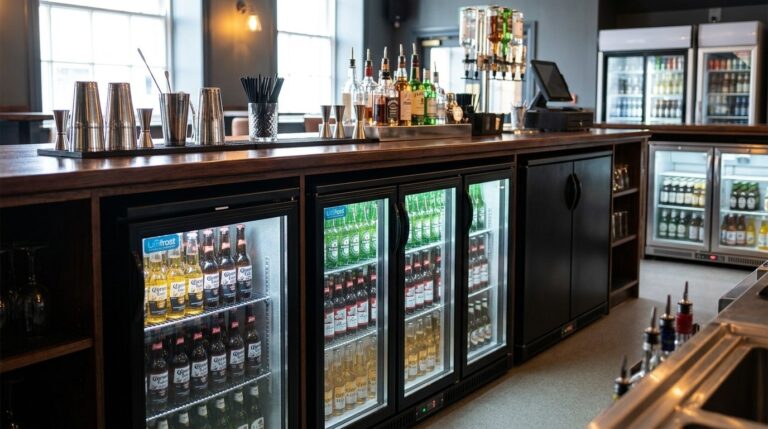
Unifrost Under-Counter Bottle Coolers: A Comprehensive Guide
Explore Unifrost under-counter bottle coolers for efficient bar setups in Ireland.
Read guideView Unifrost bottle coolers at Caterboss
The article stays useful on its own, but when the reader is ready to compare real products or move into a commercial conversation, this is the clean next step.