
Choosing the Right Unifrost Mini Freezer in Ireland
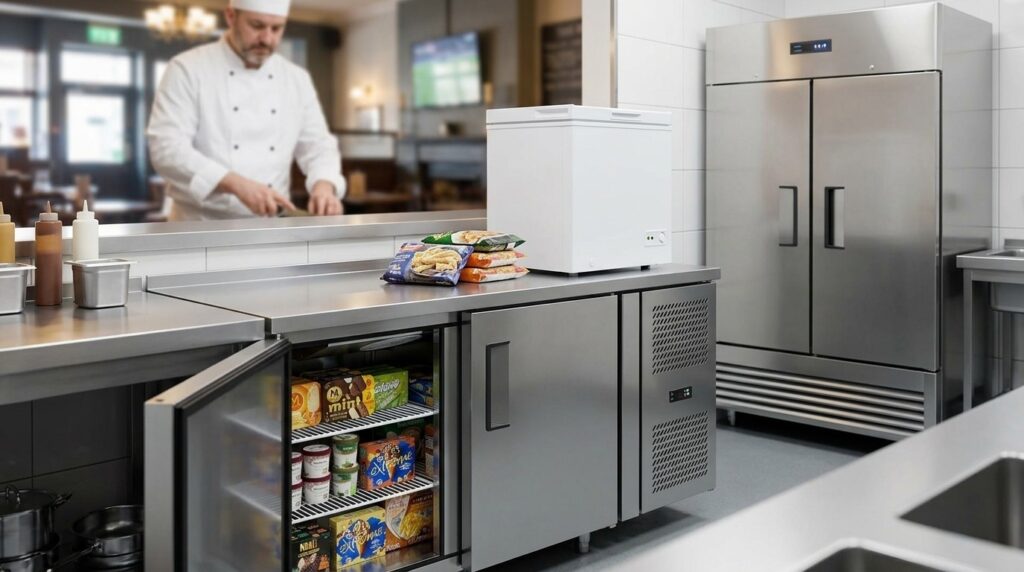
Discover ideal mini freezers for Irish businesses, focusing on Unifrost's compact options for reliable commercial use.
Choosing the Right Unifrost Mini Freezer in Ireland
If you are searching for a mini freezer in Ireland for a café, pub, deli or food truck, the real challenge is getting commercial performance in a footprint that actually fits your counter, back bar or prep area. In the Unifrost range, the closest match to a “mini freezer” is an undercounter model like the Unifrost F200SN / F200SNOG, but in some sites a compact chest freezer (for example CF500HSOG, CF501, CF601) or a smaller upright (such as F410SS / F410SSOG, F620SV) makes more operational sense.
This guide helps you choose between those formats by walking through the checks that affect day to day use and total cost: where it will sit, the ventilation and clearance it needs, how much usable storage you get, expected running cost considerations, and the common installation mistakes that lead to poor temperature control. You will also see when it is time to step up from an undercounter unit to a larger upright or chest freezer as your business grows.
Why Mini Freezers Matter for Irish Businesses
Mini freezers earn their keep when you need frozen stock at the point of service, without burning time and steps running to a back store. In cafés, pubs, and food trucks, that usually means faster service, less door-opening on your main freezer, and tighter stock control during busy periods.
They also make your HACCP routine easier. If you have a small, dedicated freezer close to the action, it is simpler to monitor, keep shut, and avoid the “how long was that out?” guesswork when trading is flat out. The catch is that “small” only works if the unit holds temperature in your actual conditions, particularly in warm kitchens, tight counters, and mobile setups where ventilation is rarely ideal.
Why cafés and pubs rely on small freezers day to day
In an Irish café, a mini or undercounter freezer often ends up holding the stock that saves service: pastries, par-bakes, chips, portions, desserts, ice, and allergen-segregated lines. Keeping those items near the pass shortens ticket times and cuts the number of trips to a larger upright freezer.
In pubs, the pattern is different. You are usually managing short, heavy bursts. A compact freezer close to the bar back-of-house helps staff grab fast movers quickly during a Saturday rush, and it reduces the temptation to overload one main freezer that still needs to stay organised for stock rotation.
Why food trucks and compact kitchens in Ireland are a special case
Food trucks and kiosks live and die by footprint, power supply, and heat load. A small commercial freezer is often the only workable way to hold safe frozen stock onboard without giving up prep space, but it needs to cope with higher ambient temperatures and frequent openings.
From a compliance angle, a dedicated freezer is also easier to manage and check. The FSAI uses -18°C as the key reference point for food remaining safely frozen during disruption, such as a power outage, which underlines why stable temperature matters even in small setups like trailers and containers (FSAI advice for power outages in food businesses).
Why “commercial mini freezer” is not the same as a domestic mini freezer
A domestic mini freezer can look like good value, but it is built for lighter use: fewer openings, cooler rooms, and gentler recovery after the door has been opened. In a café kitchen or busy bar store, that typically shows up as warmer product near the top, more frost build-up, and more time spent checking temperatures.
The decision is rarely about the headline litre figure. It is about how usable the space stays with real packaging, baskets or shelves, and enough airflow around product for the cabinet to pull temperature back down quickly. That is why format and placement matter, and why it is worth comparing proper compact commercial options based on your service pattern and where the unit will actually sit.
Understanding Unifrost’s Compact Freezer Options
In Unifrost terms, a “mini freezer” usually means a compact, catering-grade freezer for day-to-day service stock where space is tight. Think under-counter, a small prep area, or behind a bar. The point is reliable frozen holding and quick recovery when the door is opened repeatedly, not just “something small that freezes”.
Within the Unifrost range, the closest fit is typically an undercounter freezer (F200SN / F200SNOG). Chest freezers and smaller uprights come into play when you need more storage volume in a still-compact footprint. The right choice depends on opening frequency, where it will sit (heat and ventilation), and whether you need fast access or maximum holding capacity.
Mini freezer options in the Unifrost range (what to choose for the job)
Most cafés, pubs and mobile operators end up choosing between three compact formats:
Undercounter freezers (F200SN / F200SNOG)
Best when you need fast access at the point of use. Useful for portioned items, desserts, chips, and ice cream tubs where staff are in and out during service.
Chest freezers (CF500HSOG, CF501, CF601)
Best for bulk holding in minimal floor space. They suit lower access frequency, batch loading, and operations that want strong capacity per square metre.
Smaller upright freezers (F410SS / F410SSOG, F620SV)
Best when you need shelving and stock rotation you can see at a glance. Faster to pick from than a chest freezer during service, with more structure for labelling and FIFO routines.
What makes these “commercial” mini freezers different from domestic mini freezers
The real difference is how they cope with daily trading. A compact freezer in a working kitchen deals with warm air every time it’s opened, higher ambient temperatures near cooking and dishwash areas, and staff who need it to recover quickly. Commercial units are built for that kind of use and for serviceability, not occasional home access.
Food safety is part of the decision too. Your setpoint and routine need to support safe frozen storage. FSAI HACCP guidance commonly references -18°C as the standard target for frozen storage (Food Safety Authority of Ireland). In practice, what matters is temperature stability and recovery. A small cabinet that’s opened frequently can drift if it’s undersized for the job, overfilled, or installed in a hot, poorly ventilated spot.
The commercial advantages you actually feel in a small Irish kitchen
Undercounter placement improves service flow. Keeping frozen items where they’re used cuts steps and avoids overloading your main freezer. It also helps separate service stock vs bulk stock, which makes rotation and ordering easier across different shifts.
Chest freezers maximise storage per footprint. They are excellent for back-of-house holding, but they are slower to work from when you’re busy and you need to find specific items quickly.
Small uprights balance access and organisation. They are usually easier for stock control than a chest freezer, but you need realistic clearance, a sensible location, and an honest view of how often the door will be opened during a rush.
Choosing between undercounter, chest, and small upright (the practical trade-off)
Go undercounter (F200SN / F200SNOG) when the freezer needs to sit beside prep and get opened regularly. Just be strict about placement and ventilation, as compact units are less forgiving in hot, tight installs.
Go chest (CF500HSOG, CF501, CF601) when it’s primarily bulk storage and you can keep the lid closed most of the time. You trade speed of access for holding capacity.
Go small upright (F410SS / F410SSOG, F620SV) when you need easier picking, clearer rotation, and less “digging”. It’s often the right step as volume grows, assuming you have the space and airflow for efficient running.
Once you’ve picked the right format for how you actually trade, the next step is making sure installation and loading don’t undo the performance, which is where compact freezers in tight kitchens often fall down.
Key Considerations for Choosing a Mini Freezer
Choose a mini freezer around how you actually trade, not the litre figure on a brochure. Start with stockholding and service peaks, then confirm it physically fits the space with a workable door swing and loading routine. Finally, sort ventilation and heat exposure, because compact freezers struggle quickly if they are boxed in or pushed up against cooking kit.
1. Size it from your menu, deliveries, and service pressure
A “mini freezer” only makes sense in a commercial kitchen if it matches your day-to-day: what you freeze (ice cream, chips, prepped portions, segregated allergens), how often deliveries land, and how much you need at peak (Friday night, match days, Sunday lunch, event weeks).
Use this quick sizing check:
What must stay frozen all day (core stock) versus what can be topped up daily (short-cycle stock)
How many days’ cover you need if a delivery is delayed
Whether you need segregation (raw vs ready-to-eat, allergen control, gluten-free)
The pack sizes you buy in reality (boxes and gastronorm trays can waste space fast in compact cabinets)
Be careful comparing by litres alone. Usable space is usually dictated by shelf layout, evaporator housings, and the shape of your packaging. If you are looking at compact undercounter options such as the Unifrost F200SN or F200SNOG, sanity-check that your most common cartons actually fit without forcing the door or blocking internal airflow.
2. Measure placement properly, including access and daily workflow
In Irish cafés, pubs, food trucks, and tight restaurant kitchens, the usual problem is not that the freezer is too small. It is that it is in the wrong place. Measure for how it will be used on a busy day, not how it looks on installation day.
Focus on three practical points:
Door swing and standing room: staff need to open it properly without colliding with a prep table, bin station, or pass.
Loading route: can you get deliveries to it without crossing the busiest part of the kitchen.
Service speed: if you open it mid-service (chips, desserts, portioned proteins), place it where one person can access it without creating a bottleneck.
If you are choosing between undercounter, upright, or chest, decide what matters more: fast grab-and-go access (often undercounter or a small upright) or longer hold with fewer openings (often chest). A small upright generally organises stock well in a tight footprint. A chest can be efficient, but it also creates “digging time” and forgotten stock at the bottom unless the team runs it tightly.
3. Get ventilation and heat exposure right (where mini freezers often come unstuck)
Compact freezers are less forgiving when ventilation is poor. There is less thermal mass, and the condenser has less margin if airflow is restricted. Give the unit the clearance the manufacturer specifies, and avoid boxing it in under counters with no air path.
Two common issues on Irish sites:
Hot, steamy zones: putting a mini freezer beside fryers, ranges, combis, or a dishwasher increases heat load and can mean temperature drift and heavier frosting.
“Looks tidy” joinery: tight carpentry, kickboards, and blocked grilles force the condenser to run hotter and longer, pushing up electricity use and shortening component life.
If the only available spot is genuinely hostile, it can be better to change the format or location, for example moving to a small upright in a cooler back-of-house area, rather than forcing an undercounter freezer to live beside cooking equipment.
4. Judge energy use by operating conditions, not just the spec sheet
Running cost on a small freezer is mostly about how hard it has to work on your site. Door opening frequency, ambient temperature, ventilation, loading habits, and frost build-up will often matter as much as the rating on paper.
Make sure your temperature targets and checks stand up in a real HACCP routine. The FSAI highlights that maintaining the cold chain is a legal requirement under Regulation (EC) No 852/2004. It also notes that legislation does not stipulate storage temperatures for chilled and frozen food/Prerequisite-Programmes), so your targets should come from your HACCP plan, product labels, and how your kitchen operates in practice.
As a buying filter, a compact commercial freezer is usually the right call when you need dependable temperature control during service, a cabinet that stands up to daily cleaning and frequent use, and a spares and support route that suits a trading business. With those points clear, you can compare compact options like the Unifrost F200SN/F200SNOG undercounter family against small uprights and chest freezers based on what will actually work on your site.
Common Mistakes to Avoid
A “mini freezer” is still commercial refrigeration. If you treat it like a domestic plug-in box and wedge it into a tight, warm corner, you usually get temperature drift, heavier icing and higher electricity use. In busy service, that can mean frozen stock softening before anyone notices.
In an Irish food business, the practical benchmark is keeping frozen food at -18°C or colder, and compact cabinets have less tolerance for frequent opening and poor placement, as reflected in FSAI temperature control guidance. When things are off, it shows up quickly as inconsistent product quality, more time spent defrosting and cleaning, and avoidable call-outs. The expensive version of this mistake is buying small, then buying again when you realise the unit cannot cope with your volume or layout.
Ventilation and heat load mistakes (the ones that quietly wreck performance)
The most common install error is poor airflow. Leaving no breathing space around vents, or boxing a unit in under a counter with nowhere for warm air to escape, makes the system run harder and longer. SEAI specifically flags the need to leave space around refrigeration vents so air can be drawn in and expelled efficiently in its SME Guide to Energy Efficiency.
The second mistake is siting the freezer beside a heat source: dishwasher outlet, fryer line, combi steam vent, or direct sun through a hatch. The cabinet ends up fighting your kitchen’s heat rather than simply holding temperature.
A quick on-site sense check: if the side or rear panel is regularly hot to the touch during service, the location is likely too demanding. Smaller cabinets tend to show that weakness first.
Temperature setpoint and monitoring mistakes (HACCP gets messy fast)
Relying on the display alone is how slow drift turns into soft stock and staff complaints. For Ireland, the key reference point is keeping the freezer at -18°C or colder, as stated in the FSAI’s temperature control guidance for caterers.
If you are recording temperatures for HACCP, keep it realistic. Use a routine staff will actually follow at peak times, and a consistent sheet. The FSAI Safe Catering Pack includes a refrigeration recording form for fridges and freezers that suits most kitchens without overcomplicating it.
Buying the wrong format for your workflow (undercounter vs chest vs small upright)
The classic buying error is choosing on “litres” alone, instead of how the freezer will be opened, loaded and cleaned in real service.
Undercounter freezers (for example, Unifrost F200SN / F200SNOG) suit grab-and-go prep sections, tight cafés and bars where fast access matters.
Compact chest freezers (CF500HSOG, CF501, CF601) suit bulk storage with fewer openings and steadier temperature holding.
Smaller uprights (such as F410SS / F410SSOG, F620SV) suit kitchens that need better stock visibility and quicker rotation.
If you are stacking to the ceiling, blocking internal air paths, or running out of space every weekend, you have probably outgrown the “mini freezer” idea. At that point, compare the compact formats properly and match the cabinet to your workflow, rather than forcing one small unit to do every job.
Matching Freezers to Your Business Needs
An undercounter freezer and a small chest freezer can both solve the same Irish kitchen problem: getting dependable frozen storage into a tight space without making HACCP harder. The difference is how you work.
Undercounter suits high-frequency access during service. Think “reach in, close the door, keep moving”.
Chest suits bulk holding with fewer openings. Think “store a lot, open less often”.
An undercounter option like the Unifrost F200SN / F200SNOG usually makes more sense when you need fast access on the line, under a counter, or at a coffee station where staff are in and out all day. A chest freezer like the Unifrost CF500HSOG, CF501, or CF601 tends to suit back-up stock, chips, and ice where you can spare floor space and you are not opening it every few minutes.
Either way, you still need routine temperature checks and sensible loading. What you are really choosing is service speed vs storage volume.
How do undercounter and chest formats compare in real Irish service?
In a café, the freezer often supports pastries, desserts, and small-batch prep. What matters is predictable access without blocking a tight prep flow.
In a pub, late bar, or takeaway, the freezer is often a buffer store for chips, wings, and ice. Here, day-to-day success is less about slick access and more about having reserve stock that carries you through busy weekends and match-day spikes.
From a food safety point of view, both formats can work if you treat them like commercial kit: log temperatures, don’t overload, and don’t leave lids or doors open while deciding what to take out. As a simple reference point when setting checks, the FSAI notes frozen food can remain frozen as long as it is held below -18°C (see FSAI guidance: https://www.fsai.ie/Business-Advice/Running-a-Food-Business/Caterers/Flooding-of-a-Food-Business).
Undercounter fit: Unifrost F200SN / F200SNOG
Choose an undercounter freezer when frozen storage is part of a service station, not a storeroom tool. This is common in cafés, smaller restaurants, food trucks, and hotel pantry areas where you want frozen items close to prep and you cannot afford staff walking to the back during a rush.
The practical watch-out is siting. Undercounter units often end up in tight joinery runs under worktops. If you squeeze the unit in beside heat, block ventilation, or put it in a spot with constant warm air and traffic, it can struggle to recover temperature after repeated openings and running costs will reflect that.
Small chest freezer fit: Unifrost CF500HSOG, CF501, CF601
A chest freezer earns its place when you buy in bulk, have uneven peaks (weekends, events), or need a dependable “buffer” so the kitchen is not caught short. It’s a familiar pub and takeaway pattern, and it also suits schools and staff canteens that want safe reserve storage without constant access.
The trade-off is organisation and speed. Plan for baskets, clear labelling, and simple stock rotation, otherwise the chest turns into a time-waster. If staff have to dig, the lid stays open longer, the top layer warms, and you lose the efficiency advantage.
Which is best for you?
Choose an undercounter freezer (F200SN / F200SNOG style) if you need frequent access during service, you are working in a compact prep area, and you want frozen storage that behaves like part of the line.
Choose a chest freezer (CF500HSOG, CF501, CF601) if your priority is bulk holding, you can spare floor space, and it is mainly opened for restock rather than constant picking.
Step up to a small upright freezer (for example, Unifrost F410SS / F410SSOG or F620SV) if you are hitting capacity limits, spending too long finding product, or you need clearer segregation on shelves for allergens and stock control.
If you are torn between “one more undercounter” and a bigger change, decide based on what is failing first: service speed (undercounter or upright) versus running out of space (upright or chest). Then sanity-check whether the unit can realistically sit away from heat, moisture, and constant door traffic.
Once you pick the right format, comparing Unifrost’s compact models becomes much simpler, and you avoid buying a freezer that fits the space but fights the way your kitchen actually runs.
Exploring Unifrost Support and Ecosystem
The right compact commercial freezer for an Irish kitchen depends on how you run HACCP, how warm the area gets during service, and how quickly the cabinet needs to recover after repeated door openings. In foodservice, frozen storage is typically managed around -18°C, which aligns with the FSAI’s guidance on safe storage temperatures and temperature control routines (FSAI temperature control). The key point is that reaching a setpoint on a quiet morning is not the same as holding it during a Saturday rush beside hot equipment. That is where support and aftercare matter, not just the box.
What “support” means for a small commercial freezer
With compact freezers, the problems you see most often are caused by real-world conditions: tight undercounter installs, restricted airflow, and heavy door traffic. “Support” is the practical back-up you can rely on, including:
Setup guidance so ventilation and clearances are right from day one
Basic troubleshooting (controller checks, alarms, simple fault isolation) so you can react quickly
A clear route to parts and service so a damaged seal, hinge, or controller does not turn into a write-off
The Unifrost range gives you different formats for different jobs, but the day-to-day difference is usually made by correct installation, routine cleaning, and knowing what to check first when something drifts.
Warranty and service expectations in Irish hospitality
Treat warranty like a process rather than a promise. Keep proof of purchase, note the model and serial number, and log temperature issues as part of your HACCP checks. Good records make fault reporting quicker and clearer, and reduce the back-and-forth when you need help.
If you are weighing up a commercial compact freezer against a domestic “mini freezer”, the difference is not just build. It is the expectation that commercial equipment will be run hard, opened constantly, and needs a sensible repair path. Also, do not assume any brand will cover problems caused by poor ventilation, blocked condensers, or siting a freezer beside high-heat equipment. Those are common causes of failure and common exclusion areas across the market.
Maintenance that keeps a compact freezer efficient and food-safe
Compact freezers suffer when airflow is restricted and dust, grease, and flour build up. A simple routine done little and often protects temperature stability, helps running costs, and reduces the chances of a call-out in the middle of service.
Clean the door gasket so it seals properly. Poor seals drive ice build-up and longer run times.
Keep the condenser area clean, especially in bakeries, takeaways, and coffee prep areas where airborne debris is constant.
Defrost when needed (where applicable) and plan it. Heavy ice reduces usable space and disrupts airflow.
Avoid loading warm product straight into a compact freezer. It increases pull-down time and can push cabinet temperature up during busy periods.
Check product temperature as part of HACCP, not just the display reading. Under heavy use, “cabinet temperature” and “food temperature” can diverge (FSAI temperature control and monitoring).
Installation mistakes that look like faults
Most “mini freezer problems” are installation issues in disguise. If a unit is pushed hard against a wall, boxed into a tight carcass, or placed beside a dishwasher or other hot air discharge, you can get higher running costs, slow recovery, and nuisance icing even when the freezer itself is functioning correctly.
A common mistake in Irish cafés and pubs is treating an undercounter freezer like a domestic unit that can be squeezed in anywhere. Commercial kitchens run hotter, doors open more often, and nobody has time to nurse equipment through service. If correct ventilation is not realistic in the available space, it is usually better to change the format or location rather than forcing an undercounter unit into a gap where it cannot breathe.
Troubleshooting and day-to-day checks that reduce downtime
When a compact freezer “isn’t freezing”, the quickest wins are often basic:
Confirm the setpoint hasn’t been changed
Check the door is closing and sealing
Look for airflow restriction and excess ice
Check for obvious site issues like heat sources or a recently blocked condenser area
If you have a temperature excursion, treat it as both a food safety issue and an equipment issue, and follow your HACCP corrective actions with records. Irish food businesses are expected to have practical controls and documentation in place under a HACCP-based approach (FSAI HACCP).
If temperature drift is mainly happening at peak service, it is often a sizing and workflow signal rather than a defect. Compact freezers have less thermal buffer than larger uprights or chest freezers, so loading patterns, door discipline, and siting matter more.
These support considerations are easier to apply once you are clear on the compact freezer format that best suits your layout and service style.
Mini freezer Ireland: FAQs for commercial buyers
What size/capacity mini or undercounter freezer do I need for my kitchen or business?
Start with what you need to hold at peak service, then size for 2 to 3 days of stock (or your delivery pattern).
Cafés and small kitchens: an undercounter freezer is usually the best “mini freezer” choice when you need quick access to open-and-close items.
Pubs and busy service: if you’re freezing boxed product or bulk bags, a small upright can be easier to organise than drawers.
Food trucks and tight back-of-house spaces: a compact undercounter model keeps the footprint small, but plan for stock overflow during events.
If you’re regularly stacking overflow elsewhere, it’s often more cost-effective to move up to a small upright or add a compact chest freezer for back-up storage.
Practical tip: list your frozen SKUs, note typical carton sizes, and check whether you need drawer access (fast portioning) or shelf/bin access (bulk).
What is the difference between an undercounter/commercial freezer and a domestic mini freezer?
A commercial undercounter freezer is designed for frequent door openings, faster recovery, and day-in, day-out use in a working kitchen.
Key differences that matter in Ireland when buying:
Duty cycle and robustness: commercial units are built for higher workload and heavier use.
Temperature stability: better suited to service where the door is opened repeatedly.
Serviceability: commercial ranges are typically easier to support with parts and repairs than consumer “mini freezers”.
Fit for purpose: undercounter commercial models are made to live in a kitchen workflow, not a utility room.
If your “mini freezer” will be opened all day in a café, pub, or food truck, domestic units often struggle with consistency and longevity compared with a commercial undercounter.
Are these small freezers suitable for professional catering/hospitality use in Ireland?
Yes, as long as you choose a commercial model that matches your environment and workload.
For Irish catering and hospitality, small freezers are commonly used for:
Portion-controlled items near the prep or pass
Backup storage for desserts, chips, ice, or gluten-free products
Space-limited sites such as kiosks and food trucks
To keep performance reliable in a busy kitchen, focus on correct placement and airflow, avoid heat sources (ovens, fryers, dishwashers), and don’t overfill the cabinet so air can circulate around product.
Which Unifrost models work best as ‘mini freezers’ for Irish cafés, pubs, and food trucks?
Within the Unifrost commercial range, the closest match to a “mini freezer” is the Unifrost F200SN / F200SNOG from the Undercounter Freezers family.
How to choose within Unifrost’s compact options:
F200SN / F200SNOG (Undercounter Freezers): best when you need a true undercounter footprint and quick access during service.
Smaller Upright Freezers (e.g. F410SS / F410SSOG, F620SV): better when you want more vertical storage and easier organisation than drawers, without going to a large footprint.
Chest Freezers (CF500HSOG, CF501, CF601): strong choice for bulk storage and overflow stock, especially where the freezer can sit in a store room rather than on the service line.
If you tell your installer where the unit will sit (under a counter, in a prep area, or in a store), it becomes much easier to pick the right format first time.
How do I compare mini/undercounter freezer running costs between brands when buying in Ireland?
Compare running costs using a consistent, real-world method, not just brochure claims:
Use the same energy basis: compare the published kWh figure (where available) on like-for-like cabinet types (undercounter vs upright vs chest).
Convert to €:
Running cost estimate = kWh per period × your electricity rate (€/kWh).
Use your actual tariff (day/night where relevant) for a meaningful number.
Factor in operating conditions: a “mini freezer” in a hot, busy kitchen with frequent openings will use more energy than the same unit in a cool store room.
Check maintenance impact: dirty condensers, poor ventilation, and iced-up interiors increase consumption. Ask how easy the unit is to keep clean and defrosted.
Compare apples to apples on capacity and access: drawers, shelves, and internal layout affect usable space. Two units with similar litre figures can deliver very different real storage and workflow.
If you can’t get comparable kWh data for every model, use the brand’s published figure as a guide, then prioritise correct sizing, placement, and upkeep, as these typically drive the biggest real-world differences in Ireland.
Next step: shortlist a compact freezer that fits your space
If you’re choosing a mini freezer in Ireland for a working kitchen, start by deciding whether you need undercounter access (service speed), a small upright (organisation), or a compact chest freezer (bulk storage).
When you’re ready to compare current models and availability, browse Caterboss’s Frozen Storage category to narrow down the best-fit format for your café, pub, or food truck.
Use the full Unifrost Freezers Guide next
This article answers a narrower question. The family guide is the best next step when the visitor needs the full Unifrost context around comparison, use case, and support routes.
Keep comparing inside the same Unifrost topic
These articles are the best next reads if the visitor wants a deeper product choice, maintenance, or support route from here.
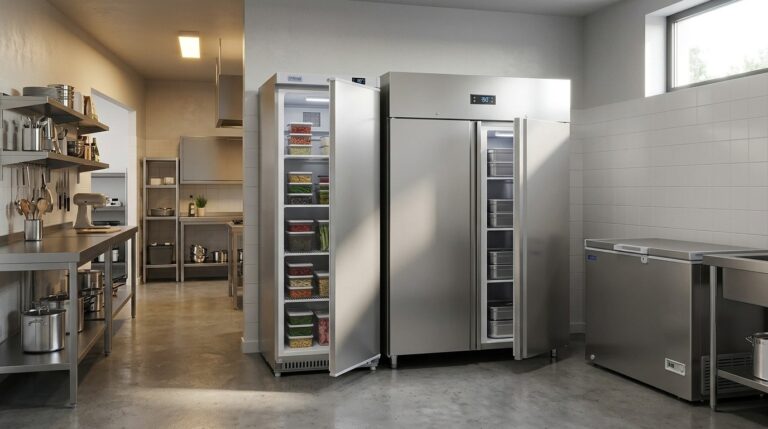
Unifrost Upright Freezer: Choosing the Right Model for Your Commercial Kitchen
Explore Unifrost upright freezers for commercial kitchens. Get advice on models, installation, and efficiency suitable for Irish venues.
Read guideCompare Unifrost freezer options on Caterboss
The article stays useful on its own, but when the reader is ready to compare real products or move into a commercial conversation, this is the clean next step.