
Optimizing Your Small Wine Storage: Unifrost Bottle Coolers in Focus
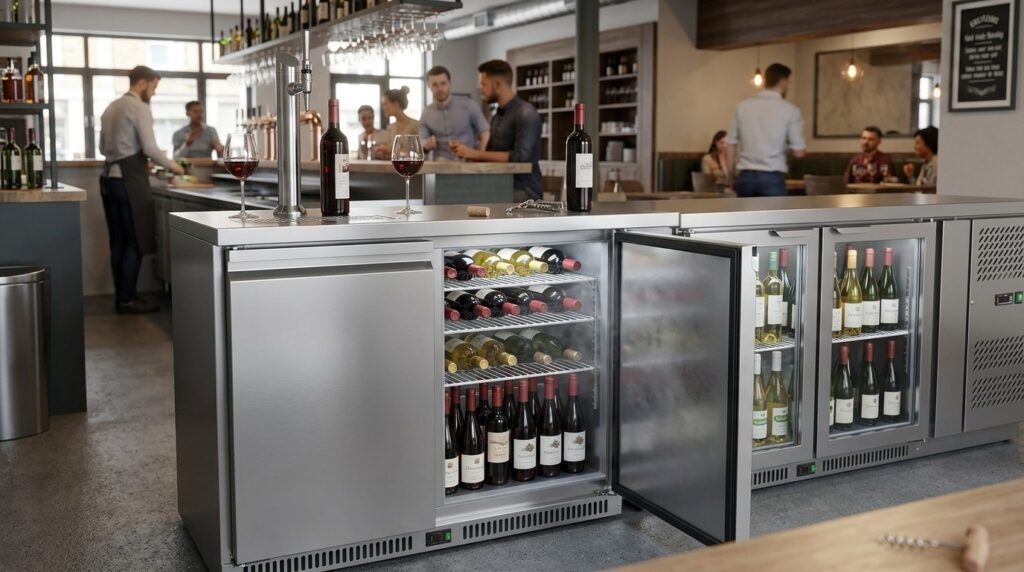
Discover how Unifrost Bottle Coolers serve as practical alternatives to small wine fridges in Irish hospitality settings.
Small Wine Fridge Alternatives: Using Unifrost Bottle Coolers in Hospitality
If you need a small wine fridge for a tight bar, café, or restaurant footprint, the decision is rarely about “wine storage” in theory. It is about serving temperature, speed of access, noise in customer-facing areas, and whether the unit will survive busy commercial use.
Unifrost does not currently offer a dedicated wine fridge model, so the closest practical option for compact wine-by-the-glass service is the Unifrost Bottle Coolers range, including models like BC10HBE, BC20HSE, BC20SBE, and BC30HBE. On this page you will assess when a backbar style bottle cooler is a better fit than a domestic small wine fridge, and what you trade off when you choose one.
You will work through the real checks that affect buying and day-to-day operation: how to think about usable bottle capacity and shelf layout, whether you truly need dual-zone control or just a reliable single serving temperature, what to look for around ventilation and undercounter installation, and how to plan backup storage for peak periods so your front-of-house “wine station” does not become a bottleneck.
Why Small Wine Storage Matters in Commercial Settings
Small wine storage matters because it keeps a small, reliable “ready to serve” selection at the right temperature, right where the work happens. That reduces bar delays and avoids bottles warming up on the back counter during a rush.
Even though wine is generally low-risk compared to high-risk foods, your front-of-house refrigeration still sits within your day-to-day HACCP discipline. In Ireland, HACCP-based food safety management is the standard expectation for food businesses, as set out by the FSAI: https://www.fsai.ie/business-advice/food-safety-management/haccp. In practical terms, consistent chilled storage supports consistent service, and that protects your margin and your reputation.
The trade-off is capacity. A small unit works when your wine list, turnover, and storage space match. If it’s too tight, you end up constantly shifting stock between areas, serving at mixed temperatures, and tying up staff time.
Service speed and bar flow are the real drivers
In most Irish venues, the issue is not long-term “cellaring”. It’s having the right bottle within arm’s reach so staff are not disappearing into the kitchen or storeroom mid-service.
A compact undercounter or backbar unit can:
keep your by-the-glass and sparkling options service-ready
reduce the temptation to open bottles that are still warm
support wine-led cocktails, spritz, and pairing menus without adding steps to the workflow
If the unit is awkward to access, or staff have to move other stock to get at wine, you lose most of the benefit.
Consistent serving temperature protects margin
Temperature problems rarely show up as a clear complaint. They show up as slower sales, half-finished glasses, quiet refunds, or “we’ll take something else”.
Small, dedicated storage helps you keep a predictable set of bottles at serving temperature, while overflow can stay in a cellar, cold room, or an upright commercial fridge away from the bar. That split is often the simplest way to keep service consistent without sacrificing bar space.
Space, ventilation, and heat build-up can make or break it
The common failure point is squeezing multiple small fridges under a counter with minimal clearance. Restricted airflow makes compressors work harder, raises running costs, and dumps more heat into an already warm bar.
Before you commit to a small wine or bottle-fridge set-up, check:
Ventilation clearance: is there enough breathing room around the unit for air to move?
Where the warm air goes: will it vent into a tight void or straight into the staff working area?
Door swing and access: will it clash with staff movement behind the bar or at the pass?
This is also where many operators find that a commercial bottle cooler format suits the job better than a domestic-style “wine fridge”. The goal is not showroom storage. It’s dependable, repeatable service during trading hours.
Choosing Between Unifrost Bottle Coolers and Domestic Wine Fridges
For a tight bar or restaurant set-up in Ireland, you’re usually deciding between two different jobs:
A wine fridge is about wine presentation and steady serving temperature for wine-only stock.
A commercial bottle cooler is about fast access, frequent door openings, and mixed drinks stock in a small footprint.
If you need one compact unit to live behind the bar and get opened all night, a Unifrost bottle cooler is generally the safer choice. If you want a unit that stays closed most of the time and is genuinely used for wine only, a domestic wine fridge can work, provided it’s protected from heat and heavy use.
How do they compare in a working Irish venue?
In most Irish bars, cafés and smaller restaurants, the “wine fridge” ends up becoming the nearest cold storage to the till or pass. That means constant opening, quick restocks and a mix of beer, mixers and soft drinks finding their way in.
That’s where a commercial bottle cooler tends to fit better. It’s designed for backbar workflow and the reality of busy service.
A domestic wine fridge tends to suit a set-up where it stays wine-only, is opened less often, and you’re protecting presentation for higher-margin bottles. If it becomes a general drinks fridge, you’ll usually see more temperature swings and slower service simply because it’s being used outside its comfort zone.
Unifrost bottle coolers (as a small wine fridge alternative)
If your wine-by-the-glass offering turns over quickly and space is tight, a bottle cooler is often the more commercial option. It’s made for quick grabs, repeated door openings, and regular replenishment.
It also keeps your drinks offer flexible. You can chill whites and sparkling alongside bottled beers, mixers and non-alcoholic lines without treating the cabinet as “wine-only”. If you’re looking at Unifrost options, the closest equivalent to a dedicated wine fridge in the current range is typically a bottle cooler (for example BC10HBE, BC20HSE, BC20SBE, BC30HBE).
The trade-off is simple: a bottle cooler is not trying to be a cellar. If your decision depends on wine-specific storage features such as dedicated bottle racking, long-term storage conditions, or reducing disturbance from constant handling, that’s where a wine fridge format can be a better fit, as long as it’s used gently.
Domestic small wine fridges
A domestic wine fridge is usually chosen for wine-specific storage and a tidier display. In a quieter, customer-facing area such as a hotel lounge or a small restaurant corner, that can be a reasonable approach if it’s not being opened constantly.
The risk in a commercial bar is day-to-day usage. Put a domestic unit under a counter beside hot equipment, pack it tight with no space to breathe, or let it become the “everyone opens it” fridge, and you can end up with heat build-up, inconsistent serving temperatures and early wear, regardless of the brand.
Which is best for you?
Decide based on how it will be used at peak service, not how it looks on install day:
Choose a Unifrost bottle cooler if the unit will be opened frequently, you need to chill mixed drinks stock as well as wine, and it has to suit real backbar pace.
Choose a domestic small wine fridge if you want wine-only storage and presentation, you can keep it away from heat and knocks, and door openings will stay low.
If you’re supporting a bigger wine-by-the-glass list, treat the undercounter unit as front-of-house working stock and keep backup chilled storage elsewhere so you’re not relying on one small cabinet at the busiest times.
Measure for door swing and service access, then check the specific unit’s ventilation and installation guidance so you don’t trap heat under the counter.
Once you’ve picked the format, plan how you’ll load it for service. The best unit in the world is still slow if staff can’t find stock quickly or you’re constantly shuffling bottles to get at what’s needed.
Understanding Key Decision Factors
Choose a small wine fridge for an Irish bar or restaurant the same way you’d choose any piece of bar refrigeration: size it for your busiest service, keep the install realistic, and only pay for features you will actually use. Start by translating your wine-by-the-glass offer into a working bottle count, then decide if one stable serving temperature is enough or if you genuinely need two zones. Finally, check the practicalities that affect reliability in Irish sites: ventilation, door swing, heat build-up under counters, and how the unit will sound and look in front of customers.
1. Set your capacity target based on service, not headline bottle count
In hospitality, capacity is about service continuity, not “maximum bottles if you stack them perfectly”. Work out what needs to be at serving temperature during peak, then add a buffer so staff are not restocking in the middle of a rush.
A simple approach is to map your by-the-glass list to expected weekend turnover: whites, sparkling, rosé, and lighter reds that you want ready to pour. If you are considering a commercial bottle cooler as the closest equivalent to a “small wine fridge”, you are effectively choosing a back-bar format designed for frequent openings and quick access in tight footprints, rather than a domestic-style wine cabinet built for occasional use.
2. Decide if you genuinely need dual-zone cooling, or just a clear serving plan
Dual-zone sounds ideal, but it only pays off if you run two distinct temperature programmes day-to-day. In many busy venues, a single-zone unit works well if you standardise how you serve and temper wines that need something different.
If the unit is also holding any food items, treat it as food refrigeration, not wine storage. The FSAI temperature control guidance is clear that fridges should be set so food is kept between 0°C and 5°C, which is colder than typical wine service temperatures. In practice, avoid mixing wine with perishable food unless you can keep food compliant without compromising wine service.
Source: https://www.fsai.ie/business-advice/running-a-food-business/caterers/temperature-control
3. Reduce running costs by getting installation and ventilation right first
On compact undercounter units, day-to-day running cost is often driven more by the install than by any brochure efficiency figure. Restricted airflow, warm voids, and constant door openings will make any small fridge work harder, especially if it is squeezed into a counter beside hot equipment.
Before you commit to an undercounter install, check the basics:
Identify where the unit rejects heat and keep that airflow path clear, including the grille area.
Allow clearance for the door to open properly without clattering into handles, kicker boards, or adjacent doors.
Keep it away from heat sources like glasswashers, coffee machine boilers, ovens, and sunny front windows.
If you are lining up multiple fridges, plan how warm air will escape from the undercounter run so you do not create a trapped heat pocket.
4. Assess front-of-house suitability: noise, heat, and the look customers actually see
If the unit sits behind the bar, noise becomes a practical operating issue, particularly during quieter services. Noise management is also part of workplace risk management under HSA guidance, even if your main noise source is the venue itself.
Source: https://www.hsa.ie/eng/topics/physicalagents/noise/noiseat_work/
Heat output matters too. A small fridge dumping warm air into a tight void can make the bar uncomfortable to work at and can push nearby refrigeration to run harder. For customer-facing installs, think about what guests will actually see: keep labels visible, avoid overstuffing, and set up the shelves so stock rotates properly instead of older bottles getting forgotten at the back.
5. Choose features that solve a real operational problem, not a brochure problem
In Irish service, features only earn their keep if they reduce mistakes, speed up service, or protect stock. If the door is opened constantly, practical details like shelf layout, visibility, and easy cleaning usually matter more than niche wine-specific extras.
A sensible “commercial” feature wish-list is often the boring one: stable temperature control, shelves and door seals that are quick to clean, and a layout that lets staff see what is there at a glance. Once those basics are clear, it becomes much easier to decide whether a commercial bottle cooler format or a domestic-style small wine fridge is the better fit for your bar programme, space, and service pace.
Avoiding Common Mistakes
Trying to run a busy Irish bar off a “small wine fridge” approach, whether that’s a domestic undercounter unit or a light-duty bottle cooler, can go wrong quickly if you ignore ventilation, service load and temperature control. The first signs are familiar: warm bottles, slow pull-down after repeated door openings, and compressors that seem to run all night. Under HACCP, you are expected to manage chilled storage performance in real conditions, not assume the cabinet will cope regardless. Problems usually show up first on Friday and Saturday when the bar is warmer, doors are opening constantly, and stock gets packed tight enough to choke airflow.
Built-in fitting with no breathing space
If you slide an undercounter unit into tight joinery without a proper air path, you are asking it to cool wine while it struggles to shed heat. In practice you see hot cabinet sides, longer run times, and temperatures drifting just when you need the unit most.
If you need a clean built-in look, treat these as non-negotiable:
The ventilation gaps the unit requires (not whatever space happens to be left).
Clear access to the grille and condenser area for cleaning.
Enough clearance that warm air can get away from the unit rather than recirculating behind the plinth.
Setting one “wine temperature” and expecting it to suit everything
A lot of venues set a single temperature and walk away, then wonder why whites taste flat, sparkling pours poorly, or reds are served too cold after hours in the same cabinet. A single-zone backbar or undercounter unit can still work, but you need to decide what you are optimising for. In many bars that means whites and sparkling for wine-by-the-glass, with reds stored elsewhere and brought forward in smaller quantities.
If the same cabinet is also used for food or dairy, the target changes. Irish food safety guidance expects chilled foods to be held at 0°C to 5°C, and the FSAI notes fridges are generally set around 3°C to 4°C to achieve that in product temperature (FSAI temperature control guidance). Don’t mix wine service and food storage unless you are clear on the priority and can keep both compliant.
Choosing by “bottle count” and ignoring service reality
A unit can technically “hold” the number of bottles you want and still fail in service. The issue is recovery: how quickly it can pull temperature back down after constant openings during a rush. This is where many domestic small wine fridges fall down in commercial use. They are built for occasional access in steady room conditions, not for a backbar beside hot equipment and a steady stream of door openings.
If you are using a Unifrost bottle cooler as a wine station, treat it like a working fridge:
Leave headroom and side space for airflow.
Don’t overstock to the point bottles block vents or fans.
Keep reserve cases in a cellar or larger cold storage area so the front unit supports service, not bulk storage.
Treating noise and heat as “someone else’s problem”
In open-plan bars, cafés and hotel lounges, a compact unit that runs constantly becomes noticeable. Multiple undercounter fridges in a tight servery also add real heat load, which pushes up room temperature and makes every unit work harder.
If you have several small fridges together, spacing, ventilation and a sensible restocking routine matter as much as the model choice. That’s often the deciding line in practice: when a commercial bottle cooler is the right compromise for fast service, and when a domestic-style small wine fridge is simply the wrong tool for the job.
Integrating Unifrost Bottle Coolers into Business Operations
Integrate a Unifrost bottle cooler the same way you’d integrate any piece of bar kit: give it a clear job, put it where the work happens, and set routines that stop performance drifting on a busy night. Before you commit to an undercounter position, confirm ventilation, door swing and heat rejection. Poor airflow is the fastest way to end up with warm bottles, extra noise and an overworked compressor.
1. Define the role: wine station, overflow, or mixed drinks storage
Treat the bottle cooler as part of the service flow, not just “somewhere cold”. In Irish pubs and restaurant bars with limited backbar space, the cleanest setup is usually:
a fast “grab zone” for whites and sparkling that are selling all night
a defined overflow plan for backups and functions
a separate approach for reds, depending on your style and room temperature
If most of your sales are wine-by-the-glass, decide what must live in the cooler all day versus what can be topped up from a cellar, cold room, or an upright fridge in the back. That avoids the familiar problem where staff cram every bottle into the nearest undercounter unit and stock rotation, visibility and serving temperature all suffer.
2. Choose placement based on service pressure and heat management
Place the unit where it saves steps during your busiest hour, not where it looks tidy on a drawing. In real venues that often means under the coffee pass in a café-wine bar, under the garnish station in a cocktail-led bar, or on the till side in a small pub where one person is covering everything.
Be cautious about clustering small fridges tightly in a dead-air corner behind the bar. When you stack refrigeration together, you stack heat as well. The area runs warmer, units run longer, and noise becomes more noticeable in customer-facing spaces.
3. Check undercounter fit, ventilation, and door swing before install
Before delivery, measure the full working envelope:
opening width and height
overall depth allowing for plugs and any pipework
door swing and access for quick loading and picking
Then work out where the warm air will go. A tight, unventilated undercounter void traps heat. That typically means longer run times, poorer temperature recovery and more service headaches.
If the unit is going into fitted cabinetry, plan for day-to-day reality. Vents get blocked by bar mats, cardboard and towels. Your layout should make it easy to keep airflow clear without relying on perfect behaviour during a rush.
4. Set a realistic temperature approach for wine service, not lab conditions
A bottle cooler is a commercial drinks fridge format. Use it to keep serving temperatures steady, rather than chasing “cellar perfect” storage conditions in front-of-house.
A practical approach in many Irish venues is to keep whites and sparkling consistently chilled for speed, then manage reds by rotation and time out of refrigeration. If you’re tempted to store food in the same unit (for example, dairy for coffee service), treat it like a food fridge from a HACCP point of view. The FSAI notes chilled food should be kept between 0°C and 5°C.
https://www.fsai.ie/business-advice/running-a-food-business/caterers/temperature-control
In most bars, mixing food and wine in a small undercounter unit is best avoided unless you have a clear separation and labelling routine that staff will actually follow.
5. Build a stocking and rotation routine staff will actually follow
Set a shelf plan that matches how orders come in, so staff are not rummaging with the door open. Typical options:
house pour together, premium by-the-glass together, sparkling together
or group by the styles you sell side-by-side (for example, Sauvignon/Pinot Grigio/Chardonnay)
Then set a restock rhythm: pre-shift load, a planned top-up on busy nights, and a close-down check. Make one person responsible each shift. If everyone owns it, nobody owns it.
6. Reduce noise and breakdown risk with simple operational habits
Noise usually gets worse when a unit is working harder than it should. The habits that protect performance are simple:
keep door-open time short between picks
don’t overfill: leave room for air to circulate
avoid loading large volumes of warm stock right before peak
If you need to crash-cool wine for an unexpected function, do it in back-of-house refrigeration where possible. Don’t ask the front-of-house grab fridge to do heavy lifting while it’s already under service pressure.
Also think about where the heat goes on warm evenings. Behind a busy Irish bar, glasswashers, ice machines and undercounter fridges can turn a tight space into a heat trap.
7. Set backup storage rules for peak trading and faults
An undercounter “wine station” should not be your only plan. Agree:
where reserve stock lives (cellar, cold room, or upright fridge)
how it gets to the bar without pulling staff off service
what happens if the unit fails mid-weekend (what can move to another fridge, what can sit ambient temporarily, and who logs the issue)
With that plan in place, it’s much easier to judge whether an undercounter Unifrost bottle cooler suits your layout, or whether you need a different format. If you’re unsure, browse the bottle cooler range on Unifrost.ie and sanity-check the footprint, ventilation requirements and access against your actual bar setup.
Practical Next Steps for Buyers
Start with the job you need the unit to do during service, then measure the space properly, including airflow and door swing, before you choose a format. In a tight backbar, confirm electrics, ventilation gaps, and where the warm air will discharge. Otherwise you can end up with a hot, noisy corner that struggles right when the bar is busiest. Set up a simple “wine station” so bottles move quickly and temperatures stay consistent, and plan a backup storage spot for overflow. Finally, check the plan against your HACCP routines. Temperature control and cleaning access will matter more day-to-day than any extra feature.
1. Define the job: serving station, display, or storage buffer
Be clear whether this is:
Wine-by-the-glass service: fast access and frequent door openings
A small curated display: noise and customer-facing appearance matter
A buffer store: capacity and recovery after loading matter
In most Irish venues, a “small wine fridge” ends up being a short-range service station. If it only needs to hold open bottles and tonight’s top-ups, an undercounter or backbar bottle cooler-style unit often makes more operational sense than a domestic wine fridge. If you’re trying to keep most of the list chilled all week, you’ll usually be better with a larger upright or a cellar solution, and use the small unit for service.
2. Measure properly, including ventilation and door swing
Undercounter installs go wrong when the unit fits the opening but cannot breathe, or the door catches a return, keg line, or post. Measure the width, height, and depth of the void, then measure the usable working space in front for loading and service.
A quick fit check that reflects real Irish backbar layouts:
Door clearance to open wide enough to load bottles without twisting them past columns, taps, or bar furniture
A path for warm air to escape so heat does not build up behind kickboards or in enclosed joinery
Access for cleaning and maintenance, including being able to pull the unit forward without dismantling the bar
If it’s going into fitted joinery, treat ventilation as part of the design, not something to “make work” later. A tight void typically means longer run time, more noise, and warmer product when the door is opening constantly.
3. Plan ventilation and heat management before you add “just one more” fridge
A run of compact fridges under a bar can turn into a heat strip. That heat has to go somewhere, and in a tight servery it often ends up raising the ambient temperature around compressors. Performance drops when you most need recovery.
Practical checks:
Keep refrigeration away from heat sources like glasswashers, hot wells, and coffee machine exhaust where you can.
Avoid boxing units into dead-end cavities.
If you already have several undercounter units, consider whether one larger, better-ventilated upright elsewhere would reduce total heat and noise at the bar.
4. Set up a simple “wine station” workflow so it stays cold in service
Small units fail in practice when staff have to hunt for stock or leave the door open while they decide. Decide, in advance, where:
Open bottles live
Tonight’s top-ups go
Backup stock is held nearby
For temperature, aim for stable, repeatable serving rather than “cellar ageing” conditions. The same discipline your HACCP system uses for routine temperature control and verification applies here too, especially with frequent door openings. See the FSAI guidance on HACCP and temperature control.
5. Match front-of-house capacity to a backup storage plan
If the small unit is your only cold wine space, you will feel it on weekends, functions, and warm spells. Decide where surplus stock will live so staff are not tempted to overfill the undercounter unit, which can block airflow and slow pull-down.
Common pairings in Irish bars and restaurants include holding reserve wine in a cellar, cold room, or a larger upright commercial fridge, and using the bottle cooler at the bar as the service-facing “ready rack”. This is also where the choice between a compact bottle cooler format and a domestic-style wine fridge becomes clearer in day-to-day trading.
Connecting to the Unifrost Ecosystem
Treat a Unifrost Bottle Cooler as a front-of-house service fridge within your wider refrigeration plan, not as a small standalone wine fridge. In an Irish food business, refrigeration needs to support documented temperature control and routine checks. The Food Safety Authority of Ireland’s temperature control guidance for caterers is a useful reference point for what “good” looks like day to day.
The practical point is simple: a bottle cooler can steady wine-by-the-glass service, but it will not replace the capacity, temperature recovery, or product separation you get from a dedicated back-of-house fridge or cold room when trade is busy.
How bottle coolers plug in to a typical Unifrost layout
In most Irish bars, cafés, and restaurants, a bottle cooler sits under-counter or backbar and keeps fast-moving drinks within arm’s reach. Use it for service stock, then rely on larger refrigeration for bulk storage and replenishment. Trying to run the full wine programme out of a small footprint usually shows up as warm bottles, constant restocking, and staff leaving doors open during peak.
A workable split often looks like:
Bottle cooler at the bar: opened bottles and “ready to pour” whites, sparkling, and any reds you’re serving slightly chilled
Upright commercial fridge or cold room: case storage and backup stock
Separate food-only fridge: ingredients, so you’re not mixing odours, spills, or workflows
Where bottle coolers sit versus other Unifrost refrigeration
Bottle coolers make most sense when your constraint is bar frontage and reach, not total volume. If you have steady by-the-glass trade, the bottle cooler becomes the “last metre” of refrigeration. The heavy lifting stays in back-of-house kit designed for higher throughput, bigger loads, and frequent restock cycles.
If you’re choosing between adding another undercounter unit versus stepping up to an upright, ask one operational question:
Are you short on reach-in access (service speed problem)?
Or short on chilled capacity (stock and peak-trading problem)?
You’ll usually get the answer quickly by looking at a Friday or Saturday: how often are you restocking, where are the cases sitting, and how far are staff walking to get them?
Support, spares, and keeping downtime manageable
The ecosystem value is not just the cabinet. It’s standardising what you buy, how staff use it, and how you maintain it across the site. Fewer types of units makes routine cleaning easier to manage, staff training simpler, and fault-finding less of a guessing game.
If you’re running multiple fridges under one counter run, plan for service access from the start: space to pull units forward, condenser areas you can actually reach to clean, and safe cable routing. Otherwise a simple call-out can turn into a joinery problem. This is also where commercial bottle coolers tend to suit bars better than domestic units, which are rarely designed to be serviced easily once they’re boxed into a working counter.
How to use a bottle cooler as a wine station without upsetting the rest of your setup
Run the bottle cooler as a controlled, labelled zone: what goes in, what does not, and how stock is rotated. Small refrigeration lives or dies on staff habits. If it becomes a dumping ground for mixers, garnish, and staff drinks, wine temperatures drift, consistency suffers, and wastage follows.
This is where the choice between a commercial bottle cooler and a domestic wine fridge usually becomes clear. It depends on service pressure, how often the door opens, and how tightly you can control loading and rotation during a busy shift.
Small wine fridge FAQs for Irish bars and restaurants
How do Unifrost Bottle Coolers compare to domestic small wine fridges for busy Irish bars and restaurants with limited space?
A domestic small wine fridge is built for light-duty, steady use and usually prioritises presentation and gentle storage. In a busy bar or restaurant, the bigger issue is often door-open cycles, fast restocking, and reliability in a warm, cramped backbar.
Unifrost Bottle Coolers are a practical alternative when you need a compact, commercial-style unit for service rather than long-term cellaring. They’re designed for bottles and cans, suit undercounter/backbar placement, and make it easier to run a consistent “grab-and-go” drinks workflow. If you mainly need to keep wine at ready-to-serve temperatures (and you rotate stock quickly), a Bottle Cooler is usually the more appropriate tool than a domestic wine fridge.
Is a dual-zone small wine fridge necessary, or will a single-zone unit be enough for my needs?
For most hospitality venues, a single-zone unit is enough if your goal is simple: keep your main by-the-glass lines (typically whites, rosé, sparkling, and any pre-chilled reds) at a consistent serving temperature.
Go looking for dual-zone only if you genuinely need two different holding temperatures at the same time and you cannot manage it operationally, for example:
You serve a high volume of both sparkling/white and lighter reds and want both ready to pour without using ice buckets.
You have limited staff time to stage bottles outside the fridge before service.
In practice, many venues use a single-zone bottle cooler as the “service fridge” and handle reds via ambient storage plus a short chill before serving when needed.
What’s the best way to use a Unifrost Bottle Cooler as a “wine station” in a tight hospitality footprint?
Treat the bottle cooler like a service station, not a cellar:
Assign zones by speed of sale. Put your fastest movers at the most accessible shelf height. Reserve harder-to-reach space for backup.
Standardise shelf layout. Keep one shelf for each SKU (or each wine style) so staff do not waste time hunting, and so stock counts are obvious during service.
Use FIFO rotation. New deliveries go to the back/bottom. Oldest stock stays closest to the doors.
Set one “service temperature” you can live with. Aim for a temperature that keeps whites and sparkling ready, then use an ice bucket or brief tempering time for bottles that need to move warmer or colder.
Keep it clear of heat and obstruction. Don’t block ventilation grills, and avoid placing it beside hot equipment or under a counter that traps warm air.
If you’re replacing a domestic small wine fridge, the biggest win is usually workflow: faster access, simpler restocking, and fewer temperature swings from prolonged door-open time.
How do I choose between a Unifrost undercounter Bottle Cooler and a larger upright fridge for my wine-by-the-glass programme?
Choose based on service style and peak demand, not just bottle count:
Pick an undercounter/backbar Bottle Cooler when you need wine at hand for speed of service, you have a tight footprint, and you’re mainly chilling bottles for the next shift or two. This is the closest functional match to a compact small wine fridge but in a more bar-friendly format.
Pick a larger upright fridge when you need higher capacity, fewer restocks during peak, and you can place it just behind the bar or in a nearby prep area without slowing service.
A common setup is: Bottle Cooler front-of-house for “open now” stock, plus an upright in a back area for “refill quickly” stock. That combination usually reduces staff steps and stops the FOH unit being overpacked (which can hurt airflow and recovery).
How should I plan backup storage if my front-of-house small wine fridge capacity isn’t enough at peak times?
Plan backup storage around how fast you can replenish, not how many bottles you can theoretically fit.
Stage a par level: decide the minimum number of bottles per SKU that must be cold and ready at all times (for example, “2 bottles of each by-the-glass white always in the FOH unit”).
Create a cold refill point close to service: an additional fridge in a back bar area, nearby storeroom, or cellar. The key is that refills are already chilled so you’re not loading warm bottles into the FOH unit mid-rush.
Use a simple restock cadence: top up before service, mid-shift if needed, and after service so the FOH cooler starts the next shift at target temperature.
Keep contingency tools: ice buckets, insulated sleeves, and a clear “who restocks what” procedure for peak periods.
If your team is constantly fighting capacity, it’s usually a sign you need a second cold holding point (or a bigger unit) rather than trying to make one small wine fridge do everything.
Next step: match the right Bottle Cooler to your service setup
If you’re using a small wine fridge idea to solve a commercial problem, the quickest next step is to pick a Bottle Cooler size and door format that fits your counter space and your service flow.
Browse Unifrost bottle coolers and backbar options on Caterboss’s Bar Equipment category to compare what’s available, then plan your “front-of-house wine station” capacity and your backup cold storage around your busiest trading hours.
Keep comparing inside the same Unifrost topic
These articles are the best next reads if the visitor wants a deeper product choice, maintenance, or support route from here.
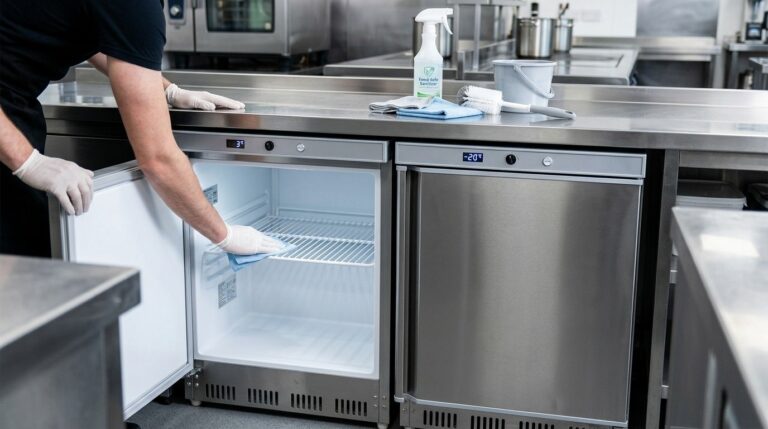
Unifrost Undercounter Fridge & Freezer Cleaning: Best Practices
Explore best practices for Unifrost undercounter fridge/freezer cleaning in Irish commercial kitchens. Ensure hygiene and equipment longevity.
Read guide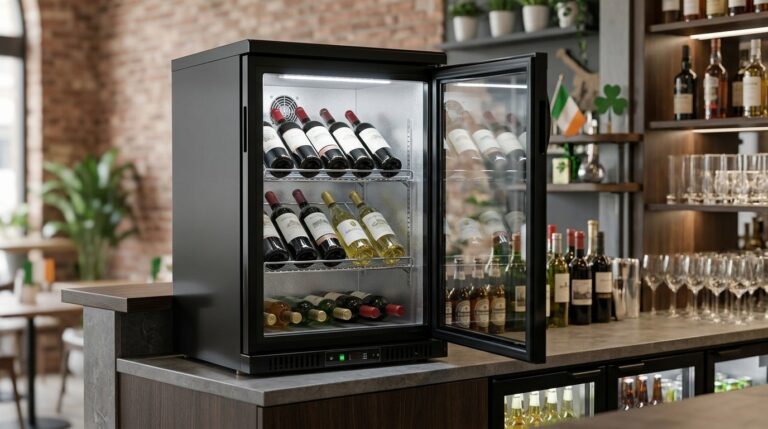
Choosing the Right Unifrost Bottle Cooler for Wine Display in Ireland
Guide to selecting Unifrost bottle coolers for optimal wine display in Irish bars and restaurants.
Read guideView Unifrost display fridges at Caterboss
The article stays useful on its own, but when the reader is ready to compare real products or move into a commercial conversation, this is the clean next step.