
Unifrost Blast Chiller Benefits: A Comprehensive Guide
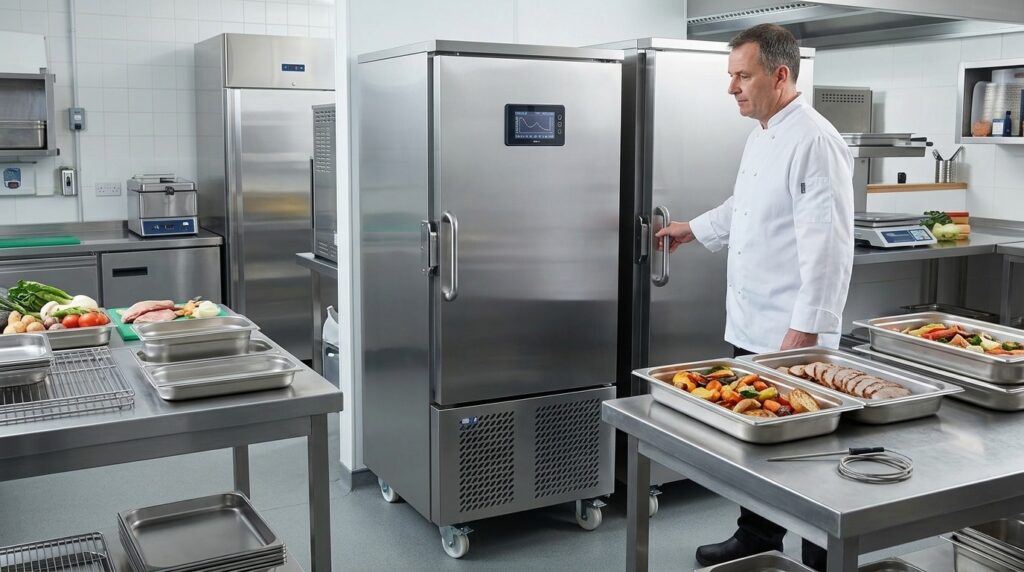
Discover how Unifrost blast chillers boost food safety, HACCP compliance, and operation efficiency for Irish kitchens.
Unifrost Blast Chiller Benefits for Irish Commercial Kitchens
If you run a busy kitchen, the real question is not whether you can cool food, it is whether you can cool it fast, consistently, and with records you can stand over in an inspection. A Unifrost blast chiller is designed to pull heat out of cooked food quickly so you protect food safety, support HACCP procedures, and keep service moving without relying on risky bench cooling or overloading fridges.
This guide breaks down the practical benefits you care about when weighing up Unifrost Blast Chillers, including what faster pull down means for quality, shelf life, and waste, how blast chilling compares with using standard refrigeration, and where you typically see labour and scheduling gains in prep heavy operations. We also cover the trade offs you need to check before buying, including space, loading patterns with GN pans, cleaning routines, and the cost versus the operational payback.
Where it helps decision making, we reference the current Unifrost blast chiller models in this family, including BC5UN, BC10U/BC10UN and BC14U, and explain what to look for when choosing a size for restaurants, hotels, bakeries, catering, central production, or dark kitchens.
Understanding the Need for Blast Chillers
Irish hospitality kitchens use blast chillers because they let you cool cooked food quickly, predictably, and in a way you can stand over in a HACCP record. That is difficult to guarantee with bench cooling or by relying on a busy service fridge.
The Food Safety Authority of Ireland (FSAI) advises cooling cooked food as quickly as possible and getting it into the fridge within two hours. It also notes blast chilling as an option where you are chilling large volumes of food, and warns against overloading fridges with warm food because it raises the overall temperature and increases risk for other stored items, per its temperature control guidance for caterers.
The real-world problem blast chillers solve: repeatable, controlled cooling
In a restaurant, hotel kitchen, café or production unit, the question is rarely “will it cool eventually?”. It is whether you can cool it fast enough, evenly enough, and consistently enough when the kitchen is under pressure.
A blast chiller is built for the awkward window between cooking and chilled storage: trays coming off the pass, out of the combi, or off the hob that need to be brought down quickly without turning your coldroom or upright fridge into a warm holding cabinet.
HACCP and audit pressure: why cooling is a common weak point
HACCP depends on control points you can monitor and record. Cooling is one of the hardest stages to control in a working kitchen because it often happens around service, with food split across shallow gastro trays, pots, buckets and speed racks, all competing for space.
FSAI guidance is clear on the direction of travel: cool cooked food as quickly as possible and get it into refrigeration within two hours. It also flags the knock-on issue most kitchens recognise in practice: loading a fridge with warm food can raise cabinet temperatures and put other items at risk during a busy period, as set out in the same FSAI guidance. A blast chiller makes cooling a defined, repeatable step instead of a best-effort task.
Why a standard fridge or freezer is the wrong tool for cooling hot food
Most kitchens try to manage cooling with bench time, ice baths, or by putting hot trays straight into a coldroom or upright fridge. You might get away with it occasionally, but the failure modes are familiar:
Warm food raises the cabinet temperature of a working fridge, which can push other stored food out of range during service, as FSAI warns in its temperature control guidance.
Bench cooling depends on tray depth, portioning, stirring, room temperature and staff attention, so results vary shift to shift.
A freezer is a poor shortcut for hot product. It can freeze the outside while the core stays warm, and it loads the freezer heavily, slowing recovery for everything else.
In tight kitchens, cooling workarounds take up prep space and add handling steps, increasing labour and cross-contamination risk.
Where Unifrost blast chillers typically sit in the workflow
Unifrost’s blast chiller range on Caterboss includes BC5UN, BC10U/BC10UN and BC14U in the “Blast Chillers” family. In practice, units like these are chosen when you need rapid pull-down as part of a HACCP routine and you want GN pan compatibility to keep the process straightforward for staff.
Your decision usually comes down to when you cook in volume and when you need food ready for the next step: post-lunch prep for dinner service, bakery production where texture matters, or bulk cooking for chilled holding. If blast chilling is built into the line, it does more than cool food quickly. It helps keep your overall refrigeration temperatures stable, which is often the difference between “we usually manage” and a cooling process you can rely on every day.
Daily Operational Benefits of Unifrost Blast Chillers
A blast chiller earns its keep when service pressure meets HACCP reality. Cooling is often where good food turns into a risk, and a paperwork headache, if it is done ad hoc. FSAI cook-chill guidance is clear that rapid cooling and controlled refrigerated storage are central to safe cook-chill systems. The right workflow still depends on your menu, batch sizes, and how much refrigerated space you have. In day-to-day terms, Unifrost blast chillers (BC5UN, BC10U/BC10UN, BC14U) are about making cooling predictable and repeatable with normal staffing.
HACCP and food safety: a controlled cooling step you can document
Cooling cooked food in a standard fridge is a common weak point. A fridge is built to hold temperature, not to pull heat out of hot product quickly. That is where the usual problems show up:
trays left on the pass to “steam off”
large pots split into whatever containers you can find
temperature checks that are inconsistent, and hard to record properly
A blast chiller gives you a defined cooling step you can build into your HACCP plan, with time and temperature checks that are realistic to do every day. For cook-chill operations, FSAI guidance includes rapid cooling targets such as cooling from 63°C to 10°C within 2 hours, and then to 5°C as quickly as possible after that, as set out in the FSAI Cook-chill Systems in the Food Service Sector (Guidance Note 15, Revision 2).
Speed in practice: why pull-down matters on a busy kitchen floor
Speed is not a headline spec. It shows up in the places that cause bother during a busy week:
better recovery when you load several GN pans after service
less heat pushed into your main fridges and cold room
fewer “where do we leave this?” compromises while food cools, which reduces time spent in the bacterial growth danger zone
These Unifrost models are positioned as GN-compatible blast chillers, which suits a simple workflow: cook into GN, chill in the same GN, then move straight to refrigerated storage. Fewer container swaps means fewer labelling slips, fewer spills, and less chance of contamination when you are closing down under pressure.
Labour and wage pressure: fewer touches, fewer decisions
A blast chiller does not remove work, but it cuts out the awkward parts that burn time:
splitting batches into multiple small containers just to get cooling started
reshuffling shelves to keep hot food away from chilled food
repeated “is it cool yet?” probing
The practical gain is consistency. When cooling is a set step with a clear end point, it can be handed over with a thermometer and a simple checklist, instead of relying on the head chef’s judgement every time. That is also where you avoid the end-of-night delay of waiting for product to cool enough to store safely.
Prep scheduling: using cook-chill to protect service capacity
Reliable cooling lets you move more cooking to off-peak hours without creating a safety gap. In a typical Irish kitchen, that might mean sauces, braises, bulk proteins, baked items, and prep components cooked earlier, chilled safely, then regenerated or finished during service.
That lines up with the control and documentation expectations in the FSAI cook-chill guidance. The operational benefit is straightforward: more consistent output when you are short-staffed, or when functions and à la carte land at the same time.
Best-practice loading and GN pan set-up (this decides whether it performs)
Most blast chiller “underperformance” comes from loading, not the unit. Keep it boring and consistent so results are repeatable across shifts:
Use shallow fills in GN pans for liquids and sauces. Depth slows cooling.
Avoid stacking pans or blocking airflow. The cold air needs access to the container surfaces.
Standardise batch sizes so cooling times stay predictable for HACCP records.
Do not seal steaming-hot containers. Vent briefly if needed to reduce condensation, chill, then cover for storage.
If you rely on deep gastro inserts, big stockpots, or whole joints, plan the cooling method at recipe level. Leaving it to the end of service is where most kitchens get caught.
Hygiene and day-to-day reliability: keeping it audit-ready
A blast chiller only helps your HACCP system if it stays clean and the routine stays consistent. Spills, condensate, and food debris build up quickly, especially with uncovered product, high-fat sauces, or strong-smelling items.
What works in practice is a routine that actually gets done: wipe-downs between loads where odour transfer is a risk, end-of-day cleaning, and periodic checks of door seals and probe condition if you use probed product temperatures for verification. That supports the broader HACCP-based approach expected of food businesses in the FSAI Safe Catering guidance framework.
Used properly, a Unifrost blast chiller is a production tool. It reduces cooling bottlenecks, steadies quality, and makes HACCP documentation easier to manage during a busy week.
Blast Chillers vs. Standard Refrigeration Units
A blast chiller is for safe, controlled cooling. A standard upright fridge or freezer is for storage. That difference matters in a working kitchen.
Blast chillers are built to pull heat out of hot food quickly and consistently. Upright fridges and freezers are designed to keep already-chilled or frozen stock at a stable temperature. If you use a storage cabinet to cool hot food, you tie up shelf space, warm the cabinet, and make it harder to keep everything else in the safe holding range during a busy shift.
In most Irish kitchens, the decision comes down to your pressure point: do you need more safe cooling capacity and a cleaner workflow, or do you mainly need more cold storage space?
How do blast chillers and standard fridges/freezers compare overall?
If you regularly cool cooked food for later use, the risk with “just put it in the fridge” is that you are asking a storage cabinet to do a job it was not designed for, especially with frequent door openings and a warm kitchen.
FSAI guidance is clear that cooked food for later use should be cooled as quickly as possible and refrigerated within two hours. It also notes that blast chillers are designed to chill hot foods quickly and safely (FSAI temperature control guidance). That is why blast chillers tend to turn up first in operations doing batch cooking, banqueting, sauces and stocks, pastry, and any venue running cook-chill or cook-freeze properly.
From a buying point of view, treat a blast chiller as production equipment, and your upright fridge/freezer as storage equipment. When you separate those jobs, your storage cabinets spend more of the day doing what you paid for: holding steady temperatures and coping better with the normal abuse of service.
Blast chillers (including Unifrost BC5UN, BC10U/BC10UN, BC14U)
The main advantage is predictable cooling. In practical terms, a blast chiller gives you a dedicated cooling step, so you are not relying on workarounds like ice baths, shallow trays, or borrowing space in the main fridge at close-down.
It also makes HACCP easier to run in the real world. Instead of a process that depends on who is on shift, you can build a consistent cooling step into your routine, aligned with FSAI expectations around rapid cooling and refrigeration within two hours (FSAI temperature control guidance). That consistency matters when staffing is tight, you are on split shifts, or production hands over from one team to another.
Rapid chilling can also protect food quality in items that suffer if they sit warm too long, such as cooked meats, rice, thick sauces, and baked goods. If you are producing for more than one site, or working from a central kitchen, it helps you standardise: chill to a controlled endpoint, then store or dispatch, rather than guessing when something is “cool enough”.
Standard upright fridges and freezers
A standard Unifrost upright fridge or freezer is the right tool for holding temperature, not shedding heat. Load it with warm food and you risk lifting the cabinet temperature and affecting everything else inside. FSAI specifically warns against overloading fridges with warm food because it raises the overall temperature (FSAI temperature control guidance).
That said, uprights win on day-to-day capacity per square metre and fast access during service. For many cafés, pubs, and smaller takeaways, the reality is you simply need more chilled or frozen storage, and any cooling you do is genuinely small-batch and can be portioned down quickly without compromising the main fridge.
Freezers remain the workhorse for longer-term holding, but they are not a safe or reliable way to freeze hot food quickly. If freezing from hot is part of your routine, that is usually a sign you need to separate cooling from storage.
Which is best for you?
Choose a blast chiller if you regularly cool cooked food for later service, you are tight on fridge space at close-down, or you are formalising cook-chill or cook-freeze within HACCP.
Choose standard refrigeration first if the core problem is lack of chilled/frozen storage and most cooked food is served straight away, or cooled only in small portions without warming the main cabinet.
Many busy kitchens end up with both: the blast chiller handles the cooling step, and upright fridges/freezers handle safe storage and quick access during service.
Treat rapid cooling as a production step rather than an afterthought, and you will usually see the benefit in workflow, reduced pressure at close-down, and fewer temperature-control headaches during peaks.
Considerations and Trade-offs
Adding a blast chiller can tighten up your HACCP cooling process, but it also adds a new piece of production equipment that needs space, airflow and a routine. If you install it wherever it fits, with no allowance for heat rejection or cleaning access, you tend to see the same problems: slower pull-down, higher running costs, and more daily friction for staff.
This shows up quickest in smaller cafés, pubs and takeaways, where the unit ends up wedged beside hot equipment or used as “extra fridge space” during service. At peak times like Christmas, weddings and match days, those shortcuts are usually when your cooling plan slips and your records stop matching what actually happened.
Space, ventilation and where the heat goes
A blast chiller is not a “slot it anywhere” box. You need a sensible position with:
Airflow around the unit, so it can reject heat properly.
Safe loading access, so staff can slide in GN pans without fighting a tight corner.
A clean route to chilled storage, so product can go straight from blast chilling into a fridge without crossing a busy service line.
If you place it beside a combi oven, fryer line, or in a tight pass where doors are constantly opening, you create two predictable issues. The unit is working in a warmer ambient, and staff are more likely to overload it or pack pans too tight. Both slow cooling and undermine the point of buying a blast chiller in the first place.
Energy use and running cost reality in Ireland
A blast chiller draws most power when it is actively pulling food down. That energy ends up as heat in the kitchen, so you will feel it in the room, especially in smaller prep areas.
The cost trade-off is easiest to manage if you treat blast chilling as a planned production step, not an all-day “open and close” cabinet. In practical terms:
Run batches during prep blocks or after service, when loading is calmer and doors stay shut.
Move food into chilled storage once it’s cooled, then let the blast chiller sit idle between cycles where your workflow allows.
This approach is often more stable than trying to cool food “on the bench” and then loading warm product into a fridge, which can push cabinet temperatures up and creates knock-on problems for everything already stored inside.
Maintenance and hygiene workload (the bit that gets forgotten)
Blast chillers work best when they are clean enough to use quickly and predictable enough to trust for HACCP. If grease, crumbs and spills build up, you can end up with odours, poorer heat transfer and longer, less consistent cycles. That’s exactly the sort of thing that becomes hard to explain during an inspection or internal audit.
The trade-off is straightforward. You swap some manual cooling labour and disruption to your fridges for a small, regular cleaning routine and more disciplined loading. Once staff treat the blast chiller as core production kit rather than overflow storage, the day-to-day benefits are much easier to hold onto during a busy service.
Optimal Situations for Upgrading to a Unifrost Blast Chiller
Investing in a blast chiller makes sense when your current cooling method is creating time pressure, pushing you towards risky workarounds, or dragging your cold storage out of spec. Before you look at sizes, pin down when you’re cooling hot food and where it’s landing. If the real issue is simply not enough cold storage, a blast chiller will not fix that on its own.
1. Check your current cooling routine against Irish food safety expectations
If hot food is regularly left to “steam off” on benches, cooled in sinks, or spread across trays wherever there’s space, you’re relying on good intentions instead of a controlled process.
The Food Safety Authority of Ireland advises that cooked food not eaten immediately should be cooled as quickly as possible and refrigerated within two hours, and notes blast chilling as an option where you chill lots of food as part of your operation (see the FSAI’s temperature control guidance for caterers).
Practical warning signs you’ll recognise:
Food still warm at close, or being left “until morning”.
Cooling start times not recorded consistently in HACCP logs.
Probe readings that vary by tray, portion size, or who’s on shift.
Upright fridges taking a long time to recover after warm stock goes in.
This tends to show up hardest in summer, in tight kitchens, and in sites where the only available fridge space is also doing service duty.
2. Match blast chilling to the service patterns where it pays back
Blast chillers justify themselves where batch cooking and controlled cooling are part of normal production, not the occasional emergency.
They tend to earn their keep fastest in:
Restaurants batch-prepping sauces, stocks, proteins and cooked veg.
Hotels and banqueting kitchens where production spikes are predictable.
Bakeries and cafés cooling fillings, custards, cooked fruit, and tray bakes.
Contract catering and central prep kitchens.
Takeaways scaling prep to hit delivery peaks without losing control of timings.
The “pressure points” are usually the same across Irish hospitality: weekend covers, event season, Christmas menus, match days, and tourist peaks. A blast chiller helps most when it lets you move prep into quieter hours while keeping cooling controlled, and when it stops you using standard fridges as cooling devices (which is when they struggle most).
3. Be clear what problem you’re solving: compliance, labour, consistency, or a mix
Your reason for upgrading should guide what “good” looks like day to day.
HACCP control: A repeatable cooling step you can explain and document, rather than improvised cooling and crossed fingers.
Labour control: Fewer touchpoints. Less stirring, decanting, moving containers around, and checking “is it cool yet?”.
Consistency: The same cooling result regardless of shift, chef, or site. This matters quickly for multi-site operators, shared kitchens, and dark kitchens where process needs to be tight.
If you’re producing for multiple brands or tenants, a controlled cooling step also makes life easier when you’re aligning procedures with different HACCP plans.
4. Make sure a blast chiller will fit your kitchen flow (and not create a new bottleneck)
A blast chiller only works if staff can use it without disrupting service. Place it close enough to the pass or production area that it becomes part of the routine, but with enough clearance for doors, safe handling, and airflow.
Three checks prevent most “we bought it and still struggle” outcomes:
Cold holding afterwards: You still need fridge space once the cycle is finished. Plan where food goes next.
Loading discipline: Overloading or blocking airflow is how “rapid chilling” turns into slow cooling and extra cost.
Cleaning routine: Door seals, internal surfaces, and any probes need to be treated as part of your HACCP-critical cleaning schedule.
Unifrost’s blast chiller range includes the BC5UN, BC10U/BC10UN and BC14U. In practical terms, choose capacity for your busiest cooling window (post-service, bake-off, carvery, events, central prep), not for your quietest day. That’s what stops the unit constantly playing catch-up at peak times.
Integrating Unifrost Blast Chillers in the Wider Kitchen Ecosystem
A blast chiller makes the most sense when you treat it as a workflow step, not an extra cold box. Its job is to get hot food through the 5°C to 63°C “danger zone” quickly, without pushing heat into your day-to-day fridges and risking temperature drift. The Food Safety Authority of Ireland specifically warns against overloading fridges with warm food, and notes blast chilling as an option to cool cooked food safely within two hours, which is where many busy kitchens get caught in practice (FSAI temperature control guidance).
The important bit is the handover after chilling. If chilled food sits waiting for space, labels, or a runner to move it, you can undo the food safety benefit you just paid for.
How blast chilling fits alongside your existing Unifrost fridges and freezers
In most Irish kitchens, the real constraint is not “cold capacity”. It’s controlled cooling capacity. Upright fridges and undercounters are designed to hold food cold. They are not designed to repeatedly absorb large heat loads from stockpots and trays across a shift. Using them that way can warm the cabinet, put other stock at risk, and create avoidable HACCP headaches.
A practical layout is straightforward: the blast chiller sits between cooking and storage. Cook, portion into shallow GN pans, blast chill, then transfer into your main Unifrost chilled cabinets for holding. If you’re doing cook-freeze, the same handoff goes to frozen storage instead, with clear labelling and stock rotation.
Unifrost blast chiller models such as the BC5UN, BC10U/BC10UN and BC14U are typically specified as part of that “cook → chill → store” flow, rather than as somewhere to park product long-term.
Where it changes labour, not just temperatures
Once a blast chiller is part of the routine, cooling becomes a repeatable task rather than “chef babysitting time”. With a written process, it’s a step a trained junior can run during close-down or between services, freeing up skilled hands for prep and service.
You also cut the small time drains that add up in real kitchens: trying to find space in a walk-in, swapping containers to “cool quicker”, ice baths in the sink, and the recurring argument about why “just stick it in the fridge” causes problems.
The trade-off is discipline. You need a realistic handover routine, otherwise chilled product will queue beside the chiller waiting for racking, labelling, or a clear shelf in the fridge. That’s when audits get uncomfortable.
How to plug a blast chiller into multi-site, events, and production kitchens
Blast chilling is one of the cleanest ways to standardise output when service pressure changes day to day, such as hotels with banqueting, pubs with weekend spikes, or production kitchens feeding delivery peaks. It supports batch cooking with controlled cooling, then controlled storage and regeneration. That’s a pattern you can document properly in a HACCP plan, rather than relying on “left out until it felt cold”.
In shared production kitchens, the blast chiller is often a shared critical control point. The non-negotiables are simple: who owns the cooling records, how batches are identified through the chiller, and where product goes immediately afterwards.
A workable four-step flow covers most sites:
Identify the batch (dish, time, operator)
Portion into shallow GN pans consistently
Chill using a consistent loading pattern
Move straight into dedicated chilled or frozen storage, with date and use-by applied
When you set it up this way, the blast chiller does more than tick a compliance box. It reduces service stress by turning cooling into a controlled, predictable part of your kitchen system.
Frequently asked questions about Unifrost blast chiller benefits
What is a blast chiller and how does it work?
A blast chiller is a commercial refrigeration unit designed to rapidly pull heat out of cooked or prepared food so it passes through the “danger zone” as quickly as possible. It works by circulating very cold air at high speed around food held in GN pans or trays, using a temperature-controlled chilling cycle to bring product down quickly and evenly.
In practice, you load hot food (typically after cooking), select the appropriate chilling or freezing programme, and the unit forces fast, controlled cooling so the food can then be moved into standard chilled or frozen storage.
How does using a blast chiller help with HACCP compliance and food safety?
Blast chilling supports HACCP by giving you a repeatable, controlled cooling step that reduces time spent at unsafe temperatures. Instead of relying on ad hoc cooling (leaving food at ambient, shallow pans in a cold room, ice baths), a blast chiller helps you:
Control the critical cooling step with a defined process staff can follow every time.
Reduce risk of bacterial growth by shortening cooling time.
Standardise documentation by tying your cooling procedure to a specific piece of equipment and a consistent method.
For audits, this makes it easier to explain your controls: what you do, how you do it, and how you ensure it is done the same way each batch.
What are the main benefits of a blast chiller compared with standard fridges or freezers?
Compared with standard refrigeration, blast chillers are built for speed, food quality, and process control.
Key practical benefits include:
Faster and safer cooling than placing hot food into a fridge or cold room.
Better product quality because rapid cooling helps protect texture, moisture, and appearance.
Less disruption to other storage because you are not heating up your main fridge/freezer with hot loads.
More predictable results for cook-chill and cook-freeze workflows.
Operational efficiency: you can batch-cook, chill quickly, and portion/store when it suits your service.
Unifrost blast chillers on Caterboss (Blast Chillers family) are commonly chosen by restaurants, hotels, bakeries and caterers for exactly these process and compliance advantages.
How does a blast chiller extend food shelf life and reduce food waste?
Rapid chilling helps extend shelf life because it reduces the time food spends warm, when bacteria can multiply fastest. When you cool quickly and then store correctly, you typically get:
More consistent holding life for prepared foods, sauces, proteins, and desserts.
Fewer quality failures (split sauces, dry meats, soggy pastry) that lead to binning product.
Better stock rotation and portion control, because you can label and store batches immediately after chilling.
The commercial result is usually less waste and better yield, especially where production is done in batches (prep days, banqueting, or central production).
What capacity or size blast chiller do I need for my kitchen?
Size the unit around your peak cooling load, not your average day.
A practical way to choose is:
List what you need to cool fast (e.g., soups, sauces, cooked meats, rice, baked goods).
Estimate how many GN pans or trays you need to chill in one cycle at your busiest time.
Decide whether you need chill only or chill plus “shock freeze” capability for your workflow.
Check space, power, ventilation clearance, and where it will sit in the production line.
Within the Unifrost “Blast Chillers” family, Caterboss lists models including BC5UN, BC10U/BC10UN and BC14U. In general, the model numbers indicate different throughput sizes, so matching your GN pan requirement and batch volume to one of these options is a sensible starting point.
How do Unifrost blast chillers help central production kitchens and dark kitchens standardise quality?
Central production and dark kitchens rely on repeatability. A blast chiller helps standardise output by making the cooling stage consistent across batches and staff shifts.
That supports multi-site consistency by:
Locking in a consistent process for cook-chill and cook-freeze items before dispatch or holding.
Helping maintain texture and portion quality so dishes reheat or finish consistently at the final site.
Enabling batch production without compromising safety, which improves scheduling and reduces peak-time pressure.
Making it easier to implement site-wide SOPs around tray layout, labelling, and storage handover after chilling.
In short, rapid, controlled cooling is one of the easiest ways to reduce variation between “how it was made” and “how it arrives/serves” in production-led operations.
What routine cleaning steps keep a Unifrost blast chiller hygienic and HACCP-ready?
A simple, consistent routine is what keeps a blast chiller audit-ready.
Recommended day-to-day steps:
Wipe spills immediately and keep door seals clean so the unit closes properly.
At the end of service, remove GN pans/racks, wash them separately, then clean and sanitise internal surfaces with food-safe chemicals.
Pay attention to corners, shelf supports, and the door gasket where residue builds up.
Do not pressure-wash the interior and avoid soaking electrical areas.
Keep the exterior, handles, and control area clean as part of your touchpoint hygiene.
Weekly or scheduled checks:
Check and clean the condenser area as appropriate for your environment (flour, grease, and dust accelerate build-up).
Inspect door seals for damage and replace if they are not sealing.
Confirm the unit is draining correctly and that there is no standing water.
If you have the model-specific Unifrost user manual for your unit (e.g., BC5UN, BC10U/BC10UN, BC14U), follow its cleaning instructions and intervals, and align your cleaning record sheet to that routine for HACCP documentation.
Explore the Unifrost blast chiller range
If you are planning to improve cooling control, reduce waste, or build a more reliable cook-chill workflow, the next step is to compare Unifrost blast chiller options by batch size and kitchen layout.
Browse the Unifrost Blast Chillers range and note the models that fit your GN pan needs and production volume so you can spec the right unit with confidence.
Related Unifrost guides
Compare models, maintenance advice and support information related to this topic.
Unifrost F410SS vs BC14U: Blast Chiller and Freezer Comparison
Compare Unifrost F410SS freezer and BC14U blast chiller for Irish kitchens. Evaluate HACCP compliance, costs, and workflow fit.
Read guide
Unifrost Blast Chiller: Efficient Chilling for Professional Kitchens
Explore Unifrost blast chillers for fast, HACCP-compliant chilling in Irish commercial kitchens. Learn about models and maintenance.
Read guideView Unifrost blast chillers at Caterboss
For current product options, pricing and availability, continue to Caterboss.