
Choosing the Right Unifrost Small Drinks Fridge for Your Business
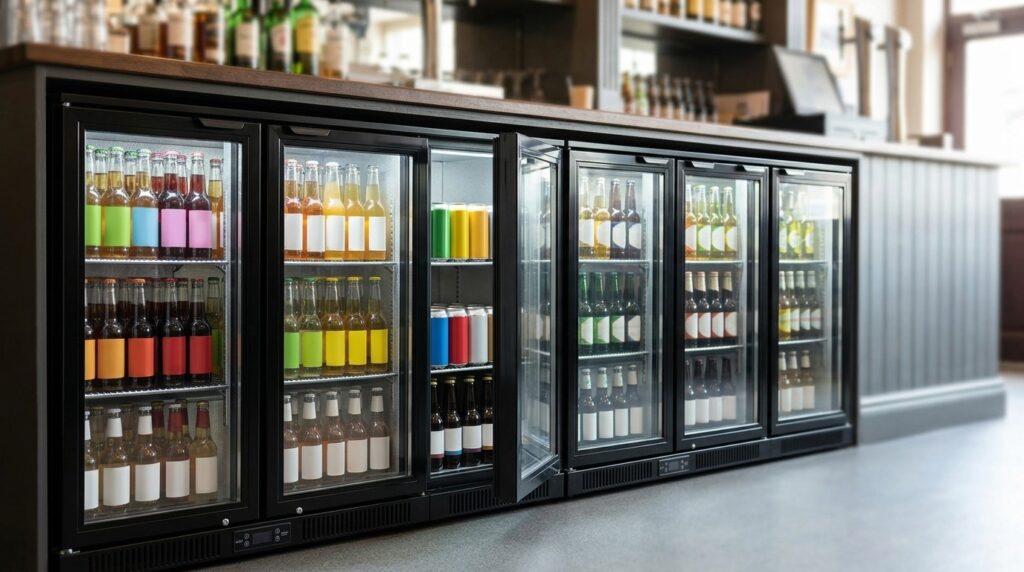
Select the perfect Unifrost small drinks fridge for high-demand commercial spaces. Discover sizing, installation needs, and more tailored to Irish businesses.
Choosing the Right Unifrost Small Drinks Fridge from the Bottle Cooler Range
You buy a Unifrost small drinks fridge when you need fast, reliable chilled stock in a tight space, whether that is a pub back bar, a café counter, or a compact retail display. The right choice keeps service moving, protects product quality, and avoids costly call-outs caused by poor installation or overloading.
This guide helps you make the practical decisions that matter in the Unifrost Bottle Cooler family, including models such as BC10HBE/BC10HBEOG, BC20HBE/BC20HBEOG, BC20HSE/BC20HSEOG, BC20OG, BC20SBE, and BC30HBE. You check footprint and height for undercounter placement, confirm whether you have the ventilation clearance you need, and decide what door style and security features make sense for your setup. You also weigh real-world tradeoffs like display visibility versus usable capacity, pull-down speed after restocking versus energy use, and how shelving flexibility affects what you can actually sell from the cabinet.
By the end, you know what to measure, what questions to ask before ordering, and how to plan day-to-day loading and maintenance so your drinks fridge stays efficient in busy commercial use.
Importance of Small Drinks Fridges in Commercial Settings
Small drinks fridges matter in cafés, bars and retail because they keep fast-moving lines cold, visible and easy to grab without tying up your main food fridges. That is a practical workflow win, but it also supports your day-to-day food safety controls. The FSAI guidance notes chilled food should be kept between 0°C and 5°C, with fridges typically set around 3°C to 4°C to stay in range in normal use (FSAI temperature control guidance).
The catch is that bottle coolers get opened constantly and often live in warm back-bar, kiosk or undercounter positions. In those conditions, format and installation clearance can be the difference between “holding temperature” and “struggling all evening”.
How compact bottle coolers protect speed of service in real venues
In a busy Irish pub, hotel bar, café or deli counter, the delay is rarely the cooling. It is the walking, searching and re-stocking friction. A small drinks fridge behind the counter keeps staff on station, reduces trips to the kitchen, and avoids dumping warm air into your main food storage every time someone grabs a can.
This is why compact units in the bottle cooler category are common undercounter and back-bar choices. Visibility is not just cosmetic. It reduces mis-picks, speeds up training, and keeps best sellers easy to reach when service is hectic.
Why a commercial small drinks fridge is different to a consumer mini fridge
A domestic mini fridge is designed for light use in a steady home environment. Commercial use is tougher: frequent door openings, warmer ambient conditions, heavier loading, and longer trading hours. You also end up installing units in awkward places, such as under counters, tight to walls, beside coffee machines, or in enclosed kiosks.
If the format or install plan is wrong, you can see slower pull-down after re-stocking, bigger temperature swings, and more nuisance issues such as poor airflow or dirty condensers. If you are choosing within Unifrost’s bottle cooler range (for example models like BC10HBE/BC10HBEOG, BC20 variants, BC20OG, BC20SBE, BC30HBE), focus less on the model code and more on whether the layout, door style and ventilation suit how your team actually works in that space.
How small drinks fridges support safer routines and better stock control
Even if you are only storing sealed bottles and cans, consistent cabinet temperature and predictable rotation make service easier. This matters even more when a drinks fridge ends up sharing space with milk, open mixers, garnishes, or ready-to-eat items during a rush.
A dedicated drinks cabinet helps because it supports simple routines staff can follow under pressure:
Keep today’s high-volume lines at the front, rotate from the back, and do not overfill. Airflow matters for quick recovery after door openings.
Set a clear rule for what can and cannot go in the drinks fridge (especially if food, allergens, or open items are in the mix).
Wipe up spills at close, and schedule deeper cleaning that includes door seals and keeping ventilation paths clear of dust.
Spot-check temperature as part of your normal HACCP routine, particularly after heavy restocking or during warm service periods.
Once you are clear on the job the fridge needs to do, the buying decision gets simpler: footprint, door style, realistic ventilation, and how you will load it day to day.
Key Considerations for Choosing a Unifrost Small Drinks Fridge
Choose the right small drinks fridge by working from site realities, not brochure numbers. Measure the space and how staff will open the door during service, then size for the stock you need to hold and how often you restock. Make sure the cabinet is suitable for commercial back-bar or retail use, and set a realistic temperature target for your drinks mix and opening pattern. Finally, plan the install properly. Most “it’s not cold enough” issues come down to ventilation, warm loading, or poor placement rather than a fault with the unit.
1. Measure space properly, including how you’ll actually use the door
In Irish bars and cafés, the constraint is rarely “will it fit”. It’s “can we use it when it’s busy”. Measure the width, depth and height, then sanity-check the working space around it: taps, drip trays, tills, glasswasher doors, bar stools and the staff route behind the counter.
Door format matters in tight back-bar runs. Hinged doors need swing clearance. Sliding doors reduce swing, but can slow down grab-and-go when you’re flat out. If the back-bar is tight on a Friday night, choose the door style that suits staff movement, not what looks neat on a plan.
2. Size capacity to your service pressure, not a headline bottle count
“Bottle capacity” varies depending on what you sell (slim cans, longnecks, mixers, stubby bottles), how you face stock, and whether you single-stack or double-stack. A better way to think about it is coverage: how many hours of your busiest window can the fridge support without staff running to another store or loading warm stock mid-rush.
If you’re choosing within the Unifrost Bottle Cooler family (including BC10HBE/BC10HBEOG, BC20HBE/BC20HBEOG, BC20HSE/BC20HSEOG, BC20OG, BC20SBE, BC30HBE), decide early whether you need the most compact footprint for a kiosk or coffee counter, or more front-facing space for back-bar visibility. The best fit is the one that reduces “panic restocks”. Constant warm loading and heavy door openings will make any small drinks fridge look underpowered.
3. Set temperature targets that suit drinks, while staying sensible on HACCP
For bottled and canned drinks, you’re usually chasing a consistent serving temperature rather than the coldest possible setpoint. In practice, stability is the test: can it hold temperature through repeated openings, warm ambient behind the bar, and restocking after deliveries.
If you’re storing any perishable food in the same cabinet, manage it as proper refrigeration, not as a “mini fridge”. The FSAI notes that refrigerated food should be maintained at 0–5 °C, which is a useful benchmark when you’re setting HACCP checks and verifying readings.
4. Plan ventilation and installation, especially for undercounter positioning
Compact bottle coolers often end up under a counter or tight into joinery. That’s where problems start if air cannot move. Don’t treat it like built-in domestic refrigeration. Follow the clearances in the unit documentation and avoid boxing the cabinet in with no airflow, particularly in bars where glasswashers, coffee machines and ice wells are adding heat all day.
Also plan for basic access. Can you pull the unit forward for cleaning? Can you reach the condenser area if it needs attention? Is the plug and cable protected from night cleaning and mopping?
5. Focus on the running-cost drivers you can actually control
On real sites, energy use is driven as much by behaviour and placement as by the model. A small drinks fridge works hardest when it’s opened constantly, loaded warm, or positioned beside heat sources, which is common in compact bars and delis.
For lower running costs without compromising service, stick to the controllables:
Keep it away from radiant heat where possible.
Don’t pack it so tightly that air can’t circulate.
Restock in smaller batches during trading instead of dumping a full warm load in one go.
You’ll usually get more benefit from these basics than from chasing small differences on a spec sheet.
6. Be realistic about pull-down and recovery based on your restocking pattern
Cooling speed matters most if you regularly load warm drinks and need them ready quickly. If you’re topping up from an already-chilled store, recovery is less critical. If you’re loading from ambient, be honest about the workload. Any small cabinet will struggle if you repeatedly fill it with warm cans during peak service. The heat load is simply too high.
A practical approach is split storage: keep reserve stock chilled elsewhere where possible, and use the small bottle cooler as the visible, fast-access service face rather than your only cold store.
7. Check security, shelving flexibility, and controls for your use case
If you need to secure alcohol out of hours, confirm whether the exact variant includes a lock and whether it suits your closing routine. Shelving is another common pinch point. Adjustable shelves make it far easier to handle tall bottles, wine, mixers and multipacks without wasting space.
Controls are operational, not cosmetic. A clear display helps staff spot issues early, but you should still verify temperatures with an independent thermometer as part of routine checks, especially in high-opening sites.
If you want a second opinion on which Unifrost Bottle Cooler best suits a tight back-bar or compact retail display, compare the BC range by footprint, door format and how you plan to merchandise the front-facing stock.
Common Mistakes When Selecting Drinks Fridges
If you choose a “small drinks fridge” on footprint alone and ignore clearance, heat and access, you often pay for it later. Typical symptoms are slow pull-down after restocking, higher running costs, and extra strain on components because the unit cannot get rid of heat properly. In pub and convenience settings, you notice it fastest at the weekend: frequent door openings, warm stock going in, and a cabinet that struggles to recover. The longer it runs flat out, the harder it is to keep serving temperatures steady.
SEAI’s SME energy guidance makes the point in plain terms: refrigeration needs clear airflow at vents and clean heat-exchange surfaces to run efficiently, including leaving space around unit vents so air can be drawn in and expelled properly.
<https://www.seai.ie/sites/default/files/publications/SME-Guide-to-Energy-Efficiency.pdf>
Ventilation: treating a bottle cooler like it can be “boxed in”
Undercounter and back-bar bottle coolers often get pushed tight into joinery, between keg lines, or hard against a wall, then expected to behave like a built-in appliance. If the intake or exhaust is restricted, warm air builds up around the cabinet. Cooling performance drops and energy use rises.
In Irish bars, this usually gets worse over time as the “gap” becomes a storage spot for spare stock, CO₂ bottles, lines, and cleaning gear. If you do nothing else, keep the vents clear and the condenser area clean, and leave the practical clearance the unit needs to breathe.
Space planning: measuring the hole, not the working clearance
It is easy to measure the opening under the counter and miss the day-to-day realities: door swing, handle clearance, and room to pull shelves out for cleaning and loading. Behind a busy bar, a door that cannot open properly slows service and keeps the door open longer. That is a direct hit to temperature stability.
The fix is straightforward on paper but expensive in practice: alter joinery or move the unit to a spot that suits the service flow.
Capacity: assuming “small” will cope with busy trading
A compact bottle cooler can be the right call in a tight back-bar, but only if you stock it for the job it is doing. Problems start when it is expected to act as display and primary cold storage at once. Overfilling blocks internal airflow, and regular loading of warm deliveries means the cabinet never catches up.
Operationally, that shows up as best-sellers not being consistently cold, and staff using other equipment as a workaround.
Buying the wrong type of “mini fridge” for commercial reality
Domestic mini fridges can look like good value, but they are not typically designed for repeated door openings, fast recovery, or the knocks and spills of bar service. In commercial use, you are more likely to see temperature drift under load and earlier failures. That quickly becomes emergency call-outs and stock risk at the worst possible time.
If you are fitting out a small bar area, treat it like a commercial install: proper ventilation, decent access, and a stocking routine that does not rely on constant warm replenishment.
Quick checks before you commit
Confirm where the unit’s vents are and leave real clearance so it can breathe in a tight back-bar or kiosk.
Measure for door opening and working access, not just the width of the opening.
Decide whether it is a display cooler, a service cooler, or both, and size it to match restocking frequency.
Avoid warm dead spots beside glasswashers, coffee machines, or direct sun.
Once you avoid these predictable mistakes, you can focus on choosing a Unifrost bottle cooler layout that matches your space, speed of service, and stocking pattern.
Aligning Fridge Selection with Business Requirements
Choosing the right Unifrost small drinks fridge is mainly a trade-off between footprint and stock-holding. In the Unifrost Bottle Cooler range, the practical split is BC10-sized units for tight spaces versus BC20 and BC30 models when you need more facings and fewer restocks.
A BC10HBE or BC10HBEOG tends to suit sites where staff need fast reach-in access but you are limited on width or undercounter space. A BC20 or BC30 is usually the safer fit for pubs, busy cafés, and retail-style displays where stock depth and presentation matter more than saving a few centimetres.
All are commercial bottle coolers built for visibility and quick access. The right choice is mostly dictated by trading volume, how often you can restock, and how much door-opening you can live with during peak service.
How do BC10 and BC20/BC30 bottle coolers compare overall?
In a small Irish café, the fridge often sits at the coffee pass or service point for water, juices, and cans. Here, the priority is minimal staff steps and a unit that does not get in the way.
In a pub back-bar, the door is opened constantly during rushes. Stock depth and tidy “grab-and-go” organisation matter, because frequent mid-shift restocking is where time disappears.
Retail or kiosk-style use brings a different pressure again: you are trying to maximise facings in a limited footprint, so the cabinet behaves like a merchandiser as much as a store. If you also hold any perishable items (for example dairy-based mixers), set your temperature targets and checks to match safe chilled practice. The FSAI notes fridges should keep food between 0°C and 5°C, and that setting 3°C to 4°C generally achieves this, in catering settings (see FSAI temperature control guidance).
BC10HBE and BC10HBEOG (very compact sites)
Choose BC10-sized options when the requirement is “keep a small, reliable selection cold right beside service” rather than “hold a full evening’s trade”. They suit coffee docks, small delis, compact counters, and staff canteens where you can top up from a larger back-of-house fridge or cold room.
This format tends to work well in cramped fit-outs, as long as you do not box it in and restrict airflow. If you are placing it under a counter, treat ventilation and door clearance as buying criteria, not afterthoughts. Check the specific Unifrost model documentation for required clearances before you commit.
BC20 family and BC30HBE (higher throughput bars and retail-style displays)
Move up to BC20 and BC30 when the requirement is fewer restocks, more facings, and less risk of running short during peak. This is the typical pub back-bar scenario, especially if you carry a spread of bottled beers, cans, and soft drinks that need to be easy to see and quick to grab.
This size band also makes sense for convenience and forecourt counters where visibility drives sales. In day-to-day terms, the win is not just capacity. It is the ability to organise stock so fast movers sit at hand height and slower lines sit lower, which reduces door-open time and helps temperature recovery when service is busy.
Which is best for you?
Choose BC10HBE or BC10HBEOG if your main constraint is footprint and you want fast service access for a limited range, with top-up stock held elsewhere.
Choose a BC20 model (including variants like BC20HBE/BC20HBEOG, BC20HSE/BC20HSEOG, BC20OG, BC20SBE) if you need a balanced back-bar unit that can cope with steady trade without constant replenishment.
Choose BC30HBE if the fridge is effectively your main drinks holding at point of sale and you want more facings to reduce restock frequency during the rush.
If the install is undercounter or in a tight kiosk, prioritise the model you can ventilate properly and open comfortably. Awkward access costs more in labour than you will save on the ticket price.
Once you are clear on volume, footprint, and how the fridge will be used during peak service, the remaining decision is about the practical details that prevent headaches after installation.
Maximising Efficiency and Merchandising in Unifrost Fridges
Set a clear temperature target, then organise the cabinet so your fastest sellers sit in the coldest, quickest-to-grab zones. Restock in a way that protects pull-down time, reduces door-open minutes, and keeps airflow paths clear so the unit is not fighting itself. Then lock in a simple routine your staff will actually follow, because efficiency disappears fast when shelves are overpacked or the door is held open during service.
1. Set a temperature target that suits drinks and your HACCP checks
For most pubs, cafés and convenience retail in Ireland, you want “cold enough to sell” without driving unnecessary compressor run time. If the unit is also used for any perishable food, align with Food Safety Authority of Ireland guidance that chilled food should be held between 0°C and 5°C, as outlined in the FSAI temperature control guidance.
Even for drinks-only use, pick a setpoint your team can stand over in a HACCP-style check and leave it there. Constantly turning the stat up and down to chase “colder” is a common route to icing, longer run hours, and uneven temperatures after a busy restock.
2. Build a shelf plan that sells, without blocking airflow
Treat a small bottle cooler like a mini planogram. Put high-velocity and higher-margin lines at eye level, back-up stock lower down, and slower movers in the least convenient spots. In a busy bar, the best layout is usually the one that lets staff grab top sellers quickly and shut the door again.
Leave breathing space around internal vents and avoid packing bottles hard against the back wall. Blocked airflow leads to warm spots, slower recovery after door openings, and more condensation on the glass.
3. Use front-facing merchandising, but manage facings like stock control
Front-facing labels and tidy rows help sales only if availability matches the display. If you give a product four facings but only carry one case, it sells out mid-shift and you are left with gaps that look messy.
A workable approach in tight back-bar setups is to agree a core range for the cooler, then keep one shelf for seasonal or promotional lines. It stops the cabinet turning into a graveyard of odd cans that tie up cold space and don’t move.
4. Restock to protect pull-down time and reduce door-open minutes
Small drinks fridges earn their keep by recovering quickly, but you can undo that with one rushed restock. Keep back-up drinks pre-chilled where possible, and restock little-and-often rather than loading a full warm delivery just before peak service.
The biggest operational win is reducing door-open time. Train staff to open, load, close, then face up afterwards, instead of standing with the door open while deciding where things should go.
5. Keep the install efficient: ventilation, clearance, and heat sources
If you are running a compact bottle cooler undercounter or in a tight kiosk, heat has nowhere to go unless you plan for it. Avoid boxing the unit in beside hot equipment, direct sunlight, or a glasswasher exhaust, and make sure there is access for routine cleaning.
If the cooler struggles in summer, the cause is often the environment, not the thermostat. Moving a heat source, improving airflow at the rear, or keeping the plinth area clear can make more difference than chasing a colder setpoint.
6. Put a simple cleaning and checking routine on rails
Efficiency and presentation go together in a glass-door cooler. Clean door seals, clear drains, and shelves that wipe down easily all help the unit run properly and look right on a bar or shop floor.
Use one routine and build it into close-down:
Daily: wipe spills, check the door closes cleanly, face stock forward, and note the cabinet temperature for your log.
Weekly: remove and wash shelves, clean the door seals, and clear debris around the base and ventilation areas.
Monthly: deep-clean behind and around the cabinet, and check nothing has crept in that restricts airflow or adds heat load.
If it helps, keep a photo of the “correct” shelf layout in the store or staff area. It reduces debate and keeps standards consistent across shifts.
These habits make it easier to choose the right bottle cooler size and door format for your space, stock volume, and service pressure, rather than trying to fix a layout problem by running the unit colder.
Next Steps in Buying a Unifrost Small Drinks Fridge
The right choice depends on what you are fixing: slow service behind the bar, a compact retail display, or the constant battle of warm deliveries ending up in the food fridge. In Ireland, your temperature targets and checks should sit inside your HACCP routine. The Food Safety Authority of Ireland guidance on refrigeration temperature control (keeping chilled food between 0°C and 5°C) is a solid reference when you’re deciding how you will set, monitor, and record cabinet temperatures. Drinks are typically lower-risk than open food, but the same discipline matters because back-bar fridges are opened constantly, restocked warm, and expected to pull temperature back quickly.
Measure properly first (including the awkward bits)
Before you look at models, measure the usable space, not the “gap on the plan”. In tight Irish back-bars and kiosk counters, the usual pinch points are:
Door swing into staff working space
Height under a counter lip or overhang
Depth once you allow for plugs, cable clearance, and ventilation
If you’re replacing an existing unit, measure that too. Then write down what currently causes hassle during service, because that is often a better spec than “bigger” or “more shelves”.
Decide what “small” means for your venue and stock mix
Unifrost “small drinks fridges” for compact bar or retail use sit within the Unifrost Bottle Cooler family, including BC10HBE/BC10HBEOG, BC20HBE/BC20HBEOG, BC20HSE/BC20HSEOG, BC20OG, BC20SBE, and BC30HBE. To narrow it down quickly, decide the job first:
True undercounter footprint: capacity matters, but so does access and airflow.
Back-bar service cooler: door openings and recovery are the daily reality.
Retail-facing compact display: visibility and facings can matter as much as litres.
List what you actually stock by format, not just “beer and mixers”. Cans, longnecks, glass mixers, and PET bottles compete for shelf height and usable depth.
Plan ventilation and the install reality (especially undercounter)
Bottle coolers often get pushed into tight joinery and then blamed when they struggle on a busy weekend. If you want an undercounter or built-in look, plan for airflow and heat rejection from day one. Also avoid placing the unit tight against warm kit like dishwashers, glasswashers, or coffee equipment.
If the area gets direct sun through a shopfront, treat that as a design constraint. It affects how hard the unit has to work and how stable the temperatures will be during trading.
Do an access and delivery check before you commit
Small premises can still be awkward. Think narrow pub stairs to a snug, split-level cafés, or stockroom pinch points in convenience. Check doorway widths, turns, thresholds, and where the unit can be unboxed without blocking service.
If the old unit needs removal, decide who is handling it and when. Downtime is more often driven by access and changeover planning than by the model you pick.
Decide your operating routine: setpoint, restocking, and quiet hours
Most performance complaints come from warm restocks and long door-open times during service. A simple routine prevents the usual issues:
Rotate stock so older product is easiest to grab.
Load without blocking internal air paths.
Avoid packing right up to the glass, which restricts airflow and slows recovery.
If you want to cut energy use during quieter hours, focus on loading discipline and keeping condenser areas clean. Big setpoint swings tend to be forgotten mid-service, and that creates more problems than it solves.
Use this quick buying checklist to choose your next action
Measure width, depth, height, and door swing clearance, and note any counter lips or plinths that reduce the real opening.
List your top 20 drink SKUs by pack format (can, bottle size, PET), and mark the “must-face” lines for impulse or premium visibility.
Decide the use case: back-bar service fridge (opened constantly) vs compact retail display (visibility and facings) vs overflow chilling.
Confirm nearby heat and steam sources (glasswasher, dishwasher, coffee kit, direct sun) and whether joinery will restrict airflow.
Agree the basics: who does temperature checks, who cleans, and what happens when warm deliveries arrive.
If you are tempted by a consumer “mini fridge”, pressure-test the decision
A domestic mini fridge can look like a bargain, but in commercial service it is usually the wrong tool for frequent door openings, warm restocks, and long operating hours. Commercial bottle coolers are chosen for day-to-day durability and recovery in working conditions. Domestic units are built for lighter duty and more forgiving use.
If you’re buying for home use, fine. Just be realistic about whether you’ll run it like a pub back-bar on a Saturday night.
Narrowing down within the Unifrost Bottle Cooler family
If footprint is genuinely tight, decide on single- vs double-door behaviour in your space before chasing capacity numbers. In a busy back-bar, the “best” model is often the one staff can open safely without clashing with knees, till drawers, or passing plates. That is where specific BC variants and door configurations matter more than headline storage.
Once you have your measurements, stock formats, and install constraints written down, you can make a clean trade-off between capacity, access, display, and day-to-day recovery. If you want a second set of eyes, browse the Unifrost bottle cooler range on Unifrost.ie and match it to your space and service flow before you commit.
Frequently asked questions about Unifrost small drinks fridges
How energy-efficient are Unifrost small drinks fridges?
Unifrost small drinks fridge models in the Bottle Cooler family are built for commercial back-bar use, so real-world efficiency depends most on how they’re used rather than a single headline figure.
To keep running costs down, focus on the controllables:
Set the temperature sensibly (over-chilling wastes energy). For most bottled and canned drinks, aim for a steady serving range rather than “as cold as possible”.
Allow airflow around the unit, especially at the rear and where the condenser vents.
Keep the condenser clean (dust is one of the biggest causes of high power draw and poor pull-down).
Minimise door opening time during service and don’t block internal air paths with overstocking.
Site it away from heat (glasswashers, ovens, sunny windows) to reduce compressor run time.
Can Unifrost drinks fridges be used in home settings?
Yes, many people use a Unifrost bottle cooler in a home bar, shed, or games room, as long as you plan for the practical differences versus a domestic “mini fridge”:
Ventilation and noise: commercial coolers often need more breathing space and can sound louder in quiet rooms.
Power and environment: make sure you have a suitable socket and the unit won’t be placed in an area that gets very cold, very hot, or damp.
Aesthetics and size: these are designed for visibility and fast service, so measure carefully and confirm door swing/clearances.
If you share your available width, height, and whether it’s going under a counter, you can narrow down the best-fit Bottle Cooler model.
What temperature range is optimal for beverage storage?
For most bars and cafés, a practical target for a unifrost small drinks fridge is a consistent serving temperature rather than the lowest possible setting.
Beer, cider, and soft drinks: typically best stored around 3°C to 7°C for ready-to-serve stock.
Energy and performance tip: set the cabinet so products hold steady in the middle shelves, then verify using a probe thermometer in a bottle/can after the unit has stabilised.
Exact operating ranges vary by model and conditions, so use the controller setting as a guide and confirm with a product temperature check, especially after restocking or during busy service.
Are Unifrost fridges suitable for undercounter installation?
Unifrost Bottle Coolers are commonly used as undercounter/back-bar fridges, but they are not always “built-in” in the kitchen sense.
Before fitting one under a counter:
Leave ventilation space as recommended and avoid boxing the unit tightly on all sides.
Don’t block the air intake/exhaust (often at the rear) with panels, stock, or cleaning supplies.
Plan for door clearance (hinge side, handle projection) and a level floor.
If you need a true built-in look, the key is confirming the ventilation route and clearances for the specific BC model you’re considering.
What maintenance schedule keeps these fridges efficient?
A simple routine prevents most performance issues (warm drinks, icing, high running costs) in a commercial bottle cooler.
Daily: quick wipe of spills, check the door closes properly, don’t over-pack shelves.
Weekly: clean shelves and interior surfaces, wipe door seals, check the drain area is clear.
Monthly: vacuum/brush the condenser and air grilles (more often in dusty bars, near fryers, or in retail environments).
Quarterly: deep clean behind and under the unit, inspect seals for splits, confirm product temperatures match your setpoint.
Annually: arrange a preventative check if the fridge is high-use or critical to service.
Condenser cleaning is the biggest win for keeping a Unifrost small drinks fridge efficient over time.
Next step: match the right Bottle Cooler to your space and service
If you’ve measured your available width and height and know whether you need a single, double, or triple-door back-bar layout, the next step is to compare the Unifrost Bottle Cooler options used for compact retail and bar service.
You can browse live availability and current pricing on Caterboss’s Bar Equipment category and then shortlist the Bottle Cooler models that fit your counter run and stock volume.
View Unifrost fridges at Caterboss
For current product options, pricing and availability, continue to Caterboss.