
Unifrost Upright Freezer: Choosing the Right Model for Your Commercial Kitchen
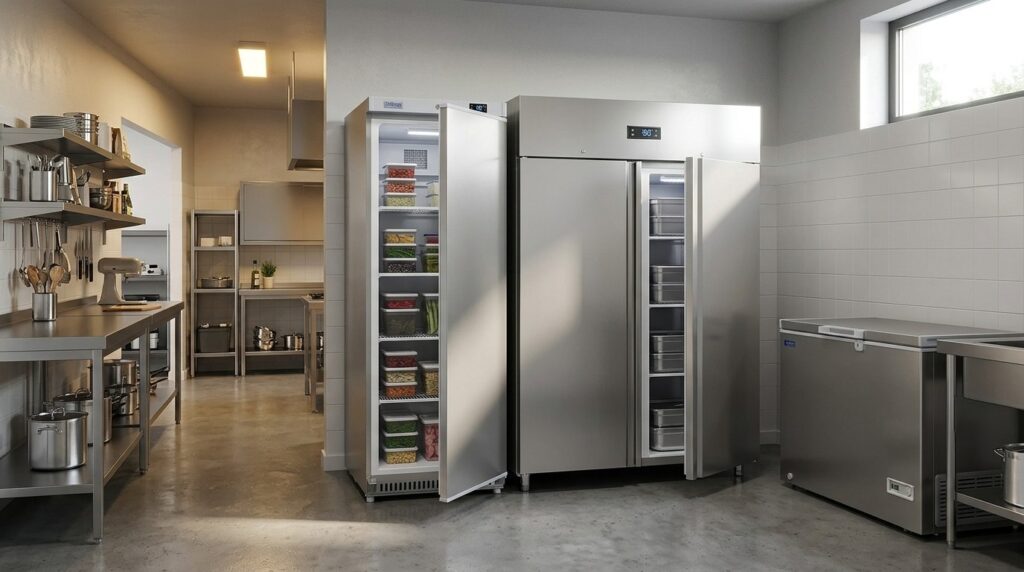
Explore Unifrost upright freezers for commercial kitchens. Get advice on models, installation, and efficiency suitable for Irish venues.
Choosing the Right Unifrost Upright Freezer for Your Commercial Kitchen
You choose an Unifrost upright freezer when you need fast access, clearer organisation, and a smaller working footprint than many bulk-storage options, but you still have to balance that against door-clearance, ventilation space, and how often the unit will be opened during service.
This guide helps you compare key Unifrost upright models such as F1000SV, F1300SVN, F1310SV, F410SS, and F620SV and decide when an upright beats a Unifrost chest freezer like CF500HS/CF501 or CF601. You will work through the practical checks that affect cost and usability in a real Irish back-of-house layout, including:
Space and access tradeoffs: storage-per-square-metre, aisle width, and door swing in tight corridors.
Service workflow: whether you need organised, grab-and-go shelves or bulk holding for slower-moving stock.
Running and maintenance expectations: opening frequency, defrosting approach, cleaning effort, and how easy it is to keep stock rotated for HACCP checks.
Delivery and install realities: getting a tall unit through doorways and positioning it with the right clearances alongside your other refrigeration.
By the end, you will know which upright format and model range best fits your menu volume, staff routines, and available floor space, and whether a mixed setup of one upright plus one chest freezer makes more commercial sense.
Understanding Upright vs Chest Freezers
For an Irish hospitality kitchen, the choice between a Unifrost upright freezer and a Unifrost chest freezer usually comes down to workflow and usable space, not just litres on a spec sheet.
An upright freezer suits sites that are tight on floor space or need quick, organised access. A chest freezer suits sites that want deep bulk storage in one place and have the overhead clearance to use it properly. Either can work, but they behave very differently once staff are in and out of them all day.
How do upright and chest freezers compare overall?
If you are judging “storage per square metre”, split it into:
Floor footprint: what it physically occupies.
Working space: what it blocks once you include door swing or lid clearance, and the space a person needs to stand and handle stock safely.
Uprights often look similar in footprint to a chest, but chests can demand more clear space above and behind so the lid opens fully without hitting shelving, pipework, or a low ceiling.
On usable storage, uprights typically win for visibility and stock rotation. Shelves let you separate by menu section, delivery day, or allergens and spot gaps before you run short. A chest can hold plenty, but the bottom layer only stays “usable” if your team rotates properly. Otherwise, it becomes a weekend excavation.
Upright freezers (Unifrost vertical models, including F-series)
Choose an upright when access speed matters as much as capacity. In a café, pub kitchen, or busy restaurant, frozen items are often pulled repeatedly through service. Being able to open a door, take one box or GN item, and close it quickly helps with temperature stability and reduces warm air sitting in the cabinet.
Uprights also support day-to-day discipline:
Labels are at eye level.
Allergen separation is easier to enforce.
Weekly checks and date rotation are simpler because stock is not piled.
That feeds directly into your food safety routines. You are expected to maintain the cold chain and manage temperature control as part of your food safety management system (HACCP). The FSAI covers this under prerequisite programmes, including maintenance of the cold chain: https://www.fsai.ie/business-advice/running-a-food-business/food-safety-management-system-(haccp)/prerequisite-programmes
Space planning tip (especially in city-centre units): check door swing and “standing room”. An upright can work in a narrow run, but not if opening the door blocks access to the pass, wash-up, or a fire route.
Chest freezers (Unifrost CF chest freezer family)
Choose a chest freezer when you want bulk frozen holding with a simple layout. They are often used as a buffer for deliveries, batch prep, and seasonal volume in caterers, schools, and prep-heavy takeaway kitchens.
Where chests can catch you out is service flow. If staff are opening it mid-service:
Lid-open time tends to increase.
Stock gets stacked, crushed, and hard to count.
Rotation becomes inconsistent unless you have a strict labelling and crate system.
Space planning tip: a chest may look compact, but confirm you have real clearance for the lid and safe lifting. If it sits under a shelf run or in a low-ceiling store, you can end up with a freezer that technically opens, but is awkward enough that staff stop using it properly.
Which is best for you?
Pick an upright freezer when you need fast access, clear organisation, and predictable stock rotation in a tight service workflow.
Pick a chest freezer when you need a bulk holding zone for deliveries, batch prep, or overflow and you have enough overhead clearance to use it comfortably.
Mix both in busy operations: keep an upright near the prep or cooking line for daily pull, and keep a chest in a store area for boxed stock and longer-hold items.
If space is genuinely tight, sketch the aisle width, door swing or lid clearance, and where a person stands to load and unload. Choose the format that wastes the least working space once the kitchen is actually in motion.
Once you know an upright is the right format for your layout and service pressure, the next step is comparing the practical features that make day-to-day running easier.
Features of Unifrost Upright Freezers
Unifrost upright freezers suit many Irish hospitality kitchens for one simple reason: you can see stock, grab it quickly, and shut the door again. In service, that matters. Upright shelving reduces the time spent hunting through frozen product, and it makes stock rotation and portion control easier than a chest freezer in most day-to-day setups.
Food safety still comes back to temperature and door discipline. The FSAI notes freezers should be kept at -18°C or below in normal use, and that keeping the door closed helps protect food during disruptions such as power cuts or accidental door-open events (FSAI storage guidance). The trade-off is that uprights can take a bigger hit from frequent opening if staff are disorganised, or if the unit sits beside heat and traffic.
Upright format features that matter day-to-day (not brochure features)
The best “feature” of an upright commercial freezer is workflow:
Fast access: open, pick, close, move on.
Clear organisation: shelves and door sections make it easier to separate product types and avoid crushed packaging.
Stock control: quicker counts, easier “new stock behind” rotation, fewer forgotten items.
For cafés, hotel kitchens, and pub food where frozen lines support speed, that operational clarity is often worth more than chasing the absolute maximum bulk volume.
Uprights also make it easier to run tighter routines. You can separate stock by shelf level, which supports allergen separation, portion control, and cleaner handovers between delivery, prep, and service staff.
Model pointers: F1000SV, F1300SVN, and F410SS in plain English
Across Unifrost’s upright freezer options, the practical differences usually come down to capacity vs footprint, and how comfortably the unit fits your kitchen flow.
F1000SV-type choice: usually suits sites that want upright access and proper shelving without giving away too much floor space. It’s a sensible fit where the walk route behind the pass is tight and the freezer gets opened often.
F1300SVN-type choice: tends to suit operations where frozen storage is part of production, not just backup. More usable shelf area helps separation across product groups, but only if you have the clearance to open doors fully without blocking a corridor, a prep station, or a combi oven.
F410SS-type choice: often comes down to placement and how the unit will hold up in your kitchen routine. If the area is exposed to knocks, heavy cleaning, or constant opening at peak times, think about day-to-day durability and whether staff can keep it organised.
If you are comparing specific models, measure the space properly, including door swing and the “standing room” you need to load shelves without turning it into a daily annoyance.
Energy efficiency in the real world: what you can control
Even without getting into model-by-model kWh numbers, running cost is heavily influenced by how much warm, moist air you let in and how hard the freezer has to work to pull temperature back down.
Site it in the coolest practical spot, away from cooking heat and direct sun where possible.
Make door openings short and purposeful by assigning shelves to product groups (not “wherever it fits”).
Avoid packing shelves so tight that air can’t circulate around cartons and trays.
Keep door seals and the closing action in good condition. A door that does not pull shut cleanly becomes a constant energy leak.
Storage capability and organisation: why uprights reduce waste in busy kitchens
A lot of freezer waste in hospitality comes from stock that gets forgotten, crushed, or allowed to soften and refreeze because it’s buried. Uprights help because you can run a simple, repeatable system:
Allocate shelves by use (for example, ready-to-serve on one level, raw inputs on another).
Keep date labels facing out.
Stick to “new stock behind” so older product moves first.
That organisation also makes HACCP checks more realistic. When the freezer is easy to read at a glance, staff are more likely to spot a door left ajar, damaged packaging, or early signs of thawing before it becomes a bigger problem. That’s where an upright freezer pays for itself in a working Irish kitchen.
Day-to-Day Operational Considerations
If you’re choosing an upright freezer for a busy Irish kitchen, the day-to-day reality is a trade-off between access and temperature stability.
An upright format makes stock checks, date rotation and cleaning quicker because everything is at eye level. The downside is simple physics: every door opening dumps cold air, so you’ll see the impact sooner if the door is left ajar, staff linger with the door open, or the seals are worn. That matters for HACCP routines, because frequent opening puts more pressure on good habits around door discipline and regular temperature checks, as set out in FSAI HACCP guidance. It’s most noticeable in cafés, pubs and takeaways where staff are in and out of the freezer all shift, rather than pulling bulk frozen once a day.
Cleaning and hygiene in real kitchens
Uprights are usually easier to keep “inspection-ready” because spillages, packaging and crumbs are easier to spot and remove before they freeze solid. You save time on weekly housekeeping, but only if you keep shelves accessible and don’t pack the cabinet so tightly that you can’t clean properly or air can’t circulate.
In many Irish kitchens, floor drains and wash-down space are limited. Being able to clean an upright in place, without emptying the whole cabinet, is a genuine labour saver during trading hours.
Defrosting and routine maintenance: where the time actually goes
When an upright freezer is worked hard, small maintenance misses show up quickly: ice around the door edges, doors not closing cleanly, and longer “door-open” time while staff wrestle with stuck stock. That becomes a slow drain on service: more time dealing with ice, more follow-up temperature checks after busy periods, and more chances for avoidable damage, like forcing the door shut on product and tearing seals.
The prevention is unglamorous but effective:
Wipe and clean door gaskets regularly.
Keep the base area and ventilation paths clear of dust and clutter.
Plan a defrost or service window around your delivery cycle, rather than waiting until the unit is icing up mid-week.
Ease of access and organisation under service pressure
In upright freezers, the operational win is speed and accountability. You can zone stock by shelf, label clearly, and do faster checks during HACCP walk-throughs. The trade-off is that sloppy loading hurts you faster than it does with a chest freezer, because blocked shelves and frequent openings disrupt everyone on the next shift.
A simple layout that tends to hold up in service is:
One shelf for open product.
One for service portions.
One for back-up stock.
Leave a small gap between items so air can move and packs don’t freeze together or snag the door.
That’s why door format, internal layout and how the cabinet behaves under repeated openings often matter more in practice than brochure specs once the freezer is on the floor.
Ideal Use Cases for Upright Freezers
Decide based on how often you need frozen stock during service, how your team works, and how tight the space is. Upright freezers suit kitchens that need quick, organised access with shelves you can label and audit. Before you commit, check you have enough door swing and ventilation clearance. A freezer that can’t open properly or can’t breathe will cause hassle every day.
1. Prioritise upright freezers where speed of access affects service
An upright is usually the better option when staff are in and out of the freezer throughout a busy shift. Shelving means you’re not digging through layers of stock, and you can keep product types separated so the door isn’t left open while someone searches.
This suits cafés doing all-day breakfast (breads, pastries, portioned proteins), takeaways running batch-prep, and pub kitchens that need quick access to chips, seafood, and pre-portioned specials during peak covers.
If you’re choosing within the Unifrost range, this is the job upright formats are designed for: frequent door openings, lots of small picks, and straightforward sectioning by shelf. Pick the size and internal layout based on how many product lines you need to keep separated, not just litres.
2. Choose upright freezers when organisation and stock control matter more than bulk volume
Uprights tend to win when “visible stock by shelf” is more useful than “bulk stock in a deep well”. They’re a strong fit for hotels and contract catering where different teams access different product lines, and for any site doing regular stock counts, allergen separation, or consistent labelling.
It also supports day-to-day HACCP routines, because you can check packaging condition, date labels, and segregation quickly when items are stored face-on rather than buried. (See FSAI guidance on HACCP-based food safety management procedures.)
3. Use upright freezers to solve back-of-house layout constraints
Go upright when your constraint is workflow and access, not just capacity. In many Irish city-centre units, the problem is narrow corridors, tight prep space, and awkward corners. Chest freezers can be efficient for footprint-to-capacity, but they’re impractical if the only spot is under shelving, beside a prep bench, or anywhere staff would need to clear space to open a lid safely.
An upright also integrates more neatly into a prep run alongside fridges and dry storage. That reduces steps during service and keeps the “frozen pick zone” consistent for new starters and rotating staff.
4. Specify an upright freezer for shared or semi-front-of-house spaces
If the freezer sits behind a bar, in a shared staff area, or anywhere multiple people access stock without clear ownership, uprights are easier to keep tidy. Shelves, labels, and “one shelf per category” rules are simpler to enforce, and you’re less likely to end up with a mixed pile that no one wants to sort mid-service.
In some operations, a two-freezer approach is the most workable: keep bulk, slow-moving stock in a chest freezer, and keep daily picks in an upright so the service team isn’t constantly rummaging and warming the whole load.
Internal layout and features make a bigger difference with uprights than most buyers expect, so it’s worth matching the shelving and access style to how your kitchen actually runs.
Integrating Unifrost Freezers in Your Kitchen
Combine an upright freezer for fast access with a chest freezer for bulk storage. The goal is simple: keep service moving without turning frozen storage into a bottleneck, and keep your temperatures stable even on busy nights.
1. Decide what each freezer is for, before you decide where it goes
Most Irish kitchens get the best workflow by splitting frozen stock into two roles:
Upright freezer (service access): items you reach for repeatedly during service such as chips, portions, ice cream tubs, gluten-free lines, and prepped components.
Chest freezer (bulk and backup): deliveries, slower-moving lines, and reserve stock so the upright doesn’t get crammed.
This matters because an overpacked upright slows staff down and increases door-open time. A chest is slower to work from, but it’s a solid option for holding bulk stock steady when you’re not in and out of it all evening.
2. Place the upright for speed, and the chest for storage flow, with real clearances measured on site
Put the upright close to the station that uses it most, often the fry area, plating line, or the “grab zone” between prep and service. Put the chest where it suits your goods-in to storage flow, ideally near the delivery drop and your store, so you’re not dragging frozen cartons through the kitchen during trading.
Before delivery day, do a tape-measure check for:
Door swing or lid opening without hitting walls, shelves, or other kit
Standing space to load, unload, and close the unit without someone squeezing past
In tight back-of-house layouts, an upright can be the practical choice because you can open, take what you need, and close quickly. A chest needs clear space above it and enough room for staff to lean in safely.
3. Organise both units so rotation is quicker than “freezer archaeology”
Your upright should reduce door-open time. Your chest should stop stock getting buried and forgotten. Use one system across both so staff aren’t guessing at 7pm on a Saturday.
In the upright: zone shelves by station or menu group. Keep your most-used items between waist and shoulder height.
In the chest: treat it like a bulk store. Use baskets/dividers and a simple rule such as “top layer = this week” so older stock doesn’t disappear to the bottom.
If you’re running multiple food types, don’t mix poorly wrapped items with open packaging. You’ll save time on date checks, reduce spills, and avoid damaged cartons that don’t stack properly.
4. Build freezer checks into HACCP, not as an extra job
Freezers are easy to ignore because “frozen feels safe”, but you still need consistent monitoring and records. The FSAI is clear that monitoring and record-keeping are core HACCP controls, and that corrective action is required when monitoring shows loss of control. See the FSAI Principles of HACCP/principles-of-haccp).
Keep it workable:
Check and record at a frequency that matches your service pressure
Look for patterns, not just one-off readings
If the upright is regularly warmer after peak service, it’s often a workflow issue (too much opening, poor organisation, overpacking) before it’s a technical fault. If the chest is drifting, common causes are the lid not sealing properly because packaging is trapped at the rim, or ice build-up affecting closure.
5. Use a two-freezer routine that protects temperature and reduces labour
Use the chest to replenish the upright at quiet times, not in the middle of service. A simple routine works well:
Decant from chest to upright once per day (or once per shift in very busy sites)
Portion and label as you go
During peak periods, treat the upright as the “service freezer” and keep door-open time to a minimum
When the roles are clear, staff stop using the freezer as a dumping ground and you get faster service with less temperature swing.
6. Plan access and manoeuvring space before choosing the bigger unit
In Dublin, Cork, Galway and other city-centre sites, access is often the hidden constraint. Check:
Doorway widths and tight turns
Lift sizes (if relevant)
Where the unit will be unboxed and stood upright
A tall upright can be awkward on stairs and tight corners. A large chest can be awkward on landings and in narrow stores where the lid can’t open fully.
Once workflow, clearances and access are confirmed, you can compare upright versus chest formats with a lot more confidence, and choose sizes that suit how your kitchen actually runs.
Unifrost Upright Freezer FAQs
What is the difference between an upright freezer and a chest freezer?
An upright freezer (like Unifrost vertical models such as F1000SV, F1300SVN, F1310SV, F410SS, F620SV) stores frozen food on shelves and/or racking behind a front-opening door, so it is easier to organise and faster to access during service.
A chest freezer (like Unifrost CF500HS/CF501 and CF601) is top-opening and is typically better for deep bulk storage. It can suit kitchens that freeze large quantities and do not need to open the unit repeatedly during peak periods.
Are Unifrost upright freezers suitable for use in outbuildings with varying temperatures?
Sometimes, but it depends on the permitted ambient temperature range for the specific Unifrost upright freezer model.
For garages, stores, or outbuildings that swing hot in summer and cold in winter:
Check the model’s rating in the manual/datasheet before purchase or installation. If the ambient drops too low or rises too high, performance and running cost can suffer.
If the space is not temperature-stable, consider improving insulation/heating/ventilation or using a freezer type better suited to that environment.
Avoid placing the unit where it will be exposed to direct rain, washdown spray, or very dusty air, and make sure airflow around the condenser is not restricted.
If you share your room conditions and preferred model (for example F1000SV vs F1300SVN), it is easier to confirm suitability.
Which has better energy efficiency: an upright freezer or a chest freezer?
In many real kitchens, a chest freezer is often more energy-efficient because cold air tends to stay in the cabinet when the lid is opened.
A Unifrost upright freezer can still be an efficient choice when it reduces “door-open time” through better organisation and faster picking. To compare fairly, look at:
How often it will be opened during service
Where it will sit (hot kitchen line vs cooler store)
Stock type and loading (blocked air paths and overfilling hurt efficiency)
The energy label and product data for the exact model
If access speed matters, the upright format often wins operationally even when a chest freezer is marginally cheaper to run.
How important is ventilation clearance for Unifrost upright freezers?
It is critical. Like most commercial freezers, a Unifrost upright freezer needs clear airflow so the refrigeration system can reject heat properly.
Practical installation tips:
Follow the clearance distances stated for the model in its documentation.
Do not box the unit in or push it tight into a recess unless the model is designed for that.
Keep the ventilation area and condenser free of dust and grease. Poor airflow can lead to higher running costs, nuisance faults, and shortened component life.
Also plan for door swing and aisle space so staff can open the door fully without blocking workflow.
Next step: compare the full Unifrost freezer options
If you are choosing between a Unifrost upright freezer and a chest unit, the quickest way to land on the right fit is to compare sizes and formats side by side, then match them to your available floor space and service workflow.
Browse Caterboss?s Frozen Storage category to view Unifrost upright and chest freezers together and shortlist the models that suit your kitchen layout and access needs.
Use the full Unifrost Freezers Guide next
This article answers a narrower question. The family guide is the best next step when the visitor needs the full Unifrost context around comparison, use case, and support routes.
Compare Unifrost freezer options on Caterboss
The article stays useful on its own, but when the reader is ready to compare real products or move into a commercial conversation, this is the clean next step.