
Optimizing Workflow Between Unifrost Upright Freezer and DCF Deli Counter: A Guide for First-Time Irish Café Owners
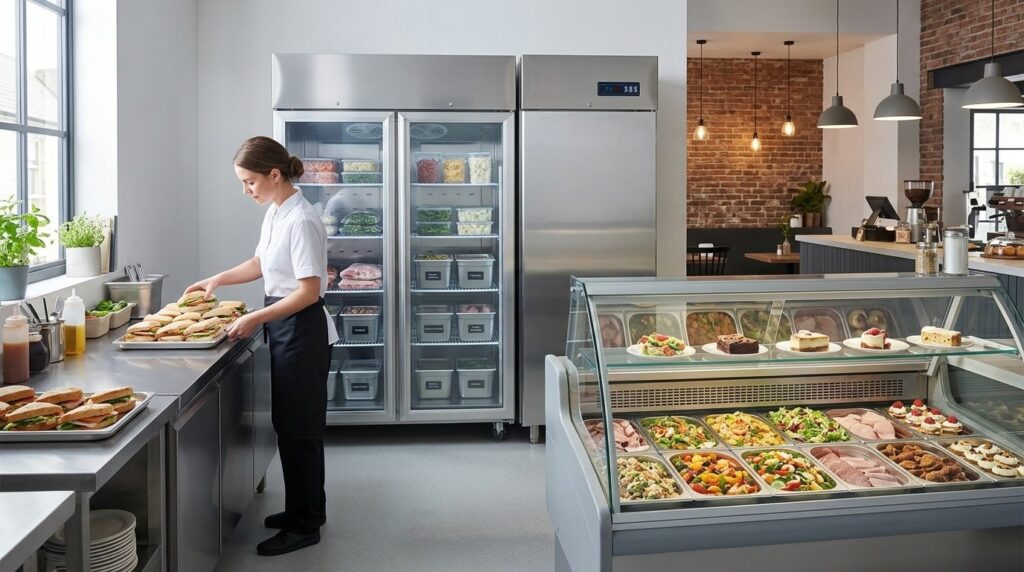
Plan efficient workflows with Unifrost freezers and deli counters for new Irish cafés. Boost efficiency and meet HACCP standards.
Need more detail? For model comparisons, setup steps and troubleshooting, see the related guides below.
Planning a Smooth Workflow Between a Unifrost Upright Freezer and a DCF Deli Counter
If you are opening a café in Ireland, your upright freezer and your serve-over counter quickly become the choke points for speed, waste, and HACCP checks. This guide shows you how to plan day-to-day workflow when your frozen storage sits in a Unifrost upright freezer (for example F410SS, F620SV or the larger F1000SV and F1300SV ranges) and your ready-to-eat chilled display sits in a curved-glass DCF deli counter (such as DCF1300 or DCF1600), which is typically used for 0°C to +4°C holding in Irish HACCP contexts.
You will work through the practical decisions that affect service: where each unit should sit to minimise steps and cross-traffic, how to stage stock from delivery through prep to front-of-house, how to organise shelves and baskets so different dayparts can share one freezer, and how to avoid the common mistakes that cause temperature drift, slow service, and unnecessary waste. You will also get a checklist-style view of the routines that keep both units performing, including ventilation allowances, door-opening discipline, labelling and FIFO, and cleaning schedules that make compliance simpler.
Why Efficient Workflow Planning Matters
Efficient workflow planning matters because it protects two things you cannot fake in a busy café: service speed and temperature control. Every extra step, door opening, and “where’s that kept?” moment adds time at the pass and increases the chance that food sits outside safe chilled or frozen conditions.
The Food Safety Authority of Ireland is clear on temperature control expectations for caterers: chilled storage should keep food between 0°C and 5°C, and freezers should be kept at -18°C or colder. Your layout and routines affect how easily you stay within those limits, especially during peak trading (see the FSAI temperature control guidance for caterers).
The catch is that the same upright freezer and chilled deli counter can behave very differently depending on queue pressure, staff experience, and how often doors and lids are opened.
Workflow speed is mostly about avoiding bottlenecks and backtracking
In a typical Irish café, the busiest periods come in short bursts: breakfast, lunch, then the mid-afternoon coffee rush. If your upright freezer is positioned so staff have to cross the prep line, pass through wash-up, or squeeze behind the barista station, you add seconds to every ticket and create pinch points that lead to mistakes.
An upright freezer and a curved-glass deli counter are usually doing different jobs:
The upright freezer is back-of-house storage and back-up stock.
The deli counter is front-of-house chilled holding and display for ready-to-eat items.
If you plan them as one flow, receive → store → prep → hold → serve, you cut down on steps and make the service routine easier to follow, especially with new staff.
Food safety and HACCP checks are easier when the route is simple
A deli counter is for chilled holding, not a “catch-all” when the kitchen is under pressure. Good workflow design reduces the temptation to park product wherever there’s space.
A practical set-up lets staff move product in a clean, logical route: freezer to controlled thawing in a fridge (where applicable), to a defined prep area, and then into the deli counter for service. The fewer crossovers through customer traffic and dirty-return areas, the easier it is to keep standards consistent.
It also makes HACCP checks more realistic. When temperature checks and date labelling are built into the routine, for example, check the deli counter before opening and the freezer at close, they get done properly rather than being “caught up on later”.
Customer satisfaction follows the cold chain more than people think
Customers notice speed first, but they remember consistency. If the deli counter is being opened repeatedly while someone runs to the back for stock, you can end up with tired-looking display food, condensation on the glass, and a messy service area. That can happen even when the refrigeration itself is working as it should.
Planning the workflow so the freezer supports the counter without constant emergency restocking keeps the display stable, the queue moving, and the product looking right.
That’s why it’s worth treating the upright freezer and the deli counter as a joined-up system before you decide on positions, access routes, and what stock lives where.
Key Considerations for Integrating a Unifrost Upright Freezer and a DCF Deli Counter
If you’re pairing a Unifrost upright freezer (for example F410SS, F620SV, F1000SV variants, F1300SV variants, F1310SV) with a curved-glass DCF serve-over counter (for example DCF1300 and DCF1600 variants), treat them as two separate temperature zones with two different jobs.
Back of house: frozen storage and stock control.
Front of house: chilled display and service.
Between them: a short, clean handover point where food is portioned, labelled, and moved forward with intent.
In Irish HACCP routines, you’re aiming to keep chilled food at 0°C to +5°C and frozen food at -18°C, in line with FSAI guidance on maintaining food temperatures. The key operational point is that a serve-over counter is for chilled holding and presentation, not for pulling product down from warm. Your layout and replenishment routine need to protect temperature recovery, especially during busy service.
Sizing: choose service capacity, not just litres and length
Start with what the DCF needs to sell through between replenishment runs, not how much you can physically fit into it.
In a small Irish café doing breakfast, sandwiches, and cakes, the DCF generally suits ready-to-eat items that benefit from display and turn quickly. The upright freezer is where you keep deeper stock and slower-moving lines.
A common mistake is using the DCF like a storage fridge. When it’s overfilled, or used to cool warm prep, you create avoidable risk: slower pull-down, inconsistent holding temperature, and product sitting around too long. Keep frozen bulk (pastries, bread, portions, batch ingredients) in the upright, and only move forward what you expect to sell within a defined window that matches your checks and staffing.
Site placement: reduce steps without creating cross-traffic or heat stress
In most Irish high-street units, the DCF belongs customer-facing, where it supports service and merchandising. The upright freezer usually doesn’t. Put the freezer in back-of-house where staff can load, rotate stock, and handle deliveries without crossing the queue.
Also plan for the realities of ventilation and cleaning. Upright freezers need space you can actually keep clear, plus access for routine condenser-area cleaning. If you squeeze the unit into a hot corner beside cooking equipment or a dishwasher, you’re making it work harder and turning maintenance into a chore. If you don’t have model-specific clearance details to hand, don’t guess. Leave practical access space and build condenser cleaning into your weekly close.
Utilisation: plan the handover point between frozen storage and chilled display
What makes the freezer plus DCF combination work is a simple, repeatable transfer routine. Even with a straightforward digital controller, no freezer will hold temperature well if the door is opening every couple of minutes during a rush.
A layout that tends to work in cafés and hotel lounge service:
Keep the upright freezer on the delivery and prep side.
Use a small buffer landing area (clear shelf or prep table) to decant, portion, and date-label before anything goes near the DCF.
Stock the DCF at set times (pre-open, mid-morning, pre-lunch) rather than constant top-ups.
That buffer step also helps you control separation between raw and ready-to-eat foods, a core part of day-to-day food safety practice. See FSAI guidance on separating raw and ready-to-eat food to reduce cross-contamination risk. When replenishment is scheduled and labelled with FIFO in mind, you waste less space, reduce “mystery tubs”, and the display counter performs more consistently under pressure.
Common Workflow Mistakes to Avoid
If your upright freezer and DCF serve-over counter are positioned or used without a clear stock flow, you feel it quickly. Staff take extra steps, ticket times creep up, and chilled food sits out while someone hunts for back-up stock. That’s when date rotation gets sloppy and you start seeing portioning and labelling drift, the exact problems your HACCP routine is meant to control. It’s most common in early-stage cafés where one upright freezer is expected to handle all frozen storage, and the DCF gets treated as display plus a “spare fridge” during a rush.
Layout mistakes that add steps (and push food out of temperature control)
In small Irish café kitchens, two layout errors show up again and again:
The freezer is only reachable by crossing the hot line, the pass, or the customer route. That turns every restock into a disruption, so doors stay open longer and you get avoidable temperature swings.
The DCF is placed where refilling means leaving the service position. Refills then happen in big batches, product sits out longer, and the unit stays open while someone rearranges trays.
Practical ways to tighten the flow:
Keep the freezer on the back-of-house “delivery to prep” lane, close to the dry store and sink, so stock comes in, gets checked, and gets stored without crossing service.
Keep the DCF on the “prep to serve” lane, so refilling is a short, predictable movement during service.
Create a small landing zone between them, such as a clean, dedicated chilled prep surface or pass shelf. Portion, label, and date once, then move straight into the DCF.
Don’t box either unit into a corner where doors can’t open fully. If staff have to drag-load baskets or GN containers, they’ll overstock the front and slow down service.
Upright freezer loading mistakes (especially when it feeds a DCF)
A badly organised upright freezer creates two problems at once: longer door-open time (so recovery suffers) and more “digging” that damages packaging and labels. Over time it also leads to vague stock knowledge, which is where rotation mistakes start.
Keep it simple and service-led:
Zone by time-to-service, not by supplier. Put fastest movers at eye level in labelled baskets. Keep deep stock higher or lower so it’s not constantly exposed.
Avoid cramming stock against vents or walls. Upright cabinets hold temperature best when cold air can circulate around the load.
Keep container sizes consistent. Mixed, overfilled GN containers and loose packs waste space and increase handling time during a rush.
Misusing the DCF counter as storage (and forgetting it is chilled, not frozen)
A DCF serve-over is for chilled holding and display, not for back-up storage. When it’s treated like a fridge store, it tends to get overfilled and rotation becomes guesswork. From a food safety point of view, you should be planning around standard chilled and frozen controls, with monitoring built into your HACCP system (see the FSAI temperature control guidance: https://www.fsai.ie/business-advice/running-a-food-business/caterers/temperature-control).
Operational signs you’re over-relying on the DCF:
Condensation and tired-looking display product
Staff “topping up” by mixing older and newer trays
More waste and more date-label errors
If you fix the flow, the kit works better. The freezer becomes storage you can trust, and the DCF stays a controlled, presentable serve-over rather than a catch-all cupboard.
Tailoring the Layout to Your Café’s Needs
Start by splitting your menu into two temperature jobs: frozen storage in an upright freezer, and chilled holding and display in the DCF deli counter. Then place each unit to suit how your café actually works. A simple way to sanity-check it is to walk the route with a tray in your hands. If you’re doing avoidable back-and-forth, it will show up quickly as queue delays, doors left open, and missed temperature checks.
1. Split your menu into back-of-house frozen stock and front-of-house chilled display
Use the DCF for chilled holding and presentation of ready-to-eat food. It is not the place to cool down warm product or to act as bulk overnight storage. If your menu leans towards sandwiches, cakes, salads and breakfast items assembled to order, the DCF becomes your “service face”, while the upright freezer acts as your bulk buffer for pastry, bread and backup portions.
Set your HACCP targets early. As a rule, chilled food should be held at 0°C to 5°C and frozen food at -18°C, in line with FSAI guidance on maintaining food temperatures. That affects layout more than people expect. The more often doors are opened, or the more heat the unit is exposed to, the harder it has to work to pull temperature back.
2. Place the upright freezer to suit deliveries, decanting and prep without becoming a bottleneck
In most small Irish cafés, the upright freezer belongs back-of-house near goods-in and dry storage, but not in the tightest pinch point. You need enough clearance to open the door fully, lift boxes out safely, and close it again without someone trying to squeeze past with hot trays or stock.
A basic zoning setup helps reduce door-open time during a rush:
Top zone: high-frequency items (bread, pastry, breakfast portions).
Middle zone: prep inputs (proteins, sauces, pre-portioned fillings).
Bottom zone: bulk and backup stock (least frequent access).
Keep the freezer out of the customer route to toilets, and avoid turning it into a “quick grab” unit for front-of-house. If everyone is dipping in for desserts or emergency stock, organisation slips and temperature control becomes harder to manage day to day.
3. Site the DCF deli counter for fast service, with a clean restock route
The DCF works best where you can serve and restock from the staff side without repeatedly leaving the service position. In a narrow high-street unit, that usually means it sits on the service line with a short, direct route back to prep. If restocking means crossing customers or walking to the freezer, you’ll feel it during busy periods.
If you’re building a starter menu, don’t rely on the DCF as your only cold storage. Use it for what you expect to sell in the next service window, keep reserve stock in back-of-house refrigeration, and only bring forward what you can sell while maintaining quality. Overfilling a display counter is a common mistake. It makes stock rotation harder, can restrict airflow, and product temperatures become more difficult to keep consistent.
4. Design staff flow to avoid cross-traffic and make checks easy to do properly
Aim for one-direction movement: receive and store, prep, load the DCF, serve, then return dirty items to wash-up without cutting back through the clean food path. In tight kiosks or container cafés, watch for “two people, one corridor” moments at the freezer door and behind the counter. That is when doors get left open and chilled display gets overhandled.
Also plan for how temperature checks happen in real life. If the freezer controller and the DCF display are visible and reachable without moving stock or asking customers to step aside, you’re far more likely to record checks consistently and spot issues early.
5. Stress-test the layout for peak trading before you commit
Run a quick rehearsal of your busiest 20 minutes: one person on coffee, one assembling food, one restocking, and someone taking payment. If the freezer needs to be opened during that window, it usually points to one of three fixes: better par levels, clearer stock zoning, or a small layout change so frozen access happens outside the rush.
Once the flow works, the operational rules do the rest: what lives in the upright freezer versus what earns space in the DCF, and what standards you set for restocking, labelling and temperature recovery during daily trading.
Maintaining Performance and HACCP Compliance
Maintain performance the same way you pass an EHO visit: control temperatures, prove you checked them, and keep airflow and hygiene routines realistic for a busy café. Most issues come from the basics slipping under pressure: overloading, blocked vents, doors left ajar, poor labelling, and “quick cleans” that leave residue behind. If you only tighten one thing, make it temperature records you can stand over.
1. Set target temperatures and record them in a way you can defend
A DCF serve-over counter is for chilled holding and display, not for pulling warm food down to temperature. Set it to support a 0°C to 5°C food temperature, then verify food temperature with a probe as part of your routine checks, in line with the FSAI temperature control guidance.
Your Unifrost upright freezer is frozen storage. Manage it at -18°C or colder, again per the same FSAI guidance. If frozen product softens and refreezes, you risk quality loss and a food safety headache.
In day-to-day terms, do two checks:
Controller check: a quick glance at the unit display to spot drift or alarms.
Probe check: a representative product, or between packs where probing isn’t practical, using the approach set out by the FSAI.
Log the reading, time, and corrective action if it’s out of limit. “We fixed it” without a note is where audits get sticky.
2. Daily cleaning that protects airflow, seals, and food contact areas
Daily cleaning is less about making stainless shine and more about keeping the unit efficient and safe.
For the DCF counter:
Wipe spills immediately and remove crumbs and smears from the deck and edges.
Clean glass and doors so staff aren’t tempted to leave openings gaping during service.
For the upright freezer:
Keep door gaskets and frames clean so they seal properly.
Deal with light ice early, before it turns into chipped plastic and damaged seals.
Don’t let staff pack stock against internal air paths. If air can’t move, the cabinet can’t recover.
Use a consistent method that prevents cross-contamination. The FSAI’s safe food handling advice supports a clean, disinfect, rinse, and air-dry approach in food areas, which is the right mindset for handles, frames, and service edges too: FSAI safe food handling guidance. If you can still smell strong chemicals inside the cabinet, you’ve likely overdone it or skipped rinsing.
3. Load for recovery speed, not “maximum fit”
A single upright freezer in a café can become a constant door-open scenario unless you organise it for service flow.
Zone the freezer: fast-moving items at hand height, longer-hold stock above/below.
Leave space for airflow: don’t ram stock against the back or vents.
Label and rotate: it reduces rummaging time, which reduces temperature swings.
For the DCF, treat it as display and holding only. Stock to what you can sell through safely, then replenish in smaller batches. What matters is product temperature, not how cold the air feels when someone puts their hand in.
4. Weekly shut-down clean and inspection (the stuff that prevents breakdowns)
Pick a quiet time, move food to safe temporary storage, and do a proper reset. This is where you catch slow failures that drive temperature drift and running costs:
Clean and dry door seals and frames, then check for splits, hardening, or gaps when the door closes.
Clear and sanitise crumb channels and any obvious drain points on the DCF, and confirm nothing is pooling.
Remove shelves/baskets and supports, clean them properly, then refit so they don’t obstruct airflow.
Check for freezer ice build-up and address it early. Heavy icing usually points to door discipline or a sealing issue, not “just the weather”.
Confirm alarms are enabled and can actually be heard in a working kitchen.
After a power cut or suspected temperature abuse, don’t guess. Use the FSAI’s guidance on assessing fridge/freezer temperatures and deciding what’s safe to keep: FSAI advice after an outage.
5. Check your probe and keep paperwork usable
If your probe thermometer is out, your HACCP records are just tidy fiction. The FSAI sets out practical calibration methods (ice-point and boiling-water) and recommends calibrating at least twice a year: FSAI thermometer calibration guidance.
Keep records simple and workable:
Daily temperature log you’ll actually fill in during service.
Cleaning schedule that matches your shifts.
Clear corrective action notes when something goes out of range.
If you want to reduce temperature issues long-term, look at workflow. Fewer door openings, better zoning, and realistic display loading will do more for compliance than any “perfect” checklist nobody has time to follow.
Building Your Unifrost Technology Ecosystem
What you need depends on your menu, service pressure, and how many different “cold jobs” you’re trying to run through the one unit at peak. The operators who find refrigeration easiest to manage generally separate storage, prep and display, rather than asking one freezer or one deli counter to do everything. It makes temperature checks and stock rotation simpler and more consistent, in line with the Food Safety Authority of Ireland’s catering guidance.
The point of an “ecosystem” is not buying extra kit for the sake of it. It’s reducing door openings, cutting cross-traffic, and giving staff a predictable place to put food safely.
Treat the upright freezer and DCF deli counter as two different jobs, not two boxes
An upright freezer is your long-hold store for frozen stock and batch-prepped items. A DCF curved-glass serve-over counter is a short-hold, customer-facing chilled display for ready-to-eat product. They might both be “cold”, but they behave very differently in a working kitchen.
In HACCP terms, your chilled display is typically managed around 0°C to +5°C product temperature. The practical reality is that it needs disciplined loading, sensible fill levels and fast service. It is not back-of-house storage, and using it that way is where you start to see temperature drift and waste. The FSAI temperature control guidance is a useful reference point for setting routines and limits:
https://www.fsai.ie/business-advice/running-a-food-business/caterers/temperature-control
Once you treat storage and display as separate tasks, adding other formats is mostly about buying consistency: fewer trips to the back, fewer “where did that go?” moments, and fewer temperature swings from a door that everyone is opening all day.
What to add first in a small Irish café, so you do not overbuy
If you’re starting with an upright freezer plus a DCF deli counter, prioritise add-ons that remove repetitive service tasks and make temperature logging easier. A simple way to think about it is three zones:
Back store (bulk, stable)
Prep and portion (high turnover)
Front display (serve and supervise)
Practical first additions often look like this:
A dedicated upright fridge or undercounter fridge for day-use ingredients. It stops staff raiding the DCF for “just one tray”, which protects display temperature stability and reduces waste from over-handling.
A refrigerated prep counter or saladette (if it suits your menu). It keeps high-turnover items like fillings, dairy and garnishes at hand during the rush, so you’re not opening other units for unrelated items mid-service.
A blast chiller when you start batch-cooking or cooling for later service. It helps you cool cooked foods safely and repeatably as part of your HACCP plan. See the FSAI approach to heat-chill and controlled processing:
https://www.fsai.ie/getmedia/9b4fa041-bc3a-48ab-9b67-aeac59a9d2ad/guidancenote15_rev2.pdf?ext=.pdf
A bottle cooler or bar display chiller when drinks are competing with food for chilled space. This is especially relevant in tight high-street sites where front-of-house staff cannot keep walking into the kitchen during peak.
You do not need to buy everything on day one. A good trigger to add a unit is when one piece of equipment is being opened for multiple purposes. That’s when temperatures drift, stock gets buried, and staff start improvising.
Make controls, checks, and support feel like one system
Different units may use different digital controllers. The operational win is not the brand of controller, it’s training staff to do the same checks across all refrigeration:
read the display temperature
record it
act when it’s out of range, rather than relying on “it feels cold”
For a first-time café owner, the simplest ecosystem mindset is: put stable storage (your upright freezer) where it’s protected from heat and constant traffic, put service display (your DCF) where it’s easy to serve and supervise, then add one more unit that removes the biggest source of back-and-forth in your layout. That makes later decisions like siting, internal zoning, GN loading and staff flow much easier to get right.
FAQs for first-time café workflow planning
How should a first-time Irish café owner plan the workflow between a Unifrost upright freezer and a DCF deli counter?
Think of the upright freezer (back-of-house storage) and the DCF deli counter (front-of-house chilled holding and display) as two different jobs.
Define what moves between them: only items that will be thawed, prepped, and sold chilled should “flow” toward the DCF. The DCF is for chilled, ready-to-eat foods, not frozen storage.
Build a simple cold-chain route: Freezer → thawing/fridge zone → prep bench → DCF counter. If you do one thing, avoid taking product from frozen straight into the DCF.
Batch, don’t drip-feed: schedule 1 to 2 restocks of the DCF during quiet periods (for example, pre-open and mid-afternoon). This reduces door-opening on the freezer and minimises time the DCF is open.
Create clear ownership: one labelled “restock point” beside the DCF (a clean tray/trolley) and one labelled “picking shelf” in the freezer. This prevents staff hunting during service.
Use temperature checks that match Irish HACCP practice: log DCF product temperatures around 0°C to +4°C and keep a routine for checking the freezer controller display. If you see a pattern of temperature spikes, it usually traces back to overloading, excessive door-open time, or poor stock rotation.
What GN pan sizes and loading patterns work best for feeding a DCF deli counter from an upright freezer?
Use GN sizes to make portioning, labelling, and restocking predictable.
Best all-round approach for cafés: portion in smaller GN formats (commonly GN 1/2 and GN 1/3) so you can restock little-and-often without warming a large pan while it sits out.
Freeze in “service-ready” batches: aim for packs that become one pan’s worth when thawed, so the DCF is replenished fast and you avoid part-used containers.
Two-bin method for each menu line: keep one pan live in the DCF and one pan thawing/ready in chilled storage. This avoids emergency defrosting and reduces the temptation to overload the DCF.
Loading pattern inside the upright freezer:
Zone shelves by time-to-service: top shelves for “today/next service”, middle for “this week”, lower for longer-term.
Keep airflow gaps between boxes and don’t pack products hard against the back or vents.
Label the shelf edge with simple codes (e.g., BFAST, SAND, CAKE, SOUP) so new staff can pick quickly and keep FIFO intact.
If your DCF uses a specific pan depth or rail arrangement, standardise on one depth wherever possible. Mixed depths make stocking slower and lead to inconsistent portions.
How do I adapt Unifrost freezer and deli counter workflow in a small or unconventional space?
In tight cafés, the goal is to eliminate cross-traffic and keep doors from being blocked.
Prioritise a straight-line route: site the upright freezer so staff can reach it without passing the customer queue, and place the DCF so restocking can happen from the staff side with minimal turning.
Use a micro-staging surface: even a small stainless shelf or a parked trolley gives you a “landing zone” for checked and labelled product. This prevents trays being set on customer-facing counters.
Split storage by frequency: keep high-turn items in the most accessible freezer shelves and push slow-moving items to harder-to-reach zones. In small spaces, this alone can save minutes per shift.
Plan for door swing and ventilation: make sure the freezer door can open fully and isn’t fighting with another door, bin, or cupboard. Poor siting often looks like a “performance problem” when it is really an access problem.
Reduce SKUs rather than overfilling equipment: if you are running one upright freezer and one DCF, a tighter menu with fewer frozen SKUs usually improves service speed and reduces waste more than adding extra pans to the DCF.
If you are working in a kiosk, container café, or unusually shaped unit, sketch the staff steps for your busiest 15 minutes and then move equipment on paper until you remove backtracking. That exercise typically reveals the best position faster than measuring alone.
Next step: match equipment choices to your menu and space
If you are ready to turn your workflow plan into a practical equipment shortlist, start by reviewing the available formats and sizes so you can choose an upright freezer that fits your stock volume and staff flow.
Browse Unifrost Upright Freezers, then align your freezer capacity with the number of DCF restocks you want to run per day and the amount of chilled display you actually need for your menu.