
Troubleshooting Unifrost Bottle Coolers for Wine Storage Issues
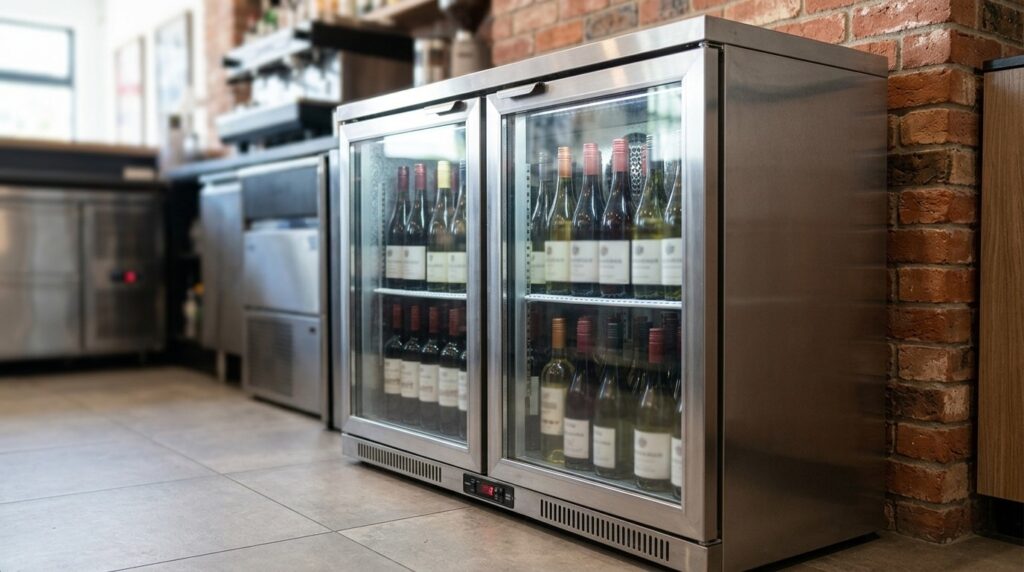
Explore common reasons and solutions for Unifrost bottle coolers not cooling wine properly in commercial settings.
Unifrost wine fridge not cooling: troubleshooting Unifrost bottle coolers used for wine
If your Unifrost “wine fridge” is not cooling, you are usually dealing with a bottle cooler being used for wine service, not a dedicated wine cabinet. In a bar or restaurant that matters because warm stock, inconsistent serving temperature, and wasted engineer callouts cost you money quickly.
This page helps you narrow down what is actually stopping your Unifrost bottle cooler from pulling down temperature, including quick power and controller checks, loading and airflow mistakes, ventilation and high ambient issues common on tight back bars, and basic maintenance like condenser cleaning and door seal checks. You will also see the tradeoffs between adjusting settings versus waiting for stabilisation, and when to stop troubleshooting and book service.
You will finish with a step by step checklist for common Unifrost bottle cooler ranges used as wine stations, such as BC10HBE, BC20, and BC30, plus what details to have ready when you contact Caterboss for parts, warranty, or support.
What this support page helps you find
If your Unifrost bottle cooler is being used as a “wine fridge” and it’s running but not pulling down to temperature (or not cooling at all), this page walks you through the checks that usually explain it.
The aim is to help you rule out the common operator and setup issues you can fix quickly in an Irish bar or restaurant, before you pay for a call-out. Temperature control and monitoring sit under day-to-day food safety controls in Ireland. The FSAI guidance is a sensible reference point for how venues should manage and record temperature control in practice: FSAI guidance on temperature control and monitoring.
Where it looks like an electrical issue, a control fault, or a sealed-system problem, we call that out early so you can protect stock and avoid wasted time.
What we mean by “Unifrost wine fridge” on this page
Unifrost does not currently list a dedicated wine fridge model in the Plytix/Katerbay product universe. In Ireland, most operators using Unifrost for wine service are using a back-bar bottle cooler as a wine station.
The troubleshooting is broadly the same whether you’re chilling beer, mixers or wine. What changes is your target temperature. Wine service temperatures are often higher than soft drinks, so the real question is usually: can the cabinet hold your setpoint consistently in a warm back bar with frequent door openings, rather than “can it get everything ice-cold quickly”.
If you’re aiming for reds at cellar temperature rather than “cold”, consistency matters more than speed of pull-down.
The step-by-step checks you’ll be guided through (before you book a service call)
You’ll follow a simple diagnostic path that fits real service conditions in pubs, cafés and hotel bars, where access behind the unit is tight and doors get hammered:
Power and basic electrics (plug, switch, extension leads, RCD trips, dead display or lights)
Controller settings and what to watch for if the thermostat, probe or control is behaving oddly
Loading and airflow inside the cabinet (overstocking, blocking internal vents, warm stock going in)
Ventilation around the cabinet (rear/side clearance, hot voids under counters, nearby heat sources)
Condenser cleanliness and airflow (dust and grease build-up is a common cause of “running but not cooling”)
Door seal checks and obvious air leaks (especially on busy back bars)
Ice build-up and defrost symptoms that point to an airflow restriction or a door-left-open pattern
The goal is to separate “operator fix” issues from faults that need an engineer, so you’re not paying for a visit just to be told the condenser is blocked or the unit can’t breathe.
What this page will not do (and why)
We won’t guess model-specific temperatures, parts, refrigerant details or wiring layouts. Those vary by unit, and we don’t invent specifications that aren’t confirmed in Unifrost product sources.
We also won’t advise you to remove panels or attempt sealed-system work. In a busy venue, the priority is protecting stock and uptime, not turning a manageable issue into a bigger one.
When to stop troubleshooting and call for support
Stop and get help if you have any of the following:
No power to the unit, repeated tripping, or burning smells
A loud new mechanical noise that wasn’t there before
The cabinet runs continuously with no meaningful temperature drop after you’ve checked airflow, ventilation and condenser cleanliness
Persistent controller alarms you can’t clear
The unit has been fitted into a hot, unventilated void and is still struggling even after you improve airflow
If you do need support, have the unit details to hand, a clear description of the fault, and a quick list of what you’ve already checked. It speeds up diagnosis and helps avoid repeat visits, particularly when call-outs need to be planned around trading hours.
Quick “keep service moving” actions if wine is warming during a shift
If you’re mid-service and the cabinet isn’t recovering, prioritise stability:
Reduce door openings and stop “browsing” for bottles
Consolidate stock so you can work faster with fewer openings
Move priority whites or sparkling to another working fridge temporarily, if you have one, rather than repeatedly warming the cabinet with constant opening
When the rush is over, run the checks in order and decide if it’s a setup issue, a cleaning/maintenance issue, or a genuine fault that needs parts and support.
Manuals, guides, or support resources available here
When a Unifrost “wine fridge” is not cooling, you will usually be dealing with a bottle cooler being used as a wine station behind the bar. The fastest route to the right manual or troubleshooting advice is to match the guidance to the exact model and controller in front of you. Start with the data label, do the basic operator checks, and if you cannot get stable temperature back quickly, escalate with clear model details so support can triage it properly.
1. Confirm the exact model and data label details first
Model names matter because controller layout, airflow and even routine checks can vary by range and production batch.
Take one minute to record:
Model code exactly as shown on the rating plate (operators often reference BC-series bottle coolers such as BC10HBE / BC20 / BC30).
Serial number.
Installation position (undercounter, tight back-bar void, against a wall, beside heat sources).
Current symptoms (running constantly, short cycling, frosting, warm cabinet with compressor running, or dead with no lights).
This saves time when you are trying to get a fix during trading hours, and it avoids guesswork if you need to book service.
2. Use the Unifrost.ie resources that cover bottle cooler operation and “not cooling” symptoms
These are the most relevant starting points on Unifrost.ie for Irish operators running bottle coolers as wine stations:
Unifrost FAQs for practical operator checks, including ventilation expectations and common “not cooling” causes at a high level.
Which Unifrost Fridge is Right for Your Irish Business? if the problem is linked to siting, airflow, loading, or day-to-day workflow rather than a failed component.
For temperature logging and corrective actions where chilled food is involved, refer to FSAI temperature control guidance so your checks align with what is expected in an Irish inspection context.
3. Match the guidance to how the unit is being used as a wine station
Unifrost does not currently present a dedicated “wine fridge” range on-site, so most “wine fridge not cooling” situations come back to bottle cooler realities.
Before you follow any setup note or manual you have to hand, sanity-check it against your use case:
Back-bar service with frequent door openings and warm restocks.
Undercounter fitment where ventilation is restricted.
Extra heat load from glasswashers, coffee machines, hot rails, or poor air circulation.
In busy service conditions, the most useful parts of the guidance are usually ventilation clearances, how stock should be spaced for airflow, and what to expect from defrost and temperature controls when the door is being opened constantly.
4. Know when to stop troubleshooting and move to service support (and what to send)
Escalate if the unit:
Will not pull down at all.
Trips the supply.
Has no display or lights.
Ices heavily and repeatedly even after you have addressed door sealing and loading habits.
When you contact support through the channel you purchased from (often Caterboss for Irish buyers), send:
Model and serial number.
A clear photo of the data label.
A short timeline of what changed (moved location, condenser area cleaned, power outage, warm stock loaded, unusual door opening).
That information lets support move straight to useful diagnostics, instead of looping through basic questions while you are in the middle of service.
When you need self-service versus direct support
Deciding whether to troubleshoot yourself or book a call-out comes down to two things: safety, and whether the fault is likely operational (airflow, loading, settings) or technical (electrical, controls, refrigeration circuit). With a Unifrost bottle cooler being used as a wine fridge, most “not cooling” issues in Irish bars are caused by heat and airflow under the counter, not a failed part.
1) Start with safe triage: is it actually running?
If the unit is completely dead (no lights, no display, no fan noise), treat it as an electrical issue until proven otherwise:
Check the plug is fully seated and not loose behind the back-bar.
Try a known-working socket.
Confirm any isolator switch (often fitted behind the counter) is on.
If the plug fuse has blown or the breaker trips again after you reset it, stop. Repeated tripping points to a fault condition. Get a competent electrician or service engineer rather than swapping fuses during service.
2) Confirm controller settings and rule out the obvious
If it has power but is warm:
Check it is not in standby or set to an unusually high temperature.
Look for any alarm or error code on the controller.
In tight bar stations, settings get bumped during cleaning or when reaching in for stock. Also be clear about what “not cooling” means: if you have just loaded warm deliveries, or the doors are opening constantly, the cabinet will take longer to pull down. Avoid chasing it by changing the setpoint repeatedly. Set it correctly, then give it time to stabilise.
3) Check ventilation, heat sources, and loading (the common causes)
Bottle coolers used for wine often struggle because they cannot get rid of heat. Undercounter installs are the usual culprit, especially beside a glasswasher, coffee machine, or any hot equipment.
Before you book a call-out, do three practical checks:
Airflow: Make sure vents are not blocked and there is clearance for air to move around the unit.
Condenser cleanliness (basic only): Clear dust you can safely reach without removing panels or using tools.
Loading: Don’t pack bottles tight against the back and corners. Leave space for air to circulate.
If your bar regularly runs hot in summer, expect longer recovery times. You may need to move the cooler away from heat sources or improve ventilation behind the counter.
4) Use clear “stop and call support” triggers
Move from self-service to professional support if any of the below apply. It’s either unsafe, likely to get worse, or requires proper tools and certified handling. Refrigerant work must be carried out by appropriately certified personnel under F-gas rules. See the EPA guidance on F-gases and refrigeration compliance: https://www.epa.ie/our-services/compliance–enforcement/refrigeration-and-air-conditioning/f-gas/
Breaker trips, fuses blow, burning smell, or visible electrical damage.
Abnormal noises (grinding, repeated clicking, hard starting) or the compressor is extremely hot and short-cycling.
Oily residue, chemical smell, or suspicion of a refrigerant leak.
Heavy icing around the evaporator, or internal fans not running after basic airflow and defrost checks.
Settings corrected and airflow improved, but temperature still will not recover over a realistic period for your service conditions.
5) Stabilise service and gather the right info before you contact support
If service is live and the cabinet is failing, focus on protecting stock and keeping the bar moving:
Stop adding warm stock.
Minimise door openings.
Move priority bottles to a known-good fridge or cold room.
Before you call support, have this ready:
Model identifier from the rating plate.
Any alarm message or error code.
What it’s doing now (running constantly, cycling, dead).
What changed recently (new delivery loaded, moved position, cleaned, power cut).
That information speeds up diagnosis and helps avoid a wasted visit. It also makes it easier to match the correct manual or quick-check guidance from Unifrost resources.
Common Cooling Issues
Why is my Unifrost “wine fridge” (often a bottle cooler used for wine service) not cooling properly?
Most “not cooling” call-outs on commercial bottle coolers come down to one thing: the cabinet cannot get rid of heat fast enough. If the condenser area is starved of airflow or sitting in high ambient heat, the system will run and still struggle to pull down.
In Ireland, temperature control is not just a comfort issue, it is part of how you run a compliant food business. The FSAI sets out chilled food control expectations, including keeping chilled food at 0°C to 5°C and monitoring it as part of routine checks. See the FSAI temperature control guidance. Wine service is often at higher temperatures than food-safe chilling, so a unit can look “fine” on a display while the warmest part of the cabinet drifts up under real service conditions.
Ventilation and high ambient heat (back-bar reality)
Bottle coolers reject heat through the condenser area. If that heat has nowhere to go, performance drops quickly.
Common Irish hospitality causes:
Tight back bars and undercounter runs with no clearance.
Boxed-in joinery where warm air cannot escape.
A hot line, glasswasher, or other heat source nearby pushing up ambient temperature, especially at the weekend.
If the unit is under a counter or built into joinery, airflow is a requirement. A cooler can run continuously and still not hit set temperature if it is effectively reheating itself.
Loading and internal airflow (compressor running, bottles still warm)
A bottle cooler needs space for air to circulate. If bottles are packed tight against the back wall, crammed into corners, or blocking internal vents, you will get warm zones and slow recovery.
This shows up during service because repeated door openings do more than “let a bit of cold out”. You are pulling in warm, often humid bar air and asking the unit to recover while it is fully loaded and potentially already struggling with poor ventilation.
Thermostat, sensors, and defrost behaviour (quiet problems)
If you hear “it’s set to X but it won’t go there”, the issue usually sits in one of three areas:
The control is reading incorrectly (sensor/thermostat).
The system cannot move heat effectively (often airflow-related).
The unit is protecting itself due to operating conditions.
Watch for ice build-up. Even light icing in the wrong place can restrict airflow and make temperatures uneven. If there is no icing but the cabinet will not pull down, it may be a control issue or a refrigeration fault. A practical check is whether small setpoint changes produce a consistent change in behaviour after a sensible stabilisation period with the door kept shut.
Power and “not working at all” symptoms (start with the boring checks)
If there are no lights, no display, and no compressor sound, start with power supply and isolation.
In busy Irish venues this is often:
A socket switched off after cleaning.
A plug knocked loose behind a tight back bar.
A shared circuit tripping when other high-load equipment is running.
If it has power but “runs and runs” without cooling, avoid pulling panels off. At that point, gather useful details for support or your service engineer: where it is installed, how it is ventilated, how it is loaded, how often the door is opened, and whether it was recently moved or deep-cleaned.
Common setup mistakes behind “wine fridge not cooling” complaints
Boxed-in installation with no effective airflow path (often behind a plinth or tight joinery).
Condenser area clogged with dust, flour, or lint, especially in mixed kitchen-bar layouts.
Bottles packed hard against the back or vents, creating warm bands.
Hot stock loaded and the unit expected to “catch up” during service.
Door not closing cleanly due to a worn seal, misalignment, or an uneven floor behind the bar.
Most of the above is fixable without parts if you catch it early. Where model-specific steps are available, follow the Unifrost manual or support guidance for your exact unit so you are not guessing.
Troubleshooting Steps for Unifrost Bottle Coolers
If you’re using a Unifrost bottle cooler as a wine fridge and it’s not cooling, work in this order: power, controller settings, loading and airflow, door sealing, ventilation, then basic cleaning. Most “not cooling” call-outs in Irish bars come back to one of those. After you correct the obvious blockers, check whether the cabinet is actually trying to pull down temperature.
If you still have warm product after a sensible pull-down period, gather the details you’ll need for support and stop short of any DIY electrical or sealed-system work.
1. Confirm power is stable and the unit is actually on
If there are no lights, no display and no sound, start with the basics:
Plug fully seated and not loose behind the counter
Socket live
Socket switch (if fitted) turned on
Back bars are busy places. Plugs get kicked and switches get knocked.
If you need to go beyond a basic socket check, stop and use a competent person. Safe Electric’s workplace guidance is a good baseline for electrical safety in Ireland: https://www.safeelectric.ie/help-advice/
2. Check controller settings (setpoint, mode, alarms)
If the unit is running but “won’t get cold”, confirm the set temperature hasn’t been changed during cleaning or stock rotation. Also check you’re not in a defrost cycle or a standby mode that makes it look like the unit has failed.
If there’s an alarm code, take a photo before you reset anything. That code is often the quickest route to a correct diagnosis when you contact support.
3. Rule out loading and airflow issues
Wine bottles are heavy, and it’s easy to pack a cabinet so tight that air can’t circulate.
Check for:
Bottles hard up against the back wall or air outlet
Stock jammed up to the top of the cabinet
No gaps between rows or shelves
A practical reset is to remove enough stock to create visible airflow gaps, then close the doors properly. If you need cold wine quickly, it’s better to cool fewer bottles properly than keep a full cabinet sitting lukewarm.
4. Check door seals and real-world door closure
A bottle cooler can run flat-out and still not recover if it’s constantly pulling warm air in.
Look for:
Torn or loose gaskets
Corners not sitting flat
Doors not pulling shut because shelves, bottles, or rails are fouling the door line
The classic pub issue is a door that looks closed from the front but is sitting on a bottle neck or shelf lip. If it doesn’t close cleanly every time, the “not cooling” problem can be a slow air leak.
5. Inspect ventilation and nearby heat sources
Tight Irish back bars are a trap for refrigeration. If the unit is boxed in by timber, pushed hard to a wall, or built in without breathing space, it may not be able to reject heat.
Also look for heat sources that get missed during service:
Glasswasher exhaust
Espresso machine boilers
Undercounter dishwasher heat
Direct sun through a window
If you can, pull the cabinet forward temporarily and see if performance improves over the next hour or two.
6. Clean what you can safely clean: vents and condenser intake area
Dust and fluff build-up is common in bars (lint, cardboard fibres, general back-bar dust). If the condenser intake or grille is clogged, the system can overheat and lose cooling capacity.
What’s reasonable for staff to do:
Switch off first
Keep water away from electrics
Use a soft brush or vacuum on accessible vents/grilles
If you can’t access the condenser area without removing panels that expose wiring, leave it and log it as a service job.
7. Confirm what’s actually running: fans, compressor, heat rejection
After you’ve checked settings, loading, seals, ventilation and basic cleaning, confirm the unit is operating:
Compressor running (steady hum rather than repeated starts)
Internal fans running (air movement inside the cabinet)
Warmth at the back where the unit rejects heat
If it’s short-cycling (starting and stopping frequently), running but never cooling, or you can’t confirm fan/compressor operation, move to “call an engineer” mode. At that point it may be a control, sensor, fan motor, start component, or refrigeration-system issue, and guesswork tends to add downtime.
8. Protect stock and service while you escalate
During service, stabilise the situation:
Keep doors closed as much as possible
Reduce stock to what you need immediately
Move higher-value wine to another working fridge/cold room where possible
If any chilled food is in the same cabinet, treat it as a food safety issue and move it to compliant refrigeration. The FSAI notes chilled foods should be kept at 5°C or below: https://www.fsai.ie/business-advice/food-safety/temperature-control
Before you contact support, note:
Model name/ID (many operators use Unifrost bottle coolers, including BC-range units, as wine stations)
What the display shows (including any alarm code photo)
What you’ve already tried
Approximate ambient conditions (enclosed back bar, beside glasswasher, etc.)
Whether the compressor and fans run
That information makes it much easier to point you to the right manual guidance or decide if a service visit is needed.
Agent stopped due to max iterations.
Preventative Maintenance Tips
How do you keep a Unifrost bottle cooler used as a wine fridge cooling reliably in a busy Irish bar or restaurant?
Keep it boring and consistent: clean the condenser area, protect airflow around the cabinet, and stop warm air leaks at the doors. Check temperatures and defrost behaviour little and often so you catch drift before a Friday night failure. Make one person responsible for the checks. If performance drops after the basics, treat it as a service job rather than turning it colder and hoping.
1. Keep the condenser and ventilation path clear (the most common “not cooling” cause)
In Irish pubs and cafés, “wine fridges” often end up as back-bar bottle coolers pushed tight into joinery, beside a glasswasher, or boxed in under a counter. That setup makes it harder for the unit to get rid of heat, so it runs longer, costs more to run, and struggles to pull down.
Once a month (more often in dusty areas, near a kitchen pass, or around flour), switch the unit off and clean the condenser intake and grille area. Use a soft brush and vacuum rather than water. While you’re there, clear anything that blocks airflow: cardboard, spirit boxes, bar towels, or cable tangles.
2. Check doors, gaskets, and closing habits (warm air leaks quietly wreck performance)
Wine service is constant door-open, door-closed traffic. If the door doesn’t seal properly, the cooler is dealing with a steady warm, humid load. That can lead to icing, poor temperature recovery, and inconsistent product temperature during service.
Weekly, wipe the door seals and frame. Do a quick paper test by closing the door on a strip of paper and checking for even resistance all the way around. If the door is dropping or not self-closing, sort hinge alignment early. A small gap is often the difference between stable temperatures and a cabinet that never quite recovers.
3. Load it like a cooler, not a storeroom (air still needs space)
Back-bar bottle coolers used as wine stations usually fall down when they’re packed to the roof before service, with bottles pressed against the back wall or blocking internal air routes. It looks stocked and “working”, but airflow is choked, and the front becomes a warm zone.
Keep a visible air gap at the back. Don’t stack stock directly in front of fan outlets or air channels. If space is tight, it’s normally better to run a slightly lower fill level and keep reserve stock elsewhere than overload the cabinet and lose temperature across the whole display.
4. Put temperature checks into your HACCP routine (so you spot drift early)
The cabinet display can look fine, but what matters is the product temperature where the wine sits. Keep it simple: check at opening and mid-service, and write it down so you can see gradual change over time.
For food and mixed-use chilled storage in Ireland, temperature control should be monitored as part of your HACCP routine using a calibrated probe thermometer, as set out in FSAI temperature control guidance. Even if your wine fridge isn’t part of food prep, that same discipline stops you discovering a warm cabinet only when a customer sends a glass back.
5. Watch for icing, drainage problems, and “silent” defrost issues
Recurring ice on internal panels, water pooling, or a musty smell is a warning sign, not just a cleaning issue. Ice buildup often points to door seal leaks, restricted airflow, or defrost and drainage problems.
During cleaning, clear any visible drain obstructions and make sure the cabinet is level so it drains properly. If icing returns quickly after you’ve improved sealing and loading, stop there and move to service rather than attacking it with sharp tools. Damaging liners, coils, or sensor wiring turns a manageable problem into a longer outage.
6. Protect the electrics and start-up conditions (small setup mistakes, big headaches)
Back-bar units get unplugged for cleaning, moving kegs, or borrowing a socket for a temporary appliance. Reduce nuisance faults by keeping the plug accessible, using a dedicated socket, and avoiding extension leads where possible in wet bar environments.
After transport or a major repositioning, follow the start-up guidance in the manual before loading it heavily. If you’re unsure, treat resting time before switching on and first pull-down before stocking as part of your standard handover checklist. Rushing this step is a common reason a cooler struggles from day one and gets blamed for it ever after.
7. Set a service rhythm before it becomes an emergency call-out
Preventative maintenance is what your team can do safely. Planned servicing is what keeps refrigeration dependable through Irish summer ambient temperatures, packed weekends, and high door-open frequency.
If you notice longer run times, louder fan noise, repeated icing, or temperatures that only hold when the bar is quiet, book a check before it becomes a breakdown. Have the model details, install location notes, and your temperature log ready. It shortens troubleshooting and makes any support or manual guidance far more useful.
Connecting to Unifrost’s Manuals and Support
The right guidance depends on the equipment you have on site. In Irish bars and restaurants, a “wine fridge” is often a commercial bottle cooler working as a wine station rather than a dedicated wine cabinet. That matters because the most common failures are installation and airflow issues, not a dead unit.
Keep your approach grounded in routine checks and clear escalation. The Food Safety Authority of Ireland is clear on temperature control expectations for chilled storage, and the Health and Safety Authority flags basic electrical safety in the workplace. If you suspect a fault, don’t keep resetting and hoping it settles. A unit can be powered up and still fail to pull temperature if ventilation is poor, it’s overstocked, or it’s sitting beside heat-producing equipment behind the bar.
When to stop troubleshooting and book a service call
Give yourself a clear stop point. In a busy venue, you can safely check a few basics, but you should not be removing panels, bypassing controls, or trying to “nurse it through service” if the symptoms point to an underlying fault.
Move to support and service if any of these apply:
The cabinet has power, but there is no meaningful pull-down after you’ve improved airflow and reduced load.
The compressor area is unusually hot, or the unit is boxed-in with little to no breathing space.
The controller/display is blank, unstable, or behaving erratically.
The unit is tripping the supply, cutting out repeatedly, or cycling in a way that does not match normal operation.
If you’re storing any perishable food in the same cabinet, temperature compliance becomes a food safety issue, not just a drinks-quality issue. The FSAI notes chilled food should be kept between 0°C and 5°C, and that fridges are generally set at 3°C to 4°C to achieve that product temperature in use (FSAI temperature control guidance).
Also be cautious about power supplies behind a tight back bar. If the unit is running from an adaptor or extension lead, treat that as a potential fault path and a fire risk. The HSA specifically warns against overloading socket outlets with adaptors, and notes extension cables need visual checks and maintenance in the workplace (HSA electricity in the workplace).
How to get faster help from Caterboss and avoid repeat visits
When you contact Caterboss support about a Unifrost bottle cooler being used as a wine fridge, the aim is to remove guesswork. Delays usually come from missing identification, vague symptoms (“not cold”), and no detail on how the unit is installed.
Have this ready:
Exact model code and serial number from the rating plate (don’t rely on what it’s called on the floor).
Where it’s installed (undercounter/back bar/tight gantry/beside a glasswasher/kitchen pass) and whether the condenser side has proper clearance.
What the controller shows (setpoint and actual temperature, if displayed), and whether lights and fans are running.
What changed before the issue (deep clean, moved position, power cut, heavy restock, hot weather, longer trading hours).
Photos of the full cabinet, the rear/ventilation area, and the door gasket area if you suspect warm air ingress.
A realistic access window. Back-bar units often need to be pulled out, which is far easier outside service.
This information helps support separate a control/sensor issue from an airflow or installation problem and reduces the risk of a call-out that ends up being a blocked ventilation gap or a poor back-bar fit.
Use Unifrost resources to keep your “wine fridge” stable in Irish trading conditions
If you’re running wine from a bottle cooler behind the bar, most “not cooling” complaints come back to real-world trading conditions: tight footprints, heat build-up, frequent door openings, and stock packed too tightly for air to circulate.
Treat the cabinet like working equipment:
Keep clearance and ventilation under control, especially in boxed-in back bars.
Keep the condenser area clean, particularly in dusty cellar routes and busy bars.
Load so air can move around bottles instead of being completely blocked by tight packing.
Where you need certainty, use Unifrost.ie resources rather than guessing. FAQs and bottle-cooler guidance help you match day-to-day use to how these units are typically deployed in pubs and restaurants. Manuals and quick-start guides are also the right place to check controller behaviour, alarm meanings, and cleaning access points before you escalate.
FAQs: Unifrost wine fridge not cooling (bottle coolers used for wine)
Why is my commercial wine fridge / wine cooler not getting cold?
In Irish hospitality settings this often happens because the “wine fridge” is actually a back-bar bottle cooler being asked to do a different job. The most common causes are:
Airflow/ventilation issues: the condenser cannot dump heat if the unit is tight to walls, boxed in, or sitting beside hot equipment.
Condenser coil blocked with dust/grease: very common behind bars and near kitchens. Cooling performance drops fast.
Door not sealing: worn gasket, door not closing square, or bottles/shelves preventing full closure.
Overloading or poor spacing: bottles packed tight against the back wall or vents stops cold air circulation.
Incorrect controller setting or mode: set too warm, or recently changed and the cabinet hasn’t had time to pull down.
High ambient temperature: busy bar service, sunshine through glass, or a hot back bar can push the cabinet beyond what it can hold.
If you’re searching “unifrost wine fridge not cooling”, start by treating it as a bottle cooler airflow and heat-rejection problem first, then move to controls and components.
Why is my back-bar bottle cooler running but still not reaching temperature?
If the fans and/or compressor are running but temperature will not pull down, it is usually one of these practical issues:
Condenser can’t breathe: no clearance around the ventilation grilles, unit pushed hard against a wall, or the grill is blocked.
Dirty condenser: the unit runs continuously because it cannot reject heat efficiently.
Door opening frequency: during peak service the cabinet may never recover, especially if it’s set very cold.
Warm stock loaded: a full load of room-temperature bottles can take hours to stabilise. Pre-chill where possible.
Airflow inside the cabinet: bottles stacked tightly, labels/boxes blocking internal fans, or stock touching the back wall.
Seal/gasket leak: you may feel cold air escaping at the door edges or see persistent condensation.
A good quick check is: is the condenser area hot and blowing warm air out? If not, suspect airflow blockage, a dead fan, or a refrigeration fault that needs service.
What’s the correct temperature setting for wine in a commercial display fridge?
Use the setting that matches service style, not the coldest possible number.
Sparkling and most whites for service: typically 6 to 10°C.
Light reds you want slightly cool: typically 12 to 14°C.
Full-bodied reds for service: often 14 to 18°C (many venues keep reds outside the cooler and only chill selected lines).
Practical tip: if you’re using a bottle cooler as a wine station, aim for a stable mid-point (for example, around 12°C for mixed use) and keep a small amount of whites/sparkling in an ice bucket or secondary chiller during rush periods. Always verify with a separate thermometer or probe, as cabinet displays can lag behind actual bottle temperature.
When should I call an engineer instead of troubleshooting a non-cooling wine fridge myself?
Stop troubleshooting and book service if you see any of the following:
Power trips / burning smell / repeated fuse or breaker trips.
Compressor won’t start, clicks on and off, or the unit is unusually noisy.
No airflow from internal fans or the condenser fan (after basic checks that nothing is obstructing them).
Heavy icing or ice build-up that returns quickly after a proper defrost.
Oil staining, obvious damage, or suspected refrigerant leak.
The unit has good ventilation, a clean condenser, good door seal, correct settings, has been left to run for a reasonable pull-down time, and still cannot reach temperature.
Anything involving the sealed refrigeration system (gas, compressor, brazing, electrical controls beyond basic resets) should be handled by a qualified refrigeration engineer.
How do I troubleshoot a Unifrost bottle cooler being used as a wine fridge when it’s not cooling, step by step?
Use this sequence to rule out the common operational causes before you book a call-out:
Confirm it has power
Check the plug is fully seated and the socket works.
Make sure the controller/display is on and the unit isn’t in an off/standby state.
Give it proper ventilation
Pull the unit forward and make sure the air inlets/outlets are not blocked.
If it’s under a counter or boxed in, temporarily run it with more breathing space.
Clean the condenser area (most common fix)
Switch off at the wall.
Brush or vacuum dust from the ventilation grille and condenser intake area.
Avoid bending fins or spraying water into electrics.
Check the door seal and closure
Inspect the gasket for splits, gaps, or hardening.
Check shelves or bottles are not preventing the door from closing square.
Do the paper test: close the door on a strip of paper. If it slides out easily, the seal may be leaking.
Check loading and internal airflow
Do not pack bottles tight to the back wall or fan cover.
Leave air gaps between rows and avoid blocking internal vents.
If heavily loaded with warm stock, remove some bottles and allow airflow to recover.
Verify the temperature setting and allow pull-down time
Set a realistic target for wine service (often 6 to 14°C, depending on what you’re chilling).
Leave the unit closed and running for a few hours. A full cabinet of warm bottles can take time to stabilise.
Do a controlled defrost if you suspect icing
If you see frost/ice restricting airflow, empty stock to another cooler, switch off, and allow to fully defrost with the door open.
Dry up meltwater before restarting.
Cross-check the displayed temperature
Use an independent thermometer inside the cabinet.
If the display says it’s cold but bottles are warm, it can be an airflow/placement issue.
Decide whether to escalate
If the unit still won’t pull down after ventilation, condenser cleaning, seal check, correct loading, and time, note the model, serial plate details, current setpoint, and what the unit is doing (running continuously, short cycling, no fan noise) before contacting support.
This process fixes a large share of “not cooling” complaints caused by airflow, heat, and loading issues common on tight back bars.
Need help choosing or troubleshooting a Unifrost wine setup?
If your “wine fridge” is actually a back-bar bottle cooler, a small change in ventilation, loading, or temperature strategy can make a big difference. If you want a second opinion on what’s happening (or you’re planning a better wine service station for your bar), Caterboss can help you match the right Unifrost-style cabinet to your layout and usage.
Browse bar refrigeration options and compare formats on Caterboss’s bar equipment category, or contact Caterboss with your model details and symptoms for more targeted advice.
Request Unifrost product help from Caterboss
For current product options, pricing and availability, continue to Caterboss.