
Troubleshooting Ice Build-up in Unifrost Upright Fridges: A Guide for Irish Kitchens
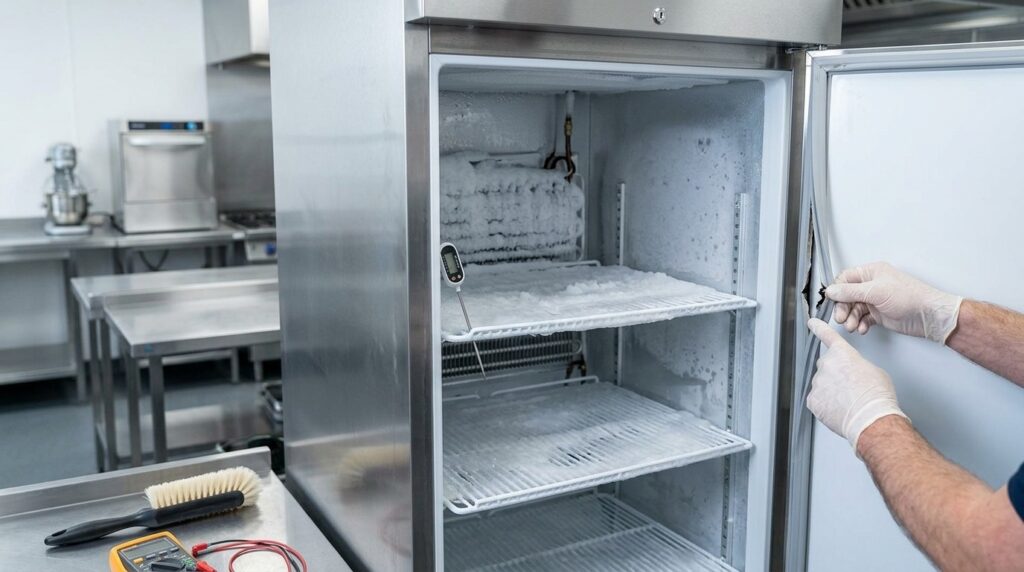
Learn how to manage ice build-up in Unifrost upright fridges and maintain food safety in Irish kitchens.
Troubleshooting Ice Build-up and Evaporator Frosting in Unifrost Upright Fridges
When your Unifrost upright fridge starts icing up, you lose airflow, temperatures drift, and you end up wasting staff time and risking stock. In a busy Irish kitchen, evaporator frosting is usually caused by a mix of door discipline, loading and airflow habits, humidity, and missed cleaning or drain checks, but it can also point to a defrost or fan fault.
This guide helps you make the right call quickly. You work through the practical checks that prevent Unifrost upright fridge ice build up and evaporator frosting, including gasket condition, vent blocking, overpacking, and temperature log clues, then follow safe steps to clear heavy ice without damaging the evaporator, fan, or probes. It also covers when to stop and call Caterboss support or a refrigeration engineer, and what details to gather first (model and serial, symptoms, photos, and thermometer readings) for Unifrost models like the CR1800G, CR2230G, R1000SV, and R1300SVN ranges.
Understanding Ice Build-up on the Evaporator
Ice build-up on an upright fridge evaporator happens when moisture gets into the cabinet and freezes onto the coldest surface, usually the evaporator coil behind the internal cover. The two most common routes are frequent door openings and air leaks at the door seal. SEAI also flags the importance of maintaining door seals to reduce warm air entering chilled cabinets and help avoid ice build-up in refrigerated equipment (SEAI Energy Efficiency Guide for Retailers).
Not all frost means “fault”. A light, even dusting can be normal in a busy kitchen. Fast, heavy, uneven ice is different. That usually points to excess moisture getting in, poor airflow, or a defrost issue.
Door openings and service pressure
In pubs, cafés and hotel kitchens, uprights often live in the worst spot for humidity: near the pass, beside a dishwasher, or close to a combi. Each door opening pulls in warm, damp air. That moisture hits the evaporator and freezes.
A useful pattern to watch:
Icing ramps up during service and eases overnight: door-open time and usage habits are the likely driver.
One person constantly in and out of the fridge: classic trigger for rapid frosting.
The same fridge can behave perfectly in a cool prep room and struggle on a tight, humid line. That’s not the unit being “prone to icing”. It’s the moisture load and how it’s being used.
Door gasket leaks and poor closure
If the gasket is damaged, dirty, or the door isn’t closing properly, moisture leaks in continuously. Unlike door openings (spikes of moisture), gasket leaks create a steady feed, so frost builds steadily and often shows up heavier around the leak point.
Common real-world causes:
Torn corners or hardened seals
Food residue on the sealing face
Door out of alignment after a knock
Shelves, boxes or GN pans preventing full closure
If staff have to “give it a shove” to shut, treat it as a maintenance issue, not a quirk.
Blocked airflow inside the cabinet (loading habits)
Upright fridges rely on airflow to move heat off the product and back across the evaporator. If stock is pressed against the back wall, vents are blocked by boxes, or shelves are overloaded (especially with warm deliveries), airflow suffers. The system then runs longer to pull temperature back, and any moisture present is more likely to freeze onto the coil.
This is common where storage is tight and deliveries get parked in the fridge “for now”. Good loading habits matter as much as the unit if you want stable temperatures without icing.
Defrost problems (often slow to show)
Most commercial uprights use automatic defrost cycles to clear normal frost. If defrost isn’t clearing properly, the fridge may still appear to cool at first, but frost gradually wins until the coil is restricted and airflow drops.
A practical clue is the timeline:
Slow, steady icing over days
Worse temperature recovery after door openings
More running time for the same result
That points more towards incomplete defrost or restricted airflow than a single busy shift.
Kitchen humidity and ventilation around the fridge
Irish kitchens are not always hot, but they are often humid. Steam from dishwashers and pot-wash areas, and heat from cooking kit nearby, add moisture and increase the workload on the fridge.
Also watch the space around the unit. If it’s squeezed into a tight gap with poor ventilation, it may run harder to hold temperature, which can increase frost formation on the evaporator. This is why icing problems sometimes appear after a layout change, a new heat source, or during heavier summer trade.
Normal light frost vs a problem you need to act on
Usually normal: a thin, even frost that comes and goes with operation.
Needs attention: thick sheets of ice, uneven build-up, changes in fan noise, blocked airflow, or cabinet temperatures starting to rise.
Once you’re clear on whether the main driver is door use, seal integrity, loading, defrost, or the kitchen environment, you can fix the cause rather than just clearing the ice and hoping for the best.
Effects of Ice Build-up
When the evaporator starts icing up, airflow through the cabinet drops. The fridge then struggles to pull down and hold temperature, so you’ll often see longer run times, warmer product and “hot spots” on shelves, even if the controller display still looks fine.
From a food safety point of view, this matters because an upright fridge that cannot recover quickly after repeated door openings is more likely to drift outside the limits you depend on for HACCP checks. In busy Irish kitchens, warm moist air is pulled in every time the door opens, and that moisture freezes onto the coldest surface, the evaporator coil. The problem typically builds over days rather than hours.
Once the coil is heavily frosted, you can also run into water leaks during defrost, slippery floors and stock quality issues from uneven cabinet temperatures. If you spot the early signs, it’s usually a simpler fix than waiting until it turns into a solid ice block.
Preventative Measures
Prevent ice build-up and evaporator frosting by cutting moisture entry, keeping airflow clear, and letting the unit complete its defrost cycles without interruption. Train staff on door discipline and loading, then back it up with quick weekly checks on gaskets, drainage, and cleanliness around air vents. Verify temperatures with a probe thermometer rather than relying on the controller display. If frosting returns quickly after you’ve tightened the basics, treat it as an early fault signal, not “one of those things”.
1. Set the fridge up for dry, steady running (location and ventilation)
If an upright fridge sits beside a dishwasher outlet, a combi oven, or a busy pass, it is being hit with warm, humid air all day. In Irish kitchens, humidity is often the real driver of icing, especially in tight prep areas where extraction is working but steam still lingers.
Give the cabinet proper breathing space and keep it away from direct heat sources where possible. Even moving it off the dishwash wall, or stopping warm air blowing straight at the door, can reduce moisture load and take pressure off the evaporator.
2. Run the right temperature and verify it as part of HACCP
Don’t chase “colder cabinet air” as a cure for frosting. You want safe food temperatures with stable operation. Big swings, frequent door openings, and high humidity are what accelerate ice on the evaporator.
As a practical baseline for Irish HACCP, the FSAI temperature control guidance says chilled food should be kept between 0°C and 5°C, which typically means a setpoint around 3°C to 4°C in service. Check using a calibrated probe on product (or between packs) in the warmest part of the cabinet. Adjust habits and loading before you start changing settings.
3. Tighten door discipline under service pressure
Most “mystery frosting” is repeated warm-air hits. In a pub kitchen, café, hotel breakfast service, or canteen, doors can open dozens of times in short bursts. Each opening pulls moist air in, which later freezes on the coldest surface, usually around the evaporator and air outlets.
Keep openings short, don’t portion with the door held open, and organise shelves so the high-usage items are easy to grab without digging. It is a simple behaviour change that reduces call-outs.
4. Load for airflow, not just capacity
Overpacking causes problems because the fridge can’t circulate air properly. That creates cold spots, condensation, and ice where you don’t want it. Avoid pushing stock tight against the back wall, blocking internal air ducts, or cramming shelves so air can’t move through the load.
A large upright can still be starved of airflow if it is packed right to the back. If you regularly run “full to the door”, it is often a sizing or workflow issue as much as an equipment issue.
5. Keep gaskets sealing properly (and fix small faults early)
A gasket that’s split, loose at a corner, or greasy will leak warm, moist air continuously. That gives you persistent frost that “comes back overnight”, plus higher running costs and slower temperature recovery.
Wipe gaskets during close-down and do a quick paper test: close the door on a strip of paper and tug gently. If it slides out easily at one corner but grips elsewhere, you likely have a sealing problem worth fixing before you start chasing defrost settings.
6. Stay on top of drainage and internal cleanliness
If the drain path blocks, water can sit and re-freeze, building ice where fans and airflow need to stay clear. Spills and uncovered liquids also add moisture to the cabinet, which ends up as frost on cold surfaces.
Clean spills quickly, keep the base and drain area clear of debris, and avoid wash-down cleaning that leaves standing water. In most kitchens, this is a weekly five-minute job that prevents a bigger stoppage later.
7. Don’t sabotage the defrost cycle with daily habits
Even with a correct defrost programme, heavy use can stop it doing its job. Common culprits include loading warm food, restocking large deliveries with the door open for long stretches, and putting uncovered hot or steaming trays into the cabinet.
Cool food properly before storage, cover liquids, and break deliveries into batches so the door can close between loads. If frosting ramps up after deliveries or weekend prep, that usually points to operating practice rather than a sudden component failure.
8. Spot early warning signs before you get a full ice-up
You will usually see performance slip before you see a solid block of ice. Watch for slower pull-down after door openings, warmer readings on top shelves, longer compressor run time, and temperature logs drifting up during peak service even though the setpoint hasn’t changed.
Catching it early matters. Light frosting can be normal, but heavy frosting that affects airflow and temperatures eats into food safety margins and service flow.
Identifying a Problem: Early Signs and Common Issues
Evaporator frosting in an upright fridge usually starts as an airflow and moisture issue, not a lack of cooling. You’ll often notice it first as slower pull-down after stock is loaded, and wider temperature swings during service. That matters for HACCP: the FSAI notes fridges should be set to keep food between 0°C and 5°C (typically 3°C to 4°C on the stat).
A light, even dusting of frost can happen in day-to-day trading. Heavy ice that covers fins, blocks vents, or starts interfering with the fan is a fault condition. Left alone, it usually worsens and reduces your usable capacity and temperature stability.
Early warning signs you’ll see in a busy Irish kitchen
The first signs are often operational rather than visible ice. The cabinet runs longer, feels slower to recover after door openings, and seems less responsive after a delivery load-in. In upright formats, poor circulation often shows up as uneven temperatures, with items at the front holding better than stock at the back or top where airflow is being restricted.
Your HACCP records often flag this early. Look for a gradual upward drift, more “nearly out” readings, or bigger gaps between the cabinet display and a probe reading taken in food or between packs. Sound is another giveaway: the evaporator fan may tick or scrape as frost builds, or the airflow noise changes as vents start to choke.
You may also see secondary symptoms such as water pooling in the base of the cabinet, sheets of ice on the floor, or damp packaging. These can point to defrost meltwater not draining properly, allowing moisture to re-freeze and accelerate icing.
Common operational causes (usually not a parts failure)
Door discipline is the big one in pubs, cafés and hotel prep kitchens. Frequent openings, doors left ajar during restocking, or staff standing at the fridge with the door open pulls warm, moist kitchen air into the cabinet. That moisture ends up as ice on the evaporator.
Loading practice comes next. Overpacking shelves, blocking air ducts, or pushing boxes and gastronorms tight to the back wall reduces circulation. The coil then runs colder than it should and frosts faster. Loading warm or steamy food is another common trigger. Even if you are trying to cool product quickly, an upright fridge is not designed to deal with hot trays and steam. It drives moisture onto the evaporator and drags overall cabinet temperature up at the same time.
Ambient conditions matter, especially in smaller, heat-heavy kitchens. If the unit sits beside a dishwasher, combi oven, or fry line, each door opening brings in warmer, wetter air. The fridge works harder for longer, and frosting risk goes up.
Door seals, hinges, and “invisible” air leaks
A split, hardened, or dirty gasket can leak continuously without looking dramatic. Condensation around the door frame, a door that does not pull closed cleanly, or the “paper test” failing (paper slides out easily when trapped in the door) are practical indicators that moist air is getting in.
Hinges and alignment matter too on larger uprights that take knocks during busy shifts. If the door sags even slightly, the gasket won’t compress evenly, and you end up feeding moist air towards the evaporator area all day.
When frosting suggests a control or defrost fault
If frosting returns quickly even with good door habits and sensible loading, you start looking beyond operations. Common patterns include the unit performing well for a day or two after a manual defrost and then deteriorating in a repeatable cycle, or icing that keeps forming in the same area of the evaporator.
Avoid the temptation to “just turn it colder” or “turn it warmer”. A control change can mask symptoms briefly while making compliance worse in the background. Base decisions on measured food temperatures and how the cabinet behaves across a full trading day, not just the display reading.
What staff should check before calling for support
Start with checks that don’t involve tools or removing panels:
Confirm the door closes firmly and sits square.
Check for obvious gasket gaps, splits, or heavy dirt.
Make sure vents and air paths are not blocked by boxes, trays, or overfilled shelves.
Check for standing water or ice on the cabinet floor.
If you can safely view the evaporator area without dismantling covers, note whether frost is light and even or heavy and clogging.
Then confirm the food safety reality:
Take a calibrated probe reading (in food or between packs).
Compare it with the cabinet display and record the difference.
To speed up remote diagnosis and parts matching, have the essentials ready: the model and serial number from the rating plate, a clear photo of the icing pattern, and a short note on conditions (door opening frequency, recent delivery load, and whether the unit is near heat or steam sources).
Once you’ve pinned down the pattern and the likely cause, it’s much easier to understand the knock-on effects frosting has on cooling performance, running costs, and the safety margin you actually have during service.
Safe De-icing Steps for Unifrost Upright Fridges
If you need to clear heavy ice from the evaporator on a Unifrost upright fridge (CR1800G/CR2230G/R1000SV/R1300SVN range), treat it like a planned job. Get the food protected, isolate power properly, and melt the ice fully rather than breaking it off. Once clear, restart the unit empty so you can confirm airflow and pull-down before you reload.
If you find damaged wiring, a stuck fan, or the ice returns quickly after a correct defrost, stop and treat it as a fault, not “maintenance”.
1. Protect food and plan around service
Heavy icing rarely clears in the gap between tickets. Pick a quiet window and move stock into another working fridge, a cold room, or insulated boxes with ice packs. Keep food covered and labelled so you can return it to the right shelf positions and maintain rotation.
If you’re unsure how long food can sit out during the defrost, use the FSAI temperature control guidance (chilled food held at 0°C to 5°C) rather than guessing:
https://www.fsai.ie/business-advice/food-safety-and-hygiene/temperature-control
2. Isolate the unit properly (not just the controller)
Stop the fridge on the controller, then isolate power at the plug or local isolator. You do not want the unit starting unexpectedly while you’re working around the evaporator and fan area. In a busy kitchen, a quick note on the door and isolator avoids someone powering it back up mid-job.
Once power is off, keep the door closed until you’re ready to start. In humid kitchens, leaving the cabinet open simply adds moisture and makes the icing harder to clear.
3. Get access without damaging panels, wiring, or sensors
Remove shelves and trays to give yourself room. If you need to remove an internal cover panel, take a quick photo first and keep screws together. Don’t pull on sensor leads or fan wiring.
If a panel feels stuck, assume ice is binding it. Forcing trims and covers often creates a second issue afterwards, usually air leaks, rattles, and poor door sealing.
4. Melt the ice safely (no knives, chisels, or boiling water)
Let the ice melt. The safest approach is time, warm room air, and controlled heat, not impact.
If you need to speed it up, use a gentle stream of warm air (for example a hair dryer on a low setting held well back). Keep it moving to avoid overheating one spot or warping liners.
Do not chip at the evaporator coil or fins. A small puncture can mean refrigerant loss and an out-of-service unit, plus an engineer call-out when you can least afford it.
5. Control meltwater: drain point, tray, and door area
As the ice clears, manage the water with towels and a shallow tray so you don’t flood the floor or soak the door frame. Check the drain point is clear of debris and sludge. A blocked drain is a common reason for repeat icing and internal leaks.
Before refitting shelves, wipe the interior and door gasket area so you’re not sealing moisture back into the cabinet.
6. Restart empty and confirm airflow before reloading
Power back on and let the fridge run empty with the doors closed. Check the fan is running normally, that airflow feels even, and that the cabinet temperature stabilises before you reload stock.
When reloading, keep product off the back wall and avoid overpacking shelves. Blocking the rear air path can recreate the icing conditions quickly, which makes it look like the defrost “didn’t work” when it’s really an airflow issue.
7. Know when to stop and treat it as a fault
Stop and get support if:
the evaporator ices up again within a short period after a full defrost
the fan doesn’t spin freely or won’t run properly once de-iced
door gaskets are damaged or not sealing
there are signs of electrical trouble (burning smell, loose connectors, repeated tripping)
Chronic icing is often tied to a defrost system, control, drainage, or airflow problem. Repeated manual defrosting just masks the root cause while running costs rise and temperature risk increases.
Once the ice is cleared properly, it’s much easier to judge how it was affecting cooling performance, recovery time, and HACCP confidence during service.
When to Call for Professional Help
Light, even frosting on an upright fridge evaporator can be normal in a busy Irish kitchen, especially with high humidity and constant door openings. If it clears after a proper manual defrost and your logged cabinet temperatures stay within your HACCP limits, you can usually manage it in-house.
Call a refrigeration engineer when any of the following applies:
The evaporator is icing solid or re-ices quickly after a full defrost
Temperatures are drifting outside your HACCP limits, or you cannot hold setpoint reliably
The cabinet is warm even though the unit appears to be running
You suspect a refrigerant-side fault (leak, gas loss, compressor issue)
Anything involving refrigerant handling should be left to a certified technician. Ireland’s F-gas rules require appropriately certified personnel for refrigerant work: https://www.epa.ie/our-services/compliance–enforcement/industry–manufacturing/fluorinated-greenhouse-gases/
A simple rule that works in practice: if icing is affecting service, stock safety, or repeatable temperatures, it’s no longer a housekeeping job.
Signs it’s beyond a staff fix (call-out triggers)
Once you move from “routine defrost” to “fault-finding”, you are usually looking at a defrost, airflow, drainage, control, or sealed-system issue. Typical triggers include:
Rapid re-icing after a full defrost
Fan noise from the evaporator area (often the fan catching ice)
Water not draining away, or ice building up around the drain area
Ice forming heavily in one corner only (often airflow or air-leak related)
A slow upward temperature trend over days, with no setpoint changes
High humidity and door traffic can start the problem, but they rarely explain chronic icing once you’ve corrected loading, kept vents clear, and tightened up door discipline.
What not to do in a busy kitchen
Avoid chipping or stabbing ice off the evaporator. One slip can damage fins, puncture pipework, or dislodge a probe, turning a manageable issue into downtime.
Also avoid boiling water, heat guns, or sharp tools around the evaporator, fan, and sensors, especially on larger uprights where access is awkward and you are working against the clock. If you cannot complete a controlled defrost and restart safely within your trading window, protect the stock and book the call-out.
What to gather before you ring technical support
Having the basics ready shortens the call and helps avoid repeat visits on site:
Model and serial number (from the rating plate)
What you can see: where ice is forming, and whether the fan spins freely
The last 24 to 72 hours of temperature log notes (including alarms and door-open periods)
Checks already done: door gaskets, blocked vents, drain condition
Clear photos of the evaporator area and the door seal area you suspect
Once you’ve confirmed whether this is a routine defrost issue or a fault needing a call-out, it’s easier to judge the operational impact. Ice build-up is not just a nuisance. It quickly affects airflow, pull-down time, temperature stability, and running costs.
Connecting to the Wider Unifrost Ecosystem
Most evaporator frosting isn’t down to a “bad fridge”. It’s usually a mix of how the cabinet is being loaded, opened, cleaned, and monitored under real kitchen pressure. In Ireland, your day-to-day checks should line up with the FSAI’s HACCP approach, because icing problems often show up first as temperature drift and repeated “out of range” entries before anyone actually sees ice building behind the evaporator cover.
The right response depends on what you’re seeing:
Light, short-lived frosting during busy service can be normal.
Heavy, persistent ice usually points to restricted airflow, warm air ingress at the door, drainage issues, or a defrost/control fault.
Use Unifrost support in a way that actually reduces downtime
If an upright fridge is icing up, you’ll normally get to a stable cabinet quickest by ruling out the basics first (loading, door discipline, cleaning, drain checks). If the symptoms still don’t make sense, escalate early rather than spending another day on trial-and-error.
Support works best when it’s treated like a repeatable routine, not a once-off emergency. Keep these close to hand:
Your HACCP temperature logs
A known-good probe thermometer
A simple “what changed?” note (new prep routine, heavier door openings, cabinet moved closer to a dishwasher or cookline, changed delivery timing, recent deep clean)
If you call with that ready, you shorten the diagnosis loop and avoid the common mistake of repeatedly powering the unit on and off, which can make frosting worse and increases food risk.
Manuals, settings, and “don’t guess” parameters
A common operator response to frosting is to start changing setpoints or controller parameters. That can create new problems, especially if you don’t know what the controller is meant to do on that specific model.
For the Unifrost upright fridge models referenced here (CR1800G/CR-1800GOG, CR2230G/CR2230GOG, R1000SV/R1000SVOG, R1300SVN/R1300SVNOG), use the model manual or Unifrost support guidance rather than copying settings from another fridge on site.
If you do adjust anything operational:
Make one change at a time
Record the original value
Verify with a separate probe thermometer, not just the cabinet display
That matters in busy Irish kitchens where heat and humidity can be higher than a quiet prep room, and the cabinet can be pushed harder during service.
Planned routines that prevent “mystery icing”
Evaporator icing is often the end result of small, boring issues that build up: door seals not closing cleanly, blocked airflow, drains not running free, or stock packed tight against the back wall.
Support is most useful when it helps you build a simple routine the team can stick to during trading weeks, not just the deep clean before an inspection.
Before contacting Unifrost/Caterboss technical support about an icing upright fridge, have:
Model and serial number
Photos of the ice pattern (even frost sheet vs localised ice block)
Last 24 to 48 hours of temperature logs
A probe thermometer reading
Notes on recent changes (loading patterns, door use, location/ambient heat, cleaning activity)
When to escalate, and what “good evidence” looks like
Some causes are purely operational and fixable fast: warm deliveries put straight into the cabinet, doors being propped open, or vents blocked by trays. Other signs are a strong hint to stop experimenting and escalate:
Rapid re-icing after a full defrost
Fan noise changes or poor airflow
Persistent water leaks suggesting a drain or defrost issue
Temperature recovery getting slower even after improving door discipline and loading
Clear symptom descriptions and a decent photo usually let support tell the difference between normal short-term frosting and a fault pattern that needs an engineer. The goal is to avoid the “wrong fix” that wastes labour, puts stock at risk, and still leaves you facing an iced evaporator before the next lunch rush.
Understanding the cause is useful, but the practical effect of icing matters most: it reduces airflow, slows recovery, and makes it harder to hold safe temperatures during Irish service peaks.
FAQs: Unifrost upright fridge evaporator frosting and ice build-up
What causes ice build-up on an upright fridge evaporator?
Evaporator ice build-up is almost always caused by moisture getting into the cabinet and then freezing on the cold coil. In busy Irish kitchens the most common triggers are:
Frequent or long door openings that pull warm, humid air into the fridge.
Damaged, dirty, or misaligned door gaskets letting air leak in even when the door is “closed”.
Overloading or blocking airflow (product pushed against the back wall, vents covered, shelves packed too tightly).
A blocked condensate drain or drain pan issue, causing water to sit and re-freeze.
Defrost system problems (timer/controller settings, sensor/probe, heater, or wiring), which prevents normal melt-off.
Light, even frosting can be normal, but thick ice that blocks airflow points to an underlying air leak, usage issue, or defrost fault.
How often should I defrost my commercial fridge?
It depends on whether your fridge is designed to self-defrost.
If it’s auto-defrosting: you should not need routine manual defrosts. Instead, defrost manually only if frosting starts to restrict airflow or temperatures begin drifting.
If it’s not auto-defrosting (or it’s in a very humid, high-traffic area): plan a manual defrost whenever frost reaches a few millimetres thick or you see airflow reducing at the back of the cabinet.
A practical approach is to use your HACCP temperature log as the trigger. If you see the unit running longer to recover or temperatures rising during service, schedule a defrost outside peak hours before it becomes a breakdown.
Can ambient conditions affect evaporator icing?
Yes. High kitchen humidity and higher ambient temperature can significantly increase evaporator frosting.
Common site factors that make icing more likely include:
Hot, humid prep areas, especially in summer or during heavy cooking.
Fridge positioned beside fryers, ovens, dishwashers, or pot-wash, where warm moist air is constant.
Poor ventilation around the unit, which can affect overall performance and recovery.
If you cannot move the fridge, focus on operating practice: keep door openings short, avoid loading warm product, allow space for air circulation, and keep gaskets clean and sealing properly.
What are warning signs of defrost failure?
Defrost problems often show up before the fridge fully ices up. Watch for:
Temperature creep in your thermometer/HACCP records (slowly rising average temps).
Longer compressor run times and the unit struggling to pull down after door openings.
Reduced airflow inside the cabinet (weak fan blow or cold spots only near the back).
Visible ice sheets behind the evaporator cover or heavy frosting on the back wall.
Water leaks inside the cabinet or pooling underneath after “partial” defrosting.
If staff have already checked door seals, loading, and the drain, and the frosting returns quickly, a defrost component or control setting may need a technician’s diagnosis.
When should I call an engineer for fridge icing issues?
Call an engineer when the issue is repeating, affecting temperature control, or involves parts staff should not touch. In particular:
The fridge won’t hold safe temperature or you see repeated HACCP deviations.
You’ve done basic checks (door seals, airflow/overpacking, drain clear, door discipline) and ice returns within days.
The fan isn’t running, airflow is poor, or you suspect the evaporator is fully blocked.
You see error codes/alarms, unusual electrical smells, or signs of damaged wiring.
Ice is so heavy that removal would require tools. Do not chip or scrape around the evaporator as it can puncture the coil and turn a service call into a major repair.
Before you call, note the model and serial, take photos of the icing pattern, and record cabinet temperatures and when the problem started. This speeds up troubleshooting and parts identification.
Next step: choose the right Unifrost upright fridge and reduce icing risk
If evaporator frosting is a recurring headache, it’s often a sign the fridge is being pushed hard for the environment or workflow. Reviewing the right size, door format, and placement for your kitchen can reduce ice build-up and improve temperature stability.
Browse current options in Caterboss’s Chilled Storage category, or contact Unifrost.ie for tailored guidance on selecting an upright fridge for busy Irish service.
Related Unifrost guides
Compare models, maintenance advice and support information related to this topic.
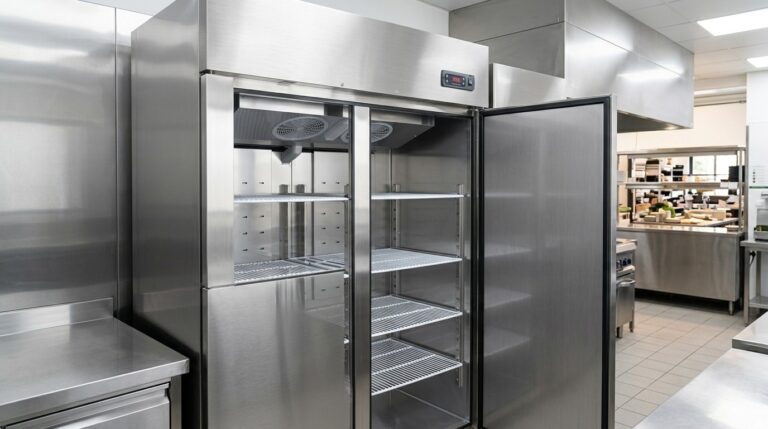
Understanding Unifrost Upright Fridge & Freezer Temperature Controller Defrost Messages
Learn about Unifrost upright fridge freezer controller messages for efficient, error-free kitchen operations.
Read guide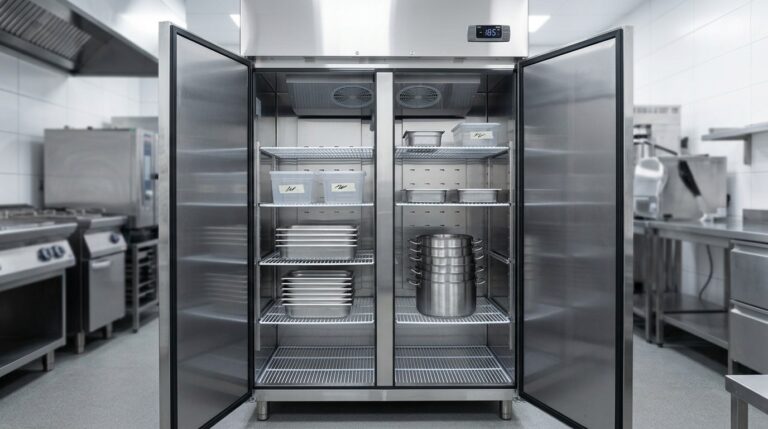
Unifrost Upright Fridge Freezer Shelving and Racking Setup Guide for Irish Kitchens
Optimize your Unifrost upright fridge freezer shelving for superior storage and compliance with Irish kitchen standards. Learn about GN pans and airflow.
Read guide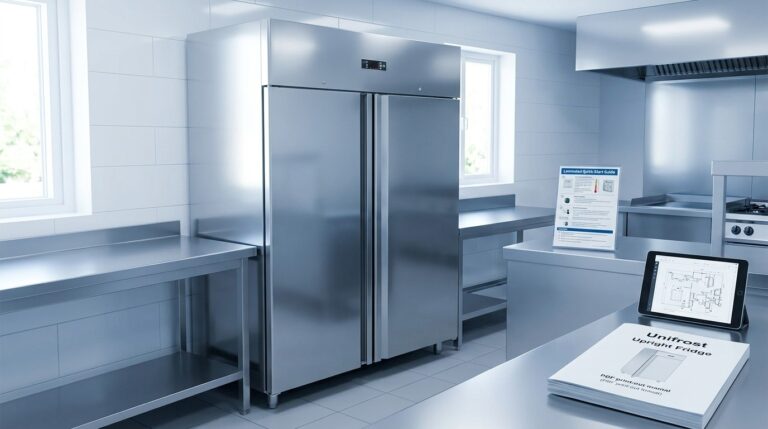
Unifrost Upright Fridge Manuals & Installation Support
Task-first manual downloads, controller help, installation notes, and troubleshooting routes for Unifrost upright fridges.
Read guideView Unifrost fridges at Caterboss
For current product options, pricing and availability, continue to Caterboss.