
Unifrost Commercial Fridge vs Freezer: Planning the Right Mix for Irish Kitchens
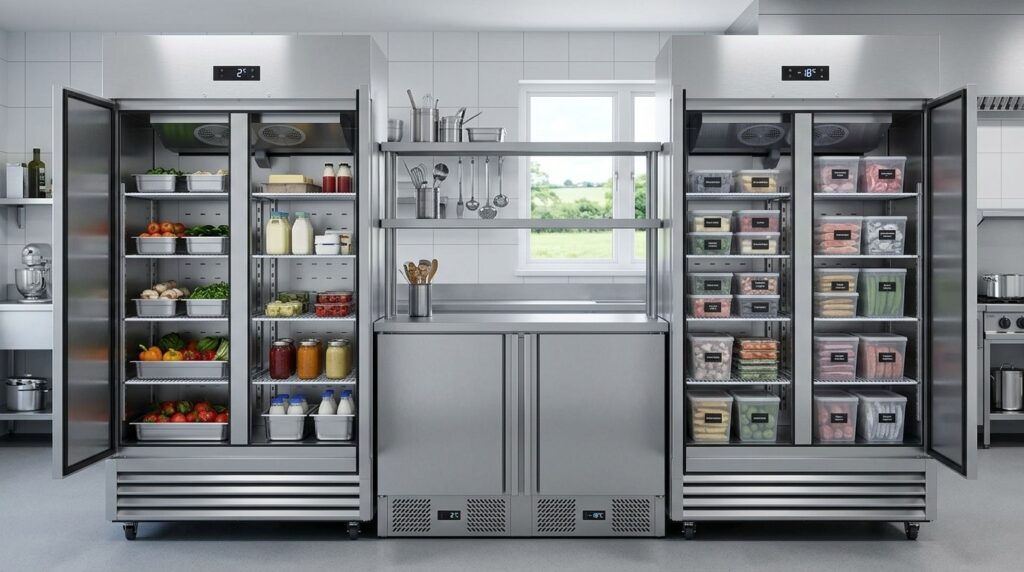
Compare Unifrost fridges and freezers for Irish kitchens. Get advice on fridge and freezer planning to meet business needs efficiently.
Unifrost Commercial Fridge vs Freezer: Planning the Right Mix for Irish Kitchens
Choosing a Unifrost commercial fridge vs freezer is rarely a one-or-the-other decision. You are planning how much chilled and frozen capacity you need, where it sits in the kitchen, and how it supports your menu, delivery patterns, and HACCP routines without wasting space or energy.
This guide walks you through the practical checks that decide the right mix, including when bulk chilled storage in Unifrost upright fridge ranges like R1000SV and R1300SVN makes more sense than adding frozen volume, and when matching upright freezers such as F1000SV and F1300SVN are the better fit. You will also see how pairing same-footprint options like the R200SN undercounter fridge and F200SN undercounter freezer can solve workflow issues when you need fast access at a section rather than more storage in one place.
You will leave with a clear way to balance capacity, access speed, footprint, running costs, and future seasonal peaks, plus the placement and day-to-day operational considerations that usually get missed until after install.
Understanding Core Differences Between Fridges and Freezers
The core difference is temperature and what that means for storage time and day-to-day workflow.
A commercial fridge is for chilled holding above freezing. In Irish catering, you’re generally working to keep chilled food at 5°C or below in line with FSAI advice on maintaining safe cold chain temperatures: https://www.fsai.ie/news-and-alerts/latest-news/advice-on-the-importance-of-maintaining-food-tempe
A commercial freezer is for long-term frozen storage, typically held at -18°C for food safety and quality, again referenced in the same FSAI cold chain guidance: https://www.fsai.ie/news-and-alerts/latest-news/advice-on-the-importance-of-maintaining-food-tempe
In practice, fridges are built around frequent access and quick recovery during service. Freezers are built around holding a much lower temperature against heat load. The right choice is usually driven less by cabinet size and more by your menu, delivery pattern, and how often doors are opened during peak service.
Chilled storage (commercial fridges): what they’re for in practice
In most Irish kitchens, the fridge is in constant use. It takes deliveries, holds prepped mise en place, and keeps high-risk items like dairy, cooked meats and sauces within a controlled range so your HACCP checks stay straightforward.
Chilled storage also suits anything you want to portion, garnish and plate without waiting on defrosting. If you run a café, sandwich counter, carvery, deli or salad service, you’ll usually feel the pain of “not enough fridge” first because so much of your work depends on fast access.
Frozen storage (commercial freezers): what changes operationally
Freezers buy you time. They let you hold core products, batch-cooked items and back-up stock through quieter weeks or supplier disruption.
They’re also less forgiving. Frequent door opening, loading warm product, or blocking airflow will show up faster in a freezer than a fridge. If your kitchen runs hot or space is tight, the freezer’s lower setpoint means it has to work harder to recover after service.
The practical differences that affect cost, service and compliance
The biggest differences aren’t “features”. They’re what you notice at 7pm on a Saturday: pull-down time after loading, recovery after repeated door openings, and how reliably you stay inside your HACCP limits.
Using the FSAI’s typical targets of 5°C or below for chilled and -18°C for frozen (see FSAI cold chain guidance linked above), the freezer is doing a bigger temperature lift. That usually makes it more sensitive to:
hot kitchens and poor ventilation gaps
heavy loading, especially with warm stock
messy shelving and blocked air circulation
Choose more fridge capacity when you need fast access and high turnover during service.
Choose more freezer capacity when you need longer holding and you want less reliance on frequent deliveries.
Overloading either cabinet tends to show up first in temperature stability and food quality, not on a spec sheet.
Once you’re clear on where you need chilled access versus frozen back-up, it’s much easier to size the right mix for your kitchen and your trading pattern.
Optimal Situations for Using Fridges or Freezers
Choosing between a commercial fridge and a commercial freezer comes down to how you buy stock, prep, and get food out during a busy service. A fridge supports high-access chilled storage for daily prep and fast rotation. A freezer supports longer-hold storage, helping you smooth deliveries, batch cook, and reduce waste.
In most kitchens you will need both. The right mix depends on your menu, delivery pattern, and where time gets lost, on the line or in the store.
How do fridges and freezers compare overall?
If your menu relies on fresh mise en place, high-turnover dairy, open packs, and ready-to-grab ingredients, the fridge should sit closest to prep and the pass because it is an all-day access unit. Chilled storage is also where temperature checks tend to be most frequent in a HACCP routine. As a practical benchmark, FSAI guidance commonly referenced in Ireland is to keep chilled food at 5°C or below where appropriate for safety and shelf life (FSAI chilling guidance).
A freezer is less about constant door openings and more about giving you breathing room. It helps when you are holding portioned proteins, bakery, sauces, or event stock that would otherwise force last-minute buying, extra deliveries, or labour spikes.
When fridges perform best (upright and undercounter)
A fridge performs best when access and rotation matter more than holding big buffer stock.
Undercounter fridges suit tight working areas where steps add up quickly, such as under a sandwich station, coffee bar, garnish section, or small prep bench. You keep your most-used items close to the hands doing the work.
Upright fridges suit bulk chilled storage when you need lots of shelving for labelled gastro containers, boxed produce, and sealed ingredients, usually in a back prep area or store.
If you are looking at Unifrost upright fridge options, stick to the practical questions: shelf layout, usable capacity for your containers, and whether the unit fits your access routes and ventilation clearances. Specific model comparisons only help when you are matching them to your storage system and service flow.
When freezers perform best (upright, undercounter, and chest alternatives)
A freezer performs best when purchasing and production are uneven, which is normal in Ireland around Christmas, the tourism season, and event-led trade. Frozen stock gives you a buffer when demand jumps or deliveries do not land exactly when you need them.
Undercounter freezers are useful when you need frozen items at the point of use but do not have space for a separate freezer area. They are also a straightforward swap where an undercounter fridge footprint already exists.
Upright freezers suit organised frozen storage with clear shelving and faster stock checks.
Chest freezers can be efficient for long-hold stock, but they are slower for service. Stock rotation can also become messy if your team is regularly digging and stacking. They tend to work better in a back-of-house store than beside the pass.
Choosing based on footprint and workflow in Irish kitchens
Use your bottleneck to decide what comes first:
If the problem is service speed and consistency, prioritise fridge placement. Keep chilled storage closest to prep, then push bulk chilled and frozen further back. Every extra step during a lunch rush becomes labour cost.
If the problem is ordering frequency, waste, or unpredictable demand, prioritise freezer capacity. It only pays off if you label, date, and rotate properly so stock does not disappear to the bottom.
Where you need both in the same space, matching formats are usually easier for staff to live with than a mix of odd sizes. Pairing an upright fridge with an upright freezer, or matching undercounter units, keeps door swing, loading habits, and shelving consistent. From there, the decision is less “fridge vs freezer” and more: how many access points do you need during service, and how much buffer stock do you need to stay in control of ordering and prep?
Daily Operations: What to Consider
Plan your day-to-day first. Start with your HACCP temperature targets and how you will record them. Then choose fridge and freezer formats that match your service flow, delivery pattern, and who is opening the door during peak. Position cabinets so they have clearance to ventilate, open fully, and be cleaned properly. Finally, put a simple routine in place for seals, airflow and defrosting so you are not spending your margin on avoidable call-outs. If you are regularly cooling large batches, do not try to fix a process issue by adding more freezer space.
1. Set your safe operating targets and monitoring routine first
Before you get into “fridge vs freezer capacity”, be clear on the temperatures you must hold and how you will prove it if you are audited or a complaint lands.
For chilled food, FSAI guidance is that food should be kept between 0°C and 5°C, often achieved by setting the cabinet around 3°C to 4°C (see the FSAI temperature control guidance for caterers). For frozen storage, FSAI guidance is to keep food at -18°C or colder (see the same FSAI freezing guidance).
That directly affects what you buy. A freezer opened all service for chips, ice, desserts, batch portions, or allergens is doing a different job to a bulk upright used mainly during prep. The more “high-touch” the unit is, the more you should prioritise access and stock rotation over headline litres.
2. Place cabinets for heat, access pressure, and cleaning reality
In most Irish kitchens, performance issues come from heat and congestion rather than cold weather. Uprights squeezed beside fryers, combis, hot presses, or in narrow prep runs end up with doors held open during service and longer run times.
When you are planning position, check three basics:
Door swing and staff flow: doors should open fully without clashing with a pass, prep table, or people carrying trays.
Heat sources: keep distance from cooking kit where you can. Heat makes recovery slower after loading and after repeated openings.
Cleaning access: if you cannot get behind and around a cabinet to clear grease and dust, it will cost you in reliability and running costs.
“Fits in the gap” is not the same as “works there”.
3. Manage running costs by reducing heat gain and bad habits
A freezer generally costs more to run than a comparable fridge because it is maintaining a much lower temperature while dealing with moisture and frequent door openings. In practice, habits and layout often matter more than the badge on the front.
Focus on what you can control:
keep door-open time down during peak
keep gaskets clean and sealing
avoid putting warm food into a standard fridge or freezer
avoid placing cabinets where they are fighting kitchen heat and poor airflow
If you are considering more freezer space because “the fridge is always full”, sanity-check the root cause first. It is often rotation, over-ordering, or trying to cool hot food in a standard cabinet. FSAI specifically warns against overloading fridges with warm food as it can raise the overall cabinet temperature (see the FSAI cooling and refrigeration guidance).
4. Put a basic maintenance routine in place so performance stays stable
Most day-to-day issues start with airflow restriction, door seals, and cleaning. Freezers are less forgiving because ice build-up and small seal leaks quickly turn into longer run times and temperature drift.
Keep it simple and consistent:
Door seals: wipe clean, check for splits, and make sure doors close without being forced.
Airflow and ventilation: keep vents and condenser areas clear, especially near cooking lines where grease builds up.
Frost control: minimise door-open time, deal with leaking gaskets early, and defrost when ice starts to affect closing or airflow.
Treat undercounter units as high-use kit. They usually live in the busiest, messiest part of the kitchen, get opened constantly, and are more likely to have airflow blocked by boxes and trays. They need quick visual checks more often than a bulk upright in a store room.
5. Confirm electrical capacity and operational fit before you add more cold storage
Do not assume you can add “just one more freezer” to a busy kitchen circuit without consequences. Start-up load and nuisance tripping during service is a painful way to find out your electrics were already at their limit.
At a practical level, you want:
sockets positioned so plugs are not strained or trapped
the ability to isolate power quickly for cleaning or faults
a clear plan for overflow stock, labelling, and who owns temperature checks at goods-in
Once those day-to-day realities are nailed down, the fridge vs freezer decision usually becomes straightforward. You will know when chilled storage suits your turnover, and when frozen storage genuinely earns its footprint.
Choosing the Right Unifrost Solution for Different Venues
The “right” fridge vs freezer mix changes between cafés, restaurants and hotels because your day-to-day trading pattern changes. Door-open frequency, how much prep you do on site, delivery cadence, and how disciplined stock rotation is will all decide whether chilled or frozen storage becomes the pinch point first.
Food safety matters here too. The FSAI advises that chilled foods should be kept at 5°C or below (with a few specific exceptions), which is easier to achieve when you have enough chilled capacity and you are not constantly rummaging in one overpacked cabinet during service. See: https://www.fsai.ie/business-advice/running-a-food-business/temperature-control
There is no universal fridge-to-freezer ratio. Your menu, buying strategy and workflow will swing it as much as venue size.
Cafés, delis, and small food-to-go sites (tight kitchens, frequent restocking)
In most Irish café setups, chilled space gets squeezed first. You are holding milk, sandwich fillings, desserts and open ingredients that need quick access during peaks. A practical layout is usually:
One upright fridge for bulk chilled holding (for example, the Unifrost R1000SV / R1300SVN range level), plus
One undercounter unit near the service line so staff are not walking back and forth when the queue is on.
Freezer demand can be modest if you buy fresh little-and-often, but it climbs quickly if you rely on frozen pastry, chips, pre-portioned cakes, or you are buying ahead to protect margin. Where space is tight, a straightforward way to add capacity without wrecking workflow is to run matching undercounter footprints (for example, an R200SN fridge alongside an F200SN freezer), so the kitchen line stays tidy and predictable.
Restaurants and pubs (mixed prep, unpredictable covers, more batch cooking)
Restaurants and food-led pubs often need a more balanced split. You are storing raw proteins, prepped veg, sauces and dessert mise en place in chilled, while frozen stock acts as cover for delivery slips and weekend spikes.
A workable approach in many kitchens is:
A matched upright pair: one upright fridge (Unifrost R1000SV / R1300SVN family) and one upright freezer (Unifrost F1000SV / F1300SVN family), then
Undercounter refrigeration where the bottleneck is the pass, not the storeroom.
One thing to watch is the temptation to go “all upright” and call it done. If a chef is opening the main upright cabinet dozens of times during service, you can end up with slower temperature recovery and more strain on the unit. An undercounter at the point of use can reduce that day-to-day abuse, even where the total litres on paper look similar.
Hotels, large restaurants, and banqueting (high volume, peaks, and segregation)
Hotels tend to need capacity and separation more than anything else. Between breakfast service, banqueting prep and multi-day stock, you are managing real peaks: weekends, weddings, tourism season and Christmas. Multiple uprights often make sense because they let you:
Segregate by section or allergen risk
Spread door openings across units
Reduce the impact if one unit goes down
A common planning mistake is letting frozen storage become a crutch for poor chilled planning. If you are batch cooking and cooling large volumes, adding standard freezer capacity is not the fix. Freezing is not the same as safe cooling. In those kitchens, a blast chiller can be the more sensible step, because it supports controlled chilling as part of a HACCP-friendly workflow and helps you keep more stock in chilled rotation instead of turning everything into frozen inventory.
Quick venue fit guide: cafés usually prioritise upright chilled plus targeted undercounter; restaurants and pubs often suit a matched upright fridge and upright freezer, with undercounter at the pass; hotels and banqueting typically need multiple uprights for segregation and resilience, and should consider blast chilling where batch cooking is driving the storage plan.
Once you have mapped your venue type to a realistic layout, it is easier to spot the situations where extra fridge space will solve your day-to-day pressure, and where frozen capacity is the smarter release valve.
Integrating Unifrost Products Within the Broader Kitchen Ecosystem
The right fridge versus freezer mix depends on your menu, delivery rhythm, prep routine, and how hard you get hit at peak. In Ireland, your HACCP checks normally centre on chilled food held between 0°C and 5°C and frozen food held at -18°C, in line with Food Safety Authority of Ireland guidance on maintaining food temperatures. The practical point is that “enough cold storage” is not just litres on a spec sheet. It’s whether stock can move through goods-in, prep, service, cooling and holding without constant door opening, cross-contamination risks, or staff taking shortcuts when it’s busy.
Think in zones, not just “a fridge and a freezer”
Most kitchens that struggle with refrigeration are not short on cabinets. They’re short on the right cabinet in the right place.
Upright storage (for example Unifrost upright fridges in the R1000SV / R1300SVN ranges and matching upright freezers in the F1000SV / F1300SVN ranges) tends to suit bulk back-of-house holding, where you want stable temperatures and predictable recovery after loading.
Undercounter units (like the Unifrost R200SN fridge and F200SN freezer) are typically better placed at the pass, in garnish stations, or beside grills and fryers, where you need ingredients within reach and you cannot afford staff walking to a back store mid-service.
If you plan cold storage as zones, it’s easier to run consistently: service stock lives undercounter, bulk lives upright, and anything that’s handled heavily during prep gets a clearly defined home. Done well, this cuts down on door openings on your uprights, which helps temperature control and keeps running costs from creeping up over time.
Using matched footprints to keep layout flexible
Matched formats can make fit-out and day-to-day operation simpler, particularly in tight prep areas and back stores. Pairing similar upright formats (R1000SV / R1300SVN with F1000SV / F1300SVN) helps you keep aisle width sensible, maintain cleaning access, and avoid awkward dead spots that collect clutter.
The same idea applies undercounter. A pairing like the R200SN with the F200SN lets you change the “cold mix” at workstation level without rebuilding the line, which matters if your menu swings between chilled-led trade (salads, desserts, deli) and freezer-led trade (chips, portioned proteins, pre-prepped items).
Matched dimensions only help if you allow for ventilation and service access. If an upright is wedged into a corner, or an undercounter becomes a dumping ground with vents blocked, you usually pay for it in slower pull-down and more temperature swings during the rush.
When it makes sense to add a blast chiller instead of more freezer space
Another upright freezer is the right answer when you genuinely need to hold more frozen stock for longer, such as a takeaway scaling delivery volume or a hotel building event inventory.
A blast chiller can be the better answer when the real bottleneck is safe, fast cooling of cooked food so it can move into chilled holding without spending too long in the danger zone. That’s a workflow issue, not a storage-capacity issue.
In real kitchens, a blast chiller tends to earn its floor space in operations doing batch cooking, carvery prep, sauces, cooked meats, or central production where consistency and waste control matter. If your freezer is being used as a “cooling shortcut”, it’s usually a sign the cooling step needs fixing, not that you need more frozen storage.
Future-proofing your Unifrost mix for Irish seasonal peaks
Irish seasonality is predictable enough to plan for. Christmas, tourism surges, communion and confirmation weekends, and summer events can all change what you’re storing and how fast it’s turning. The risky moment is when chilled storage is packed and staff start overfilling shelves or blocking airflow to make things fit.
A practical way to future-proof without overbuying is to plan for a base load plus a pressure valve:
Keep bulk chilled storage on an upright fridge range (for example R1000SV / R1300SVN) and bulk frozen storage on the matching upright freezer range (for example F1000SV / F1300SVN).
Use undercounter units (R200SN and F200SN) to protect service stations and absorb menu shifts without disrupting the back store.
This approach also keeps your options open if you later add production, a dessert section, or simply more hands in the prep area. You expand the workpoints that are under pressure, rather than forcing everything through one overcrowded cabinet.
A good way to bring it back to the “fridge vs freezer” decision is to choose the setup that does the least damage to service flow and temperature control when the kitchen is under pressure.
FAQs: Unifrost commercial fridge vs freezer planning
How do I choose between a commercial fridge and a freezer for my kitchen?
Decide based on how you buy, prep, and replenish stock:
Choose a commercial fridge first if you’re turning over fresh ingredients daily (meat, dairy, veg, garnishes) and need fast access during service. Unifrost upright fridges such as the R1000SV / R1300SVN ranges are aimed at economical, safe bulk chilled storage for busy kitchens.
Choose a commercial freezer first if you rely on batch cooking, frozen staples, or you want a buffer against supplier lead times. Matching Unifrost uprights like F1000SV / F1300SVN give you similar “bulk storage” workflow but for frozen stock.
A practical way to decide is to list your top 20 ingredients by value and volume and mark each as must-be-chilled vs can-be-frozen. The side with the bigger footprint and higher replenishment pressure should get priority capacity.
What size or capacity commercial fridge or freezer do I need for my business?
Start with days of cover and your delivery frequency, then work backwards:
Set your cover target: many kitchens plan 2 to 4 days chilled and 1 to 4 weeks frozen depending on menu and supplier reliability.
Map storage by category: raw proteins, cooked/ready-to-eat, dairy, produce, desserts, allergens. This avoids buying “one big cabinet” and then running out of the right kind of space.
Choose the format that matches your workflow:
Upright cabinets suit bulk storage with frequent access.
Undercounter units suit line-side and pass storage where speed matters.
If you’re trying to balance fridge and freezer capacity in the same footprint, Unifrost’s matching options make it easier to scale, for example pairing an upright fridge range (R1000SV / R1300SVN) with a matching upright freezer range (F1000SV / F1300SVN), or pairing undercounter R200SN (fridge) with F200SN (freezer) where you need both at section level.
What is the ideal ratio of fridge to freezer space in a busy restaurant or hotel kitchen?
There isn’t a single “correct” ratio, but you can land on a reliable starting point by looking at menu style and purchasing pattern:
Fresh-led restaurant menus (daily deliveries, high prep, lots of garnish and dairy) often lean toward more fridge than freezer.
Banqueting, hotels, high-volume or seasonal venues often need more freezer capacity to smooth peaks and support batch production.
A useful planning method is to split storage into three buckets and size each deliberately:
Service fridge space (line-side and pass): sized for the busiest shift, not average trade.
Bulk chilled storage (upright fridge): sized for deliveries and prep cycles.
Buffer storage (freezer): sized for menu resilience, waste reduction, and peak demand.
If you regularly “borrow” space from one to cover the other (for example, chilling product in freezer space because the fridge is packed), that’s a sign your ratio is off, and adding a matching cabinet is usually more effective than upsizing one unit.
Next step: check the Unifrost ranges that fit your layout
If you’re ready to map the right mix, compare the Unifrost ranges side by side and match fridge and freezer capacity to your workflow, deliveries, and service pressure.
Browse Unifrost commercial fridges and Unifrost commercial freezers to shortlist the cabinet types that make sense for your kitchen in Ireland.
Compare Unifrost freezer options on Caterboss
For current product options, pricing and availability, continue to Caterboss.