
Unifrost Ice Storage Bin vs Upright Freezer: Best Choice for Irish Hospitality
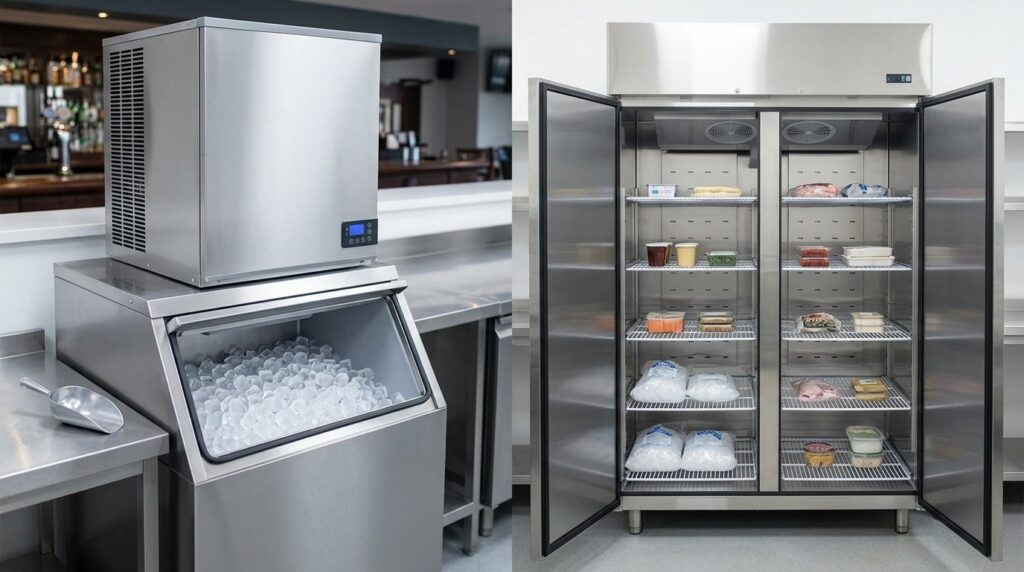
Guide to choosing between Unifrost ice bins and upright freezers for ice storage in Irish hospitality. Understand efficiency and hygiene impacts.
Unifrost Ice Storage Bin vs Upright Freezer for Ice: The Best Choice for Irish Hospitality
You store ice every service, so the choice between a purpose-built Unifrost ice storage bin and an upright freezer directly affects melt loss, staff speed, hygiene controls, and running costs. If you are currently tipping bags into a freezer or considering using a Unifrost upright freezer (like the F410SS, F620SV, F1000SV or F1300SV range) as “ice storage”, you need to know what you gain and what you risk.
This guide walks you through the practical checks that decide it in real venues: how bin design and lid discipline helps protect ice quality through a shift, what changes when ice is stored in a freezer that may also hold food, and how cleaning routines and HACCP records differ. You will also see how to size and match a Unifrost modular ice machine and bin combination, including common pairings like U165-125+B175 and U230-175+B175, versus relying on freezer space.
By the end, you will have a clear decision framework for your bar, restaurant, hotel or function venue, including when a freezer can make sense as emergency backup ice storage and the trade-offs you should plan for.
Core Differences Between Ice Storage Bins and Upright Freezers
An ice storage bin and an upright freezer can both hold ice, but they are built for different jobs in Irish hospitality.
A purpose-built ice bin is designed to receive ice from a modular ice machine, protect it as a food product, and let staff dispense it quickly. An upright freezer is designed to freeze and store mixed products behind an active refrigeration system, usually on shelves, with frequent door openings.
That matters because ice is treated as food and needs the same hygiene control as anything else. If you are using a freezer as an ice store, you increase the risk of cross-contamination, especially if it also holds food. Hygiene obligations under rules such as Regulation (EC) No 852/2004, Annex II still apply.
In practice, the choice comes down to this: do you need reliable, at-pace ice dispense at the bar, or do you need general cold storage and you are trying to make do with the space you already have.
How do ice storage bins and upright freezers compare overall?
Unifrost ice storage bins (for example B175, B275AIB, B375, and B175OG/B375OG variants) are part of a modular setup. The bin is the storage and dispense base, and the ice machine head sits above and drops ice into it.
Unifrost upright freezers (for example F410SS, F620SV, F1000SV, F1300SV, F1310SV, plus undercounter F200SN) are general-purpose freezers. They are not designed around clean ice dispense or around separating meltwater from usable ice.
You feel the difference at peak service. A bin is built for quick open, scoop, close, and back into service. A freezer usually means longer door-open time, awkward reach, and more chances for hands, packaging, or other products to contact the ice.
Ice storage bins (purpose-built for ice)
A proper ice bin is designed around three practical outcomes:
Lower melt (insulation and a tight lid help slow melt, without trying to actively freeze the ice)
Dedicated, food-contact storage (ice is kept separate from other products)
Fast, repeatable access (less time with the lid open and less mess)
They also suit the cleaning routine you actually have time to do. You typically have a tight-fitting lid, a liner intended for repeated wipe-downs, and a drain arrangement designed to move meltwater away, rather than letting it sit in the bottom.
When you pair a modular head with a matched bin (for example U165-125+B175 or U230-175+B175), you are setting up a single ice station that produces, stores, and dispenses where the ice is used.
Upright freezers (useful cold storage, awkward ice storage)
An upright freezer is excellent for food storage, but it is not laid out for ice as an ingredient. Shelving, door format, and airflow are designed for boxed and tray product. To store ice, you end up improvising with bags, tubs, or gastronorms, which is where consistency and hygiene control tend to slip.
There is also a workflow issue. If ice lives in a freezer across the kitchen or in a back store, every top-up becomes a stock run. That adds labour, slows service, and increases the chance of spills when staff are moving fast.
Which is best for you?
If you are serving cocktails, spirits and mixers, draught, or high volumes of soft drinks, a dedicated ice bin is usually the better fit. It is designed for safe, fast, repeatable dispense.
If you only need occasional bagged ice for low-pressure trade, or you need a short-term fallback for an event, a freezer can work, but treat it as a compromise. Keep ice strictly separated from raw foods and strong odours, and avoid turning it into a mixed-use “everything” cabinet.
A good sense check is simple: do you want staff handling ice as a clean, dedicated ingredient at one station, or as stock that sits alongside everything else in cold storage? That decision is what shows up later in service speed, melt losses, and day-to-day hygiene routines.
Performance in Hospitality Settings
Purpose-built ice storage bins usually beat an upright freezer for day-to-day bar service in Ireland for one simple reason: a bin is designed for frequent access and clean handling, while a freezer is designed for deep-frozen storage with as little door-opening as possible.
Once you start using a freezer like a service drawer, warm-air ingress and moisture become part of the routine, which increases refrigeration load and contributes to clumping. SEAI guidance highlights air leakage and door control as key drivers of refrigeration energy use in refrigerated spaces, which is exactly the behaviour you get in a busy bar when a freezer door is in constant use (SEAI Energy Audit Handbook).
A freezer can still have a place as backup, but treat ice as a food item in your HACCP controls. It needs protection from contamination and hygienic handling in line with food hygiene requirements (FSAI guidance on Regulation (EC) No 852/2004).
Ice preservation under real bar pressure (clumping, melt, and “usable” ice)
In practice, the issue is rarely “will it stay frozen?” It’s “will it still be usable at 8pm on a Saturday when two or three people are working the same space?”
A proper ice bin is built around fast access and controlled holding. You lift the lid, scoop, close, and move on. That simple workflow reduces the time the storage is open, reduces handling, and helps keep cubes free-flowing so you are not breaking up blocks mid-service.
An upright freezer tends to create the opposite pattern. Regular door openings pull in warm, humid air. Moisture then refreezes on the ice and packaging, leading to clumping, slower scoops, more breakage, and more ice dumped at the sink because it is stuck together or contaminated from poor handling.
Energy use: passive storage versus active refrigeration
An ice storage bin is insulated storage. It is there to hold ice that has already been made, usually sitting under a modular ice head. The bin itself is not trying to pull product down to temperature during service, so your main electrical load is the ice machine operating on its normal cycle.
An upright freezer is active refrigeration running constantly, and it pays a penalty every time the door opens. In a high-throughput bar, that turns into a genuine running-cost factor, because staff will open it briefly and often. SEAI’s point about air leakage and door control driving refrigeration load maps directly onto this kind of use (SEAI Energy Audit Handbook).
High-throughput suitability (speed, hygiene, and workflow)
In a cocktail bar, hotel bar, or function venue, speed and repeatability matter. The storage format needs to support good habits: open, scoop, close, back to service. That is what ice bins are for.
A freezer is a poor workflow tool for ice because it is often placed wherever there is space, not where service needs it. It also invites mixed-use storage. Once staff start sharing it with food or other items, you get more door traffic, more cross-contamination risk, and less control over what happens to a food-contact product like ice.
Where each option actually fits in Irish venues
A practical rule-of-thumb:
Choose an ice storage bin when ice is a core service input and you need fast access, predictable cube condition, and a dedicated, food-contact storage point under HACCP controls.
Consider an upright freezer only as backup storage for sealed, bagged ice, or where ice demand is occasional and you can keep the freezer dedicated, clean, and controlled.
This becomes clearer when you size storage to your peak hour, not your average day, and when you place the ice point beside the glassware, bottle coolers, and garnish station so staff are not walking away from the line mid-service.
Operational Considerations
Run ice like a food product, not like “something cold we keep in the freezer”. If you want an ice storage bin to outperform an upright freezer in day-to-day Irish service, the difference comes down to three things: a dedicated ice point, simple hygiene rules that staff will actually follow, and a cleaning routine you can record under HACCP.
Start by deciding where ice is used (cocktail station, soft drinks, kitchen pass) and design a single, obvious route for staff to get it. Then set basic controls: potable-water ice only, a dedicated scoop, and a lid-closed habit so hands, glassware and packaging do not end up in the ice. If you keep an upright freezer as emergency backup, treat it as temporary and tighten up labelling and handling so it does not become the default.
1. Put the ice point where service happens (not on the freezer run)
A dedicated bin under a modular head unit usually gives the cleanest workflow behind a busy bar. Staff open the lid, scoop, serve, close the lid and they are back on the rail. Once ice lives in an upright freezer, you add extra trips, more door-open time and more chances for cross-contamination from whatever else is being handled around that freezer.
Place the bin so staff are not reaching across garnishes, glass racks or sink splash zones. In a tight Irish back bar, the “best” position is often the one that stops people carrying ice across a wet floor during peak trade. That is a speed issue and a slip risk.
Treat the bin as part of the station footprint from day one. Allow clearance to open the lid fully, space to empty and clean it properly, and a sensible route for drainage. If you cannot access it easily, it will not get deep-cleaned when you are flat out in July and August.
2. Set hygiene rules that match how ice is inspected in Ireland
In Ireland, your HSE Environmental Health Officer assesses you against food hygiene requirements. Ice used in drinks, or in contact with food, is treated as food. FSAI guidance is clear that where ice contacts food, it must be made from potable water (see FSAI Guidance Note No. 16: “Where ice is used in contact with food, it must be made of potable water”).
<https://www.fsai.ie/getattachment/34a65458-9661-4d84-afb8-e1ea10e3ed6d/gn-16-rev-2-final-accessible.pdf?lang=en-IE>
A purpose-built bin makes the basics easier to enforce than a shared freezer:
Lid closed between uses, reducing airborne contamination and slowing melt.
One dedicated scoop, rather than hands, glassware or “whatever is clean”.
No mixed storage, so you avoid the temptation to park garnish tubs, unopened packs or bar towels beside the ice.
If you use a freezer as a short-term backup, make it clearly labelled and ice-only for that period. The main risk is rarely temperature. It is people: grabbing ice while handling packaging, raw ingredients or dirty glassware is how “ice as food” controls fall apart.
3. Build a cleaning routine you can execute and record under HACCP
Treat the bin interior, lid underside, scoop and any ice-contact chute as food-contact surfaces. Keep the method simple enough that it still gets done on a busy week, and write it into your HACCP-based food safety management system. FSAI guidance on good hygiene practice supports the expectation that food contact surfaces are cleaned and sanitised before use.
<https://www.fsai.ie/getattachment/f3efa69d-8010-4a7c-b093-7b53700bfb81/guide-to-good-hygiene-practice-cml-final-2014.pdf?lang=en-IE>
A dedicated bin also makes record-keeping clearer. You can log “ice system cleaning” as one item and schedule it for quieter windows (early morning in hotels, or late afternoon before the bar ramps up). With a freezer, cleaning records often get muddled because it is also general food storage, and it is not always clear whether the entry refers to the whole cabinet or just the ice area.
The scoop is where many sites slip. If it lives in the ice, it will sink, get handled with wet hands, and quickly becomes the weak link. Store it clean and dry in a holder or container beside the bin, and make “scoop stored correctly” a quick visual check at shift handover.
4. Reduce disruption and decide what “backup” really means
Ice bins are mechanically simple, but they still need basic operational attention: keep drainage clear, keep lids and hinges clean, and ensure you can empty the bin fully for periodic deep cleans. If your layout makes that awkward, cleaning gets postponed, and that is when quality issues tend to show up.
With modular setups (head unit plus bin), fault-finding is usually more straightforward. If ice quality drops, you can check water supply and filtration, bin hygiene, and machine cleaning separately, rather than blaming the freezer for everything.
If your demand swings hard (live music weekends, functions, tourist-season peaks), agree your backup plan in advance. A freezer can be part of that plan, but it is a poor “main” storage method in a busy operation because it typically slows service, weakens hygiene control, and complicates cleaning records.
Decision Guide for Different Venue Types
The right setup depends on how often you use ice, where it’s handled, and how well your hygiene routine holds up during a rush. Irish food safety expectations around cold storage are clear, for example the FSAI guidance that freezers should be maintained at -18°C or colder. But “cold enough” is not the same as “set up for food-contact ice”. In practice, the decision is mostly about workflow: how many hands touch the ice, how often doors are opened, and whether ice is sharing space with other foods.
Cocktail bar or high-volume wet-led pub: go for a modular ice machine with a dedicated bin (Unifrost bins such as B175, B275AIB, B375, including “OG” variants, and common combinations like U165-125 + B175 or U230-175 + B175). Avoid making an upright freezer (for example F410SS, F620SV, F1000SV, F1300SV-series) your day-to-day service ice solution.
Restaurant with steady covers, limited cocktail output: a bin is still the cleaner operational choice if ice is going into drinks, but you can often size smaller and focus on access, cleaning, and staff routine rather than maximum storage.
Hotel bar, function venue, wedding trade: prioritise storage buffer and recovery during peaks. That usually points to a modular head with a larger bin (often stepping up from B175 towards B275AIB or B375, depending on event demand) rather than trying to stockpile bagged ice in a freezer.
Café, deli, small takeaway with occasional iced drinks: if ice is genuinely occasional and you are not running an ice machine, an undercounter freezer like F200SN can work for sealed, bagged ice. It often becomes a false economy once iced drinks move from “occasional” to “daily”.
Back-of-house backup only: an upright freezer can be a contingency store for sealed bags during exceptional peaks, but it should not be your main ice handling point if the ice is going into drinks.
Busy bars and cocktail-led venues (fast draw, high handling)
If you’re pulling ice constantly, the biggest win from a bin is not “colder ice”. It’s controlled access: a dedicated lid, a dedicated scoop, and a food-contact area that’s designed to be cleaned properly, without competing with frozen chips, allergens, raw foods, or someone “just grabbing something quickly”.
An upright freezer tends to become a bottleneck at the worst possible time. Bags tear, ice clumps, doors get left ajar during a rush, and staff end up treating ice like stock rather than like food. In a back bar fit-out, bin position matters. If the bartender can scoop without leaving the well or turning away from service, you’ll feel the difference every busy night.
Restaurants (predictable service, mixed BOH and FOH needs)
In most restaurants, ice demand is spiky but fairly predictable: water jugs, soft drinks, a modest cocktail list, and occasional ice baths for service. If ice is going into drinks, a bin gives you a cleaner HACCP story because it separates customer ice from general frozen storage. It’s also easier to assign ownership for cleaning and make it part of routine checks.
The common mistake is sizing for an “average” night. If Saturdays are heavy, or you regularly do communions and confirmations, size to your peaks. A sensible approach is consistent production into a correctly sized bin, then reducing waste and melt through good workflow, rather than over-producing and trying to store ice like inventory in a freezer.
Hotels and function venues (peaks, events, and seasonal trade)
Hotels can tick along midweek and then get hit by function-level ice demand at the weekend. That’s a different workload. A larger dedicated bin paired with your modular head unit is usually the safer option because it creates buffer without turning ice into a stock movement job across corridors and kitchens.
If you’re tempted to use a large upright freezer (for example F1000SV, F1300SV, F1310SV and similar) as the main ice store, be honest about what it means operationally: someone has to bag ice, label it, protect it from taint and cross-contact, and keep the freezer organised under pressure. It can work in a disciplined operation, but it’s labour-heavy and tends to fall apart when staffing is tight.
Small cafés, delis, and takeaways (space-limited, labour-limited)
If you sell a few iced coffees a day, you can usually manage with sealed, bought-in ice in a freezer, as long as it stays sealed and segregated. Once you’re opening bags, decanting into tubs, or sharing a scoop between ice and other prep tasks, you’ve moved into “ice is a food” territory, and the cleaning and controls get harder fast.
In compact service areas, a bin-led setup can also improve speed because staff are not stepping away, opening a freezer door, and rummaging. In a small unit, those seconds add up because it’s often the same person taking payment, making drinks, and plating food.
When an upright freezer is acceptable as backup ice storage (and the trade-offs)
An upright freezer can be a reasonable emergency overflow, especially for summer weekends or to protect service during an ice machine outage. The trade-offs are straightforward: more handling steps, higher risk of odour taint and cross-contact if other foods are stored nearby, and more clumping once bags are opened and re-stored.
If you keep a freezer as backup, treat ice like its own product line. Keep it sealed, keep it physically separate from raw foods and strong-odour items, and make one person accountable for how ice is packed, rotated, and handled. Otherwise it becomes “everyone’s job”, which usually means nobody’s job.
A simple rule works in most venues: if ice is a daily, service-critical ingredient, a dedicated Unifrost bin matched to your modular head unit is usually the cleaner, less stressful way to run it, especially when trading pressure is real.
Integrating Unifrost Equipment for Optimal Ice Management
A Unifrost modular ice machine paired with a matching Unifrost storage bin is usually the simplest way to keep up with service without blurring food safety lines. In Ireland, ice needs to be treated as food from production through to handling, so separation, a lid that stays closed, and a proper scoop routine are not “nice to haves”. They are basic controls you can stand over in a HACCP check, as reflected in the FSAI guidance that ice should be handled like food (FSAI Guidance Note No. 16).
The practical part is layout. The right bin in the wrong place becomes a bottleneck, or worse, ends up being handled like a general-purpose container when you are under pressure.
Pair the bin format with how you actually use ice
If ice is going straight into drinks all night, treat the bin as front-of-house production, not back-of-house storage. That means choosing a Unifrost bin format that suits your draw and positioning it so staff can open the lid, scoop, and close it again without stepping away from the well or crossing a prep route.
Unifrost options in this space include bins from the B175, B275AIB and B375 families, and packaged head-and-bin combinations such as U165-125+B175 or U230-175+B175. The key is not the model code. It’s whether the bin lives where the ice is used, and whether the workflow encourages the lid to be closed between scoops.
Where time gets lost is in “ice trips”: walking to a back kitchen freezer, digging out bags, then weaving back through the pass. A dedicated bin at point of use cuts steps and makes it easier to keep handling consistent during a rush.
Make the bin work with your back bar refrigeration, not against it
Think in zones. Bottle coolers and undercounter fridges are designed around frequent door openings. An ice bin is designed around frequent lid openings. Put them close enough that nobody queues for ice, but far enough from glasswash splash, garnish boards, and customer traffic that the lid, scoop, and landing area stay clean.
A simple rule that works in a lot of Irish bars is to keep the bin in a “dry lane” with clear space for the scoop and any ice bucket kit. If the bin sits where cooler doors constantly clip the operator, that is when lids get left open and scoops end up parked wherever there is room.
Size the modular head unit and bin for peak draw, not average trade
Many venues size for daily production and forget the real stress point: a 60 to 120 minute peak where you cannot afford to run short or wait for recovery.
Size your modular head and bin combination around your biggest predictable hits: warm weekends, match days, weddings, and conference breaks. If you are comparing combinations like U165-125+B175 versus stepping up storage options in the B275AIB or B375 families, extra storage is often what protects service first. Higher production capacity tends to protect you over the full day.
Use an upright freezer as contingency only, and keep it operationally separate
A Unifrost upright freezer can make sense for emergency bagged ice, but it is a poor substitute for an ice bin in live service. Using a mixed-load freezer for ice increases the chance of cross-contamination and makes your HACCP controls harder to keep tidy, simply because the door is being opened repeatedly for a ready-to-eat product.
If you have to use a freezer as backup, keep it tight:
Keep ice in sealed bags.
Store it above raw foods.
Use a dedicated ice scoop or gloves.
Don’t decant loose ice into a shared tub inside a food freezer.
Get the small handling details right, or the system will drift
Most “ice management” problems are routine problems. The lid is left open. The scoop is not kept clean. The drain gets blocked. Staff don’t know where the bucket kit lives.
A dedicated bin makes it easier to standardise and document cleaning and sanitising, and to show clear separation between ice handling and raw food storage. In day-to-day Irish service pressure, that separation is usually the difference between a system that ticks along quietly and one that turns into nightly firefighting.
FAQs: Unifrost ice storage bin vs upright freezer for ice
Can I use a standard commercial freezer instead of an ice storage bin to hold ice?
Yes, you can store bagged ice in a commercial freezer, and some operators also use a freezer as short-term emergency backup. But for day-to-day service, a freezer is rarely a good substitute for a purpose-built ice bin.
Use a freezer only if all of the following are true:
The ice is sealed in bags (not loose ice for drinks).
The freezer is dedicated to ice only (no raw foods, no open containers, no strong odours).
You can accept slower access and more staff time during service.
If you are storing loose service ice (ice that will go straight into drinks), a dedicated Unifrost ice storage bin is the safer and more workable option because it is designed for hygienic access, drainage handling, and integration with a modular ice machine head.
How much ice storage capacity do I need for a busy bar, restaurant, or hotel?
Size storage around peak-hour draw and how often you want the machine to “catch up”.
Practical sizing approach:
Estimate peak use (busy hour): cocktails, soft drinks, water jugs, buckets, events.
Decide the buffer you want: at least 1 to 1.5 times your expected peak-hour requirement in available bin storage is a sensible starting point for many venues.
If you host functions or see strong seasonality, plan for extra reserve so the bar does not run out during a rush.
In the Unifrost range, common bin sizes used in hospitality include B175, B275AIB, and B375. If you are looking at modular combinations, factory-matched sets like U165-125+B175 or U230-175+B175 are often chosen when operators want a straightforward head-and-bin pairing without overcomplicating the spec.
If you share your covers, service style (cocktails vs pints), and whether you do events, you can usually narrow it down to one or two realistic bin options quickly.
Why are Unifrost ice storage bins a better choice than using an upright freezer for ice?
For Irish hospitality service, Unifrost ice bins are generally the better choice because they are built around fast, hygienic, high-frequency access, rather than long-term frozen storage.
Key operational advantages vs an upright freezer:
Workflow speed: A bin is designed for repeated scooping at bar height. Freezer doors, shelves, and baskets slow service and encourage poor handling.
Hygiene and compliance: A dedicated bin helps you keep a clear “ice is food” routine: separate scoop storage, less mixed-use risk, easier daily checks.
Better integration: Bins are made to sit under (or pair with) modular Unifrost ice machine heads and matched combinations, so you get a clean, service-friendly footprint.
Less “hidden” mess: Purpose-built bins manage meltwater and condensation as part of normal use, whereas freezers used for ice often end up with wet packaging, ice fragments, and contamination risks around food storage areas.
In short, an upright freezer can store frozen product well, but it is not optimised for service ice handling, which is where most problems and staff shortcuts happen.
Next step: choose the right Unifrost bin size for your service
If you are weighing up a Unifrost ice storage bin vs upright freezer for ice, the quickest way to decide is to match your peak-hour demand and service style to a realistic bin size (for example, stepping through options like B175, B275AIB, and B375, or a matched head-and-bin set).
Explore Unifrost’s range of ice storage solutions to find the best fit for your business needs, then shortlist one or two options and confirm the footprint, access side, and cleaning routine that suits your bar or kitchen layout.
Related Unifrost guides
Compare models, maintenance advice and support information related to this topic.
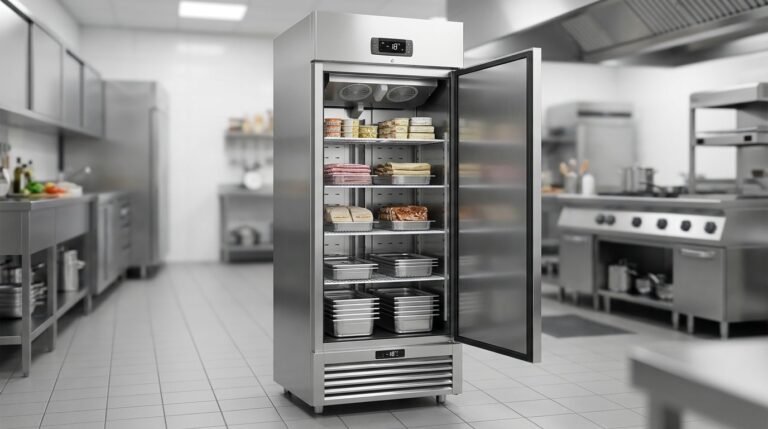
Unifrost F410SS Upright Freezer: Layout, Controller, and Energy Saving Hub
Optimize your Unifrost F410SS for layout, controller use, and energy efficiency in Irish kitchens.
Read guide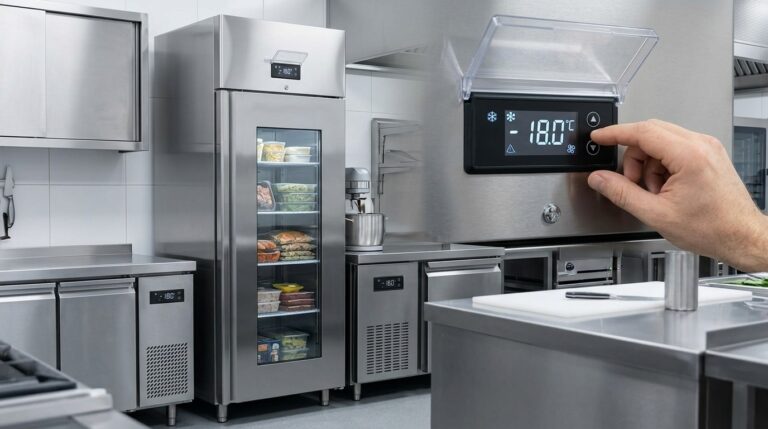
Optimising Unifrost F410SS Upright Freezer Temperature Controller Settings
Learn to adjust Unifrost F410SS freezer settings for optimal use in Ireland's hospitality sector. Improve efficiency and compliance.
Read guide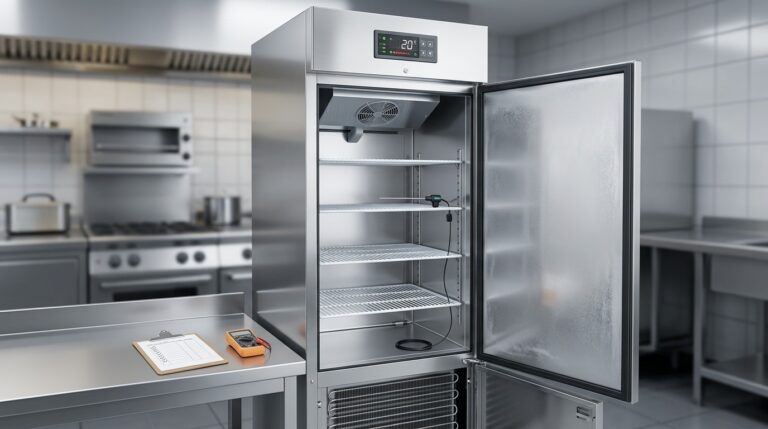
Unifrost F410SS Upright Freezer Temperature Troubleshooting Guide
Troubleshoot your Unifrost F410SS freezer's temperature issues with our expert guide for Irish kitchens. Practical, step-by-step support.
Read guideView Unifrost products on Caterboss
For current product options, pricing and availability, continue to Caterboss.