
Understanding Ambient Temperature Conditions for Unifrost Undercounter Fridge/Freezer Use in Commercial Kitchens
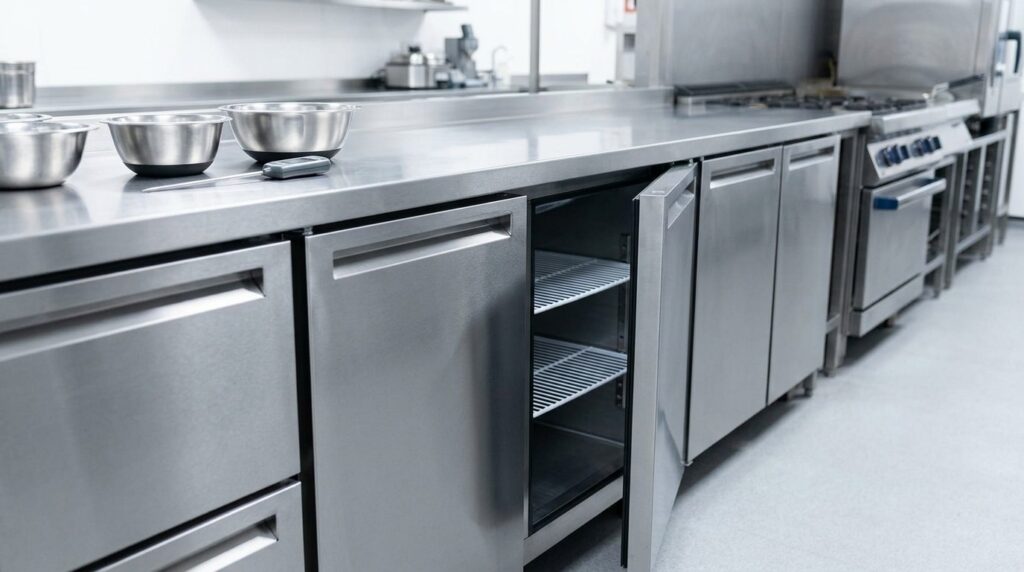
Learn how to position Unifrost undercounter fridges/freezers for best performance under typical Irish kitchen conditions.
Unifrost undercounter fridge and freezer ambient temperature: room conditions and placement
If your Unifrost undercounter fridge or freezer is running hot, icing up, cycling constantly or struggling during service, the room conditions around it are usually the reason. Ambient temperature, humidity, ventilation and how often the door is opened directly affect performance, energy cost and food safety for Unifrost undercounter fridges (R200SN/R200SVN families) and undercounter freezers (F200SN family) in busy Irish kitchens and bars.
This page helps you make the practical calls that matter before you buy, install or troubleshoot:
How to check what ambient limits apply by climate class and by the unit’s rating plate.
Where undercounter units should and should not go, including tight built-in counters, hot cook lines, dishwash areas, and colder back corridors or unheated spaces.
What clearances and airflow paths you need so the condenser can dump heat properly.
The common mistakes that increase running costs and lead to poor temperature hold.
How to factor Irish heat spikes, small kitchen layouts and compliance expectations into model choice, including when static (R200SN) versus ventilated (R200SVN) cooling makes more sense.
Why Proper Ambient Temperature Matters for Undercounter Units
Ambient temperature and room conditions dictate how hard an undercounter fridge or freezer has to work. That shows up quickly in temperature stability, energy use, and the likelihood of call-outs. When the air around the unit is too warm, or the condenser can’t breathe, it becomes harder to keep food consistently in the safe chilled zone. The FSAI advises 0°C to 5°C for fridges and chill cabinets in its guidance on storing food safely: <https://www.fsai.ie/consumer-advice/food-safety-and-hygiene/storage>.
The catch with undercounter refrigeration is that “room temperature” is often irrelevant. These units are typically squeezed into tight joinery, under hot counters, and beside equipment that dumps heat all service. The air the condenser sees at the back or base can be far warmer than the air you feel standing at the pass.
What “bad ambient” looks like in real Irish kitchens and bars
Most problems come from the fit-out, not the weather. Common culprits include:
A unit boxed in behind a plinth with no grille or ventilation gap
Pushed tight to a wall so hot air can’t escape
Installed beside a dishwasher, combi, fryer line, or a coffee machine setup that constantly vents warm air
The condenser area acting as a storage space for boxes, trays, or cleaning gear
With Unifrost undercounter models, the principle is straightforward: they’re built for commercial use, but they still need airflow and sensible placement. Treat them like “fit anywhere” appliances and you’ll drive longer run times and higher stress on the refrigeration system.
Why ambient temperature hits running costs so quickly
In a hotter environment, the unit has to reject more heat through the condenser to hold the same internal temperature. In practice, that usually means longer compressor run time and less recovery time between cycles. It is why a unit that feels fine in spring can look expensive during warmer spells, or when the kitchen is flat-out and extraction is struggling.
It also explains the common pattern: “fine overnight, but struggles from 6pm to close”. The load isn’t just the room temperature. It’s frequent door openings, warm deliveries going in, and hot air trapped around the condenser under the counter.
Why it affects longevity and call-outs, not just temperature
Undercounter units live in the harshest spot in the building: low level, dusty, and right where staff knock skirting, kick debris, and park stock. High ambient temperature plus restricted ventilation raises operating temperatures inside the unit, and the early warning signs are usually operational:
Louder fan noise
More frequent cycling
Intermittent high temperature alarms
Ignore it and you increase the risk of avoidable service visits linked to overheated compressors, dirty or blocked condensers, and premature component failure.
If you’re trying to stay HACCP-tight in a small Irish kitchen, the practical takeaway is simple: get the placement and airflow right, and keep the condenser area clean. That is usually cheaper than chasing performance by turning the thermostat down and hoping for the best.
Why undercounter placement is rarely neutral
With undercounter refrigeration, placement decisions are performance decisions. A unit in a cool prep area with decent ventilation will behave very differently to the same model trapped in sealed joinery beside a heat source, even though both are “indoors”.
This is where the unit’s stated operating conditions and climate class matter. Design around what the rating plate expects, and what your installation actually looks like in service, rather than assuming ideal room temperature.
Key Factors to Consider: Climate Class and Placement
Climate class tells you the ambient temperature and humidity a commercial fridge or freezer is tested to work in while still holding safe internal temperatures. It matters with undercounter units because they dump heat back into the room. Put one into a hot, tight counter run with poor airflow and it can struggle, even if nothing is “wrong” with it.
One practical point: climate class is model-specific. Check the rating plate or the manual for the actual unit you are buying or installing rather than assuming every “commercial undercounter” is the same.
What “climate class” looks like in Irish hospitality terms
Think of climate class as a reality check on where the unit belongs day to day: a steady back bar, a busy pass, or beside hot kit.
In commercial refrigeration you will commonly see Class 3, 4 or 5, typically referenced against test conditions of 25°C/60% RH, 30°C/55% RH and 40°C/40% RH respectively, as summarised here: commercial refrigeration climate class summary.
If your kitchen regularly runs hotter than the unit’s class rating, you usually see it in the real world as:
longer pull-down after door openings and peak service
wider temperature swings in the cabinet
higher running costs and more compressor run time
That becomes a food safety and waste issue, not just an energy bill issue.
Recommended ambient conditions for Unifrost undercounter models (R200SN/R200SVN and F200SN)
The Unifrost R200SN/R200SVN undercounter fridges and the F200SN undercounter freezer are designed for commercial use, but they still need sensible room conditions and airflow. Treat them as indoor equipment for a controlled space, not “fit anywhere” boxes, especially if you plan to box the unit into a counter, place it in a small store, or run it in a warm prep area.
From a compliance point of view, what matters is what your food is actually held at. The FSAI’s general guidance is that chilled food should be kept between 0°C and 5°C, with fridges typically set to 3°C or 4°C to achieve that in use: FSAI temperature control guidance for caterers.
Placement rules that prevent most “it can’t hold temp” call-outs
A lot of undercounter problems come down to heat load and ventilation, especially during summer spikes or when the kitchen is flat out. Before you blame the unit, pressure-test the install.
Use this placement checklist:
Confirm the climate class on the rating plate or documentation and compare it to the hottest conditions the unit will face during service.
Avoid hot kit: don’t site it tight beside fryers, ranges, combis, dishwashers, or glasswashers unless you can create a proper heat break and an airflow path.
Don’t seal it into a dead-end: use a vented plinth or louvred door so the condenser can pull cool air in and push hot air out.
Keep the condenser area clear: dust, fluff, cardboard, tea towels, bins and boxes will all choke airflow at the worst possible time.
Watch cold locations too: if the room is unheated in winter (cold corridor, store, outbuilding), treat it as a risk location and check the specified ambient limits before storing critical stock in the unit.
That last point is easy to miss. Depending on the refrigeration design and controls, very low ambient temperatures can cause their own issues. If you are installing in an unheated area, confirm the unit’s stated ambient range first, then validate with temperature records during a cold spell.
How placement affects static (R200SN) vs ventilated (R200SVN) choice
In small Irish kitchens, basement sites, food trucks, and container cafés, the static versus ventilated decision is often about placement and workflow as much as menu.
Ventilated cabinets are generally more forgiving when you need even temperatures across shelves and you have frequent door openings.
Static cabinets can suit steadier loading patterns and may be preferred where noise, air movement, or dehydration of uncovered product is a concern.
Either way, if the unit can’t breathe or is drawing hot air off a dishwasher, you will struggle to get stable day-to-day temperatures. Decide climate class and physical placement together, then choose the cabinet type that suits how you actually trade.
Common Mistakes in Ambient Management
Undercounter refrigeration is sensitive to its surroundings. If you block airflow, box a unit into tight joinery, or install it in a space that runs too hot or too cold, it will struggle to pull down and hold safe temperatures. The usual knock-on effects are warmer product, longer run times, more noise, heavier icing, and higher electricity use. You also increase the chances of nuisance faults and early component wear.
In Irish kitchens, these issues tend to show up during busy service, warm spells, or where a unit is squeezed into cabinetry with no clear air route. They also make HACCP checks harder to keep consistent, because cabinet performance starts depending on room conditions rather than the setpoint. The FSAI HACCP guidance is built around routine monitoring and corrective action, and a struggling unit makes that routine harder to manage.
Ventilation mistakes: “it fits under the counter, so it must be fine”
A common error is pushing an undercounter fridge or freezer hard back to the wall, building it behind a solid plinth, or closing it in with tight side panels. If the heat the unit rejects cannot get out, the compressor runs longer to achieve the same internal temperature. In day-to-day terms, you’ll see higher running costs and more temperature drift when the door is opened frequently.
If you’re planning a built-in look, treat ventilation as part of the install, not an afterthought. A decorative kickboard is not the same as a proper vent path.
Placement mistakes: next to hot kit, in direct sun, or in the dishwasher steam path
Siting refrigeration beside a combi, range, fryer, or glasswasher creates a local hot zone around the condenser. The result is slower pull-down after deliveries, softer temperatures during peak service, and more icing when warm, moist air gets dragged in through frequent openings.
If you cannot change the layout, you normally need a heat break and a real airflow route for the condenser, not just “a bit of space” that gets blocked by bins or cleaning gear.
Low-ambient mistakes: unheated corridors, stores, smoking areas, and winter shut-down habits
A space can be too cold as well as too warm. Low ambient conditions can cause odd cycling behaviour, particularly on freezers, because most systems are designed to operate within a specified ambient range rather than near outdoor winter temperatures.
The awkward part is that it may not look wrong at a glance. It often shows up on the temperature log as wider swings. If you drop heating overnight in winter, treat it as an installation and compliance question, not just an energy-saving idea. What matters is the unit’s rated operating conditions and the coldest temperature the room actually reaches.
Build-in mistakes: sealed joinery that turns the cavity into a heat box
In tight Irish kitchen footprints, a “snug fit” is often mistaken for a correct installation. If warm air cannot escape and cooler air cannot enter, the cavity becomes a heat box. Performance typically degrades over time as dust and grease build up on the condenser, making the airflow problem even worse.
The practical fix is to design ventilation into the furniture, not just around the appliance. If you are specifying joinery, it’s worth confirming airflow requirements before the cabinet is built, not after the fridge starts struggling.
If you’re unsure whether a site is too warm, too cold, or too tight for an undercounter unit, it’s usually quicker to share the layout and location and choose the right format up front than to fight poor performance later.
Tailoring Ambient Conditions to Irish Commercial Settings
Set your undercounter fridge or freezer up for the conditions it will actually see, not the conditions you wish you had. In most Irish kitchens and bars the weak points are predictable: heat soak from nearby kit, poor airflow in tight joinery, and service habits that dump heat into the cabinet faster than it can pull it back down. Get those right and you avoid the common “it’s struggling” callout that’s really an installation or operating issue.
1. Measure the “real ambient” where the unit will sit, not the room average
Undercounter positions are often the hottest part of the building: beside the fryer line, under a pass with heat lamps, or in a sealed underbar cabinet with little air movement. Take a couple of readings at the unit’s installed height during a normal service and again near close-down. A kitchen that feels fine at head height can be running much hotter down in the dead air under counters.
From a food safety point of view, work back from the temperatures you need to hold. The FSAI guidance commonly used for HACCP routines is 5°C or below for chilled food and -18°C or colder for frozen storage:
Chilling food safely (FSAI): https://www.fsai.ie/business-advice/food-safety-training/food-safety-factsheets/chilling-food-safely
Freezing and frozen storage (FSAI): https://www.fsai.ie/business-advice/food-safety-training/food-safety-factsheets/freezing-food
If the air around the unit is regularly high, you have less recovery headroom after door openings and warm loading. That’s when “holds temperature” turns into “catches up eventually”.
2. Choose a location that avoids constant heat soak
The classic undercounter mistake is treating refrigeration as a gap-filler beside hot equipment. Keep the unit away from dishwasher and glasswasher discharge, combi vents, oven sides, fryer flues, and other appliances that throw heat into the same pocket of air.
Behind bars, tight joinery is the usual culprit. A unit pushed into a sealed counter beside a glasswasher or other heat source can sit in a warm pocket all night. If you cannot avoid a warmer spot, plan separation and ventilation upfront rather than hoping it will be fine. “Chancing it” normally shows up later as longer run times, temperature drift during peak service, and higher running costs.
3. Build in airflow from day one (especially in tight counters, bars, and kiosks)
Undercounter units are not “fit anywhere”. They need a clear path for cool air in and warm air out, otherwise the condenser area runs hot, the compressor works harder, and performance drops when you need it most.
This comes up constantly in Irish layouts: basement kitchens with limited ventilation, container cafés and food trucks where the whole space warms quickly, and older pubs where underbar cabinets were built for dry storage rather than refrigeration. If you’re boxing a unit into joinery, leave proper ventilation and avoid sealing it into a dead cavity. The goal is steady air exchange around the refrigeration system, not just a tidy finish.
4. Match operating habits to the room, especially during peak service and warm spells
Ambient problems are often service-pattern problems in disguise. In busy cafés and delis, repeated door openings and loading warm deliveries during lunch can make any undercounter look underpowered because you’re adding heat faster than the system can remove it.
Simple changes make a noticeable difference:
Load stock at quieter times where possible.
Pre-chill items before loading when you can.
Keep doors closed between picks, and don’t portion with the door open.
If you’re choosing between static and ventilated undercounter formats, think in terms of use rather than labels. Frequent in-and-out access typically benefits from faster, more even recovery. Calmer “storage only” use can suit simpler setups, provided the cabinet isn’t being hit with constant warm loading.
5. Don’t ignore “too cold” rooms in winter
Not every Irish issue is a hot kitchen. Unheated stores, back corridors near delivery doors, and semi-outdoor structures can drop very cold overnight. That can change how refrigeration cycles and defrost behaves, especially if the unit was intended for a normal, stable indoor trading space.
If you’re turning heating down hard overnight, treat it as an operational change that needs a quick check, not an automatic saving. Log product temperatures for a week. If you see wider swings, nuisance icing, or slower recovery, the practical fix is usually a more stable location or a different spec, rather than forcing the installation to fight the environment.
6. Add two quick ambient-related checks to your weekly routine
When an undercounter fridge or freezer is “struggling”, the early signs are usually consistent: longer run time, the area around the unit feeling unusually warm, or a performance dip that happens at the same time every day (often your hottest service window). That points to airflow restriction, heat soak, or a dirty condenser more often than a sudden component failure.
Two habits prevent a lot of callouts:
Keep vents and grilles clear of boxes, linens, bar mats, and stock.
Check for dust and grease build-up where the unit draws air, especially in kitchens with flour and fryer load, and underbar spaces that become a dumping ground during service.
Once you’ve measured the real ambient and protected airflow, placement rules and climate class limits are much easier to interpret. More importantly, the unit will behave predictably during the hours you actually trade.
Ensuring Compliance and Performance During Climate Variations
Keep the unit in a stable, ventilated position, then verify food temperatures with a calibrated probe rather than relying on the display alone. During hot spells and busy services, tighten monitoring and record clear corrective actions in your HACCP checks. If you cannot hold safe temperatures consistently, treat it as a food safety issue first and a refrigeration problem second.
1. Set targets around food temperature, not the dial
For chilled storage, keep food between 0°C and 5°C, in line with FSAI guidance. For frozen storage, plan for -18°C or colder, per FSAI temperature control guidance.
Practically, this means avoiding “dial chasing” when the kitchen gets warmer or colder. Pick a sensible cabinet setpoint, then confirm the food is on target using your probe. Adjust only if your measured food temperatures are drifting.
2. Increase monitoring when the kitchen is under pressure
When ambient temperature rises, undercounter units will run longer and recover more slowly after door openings, especially on a tight cook line or behind a bar. In those conditions, check and record temperatures more often. What matters for compliance is what you can show in your HACCP records, and FSAI is clear on using a calibrated probe thermometer and recording the measured temperature (source).
If the undercounter is acting as a service fridge, choose one “sentinel” item you regularly handle (for example milk, cooked meats, sauces) and probe it:
start of service
mid service
close
For a freezer, check a realistic worst-case spot: the area you load most often, not the back corner that never gets opened.
3. Manage heat load and airflow, especially if the unit is built-in
Undercounter refrigeration is sensitive to ventilation and how heat is allowed to escape. Your job is to stop heat building up around the system: keep vents clear, avoid boxing the unit into a dead-end cabinet, and do not park it beside hot equipment (dishwashers, ovens, fryers) unless you have a proper gap and a clear route for hot air to leave.
If you are integrating the unit into joinery, plan permanent air paths rather than hoping “it’ll breathe through the gaps”. A vented plinth or louvred door can be the difference between steady compliance and a fridge that creeps above target temperatures every Friday night.
4. Use a clear corrective-action routine when temperatures drift
If a check shows chilled food above 5°C, or frozen food warmer than your target, act immediately and record what you did, not just the number.
Start with the common real-world causes that show up during Irish weather swings and busy service:
doors not fully closed during service
hot product loaded straight in
vents blocked by cardboard or packaging
condenser area fouled with dust/grease
unit pushed hard back against a wall
kitchen hotter than normal due to extraction problems
Move high-risk items to a known-good fridge or coldroom first. Then stabilise the undercounter by reducing door openings and load, improving ventilation, and allowing recovery time. If it repeats across multiple checks, treat it as a placement or capacity issue that needs a layout change or a different unit specification, not a one-off “bad reading”.
5. Protect performance with maintenance that prevents warm-weather failures
Many “can’t hold temperature in the heat” issues come down to airflow and heat rejection rather than a sudden breakdown. Two habits prevent a lot of avoidable problems:
keep the condenser area free of dust and grease
keep designed vents unobstructed
Finally, keep your measuring kit honest. FSAI advises checking thermometer accuracy at least twice a year as part of calibration (source). If you cannot trust your probe, you cannot prove compliance during the one week of the year when the kitchen hits 30°C and everything gets tested.
Once your monitoring and corrective-action routine holds up in real service, you will have a clearer view of whether your current placement and room conditions suit an undercounter unit, or whether you need to change layout, ventilation, or refrigeration format.
Connecting Ambient Temperature to Unifrost Product Selection
The right Unifrost undercounter model depends as much on where it’s going as it does on litres or internal layout. Small commercial cabinets are more sensitive to heat build-up and frequent door openings than most people expect. The Food Safety Authority of Ireland is clear that fridges and chilled display cabinets should hold food at 0°C to 5°C, which is the target you’re trying to protect during busy service and warm spells (FSAI guidance on fridge temperatures).
In real Irish kitchens, “ambient” isn’t one neat number. The air behind an undercounter can be far hotter than the room thermometer, especially when it’s pushed tight under a worktop beside hot equipment. That’s why Unifrost’s own FAQs point to ventilation, placement and door-opening patterns as key drivers of both performance and running costs.
Start with the room, then choose a fridge or freezer you can actually keep on temperature
If the unit is going into a genuinely hot spot, a small undercounter that looks fine on paper can end up running flat out. You’ll typically notice:
cabinet temperature creeping during peak service
slow pull-down after door openings
higher electricity use
heavier icing on freezers
At that point, the decision isn’t “which size Unifrost?” so much as “is an undercounter viable in this location?”. If you can’t give it airflow, or the area runs hot most days, it can be smarter to shift primary cold storage to a cooler prep area and use the undercounter position for back-up stock, lower-risk items, or short service windows.
Static (R200SN) vs ventilated (R200SVN): choose based on heat load and door use
Within the Unifrost undercounter fridge range, the practical choice is usually static cooled (R200SN / R200SNOG) versus ventilated (R200SVN / R200SVNOG). Ambient conditions and working habits push you one way or the other:
If the kitchen is warm or humid and the door is opened constantly (sandwich station, garnish, dairy top-ups), a ventilated cabinet is generally the safer fit because it tends to recover temperature faster after openings and copes better with uneven loading.
If you want gentler storage and you’re disciplined about loading and door time (prep kitchen, pastry, items prone to drying), a static cabinet can suit, but it’s typically less forgiving when the room is hot and the cabinet is packed.
In practice, “busy service” matters more than the spec sheet. A quiet site opening the door a handful of times an hour can live with choices that a high-volume café or bar will quickly punish.
Freezer placement is less forgiving, so keep the F200SN in the coolest realistic spot
Undercounter freezers such as the Unifrost F200SN / F200SNOG have a tougher job than fridges. High ambient temperatures make that job harder. If you place an undercounter freezer hard against a wall, inside sealed joinery, or beside a dishwasher dumping heat and steam, you’re usually signing up for higher running costs and a greater chance of temperature alarms or excessive icing.
For bars and cafés, keep an undercounter freezer away from the hottest “wet heat” zones (dishwash area, combi vent plume, tight corners behind coffee kit). A drier, better-ventilated back bar or prep run is normally a safer home. If you can’t change the location, think about how you’ll ventilate the counter furniture, not just which freezer model to buy.
“Built under the counter” isn’t the same as “boxed in”
A lot of undercounter problems blamed on the cabinet are really joinery decisions. When warm air can’t escape, the condenser area runs hotter, the compressor runs longer, and temperature stability suffers right when you need it most.
If you’re designing cabinetry around a Unifrost undercounter, treat airflow as part of the spec. In practical terms, that means allowing ventilation openings and clear air paths, and avoiding dead-end voids that trap hot air around the back and sides of the unit.
How to decide quickly in Irish sites with awkward ambients (basements, food trucks, container cafés)
These are the sites where temperature and humidity swing the most, and where undercounter units take the most punishment.
If the space is small and heat-soaked, lean towards the more service-tolerant option in the Unifrost undercounter fridge range (typically ventilated R200SVN / R200SVNOG) and be conservative on loading and door time.
If it’s cooler but damp, pay closer attention to icing risk, door seals, and what happens when moisture repeatedly enters during service.
If it’s unheated or semi-outdoor, don’t assume any commercial undercounter is “fit anywhere” without checking the unit’s rating plate and installation guidance for ambient limits.
This is where guessing wastes money. Confirm the unit’s climate class and permitted ambient range on the data label, then place it where those conditions are actually met in day-to-day trading.
FAQs: ambient temperature, climate class and ventilation
Can a commercial undercounter fridge or freezer be installed in any room, or are there limits on ambient temperature?
Not in any room. Commercial undercounter units are designed to work within a stated ambient temperature range. If the room is hotter than the unit’s rating, it may struggle to hold safe food temperatures, run for longer, and wear components faster. If the room is very cold (for example an unheated store), some fridges and freezers can also behave unpredictably because the system is calibrated for “normal” indoor conditions.
Best practice: check the unit’s rating plate or manual for its ambient limits (often shown as a climate class), then place it away from direct heat sources (cook lines, dishwashers, sunny windows) and ensure it has clear airflow.
What does “climate class” mean on a fridge/freezer, and what ambient temperature range is it designed for?
Climate class is the manufacturer’s declaration of the room temperature conditions a fridge or freezer is designed to operate in while maintaining performance.
In commercial catering, you’ll commonly see classes such as 3, 4, and 5 (often aligned with typical EN/ISO test conditions). As a practical rule of thumb:
Class 3 is for standard indoor environments.
Class 4 is for warmer commercial kitchens.
Class 5 is for very hot kitchen conditions.
Because exact limits can vary by model and standard, treat the label/manual on your specific unit as the source of truth. If you are unsure, note the model number and check the data label before you commit to an installation location.
How much ventilation space do I need around an undercounter fridge or freezer for it to work properly?
You need unrestricted airflow to the condenser and the unit’s air inlets/outlets. Most real-world “undercounter failures” come from being boxed into tight joinery with nowhere for hot air to escape.
Practical installation tips that prevent callouts:
Do not block the front grille or kick-vent (if fitted). Keep it clear of mats, packaging, and dust build-up.
Avoid sealing the unit into a closed cupboard. If it must be built-in, use louvred/vented plinths, vented doors, or high and low vents so heat can leave the cavity.
Leave breathing room behind and above where possible and avoid hard contact with insulation, cardboard, or soft materials that trap heat.
After install, do a quick check: if the cavity becomes noticeably hot during service, ventilation is likely insufficient.
Always follow the clearances in the Unifrost manual for your specific model where stated.
Next step: match the unit to your room conditions
If your undercounter fridge or freezer is going into a hot kitchen line, a tight built-in counter, or a space with fluctuating temperatures, it is worth choosing a unit specifically suited to those ambient conditions.
Browse the Unifrost Commercial Fridges Selection to compare undercounter options and narrow down models that fit how and where you actually operate day to day.
Related Unifrost guides
Compare models, maintenance advice and support information related to this topic.
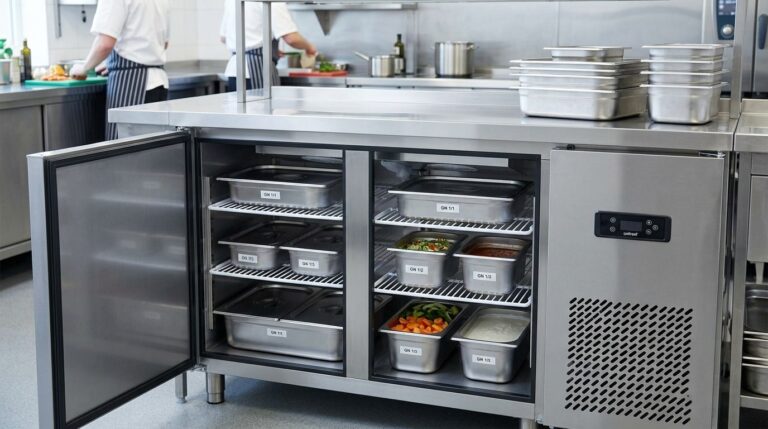
Setting Up Unifrost Undercounter Fridge & Freezer with GN Pans
Optimize your Unifrost undercounter fridge/freezer by using GN pans efficiently in Irish kitchens.
Read guide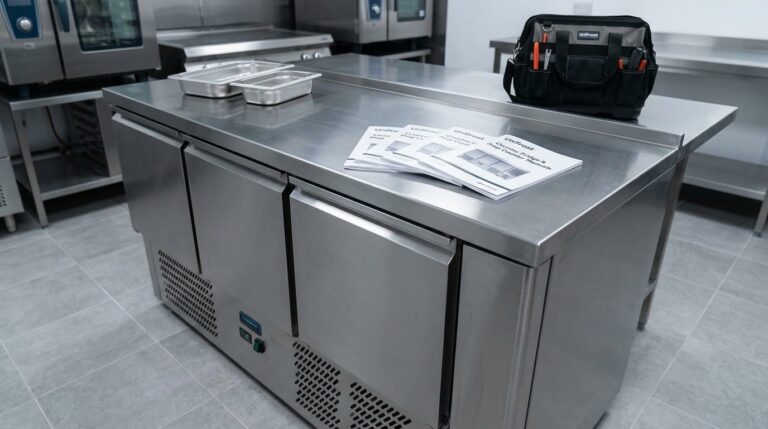
Unifrost Counter Fridge Prep Counter Saladette Manuals and Installation Support
Manuals, controller guidance, setup checks and troubleshooting help for Unifrost counter fridges, prep counters and saladettes.
Read guideCompare Unifrost freezer options on Caterboss
For current product options, pricing and availability, continue to Caterboss.