
Unifrost Upright Fridge Freezer: Summer Performance & Overheating Troubleshooting Guide
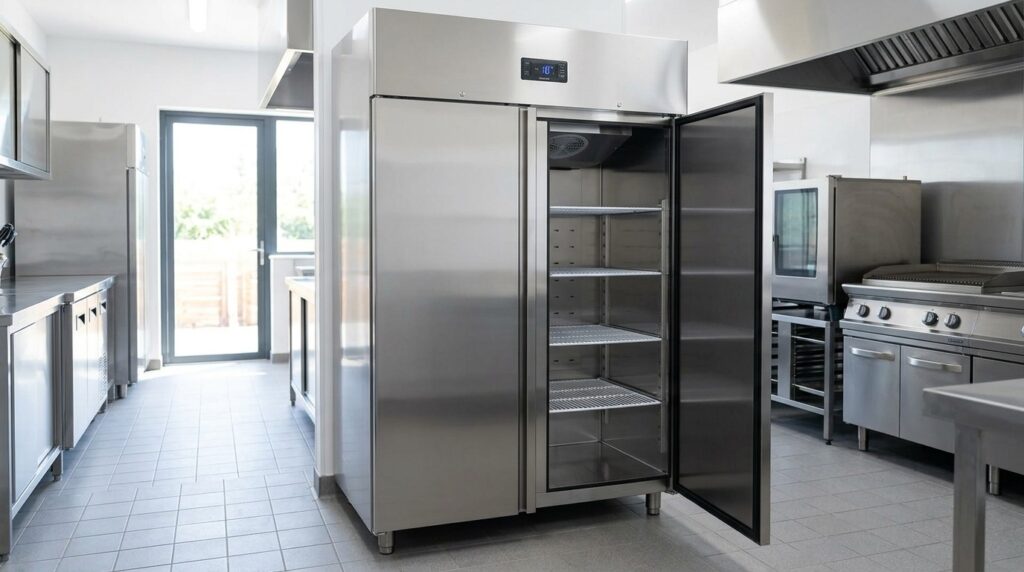
Explore solutions for overheating Unifrost upright fridge freezers in hot Irish kitchens. Learn prevention and troubleshooting tips.
Unifrost Upright Fridge & Freezer Summer Overheating: Performance and Troubleshooting Guide
When your Unifrost upright fridge or freezer starts running hot in summer, you risk temperature drift, product loss, HACCP non compliance, and higher energy use. This guide helps you stabilise performance on Unifrost upright refrigerators and freezers used in busy catering kitchens, including CR glass door fridges, R stainless fridges, and F range upright freezers.
You will work through the practical checks that usually fix summer overheating fast, and the tradeoffs to consider before you call out an engineer:
Is it normal heat or a fault? How to judge warm sides and top panels versus dangerous overheating.
Installation and airflow first: Clearances, ventilation, and nearby heat sources like ovens, grills, and dishwashers.
Condenser cleanliness: What to clean, how often to do it, and how blocked airflow drives continuous running.
Operating habits that matter in heatwaves: Loading, blocked internal vents, door opening frequency, and night time settings.
Food safety triggers: The cabinet temperatures and alarms that mean you must act immediately.
Recovery after an overheat event: Step by step actions to pull temperature down safely before you restock.
When DIY stops: The signs you should stop troubleshooting and contact a refrigeration engineer.
What This Support Page Helps You Find
This guide helps you keep a Unifrost upright fridge or freezer stable and food-safe through Irish summer conditions, when high kitchen ambient temperatures and poor airflow can push cabinets warm and keep compressors running for long stretches. It focuses on the common causes behind “overheating” signs such as hot outer panels, slow temperature recovery, alarms, and sweating around the door area. You will also find checks you can do without tools.
For food safety context, it follows Irish temperature control expectations, including Food Safety Authority of Ireland guidance that chilled food should be kept at 5°C or below.
Some heat is normal. Persistent temperature creep, constant running, or repeated alarms usually comes back to ventilation, loading, or basic maintenance that you can put right quickly.
What “overheating” usually means on an upright cabinet in summer
If the sides or top feel hot, that is often the unit rejecting heat from the refrigeration system into the room. In a tight kitchen, that heat builds up around the cabinet, so it runs longer, gets louder, and takes longer to pull temperature back down after door openings.
The key is separating normal warm surfaces from warning signs that point to a real performance issue. That helps you decide whether you are dealing with an installation or usage problem (most common) or something that needs an engineer.
The Unifrost models this applies to
The checks and habits here are written for Unifrost commercial upright cabinets used in Irish catering environments, including:
CR glass door refrigerators (CR1800G / CR1800GOG, CR2230G / CR2230GOG)
R range stainless refrigerators (R1000SV / R1000SVOG, R1300SV / R1300SVNOG)
F range upright freezers (F1000SV / F1000SVOG, F1300SV / F1300SVNOG, F1310SV, F410SS / F410SSOG, F620SV)
Where a step depends on the exact build or controller, the guidance stays practical and avoids model-specific settings that are not universal.
What you will be able to do after reading this
You will be able to narrow “overheating” down to the usual summer culprits:
Ventilation and clearance issues around the cabinet
Extra heat load from nearby ovens, grills, dishwashers, or hot pass areas
Blocked internal airflow from overloading or poor stock layout
Dirty condenser coils reducing heat rejection
Warm air leaks from worn or dirty door gaskets
You will also know when cabinet behaviour becomes a genuine HACCP risk in a busy Irish kitchen, and when to stop troubleshooting and call a refrigeration engineer.
A practical summer focus: stability first, then running cost
In hot weather, an upright running for long periods is not automatically “broken”, but it is often a sign it is working at the edge of what your room conditions allow. The steps in this guide focus on reducing heat load and improving airflow so the cabinet cycles more normally, holds temperature through service, and avoids unnecessary compressor strain.
Once you understand what is driving the heat, you can prioritise the fixes that match your kitchen layout and service pressure.
Common Overheating Causes in Summer
Summer overheating is when an upright commercial fridge or freezer can’t reject heat fast enough. Cabinet temperatures start to drift and the compressor runs for long periods, sometimes nearly nonstop. In Irish kitchens this is usually down to ventilation, positioning, and how the unit is used during busy service, rather than an instant “compressor failure”. That said, the symptoms can look similar to a developing fault, so it pays to rule out the basics quickly.
Heat rejection and poor ventilation around the cabinet
An upright fridge or freezer sheds heat into the room through the condenser area, and it needs steady airflow to carry that heat away. In summer, the air it’s trying to cool itself with is already warm, and extraction is often under pressure. A cabinet that behaved in winter can struggle once the kitchen or back bar temperature rises.
Common causes are straightforward:
The cabinet is pushed tight to a wall or boxed in by joinery.
It’s squeezed between other heat-producing equipment.
The condenser airflow path is restricted by dust, grease, or general build-up.
When heat can’t get away, you’ll often notice hot cabinet panels and longer compressor run time for the same cooling result.
High ambient temperature and nearby heat sources
High room temperature reduces the system’s “headroom” just when you need it most. Typical problem spots include uprights placed beside or opposite ovens, grills, fryers, combis, or near pot wash and glasswash areas where hot air and steam are constant. Front-of-house units can also suffer if they’re in direct sun for part of the day.
If you’re seeing repeated temperature alarms or stock warming, treat it as a food safety issue, not a nuisance. The Food Safety Authority of Ireland guidance is that chilled food should be kept at 0 to 5°C and frozen food at -18°C. If you’re regularly drifting above those targets during service, you need corrective action rather than simply turning the setpoint down (FSAI temperature guidance).
Door openings, loading patterns, and internal airflow
Busy summer trading changes how refrigeration is used. More door openings pulls warm, humid air into the cabinet. That adds heat load, increases moisture, and pushes the compressor into longer run cycles.
Loading can tip it over the edge too. If trays, gastronorms or boxed stock block internal air paths, the probe may read “fine” while warmer pockets develop around the door area or higher shelves. The unit then runs harder because it can’t circulate cold air properly.
Condenser fouling from kitchen dirt
Even in a well-run kitchen, summer often means more airborne grease, flour dust, and lint. When that builds up on the condenser, it insulates the coil like a blanket. The system runs hotter, recovery after door openings slows, and alarms become more frequent.
If you do one preventative job before the busy season, make it condenser cleaning, and then check it again through July and August. It’s a small maintenance task that prevents a lot of “mystery overheating” call-outs.
Humidity, door seal leaks, and condensation at the frame
Warm, humid weather changes how uprights behave. More moisture means more condensation around doors and more frost load in freezers. It also exposes weak gaskets and poor door closing habits.
If you’re seeing:
sweating around the frame,
water on the floor,
or doors not pulling shut cleanly,
assume warm air is leaking in. The unit then has to remove both heat and moisture, which increases run time and can push components to run hotter.
Icing and restricted airflow that looks like overheating
Sometimes “overheating” is really an airflow restriction inside the cabinet. Heavy summer use can drive ice build-up on a freezer evaporator, particularly with frequent door openings or ongoing moisture ingress. Airflow drops, the compressor runs longer trying to hit setpoint, and the motor compartment feels unusually hot.
Before you chase refrigerant issues or crank the thermostat colder, check the obvious first: ventilation around the condenser, condenser cleanliness, door seals, and internal airflow. Once you know whether the bottleneck is heat rejection outside the cabinet, airflow inside, or usage at the door, troubleshooting becomes much more decisive.
Preventative Measures for Summer Efficiency
Hot weather exposes the weak points in most upright fridges and freezers: poor ventilation, a dirty condenser, heavy door traffic, and small seal leaks that become big problems under service pressure. Start with airflow and heat exposure around the cabinet, then clean the condenser area and keep internal air paths clear. Finally, tighten temperature checks and your HACCP response during hot spells.
1. Verify ventilation and keep the unit out of heat traps
Summer “overheating” is often about placement rather than a fault. If your upright is hard against a wall, boxed into joinery, or pushed under a shelf that traps hot air, it will struggle to reject heat and the compressor will run longer.
Do a quick check during service:
Feel for hot air building up at the top and back of the cabinet.
Compare that area to the rest of the kitchen. If it is noticeably hotter, deal with airflow first.
Practical fixes are usually simple: pull the cabinet forward slightly, keep the rear and top clear, and do not store boxes, trays, or tape over any vents.
2. Clean the condenser area properly (and safely)
A dusty or greasy condenser cannot dump heat efficiently. That shows up as hotter side panels, longer run times, and temperatures drifting up when the kitchen is busy. In Irish kitchens, grease, flour, and lint build up quickly, especially near fryers, grills, and bakery prep.
A repeatable method:
Power the unit off at the isolator or plug before you start.
Brush and vacuum the condenser and any intake/discharge grilles carefully. Avoid bending fins or catching wiring.
If grease is heavy, use a non-caustic degreaser on surrounding metalwork (do not spray into electrics), then dry fully before switching back on.
If you cannot access the condenser without removing panels, or you see oil residue, heat damage, or burnt smells, stop and book a refrigeration engineer. That is a safety issue, not a cleaning job.
3. Reduce the workload: loading and door habits that actually move the needle
In hot weather, uprights usually struggle because of usage: frequent door openings, warm deliveries going straight in, and product stacked in a way that blocks internal airflow. Your goal is to keep cold air circulating and limit warm air getting in.
What works in real service:
Restock in short bursts instead of one long open-door session.
Keep high-turn items on the most accessible shelves so staff are not searching with the door open.
Avoid packing product tight to the back or over internal air channels. Poor circulation creates warm spots and forces longer run time.
If you are consistently putting warm stock into the cabinet at peak times, plan a staging step, even if it is just scheduling deliveries and prep so the unit gets a chance to recover.
4. Keep door seals and alignment clean to prevent leaks and sweating
Condensation around the door is common in humid summer weather, but it is also a useful warning sign. If warm, moist air is leaking in, the unit will run harder and you can see icing on colder internal surfaces.
Build this into your daily routine:
Wipe seals with warm water and mild detergent, then dry them.
Check sealing pressure with a paper-strip test. If it pulls out easily in certain spots, you likely have a weak seal or misalignment.
If the door is sagging or not closing cleanly, sort it early. Small leaks become costly when the kitchen is 25°C+ and the door is opening every couple of minutes.
5. Tighten monitoring and HACCP actions during heatwaves (and know when to stop using the cabinet)
In summer, temperature records should act as an early-warning system, not admin. For chilled storage, you are aiming to keep food at 5°C or below, in line with FSAI guidance on safe chilling temperatures.
If you suspect the unit is overheating:
Move high-risk food to another compliant cabinet.
Reduce openings and stop restocking.
Confirm ventilation is clear and the door is sealing properly.
Allow time for controlled pull-down to normal operating temperature.
If it cannot recover after doors are closed, alarms repeatedly, or runs continuously with little temperature improvement, treat it as a fault condition and call it in. Summer failures are usually repeatable once you address the basics: airflow, cleanliness, sealing, and workload.
DIY Troubleshooting Steps
If a Unifrost upright fridge or freezer seems to be running warm during an Irish heat spell, protect food first, then work through the common causes: airflow, nearby heat, door sealing, loading, and condenser cleanliness. If you’re still getting temperature alarms, icing, or a compressor that runs constantly, that’s your stop point. Escalate before you lose stock.
1. Confirm it’s a temperature problem (not just warm panels) and protect food first
Warm sides and a warm top can be normal on commercial uprights. That’s heat being rejected into the room. The question is whether the cabinet is holding temperature and whether your product is in a safe range.
Check with a calibrated probe and record it in your HACCP log. If chilled food is not being maintained at 0 to 5°C and frozen food at -18°C, treat it as a food safety issue and act immediately, in line with FSAI guidance on maintaining safe food temperatures.
2. Check airflow, clearance, and nearby heat sources
In a lot of Irish kitchens, “overheating” is really high room temperature plus poor ventilation around the unit. A fridge that was fine all winter can struggle once the kitchen warms up and the condenser cannot dump heat fast enough.
Before you touch settings, check:
Air paths: Front grille and any rear air route clear of boxes, kick plates, bin storage, dust mats, and grease build-up.
Heat and steam: Keep clear of combi ovens, grills, fryers, dishwashers, pot wash areas, and direct sun through windows.
Tight alcoves: If the unit is boxed in, assume it’s a problem until proven otherwise. If you cannot check the manual clearances quickly, give it more breathing space.
3. Inspect door seals and door behaviour (summer condensation is a clue)
In humid weather you’ll often see more “sweating” around gaskets and door frames. It’s not automatically a fault, but it can be an early sign of warm, moist air being pulled into the cabinet. That drives temperatures up and increases compressor run time.
Quick checks that work in a busy kitchen:
Paper test: Close the door on a strip of paper and pull gently. If it slides easily in one corner but grips elsewhere, you likely have a leak.
Visual check: Look for torn sections, hardened corners, and debris on the gasket or frame.
Reality check: If the door is being nudged shut on a busy pass, you can end up “nearly closed” more often than you think.
4. Restore internal airflow: loading, shelf gaps, and blocked vents
Upright fridges and freezers depend on air circulation inside the cabinet. In summer, overloading can start a spiral: airflow gets blocked, product warms, the unit runs longer, and the kitchen gets hotter again.
Practical fixes that usually make an immediate difference:
Keep product off the back wall and away from internal vents.
Don’t stack right to the top. Leave space for air to return and circulate.
Leave vertical gaps between GN pans, boxes, or baskets.
If you’re loading a warm delivery, split the load and allow recovery time rather than cramming everything in during service.
5. Clean the condenser properly (often the main cause in summer)
A dirty condenser is one of the most common reasons an upright runs hot, runs constantly, and struggles in a warm kitchen. Cleaning is straightforward, but do it safely and avoid damaging the coil.
A safe in-house method:
Switch off and isolate the power.
Remove the grille/access panel.
Use a soft brush and vacuum to lift dust and grease.
If it’s greasy (common near fryers), use a non-corrosive coil cleaner suitable for refrigeration and follow the product instructions. Let it dry fully before restarting.
6. Check for icing that points to airflow or defrost issues
Not every “warm-running” complaint is caused by ambient heat. If the evaporator is iced up, the system cannot absorb heat properly, so the compressor runs harder with less result.
Signs you can spot without dismantling the unit:
Heavy frost on internal panels
Ice around the evaporator area
Reduced airflow noise
Cold in one area and warm in another
If you see icing, protect stock, keep door openings to a minimum, and only plan a controlled defrost if you can keep food safe during downtime.
7. Recover properly, then decide whether to call an engineer
After cleaning or adjustments, give the cabinet time to pull down and stabilise before packing it tight again. Keep the load lighter for the first hour or two, prioritise high-risk foods, and verify with a probe rather than relying on the display alone.
Stop DIY and call a refrigeration engineer if:
It won’t hold safe temperature after ventilation checks and condenser cleaning, or it keeps alarming in normal service
The compressor runs almost continuously for hours with little improvement (especially on a freezer)
Icing returns quickly after a full defrost and correct loading, or you suspect a fan isn’t running
You notice burning smells, electrics tripping, or visible oil residue (possible sealed-system fault)
Once you’ve done this triage, it’s much easier to pinpoint whether the issue is layout, heat load, usage, or a component fault.
When to Contact a Refrigeration Engineer
The right response depends on whether you are dealing with installation and loading issues or an actual refrigeration fault. Either way, persistent high temperatures are an urgent operational risk.
For Irish food businesses, the Food Safety Authority of Ireland is clear that chilled food should be kept between 0°C and 5°C, and freezers at -18°C or colder. “It’ll be grand” is not a defensible position during a heatwave (FSAI temperature control guidance). Hot weather can push any upright harder, and it often exposes weak airflow, dirty condensers, tired door gaskets, or a component starting to fail.
When it stops being “summer performance” and becomes a service call
Move from DIY checks to a refrigeration engineer if any of the following are true:
Your Unifrost upright fridge or freezer won’t pull down to its normal set temperature after you’ve checked ventilation, removed obvious heat sources, and cleaned dust from accessible air intakes and the condenser area.
Temperatures climb during service and don’t recover when the door stays shut, including overnight.
The cabinet is running almost continuously, sounds noticeably different, or you are getting repeated temperature alarms soon after clearing them.
There is heavy ice build-up where it shouldn’t be, or signs of a defrost/airflow issue (for example, product near air outlets softening while other areas seem colder).
You feel excessive heat around the unit, notice an electrical smell, or the unit trips power. That’s no longer a performance issue, it’s a safety one.
Condensation around the door is getting worse, and a paper-strip check suggests the gasket is not sealing evenly. In warm weather, a small air leak can be enough to push a cabinet into constant running.
Food safety and HACCP triggers that need fast escalation
If you cannot keep chilled food out of the danger zone in real time, you need a plan beyond adjusting settings. In practice that means moving stock to backup refrigeration, reducing door openings, and booking an engineer before the next service peak. Limping on often ends with wasted high-risk food and a messy HACCP record.
For an upright fridge, treat any sustained inability to hold your normal chilled target as a priority, especially for cooked meats, dairy, prepared salads, desserts, or open foods that rely entirely on refrigeration control. For an upright freezer, any pattern of softening product, thawing at the edges, or recurring alarms after a reset should be treated as urgent. Refreezing decisions and stock rotation get complicated very quickly in a busy kitchen.
How to tell installation issues from likely component faults
Installation and usage issues tend to behave predictably. Temperatures rise with heavy door opening, recovery is slow, and the situation improves when you reduce load, improve airflow around the cabinet, or move it away from heat-producing kit (ovens, grills, glasswashers) or direct sun.
Component or control faults are more likely when symptoms are inconsistent, sudden, or extreme. Typical signs include a cabinet that used to be stable but now won’t recover even when lightly loaded, a clear change in noise or cycling behaviour, repeated alarms with no change in how the kitchen is operating, or icing patterns that suggest a defrost, fan, or sealed-system problem. If you’ve corrected ventilation and loading and the fault pattern doesn’t change, kitchen tweaks usually won’t solve it.
What to record before you ring for service (it speeds up the fix)
A clean description from the last 24 to 48 hours helps engineers diagnose faster. Record:
The model family (for example Unifrost CR and R upright fridges, or F upright freezers)
What the display is showing (temperature and any alarm codes)
When it’s worst (mid-service, afternoons, after deliveries, overnight)
Where it’s positioned (beside hot equipment, tight alcove, poor airflow)
Probe thermometer readings of actual product temperature, if you have them
“Air temperature on the display” and “food temperature” can tell different stories, especially during busy summer service.
What not to do while waiting for an engineer
Avoid turning the thermostat down repeatedly to “force” cooling. If the root cause is poor heat rejection, a blocked condenser, icing, or a failing part, more aggressive setpoints can increase run time and stress without protecting stock.
Also avoid removing panels or interfering with electrics in-house. In a busy Irish kitchen you want a fast, clean fix, not an injury, a damaged controller, or an avoidable warranty argument.
This is also a good moment to step back and check the most common summer overheating causes, because many call-outs start with airflow, heat sources, and loading, rather than a failed refrigeration system.
Related Unifrost Guides and Ecosystem Support
If a cabinet runs warm in summer, first work out whether you are seeing normal heat rejection from the refrigeration circuit (warm air around the unit) or a real loss of cooling performance (food temperatures rising). For Irish food businesses, the baseline targets are straightforward: the FSAI advises chilled food is held between 0°C and 5°C and frozen food at -18°C or colder, with checks verified using a calibrated probe thermometer as part of your system (FSAI temperature control guidance).
The detail that catches people out is that the controller display, the air temperature inside the cabinet, and the product core temperature can all move differently during busy service, especially in a hot kitchen. Use the display to spot trends, but make decisions off probe checks.
Use the manual that matches your exact model (it matters in summer)
Before you change settings or assume a fault, confirm the exact model from the rating plate and pull the matching operating and maintenance instructions. Even within “upright fridge” or “upright freezer”, cleaning intervals, alarm behaviour, controller functions and defrost logic can differ. Those differences tend to show up first when ambient temperatures rise.
Use the Unifrost model family and model number to locate the correct support file for the unit you have on site:
Upright glass door fridges: CR1800G / CR1800GOG, CR2230G / CR2230GOG
Upright stainless fridges: R1000SV / R1000SVOG, R1300SV / R1300SVNOG
Upright freezers: F1000SV / F1000SVOG, F1300SV / F1300SVNOG, F1310SV, F410SS / F410SSOG, F620SV
This also helps you avoid the common “quick fix” that causes more trouble, like adjusting a setpoint when the real issue is poor airflow, a dirty condenser, or doors not closing properly during service.
Quick separation test: installation and usage issues vs likely faults
Treat overheating as an installation and workflow problem first, and a refrigeration fault second. A lot of summer call-outs come down to the basics:
Clearance lost after a deep clean and the cabinet pushed tight to a wall
Hot air recirculating behind the unit
Unit placed beside a grill line, oven, or dishwasher heat exhaust
Condenser blocked with grease and dust
Stock packed tight against internal air outlets
If you can improve the room conditions and reduce cabinet load, but temperatures still drift, you are past “manual and checklist” territory. At that point, capture information a service engineer can act on quickly:
Cabinet temperature trend (what it does over a full shift, not a single reading)
Product core temperature checks (probe)
Whether the compressor seems to be running continuously
What changed recently (relocation, refurb, service volume, cleaning routine)
HACCP and “urgent” readings: what to record while you troubleshoot
In a heatwave, it is easy to chase the wrong number, especially if staff rely on the controller display alone. For HACCP, keep your records anchored to product temperatures taken with a calibrated probe, and use the cabinet display as a diagnostic indicator, in line with FSAI temperature control and monitoring guidance (FSAI temperature control guidance).
If you are getting repeated alarms or a steady rise that cannot be explained by door openings or loading, treat it as time-sensitive. Focus troubleshooting on the usual summer causes first: ventilation and heat sources, condenser cleanliness, and blocked internal airflow. If those are ruled out, it is typically time to log the symptoms and move to a service call rather than trying to “nurse” the unit through peak trading.
FAQs: Summer performance, overheating, and support
What regular maintenance should be carried out on Unifrost upright units to prevent overheating?
A simple routine prevents most summer overheating callouts:
Condenser coil and air path: Vacuum or brush the condenser (and the intake grille/filter if fitted) every 2 to 4 weeks in summer in busy kitchens. Grease and flour build-up is the most common cause of “hot sides/top” and constant running.
Keep the discharge area clear: Do not store boxes, trays, or cleaning chemicals on top of the cabinet or tight against the rear where warm air needs to escape.
Door seal and hinges: Wipe gaskets weekly with warm soapy water, check for splits, and confirm the door self-closes and sits square. A small gasket leak can make the compressor run non-stop in hot weather.
Defrost and drain hygiene: If you see ice build-up or blocked water, schedule a manual defrost and clear the drain. A restricted drain can lead to icing and poor airflow.
Cabinet loading: Keep internal air vents clear and avoid overloading shelves right in front of the evaporator air outlets, especially during heatwaves.
How does ambient temperature affect the efficiency of Unifrost upright fridges in summer?
As kitchen ambient temperature rises, your upright has to dump heat into hotter air, so it will run longer, use more energy, and recover slower after door openings. In practical terms:
More frequent door openings matter more in summer because each warm air change adds to an already higher heat load.
Glass door fridges (e.g., CR1800G/CR2230G variants) typically feel the impact sooner in bright, warm front-of-house areas because they gain extra heat from the room and lighting.
If the room is very warm, you may notice higher cabinet temperature swings, longer pull-down times after deliveries, and warm surfaces around the condenser area.
If performance drops only in summer, first prioritise condenser cleaning, airflow/clearances, and moving the unit away from cooklines, dishwashers, or direct sun before assuming a component fault.
What are the signs that a Unifrost upright fridge or freezer may need professional repair?
Stop DIY troubleshooting and book a refrigeration engineer if you see any of the following:
Not holding set temperature after you have cleaned the condenser and confirmed good ventilation and correct loading.
Continuous running with little or no cooling (cabinet warming while the compressor never seems to cycle off).
Unusual noises such as loud knocking, grinding, repeated clicking on/off (possible start components), or a fan hitting ice.
Heavy frost/ice that returns quickly after a full defrost, or ice only in one area that points to airflow or sealed-system issues.
Repeated high-temperature alarms, product softening in freezers, or visible thawing.
Refrigerant or electrical warning signs: oily residue near pipework, burning smell, tripping breakers, or visible damaged wiring.
For food safety operations, treat any sustained temperature breach as urgent and follow your HACCP procedures while service is arranged.
Need model-specific guidance for warm kitchens?
For the most accurate summer performance and overheating troubleshooting, check the Unifrost manual for your exact model (for example CR1800G/CR2230G, R1000SV/R1300SV, or F1000SV/F1300SV families). It will confirm the correct operating setup, ventilation needs, cleaning points, and alarm behaviour.
If you are comparing options for a hotter kitchen or planning an upgrade, Caterboss can help you choose the right capacity and configuration. Browse Caterboss’s Frozen Storage category or contact the team with your site conditions (ambient temperature, placement, and usage pattern).
Compare Unifrost freezer options on Caterboss
For current product options, pricing and availability, continue to Caterboss.