
Unifrost Upright Freezer Door Not Closing or Popping Open in Summer: Troubleshooting Guide
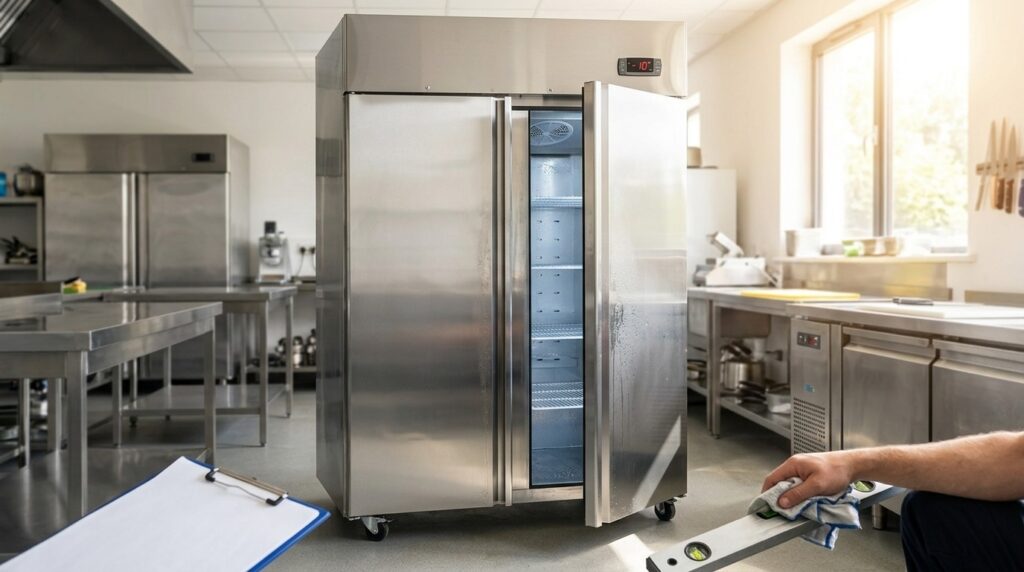
Resolve Unifrost upright freezer door issues during Irish summers. Practical troubleshooting for commercial kitchens.
Unifrost Upright Freezer Door Not Closing or Popping Open in Summer: Troubleshooting Guide
If your Unifrost upright freezer door won’t stay shut or pops back open during a warm Irish summer service, you risk temperature drift, wasted energy, and stock loss. This support guide is for Unifrost upright freezers including F1000SV, F1300SV, F1310SV, F410SS and F620SV, plus OG stainless variants.
You work through the practical checks that typically fix summer-related door problems fast, including site conditions, levelling, loading pressure on the door, gasket cleaning and sealing, and when ice at the frame means you need a proper defrost rather than a quick scrape. You also get immediate actions to protect food safety and HACCP records if you find the door has been ajar, and clear stop points where it’s smarter to call a refrigeration engineer or arrange Unifrost support parts such as replacement gaskets or hinge adjustments.
Purpose of this Support Page
If your Unifrost upright freezer door will not stay shut, or it pops back open a few seconds after closing, this guide walks you through the most common causes and the safe checks you can do on-site. In summer, heat and humidity in Irish kitchens make small issues show up fast: a slightly out-of-level cabinet, a dirty gasket, or a bit of ice around the frame can be enough to stop a door sealing properly.
This matters for stock protection and compliance. The FSAI notes frozen food should be stored at -18°C or colder. A door left ajar is one of the quickest ways to drift out of spec and build ice around the frame.
Source: https://www.fsai.ie/enforcement-and-legislation/legislation/food-legislation/temperature-control
What you will get from this guide (and what you won’t)
You will get:
The typical summer triggers behind doors that do not self-close, do not seal, or “bounce” back open.
Quick checks you can do during service, plus deeper checks you can schedule around prep and deliveries.
Clear “stop here” points, so you do not waste time repeating the same reset when it needs a proper fix.
You won’t get:
Model-by-model specifications or parts diagrams.
Any advice that involves opening the refrigeration system. If it looks like a refrigerant-side or control fault, we point you towards calling a refrigeration engineer.
Which Unifrost upright freezers this applies to
This page is aimed at Unifrost upright freezer models commonly used on Irish sites, including F1000SV, F1300SV, F1310SV, F410SS and F620SV, plus stainless variants. The checks are practical and generally apply across upright commercial cabinets, even where your unit is a close variant.
How this fits with your routine maintenance and HACCP
If you already follow your normal Unifrost upright freezer maintenance routine, the themes will be familiar: gasket condition, icing around the door frame, airflow, cleaning, and defrost habits. This page focuses on what tends to change in summer, what to do when you suspect the door has been ajar, and what to record so your actions are easy to stand over during an EHO or FSAI visit.
When this is a simple door issue versus a bigger fault
In most kitchens, a “popping open” door comes down to one of four things:
Levelling: the cabinet is slightly leaning forward or twisted on an uneven floor.
Loading: boxes or product are catching the inner liner or pushing against shelves, stopping the final seal.
Sealing: the gasket is dirty, hardened, torn, or not sitting flat against the frame.
Ice and humidity: frequent openings in humid weather lead to ice around the frame, which breaks the seal and makes the door spring back.
If you are also seeing ongoing temperature drift, rapid ice build-up returning after cleaning, or the door only stays shut when forced or weighted, treat it as a reliability risk. At that point it is usually better to move towards an engineer call-out than to keep repeating quick fixes.
Next, we go through the summer causes to check first, in the order that usually saves the most time on a busy kitchen floor.
Common Causes of Door Issues in Summer
Warm, humid air and heavy door traffic in summer make door problems show up quickly on upright freezers. Moisture can freeze around the frame and gasket, which stops the magnetic seal gripping properly. Rapid temperature changes can also create a pressure difference inside the cabinet that makes the door feel like it “bounces” or reopens. BIM’s refrigeration maintenance guide explains this pressure equalisation effect and why good door sealing matters for performance and food safety: BIM Refrigeration System Management and Maintenance Guide.
That said, “it’s the heat” is often only part of it. Levelling, hinge wear, and stock or packaging fouling the opening can cause the same symptom.
Heat and humidity: moisture freezes where you need a clean seal
In Irish kitchens, summer usually means more humid air coming in through back doors, yard doors, and busy passes. Every time the door opens, warm air is pulled into the cabinet. That moisture condenses and then freezes first on the coldest surfaces near the opening, typically the frame, gasket contact area, and the leading edge of shelves.
Even a thin ridge of ice can hold the door a few millimetres off the frame. The door feels shut, but the magnet is not fully engaged, so it can creep open as the gasket relaxes.
High traffic after deliveries: “not quite shut” is usually a workflow issue
The classic pattern is a delivery landing, warm cartons going in and out, and staff closing the door with a knee or elbow. If the door is nudged rather than closed firmly, it is easy to trap a carton corner, shelf liner, label strip, or a protruding pack so the door cannot seat squarely.
Overloading can make it worse. If stock is packed hard up to the front, it can interfere with the door lining or simply stop the door swinging fully closed.
Heat sources and installation: small alignment issues show up at the door first
Summer also exposes a marginal install. If the freezer is slightly out of level, or it is sitting on an uneven floor that shifts with washdowns and traffic, you lose the gentle self-close you rely on. The door can “float” in the last inch and fail to pull itself onto the seal.
Nearby heat loads matter too. An upright freezer beside a fryer line, combi oven, dishwasher exhaust, or a sunlit back door increases heat around the cabinet. That can soften the gasket and encourage icing around the frame, which is often when operators start noticing the door popping open rather than sealing cleanly.
These are the common mechanisms behind the symptom. The next step is turning them into a quick set of checks you can run without damaging the gasket or chasing the wrong fault.
Checking and Cleaning Door Seals (Gaskets)
To inspect and clean the door gasket on a Unifrost upright freezer without damaging it, work quickly and methodically. Protect stock first, then check the gasket and cabinet lip for splits, flattening, debris and local icing. Clean with warm water and mild detergent using a soft cloth, rinse, and dry fully so the magnetic strip can grip properly. Finish by checking the door closes square and doing a simple paper test around the perimeter. If the seal is torn, hardened, or the door still won’t stay shut in normal use, stop forcing it and plan a gasket or hinge fix before a busy service.
1. Protect stock and give yourself a safe working window
In a working Irish kitchen, this often happens mid-trade, so plan for speed.
Move high-risk stock (ice cream, seafood, prepped items) into a known-good freezer or insulated containers.
Keep door-open time short.
If the door needs to stay open for more than a minute or two, switch the unit off at the isolator if you can access it safely. The aim here is the sealing surfaces, not a full cabinet clean.
2. Inspect the gasket and the mating surfaces
Do a slow visual check all the way around the door. Look for the common causes of air leaks and “door popping open”:
tears or splits, especially at the corners
sections pulled loose from the retaining channel
hardened, flattened, or wavy areas
food debris or packaging trapped along the seal line
Then check the cabinet lip and door face where the gasket lands. Even a clean gasket will struggle if there’s grease film, crumbs, or ice on the mating surface.
3. Clean properly (gentle, food-safe, and dry at the end)
Use warm water with a small amount of mild detergent and a soft cloth (or a soft brush for the folds). Work around the gasket, lifting the lip gently to remove hidden grime.
Avoid bleach, harsh degreasers, and solvent sprays. They can dry out rubber, leave odours, and create residue risk around food storage. Keep cleaning and disinfection practices consistent with FSAI guidance for food businesses.
Rinse with clean water and dry thoroughly. A wet gasket can slip, and damp surfaces encourage icing in a busy, high-humidity kitchen.
4. Clear local ice without tearing the seal
If you find ice along the seal line or door frame, do not chip it off with a scraper. That’s how gaskets get nicked and start leaking.
Instead:
hold the door open
use a cloth dipped in warm water to melt ice gradually
wipe away meltwater as you go
If the ice returns quickly in the same spot, note where it forms. Repeat icing in one area usually points to a gap, misalignment, or frequent door-holding during loading, rather than a one-off defrost issue.
5. Check the seal before you reload stock
Close the door normally, without slamming. Check it sits flush at the top corners and along the latch side.
Do a paper test:
trap a strip of paper at several points around the perimeter
pull it out gently
you want steady resistance everywhere, not “loose at the top” or “tight at the hinge, loose at the bottom”
If the gasket is clean but the grip is weak or uneven, don’t try to “bend the door back” by force. At that point, hinges, latch points, or door alignment need attention. In day-to-day trading, that’s also where heat load and frequent openings turn a small seal issue into icing and temperature drift.
Defrosting vs. Cleaning Ice from Door Areas
What you do depends on whether the ice is a small build-up at the gasket or a broader frost issue that’s affecting airflow and temperature stability. FSAI guidance is clear that freezers in food businesses should be kept at -18°C or colder, so ice that stops an upright freezer door sealing properly is not just cosmetic. It can undermine temperature control across a busy day (FSAI temperature control guidance for caterers).
In Irish kitchens, summer humidity, hot deliveries and constant door openings can turn a minor air leak into heavy icing in a few shifts. Sometimes “clean it off and carry on” is fine. Sometimes it just buys you a few hours.
When cleaning ice off the door area is enough
If the ice is light and clearly limited to the gasket line or immediate door frame, a controlled clean is usually enough. This often happens when:
the door was held open during service
packaging caught the door briefly
the unit had a burst of heavy use and then settled
The goal is simple: remove the obstruction so the gasket sits flat again. You’re looking for three checks afterwards:
the door closes without force
it stays closed without a second push
the gasket makes contact all the way around
If those checks pass and the ice doesn’t return quickly, a full defrost is usually unnecessary downtime.
It’s still worth logging as a minor maintenance action. Small sealing problems have a habit of becoming bigger problems at peak trading.
When you should plan a full defrost (not just chip and wipe)
A full defrost is the better option when the ice is a symptom of a bigger moisture or airflow issue, rather than a one-off event. If you’re clearing the same area every day or two, you’re usually treating the result (ice) and not the cause (warm, damp air getting in).
Plan a full defrost if you see any of the following:
ice building along more than one edge of the frame, or the gasket freezing to the cabinet
the door needs a push or “second close” to stay shut, especially after busy periods
snow-like frost inside near the top shelves or around air outlets, suggesting damp air is circulating and freezing
slow temperature recovery after openings or deliveries, or noticeably more frost on stock (often a sign of longer run times and higher moisture load)
The practical tell is repetition. If the door area ices up again shortly after you clean it, a full defrost gives you a proper reset. It also lets you clean and inspect the gasket line, hinge side and frame, and check the door is aligning and sealing as it should.
Why “just breaking the ice” can make door sealing worse
In a live kitchen, it’s tempting to chip ice off and move on. The risk is that scraping can:
nick or tear the gasket lip
distort the gasket edge so it no longer sits flat
leave small ridges of ice that keep the door slightly proud
That’s how you end up with a door that looks closed but pops back open a minute later.
Rushed ice removal also tends to miss the hygiene side. Meltwater and debris collect around the frame, so if you don’t clean and dry properly you can end up with odours, staining and faster re-freezing. If you need a deeper clean, stick to proper cleaning and disinfection practice rather than improvised strong chemicals (FSAI guide to good hygiene practice).
Practical approach in Irish service conditions (without risking stock)
If a full defrost is needed, treat it as a planned job, not something you start mid-service. Move stock to backup freezer space, a hired cold store or another site unit, and keep your temperature records tidy. Even if the cabinet display looks fine afterwards, you want a clear note of what happened and what corrective action you took. Inspections focus on control, monitoring and records.
If you’re unsure, use this quick decision test: after you clean the door area, does the door close cleanly and stay sealed through the next busy cycle? If not, a proper defrost and inspection is usually better value than repeated short-term fixes, especially in humid weather when door icing returns quickly.
Impact of Overloading and Vent Blocking on Door Performance
If stock is packed hard up against the internal fan cover or air vents, the freezer cannot move cold air properly. You end up with uneven temperatures, slower recovery, and heavier frosting around the door frame. That frost stops the gasket seating cleanly, which is when you see doors that “bounce” back open.
In Irish kitchens this shows up most in summer, especially straight after deliveries. Warm product going in and humid air coming in with frequent door openings accelerates ice build-up. From a HACCP point of view, keeping airflow paths clear and checking door seals sits comfortably in the “basic controls done daily” category, because it affects both temperature stability and defrost workload.
The risk is not just the door. A unit that is starved of airflow will run longer, struggle to pull down, and is more likely to drift outside your normal temperature record window during a busy service, when a door left ajar is easiest to miss.
So if the door “closes if you push it”, check loading and airflow first before assuming a hinge or gasket fault. It is often the quickest fix, and it ties directly into the common summer-related causes of door problems.
Quick Actions if the Freezer Door is Ajar
If you find an Unifrost upright freezer door has been left ajar during a hot spell, treat it as a food safety incident first and an equipment issue second. Get the door properly closed, reduce heat around the cabinet, and protect stock by separating anything that may have softened or partially thawed. Then confirm the freezer is recovering to a safe frozen temperature and record what happened for your HACCP file. If the door will not stay shut or temperatures will not pull down, stop writing it off as “busy service” and escalate it as a fault.
1. Get the door fully shut and reduce heat load around the cabinet
Close the door firmly and leave it closed for a few minutes. On larger upright cabinets, the seal can take a moment to “grab” once internal pressure settles.
In warm Irish kitchen conditions, reduce the heat load straight away:
Close nearby back doors if they are letting in warm air.
Move portable hot equipment away from the cabinet if possible.
Stop staff hovering with the door open during service.
If the door keeps popping open, don’t wedge it with towels or improvised props. It usually distorts the seal, increases icing around the frame, and only buys you minutes.
2. Protect stock quickly: one fast check, then minimise openings
Open the door once and do a quick triage. Pull anything that looks suspect (soft packs, sweating bags, deformation, signs of melt and refreeze on outer packaging) into clearly marked crates so it cannot be used by mistake.
After that, keep door openings to an absolute minimum. In a busy café, takeaway or hotel kitchen, assign one person to manage access. Lots of short openings are often worse than one longer one because you keep dragging warm, humid air into the cabinet.
3. Check temperatures and write it down for HACCP
You need to establish two things: whether product warmed up, and whether the cabinet recovered promptly once closed.
If you have a suitable probe, check a couple of higher-risk items (typically smaller packs near the front or top shelves).
If you do not, use the cabinet display and monitor recovery over the next hour, without repeatedly opening the door.
Record the incident and corrective actions in line with a HACCP-based system, as set out in FSAI guidance on HACCP and food safety management systems. At a minimum, note:
Time found ajar and best estimate of how long.
Cabinet reading when found.
What stock checks you did and what you segregated or disposed of (if applicable).
Time the freezer returned to normal operation.
4. Clear “closing blockers” before blaming the gasket
A surprising number of “door won’t stay shut” problems are simple loading issues. Check for cartons, gastro trays, or bulging bags pushing against the inner door liner. Reload so product sits behind the front shelf line, not perched forward.
Then check the door frame and gasket contact area for:
Packaging film
Food debris
A ridge of ice at the frame
If you see heavy ice, don’t chip it with a blade. Plan a controlled defrost and clean when you can protect stock properly. Damaging the sealing surface turns a one-off incident into a repeat problem.
5. Escalate early if it won’t stay closed or pull-down is slow
Treat it as a fault if any of the following are happening:
The door needs repeated re-closing.
The cabinet temperature keeps climbing after the door is shut.
Alarms are activating.
You can feel persistent warm airflow around the door area after it has been closed for a while.
If you must keep trading while you wait for support, move your highest-value and highest-risk stock to another freezer on site and tighten your checks until the issue is resolved. In peak summer conditions, a freezer that cannot hold temperature under normal door traffic becomes a waste and compliance problem very quickly.
When to Seek Professional Support
If a Unifrost upright freezer door won’t stay closed in summer, treat it as a food safety risk first and a maintenance issue second. Do a quick, non-invasive check (levelling, loading, gasket contact). If it still won’t stay shut, or you see any refrigeration or electrical warning signs, stop there and book a refrigeration engineer. In busy summer service, anything that affects temperature control, electrics, or the sealed system is not a “keep tinkering” job.
1. Protect stock and stabilise service
If you find the door has been ajar, respond as you would to any cold chain slip. Move high-risk stock to a known-good freezer if you can, limit openings, and write down what happened, when you found it, and what you did. Irish food businesses are expected to demonstrate effective temperature control as part of HACCP-based food safety management, and the FSAI guidance is a good reference point for what “good records” looks like (see FSAI guidance on HACCP and temperature control).
Avoid makeshift fixes like tying the handle shut or wedging the door closed. They can distort hinges and gaskets and often turn a small alignment issue into a bigger repair.
2. Stay within safe DIY checks
Keep your checks simple and non-destructive. Don’t open panels, adjust refrigeration components, or interfere with electrics.
A quick triage that is usually worth doing:
Levelling: The cabinet should sit solid with no rock. A slight lean can be enough for a heavy door to drift open.
Loading and obstructions: Make sure stock, shelves, or gastronorm pans aren’t pushing against the door or fouling the inner liner.
Seal contact: Check for debris on the gasket and the cabinet face. Look for obvious gaps where the magnetic seal isn’t pulling in evenly.
Ice on the frame: Clear any ice that’s physically preventing full closure.
You may notice brief suction or stiffness right after closing. That can be normal pressure equalisation. It should not repeatedly spring open once the door is properly shut and unobstructed.
3. Book an engineer if you see any red flags
Call for professional support if any of the following apply:
The door won’t stay shut even when the freezer is level and empty, or you can see hinge drop, twisting, or metal-on-metal wear.
The gasket is split, torn, permanently flattened, or pulling away so the seal is uneven.
Ice keeps forming around the frame shortly after you clear it, which can point to ongoing warm-air ingress or defrost and drainage problems.
The freezer is short-cycling, running constantly, alarming, unusually noisy, or slow to recover after openings.
There are electrical warning signs: burning smells, tripping breakers, moisture around electrics, or damaged plug/cable.
The problem started after a move, delivery, deep clean, or relocation and the door alignment now looks off.
If the investigation might involve refrigerant handling or sealed-system diagnosis, it needs an appropriately qualified technician under Ireland’s F-gas requirements (see the EPA guidance on fluorinated greenhouse gas rules).
4. Make the callout quicker (and keep your paperwork straight)
You’ll get a faster diagnosis if you can share:
Model details and where the unit is positioned.
When it happens: for example, after deliveries, during afternoon heat, or only during peak service.
What you observed: cabinet temperature checks, alarms, unusual sounds, ice patterns, and what stock you moved.
Keep those notes with your HACCP records. If an Environmental Health Officer ever asks how you managed temperature control during a hot spell, a clear timeline of checks and corrective actions is exactly what you want (aligned with FSAI HACCP expectations).
If it’s a repeat summer issue, tell the engineer what’s changed around the freezer. A fryer line beside it, a back door opening to the yard, or a tight alcove with poor ventilation often explains why the problem only shows up in warm, humid weather.
Connecting to Unifrost’s Support Ecosystem
A freezer door that won’t stay shut is either a straightforward sealing or alignment issue, or a sign the unit is being pushed too hard by heat, loading and constant opening during service. The difference matters because you need actions and records that stand up to inspection. The FSAI’s HACCP guidance is clear that food businesses must have food safety management procedures and keep appropriate documentation. In practice, a door “popping open” can move from nuisance to stock protection and traceability problem very quickly, especially in a warm spell.
Use Unifrost support in a way that actually speeds up a fix
If you are running Unifrost upright freezers such as the F1000SV, F1300SV, F1310SV, F410SS or F620SV (including OG stainless variants), you will save time by treating this as a repeatable fault report, not a once-off irritation. Use this troubleshooting page to pin down the symptom, then go straight to the most relevant Unifrost.ie support resource instead of starting from zero each time.
Door won’t stay shut, but temperature is broadly holding: treat it as a sealing or closing issue first. Check and record gasket condition, icing at the frame, hinge play, levelling, product pressure against the door, and your defrost and cleaning routine.
Door is misaligned, scraping, or you can see gaps at the seal: treat it as a hardware and fit issue. Avoid forcing the handle or “fixing” it by slamming the door.
Door looks like it’s sealing, but temperatures drift during peak opening: treat it as recovery and airflow. Review loading patterns, vent clearance and hot-kitchen placement before assuming parts are required.
Only happens in summer or after deliveries: capture the pattern. Note what changed (ambient heat, back door open to the yard, warm stock loaded, repeated openings) and what stopped it. That timeline is often what an engineer needs to get it right first visit.
Parts, adjustments and repeat problems: what Unifrost.ie can help you isolate
Most repeat pop-open issues land in one of three buckets you can describe clearly:
Seal not gripping (dirty, deformed, iced, or not pulling in evenly)
Door not sitting square (hinge wear, alignment, levelling, cabinet twist)
Usage and humidity affecting pressure equalisation (heavy traffic, warm loads, frequent opening)
Start by identifying the likely cause, because each problem needs a different fix. A gasket problem is different to a hinge or levelling problem, and both are different again to an operational issue that will keep coming back every summer.
If a part may be required (for example a worn gasket or a hinge that will not hold alignment), have your model number, serial plate details and clear photos ready. One photo showing the door line against the cabinet from top to bottom, plus a close-up of the corner that fails first, helps avoid ordering the wrong item or chasing the wrong fault.
HACCP and audit-proof records when the door has been ajar
If you find the door has been left slightly open during a warm spell, don’t just close it and move on. Record when you noticed it, what you observed (softening, frost melt, wet packaging), and the corrective action you took. Then increase temperature checks for the rest of the shift so your record shows active control.
Keep it practical. Your notes should allow someone else to understand what happened and why your decision protected food safety. A short entry linking the observation to temperature checks, any stock moved to another freezer, and a prevention step (clearing product pressing on the door, scheduling a deeper defrost outside service) is usually more useful than a long narrative.
When to stop DIY and escalate, without wasting an engineer call-out
Escalate if the problem repeats after you’ve confirmed:
the unit is level
product is not pushing on the door
the gasket is clean and not damaged
icing around the frame is not rebuilding quickly after defrost
Also escalate if the door becomes harder to open after cleaning or defrost and does not settle back to normal. Forcing it can turn a minor sealing problem into hinge damage and a recurring failure.
If you call for service, give a clean timeline: when it happens (afternoons, deliveries, hot prep periods), how long the door is ajar before you notice, what the temperature trend looks like, and whether it tracks to one corner of the seal. That’s the information that supports a first-visit fix, instead of a cycle of adjustments that don’t address the real trigger.
FAQs: Unifrost upright freezer doors popping open in summer
Why does my Unifrost upright freezer door pop back open in hot Irish summer weather?
In summer, the problem is often a combination of warm, humid air, high door traffic, and a slightly “lazy” close rather than a single fault.
Humidity and ice on the frame: Warm air rushing in condenses and freezes around the door frame. Even a thin ridge of ice can stop the door reaching the final “magnetic pull” point, so it rebounds.
Pressure equalisation after a hard close: Upright freezers can feel like they “push back” briefly after closing, especially right after restocking or multiple openings. If the door is not fully seated on the gasket, that pushback can be enough to pop it open.
Heat load after a big delivery: Putting in warm product or leaving the door open while loading drives longer run times and more moisture in the doorway area, making both of the above more likely.
Practical fix: during a hot spell, do a quick end-of-shift check of the door frame for ice, wipe the gasket and frame dry, and make sure the door closes with a firm final press. If popping open persists even when the frame is clear and the unit is level, move to hinge alignment checks or book a service call.
How can kitchen layout and nearby heat sources affect freezer door alignment?
Layout issues can create small twists and knocks that become obvious in summer when the gasket is working harder.
Uneven floors and “racking”: If the cabinet isn’t level, the door can drop slightly on the hinge side or bind at one corner. That reduces gasket contact and makes the door more likely to spring open.
Heat sources close by: Ovens, fryers, dishwashers, hot pass areas, or direct sun from a window can warm one side of the cabinet and doorway area. That can worsen condensation and icing around the frame and can also make staff more likely to leave the door ajar while working.
Traffic and impacts: Tight walkways, opening into a busy route, or a nearby back door to the yard can lead to repeated knocks on the door edge or handle, gradually shifting alignment.
What to do: ensure the freezer is stable and level front-to-back and side-to-side, confirm it has clearance around it (especially at the hot side and rear), and reposition it so the door can open fully without catching on counters, walls, or passing trolleys.
What loading patterns help a freezer door close cleanly?
The goal is to keep product from pushing on the inner door area and to maintain air paths so the cabinet pulls down temperature quickly after openings.
Keep the “door sweep” clear: Don’t store boxes, trays, or protruding packaging where they can press against shelves or bins near the door. Even slight contact can stop the last few millimetres of closure.
Avoid overfilling shelves: Leave a small gap so items don’t creep forward when the door is closed.
Use lidded, rigid containers: Soft cartons and open boxes deform and snag more easily, especially when damp in summer.
Don’t block air vents or returns: Poor circulation means longer recovery time after each opening, more moisture at the doorway, and more frame icing.
Restock in batches: Plan a quick “in and out” restock, then let the freezer recover, rather than holding the door open while sorting.
Quick check: after loading, close the door and do a 2-second handle tug to confirm the magnetic seal has fully grabbed before walking away.
Next step: choose an upright freezer that copes better with summer service
If your kitchen gets heavy summer footfall, frequent deliveries, or higher ambient temperatures, it may be worth comparing upright freezer options with features that make daily closing and recovery easier in real service conditions.
Explore the Unifrost upright freezer range (including models like F1000SV, F1300SV, F1310SV, F410SS, F620SV and stainless OG variants) and shortlist a unit that matches your door-traffic, layout, and loading needs.
Related Unifrost guides
Compare models, maintenance advice and support information related to this topic.
Unifrost F410SS Upright Freezer Guide for Irish Hotels
A practical Unifrost F410SS guide for Irish hotels, covering installation, daily use, maintenance and troubleshooting.
Read guide
Understanding the Unifrost F410SS Upright Freezer: Temperature Alarm Basics for New Owners
Discover the essentials of managing temperature alarms on your Unifrost F410SS upright freezer for optimal performance in Irish kitchens.
Read guide
Unifrost Upright Freezer vs Chest Freezer: Model Comparison Guide for Irish Kitchens
Compare Unifrost upright and chest freezers for Irish kitchens. Find the best fit for your business needs efficiently.
Read guideCompare Unifrost freezer options on Caterboss
For current product options, pricing and availability, continue to Caterboss.