
Unifrost Bottle Cooler Door Glass Handle Damage: Warranty, Replacement & Safety
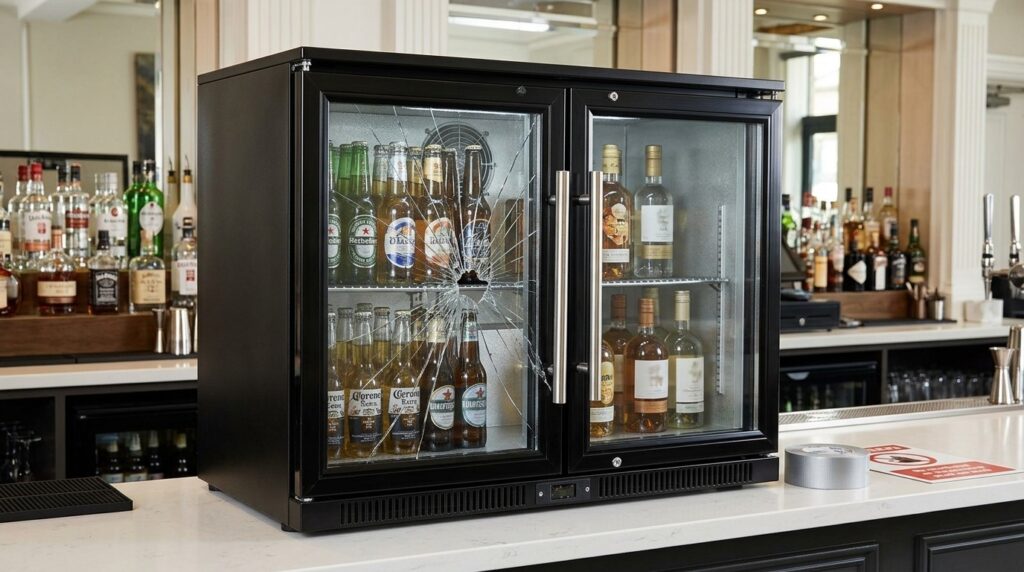
Guidance on Unifrost BC bottle cooler door damage: warranty, replacements, safety in Irish bars. Understand coverage and claims.
Need more detail? For model comparisons, setup steps and troubleshooting, see the related guides below.
Unifrost BC-Series Bottle Cooler Door Glass and Handle Damage: Warranty, Safety and Replacement
If the glass door or handle on your Unifrost BC-series bottle cooler is cracked, smashed, or pulled loose, you need to keep the bar safe and decide quickly whether it is a warranty claim, a chargeable repair, or one for your business insurance.
This page walks you through the practical checks and tradeoffs you face on BC10HBE (and BC10HBEOG), BC20 variants (BC20HBE, BC20HSE and BC20HSEOG, BC20OG, BC20SBE) and BC30HBE units. You will learn what to do immediately after damage to protect staff and stock, what evidence to gather before you contact Caterboss, and how to order the correct replacement door, glass, handle or fittings using your model and serial details. It also covers the common operator causes that can affect warranty outcomes, such as impact damage, repeated slamming, misaligned hinges, and overloading the door.
What this support page helps you find
Broken or cracked glass on a Unifrost BC-series bottle cooler door is a safety and workplace issue, not just a refrigeration fault. If there’s a risk of injury from breakage, Irish workplace rules require suitable safety material or protection on transparent door surfaces. See Ireland’s Safety, Health and Welfare at Work (General Application) Regulations 2007, Regulation 11 on doors and gates.
This page helps you:
judge whether the damage is more likely warranty-related or chargeable
identify the right replacement route (complete door vs parts)
gather the details a dealer or service engineer will ask for
get the unit back in service with minimal downtime
With glass, hinges and handles, how it happened often matters as much as what’s broken.
Warranty vs chargeable repair: what you’re really checking
If a BC-series glass door is smashed, the key question is usually “is it covered?” In practice, the decision often comes down to whether it looks like a manufacturing or component failure, or an external event such as impact, slamming, or accidental damage during service.
To support a clean decision, be ready to explain:
what failed first (glass, hinge, handle, door frame)
whether the door had been dropping, catching, or not closing cleanly beforehand
any signs of hinge misalignment or a door not sitting square
whether handle fixings pulled out or screws failed
Those details usually matter as much as the model name.
Replacement options: door, glass, handle, hinges
A broken door does not automatically mean replacing the full bottle cooler. For Unifrost BC back-bar coolers commonly supplied in Ireland, the usual outcomes are:
a complete replacement door assembly, or
replacement parts such as hinges and handle components, depending on what’s damaged and what’s available for your exact model variant
This support page is written around the Unifrost BC-series models in scope: BC10HBE / BC10HBEOG, BC20HBE, BC20HSE / BC20HSEOG, BC20OG, BC20SBE, BC30HBE. It also explains how to confirm the exact version you have, because small suffix differences can affect compatibility for doors, handles and hinges.
Immediate safety procedure in an Irish bar when glass breaks
When a glass door shatters or cracks, focus on preventing injury and stopping contamination behind the bar. The steps below also help if you later need to support a service call, warranty query, or insurance claim.
Isolate the area immediately. Stop service beside the unit and put a barrier or wet floor sign in place.
If the door can’t close safely, or glass is loose in the frame, switch the unit off and move stock to backup refrigeration where possible.
Use cut-resistant gloves and eye protection for clean-up. Treat open bottles, garnish and ice as contaminated if there’s any chance of glass ingress.
Keep key evidence: bag and retain larger pieces of glass and any failed screws/fittings. Take clear photos before and after clean-up.
Who to contact first: dealer, service engineer, or manufacturer
In Ireland, you’ll usually get the quickest outcome by starting with the seller or supplying dealer (for many operators, that’s Caterboss). They can confirm warranty status, check supply details, and help match the correct door or parts to your serial number.
Before you call, gather:
purchase proof (if available)
rating plate details (model and serial)
photos of the damage and the hinge/handle area
whether the unit is hinged or sliding, and whether the door still seals
That avoids back-and-forth and keeps downtime down.
Insurance vs warranty: when it’s a workplace accident
If the door was damaged in an incident (trolley strike, knock during service, slip, or similar), it is often faster to treat it as accidental damage and route it through your business insurance rather than trying to frame it as a warranty fault.
This page highlights the usual signs that point to impact damage versus a component failure, so you can choose the route that gets you trading again.
Keeping performance and future support intact after replacement
Door and glass replacement is not cosmetic. If the door is not aligned or sealing properly afterwards, you’ll often see it quickly in a busy back-bar: temperature swings, higher running costs, and icing or condensation.
It’s also worth being careful with parts choice and fitting. Incorrect parts or poor alignment can create ongoing sealing issues and may complicate later warranty discussions if an unrelated fault appears. This leads into the next practical question: what Unifrost BC-series warranty cover typically looks like for glass, hinges, handles, and other wear items.
Understanding Unifrost BC-series Warranty Coverage
A warranty on a Unifrost BC-series bottle cooler is generally there to put right manufacturing faults. It is not there to cover accidental damage to a glass door, or the normal wear you get on hinges and handles in a busy bar.
In Ireland, it is also worth separating the practical warranty process from your legal rights. A warranty or guarantee is separate to your statutory position, and issues should be raised with the seller in the first instance, as outlined by Citizens Information on guarantees and warranties.
For bars, “door issues” are a common flashpoint because the same symptom can come from very different causes. A door that will not close can be a defect, or it can be impact damage, slamming, misalignment from an out-of-level install, or overloading. The outcome depends on what failed and why.
What’s usually covered, and what’s usually excluded (glass doors and handles)
If you do not have the model-specific Unifrost warranty terms in front of you, a sensible way to frame a BC10/BC20/BC30 query is fault vs damage.
Usually covered (fault): failure caused by a defective part or assembly. Examples include a door not sealing because it was mis-hung from new, or a hinge/handle pulling out because the fixing points were faulty.
Usually excluded or chargeable (damage/wear): cracked or smashed glass after knocks, bottles striking the door, doors being forced against a wall or adjacent equipment, staff leaning on the handle, or general “wear and tear” such as hinge sag and loose handles after heavy daily use.
Grey areas to document well: glass that shatters with no obvious impact, repeated hinge failures on a correctly installed unit, or a handle snapping with normal use. These can point to a defect, but you will need clear evidence to avoid it being treated as accidental damage.
Timing matters. If you keep running the cooler with a compromised door, you can create a safety issue and make it harder to establish what happened first.
Glass damage: often not warranty, but always urgent
Most broken glass incidents behind a bar are accidental. That is why many standard warranty terms exclude them. Manufacturers cannot control what happens during service.
Separate to warranty, you still need to treat broken or cracked glass as a workplace safety issue. Irish workplace rules require precautions where transparent or translucent door surfaces are not made of safety material and could shatter, including protecting against breakage where there is a danger of injury, under S.I. No. 299/2007 (General Application) Regulations, Regulation 11 on doors and gates. Practically, if the glass is cracked or shattered, secure the area and take the unit out of use until it is made safe.
Handles and hinges: “wear and tear” is real behind a bar
Hinges and handles take constant abuse in Irish hospitality. Door slamming, pulling the handle sideways while serving, and heavy loading all accelerate wear and can pull the door out of alignment. If a hinge loosens because the unit was installed out of level, or because the door has been used as a grab point while moving stock, you should expect a chargeable call-out even if the cooler is still within the headline warranty period.
If you are dealing with a potential defect, describe the failure mode clearly. “The door won’t shut” is hard to assess. “The top hinge has dropped and the door is fouling the frame even though the unit is level and there has been no impact” is the kind of detail that supports a proper warranty decision.
What a “good” warranty claim looks like for BC-series door issues
Good claims are specific, well documented, and show normal commercial use. Before parts are removed:
Take clear photos from multiple angles (hinge side, handle fixings, door seal, and the full door).
Photograph the serial number plate.
Keep proof of purchase and note when the issue started.
Record anything relevant that changed: the unit being moved, re-levelled, recently serviced, or loaded differently.
Door and glass replacement can be a straightforward repair route on commercial bottle coolers. The risk comes from poor fitting or using non-matching parts, which can affect sealing and performance and complicate later support if an unrelated fault crops up.
Warranty vs insurance: when to claim the right way
If the glass was clearly smashed in a workplace accident, warranty is rarely the right path. Business insurance is often quicker and cleaner, especially if you need the bar back trading fast.
Decide early which route you are taking. Delays, incomplete records, or multiple repair attempts can muddy the timeline. Once you know whether you are pursuing warranty or accidental damage, the next practical step is identifying the exact BC-series model and the correct replacement door, glass, handle, or hinge to minimise downtime and avoid repeat failures.
Immediate Steps for Safety After Door Damage
If a Unifrost BC-series bottle cooler door glass shatters, or a handle/hinge fails and the door becomes unsafe, treat it as an immediate safety and hygiene issue. Stop using the unit, control the area, protect stock from contamination, and clean up properly before you think about getting the cooler back into use. Once the risk is contained, document the damage so you can raise a parts or service request without delays.
1. Stop service use and control the area
A cracked or shattered glass door is a cut and slip hazard, especially behind a busy bar with low light and constant footfall.
Close off the area around the cooler and put clear “do not use” signage at eye level.
Keep staff and customers away first, then deal with stock and clean-up.
Nominate one person to manage the response so you do not end up with multiple people walking through the same space.
During service, it is usually quicker to switch sales to another fridge or bottle well than to keep working around a compromised door.
2. Isolate the unit safely (power off and prevent restart)
Switch the bottle cooler off at the plug. Then prevent accidental re-energising by taping a “do not plug in” note to the lead, or locking out the socket if you have that in place.
Do not run a cooler with a damaged door to “hold temperature”. It will work harder than normal, can pull in warm moist air, and increases the chance of water on the floor and further breakage around the frame.
If a hinge has failed and the door is hanging, support it carefully and keep hands clear of sharp edges. Do not try to re-seat or adjust a loaded door during service pressure.
3. Protect stock from glass contamination and temperature abuse
Assume glass fragments may have landed on packaging, shelf edges, door rails and the cabinet floor.
Move stock carefully into clean crates.
Quarantine anything open or unwrapped.
Avoid using prep sinks or ice wells as “temporary storage” if it creates a new hygiene risk.
If the unit has been off for any length of time, treat it like any other refrigeration interruption. Prioritise food safety over saving stock, and record what happened and what actions you took as part of your site controls and risk assessment approach. Citizens Information’s overview of workplace health and safety responsibilities is a useful reference point:
https://www.citizensinformation.ie/en/employment/employment-rights-and-conditions/health-and-safety/health-safety-work/
4. Clean up glass properly (PPE, method, and disposal)
Use appropriate PPE for broken glass. At a minimum: cut-resistant gloves if available. Eye protection is sensible when lifting larger shards from frames.
A practical clean-up sequence:
Pick up large pieces by hand first (carefully).
Sweep next.
Vacuum last using a machine suitable for fine debris if you have one on site.
Do not start with a wet mop. It tends to spread fine granules and makes the floor more dangerous.
Check the places glass hides: door gasket channel, lower door rail, shelf supports, cabinet floor edges, and the area around the unit base. Bag the glass separately, label it, and dispose of it in line with your waste provider’s requirements. Do not mix it into general waste where it can injure staff later.
5. Keep the cabinet safe while awaiting repair
If the door is cracked but intact, keep it closed and secured. Do not allow “just one quick grab” during service.
If the glass is missing or the door cannot close, keep the cabinet out of use and remove any loose components that could cut hands or snag clothing. The goal is simple: nothing sharp, nothing unstable, nothing accessible.
Avoid DIY fixes such as tape over broken glass, improvised handles, or forcing a hinge back into position. They often fail again and can complicate a proper repair.
6. Document the incident for faster service and clearer decisions
Take clear photos of:
the full unit in position
the damaged area
any obvious cause (impact point, hinge pull-out, broken handle mounts)
Record the model (for example BC10, BC20, BC30 variants) and the serial number from the rating plate. Note the time, what happened, whether the unit was moved recently, and whether it failed during normal use. That context matters when deciding next steps and whether the damage is accidental, wear-related, or potentially a fault.
Once the area is safe and you have the details logged, you are in a good position to plan downtime and raise a parts or service request with minimal back-and-forth.
Replacement Options for Doors and Handles
If you need a replacement door, glass panel, handle or hinge for a Unifrost BC-series bottle cooler in Ireland, start with two things: the exact model code and the serial number from the rating plate. Then take clear photos of the damage and contact the selling dealer to confirm the correct spare and lead time. Doors, hinges, handles and gaskets are usually model-specific rather than interchangeable, even when units look similar.
If you need to get the bar trading quickly, ask whether a complete door assembly is available (often the fastest, cleanest fix) versus replacing individual components. Before you approve any non-OEM glass or a third-party door, check how it could affect safety, sealing and your warranty position.
1. Identify the exact BC model and gather the details you will be asked for
Parts matching is straightforward when you can provide the full model variant. Within this article’s scope, that includes BC10HBE / BC10HBEOG, BC20HBE, BC20HSE / BC20HSEOG, BC20OG, BC20SBE, and BC30HBE. On BC-series units, small differences between variants can change the door assembly, hinge set, handle fixing, and gasket profile.
Have this ready before you ring:
Model code exactly as shown on the rating plate (for example BC20HSEOG, not just “BC20”)
Serial number and approximate purchase date
Installation location (behind bar, cellar pass, kitchen) and whether access is tight for a door swap
Photos: full door, hinge side, handle area, plus close-ups of the failure
What failed and whether it still seals (shattered glass, snapped handle, pulled hinge, door dropped out of alignment)
If the damage happened during a workplace incident and someone is injured badly enough to be out for more than three consecutive days (excluding the day of the accident), you may have reporting obligations. Log it in your incident book and follow the HSA accident reporting guidance: https://www.hsa.ie/eng/topics/accidentanddangerousoccurrencereporting/
2. Start with the dealer to confirm the correct spare and the quickest route back to service
In practice, the fastest route in Ireland is usually the supplying dealer first, then their service channel or parts supply chain if needed. The dealer can confirm the part against your exact BC model, quote lead time, and tell you whether you are ordering a full door, handle kit, hinges, or a gasket.
Be clear about the operational pressure when you call. If you have backup cold storage and can shuffle stock, you might tolerate some downtime. If this unit is your main back-bar run, you will want a same-week plan. Where possible, ask for two routes:
Correct OEM part (best fit, least hassle long-term)
A temporary “get me open” workaround if lead times make the OEM route unworkable
3. Decide on the right repair: complete door, hardware replacement, or glass-only work
Most replacements fall into three options. The right choice depends on what failed and what stress the door took when it happened.
Complete door assembly
Usually the cleanest fix if the glass has shattered, the frame is twisted, or hinges have been pulled out of alignment. It costs more up front, but it reduces the risk of ongoing sealing issues that lead to temperature drift, longer compressor run time, and stock losses. It also avoids the classic problem of “it fits, but it never closes right”, which tends to show up under Friday-night service pressure.
Handle or hinge replacement
Best when the door is still square and sealing and the damage is localised. Repeated slamming, leaning on the handle during service, or using the door as a grab point when moving stock are common causes. From a warranty and liability point of view, be straight about how it happened. Misuse-related failures are typically treated as a chargeable repair.
Glass-only replacement
This needs careful handling. The glass and sealing system are part of how the cabinet holds temperature and avoids condensation and air leaks. If you replace glass only, make sure the fitter understands it is a refrigerated door assembly, not a standard glazing job. The door must still align and seal correctly all the way around after the work.
4. Book fitting and protect sealing, safety and warranty
In a bar, the biggest cost is often not the part. It is the downtime, the stock shuffle, and the service disruption. If the dealer can arrange fitting, it is usually worth taking. If you are using a local refrigeration engineer, confirm in advance:
Will they fit customer-supplied parts?
What will they stand over regarding alignment and sealing after fitting?
Avoid quick fixes that create repeat failures: film over cracked glass, generic handles that do not sit correctly, or forcing a misaligned door shut. If you do approve a non-OEM door or glass solution to get trading again, document the decision and keep paperwork. It can matter later if you need to discuss what is, and is not, covered under BC-series warranty terms.
Identifying the Correct Parts for Replacement
To identify and order the correct replacement door glass, handle, hinge, or complete door for a Unifrost BC-series bottle cooler in Ireland, start with the basics: confirm the full model code and take a clear photo of the serial/rating plate. Then match what’s failed (glass, handle, hinge set, runners, or the full door assembly) to the correct door type (hinged vs sliding) and finish. If there’s any uncertainty, treat it as an identification job first and a parts order second. The wrong door or hinge set is a fast way to create downtime behind the bar.
1. Confirm the exact BC model variant (don’t rely on “BC20”)
On site, BC back-bar coolers often get shortened to “BC10”, “BC20”, or “BC30”. Parts rarely work off shorthand. Record the full model code exactly as printed on the unit and, ideally, on the invoice too. Examples from the BC-series models in scope include BC10HBE / BC10HBEOG, BC20HBE, BC20HSE / BC20HSEOG, BC20OG, BC20SBE, and BC30HBE.
Those suffixes matter because they often relate to door configuration or finish, which is where most parts mismatches happen. Even if everyone calls it “the back bar fridge with the glass door”, you still need the full code before anyone can sensibly quote a door, handle, hinge set, or glass.
2. Photograph the rating plate and record the key details
Before you ring a supplier, take a photo of the rating plate and keep it with your maintenance records. On commercial bottle coolers it’s typically inside the cabinet (side wall), or on the rear exterior, depending on the build. A photo beats handwritten notes, especially when you’re trying to avoid a near-match part.
Use this checklist so you only gather the info once:
Full model code (exactly as printed, e.g. BC20HSEOG)
Serial number (photo of the plate is best)
Proof of purchase date (invoice or delivery docket)
Door type: hinged or sliding
Photos: full front of the unit, the damaged area close-up, plus hinge/runner and handle fixing points
If the glass is cracked or shattered, isolate the area and clean up thoroughly before service continues. Broken glass is an immediate cut and slip risk. The HSA’s guidance on preventing slip hazards from spills and debris is a useful reference for the clean-up and control steps: https://www.hsa.ie/eng/topics/slipstripsfalls/spills/
3. Be clear what’s actually being replaced
“Door damage” can mean very different parts and very different lead times. Identify the failure, not just the symptom.
Glass only: usually only makes sense if the frame is straight, the door seals properly, and the hinge side hasn’t been strained.
Handle only: feasible if the door is still closing square, sealing, and not dropping on the hinge side.
Hinge set / hinge-side repair: likely if the door has sagged, doesn’t seal, or the hinge area has been pulled out.
Complete door assembly: often the practical route if the frame is bent, the door won’t seal, or you need a faster swap with less fiddling on site.
Sliding doors: you may be dealing with door panels and runner components, not hinges. Call out “sliding” early so you’re not priced for the wrong hardware.
4. Use documentation and photos to avoid wrong-door orders
If you have documentation for your BC model, use its naming when describing the part required. If you don’t, your photos become the identification tool. Photograph:
The hinge area (or runners, if sliding)
Handle fixing points
Door edge profile and seal area
The full door showing trim/finish
Avoid “it looks the same” ordering. Doors that appear identical can differ in hinge spacing, handle mountings, thickness, and sealing profile. Sending the model code, rating plate photo, and clear images together reduces back-and-forth and helps avoid a door that doesn’t line up, won’t seal, or can’t be fitted quickly during trading hours.
5. Order through the seller first, then agree the repair approach (on-site vs off-site)
For BC-series parts in Ireland, your first call is usually the retailer or distributor who supplied the unit. They can check the part against the serial number, advise on stock and lead times, and confirm whether it’s supplied as glass-only or as a complete door.
When you request the part, ask one practical question: is this a like-for-like replacement that maintains correct sealing and safe operation? It also sets expectations on warranty versus chargeable repair, which often depends on what failed, how it failed, and what information you can provide from the rating plate and photos.
Preventing Future Damage to Bottle Coolers
Most door glass and handle failures happen when a bottle cooler gets treated like a fixed bit of the bar, rather than a piece of refrigeration that needs a clean open and close. In a busy Irish bar that usually means doors being slammed, used as a grab point in tight service lanes, or clipped by stock trolleys and crates during a rush. The risk is not theoretical. The HSA flags broken glass as a common cause of cuts in catering workplaces, which is exactly the kind of injury you want to avoid behind the bar (HSA catering hazards guidance).
Even where double-glazed safety glass is used on back-bar display coolers, repeated impact, poor alignment and overloading can turn “normal wear” into avoidable breakage, especially if the unit sits at a pinch point in service.
Door use that protects hinges, handles and glass (without slowing service)
On Unifrost BC-series back-bar coolers, the biggest win is stopping staff using the handle as a lever or anchor. If someone is pulling the door sideways to “help it close”, hanging on it while reaching for stock, or yanking it open with a tea towel, you are twisting hinges and loading the glass and fixings in ways they are not designed for.
Look at your bar layout, not just the cooler. If you’ve a keg trolley route, glass-wash basket traffic, or a narrow pass behind the taps, treat the door swing as a collision zone. Small changes often prevent the knocks that start chips and cracks:
Move a bin, speed rail or under-counter storage a few centimetres to clear the swing.
Mark a short “no parking” strip so crates and kegs do not end up parked in the impact line.
Keep the area in front of the cooler clear so nobody is hip-checking a door shut mid-service.
Simple checks that stop small issues becoming a smashed door
A door that is slightly out of alignment is more likely to get slammed because it doesn’t catch and seal smoothly. That extra force works handles loose, pulls on hinges, and makes any minor knock more likely to turn into a break.
Build a quick check into closing duties once a week:
Does the door close smoothly, sit square, and seal without forcing?
Are the hinges and handle fixings tight, with no wobble?
Is anything rubbing or catching that encourages staff to “give it a bang”?
If the unit has sliding doors, keep the track clean. Bottle caps, labels and sticky residue are small things, but they make people force the door, and forced doors break faster.
Physical protection and staff habits that actually hold up in Irish bars
You do not need a big SOP folder. You do need consistent habits across day staff, late staff and weekend cover. Set the expectation at induction, then reinforce it during the first busy shift when shortcuts appear.
Fit simple bumper guards or a low-profile barrier if the cooler sits on a tight corner or a turn with crates.
Avoid overloading door shelves or bottle racks. Extra weight makes doors sag and encourages forcing.
Treat any chip or crack as “stop and report”, not something to watch over a weekend.
If you do end up needing replacement parts for BC-series models, having a clear record of sensible operation and basic checks also helps when you are working out what is wear-and-tear versus what might fall under warranty.
Related Unifrost Support and Resources
What you do next depends on whether this is an immediate safety issue, a straightforward parts job, or a potential warranty query. Treat those as three separate tracks. When they get mixed up, you usually lose time.
If a back-bar glass door shatters mid-service, your first job is to make the area safe and record what happened. The Health and Safety Authority guidance on reporting and recording incidents is a useful Irish reference point: Accident and dangerous occurrence reporting.
Where to go for help, in the right order
If a Unifrost BC-series bottle cooler door glass breaks in a working bar:
Make safe and isolate the unit using your own HACCP and incident process.
Contact your supplying dealer (often Caterboss) with the model code and serial number so the correct door or parts can be identified.
Only then involve a service agent or glazier if you’re directed that way based on the model and the nature of the damage.
From a practical point of view, the most “useful resource” is not a brochure. It’s the details that let the supplier match the correct door assembly or spare parts to your exact unit and door type.
What to gather before you contact Caterboss or your service agent
Once the area is safe and the unit is isolated, having the basics ready avoids the usual delays (extra calls, more photos, and a fridge taped shut while you try to keep trading):
Model code and serial number from the rating plate (write them exactly as shown).
Proof of purchase and who supplied it (invoice or delivery note).
Photos: full unit front, close-up of the damage, hinge/handle/lock area, and the door seal edge.
A short incident note: impact (trolley strike, door slammed), or glass failed without obvious impact, and whether the unit is still cooling normally.
Door format: hinged vs sliding, and hinge side if relevant.
This is the information that typically determines whether you need a complete replacement door, a hinge/handle kit, or a site visit to check alignment and sealing. It also supports warranty assessment and, where relevant, an insurance claim.
Unifrost.ie resources that help you reduce downtime
The goal is to help you decide what’s safe to keep running and what needs to stop immediately, and to capture the right evidence before clean-up. If your team is unsure what to record or how to think about “make safe” steps, the HSA risk assessment approach is a good benchmark: HSA risk assessment guidance.
On Unifrost.ie, the most useful pages to have to hand are:
Any BC-series support pages available for your model
Manuals/downloads for the exact model code (where provided)
Troubleshooting guidance on temperature stability and door sealing
After an impact, it’s common to see secondary issues that look like refrigeration faults but are actually door-related, for example a poor seal from misalignment leading to icing and longer compressor run time.
Service routing in Ireland: dealer, engineer, or glass replacement?
In many Irish bar setups, a broken door is a parts and fitting job, but the right route depends on the damage:
Get a refrigeration service agent involved if the cabinet has taken a knock, the frame looks out of square, hinges have pulled, or the door no longer closes cleanly. Alignment affects sealing, icing, and running hours.
Parts replacement is often fastest where the damage is confined to the door assembly (glass/handle/hinges) and the cabinet is sound, provided the correct parts are matched to model and serial number.
Avoid make-do fixes that change how the door closes. Even a small air gap can drive longer run time in a busy bar, especially where doors are opened frequently and ambient temperatures are high.
How this ties into warranty, exclusions, and insurance
A lot of frustration in glass and handle cases comes from treating warranty like insurance. Warranty typically relates to manufacturing faults and premature component failure. Broken glass and impact damage are more often treated as chargeable repairs, and workplace incidents may sit more naturally with your business insurance.
Either way, the same basics help: clear photos, the serial number, and a short incident note. They make it easier for the supplier to give a decision quickly and keep downtime to a minimum.
This sets up the practical question most operators need answered next: what BC-series warranty cover usually includes, and what tends to fall outside it in real bar conditions.
Frequently asked questions
Does the standard commercial fridge/bottle cooler warranty cover broken or smashed door glass?
Usually no. On most commercial refrigeration warranties, glass breakage is treated as accidental damage or misuse rather than a manufacturing fault, so it is commonly excluded along with other consumable, cosmetic, or impact-related issues.
What to do next:
Check the written warranty terms for your exact unit and supplier, and keep everything in writing.
If you believe it is a fault (for example, door alignment, hinge failure, or a handle/door frame issue that caused the glass to fail), take photos, a short video, the model and serial number, and proof of purchase before anything is disturbed.
If the damage happened during an incident in the bar, it is often more appropriate to pursue business insurance rather than warranty.
Can I buy a complete replacement door or glass panel for my back bar/bottle cooler, or do I need a whole new unit?
In many cases you can replace the door assembly or specific door components rather than replacing the whole bottle cooler, provided the cabinet is not distorted and the hinge points are intact.
To avoid ordering the wrong part:
Identify the exact model (for example Unifrost BC10HBE / BC10HBEOG, BC20HBE, BC20HSE / BC20HSEOG, BC20OG, BC20SBE, BC30HBE) and record the serial number from the rating label.
Send clear photos of the full unit, the damaged door, hinge side, handle area, and any visible door markings.
Decide whether you need a complete door (fastest downtime fix) or a component (such as handle/hinges/gaskets, where applicable). A complete door can be simpler and safer than trying to re-glaze a damaged frame.
If you are unsure, ask for confirmation by model and serial before you pay, as BC-series variants can differ by door type and finish.
How should Irish bar managers make a unit safe and protect stock and staff immediately after door glass shatters?
Treat it as an immediate safety incident and a contamination risk.
Stop use and isolate the area
Keep customers and staff back, put up wet floor and hazard signage, and cordon off the area.
Unplug the unit at the socket (do not touch exposed wiring if any damage is visible).
Protect staff before clean-up
Use cut-resistant gloves, eye protection, and closed footwear.
Never pick up shards with bare hands or a cloth.
Remove stock safely
Take out all bottles/cans from the affected section. If any product is visibly contaminated or has been struck by glass, dispose of it.
Move stock to backup refrigeration where possible and keep the doors closed on working units to protect temperature.
Clean up methodically
Collect large pieces first, then use a brush and dustpan. Follow with a vacuum (not a mop first).
Check the door gasket channel, base plate, shelving, and drain areas where shards hide.
Bag and label broken glass for disposal.
Document before repair
Take photos/video of the damage and surrounding hinge/handle area, and note the time and what happened. This helps with service, parts identification, and any insurance or warranty assessment.
Do not run the cooler with a cracked or missing glass door. It is unsafe and will struggle to hold temperature efficiently.
Next step: confirm the right Unifrost BC door parts and reduce downtime
If you have a damaged Unifrost BC-series door or handle, the quickest path is usually to identify the exact model and serial number, then confirm whether a complete replacement door or a smaller spare part is the safest, fastest fix.
For help with part identification, availability, and the most practical repair route for an Irish bar, use Caterboss Unifrost Support.