
Unifrost R200SN/R200SVN Undercounter Fridge vs. BC20 Bottle Cooler: Back-Bar Storage Planning for Irish Bars
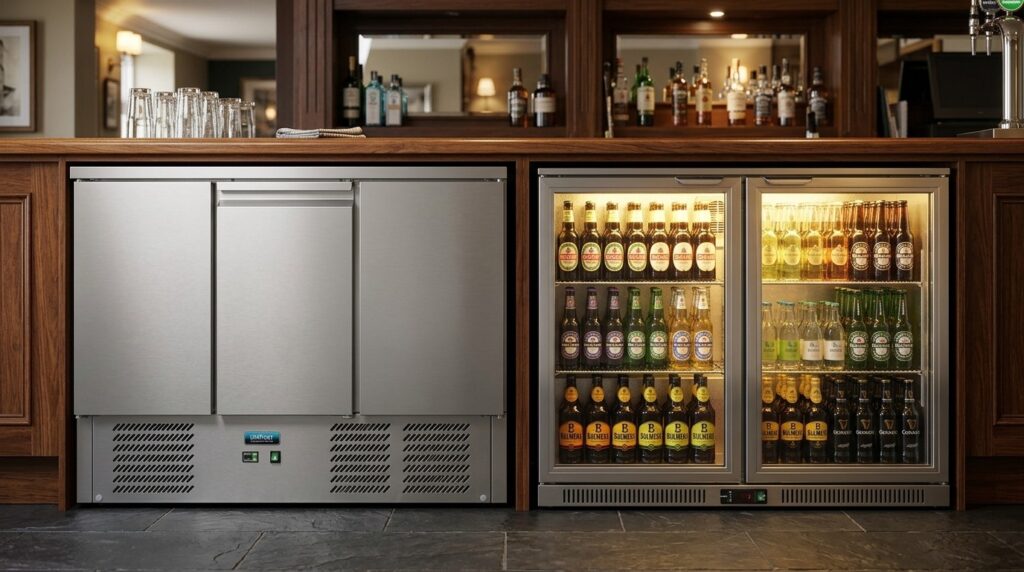
Explore the differences between Unifrost undercounter fridges and bottle coolers for back-bar planning in Irish bars. Practical support for choice and layout.
Unifrost R200SN/R200SVN vs BC20: Choosing the Right Back-Bar Storage for Irish Bars
When you plan back-bar refrigeration, you’re usually choosing between two priorities: hidden capacity and stable storage (a solid-door undercounter fridge like the Unifrost R200SN/R200SVN) versus drink visibility and fast grab-and-go service (a double-door bottle cooler like the Unifrost BC20).
This page helps you decide what to put behind your bar by comparing where each unit fits best, what you need to check before buying, and when a mix of both is the smarter layout. You’ll work through practical tradeoffs like solid door vs glass merchandising, undercounter positioning vs back-bar display, the day-to-day impact of a ventilated (fan-assisted) R200SVN compared with the R200SN, and the operational basics that matter in a busy Irish pub: temperature use for beer, wine and mixers, loading strategy on peak nights, ventilation and heat rejection, cleaning access, and running-cost considerations.
Core Differences Between R200SN/R200SVN and BC20
The practical difference is storage versus display.
R200SN/R200SVN are solid-door undercounter fridges. They suit bar prep, back-up stock and anything you do not need on show.
BC20 is a double-door bottle cooler with glass doors and lighting, designed for visible drinks storage and quick selection behind the bar.
If you are planning Irish back-bar storage, choose based on workflow first: what needs to be grabbed fast, what needs steadier conditions, and what you are happy to have visible during service.
How do R200SN/R200SVN and BC20 compare overall?
Visibility and service speed
Solid doors (R200SN/R200SVN) keep the cabinet closed and the contents out of sight. That helps in busy service because staff are less tempted to “browse” with the door open.
Glass display doors (BC20) make it easier to find products fast and keep best sellers front-and-centre, but they also invite more door opening.
Temperature use case
With an undercounter used for garnishes, open mixers, dairy and prepped items, you are managing a food safety routine as well as service speed. Use the FSAI guidance on keeping food cold as the baseline for what should live in a bar station fridge and how you manage time out of refrigeration: https://www.fsai.ie/business-advice/food-safety-controls/chilling-food-safely
A bottle cooler is typically used for drinks service conditions rather than bar prep. Treat it as a merchandising and service tool, not a substitute for a prep fridge.
Installation reality
“Undercounter” describes the footprint, not permission to box it in. Plan both unit types as freestanding unless the specific model manual states built-in ventilation is supported. Poor airflow behind a back bar is one of the fastest ways to end up with warm stock and a compressor that never gets a break.
R200SN/R200SVN (solid-door undercounter fridges)
Choose these when you need functional chilled storage more than you need bottles on display. In most bars they earn their keep at the service station: cut citrus, syrups, opened mixers, dairy, and prep containers.
Where the two versions matter operationally:
A ventilated (fan-assisted) undercounter (like the R200SVN) is generally the better bet when you expect frequent openings, want more even temperature across shelves, and need faster recovery.
A standard/static undercounter (like the R200SN) can suit quieter sections where the door is opened less often.
Because you cannot see inside, performance depends on discipline:
clear labelling
set par levels
a quick top-up routine before peak service
Otherwise, doors get left open and the unit ends up working harder than it should.
BC20 (double-door bottle cooler / back-bar merchandiser)
Pick the BC20 when the priority is presentation and fast selection. It fits best where staff need to grab by brand quickly or where customers are choosing from what they can see.
What to expect in use:
Glass doors and lighting help merchandising, but they also mean the cabinet behaves more like a display cooler than a closed storage fridge.
It is well suited to beer, soft drinks and mixers laid out for quick access, rather than open food items and prep tubs.
If you need a specific feature (for example a lock), check the exact BC20 variant and documentation before buying. Don’t assume, as back-bar coolers can vary by build and intended commercial use.
Which is best for you?
Most Irish bar fit-outs end up with a mix because each format does a different job well.
If you sell bottles on visibility and brand choice (busy pub lounge, hotel bar, table service), put a BC20 on the “selling face” of the back bar, and use an R200SN/R200SVN for prep and back-up stock.
If you are cocktail-led with heavy garnish and prep, prioritise an R200SVN at the cocktail station for recovery and consistency. Add BC20 display capacity only where it genuinely improves speed or sales.
If your back bar is tight on ventilation (snug joinery, warm plant area, low airflow), don’t line units up with no breathing room. Heat rejection and compressor run time will limit real-world performance long before you run out of shelves.
If you are unsure, the quickest way to decide is to map what gets opened every 30 seconds during peak service (prep fridge job) versus what needs to be seen at a glance (bottle cooler job).
Performance Across Different Bar Setups
Choosing between the Unifrost R200SN/R200SVN undercounter fridges and the Unifrost BC20 bottle cooler is really a back-bar planning decision: do you need the space to behave like prep storage during service, or like a merchandised bottle station?
R200SN/R200SVN: closed-door chilled storage for ingredients and backup stock. Better when you care about steady temperatures, mixed products, and keeping open containers out of sight.
BC20: a back-bar display cooler for visible bottles and fast pick. Better when speed of selection and presentation matter.
Both can hold bottled drinks, but you will get a better result by matching the unit to the job. If you are storing food items (garnishes, dairy, juices), your HACCP routine still applies. FSAI guidance is a useful reference point here: chilled food should be kept at 5°C or below where required for safety (FSAI temperature control guidance).
How do R200SN/R200SVN and BC20 compare overall?
In an Irish pub or hotel bar, the difference shows up during the rush:
If your team is building cocktails, coffees and mixed drinks, a solid-door undercounter is usually the more practical “workflow” unit. You are opening it for short grabs, storing mixed items, and trying not to warm the contents every time the door opens.
If your team is mainly pulling bottled beer, 0.0, mixers and water, the BC20-style bottle cooler supports “find it, grab it, sell it”. Stock is visible, organised, and easier to count at a glance.
R200SN/R200SVN (solid-door undercounter fridges)
These suit cocktail bars, gastro pubs with a busy service bar, and any venue where the “bar fridge” is doing ingredient duty as well as drinks. A solid door helps limit warm, humid bar air getting into the cabinet, which matters in smaller premises where the bar can run hot on a Saturday night.
The split between R200SN and R200SVN matters most when your loading and door-opening are constant. In general terms:
Fan-assisted (ventilated) cabinets tend to give more even temperatures across shelves when you are in and out repeatedly.
Non-ventilated cabinets can suit steadier storage patterns where the door is opened less and you are not trying to recover temperature every couple of minutes.
If your bar doubles as a prep area, solid-door storage also keeps dairy, garnishes and open containers out of customer sightlines, which is often the tidy, low-hassle option.
BC20 (double-door bottle cooler / back-bar merchandiser)
BC20 makes sense in wet-led pubs, late bars and high-volume venues where bottled turnover is high and restocking needs to be quick. The practical value is the combination of:
visibility (you can see what you have without opening doors),
fast selection (less time searching),
simple facing and stock control (quick counts reduce the risk of running out mid-session).
It is also the natural choice where the back bar is part of what customers see. Glass doors and internal lighting help you keep the back-bar looking organised, even when service is under pressure.
Which is best for your bar setup?
Start with your biggest pinch point:
If the problem is ingredient access and drink build, R200SN/R200SVN usually makes more operational sense because it behaves like a compact prep fridge.
If the problem is bottle speed and visibility, BC20 is the better tool because it is a display-first cooler rather than a general-purpose fridge.
A lot of Irish bars end up using both: a bottle cooler on the visible back bar, and an undercounter solid-door unit for ingredients and backup stock out of sight. Once you separate those jobs, it becomes much easier to plan your back-bar line so the busiest movements land on the cold storage that actually helps.
Day-to-Day Operation Considerations
Running an undercounter fridge (R200SN/R200SVN) day to day is mostly about protecting food-safe temperatures through busy door opening. Running a back-bar bottle cooler (BC20) is about steady “serve-ready” drinks, quick restock recovery, and keeping the unit presentable. In an Irish bar, the two big performance killers are the same: heat and airflow. If either is wrong, even a good cabinet will look underpowered.
1. Set temperature targets based on what’s inside
For the R200SN/R200SVN, treat it as ingredient refrigeration. Your risk is open and perishable items (dairy, garnishes, prepped mixers), not sealed bottles. Set a clear target that supports your HACCP checks. As a practical baseline in Ireland, chilled food is typically kept at 5°C or below, in line with FSAI guidance on cold holding. Confirm the actual product temperature with a probe, especially after busy periods.
For the BC20, you are usually managing service temperature and consistency, not minimum temperature. A slightly higher, stable range is normal for a back-bar merchandiser. Decide what you are optimising for:
Ready-to-serve drinks all night, or
Fast pull-down after restocking during peak trade.
2. Load for airflow, not maximum packing
Undercounters and bottle coolers react differently once the doors start flying.
R200SVN (fan-assisted/ventilated style): keep internal air paths clear. Overstuffing with gastro trays, squeeze bottles, or fruit tubs is how you get warm spots and uneven garnish temps during service.
R200SN (static style): avoid tight packing and overfilling. In real bar conditions, repeated door openings can slow recovery, so give product space and keep like-with-like for quick grabs.
For the BC20, don’t pack bottles hard against the back or any internal fan outlets. You will get uneven chilling and slower recovery after a refill. If warm deliveries are going straight into the cooler during trading, keep a “cold buffer” of your fastest movers already chilled, and use another cold space for pre-chilling where possible.
3. Make door behaviour part of the workflow
Solid doors on the R200SN/R200SVN help temperature stability, but only if staff can open, grab, and close without rummaging. Set the cabinet up to match the station:
garnishes and cocktail prep together
backups and sealed mixers separate
nothing loose that can catch in the door seal
Glass doors on the BC20 improve visibility, but they also encourage longer open times during a rush. Every extra second pulls in warm, moist air. If the cooler is customer-facing or in a tight pass, avoid staff propping doors while taking orders. Keep gaskets clean and intact so the door seals properly after the inevitable knocks.
4. Clean to prevent odours, icing, and “it’s not cold” calls
Nightly: wipe spills and sticky residues before they set. Sugar, beer, and syrups quickly become smells and extra labour behind a bar.
Weekly: remove shelves where possible, clean corners and drain areas, and check for stock blocking vents. A lot of “mystery warm” complaints come down to airflow restrictions, not a true refrigeration fault.
For the BC20, presentation matters because it is on show. Keep glass, frames, and light covers clean so the unit does its job properly. If you see persistent condensation or icing, start with door discipline and door seals, then check whether the unit has enough ventilation.
5. Protect running costs with ventilation and condenser care
Behind a back bar, ventilation is not optional. Boxing units in, lining several cabinets tightly together, or placing them beside heat sources (glasswashers, coffee machines, ice wells) will hit temperature performance and running costs.
Keep grilles clear and allow proper airflow around each cabinet.
Build a simple condenser cleaning routine. Dust and fluff build-up increases energy use and can shorten component life. It is one of the few maintenance jobs that reliably pays back in a busy pub.
On security: don’t assume any model is lockable as standard. If you need locks for your risk profile, confirm the exact configuration before you order. Retrofitting after fit-out is rarely tidy.
These habits land differently depending on your bar type. A wet-led pub, a cocktail-led late bar, and a bar-restaurant sharing space with food prep will all stress cabinets in different ways. Layout and service pattern matter as much as the unit choice.
Choosing Based on Venue Type
In an Irish bar, choosing between an undercounter Unifrost R200SN/R200SVN and a Unifrost BC20 bottle cooler is really a choice between working chilled storage and customer-facing drinks display.
R200 series (solid door undercounter): built for bar production. Think garnishes, juices, dairy, opened bottles, prepped items and anything you need to keep safely cold while you’re in and out all service.
BC20 (bottle cooler): built for speed of sale. Visible bottled drinks, quick grabbing, easy restocking, and fewer “what have you got?” delays at a busy bar.
Both can hold bottles, but they behave differently when you factor in frequent door openings, warm back-bar conditions, and the need to keep food-related items separate from drinks display.
R200SN/R200SVN: best for bars that need working cold storage more than display
If you run a food-led pub, a cocktail bar, or a hotel bar where staff are constantly reaching for garnishes, juices, milk, syrups and prepped items, the R200SN/R200SVN format is usually the more sensible fit. A solid door helps protect temperature stability when you’re dealing with radiant heat from glasswashers and coffee machines, or draughty customer areas.
It’s also the safer option when food is in the mix. Your HACCP routine generally focuses on keeping chilled foods in the right temperature range and recording checks consistently, as set out in the Food Safety Authority of Ireland’s HACCP guidance.
Between the two R200 variants, the day-to-day difference is how hard you’re working the unit:
If it’s being opened repeatedly through peak trading (cocktail station, service bar, busy pass), a fan-assisted/ventilated style undercounter like the R200SVN is often easier to live with because it’s designed to circulate air and recover quicker after openings.
If it’s more “reach in occasionally” (backup milk, spare mixers, prepped desserts), the R200SN type can still make sense, as long as you’re not expecting it to behave like a merchandiser for fast, visible bottle service.
BC20: best for wet-led pubs, sports bars, and high-visibility back bars
If bottled drinks drive a meaningful part of your sales and you want customers to see what’s available without asking, the BC20 is the more natural choice. It’s a back-bar merchandiser first, and in the product context provided it sits in a drinks-friendly temperature band of +1°C to +10°C.
On match nights or any time you’re two or three-deep at the counter, that visibility matters. It speeds up ordering, helps new staff find stock fast, and makes restocking more straightforward during a handover.
Layout and ventilation matter more than most bars expect. Bottle coolers need space to reject heat. If the unit is boxed into tight joinery in an older timber back bar, poor airflow can push up running costs and shorten component life. Plan ventilation properly as part of the fit-out, not after the first summer weekend.
Security is another practical point. Don’t assume there’s a door lock on a bottle cooler without checking the exact BC20 spec for the unit you’re ordering. Lock inclusion can vary by model and build.
When a mix of both is the right call in real Irish bar service
Many mixed-service venues end up better with one BC20 for front-and-centre bottled sales, plus an R200SVN (or R200SN) closer to the cocktail or service station for garnishes, open wine, juices, dairy and backup stock.
This avoids a common operational trap:
Load a bottle merchandiser like a kitchen fridge and you lose the point of having a display unit.
Try to use a solid-door undercounter as your main bottle “showcase” and you slow service, increase door openings, and make life harder during peaks.
Once you decide what’s display stock versus working stock, the equipment choice gets simpler. You’re matching units to how staff move in a rush, not how the bar looks on a quiet Tuesday.
Integrating Unifrost Solutions into Bar Layout
The right set-up depends on what you are optimising for: speed of service, visible sales, or (in most Irish bars) a bit of both. Layout decisions are also tied to food safety. Chilled food needs to be held at 0–5°C, per the Food Safety Authority of Ireland guidance on maintaining safe food temperatures. That matters because a back-bar “cold zone” that looks great to customers is not always the best place for garnish, dairy, or any open prep items when doors are being opened constantly during peak trading.
Put each unit where it earns its keep: visibility vs protected storage
Put customer-facing stock where it sells, and keep ingredients where they stay stable.
BC20: Use it as the customer-facing merchandiser. It suits the back-bar line where customers can see stock and staff can grab quickly. It also keeps premium bottled lines visible, instead of disappearing into a solid-door cabinet.
R200SN / R200SVN: Use these where you need more protected, consistent chilled storage for ingredients and backups, particularly items you do not want sitting in a high-traffic, high-heat, high-light bar environment. In practice that means cocktail station mise en place, dairy for coffee service (in mixed bar and restaurant venues), garnish, syrups, and backup soft drinks that do not need to be on display.
Plan the back-bar as two lanes: “serve” lane and “stock” lane
A lot of speed issues come down to workflow, not cabinet size. If the same door is being used for every grab and every restock, you get bottlenecks.
A simple way to plan it:
Keep the BC20 in the “serve lane” directly behind the main pour point or POS. Your highest-frequency bottled lines should be one step, one open, one grab.
Keep the R200SN/R200SVN in the “stock lane”: at the end of the bar run, under the cocktail prep section, or in a small bar-support alcove. The goal is to stop staff blocking the well to fetch garnish or backup tonic.
If space is tight, it is usually better to split the job across two cabinets than to ask one unit to handle display, backup, and prep storage at once.
R200SN vs R200SVN in a bar: why “ventilated” matters day to day
The day-to-day difference shows up when doors are opened repeatedly during service.
A ventilated, fan-assisted undercounter fridge (for example, the R200SVN) is typically chosen where you want more even cabinet temperature and better recovery after short, frequent door openings. That suits cocktail stations and busy garnish storage.
A more standard undercounter model (for example, the R200SN) can still be the better fit where door openings are less intense, or where you want straightforward chilled storage without building the station around constant access.
If your team tends to “ride the door” at peak, you will usually notice the difference as fewer warm spots and less temperature drift. The trade-off is that you need to keep vents clear, avoid overloading shelves, and keep air paths open.
Built-in vs freestanding: design ventilation first, then pick the cabinet
A common fit-out mistake is boxing units into joinery and leaving them with no way to get rid of heat. The result is predictable: higher running temperatures, slower recovery, and more breakdown risk at the worst time.
Unless you have confirmed the exact installation requirements for the model you are fitting, plan for reliable airflow around the refrigeration system and avoid sealing cabinets into tight spaces with no ventilation path.
This is also about comfort and performance. A line of cabinets dumping warm air into a tight bar area can raise ambient temperature, make staff uncomfortable, and reduce cooling performance during the rush.
Temperature and loading strategy for busy nights (beer, mixers, cocktails)
The BC20 operating range is stated as +1°C to +10°C, which suits bottled drinks and back-bar service. It will perform best if you load it like a merchandiser, not a storeroom:
Keep the front rows as sell-through stock.
Replenish from separate backup storage.
Avoid long door-open times while staff search for stock.
For R200SN/R200SVN use, treat them as controlled cold storage for bar ingredients and backups:
Pre-chill what you can before service.
Store like-with-like (garnish together, dairy together).
Keep open items in sealed containers.
Leave air gaps so cold air can circulate.
If you are routinely packing any undercounter unit solid before a Friday night, that is usually a sign you need either a second cabinet or a different split between visible BC20 space and protected R200 storage.
Security, noise, and “can I put it in a shed?” questions at fit-out stage
For overnight security, bars often ask about door locks on bottle coolers. Locking is model-specific, so confirm it before you build a closing routine around it. Placement helps too: keep high-value display units within CCTV sightlines and away from the easiest exit route.
On “shed/home bar” questions: these are commercial units designed for commercial duty cycles and ventilation. They can work outside a typical bar environment, but they are not designed around domestic noise expectations, low-usage patterns, or cold outbuilding conditions. The practical takeaway is to treat them as commercial appliances: give them proper airflow, stable power, and an environment that supports consistent operation.
Get the layout right and the same cabinets feel effortless on a Saturday night. Get it wrong and they become another obstacle when you are three deep at the counter.
FAQs for back-bar storage planning
How many bottles or items can each unit hold?
Capacity depends on how you shelf and load the unit, and what you’re storing.
R200SN / R200SVN (solid-door undercounter fridges): best thought of as ingredient and service-stock storage for a bar or cocktail station. You’ll typically load these with mixers, juices, garnishes, dairy, pre-batched cocktails, and opened stock in GN pans or crates, rather than trying to “count bottles”. For planning, sketch your service list and allocate shelves to the containers you actually use (GN, crates, 700 ml, 1 L, PET mixers).
BC20 (double-door bottle cooler): designed for upright bottle/can display behind the bar. Real-world bottle counts vary with bottle shape, whether you double-stack, and whether you dedicate shelves to cans or premium glass. If bottle count is critical, build your plan around your top sellers (for example, standard longneck vs stubby vs 500 ml) and request the model’s shelving layout so you can map facings per shelf.
If you need an exact count for your SKU list, the quickest route is to list your core bottle formats and we can help you translate that into a shelf-by-shelf loading plan rather than relying on a single headline number.
What is the energy efficiency of these models?
Energy use is driven more by how the unit is used and installed than by the model name alone.
Solid-door undercounter fridges (R200SN/R200SVN) generally have an efficiency advantage in bars because the door is opened for short grabs and then closed, with less cold-air loss than glass display doors.
Glass-door bottle coolers (BC20) trade higher visibility for higher load: internal lighting, frequent browsing, and warm bar air hitting the door area can increase consumption.
To keep running costs down in Irish bar conditions:
Keep clear ventilation space around the condenser area and avoid boxing units in.
Set temperatures realistically for your serve style, and avoid “colder than needed” setpoints.
Don’t overload air paths. Leave space for airflow around stock.
Clean dust from the condenser area routinely; a dirty condenser is one of the most common causes of rising energy use.
If you’re comparing two specific listings, use the official energy label or spec sheet for like-for-like kWh figures, because it accounts for the test method used for that exact model.
Can BC20 be used in a domestic setting?
Yes, it can be used in a home bar, garage, or shed, but it’s built as a commercial back-bar merchandiser, so plan for commercial realities:
Ventilation and heat: it needs free airflow to reject heat. Avoid tight alcoves or fully enclosed cabinetry.
Noise: commercial units can sound more “industrial” than domestic fridges, especially in very quiet rooms.
Ambient conditions: sheds and garages can swing hot or cold. Performance and condensation control are best when the unit is kept in a more stable indoor environment.
Power and access: confirm you have a suitable socket, and that the route into the space can handle the unit’s size and weight.
If you want the look and display benefits at home, the BC20 is usually a good fit as long as you treat it as a freestanding, well-ventilated appliance rather than a built-in kitchen fridge.
Next step: build a back-bar refrigeration plan
If you’re deciding between an R200SN/R200SVN undercounter fridge and a BC20 bottle cooler, the most useful next step is to map your actual service flow: what needs to be hidden and close to hand (ingredients and prep stock) versus what should be visible and easy to grab (bottled and canned drinks).
Browse Unifrost’s range of options and layouts here: commercial fridges.
Related Unifrost guides
Compare models, maintenance advice and support information related to this topic.
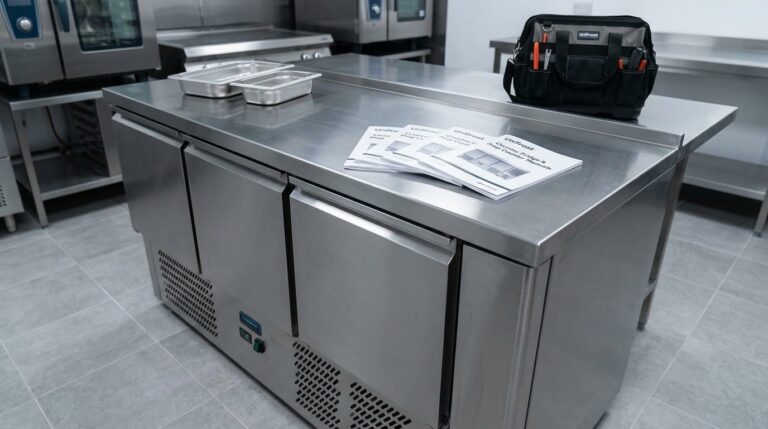
Unifrost Counter Fridge Prep Counter Saladette Manuals and Installation Support
Manuals, controller guidance, setup checks and troubleshooting help for Unifrost counter fridges, prep counters and saladettes.
Read guide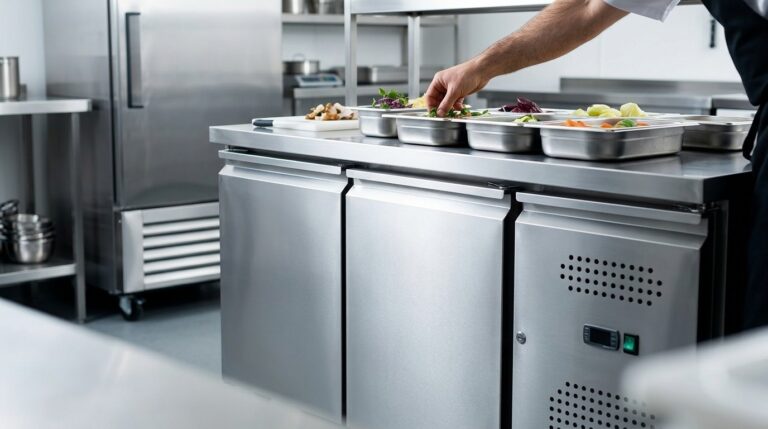
Choosing the Right Unifrost Under Counter Fridge for Your Business
Explore Unifrost under counter fridges, ideal for busy Irish kitchens where space and efficiency are vital.
Read guide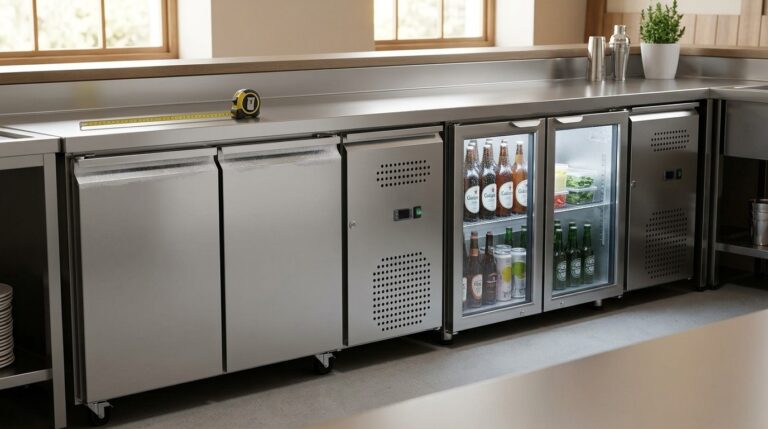
Choosing the Right Unifrost Undercounter Fridge for Irish Businesses
Discover the best Unifrost undercounter fridges for your Irish business. Learn about sizing, cooling types, and energy efficiency.
Read guideView Unifrost bottle coolers at Caterboss
For current product options, pricing and availability, continue to Caterboss.