
Workflow Planning Guide for Unifrost Upright Freezers and DCF Deli Counters in Irish Hotel Kitchens
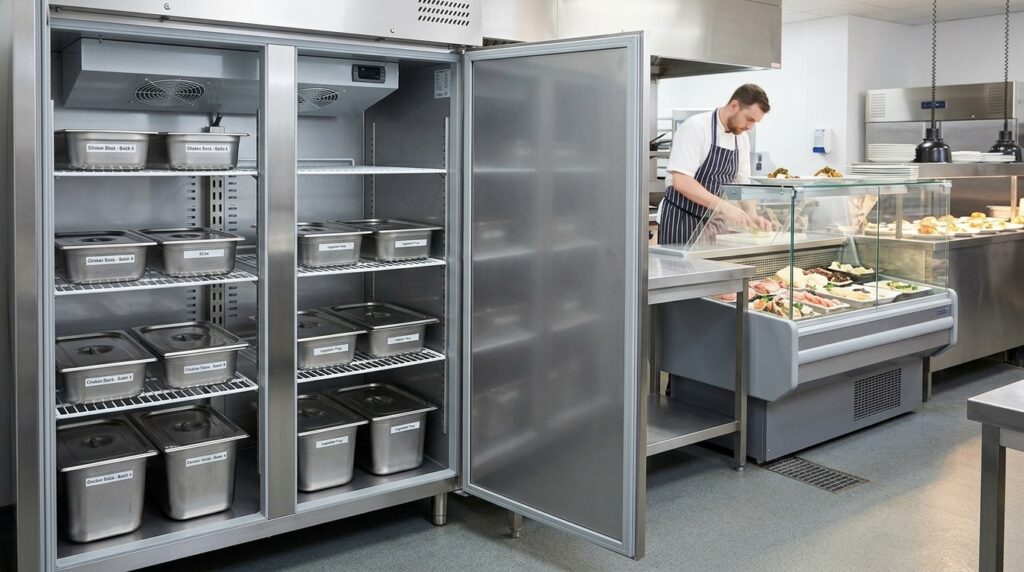
Optimize your Irish hotel's kitchen workflow with Unifrost upright freezers and deli counters. Practical tips for efficient service in banqueting setups.
Workflow Planning for Unifrost Upright Freezers and DCF Deli Counters in Irish Hotel Banqueting Kitchens
If you run banqueting in an Irish hotel, your refrigeration layout directly affects speed of service, HACCP compliance, labour cost, and how often doors are left open during a 100 to 300 cover push. This guide focuses on planning a practical workflow using Unifrost upright freezers (including ranges like F410SS and larger SV models) alongside Unifrost DCF serve-over deli counters (DCF1300 and DCF1600 variants).
You will work through the real decisions that make or break throughput: where uprights sit relative to prep, plating, blast chilling, and pass; how to zone cabinets by function (banqueting, breakfast, bar, overflow, allergens); when GN pans beat wire baskets for portion control and pick speed; and how to set up landing space, labelling, and shelf maps so agency staff can operate the same way every shift. You will also see the key checks to make before you commit to an install or a re-fit, including access clearances, power and ventilation planning, and how to stress-test the layout before wedding season.
Why this topic matters in commercial use
Freezer and deli-counter workflow planning is simply deciding where frozen stock lives, how it’s portioned, and how it moves through prep and service. In Irish hotel banqueting, that matters because 100–300 covers compress a lot of decisions into short windows. If picking is slow, you get longer door-open time, temperature drift, cross-traffic in tight corridors, and avoidable labour cost.
Most banqueting setups rely on a mix of upright freezers for controlled storage and quick access, plus a serve-over deli counter for organised chilled presentation and service support. The key detail is that the “right” layout depends on the job. A freezer used as a service pick during peak plating needs different organisation to a freezer used for longer-term back-up storage. Door-opening patterns and stock rotation are not the same.
Why banqueting exposes weak freezer habits
Banqueting production is predictable on paper and messy in the last 30 minutes. When staff have to hunt for product in an upright freezer, you pay three ways: longer door-open time, more steps, and more handling “just in case” that undermines portion control.
This is why many hotels assign specific roles to different uprights instead of treating them as shared storage. A bank of uprights can work well when each cabinet has a clear job (banqueting pick, breakfast back-up, bar overflow, allergen-controlled holding) rather than becoming a dumping ground. The brand and model matter less here than the discipline: one cabinet, one purpose, with labelling that stands up to agency staff and a busy pass.
Food safety and HACCP consequences are operational, not theoretical
This is not only about speed. Good workflow makes your HACCP routine easier to follow under pressure, especially where cook-chill or make-ahead production feeds banqueting.
If you run cook-chill, the storage and handling steps need to be designed so the team can actually comply during service, including rapid chilling and controlled cold storage, as set out in FSAI Guidance Note 15 on cook-chill systems. When the layout is wrong, paperwork may still get ticked off, but behaviour drifts into “door open, tray in, sort it later”. That is where temperature control and allergen segregation tend to slip.
What you are really trying to reduce: steps, searches, and door-open time
In practical hotel terms, “workflow planning” means removing decisions from the pass and building a simple map that any competent staff member can follow. Once you add a deli counter into the flow, you also need clear rules on what lives there (service-ready chilled items) versus what stays back-of-house in uprights (bulk back-up, longer-hold items, segregated allergens, overflow).
Work-in-progress freezer: organise for fast pick and clear labelling, not maximum theoretical capacity.
Bulk freezer: organise for stock rotation and fewer openings, not rapid access.
Deli counter: position it so plating and replenishment do not compete for the same narrow strip of floor, especially when trolleys and hot holding are also in play.
Get those basics right and the upright freezers and deli counter start behaving like a system in day-to-day service, rather than two pieces of kit sharing the same room.
Key considerations for integrating Unifrost equipment
Integrating Unifrost uprights with a DCF deli counter in an Irish hotel banqueting kitchen is mostly a workflow problem, not a “how many cabinets can we fit” problem. The biggest losses come from door-open time, cross-traffic, and product sitting at ambient while someone searches for stock. That hits service speed and food safety. The FSAI guidance is clear that freezers in food businesses should be kept at -18°C or colder, and it warns against overloading cold storage with warm food because it drives cabinet temperatures up and increases risk (FSAI temperature control guidance).
More cabinets do not automatically fix this. If access, landing space, and staff routes are wrong, you simply create more doors to open and more places for stock to disappear.
Sizing: decide what each upright is for before you decide how many you need
In most Irish wedding and conference hotels, the freezer workload splits in two during peak weeks:
Fast-pick stock during prep and service (fewer SKUs, high access).
Bulk holding (higher volume, lower access).
If you ask one bank of uprights to do both without rules, fast-pick shelves get buried behind slower-moving stock. Then doors stay open longer, packs get crushed, airflow gets blocked, and the “quick grab” becomes a rummage.
A more reliable approach is to size and assign roles based on event pressure, not model names. In practice, that usually means:
One upright designated as the fast-pick cabinet for banqueting.
One or more uprights designated for bulk and overflow where doors can stay shut.
If you use an undercounter freezer, keep it for allergen-controlled backup or “service insurance” items that must be accessible without tearing through bulk stock.
The goal is simple: staff should be able to pull pre-portioned, labelled items in seconds without shifting trays, blocking vents, or leaving product at room temperature.
Placement: reduce steps between cold storage, cold assembly, and the pass
Your DCF deli counter is most useful when it acts as a controlled cold assembly point for starters, desserts, buffet components, and carvery-style service. Position it to shorten the walk between prep benches and the service exit, but do not make it part of a main route. If staff have to squeeze past it to reach pot wash or dry store, you will see unnecessary heat load and constant interference during busy set-ups.
For uprights:
Keep the fast-pick freezer closest to the production area that uses it (banqueting prep is usually the pinch point).
Put bulk/overflow uprights slightly further back, where doors are less likely to be held open.
Plan a proper landing zone between freezer and counter. If there is nowhere to park a trolley, GN rack, or labelled tote while the door shuts, staff will default to leaving the door open “for speed”. That costs temperature stability and slows recovery during service.
Workflow integration: make the cold-chain handoff repeatable
This setup works when the team follows a simple handoff every time:
Cool or freeze product correctly.
Move it into the appropriate upright zone (fast-pick or bulk).
Stage into the DCF counter in controlled batches that match the service run.
That avoids a common banqueting failure: pushing warm or just-chilled product into a storage freezer during a rush, dragging cabinet temperature down and creating a mix of part-frozen, mislabelled items.
Use one shared “map” across the uprights and the DCF so any chef, KP, or agency staff member can work without asking. Keep it on the freezer door and above the DCF in a wipe-clean sleeve:
Top-to-bottom zoning by task (service pick, tomorrow’s prep, bulk/overflow, allergen-controlled), with consistent labels and container types so the same item always lives in the same zone.
That map also supports HACCP in the real world. It reduces unnecessary stock movement and makes probe checks and corrective actions more achievable when the hotel is full and the banqueting docket is tight. If you can walk the route and pull a full starter run with two door openings and one trolley park, you are close to a layout that will hold up through wedding season without heroics.
Common pitfalls in freezer and deli counter layouts
If your uprights and deli counter are laid out without a clear pick route, doors stay open longer and people cross paths. That’s when cabinet temperatures drift and service slows, especially under banqueting pressure. It also raises food-safety risk, because chilled and frozen food still has to stay within your HACCP controls, as set out in Irish guidance such as the FSAI guidance on temperature control of food.
You usually see this first during wedding and conference spikes: landing space disappears, agency staff are in, and “I’ll just grab it quickly” turns into repeated, long door-open cycles. It also adds to running cost, because uprights have to pull temperature back repeatedly in a warm kitchen.
The “one big freezer for everything” trap
Using a single upright for banqueting pick stock, breakfast backup, bar overflow, and long-term storage guarantees constant openings and constant rummaging. In practice, rotation slips and stock ends up in the wrong place, which is where allergen segregation and traceability start to get messy during changeovers.
The fix is usually simpler than more labels: decide which cabinet is fast-pick and which is bulk hold, then treat that boundary as a rule, not a suggestion.
Overfilling with GN pans (and blocking airflow)
A cabinet can look “full” and still perform poorly if GN pans are packed tight to the back or stacked so high they block airflow. The result is uneven freezing and slower recovery after door openings, which is the exact moment you need it to stabilise during plating runs and dessert pick-up.
This is also where warm product gets pushed into an upright after prep. Recovery takes longer, and temperature records become harder to stand over if you ever need to explain a deviation against the FSAI guidance on temperature control of food.
Putting the deli counter in the wrong place (and using it like a store)
If the deli counter is positioned so staff have to walk back through prep, or around hot equipment, to reach the uprights, you add steps and delays. Cold product sits out while someone does “one more run” to the freezer.
The next problem is predictable: the deli counter becomes a convenient holding bay for backup trays. That eats into service space and increases the chance of mix-ups with garnishes, allergens, and plated components. A better working rule in hotel banqueting is deli counter for service-facing presentation and controlled replenishment; uprights for disciplined backup.
No landing space, no rules, and no shared “map”
Without dedicated landing space beside each upright and an agreed shelf plan, every pick becomes a door-open search. Trays get parked wherever there’s a gap. This multiplies when you’re running more than one cabinet, because staff stop trusting locations and start opening multiple doors “just to check”.
A simple pre-season stress test often does more than another label-printer run, as long as you write it into the SOP and train it the same way you train plating:
Run one mock pick-up for 100 and one for 300 covers, and time door-open minutes
Create a “new staff” scenario where someone unfamiliar must pick from the shelf plan only
Define what counts as overflow, where it goes, and who is allowed to move it
Check the route from upright to deli counter to pass for pinch points and hot-side crossings
These issues are all fixable, but the solution is usually about workflow: power, ventilation, access clearances, landing space, and who touches what at each stage, not just where the cabinets fit on a plan.
Aligning equipment usage with kitchen operations
Match each cabinet to how your banqueting kitchen actually works, not how you’d like it to work on a quiet Tuesday. The simplest split is:
Fast-pick during service: items chefs need repeatedly, quickly, with minimal door-open time.
Bulk storage: everything else, accessed less often and ideally outside peak service pressure.
Once you’ve decided what belongs in each bucket, assign specific Unifrost uprights and DCF deli counters to those roles so teams are not fighting for the same door space. Keep it consistent with a clear cabinet map (GN pans, baskets where they make sense, and labelling that survives a busy shift). Tie the routine back to your HACCP checks, including limits, monitoring and corrective actions, in line with the FSAI HACCP principles/principles-of-haccp). Before wedding season, run a timed mock service and adjust based on where staff actually queue, not where the SOP says they should.
1. Define what “service pressure” looks like in your hotel
In banqueting, the common failure mode is one upright becoming the bottleneck because too many sections treat it as shared overflow.
Plated service: you want short, predictable pick paths and minimal door-open time.
Buffet: you need bulk access and quick replenishment without dragging frozen stock through a busy pass.
Write down what must happen in the last 60 minutes before service for starters, mains, desserts and late-night food. If the job involves “open freezer, decide what to take, close freezer”, you’re designing for door-open time and indecision, not speed.
2. Assign each cabinet a job, not a food type
Treat uprights as tools with owners, not as general “freezer space”. In practice, that usually means:
one or more uprights dedicated to banqueting fast-pick (pre-portioned items)
separate uprights for longer-term storage, breakfast, bar, and true overflow
A bank of uprights (for example models such as F410SS, F620SV, F1000SV/F1000SVOG, F1300SV/F1300SVNOG, and F1310SV) can suit this approach because you’re splitting responsibility by section and task, rather than trying to manage one cabinet with too many users.
For chilled service and presentation, treat DCF deli counters (such as DCF1300/DCF1300OG and DCF1600/DCF1600OG) as service buffers. They should hold what’s being plated or served in the next short window, not become the only home for the product. That reduces panic restocking and cuts traffic between prep and service when the room heats up.
3. Map the internal layout for pick speed, portion control, and airflow
If you’re trying to push 100 to 300 covers without doors hanging open, the inside layout matters as much as the cabinet count.
GN pans are typically best for pre-portioned banqueting items because they standardise portioning, labelling and replenishment.
Wire baskets suit quick grab-and-go units (sealed bags, wrapped breads, individual desserts), where you can accept less tidy packing density.
Keep the layout consistent across fast-pick uprights so agency staff and cross-cover chefs can work from muscle memory. A workable “map” looks like this:
Top: allergen-controlled or higher-risk ready-to-eat items you want away from splash and heavy handling.
Middle: next-service components (pre-portioned starters, desserts, garnish packs), organised by function, not by supplier box.
Bottom: bulk backups and heavier packs, where bending down is acceptable because it’s not a constant pick.
If you’re setting up an upright like the F410SS for fast-pick, prioritise a stable pattern over maximum fill: a small number of clearly labelled GN pans for the next function, plus one obvious back-up zone. The practical gain is fewer decisions while the door is open.
4. Use blast chilling properly so warm product never goes into storage uprights
In cook-chill banqueting, the upright freezer should be the storage step, not the cooling step. Use blast chilling first (for example BC5UN/BC10U/BC14U), then transfer product to the upright once it has reached your agreed chilled or frozen handling point, with sign-off built into the routine.
Plan for two landing spaces:
one beside the blast chiller for hot-to-cold transition trays
one beside the upright freezer for labelled, ready-to-store product
That physical separation helps stop shortcuts, like putting warm or poorly labelled items straight into an upright during service pressure, when temperature control and allergen discipline are most likely to slip.
5. Stress-test the workflow and lock it into training and SOPs
A freezer and deli counter plan only works if it survives a Saturday wedding when two chefs are out and the breakfast team is borrowing space. Do a timed rehearsal using a real banqueting menu:
how long does it take to pick 30 portions of each component?
where do people collide?
which doors get opened repeatedly?
Then capture three rules in your SOPs:
Who owns each cabinet (and who can use it, and when)
What the DCF counters may hold, and for how long in your process
What happens at overflow, including where product goes and who signs off
It makes HACCP monitoring and corrective actions easier to apply in the real world, and it stops your layout unravelling the moment service pressure hits.
Practical steps for implementing a new layout
Start by defining what “good” looks like for service speed, door-open time, and HACCP compliance. Then map the routes between blast chilling, upright freezer storage, and any DCF serve-over point. Trial the layout using a real banqueting menu and timed pick runs, and adjust shelf zoning, labelling, and landing space until staff can work without queueing at doors. Only sign it off after you have run it under worst-case conditions: full covers, tight turnaround, and a mix of trained and relief staff.
1. Set success criteria that match Irish banqueting reality
Write down three to five measurable outcomes before you move a shelf or a GN pan. In hotel banqueting, practical targets are:
No door held open while someone decides what they’re looking for
No cross-traffic through the hot pass or plating line
No mixing of allergen-controlled stock with general picks
Build these around your HACCP plan, not personal preference. The layout needs to support monitoring and corrective action, not just make storage feel tidy. If you need a clear temperature benchmark for checks and supplier acceptance, the FSAI guidance on keeping frozen food at -18°C or colder is a sensible reference point for Irish kitchens:
https://www.fsai.ie/business-advice/running-a-food-business/food-storage-and-distribution
2. Map the real workflow routes between blast chill, uprights, and the DCF counter
Treat this as a movement problem first, and a storage problem second. On a quick kitchen sketch, draw the shortest staff route for each flow:
Production to blast chill (if used)
Blast chill to upright freezer (storage)
Upright freezer to prep bench (regen, portioning, backup)
Prep to DCF serve-over (starters, desserts, carvery-style service)
Layouts usually fail in the in-between spaces: where trays land, where a trolley turns, and where two jobs collide during set-up. If the DCF serve-over is in a banqueting suite or plating room, set up replenishment so a runner can restock from a designated “fast-pick” upright without cutting through pastry, breakfast prep, or the busiest part of the kitchen.
3. Build shelves and containers around how people pick under pressure
For banqueting, aim for “one glance, one grab”. Put your most-used items between waist and shoulder height and avoid stacking that forces extra handling while the door is open.
Decide where GN pans make sense (portion control, clear labelling) versus where baskets make sense (fast visibility for bulk packs). The key is consistency across the bank of uprights so relief staff are not re-learning your system at 6pm before a wedding.
4. Run a timed peak-pick trial with one real menu, then change one variable at a time
Do a dry run using the actual items you will pick on a busy service: cold starters, desserts, allergens, backup veg, ice cream, and any likely late-change options. Time how long a staff member takes to complete a standard pick list, and watch what actually causes delays:
Searching and re-checking labels
Opening multiple doors for one list
Moving stock to reach stock
Queueing behind another job at the same upright
Trips to replenish the DCF that cut through the busiest prep area
Use one simple checklist so you can compare trial A versus trial B properly:
Door-open time per pick (and whether staff hesitate)
Number of “double-handles” where stock is moved to access other stock
Where congestion happens (door, landing space, trolley turn)
Any point allergens could be picked incorrectly under pressure
Whether DCF replenishment disrupts plating or hot holding
Keep the changes controlled. If you move shelves, don’t also change labels and container types in the same test, or you won’t know what improved the result.
5. Stress-test blast chilling to freezer loading so you don’t warm the storage upright
If blast chilling is part of your cook-chill routine, agree the handover rule from blast to storage and make it explicit. The operational aim is simple: don’t load warm trays into an upright freezer during a service window. It drives longer compressor run time, slower recovery, and more door-open time while staff try to “make it fit”.
Run one trial where a batch finishes chilling at the same time as the banqueting pick is happening. If your landing space and roles don’t stop the freezer being used as a temporary cooling cupboard, fix the process, not the thermostat.
6. Lock in controls: labelling, allergen zoning, and a freezer map that works with agency staff
Once the shelves work, make the layout easy to follow when your strongest operator is off. A freezer “map” can be a single A4 sheet on the door showing:
Shelf zones
What product families are allowed on each shelf
The replenishment rule for the DCF serve-over
For allergen-controlled frozen stock, keep the approach aligned with your documented allergen management system. The zoning should support traceability under pressure, not just good intentions. FSAI allergen guidance is the right reference point for what your controls need to achieve in practice:
https://www.fsai.ie/business-advice/allergens
7. Write an overflow and failure-mode plan before wedding season
Banqueting rarely fails on a normal day. It fails when you get an extra 60 covers, a late dietary change, or a delivery that lands mid-set-up. Decide now what happens:
When each cabinet is full
When one cabinet is down
When the DCF needs rapid replenishment without derailing plating
Keep the SOP short and specific: where overflow goes (by cabinet and shelf zone), who is allowed to move stock, what must be relabelled if location changes, and what is not allowed in the fast-pick uprights because it slows service.
If you can’t make the overflow plan work on paper, it’s a sign you may need dedicated banqueting uprights rather than relying on general storage that gets raided during breakfast.
Getting these steps right makes later decisions on access, positioning, ventilation clearances, and day-to-day running far easier to validate in the real kitchen, not just on a drawing.
Connecting to the Unifrost support ecosystem
What “good support” looks like depends on how you use the cabinet. A freezer used as a fast-pick service unit in banqueting will be opened constantly. A freezer used for deep storage might only be opened a few times a day. Your controls, labelling, and temperature checks need to reflect that reality.
Irish hotel kitchens are also expected to run documented food safety controls. The FSAI’s HACCP guidance for food businesses is a solid reference point when you’re deciding what must be labelled, temperature-checked, and kept segregated in chilled and frozen holding. The key point is that “support” is not just a call-out when something fails. It’s also your layout, your SOPs, and how reliably even new or agency staff can follow them when service is under pressure.
Use Unifrost support assets to standardise your freezer and counter maps
If you want uprights and counters to feel quicker in service, treat the internal layout as a set system rather than personal preference. Agree one shelf plan per cabinet role (banqueting pick, breakfast back-up, bar overflow, allergen-controlled hold) and keep it consistent across the same model types. That way, a chef moving between sections is not re-learning where stock lives mid-shift.
Where product documentation and accessory information is available, keep the relevant PDFs alongside your own shelf maps in one shared location staff can access quickly. The operational win is fewer “door-open seconds”, fewer wrong picks, and cleaner HACCP records.
Join up uprights, blast chilling, and deli counters as one cold-chain workflow
Serve-over and deli counters can end up treated as front-of-house kit only. In banqueting and high-volume prep, they’re often more valuable as a controlled staging point between back-of-house storage and plated or buffet service, but only if the rules are clear.
Decide in advance:
What stock can move from uprights into a staging counter during service
What must stay as back-up stock
What should never sit in a staging counter because it will be opened too frequently
If you’re also running blast chilling, one rule is worth being strict on: don’t use storage uprights to compensate for a missed chill cycle. If your SOPs define “ready for storage” in plain terms (protected, labelled, chilled properly before freezing, assigned to a cabinet zone), you reduce the behaviours that lead to warm loading, ice build-up, and avoidable stock rotation problems.
Make troubleshooting and routine care part of the ecosystem, not an afterthought
Most refrigeration downtime starts as a small operating issue: airflow blocked by overfilled pans, door seals taking a hammering because staff lean on doors during pick, or condenser areas never being cleaned because nobody “owns” it. If you treat support as part of how you run the kitchen, you can build a simple weekly rhythm: quick visual checks, basic cleaning responsibility, and a clear trigger for escalation before you lose product.
A freezer used as a fast-pick cabinet needs different discipline to one used for deep storage, even if the model is the same. Door-open frequency and loading pattern change everything.
When you need help, capture the information that speeds up a fix
When you do need technical support, the speed of the fix often comes down to what you can report from the kitchen floor. Use one shared reporting template across your uprights and counters so the first message includes what a technician or parts desk will ask for anyway:
Model ID and serial number from the rating plate
Location (main kitchen, banqueting plating, bar back-up)
What it’s used for (fast-pick vs storage)
Current product condition (hard frozen, softening, frosting)
Door seal condition
Photo of the controller display and a quick photo of the load arrangement
That level of detail helps separate genuine faults from workflow issues. It also feeds back into better planning for ventilation, access, and positioning when you’re tightening up a banqueting line or reworking how uprights and counters are used day to day.
FAQs for hotel banqueting freezer and deli-counter workflow planning
How should I lay out a Unifrost upright freezer for hotel banqueting to enhance staff efficiency?
Treat the upright as a pick cabinet, not a deep store.
Put a landing zone beside it: a clear stainless bench or trolley space so staff can open once, pull multiple items, close, then portion or plate without holding the door open.
Build a simple shelf map (top to bottom):
Top shelves: fastest-pick items for the next 30 to 90 minutes of service (pre-portioned desserts, ice, garnish components).
Middle shelves: core banqueting items you pick repeatedly (starters components, plated veg portions, backup bread rolls).
Bottom: heavy or bulky items and “do not pick in service” overflow.
Allocate by function, not by product type: e.g. one clearly labelled section for Banqueting Tonight, one for Breakfast Backup, one for Bar/Events, and one for Overflow/Week Stock.
Standardise packaging: use the same GN size or box format per shelf so staff can grab by muscle memory.
Mirror the layout across multiple uprights: if you run more than one Unifrost upright (for example F410SS plus a larger cabinet such as F1000SV or F1300SV), keep the same shelf numbering and labels so agency staff can work quickly.
What factors determine the number of freezers and deli counters needed for a 300-cover event?
For a 300-cover banqueting push, the constraint is usually pick rate and access, not total litres.
Key sizing factors:
Service style: plated service needs fast access to pre-portioned components; buffet or grazing needs more front-of-house chilled display time and tends to suit a larger or additional DCF counter.
Menu complexity and allergen splits: more distinct items and allergen-safe alternates usually means more dedicated zones and potentially an extra upright or a dedicated sectioned cabinet.
How far the kitchen is from the pass or suite: long travel distances benefit from a “service-facing” upright (fast pick) plus a second cabinet as back-up stock so the service cabinet stays organised.
Door access and staffing: if multiple sections are picking at once (dessert, starters, canapé), two smaller pick points can outperform one large cabinet.
How the DCF is being used:
If the DCF1300/DCF1600 is used as a plating and hold point for cold starters and desserts, you may need one counter per service line (or per suite) to avoid queues.
If it is mainly for display and controlled service, you size it to the length of the menu and the time items must stay presented.
A practical way to decide is to run a 30-minute “mock service” with trays and GN pans and measure: how many door opens per minute, where queues form, and how often staff have to re-locate items mid-service.
How do I ensure allergen compliance when using Unifrost equipment for banqueting?
Use the equipment layout to make allergen control the easy default.
Separate by shelf and container, not just by label: dedicate a clearly marked shelf zone for allergen-controlled items and keep them in lidded GN pans or sealed containers to prevent cross-contact from torn packaging or loose crumbs.
Colour-code and standardise labelling: include dish name, allergen status, date/time, and event name so stock cannot drift between functions.
Create a two-step pick rule: allergen-safe items are picked first into a clean, dedicated tray or tote, then general items are picked afterwards. This reduces accidental glove or hand cross-contact.
Keep utensils and wipes dedicated: store a small allergen-only kit (tongs, scoop, sanitiser wipes) at the DCF counter so staff do not borrow tools from general prep.
Document it in your HACCP routine: record freezer temperatures and include an allergen-check step at handover (kitchen to banqueting team), especially when switching between weddings, conferences, and breakfast service.
If you regularly carry multiple allergen-safe variants, consider assigning one Unifrost upright (or one door section) as the “controlled stock” cabinet so segregation is physical as well as procedural.
Next step: match your layout to the right frozen-storage format
If you are ready to translate your workflow map into an equipment shortlist, compare upright and bulk frozen-storage options in Caterboss’s Frozen Storage category and note which formats best suit fast pick during service versus deep back-up stock.
Once you have a draft list, bring it back to your banqueting team and do a quick mock-service test so the final layout works in real steps, not just on paper.
Related Unifrost guides
Compare models, maintenance advice and support information related to this topic.
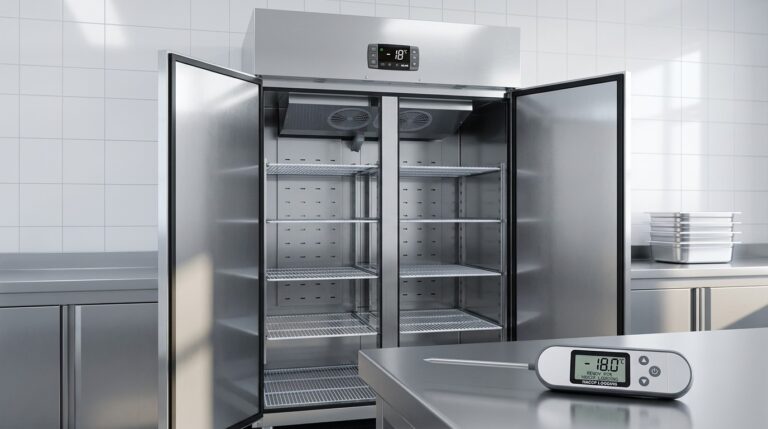
Unifrost Upright Freezer Temperature Controller: New Owner Core Overview Guide for Irish Kitchens
Learn to set up and manage Unifrost upright freezer controllers for Irish kitchens. Essential guide for safety and efficiency.
Read guide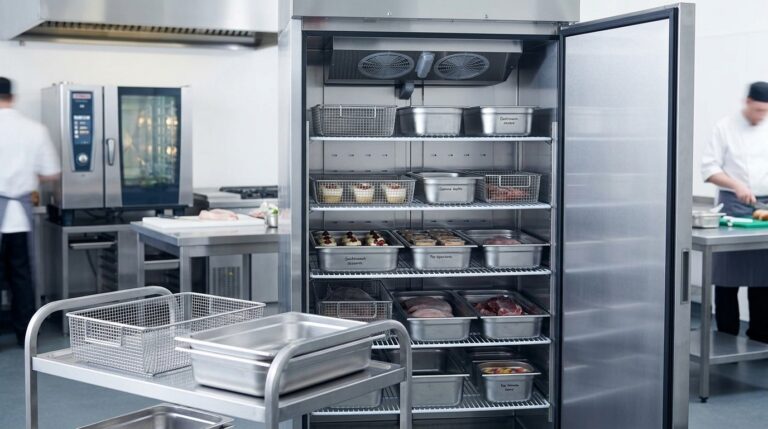
Optimizing GN Basket Plans for Unifrost F410SS Upright Freezer in Hotel Banqueting
Explore GN basket planning in the Unifrost F410SS for Irish hotels. Optimize layouts for efficiency in banqueting.
Read guide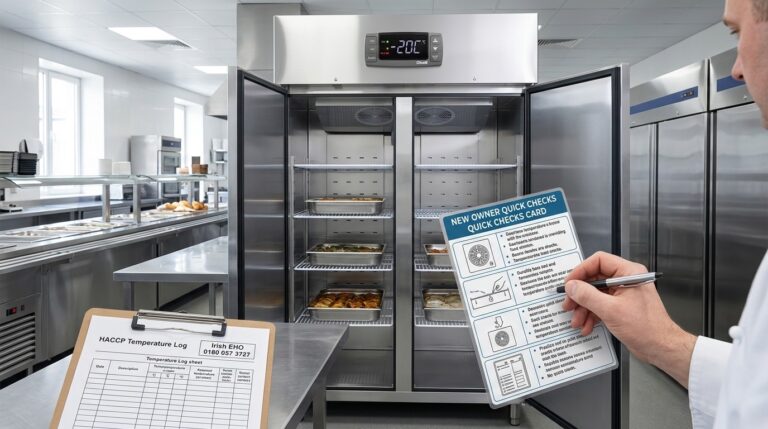
New Owner Quick Checks for Unifrost Upright Freezer Temperature Controllers
Quick reference for setting and checking Unifrost upright freezer controllers in Irish hotel service lines.
Read guideCompare Unifrost freezer options on Caterboss
For current product options, pricing and availability, continue to Caterboss.