
Preventing Overheating in Unifrost Fridges During Irish Summers
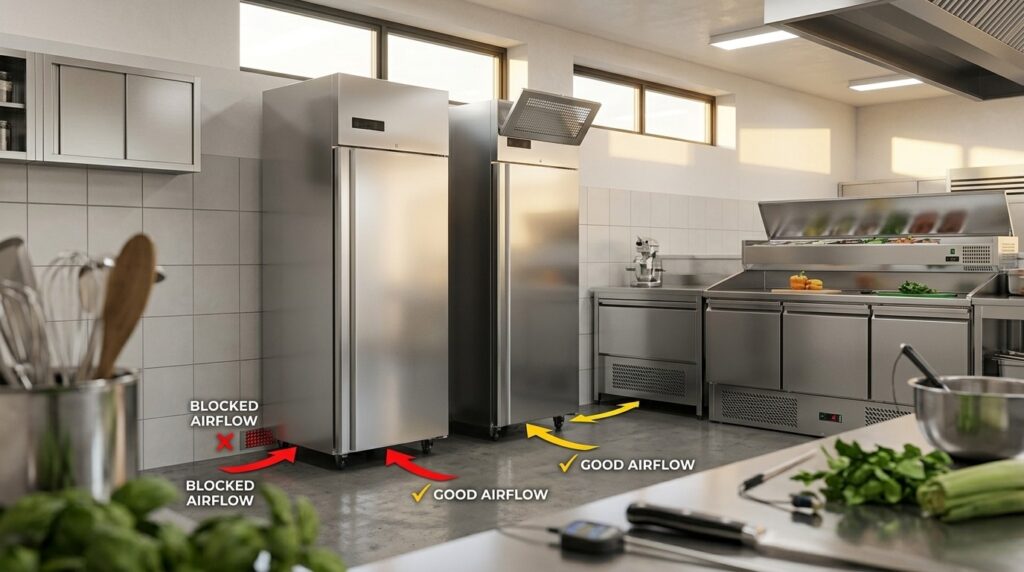
Guide to preventing overheating in Unifrost fridges during Irish summers. Practical tips for airflow, maintenance, and usage in hot kitchens.
Preventing Overheating in Unifrost Fridges in Irish Summer Kitchens
If your Unifrost upright, counter fridge, or prep and saladette unit starts struggling during a warm Irish spell, it is usually an airflow and heat-load problem before it is a major fault. Overheating means longer run times, higher energy use, poor temperature recovery during service, and higher risk to chilled food safety.
This guide walks you through the practical checks that make the biggest difference in a busy kitchen:
Confirm the environment is workable: what happens when ambient temperature climbs, and how to judge whether the unit is being asked to do more than the room allows.
Protect ventilation and clearances: where hot air gets trapped around uprights, undercounters, and prep counters, and what to change in siting, grills, and obstruction points.
Run a simple summer maintenance routine: what to clean daily and weekly, especially condenser areas, door seals, and anything that blocks internal airflow.
Spot early warning signs: hot cabinet surfaces, noisy fans, frequent alarms, icing, or a unit that runs constantly, plus the first actions to take before service is impacted.
Know when settings help and when they do not: what to review on the controller and defrost behaviour in hot weather, and when you should stop adjusting and log a service call.
By the end, you can separate quick operational fixes from issues that need an engineer, and you can brief staff on the habits that keep Unifrost refrigeration stable through summer service.
Introduction to Overheating Issues During Summer
Unifrost upright, undercounter and prep fridges tend to struggle more in Irish kitchens during summer for one simple reason: the refrigeration system has to get rid of heat into the room. When the kitchen is already warm, cramped, or poorly ventilated, the fridge cannot reject heat efficiently. The result is longer run times, slower temperature recovery after door openings, and in some cases high-temperature alarms.
That does not automatically mean the unit is “faulty”. A warm spell can push a marginal setup, like tight clearances, a greasy condenser, or a unit parked beside hot equipment, into obvious performance problems.
Hot Irish kitchens load the fridge from both sides
Even in Ireland, a few warm days can leave a kitchen in the mid to high 20s before you factor in cooklines, combi ovens, dishwashers and sun through a hatch. Met Éireann defines a heatwave as temperatures above 25°C for five consecutive days at the same location, which is enough to change how refrigeration behaves in real kitchens (Met Éireann heatwave criteria).
Your fridge then has two jobs at once:
remove heat from the food and air inside the cabinet
dump that heat back into a room that may not be able to absorb it
That is why “it’s running all the time” is such a common summer complaint on uprights, undercounters and prep counters. In many cases, the unit is doing what it can, but the ambient conditions and service pattern are stacking the odds against it.
Airflow is usually the bottleneck
Most overheating call-outs start with airflow, not refrigerant. Common causes in hospitality kitchens include:
the unit pushed tight to a wall or boxed in under a counter
the condenser grille coated in dust, flour, grease, or cardboard fluff
the fridge positioned beside a dishwasher outlet, grill, or hot pass
staff standing in front of the air intake during service in a narrow galley
When airflow is restricted, heat builds up around the condenser and the compressor has to work harder for less cooling effect. You will usually notice it as louder running, warm cabinet sides, and slower pull-down after doors have been opening all service.
Summer also exposes layout choices that were “fine” in spring. A fridge that holds temperature most of the year can start alarming once the room temperature rises and the unit cannot clear heat fast enough.
Summer service habits raise the risk on prep and saladette units
Prep counters and saladettes are built for quick access, not for being treated like a storeroom. A few day-to-day habits can make a unit look like it is overheating when the real issue is internal heat load and blocked air paths:
over-stacking GN pans so air cannot circulate
loading warm product straight into the top well or cabinet
leaving lids open longer than needed during a busy run
blocking internal vents with packaging or pans
The food safety side matters here. The FSAI guidance is clear that chilled food should be kept between 0°C and 5°C, so summer performance issues are not just a comfort problem, they are a HACCP problem (FSAI temperature control guidance).
Before changing controller settings or assuming “a gas issue”, it is worth checking the basics: ambient temperature, ventilation clearance, condenser cleanliness, and how the unit is being loaded and used during service. Those factors explain most summer overheating complaints in working Irish kitchens.
Ideal Working Temperatures and Environment for Unifrost Fridges
Ambient working temperature is the air temperature around the unit where it takes in air and rejects heat. It is not the same as the cabinet setpoint on the controller. It matters because an upright, counter or prep fridge can only pull heat out of the cabinet as quickly as it can dump that heat back into the room through the condenser.
In Irish kitchens, “summer overheating” is often a local problem rather than the whole room being tropical. A fridge can be sitting in a heat pocket between counters, beside a combi, under a pass, or tight to a wall. The kitchen might feel fine, but the air at the back or base of the unit can be far hotter and stagnant.
Why ambient is the spec that catches kitchens out
Most operators think, “Set it to 3°C and we’re covered.” In reality the system is doing two jobs at once: cooling inside and getting rid of heat outside. When a unit is boxed in, pushed hard against a wall, or parked beside a dishwasher, it ends up trying to cool itself in its own exhaust heat. That is when performance drops, even if the controller still looks close to target.
If the manual or rating plate shows a climate class or maximum ambient, treat that as a planning limit for where you can safely site the unit. If you do not have that information, assume it needs a sensible, ventilated location. Performance will fall away quickly in hot, stagnant air.
What changes in a hot kitchen
As ambient temperature rises, the condenser runs hotter and the system has to work harder to hold the same cabinet temperature. In day-to-day terms you’ll see:
Longer run times and less cycling off
Slower recovery after door openings and stock replenishment
Higher product temperatures during service peaks
This is the bit that matters for HACCP. Chilled food needs to be held so the food itself stays between 0°C and 5°C, in line with FSAI temperature control guidance.
Early warning signs you’re asking too much of the environment include:
The compressor appears to run almost constantly.
High temperature alarms crop up during busy service or after deliveries go in.
Product is fine first thing, then drifts warmer through lunch or evening peak.
External panels feel unusually hot around the condenser area.
The unit sounds louder than normal as fans work harder and airflow gets messy.
Uprights vs counters vs prep units: what to watch for
Upright fridges often cope better if they can breathe, but they are frequently placed beside hot kit because they are “just storage”. Counter fridges and prep counters are more likely to be boxed in by design. Their grilles can also get blocked by kickboards, flour dust, grease and general kitchen debris, so they tend to be less forgiving in warm weather.
If you are planning a layout or troubleshooting a hot-running unit, treat airflow and nearby heat sources as part of the refrigeration spec. Getting that right makes everything else, from temperature stability to running costs and call-outs, much more predictable.
Ventilation and Clearance Requirements
Place a Unifrost upright fridge, counter fridge, or prep/saladette where it can draw in cooler room air and dump heat without pulling that hot air straight back through the condenser. Keep the intake and discharge areas clear of walls, boxes, and “temporary” storage. If you are boxing a unit into joinery or fitting it under a counter, you need a real air path in and out, not just a token gap.
Before you sign off a fit-out, check the installation guidance for your specific unit. A small mistake in kickboards, side panels, or rear voids can turn a reliable fridge into a recurring high-temperature alarm and call-out.
1. Identify where the unit pulls air in and exhausts heat
Every commercial fridge is moving heat from inside the cabinet to the room. If the condenser cannot reject that heat, cabinet temperatures creep up and the compressor runs longer.
Do a quick physical check first: find the air intake and the warm air discharge (often behind a grille at the base, to the rear, or occasionally to the side depending on the format). Once you know the airflow path, you can avoid the common summer issue in tight kitchens: the unit breathing its own hot exhaust.
2. Set clearance that will still be clear at 7pm on a Saturday
Clearance is not what you measure on install day. It is what remains when someone parks a flour bucket, a spare crate, or a cardboard box “for a minute”.
Leave enough space for airflow and for cleaning access around grilles and the condenser area, then treat that space as a no-storage zone in day-to-day kitchen rules. From a hygiene point of view, equipment also needs to be accessible for cleaning and the area kept well ventilated, which is reflected in the FSAI prerequisite programme guidance for food businesses:
<https://www.fsai.ie/business-advice/running-a-food-business/food-safety-management-system-%28haccp%29/prerequisite-programmes>
3. Match the placement to the format (upright vs undercounter vs prep/saladette)
Uprights: Problems usually start when they are pushed tight to a wall, wedged between shelving, or put into a dead pocket where warm air builds up behind the cabinet. In older Irish back kitchens, a “gap” can be pointless if it is a sealed warm void.
Undercounter and counter fridges: These are most often choked by joinery, kickboards, and side panels. If the unit is front-breathing, the front grille still needs to stay clear and be cleaned. If it breathes from the rear or side, you need deliberate ventilation routes that staff can actually keep free.
Prep/saladette units: You can get temperature issues even when the refrigeration system is fine if internal air movement is blocked. Over-stacking pans, covering air slots with film, or loading product so it blocks internal air channels will reduce recovery and can look like “overheating”.
4. Avoid local heat and moisture sources that punish airflow
Most “overheating” call-outs in warm weather are siting problems. If you heat the air around the condenser, the unit has to work harder to reject heat.
High-risk placements in busy Irish kitchens include:
Beside combi oven vents, fryers, grills, or the hot pass
Next to a dishwasher where steam and hot air plume into the room
Under a counter where the kickspace is blocked by mats, boxes, or a tight plinth
In a tight corner where warm exhaust air cannot escape and simply circulates
If relocation is not realistic, you can often reduce the heat load with a simple heat shield, by managing where hot-air vents discharge, or by moving the unit even 300 to 500 mm away from the hottest zone so it can draw cooler air.
5. Validate airflow in real conditions and lock it into staff habits
Do a “hot shift” check during the first warm week. After an hour of service, put your hand near the discharge area: you should feel warm air leaving into open space, not blasting into a dead gap. Confirm doors can open fully and that the no-storage zone around grilles is still being respected.
If airflow keeps getting blocked by how the kitchen operates, it is usually cheaper to adjust layout and habits than to keep chasing high-temperature alarms and compressor strain. Once airflow is right, you can make a clearer judgement on whether the unit is sized and specified correctly for your summer ambient conditions.
Daily and Weekly Maintenance Tips
Keep airflow clear, keep the condenser area clean, and keep doors closing properly. In an Irish summer kitchen, most “overheating” complaints on uprights, undercounters, and prep counters come back to one of those three. Build it into your routine: a quick daily check before service, then a proper weekly clean of intakes, grills, and the condenser area where dust and grease build up.
If you notice an electrical burning smell, repeated high-temperature alarms, tripping, or the cabinet will not pull down after basic cleaning and airflow checks, stop there and log a service call.
1. Do a quick daily airflow and heat check (before service)
Use this as a two-minute check for uprights, undercounters, and prep counters:
Clear the vents. Make sure stock, boxes, tea towels, and packaging are not against ventilation grills or being pulled towards the air intake.
Feel the discharge air. You want a steady warm air flow out. A weak trickle often points to a blocked intake, dirty condenser, or restricted airflow.
Check for abnormal cabinet heat. Warm sides can be normal. Very hot surfaces are a sign the unit is struggling to reject heat.
Undercounters and prep units: keep the plinth/kick space open. Crates shoved in front during a rush will choke airflow quickly.
Listen for changes. A louder fan, rattling grill, or new vibration often means restriction, heat load, or something coming loose.
This is the classic summer failure pattern in tight kitchens: the fridge is running, but it cannot get rid of heat fast enough.
2. Clean the condenser area weekly (more often beside hot or greasy kit)
Treat this as a set weekly job, and tighten the interval in July and August, or anywhere with heavy grease or flour dust.
Isolate the power before opening any grill or access panel.
Vacuum and brush gently around intake grills and the condenser area. Avoid bending fins or snagging wiring.
If the unit sits near a cookline, combi, dishwasher or pot wash, the condenser will clog faster because warm, greasy air sticks. A clogged condenser means longer run times, higher cabinet temperatures, and higher running costs. It is simple, but it matters.
3. Check door seals and closing daily (deal with “door popping” early)
A poor seal can look like an overheating fault because the cabinet is constantly pulling in warm, humid kitchen air.
Visual and finger check: splits, hardened gasket sections, gaps at corners, and debris stopping full contact.
Wipe the gasket and the frame where it lands. Grease and crumbs are enough to break the seal.
If a door “pops back” in warm weather, check the operational causes first: shelves or GN containers fouling the door, bins or mats blocking the swing, and staff not giving a positive close during a rush.
A small levelling adjustment can help a door self-close properly, but hinge work, closers, or seal replacement is usually best left to an engineer. It is easy to make a seal worse with a well-meant tweak.
4. Avoid internal airflow blockages and verify temperature under HACCP
Prep and saladette units are easy to overload without realising it. If GN pans are overfilled or stacked high enough to interrupt airflow, the controller can read cold in one spot while food at the edges runs warm, and the unit looks like it cannot cope.
In practice:
Keep product below the load line (where fitted).
Do not block internal fans or vents with pans, trays, or wrapped product.
Do not put hot food straight into chilled storage.
Your settings and checks should support holding food in safe chilled conditions. The FSAI’s temperature control guidance for caterers is a good reference point for refrigeration routines and checks: <https://www.fsai.ie/business-advice/running-a-food-business/caterers/temperature-control>. During heatwaves, a quick probe check of higher-risk items is time well spent.
If you are seeing controller resets, nuisance alarms, or odd display behaviour during busy service, treat the power supply as part of maintenance too. The HSA’s fire prevention guidance flags the risks around extension leads and poor connections, and in real kitchens this also helps reduce nuisance electrical faults: <https://www.hsa.ie/topics/fire/fire_prevention/>.
Once the routine is solid, the next question is whether the unit is being asked to operate outside its expected conditions, particularly ambient heat and ventilation in the space.
Signs of Overheating and How to Address Them
If a commercial upright, undercounter fridge, or prep counter can’t breathe, it can’t get rid of heat. In a warm Irish kitchen, poor ventilation or a dirty condenser means longer run times, slower recovery after door openings, and cabinet temperatures creeping up. The first thing you’ll usually hear from staff is: “It’s running all the time”.
Keep operating like that through a warm spell and you increase the chance of nuisance alarms, soft product, heavier ice build-up and extra wear on the compressor. More importantly, chilled food can spend longer outside safe control temperatures, which is exactly what you’re trying to avoid under HACCP and day-to-day checks. (See FSAI guidance on chilled storage temperature control.) In tight galley kitchens, the effect can be immediate because the unit ends up pulling its own hot exhaust air back in behind or under the counter.
Airflow starvation symptoms you can spot during service
Look for patterns that show up when the kitchen is busy, doors are opening, and the room is at its warmest:
The unit feels unusually hot around the condenser area (rear or front grille, depending on design). Hot is normal, but a noticeable step-change alongside poor recovery points to ventilation, not “just summer”.
Longer run times and slow pull-down after doors have been opened during service.
Change in sound: louder fan noise, rattling near the grille, or cycling that suggests it’s hitting a protection cut-out (often triggered by high pressure/poor heat rejection).
Uneven temperatures inside prep units: over-stacked GN pans or product piled above the load line can disrupt airflow, so the controller may read fine in one spot while food at the top line warms. This is why FSAI HACCP guidance focuses on consistent temperature control and verification, not “it felt cold”.
First checks you can do safely before calling an engineer
Start with the basics. Most “overheating” calls in summer come down to airflow, loading, or doors.
Clear the grille and clean the condenser (operator-safe only). Remove dust and grease build-up. If you can access the condenser safely, use a soft brush and vacuum. Avoid washing it down with water.
Check doors, gaskets, and latching. A door not fully closed can mimic an overheating fault because warm, moist air keeps entering and the system never catches up.
Remove internal airflow blockages. Don’t pack product hard against the back wall or cover internal vents. On prep counters, don’t overfill or stack pans in a way that blocks circulation.
Confirm the power supply is suitable. Avoid daisy-chained extensions and overloaded sockets. If you suspect an electrical issue, follow HSA electrical safety guidance and get it checked properly.
If performance improves after cleaning and clearing ventilation, you’ve likely found the cause. That also helps you describe the fault clearly if it returns.
When to stop and log a service call
Stop troubleshooting and call an engineer if:
High-temperature alarms continue despite clear airflow and a clean condenser.
The cabinet won’t pull down towards setpoint over a reasonable period with the door kept shut.
You see oil staining, odd icing patterns, or rapid cycling that doesn’t match normal operation.
Doors keep popping open even after you’ve cleaned the gasket and confirmed the unit is level. Hinge wear or misalignment usually gets worse under summer load.
Once you’ve ruled out ventilation, loading, and power, the likely causes move to fans, controls, or refrigeration components. At that point, quick diagnosis matters because it protects stock and reduces downtime.
Getting these symptoms and checks right also helps you judge whether the unit is being asked to work outside its practical limits, which is where siting, ventilation clearances, and kitchen layout become the deciding factors.
Advanced Settings Adjustments for Hot Weather
How do you safely adjust controller settings and defrost schedules on Unifrost fridges (uprights, counters, and prep units) during hot Irish kitchen weather?
Start by confirming the actual product temperature with a sanitised probe and a quick HACCP note. Then make one small change at a time and give the cabinet time to settle. Chasing settings too aggressively can create new problems: icing, longer run times, nuisance alarms, and poor recovery during service. If you do change any defrost parameters, watch the unit for a full trading day and revert if you see ice build-up, water leaks, or temperature swings.
1. Confirm it’s a control issue, not a measurement issue
Before touching the controller, verify what the fridge is doing in food terms, not just what the display says.
Use a calibrated probe on a couple of typical items (for example, a sealed tub of dairy and a covered tray of cooked meats) and compare results to the cabinet display. Your operational target is the food temperature. The FSAI notes that the thermostat should be set to ensure food is held between 0°C and 5°C, with fridges often set around 3°C to 4°C to achieve this in practice (see the Food Safety Authority of Ireland temperature control guidance).
If food is already in range but the unit seems to be “running all the time”, the cause is often summer heat load, door openings, loading practices, or restricted airflow at the condenser, not a setpoint that needs constant tweaking.
2. Adjust the setpoint cautiously (food safety first, then workload)
In hot kitchens, the instinct is to keep dropping the setpoint. That can backfire by increasing compressor run time and raising the risk of icing, especially on prep counters that see constant opening during service.
Move the setpoint in small steps and wait for the unit to stabilise before judging the result.
A modest reduction can help recovery after frequent door openings, but it will not fix poor ventilation, a dirty condenser, or a cabinet squeezed beside hot equipment.
On prep and saladette units, be conservative. Very cold setpoints can freeze high-water-content items near the air outlet, which then blocks airflow across the pan well and makes temperature control worse, not better.
3. Only change the settings that matter (don’t go menu-diving mid-service)
Most commercial controllers used on uprights and counters include parameters for differential (temperature swing), compressor anti-short-cycle delays, and alarms. In warm weather, those behaviours affect performance more than obscure advanced parameters.
Differential / swing: If cabinet temperature is swinging widely, a slightly tighter differential can reduce peaks during heavy opening. Too tight, and you can cause rapid cycling and extra wear.
Compressor delay / protection: Don’t defeat anti-short-cycle delays. They protect the compressor after quick restarts, power dips, or repeated openings.
Alarms: If you’re getting nuisance alarms during service, don’t mute the problem with settings. Confirm temperatures with a probe and look for the cause (loading, airflow, door seals, condenser cleanliness).
If you’re not completely sure what a parameter does on your specific controller, use the relevant Unifrost manual or Knowledge Hub guidance rather than experimenting during a busy shift.
4. Change defrost settings only when you have an icing or humidity symptom
Defrost tweaks are not a general “summer mode” for fridges. They only make sense when humidity and ice build-up are restricting airflow.
Signs you may have an icing issue include reduced airflow, rising cabinet temperatures despite long run times, and a fan that sounds strained. In those cases, a slightly more frequent defrost can prevent the evaporator gradually choking with ice.
Keep changes minimal and watch the trade-off: too much defrost time lifts cabinet temperature and increases pull-down time after defrost, which is the last thing you want on a busy breakfast service or a high-volume takeaway line. Also be realistic: on freezers especially, moisture ingress from frequent opening and poor door discipline is often the main driver. A settings change without a quick staff brief rarely sticks.
5. Monitor for 24 hours, then revert, escalate, or book service
After any change, run the unit through a full trading day and check:
Food temperature at peak service (probe-check and record).
Compressor behaviour (continuous running versus short cycling).
Any icing, pooling water, or unusual noise.
Stop tweaking and arrange service if you see any of the following, as they usually point to airflow restriction, sensor issues, or a refrigeration fault rather than “wrong settings”:
Food is consistently above safe chilled range despite sensible setpoint adjustments and normal loading.
Frequent alarms, noisy/intermittent fan operation, or repeated evaporator icing.
The unit is extremely hot at the sides/top, or trips the supply (often heat rejection, ventilation clearance, or electrical supply issues).
Controller settings can help at the margins, but performance still depends on room temperature, ventilation around the cabinet, and how hard the unit is being worked during service. If you’re routinely fighting hot-kitchen conditions, it’s worth reviewing placement and airflow as seriously as the setpoint.
Planning Kitchen Layout for Optimal Fridge Performance
Overheating complaints in Irish kitchens are usually layout and airflow problems first, refrigeration problems second. Before you blame “gas” or a faulty controller, look at where heat, steam and traffic sit in your kitchen, then place uprights, counter fridges and prep units so they can breathe during peak summer service.
1. Choose the “cool and calm” spot first
Start with what’s driving heat and humidity in your space. A fridge will struggle if it’s:
Beside a combi, chargrill, fryer or pizza oven
In the line of dishwasher or glasswasher steam
At the end of the cookline where hot air pools
In a dead corner where warm air has nowhere to go
Pick a position with steady conditions across the day. In tight galley kitchens and café back counters, a unit that looks fine at 10am can fall behind at 7pm when the pass, heat lamps and wash-up are in full swing. That pattern tends to show up as “it only happens in summer” call-outs, when it’s really predictable peak-load siting.
2. Design ventilation gaps into the joinery, not as an afterthought
You are not leaving space for installation. You are leaving space for the fridge to dump heat. The most common real-world failure mode is airflow starvation: tight joinery, kickboards sealing the base, or stock piled against vents because it’s the easiest place to put it.
Use this check both at design stage and after fit-out:
Confirm from the manual where the unit takes in air and where it exhausts (front, rear, side or base), then protect that path in the layout.
Don’t “box in” undercounter and prep units into sealed plinths unless the void is deliberately ventilated in and out.
Keep the grille area out of the natural dumping ground for cardboard, linen bags, dry stores and mop buckets.
Leave enough access to clean the grille and condenser area without having to drag the unit out every time.
Uprights tend to get blocked at the rear (tight to a wall, clutter behind). Counter and prep units tend to get blocked at the front or base, because that’s where feet, boxes and cleaning gear live during service.
3. Plan workflow so doors and internal air paths aren’t sabotaged mid-service
Layout isn’t just where the cabinet sits. It’s what staff are forced to do around it. If a prep fridge is on a pinch point, people will park trays and GN pans wherever they can, and that often means blocking air slots or leaving doors open while they plate.
Set the station up so staff can work without:
Holding doors open while searching or building orders
Over-stacking product or letting GN pans sit proud of their intended position
Putting warm food into the fridge because there’s no proper cooling step or space elsewhere
If the unit is steady overnight but struggles at lunch and dinner, treat it as a workflow and loading clue. It often points to door-open time, overloading, or blocked airflow rather than a refrigeration fault.
4. Allow for cleaning access, stable power, and “heatwave habits”
A unit that can’t be accessed won’t be maintained. In warm weather, that usually means the condenser area stays dirty and performance drops when you need it most. When you place the fridge, make sure your team can do basic housekeeping around the air path, and that an engineer can reach the service area without dismantling half a counter run.
On electrics, avoid building in a setup that relies on shared extension leads or overloaded sockets. Poor connections and voltage drop can trigger nuisance alarms and controller resets, wasting time on “fridge faults” that are really site power issues.
Get the layout right and you’ll have a clearer baseline for what “normal” looks like in your kitchen in warm weather. From there, you can make a sensible call on whether you need a different format (upright vs counter vs prep), a different position, or advice on a unit better suited to your ambient conditions.
Connecting to Unifrost Support Ecosystem
The right next step depends on whether you have a genuine refrigeration fault or a site issue (usually heat and airflow) that makes the cabinet look like it is failing. The Food Safety Authority of Ireland (FSAI) is clear that temperature control must be monitored and managed as part of day-to-day food safety, so relying on “it was warm last week” is a risky way to protect stock.
The checks to make next depend on two things: the cabinet format (upright, counter, prep) and what changed first, the controller behaviour, the airflow around the unit, or both.
Choose guidance for the model, controller or symptom
If a Unifrost fridge or prep counter struggles in summer, you will save time by separating “I need the correct manual for this exact controller” from “I need a practical checklist for hot kitchens”. Unifrost’s manuals library reflects that, with cabinet manuals plus separate controller manuals and parameter guides used across multiple upright and counter ranges.
For the correct PDF manual and controller documentation, start at Manuals & Downloads. Match the cabinet rating plate model code and the controller fascia label before changing any settings.
For operator-level checks (clearances, alarms, power supply basics, extension leads, door seals and closing issues), use the Unifrost FAQs rather than guessing based on a similar-looking unit.
For longer, Irish-use-case guidance that ties troubleshooting back to setup and maintenance, use the Knowledge Hub.
When it’s safe to keep troubleshooting, and when to stop and escalate
Hot cabinet sides, constant running, nuisance high-temperature alarms, or warm product during hot weather are often driven by ambient temperature and restricted airflow first. That said, stop owner troubleshooting and log a service call when:
you cannot keep food at safe temperatures
alarms return immediately after basic checks (ventilation around the cabinet and condenser cleaning where accessible)
you suspect a power supply issue that could damage the unit or create intermittent controller faults
Controller settings are a common trap. If someone goes into advanced parameters to “make it cope with summer”, you can end up with longer defrosts, alarms that trigger too late, or a display offset that looks fine while product temperature drifts. If you genuinely need advanced controller guidance for a specific upright model such as the F410SS, use the model-specific controller guidance rather than experimenting during service, for example: Customising Advanced Settings on the Unifrost F410SS Upright Freezer Controller.
What to have ready before you contact support (so you get a useful answer fast)
Support is quicker and more accurate when you can separate site conditions from a refrigeration fault. Before you reach out, have:
model code and serial number (from the rating plate)
controller brand and model (from the controller fascia)
any alarm code or flashing message
where the unit is installed and what’s around it (tight joinery, beside a combi, under a counter void, near a dishwasher exhaust)
That gives support enough to point you to the correct Unifrost manual, a controller-specific fix, or a clear “call an engineer now” decision without wasting time.
Once you have the right documentation and you know when to escalate, the biggest remaining variable is usually the working environment, especially real ambient temperatures and heat load during Irish summer service.
FAQs: preventing Unifrost fridge overheating in Irish summer kitchens
What ambient room temperature are commercial fridges designed to work in?
Most commercial fridges are built and tested to hold safe food temperatures within a defined maximum ambient room temperature (the kitchen air around the unit). If your kitchen regularly runs hotter than the unit’s rated ambient, you will typically see one or more of these outcomes:
Longer run times (it feels like it is “running all the time”) and higher energy use.
Slower pull-down and recovery after busy service or frequent door openings.
More heat dumped into the room, which can worsen the cycle in tight Irish kitchens during warm spells.
If you are unsure what your exact Unifrost model is rated for, check the model plate and the product or manual details in the Unifrost Knowledge Hub. The key point is that summer heat plus poor airflow often pushes units beyond their intended conditions.
How much ventilation is needed to avoid overheating?
Ventilation is about giving the condenser a clear path to pull in cooler air and exhaust hot air.
Practical guidance for Irish kitchens when model-specific clearances are not to hand:
Do not box the unit in. Avoid tight alcoves and fully enclosed carcassing around undercounters and prep units.
Keep the air path open at the grille and at the exhaust side. A “gap” that is blocked by foil, cardboard, bags, or staff belongings behaves like no gap at all.
Leave enough space to clean and service. If you cannot easily remove the grille or reach the condenser area, ventilation is usually inadequate.
For the exact clearance for a specific Unifrost upright, counter, or prep/saladette unit, follow the installation section of that model’s manual rather than guessing.
What daily or weekly cleaning is necessary to maintain airflow?
Airflow failures in summer are often simple maintenance issues. A practical routine is:
Daily (or every shift in flour-heavy kitchens):
Wipe down and keep the front and rear grilles clear of dust, labels, and splash.
Check that no packaging or GN pans are blocking internal fan vents or air returns.
Weekly:
Remove the accessible grille and vacuum the condenser area carefully (soft brush attachment helps). If grease is present, use a suitable degreaser and let everything dry before refitting.
Inspect door gaskets for splits and debris, and clean the seal channel so the door closes firmly.
After cleaning:
Confirm the unit is not pushed back so far that it crushes the air gap or kinks cables.
If the condenser is heavily greased or inaccessible, plan a periodic deeper clean with a competent technician to avoid repeated overheating and compressor strain.
Next step: choose a fridge that copes with Irish summer service
If your kitchen regularly runs warm, the best long-term fix is choosing a commercial fridge that suits your layout and heat load, then installing it with the right airflow from day one.
Browse the Unifrost Fridge Range to compare upright fridges, counter fridges, and prep or saladette units that are commonly specified for Irish hospitality kitchens.
View Unifrost fridges at Caterboss
For current product options, pricing and availability, continue to Caterboss.