Why do persistent high-temperature alarms occur on Unifrost fridges?
 FAQ
FAQ
A persistent HI (high temperature) alarm is usually caused by the cabinet not being able to pull down to setpoint, or by conditions that keep pushing heat into the box.
Need more detail? For model comparisons, setup steps and troubleshooting, see the related guides below.
A persistent HI (high temperature) alarm is usually caused by the cabinet not being able to pull down to setpoint, or by conditions that keep pushing heat into the box.
Common, commercially relevant causes to check first:
Power cut recovery plus heavy loading: restocking warm product straight after an outage can keep HI active for longer.
Door usage and seals: frequent openings, a door left ajar, or worn gaskets let warm air in continuously.
Airflow problems: blocked internal air vents, overfilled shelves, or poor clearance around the unit reduce heat removal.
Maintenance issues: dirty or blocked condenser areas can stop the system rejecting heat efficiently, leading to repeated HI alarms.
Defrost state confusion: dEF indicates a defrost status, not a fault code. If defrosts seem unusually frequent and HI follows, it can point to an underlying performance issue that needs a check.
Operational tip for HACCP: if HI persists, check a calibrated probe temperature (not just the display), minimise door openings, and consider moving high risk food to another correctly holding unit until temperatures are confirmed back in range.
Read the full guide: Understanding Your Unifrost Commercial Fridge Controller: Power Cut Recovery and Alarm Management.
More help with this question
Compare models, maintenance advice and support information related to this topic.
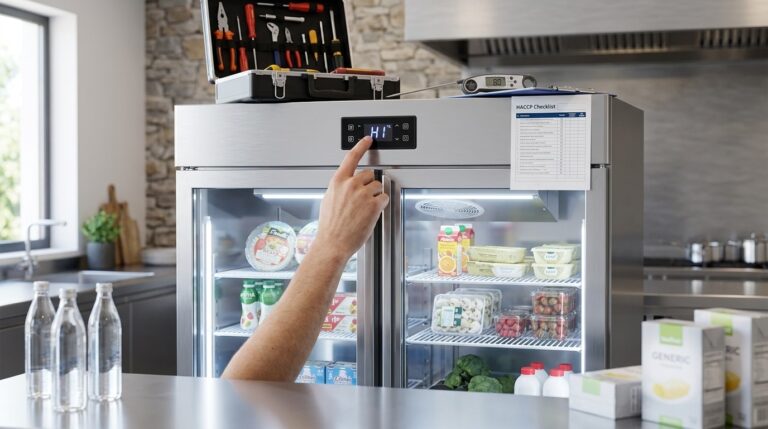
Understanding Your Unifrost Commercial Fridge Controller: Power Cut Recovery and Alarm Management
Learn to manage Unifrost fridge controller alarms post-power cut for smooth operations in Irish kitchens.
Read guide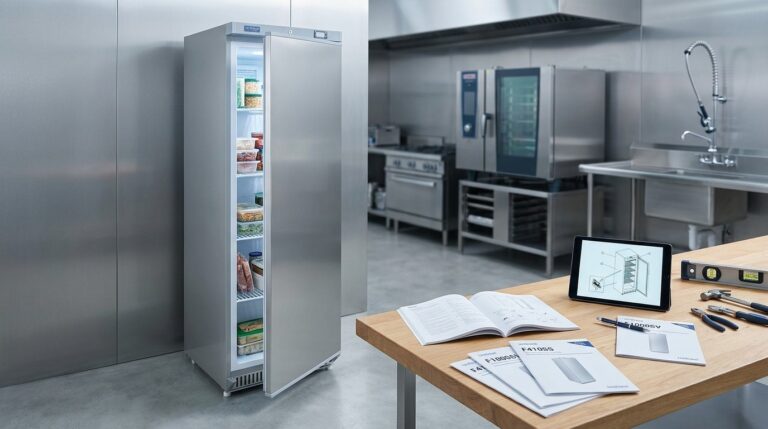
Unifrost Upright Freezer Manuals & Installation Support
Task-first manual downloads, controller help, startup checks, and troubleshooting routes for Unifrost upright freezers.
Read guide