What GN depths and pan combinations work best in an F410SS for pre-portioned banqueting items while maintaining airflow?
 FAQ
FAQ
Choose GN depths and combinations based on portion format and pick speed, then protect airflow by avoiding overhangs and tightly packed “solid blocks”.
Need more detail? For model comparisons, setup steps and troubleshooting, see the related guides below.
Choose GN depths and combinations based on portion format and pick speed, then protect airflow by avoiding overhangs and tightly packed “solid blocks”.
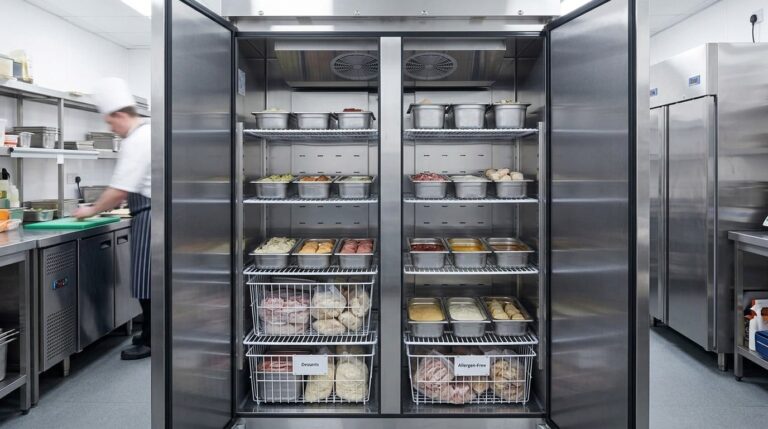
Shallow to medium GNs (commonly used for portioning) tend to work best for banqueting because they freeze and temper more predictably and let you see stock at a glance.
Standardise one or two pan depths across the team for sides, petits fours, portioned desserts, and sauce portions. Consistency speeds up shelf resets and reduces misfits that block air.
Leave clearance around pans and baskets: avoid packing pans edge-to-edge. In uprights, airflow suffers most when you create a continuous wall of product.
Use “like with like” per shelf: one shelf for portioned soups/sauces, one for portioned sides, one for dessert components. Mixed heights and mixed packaging usually leads to crowding and poor air circulation.
Label on the short end and face labels outward so staff can pick without pulling pans out and holding the door open.
Also: Can standard GN pans go straight into an upright freezer? Yes, in day-to-day use they can, but for best results make sure they are freezer-suitable (no cracks or warping), properly covered/lidded, and not filled so high that lids dome. Avoid putting hot product into the freezer. Chill first (for example via your cook-chill process) so you don’t drive up cabinet temperature and create excess ice.
Read the full guide: Unifrost F410SS Upright Freezer Planning Guide for Irish Hotel Banqueting Kitchens.
GN pan layout and airflow
- For routine portion storage, 65-100 mm deep pans are usually easier to organise and recover around than 150-200 mm deep pans; deeper pans need extra caution for headspace, loading density and pull-down time.
- Plan combinations using 1/1, 1/2 and 1/3 GN footprints, checking basket and shelf dimensions rather than assuming every nominal GN mix fits the cabinet.
- Keep vertical headspace and the cabinet air path clear. Remove cardboard transit packaging and loose film that can block vents or interfere with the door seal.
- Initially space newly frozen or transferred pans so cold air can circulate; consolidate them only after temperatures have stabilised and the load remains within the site’s food-safety controls.
More help with this question
Compare models, maintenance advice and support information related to this topic.
Unifrost F410SS Upright Freezer Planning Guide for Irish Hotel Banqueting Kitchens
Plan your F410SS freezer layout for efficient high-volume banqueting in Irish hotels. Optimize GN pans and workflow.
Read guide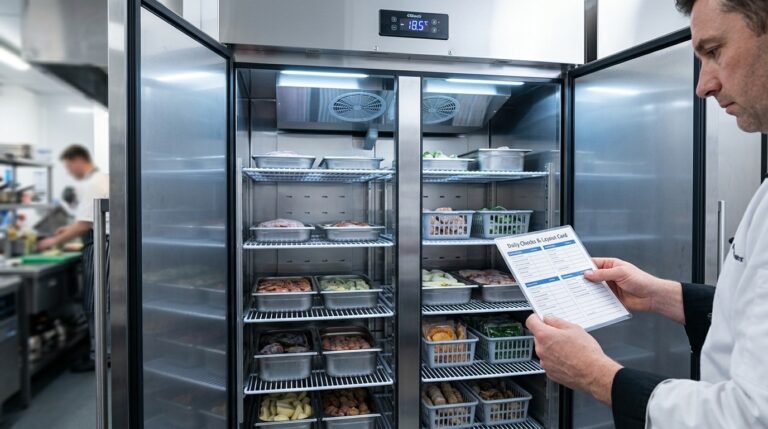
Unifrost F410SS Upright Freezer: Quick Start Guide for Hotels
Get started with the Unifrost F410SS in your Irish hotel. Temperature setup, layout guidance, and quick checks for optimal freezer use.
Read guide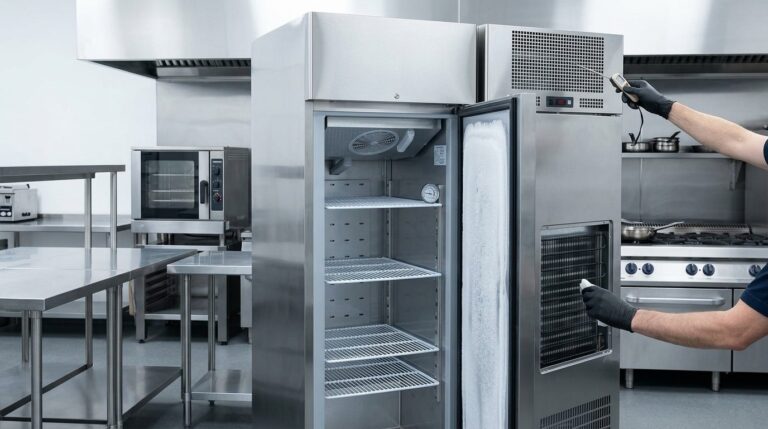
Unifrost F410SS Upright Freezer Ambient Heat & Ventilation Troubleshooting
Troubleshoot Unifrost F410SS freezer temperature issues. Learn how ambient heat and ventilation affect performance in Irish kitchens.
Read guide