How does ambient room temperature affect freezer performance?
 FAQ
FAQ
Ambient temperature sets the starting point for how hard the freezer must work to reject heat.
Need more detail? For model comparisons, setup steps and troubleshooting, see the related guides below.
Ambient temperature sets the starting point for how hard the freezer must work to reject heat.
Practical impacts in busy Irish kitchens:
Higher room temperature and nearby heat sources (ovens, hot pass, dishwasher exhaust) reduce cooling capacity, so the cabinet may take much longer to reach setpoint or may not hold it during peak service.
Poor ventilation around the condenser traps hot air, effectively raising the “ambient” the freezer is breathing, even if the room itself is not extreme.
More humidity and door openings add extra heat and moisture load, increasing frost and recovery time.
If performance issues appear mainly during hot shifts and improve overnight, that pattern strongly suggests an ambient heat or ventilation constraint rather than a control fault.
Read the full guide: Unifrost F410SS Upright Freezer Ambient Heat & Ventilation Troubleshooting.
More help with this question
Compare models, maintenance advice and support information related to this topic.
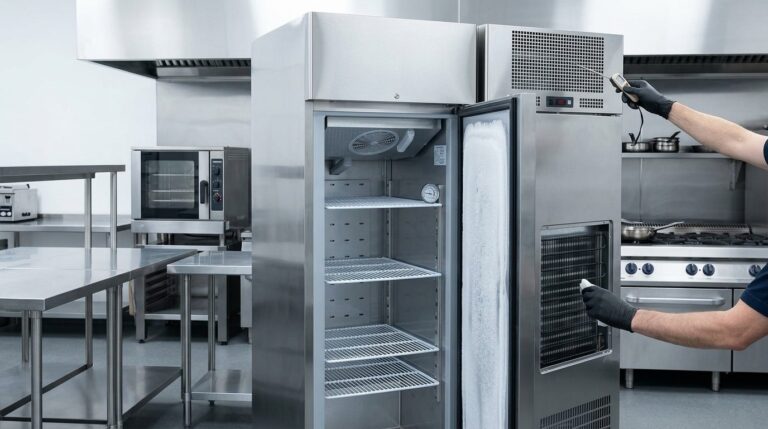
Unifrost F410SS Upright Freezer Ambient Heat & Ventilation Troubleshooting
Troubleshoot Unifrost F410SS freezer temperature issues. Learn how ambient heat and ventilation affect performance in Irish kitchens.
Read guide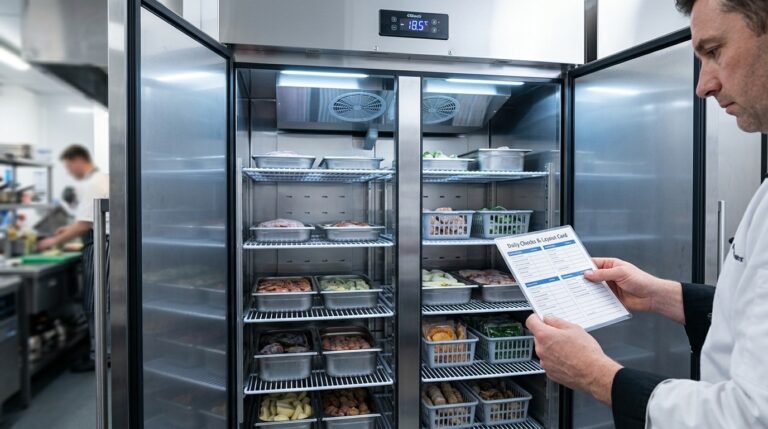
Unifrost F410SS Upright Freezer: Quick Start Guide for Hotels
Get started with the Unifrost F410SS in your Irish hotel. Temperature setup, layout guidance, and quick checks for optimal freezer use.
Read guide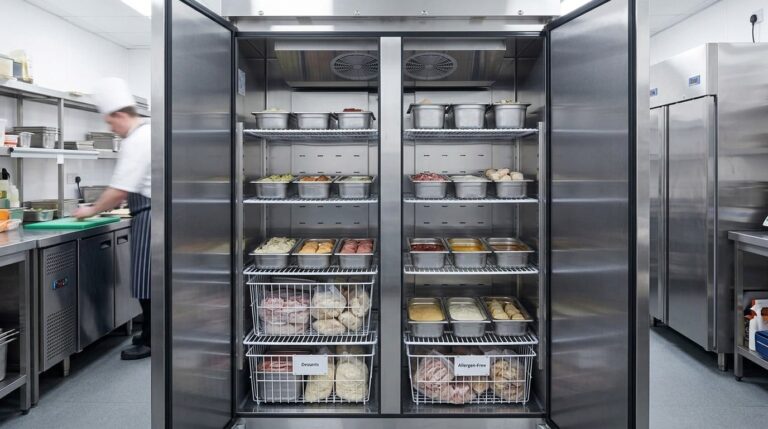
Unifrost F410SS Upright Freezer Planning Guide for Irish Hotel Banqueting Kitchens
Plan your F410SS freezer layout for efficient high-volume banqueting in Irish hotels. Optimize GN pans and workflow.
Read guide