What are the consequences of neglecting regular freezer cleaning?
 FAQ
FAQ
Neglect shows up quickly in both hygiene and operating cost:
Need more detail? For model comparisons, setup steps and troubleshooting, see the related guides below.
Neglect shows up quickly in both hygiene and operating cost:
Temperature instability from restricted airflow and iced-up internal surfaces, increasing the risk of soft product, freezer burn, and stock waste.
Higher energy use as the system works harder to pull down temperature.
Odours and cross-contamination risk from spills and residues that freeze onto shelves and liners.
Door seal failure caused by grime and dehydration of gaskets, leading to warm air ingress and condensation.
More call-outs and downtime due to blocked vents, dirty condenser areas, and preventable icing.
Poor presentation (streaked glass, fogging/condensation marks), which directly affects sales in display applications.
In short, cleaning is one of the lowest-cost ways to protect compliance, product quality, and the freezer’s lifespan.
Read the full guide: Unifrost Upright Display Freezer Cleaning and Hygiene Best Practices.
More help with this question
Compare models, maintenance advice and support information related to this topic.
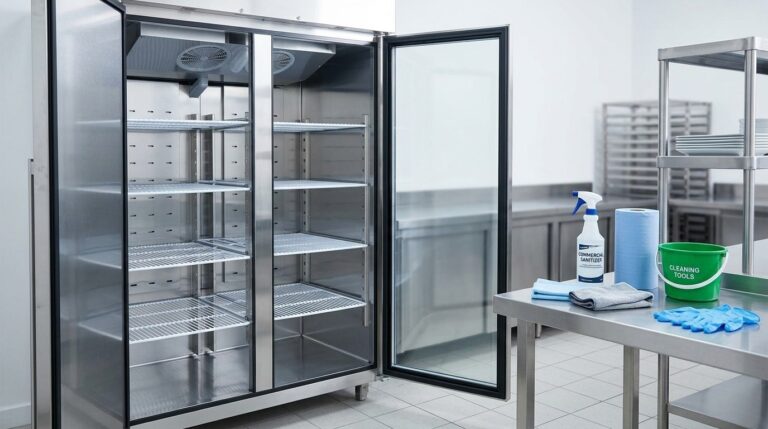
Unifrost Upright Display Freezer Cleaning and Hygiene Best Practices
Discover best practices for cleaning Unifrost upright display freezers, ensuring hygiene and efficiency in Irish commercial settings.
Read guide