
Unifrost Upright Display Freezer Cleaning and Hygiene Best Practices
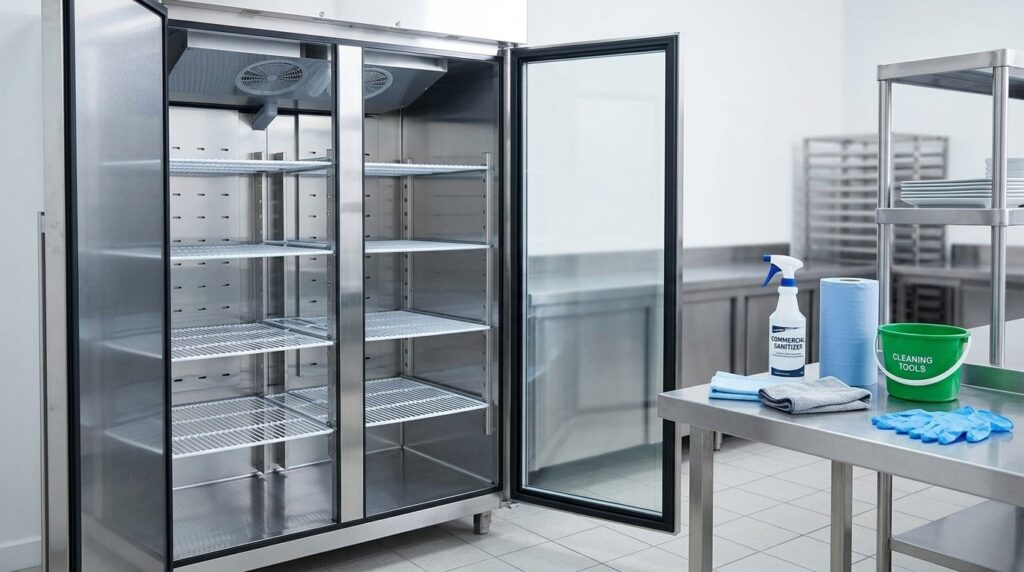
Discover best practices for cleaning Unifrost upright display freezers, ensuring hygiene and efficiency in Irish commercial settings.
Unifrost Upright Display Freezer Cleaning and Hygiene Best Practices (GDF and HVF)
If you run a Unifrost upright glass door display freezer in a shop, café, forecourt or restaurant, cleaning is not just about presentation. It directly affects food safety, temperature control, energy use, and how reliably you can merchandise frozen food and ice cream in busy service.
This guide focuses on the Unifrost Display Freezers family, including GDF and HVF upright glass door ranges. You will learn what to clean daily, weekly and monthly, which chemicals and tools are safe for glass, gaskets and internal liners, and the checks that prevent common issues like frost build up, poor airflow, rising running costs, and damaged door seals.
You will also see how to build the routine into your operation with minimal downtime, what to record for HACCP style cleaning and inspection logs, and what to do after events such as power cuts or temperature alarms so you can protect stock and stay audit ready.
Why Cleaning is Crucial for Upright Display Freezers
Regular cleaning matters because an upright glass door display freezer is doing three jobs at once: holding temperature, presenting stock, and sitting in full view of customers. Dirt, spills and frost build-up make the cabinet work harder, can create avoidable hygiene issues, and they usually show up at the worst possible time, mid-service or during a busy retail rush.
From an efficiency and reliability point of view, it is basic maintenance. SEAI notes that refrigeration efficiency depends on ensuring condensers and evaporators are kept clean and defrost systems are working correctly. How often you need to clean comes down to your site: a busy convenience store, ice cream service, or a flour-heavy café will load a cabinet with grime and airborne dust faster than a staff-only freezer in a back corridor.
Hygiene and food safety: why display freezers need a stricter routine
A display freezer is part of your customer experience as much as your cold chain. Torn packaging, drips in the base, sticky handles, and finger marks on the glass quickly become “invisible” to staff and very visible to customers.
A proper routine also supports HACCP in a practical way. Cleaning reduces the chance of physical contamination (crumbs, bits of packaging) and forces regular checks that often catch issues early, such as:
split packs and leaking products
damaged shelf clips or broken shelf runners
water pooling that refreezes and traps dirt
door seals starting to lift or tear
If cleaning is informal, it is the first thing to slip during Irish peak trading patterns like Friday evening, Saturday daytime, and match nights. Those are also the periods when doors open most and the cabinet takes the biggest hit.
Lifespan and breakdown prevention: what dirt and ice do to the cabinet
Most freezer problems from poor cleaning are gradual, not dramatic. You tend to see the slow, expensive symptoms:
longer pull-down and recovery after stocking
more frost on internal surfaces
more frequent alarms or temperature drift
compressors running longer than they need to
That extra run time and heat stress is what turns a “grand yesterday” cabinet into an urgent call-out during service.
Frost and ice are not just cosmetic either. They can interfere with airflow, make shelves and liners harder to sanitise properly, and lead to the kind of improvised “chipping away” that damages liners, fan covers and door seals.
Energy efficiency and running costs: cleaning is a controllable cost lever
Electricity is a major operating cost in Ireland, and upright display freezers run 24/7, often in warm, awkward spots: near entrances, coffee machines, deli counters, or sunlight. Keeping airflow paths clear, keeping door seals clean and intact, and staying on top of frost helps the unit reach temperature faster and cycle normally instead of running flat-out.
Cleaning is also one of the few efficiency actions you can standardise across staff. The Food Safety Authority of Ireland highlights the importance of cleaning schedules and records, and sets out the stages of effective cleaning and the need for structured routines. That approach applies well to display freezers because they sit at the centre of daily opening, merchandising and customer interaction.
That is the why. The practical win is turning it into a repeatable routine that fits around service and keeps your upright display freezer presentable, efficient, and less likely to let you down when the shop is busy.
Comprehensive Cleaning Checklist for Unifrost GDF and HVF Models
Clean little and often. Keep the glass, handles, and spill points hygienic daily, then schedule a proper internal clean weekly and a deeper airflow and seal check monthly. Follow a consistent order: protect stock, put the cabinet in a safe state, wash with detergent, rinse, sanitise, rinse, and air-dry. Finish by checking temperature recovery and logging the work for HACCP.
If you have alarms, abnormal frost, or a power cut, treat it as a food safety event. Check product condition and cabinet temperature before you resume service, in line with the FSAI’s guidance on power outages in food businesses: <https://www.fsai.ie/Business-Advice/Running-a-Food-Business/Caterers/Power-Outage-in-a-Food-Business>.
1. Plan the clean around trading, stock protection, and downtime
For most Irish retail and hospitality sites, the easiest window is just after a stock rotation or near close, when the cabinet is at its emptiest. The aim is to keep frozen stock hard-frozen and packaging dry. Once cartons soften and re-freeze, you tend to get torn packs, more frost, and a poorer display.
If you cannot empty the unit, clean in sections. Keep the doors shut between sections and move stock into insulated boxes, a back-of-house freezer, or a temporary chest freezer.
2. Put the cabinet into a safe state before you use chemicals
Move or cover exposed product first. For a deeper clean, switch the unit off at the controller if needed. Only isolate power at the plug or local isolator where your site procedure allows and you can do it safely.
Avoid spraying liquids near lights, fans, controls, or vents. On glass door display freezers, liquid running into door frames and channels is a common route to odours and icing later.
3. Use suitable chemicals and non-damaging tools
Use a food-safe detergent for the wash stage, then a food-safe sanitiser or disinfectant for the sanitising stage. Follow the label for dilution and contact time. The practical logic is the FSAI “6 stages of effective cleaning” approach (wash, rinse, disinfect, rinse, air dry): <https://www.fsai.ie/Business-Advice/Running-a-Food-Business/Butchers/Safe-Food-Handling>.
Keep tools simple:
Microfibre cloths for glass and frames
Soft brushes for shelf supports, corners, and channels
A separate cloth for door seals
Avoid abrasive pads on glass or liners. Skip strongly perfumed products around open packaging and ice cream, as odours can carry.
4. Set a frequency routine that fits a display freezer (daily, weekly, monthly)
A glass door display freezer has two jobs: food storage and presentation. One written schedule helps stop “we cleaned the glass” becoming “we forgot the seals, channels, and airflow points”.
Daily (2 to 5 minutes): wipe external glass (inside and out), handles, and other touch points; spot-clean internal spills; check doors close properly and seals are sitting flat; remove cardboard bits and damaged packaging that can block air slots.
Weekly (20 to 40 minutes): remove shelves and fittings for washing; clean internal liners, corners, and shelf supports; clean door frames and gasket folds; sanitise after washing; pay attention to glass edges and lower channels where sticky residue turns into odour.
Monthly (30 to 60 minutes): clean accessible condenser intake grilles or filters (if fitted) and vacuum dust around ventilation paths; inspect door seals for splits, flattening, or gaps; check hinges and self-closing action; review temperature logs and alarm history for patterns that suggest icing or airflow restriction.
5. Clean and inspect door seals properly (they drive hygiene and performance)
Dirty or damaged gaskets are a common root cause of frost and poor temperature control. Warm, moist air leaks in, ice builds up, and the cabinet runs harder.
Fold back the gasket lips gently, wash out trapped debris, sanitise, and let the seal dry before closing up. When the door shuts, you want consistent resistance and a consistent seal line all the way around. If you see gaps, repeated fogging, or frost building in one corner, log it as a maintenance issue rather than trying to “clean it away”.
6. Manage frost and ice build-up without damaging the cabinet
Do not chip ice with knives or metal scrapers. If you are seeing regular ice on shelves, around the door frame, or near airflow areas, start with the basics:
Door-open time and staff habits
Seal condition and door alignment
Overloading or packaging blocking internal air vents
Loading warm product straight into the display
If frost keeps returning despite good operation and routine cleaning, it is usually time for a service check rather than more aggressive cleaning.
7. Restart correctly: confirm temperature recovery, then log it for HACCP
Reassemble shelves when dry, reload with airflow in mind, and let the cabinet pull down to temperature before you fully face-up the display.
Your HACCP routine should include freezer temperature checks and cleaning records. If you want a format that matches Irish practice, you can align your paperwork to the FSAI Safe Catering Pack refrigeration recording form (Recording Form 2): <https://www.fsai.ie/publications/safe-catering-pack-record-books>.
After a power cut or temperature alarm, verify whether product stayed frozen. The FSAI notes that food that is still frozen can continue to be kept frozen if it is still below -18°C: <https://www.fsai.ie/Business-Advice/Running-a-Food-Business/Caterers/Power-Outage-in-a-Food-Business>. Anything fully defrosted needs a risk-based decision and, in many cases, disposal.
Keeping temperature checks and cleaning actions in the same log makes it easier to spot the real causes of icing, fogging, and slow pull-down before they turn into a call-out.
Common Mistakes in Freezer Maintenance
Most freezer problems do not start with a dramatic breakdown. They start with small maintenance shortcuts that lead to poorer temperature stability and quicker ice build-up. Once that happens, the cabinet runs harder, energy use creeps up, and stock can look tired sooner than it should.
It also creates a paperwork problem. If you get a temperature alarm or a power cut, you need to be able to show what temperature the freezer actually held. FSAI guidance notes food should only remain frozen if it is still below -18°C (FSAI power outage advice for food businesses). If your unit is frosting up, struggling to recover, or the door is not sealing, you are making that decision harder and riskier.
Cleaning glass with abrasives or the wrong chemicals
Glass door display freezers take a battering in day-to-day service, but the glass still needs the right approach. Scouring pads, abrasive powders and heavy-duty degreasers can haze or scratch the surface. Once the glass is marked, it shows fingerprints and smears under the internal lighting, so staff clean it more often and usually more aggressively.
The operational knock-on is that poor cleaning habits often go with rough handling. More pulling, yanking and slamming leads to gasket wear and door alignment issues. A door that does not close cleanly pulls in moist air, which means more fogging and faster frost build-up.
Ignoring (or damaging) door gaskets and threshold areas
Another common mistake is wiping “around” the gasket without cleaning the folds and corners, and forgetting the bottom threshold where crumbs, sugar and packaging debris collect. Dirt in these areas stops the seal seating evenly. Even small air leaks drag in humidity, which then shows up as fogging, frost on shelves and ice on product packaging.
If you have an alarm event or a power cut, seals matter more than ever. You are expected to verify the temperature the freezer held and make discard decisions based on that. FSAI notes you can only keep food frozen if it stayed below -18°C (FSAI power outage advice for food businesses).
“Quick defrost” shortcuts that create water and electrical problems
Pouring hot water into the cabinet, chipping ice with sharp tools, or using a heat gun in tight corners is a fast way to create expensive problems. You can crack liners, damage internal finishes, and drive water into places it should not be. Even when nothing fails on the day, you can be left with rough surfaces that are harder to clean properly, so staining and odours become a regular headache.
In Irish cafés and shops, these freezers are often kept stocked all day, so the temptation is a quick scrape and refill. In practice, you get better results by planning a controlled defrost and clean: contain the meltwater, protect interior surfaces, and give the unit time to pull back down to temperature before reloading. If you are unsure what a safe routine looks like for your setup, it is worth getting advice before it turns into weekly ice management.
Integrating Cleaning Routines into Everyday Operations
To keep Unifrost GDF and HVF upright glass door display freezers clean without losing trading time, tie quick tasks to natural moments in the day (open, lull, close) and put a deeper clean into a fixed weekly slot when stock is lowest. Give each shift clear ownership, keep the right cloths and chemicals beside the freezer (not “out the back”), and keep cleaning sign-off beside your temperature records. Finish each clean with a quick seal and airflow check. A cabinet can look spotless and still struggle if the door is leaking or vents are blocked.
1. Decide who owns the freezer, and when it gets cleaned
If everyone “helps out”, nobody owns it. Assign a primary owner (duty manager, senior deli staff, kitchen porter lead) and a named backup. Then set timing that matches your trading pattern. A forecourt shop at lunchtime has different pressure points than a hotel bar after dinner.
Make it specific: “glass and handle wipe at open and 3pm” works. “Clean regularly” does not. Aim for consistency, not heroics. Avoid scheduling a deep clean for the busiest shift or the person who always ends up on the till.
2. Standardise daily, weekly and monthly tasks so they happen on busy days
The easiest way to stop cleaning getting skipped is to break it into small, repeatable tasks that staff can do without emptying the cabinet. With glass door merchandising, “little and often” keeps the unit sale-ready and reduces sticky drips turning into ice, smells, and hard work later.
Daily (minutes): wipe glass inside and out, clean handles and touch points, spot-clean spills, remove damaged packaging, and check the door closes freely without product fouling it.
Weekly (plan for reduced stock): remove and wash shelves or shelf fronts, clean internal liners, clean and dry gaskets, and tidy product presentation so airflow gaps are maintained.
Monthly (planned maintenance slot): inspect seals for splits or hardening, check hinges and door alignment, and clean accessible ventilation areas so the unit is not starved of air.
3. Make cleaning a food safety process, not just a cosmetic job
In Irish operations, you are cleaning for two outcomes: preventing contamination and keeping temperatures stable. Use a proper sequence so you are not just moving grime around. The FSAI sets out a structured approach: clean with detergent, rinse, disinfect (or use a combined product as directed), then allow to air dry before reassembly and reloading (FSAI guidance on the stages of effective cleaning).
Two practical habits reduce repeat work:
Work top to bottom, so you do not re-soil lower sections.
Do not soak gaskets or flood joints. Moisture that sits in corners is where mould and odour complaints tend to start.
4. Tie cleaning to HACCP records so it is auditable on inspection day
If you cannot show it, you will end up doing it again. Keep cleaning sign-off beside your freezer temperature monitoring so supervisors see both during handover and you have one place to check compliance.
For smaller caterers and deli-style operations, it helps to align paperwork with common Irish templates. The FSAI Safe Catering Pack includes record forms for refrigeration temperature recording and hygiene inspection checklists (FSAI Safe Catering Pack record books). Operationally, it builds one repeatable routine: clean, check, sign, move on.
5. Reduce downtime by cleaning in sections while keeping the freezer merchandised
Emptying a glass door display freezer mid-trade is exactly how cleaning gets postponed. Clean in sections instead: top half one day, bottom half the next, or one shelf bank per shift. Hold product in lidded tubs or insulated crates only for the time it takes to clean that section, then get it straight back in.
Set one house rule to protect performance: doors stay shut unless hands are inside, and product goes back with space around vents. In a display freezer, airflow is food safety and glass clarity. Messy loading leads to more frost, more cleaning, and higher running costs.
6. Add a “power cut and alarm” hygiene routine so you are not guessing under pressure
When a power cut or temperature alarm hits, the focus is usually on saving stock. What gets missed is the hygiene fall-out: condensation, drip water, and damaged packaging. Your written routine should cover: check temperatures, assess product condition, clean up meltwater, sanitise touch points, then restock only when the freezer is stable and back at a safe temperature.
The FSAI advises checking temperatures, discarding fully defrosted high-risk foods, and only continuing to freeze food that is still below -18°C, then confirming units are working properly before restocking (FSAI power outage advice for food businesses). Incidents rarely land at a quiet time, so this needs to be a routine staff can follow without debate.
These routines are easier to run when you have a single, model-appropriate checklist that staff can follow shelf-by-shelf without making judgement calls mid-shift.
Unifrost Specific Features and Cleaning Considerations
How you clean a cabinet should match how it’s built and how it’s used in service. Upright glass door display freezers add extra customer-facing surfaces, plus vents and seals that get more abuse from constant opening.
The Food Safety Authority of Ireland’s guidance on cleaning schedules and the staged clean, rinse, disinfect, rinse, air-dry method is a good baseline. In practice, you’ll need to apply it properly around glass doors, shelf hardware, door frames and any lighting or venting on your Unifrost GDF or HVF unit. The common failure point is relying on “quick wipes” during trading, while gaskets, shelf edges and intake areas quietly build up grime and then start causing frost, odours, and poor door sealing.
Glass doors and visibility: hygiene is part of merchandising
With GDF and HVF upright display freezers, clean glass is operational, not cosmetic. It affects what customers pick up, how long the door stays open, and how much warm moist air gets pulled into the cabinet.
In Irish convenience and forecourt settings, the usual problem areas are fingerprints at handle height, drips at the bottom rail, and cloudy residue from the wrong cleaning chemical. That haze makes the cabinet look “warmer” than it is, and slows down browsing.
Use a food-safe glass cleaner or mild detergent solution, then rinse with a clean cloth and dry fully. Residue is what causes most smearing under LED lighting. Avoid abrasive pads, as they can scratch glass and leave it looking permanently dull.
Door gaskets and frames: where hygiene and temperature control meet
Door seals do two jobs: they reduce warm air ingress (temperature stability and frost control) and they stop spills sitting in folds (hygiene and odour).
If you’re running ice cream or boxed impulse lines, sugar film and cardboard dust often collect at the gasket line, then freeze. That can create tiny gaps that aren’t obvious until you’re dealing with persistent icing.
Clean gaskets gently with a soft brush or cloth to get into the folds without tearing them. While you’re there, check the contact line on the frame. If a gasket is split, hardened, or pulling away at the corners, cleaning won’t restore performance. Plan a replacement rather than accepting ongoing frost and higher running costs.
Shelves, shelf supports, and ticket strips: the places dirt hides
Display shelves collect crumbs, broken cardboard and sticky residue, then freeze it into place. Over time, that reduces usable shelf depth and makes rotation harder. You’ll see it as torn packaging, frost on box faces, and messy shelf presentation.
When you remove shelves for a deeper clean, take the supports and clips with you. Clean them off-cabinet where possible, and make sure they’re fully dry before refitting. Trapped moisture refreezes, leaving shelves skewed or unstable and causing knock-on damage during restocking.
Lighting and internal trims: clean without letting moisture into electrics
Some units in the Unifrost GDF and HVF display freezer family are fitted with internal lighting. The priority here is keeping liquids and chemicals out of fittings and control areas.
Don’t spray chemicals into light fittings, switches or controls. Put cleaner onto the cloth first, wipe, then follow with a clean damp cloth and dry, especially around end caps and trim joints where liquid can sit.
If you notice flicker, dark spots, or condensation behind a lens after cleaning, treat it as a maintenance flag. It can indicate moisture ingress, or simply that doors are being held open too long during restocks.
Airflow and condenser areas: cleaning that reduces frost and helps energy use
Display freezers depend on airflow. If product is pushed tight to the back or vents are blocked, you’ll get uneven temperatures, heavier frost in certain zones, and more time spent making product faces look presentable.
Separately, dust on ventilation and heat rejection areas makes the system work harder. In day-to-day terms, you’ll notice slower recovery after door openings and more temperature swings.
A simple operator rule set that prevents a lot of avoidable issues:
Keep products clear of vent paths and avoid brick-packing.
Clean glass and handles little and often, but deep-clean gaskets and shelf hardware on a rota.
Avoid abrasive pads on glass, liners or painted trims, and don’t spray liquids into controls or lighting.
Treat recurring frost in one shelf zone, persistent wetness at the bottom rail, or repeated gasket icing as a fault to investigate, not “just cleaning”.
If you want this to hold up under Irish trading pressure, build it into a timed routine staff can complete without stripping the cabinet at peak hours. That’s where a model-appropriate checklist earns its keep, especially across multiple sites or shifts.
FAQs on Unifrost upright display freezer cleaning and hygiene
What cleaning chemicals are safe for use on Unifrost freezer glass doors?
Use non-abrasive, food-safe cleaners that leave minimal residue:
Daily wipe-down: warm water with a small amount of pH-neutral washing-up liquid, then rinse with clean water and dry with a microfibre cloth.
Sanitising (when needed): a food-safe sanitiser used at the manufacturer’s dilution, followed by a wipe with clean water if the product label requires it.
Stubborn fingerprints/grease: an ammonia-free glass cleaner is usually safest for coated or heated glass, applied to the cloth rather than sprayed into vents or seals.
Avoid scouring pads, abrasive powders, chlorine bleach, caustic degreasers, and solvent-based cleaners as they can scratch glass, haze plastics, or prematurely harden door gaskets. If your site has a prescribed chemical set, cross-check it against the unit’s user manual and your HACCP chemical list.
How often should different components of the Unifrost upright freezer be cleaned?
A practical commercial schedule that works for most Unifrost upright glass-door display freezers (Display Freezers family, e.g. GDF/HVF ranges) is:
Glass doors (inside and out): daily (more often in high-traffic retail for merchandising standards).
Handles and touch points: daily.
Spill spots and product debris: as they occur to prevent frozen-on contamination.
Shelves and shelf supports: weekly (remove, wash, fully dry before refitting).
Door gaskets and frame surfaces: weekly (soft cloth and mild detergent, then dry).
Interior liners and base/floor area: monthly or fortnightly for ice-cream and high-turnover sites.
Air intakes/vents: monthly (keep clear of dust and packaging).
Condenser area (where accessible): every 2 to 3 months in kitchens, bakeries, or dusty areas, and at least twice a year in cleaner retail environments.
If the unit is in a hot kitchen, near flour, or by a front door, tighten the schedule as these conditions quickly increase dust, condensation, and odour risk.
What are the consequences of neglecting regular freezer cleaning?
Neglect shows up quickly in both hygiene and operating cost:
Temperature instability from restricted airflow and iced-up internal surfaces, increasing the risk of soft product, freezer burn, and stock waste.
Higher energy use as the system works harder to pull down temperature.
Odours and cross-contamination risk from spills and residues that freeze onto shelves and liners.
Door seal failure caused by grime and dehydration of gaskets, leading to warm air ingress and condensation.
More call-outs and downtime due to blocked vents, dirty condenser areas, and preventable icing.
Poor presentation (streaked glass, fogging/condensation marks), which directly affects sales in display applications.
In short, cleaning is one of the lowest-cost ways to protect compliance, product quality, and the freezer’s lifespan.
Next step: choose the right Unifrost upright display freezer for your site
If you are comparing capacities, door layouts, and merchandising needs, start by shortlisting the Unifrost upright display freezer style that suits your store or kitchen, then set a cleaning schedule around your trading pattern (daily glass and touch-points, weekly gaskets and shelves, and periodic airflow and condenser checks).
To browse current commercial options and narrow down by type, view Caterboss’s Frozen Storage category and then ask for advice on the best-fit Unifrost display freezer and a hygiene routine that minimises downtime.
Compare Unifrost freezer options on Caterboss
For current product options, pricing and availability, continue to Caterboss.