
Unifrost DCF1300 & DCF1600 Deli Counter: Buying and Setup Guide for Irish Cafés and Delis
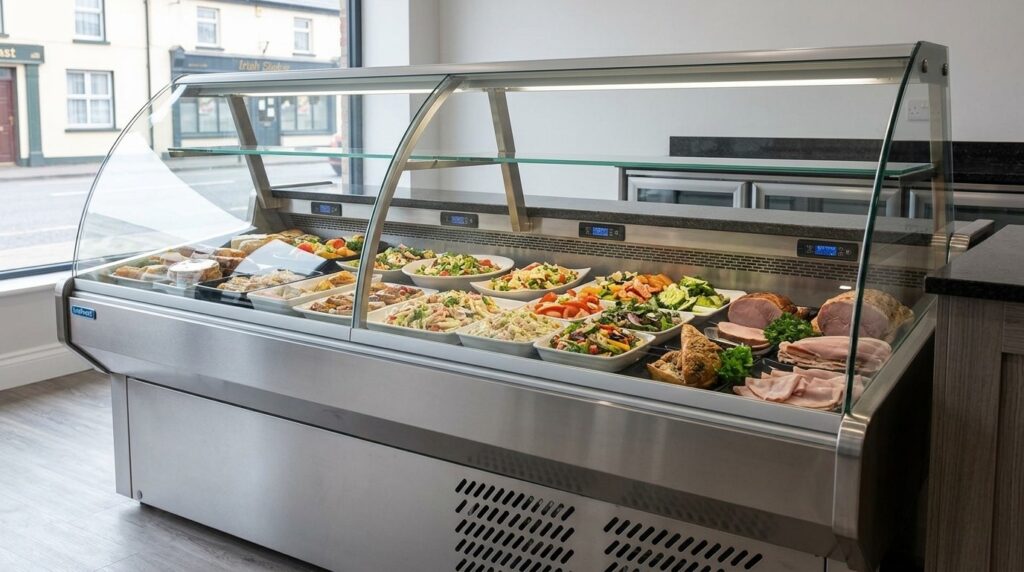
Discover the features, setup, and use of Unifrost DCF1300/DCF1600 deli counters for Irish businesses, optimizing presentation and safety.
Unifrost DCF1300 & DCF1600 Deli Counter: Buying, Installation and Daily Use Guide (Ireland)
You are choosing between the Unifrost DCF1300 and DCF1600 curved-glass serve-over deli counters because front-of-house display has to sell product while keeping chilled food within safe limits. The wrong footprint, airflow clearance, or loading routine quickly shows up as warm spots, condensation, slow service, and wasted prep.
This guide walks you through the practical checks and tradeoffs you actually make before ordering and during setup, including:
Which model size fits your menu and throughput, and how the display deck, chilled under-storage, ambient upper shelf, rear sliding doors, and granite worktop affect staff workflow.
What to confirm for a smooth install in an Irish premises, such as access, positioning, power, ventilation clearance, and commissioning the digital controller and lighting.
How to operate and clean the counter day to day using the hinged curved front glass and routine hygiene practices to stay commercially sharp and compliant.
Common mistakes and quick troubleshooting signals, including temperature swings, icing, and poor presentation.
How the DCF1300 and DCF1600 compare with alternatives you can buy on Caterboss, so you can weigh running costs and spec priorities without guesswork.
Why this topic matters in commercial use
Choosing the right serve-over deli counter matters because it sits at the point where food safety and sales overlap. You need it to hold chilled food safely while also doing the front-of-house job of making products easy to see, choose and serve.
Temperature control is not optional. The FSAI guidance for caterers is clear that chilled food should be kept between 0°C and 5°C in fridges and chill cabinets (see the FSAI’s temperature control guidance). The catch with serve-over displays is that the controller reading and the food temperature are not always the same thing, especially during busy service, frequent opening, warm shop floors, strong lighting and overloading.
Why presentation and service flow matter as much as temperature
In an Irish café or deli, the serve-over counter is often your busiest refrigeration unit. It is opened constantly, staff are serving at speed, and customers are making decisions with their eyes. If the counter layout fights the workflow, you end up with the usual symptoms: doors left open “for a second”, trays shuffled around mid-service, condensation being wiped down, and food spending too long out of controlled chilled holding.
A curved-glass serve-over format with a stainless display deck, chilled under-storage and rear sliding doors is essentially a small production line: store cold below, present above, serve from the back. When the format suits your menu and service pace, you reduce handling and keep the display looking full without constant re-plating.
Why the “right counter” is a compliance decision, not just a layout decision
Serve-over counters can quietly encourage unsafe habits if they are treated as a shop window rather than refrigerated storage. The compliance risk is not just the cabinet air temperature. It is also:
how you load the deck (don’t block airflow)
how deep you fill pans and trays
how long product sits out during a rush
whether staff can restock quickly without leaving doors open
Chilled display is simply less forgiving than a back-of-house fridge because it is disturbed all day. If you regularly display high-risk foods like cooked meats, protein salads, dairy desserts or seafood, the counter needs to be easy to work from, or staff will end up taking shortcuts that create waste and HACCP problems.
Why size and model choice affects running costs and day-to-day reliability
Bigger is not automatically better. A longer counter can help range and reduce overcrowding, but it also takes more floor space and increases the amount of chilled area exposed to warm air each time staff are serving. In quieter trading, a large counter can also be harder to keep looking “full” without over-prepping, which can push waste up.
In practice, the decision comes down to a few trade-offs:
Footprint vs queue flow at the till and customer side
Display capacity vs service speed, including how long doors stay open
Under-storage convenience vs restocking trips, depending on how your prep area is set up
Get those basics right first. Then you can choose between sizes and layouts based on what actually improves daily service, rather than trying to compensate for a counter that does not suit your site.
Key features of Unifrost DCF1300 & DCF1600
The Unifrost DCF1300 and DCF1600 are plug-in, curved-glass serve-over deli counters. They are built to do three jobs in one footprint: present chilled food to customers, keep back-up stock chilled underneath, and give you a practical surface for portioning and service.
For Irish deli and café service, the main operational aim is steady, verifiable holding temperatures for high-risk foods. The Food Safety Authority of Ireland highlights keeping chilled foods at 5°C or below in normal operation as part of good temperature control practice (FSAI guidance on chilling). In day-to-day terms, you still need to site the counter properly, load it sensibly, and keep the glass closed as much as service allows.
The real difference between the two models is simple: DCF1600 gives you a longer frontage and more capacity, which suits a wider menu or busier peaks.
Curved-glass serve-over design (what it changes in practice)
Both models use curved front glass and a hinged front panel for cleaning. That hinge matters because front glass gets fingerprints, smears, and condensation lines every day. If it’s awkward to access, cleaning slips, and the counter starts to look tired fast.
Curved glass helps visibility for customers at standing height, but it can be less forgiving if the counter is exposed to warm air. Avoid placing any serve-over right beside:
an entrance door with regular drafts
a coffee machine exhaust or hot display
a supply air vent blowing across the glass
Those details affect temperature stability more than the brochure spec.
Ventilated cooling vs static (why it’s worth understanding)
DCF1300/DCF1600 use ventilated cooling, meaning cold air is circulated across the display area rather than relying mainly on natural cold “fall” (static).
In busy service, ventilated counters tend to cope better with frequent access and replenishment because they recover quicker and hold more evenly across the deck. The trade-off is airflow discipline:
don’t over-stack product
avoid blocking air paths with packaging, paper liners, or deep pans
keep the display organised so air can move as designed
If the air can’t circulate, performance suffers, regardless of model.
Integrated service layout: display, worktop, shelf, and under-storage
Both models combine:
stainless display deck for the chilled food zone
granite worktop for serving and portioning
upper ambient shelf for packaging, napkins, POS items, or non-chilled stock
chilled under-storage for back-up product and quick replenishment
internal LED lighting to keep the display clear in typical front-of-house lighting
The under-storage is the part that usually pays back in operations. During a rush, topping up from directly below reduces steps and keeps one-person service more realistic.
Quick comparison: DCF1300 vs DCF1600 (and common alternatives)
What to check when comparing against other deli counters
When you’re comparing serve-overs, the useful differences are usually practical rather than headline figures. Focus on:
plug-in vs remote: install complexity, heat rejection, and who you’ll call when something goes wrong
ventilated vs static: recovery and consistency when service is busy
glass and door design: whether it suits your counter run, staff movement, and cleaning routine
Once those are right, choosing between DCF1300 and DCF1600 is a commercial call: how many items you need on display at peak, how often you want to restock, and how much reaching and bending your team can realistically keep up all week.
Common mistakes in selecting and using deli counters
Most headaches with serve-over deli counters come from installation and day-to-day use, not from the unit being “bad”. In Ireland, chilled temperature control is part of your due diligence under HACCP. The FSAI guidance on temperature control for chilled foods is the reference most operators work to in practice. The key point is simple: a counter can read “cold” on the controller and still be unsafe at product level if it is loaded poorly, airflow is blocked, or it is used as storage during a busy service.
Space, access, and clearance mistakes (the ones that bite before day one)
The most common buying mistake is measuring the space for the counter, but not the route to get it in. A curved-glass serve-over like the Unifrost DCF1300/DCF1600 is a bulky, upright piece of kit. Check door widths, corridors, tight turns, lifts, kerbs, and where it can be unwrapped and positioned without blocking trade. High-street cafés and shopping-centre units are where this most often goes wrong, especially if deliveries are restricted to certain hours.
The second mistake is forgetting the working side. Rear sliding doors need standing room for staff, and you need clearance to lift the hinged front glass for cleaning. If you are tight on footprint, you will feel it daily through awkward restocking, slower service, and cleaning that gets postponed because moving the unit is a hassle.
Temperature setting errors: “the dial says cold” is not a HACCP record
A refrigerated deli counter is for display and short-hold, not long-term storage. A common pattern is setting a generic temperature and assuming everything behaves the same. In reality, higher-risk foods such as cooked meats, dairy-based salads and seafood need tighter handling than, say, pastries or whole cheeses.
These issues show up repeatedly:
Relying on the controller reading without checking actual product temperature with a probe. Your HACCP record needs to reflect product temperature, not just the air in the cabinet.
Chasing a colder setpoint “to be safe”, which can dry out certain foods, increase icing, and hurt presentation when the counter is opened frequently.
Ignoring peak-service warm-up, when doors are opening, stock is being topped up, and the unit is fighting ambient heat as well as operator behaviour.
On ventilated counters, airflow matters as much as setpoint. If trays, paper, signs, or over-stacked product block the air path, you end up with warm spots, cold spots, and more waste.
Loading and merchandising mistakes that reduce sales (and increase waste)
Serve-over counters sell with what the customer sees first. Many sites overfill them like a backup fridge. That makes the display look messy, blocks airflow, and makes rotation harder. The result is more end-of-day discounting and more product going off.
A more workable approach is to treat the deck as a service buffer and hold backup stock in the chilled under-storage, topping up little and often. It keeps the display tidy, helps rotation, and avoids big temperature swings from constantly shifting large loads of product in and out during service.
Cleaning and maintenance shortcuts that lead to faults and poor optics
Curved glass and lighting only help if the unit stays clean. The common mistake is waiting for “deep clean day” and doing a quick wipe that misses the parts that actually cause problems: door tracks, seals, corners, and the areas exposed when the hinged front glass is lifted.
Two maintenance habits also drive avoidable call-outs:
Ignoring early warning signs like longer pull-down, louder running, or controller alarms that clear when you press a button.
Letting under-storage become a cardboard store. Boxes shed debris, restrict airflow, and turn routine cleaning into a bigger job that gets skipped. Hygiene slips, performance drifts, and you end up firefighting.
Condensation and “foggy glass” problems that are usually site-related
Mist on glass is often caused by the environment rather than the counter itself. If the unit sits beside a frequently opening door, under a supply-air vent, near a coffee machine, or in direct sun through a shopfront, it is constantly battling warm, damp air and heat swings. That shows up as foggy glass and less stable temperatures.
Because DCF1300/DCF1600-style counters are front-of-house, placement is part of the buying decision. Before you commit, think like a customer and a service engineer: avoid drafts and radiant heat, and make sure staff can use the rear access properly during a rush without leaving doors open.
Most of these mistakes are fixable. They are also what you should prioritise when comparing deli counters: not just length, but the practical details that affect cleaning time, service speed, and consistent product temperature day to day.
Choosing the right size and configuration for your business
To choose between the Unifrost DCF1300 and DCF1600 deli counter, start with what you need to serve from the front, then work backwards to the space, workflow, and temperature control you can reliably manage day to day. A longer counter only pays off if you can stock it properly, keep airflow clear, and work it efficiently during peaks.
1. Define what you’re actually selling from the counter (and how fast it moves)
Your menu mix decides whether you need more display length, faster replenishment from under-storage, or simply a tidier service setup.
If you’re mainly selling prepared sandwiches, salads, desserts, and packaged deli items, you’re using the counter for both presentation and speed. Display space matters, but so does how quickly staff can restock without disrupting service.
If you’re holding higher-risk chilled foods (for example cooked meats, seafood, dairy-heavy dishes), prioritise stable holding temperature and consistent staff habits over “fitting more in”.
For Irish operations, keep your food safety targets in mind. FSAI guidance supports controlling chilled foods at safe temperatures as part of your HACCP approach, so avoid choosing a size that pushes staff into stacking product, blocking airflow, or leaving doors open during busy periods. See: FSAI HACCP and chilled food control guidance.
2. Choose DCF1300 vs DCF1600 based on service pressure, not just the tape measure
Think about what service looks like at your busiest, not what it looks like at 9:30 on a quiet weekday.
DCF1600 tends to suit higher footfall and sharper peaks (school runs, lunch rush, match days, hotel breakfast). The extra serving frontage makes it easier to separate sections (for example sandwiches on one side, desserts on the other), which reduces tray shuffling mid-service. That matters because “quick rearranging” is when lids get left open and product spends too long out of position.
DCF1300 usually suits tighter front-of-house spaces (compact cafés, narrow units, smaller deli hatches). A shorter deck is easier to keep looking full and easier to rotate stock quickly. It also reduces the temptation to spread product thinly just to fill a bigger display.
If you regularly find yourself running low on a small range of bestsellers, a longer counter can help. If your challenge is keeping the display tidy and rotated, smaller can be the more manageable choice.
3. Measure the real footprint, including working space and cleaning access
Don’t just measure “where it fits”. Measure how it will be used when you’re down a staff member and still need to clean, restock, and serve without turning the area behind the counter into a pinch point.
Allow for:
Comfortable access to the rear sliding doors
Space for staff to step back and move past each other during service
Practical clearance to clean properly
These counters have curved front glass that hinges for cleaning, so make sure you can open it without hitting walls, shelving, or a coffee station. If cleaning access is awkward, it will slip, and the counter will look tired faster than it should.
4. Plan how you’ll use each zone: deck, under-storage, worktop, shelf
Both models combine a stainless display deck, chilled under-storage, a granite worktop, and an ambient upper shelf. That layout works best when each zone has a job:
Deck: “sell now” items only. Keep airflow clear and avoid over-stacking.
Under-storage: “replenish fast” stock, organised so staff are not rummaging mid-queue.
Worktop: portion, wrap, and finish without blocking access to the display.
Upper shelf: ambient items only, and only if it doesn’t encourage clutter over the service area.
If you run one-person service, put your highest-volume lines in the easiest reach zone and keep replenishment directly underneath. If you often run two staff, the longer unit can make life easier by giving clearer separation between serving and finishing/restocking, provided your space behind the counter supports it.
5. Fit the counter into your front-of-house line, not just the gap in the wall
A deli counter rarely stands alone. Check what sits beside it and how customers move: coffee, till, bakery display, chilled drinks, collection shelf for online orders.
A longer counter can anchor a proper serve-over line, but only if your queue direction and payment point prevent people doubling back.
If you expect to expand your range later, it’s often safer to choose the size that suits your layout and staffing now, then add complementary display refrigeration alongside it, rather than oversizing the serve-over and struggling with loading discipline.
If you’re unsure, make the decision off a simple service sketch: where staff stand, where customers queue, where replenishment happens, and what gets cleaned daily. That will usually tell you whether the DCF1300 is the sensible fit, or whether the DCF1600 is justified by throughput.
Installation and operational best practices
Plan delivery access first, then position the counter with sensible ventilation clearance and level it before you power up. Once it is running, let it pull down to temperature, confirm the controller setpoint, and verify product temperatures with a probe. Day to day, stability comes from routine: correct loading, short door-open times, frequent wipe-downs, and scheduled deep cleaning. If you skip pull-down, block airflow, or rely on the display reading instead of food temperatures, you will end up chasing alarms and food quality issues.
1. Confirm delivery access and the exact final location
Before it arrives, walk the full route from kerb to final position, including doors, corridors, tight turns, lifts, and any steps. Serve-over counters are awkward once they are off the pallet.
In high-street units and shopping centres, confirm delivery time restrictions and loading bay rules with centre management. Choose a location where staff can serve without choking the queue, and where the rear sliding doors can open fully for restocking.
Aim for predictable ambient conditions. Avoid siting the counter beside ovens, dishwashers, hot pass shelves, or in direct sun from a front window. Heat and humidity increase the load on a plug-in counter and can drive condensation on curved glass during busy periods.
2. Position, level, and protect ventilation paths
Move the counter into position, then level it front-to-back and side-to-side before you load any food. Even a slight lean can lead to nuisance issues like sticky sliding doors, pooled condensate, and uneven presentation on the deck.
Keep ventilation paths clear. Do not box the unit in with joinery, kickboards, stacked packaging, or bins. If it is part of a fitted line, make sure panels can still be removed for service access without dismantling half the run.
3. Connect power correctly (and safely) for Irish premises
Use a dedicated socket where possible and keep the plug accessible. You will need to isolate power for cleaning and service. Avoid running a refrigerated display counter from a multiway adaptor under the unit, and avoid extension leads in wet-cleaned areas.
If you are unsure about circuit capacity, check the unit data plate and have your electrician confirm the socket, breaker, and RCD protection are appropriate for that load, in line with Irish electrical rules such as the ETCI National Rules for Electrical Installations (I.S. 10101).
4. Commission the counter: pull-down, controller checks, and temperature verification
After switching on, close the rear sliding doors and keep the front glass shut. Let the unit pull down to temperature before loading for service.
Set a suitable chilled setpoint on the controller, then verify performance using an independent calibrated probe or a checked thermometer. Do not rely on the display reading alone.
For high-risk chilled foods, your operational target in Ireland is typically 5°C or below at product level, and your HACCP checks should reflect that, in line with FSAI guidance on temperature control for chilled foods. If the air feels cold but the food is not holding, treat it as an airflow or loading problem first, not a controller problem.
5. Set up loading patterns that keep food safe and looking good
A ventilated deli counter depends on clear air circulation. Keep product low enough that it does not obstruct airflow at the front glass, and do not over-pack the deck just because it fits. Shallow trays generally recover faster during service.
Only load food that is already chilled. A deli counter is for holding and presenting cold food, not pulling hot food down safely. If you are displaying mixed foods, separate higher-risk items (cooked meats, dairy-based salads, seafood) from anything recently delivered or not yet fully chilled. Keep backup stock in chilled storage so staff can replenish quickly without holding the rear doors open.
6. Use the hinged front glass and rear doors properly during service and cleaning
Hinged front glass makes access and cleaning easier, but it also demands consistency. During service, keep rear sliding door open-time to a minimum. Every extra second is warm, humid air entering the display.
Train staff to stage replenishment, open the rear doors briefly, load, and close. For cleaning, isolate power, allow fans to stop, then open the hinged glass carefully and support it as designed. Wipe in a way that avoids pushing crumbs and liquids into seams and edges, then dry thoroughly to reduce fogging and streaking when the counter comes back down to temperature.
7. Daily and weekly cleaning routines that reduce breakdowns and call-outs
Daily, focus on food-contact and splash zones: the stainless display deck, tray edges, and operator-side handles and door tracks. Use food-safe chemicals correctly and finish by drying. Standing moisture drives odours, slip risk, and smearing on curved glass under lighting.
Weekly, schedule a deeper clean that includes rear door tracks, any drain areas you can safely access, and accessible air inlets. Dust build-up restricts airflow and is a common cause of poor temperature stability in plug-in display refrigeration, especially in cafés and delis with flour, crumbs, and high footfall.
8. Quick operational checks for common issues (before you log a service call)
If you see temperature alarms, fogging, or product warming, check the basics first:
Rear doors being left open during replenishment
Overfilled deck or packaging blocking airflow
Unit pushed tight to a wall or boxed in by joinery
Counter out of level
Worktop used as a dumping zone, blocking vents or preventing proper cleaning around the unit
If icing or heavy condensation persists after correcting use and cleaning, stop loading high-risk food until you have verified product temperatures and your HACCP records are back in control, following the approach in FSAI HACCP-based food safety management guidance.
Once the counter is stable and staff routines are set, you will see quickly what matters in practice: how easy it is to serve, how fast it recovers after restocking, and how well it keeps the display looking tidy through a busy lunch rush.
Comparing Unifrost DCF1300 & DCF1600 with alternatives
Most buyers choose the DCF1300 or DCF1600 for front-of-house selling, so the useful comparison is day-to-day trading cost and temperature stability, not just the ticket price.
Against many Caterboss-listed alternatives, these units sit firmly in the serve-over camp: plug-in, curved-glass counters with a rear service workflow and ventilated airflow. That matters because you are comparing a closed, staff-served format with options that are often designed for self-service (open-front) or simpler straight-glass cabinets.
Versus open-front multidecks and grab-and-go cabinets: a closed serve-over generally spills less cold air into the shop during service. In practice, that can make it easier to hold product temperature without the compressor working constantly, especially in busy cafés.
Versus basic static or straight-glass serve-overs: ventilated counters can recover temperature faster after repeated serving, but they are less forgiving if you overload them, block air paths, or run them in a warm spot.
The DCF1300 and DCF1600 tend to land in the middle ground: strong presentation and service speed, with running cost heavily influenced by placement, loading discipline, and how often the rear doors are opened.
How do DCF1300 and DCF1600 compare on running cost?
Between the two, energy use is usually driven more by how you operate the counter than by the extra length alone.
The DCF1600 is typically chosen when you need more display run to keep throughput up at peak times. The catch is that extra space can encourage overfilling, slower stock turn, and blocked airflow, all of which push up running cost and increase waste.
What you should not do is run a serve-over “a bit warm” to save electricity. You still need consistent chilled holding. The FSAI notes fridges should be set so food stays between 0°C and 5°C, often achieved by setting the cabinet around 3°C to 4°C in many cases (see FSAI temperature control guidance).
DCF1300 vs smaller serve-over counters (Caterboss alternatives)
Smaller serve-overs can be cheaper to run because you are cooling less volume and you often have fewer, shorter door openings.
The trade-off is service flow. A shorter deck can force staff to reshuffle pans, restock more often, and spend longer with the rear doors open during a rush. That is when you see more compressor cycling and more temperature drift.
If your counter is also doing real work (not just display), the practical question is whether the footprint you save costs you time and stability during service.
DCF1600 vs open-front grab-and-go and multidecks
Open-front display fridges suit genuine self-service, but they usually cost more to run in real Irish café conditions because cold air is constantly leaking into the room. You feel it most near entrances, on exposed shop floors, or anywhere with strong heat loads and frequent door opening.
A served-from-behind counter like the DCF1600 is easier to “defend” thermally because the front glass is a barrier and staff control access. That normally means fewer temperature swings and less warming at the front edge during busy periods.
If your concept is truly grab-and-go, the higher running cost can still make commercial sense because it may sell more units per hour. It is just a different decision to a deli-style counter.
Which is best for you, and how to compare energy use properly?
Choose DCF1300 when floor length is tight, or you are focusing on a small number of fast-turning lines. Empty display space is paid for twice: once in energy, and again in slow-moving stock.
Choose DCF1600 when the bottleneck is serving speed and you need a longer run so staff can keep pace without constant restocking mid-rush.
When comparing against other Caterboss serve-overs, don’t get stuck on “watts” in isolation. Sanity-check the factors that actually move the meter in Irish trading conditions:
served-from-behind vs open-front
ventilated vs static cooling
location in the shop (near doors, coffee machines, ovens, direct sun)
how often rear doors are opened during peak service
loading discipline (don’t block vents or air returns)
cleaning access, so airflow stays clear and performance doesn’t drift
Once you’ve picked the right format and size, the day-to-day usability is what separates a counter that holds temperature calmly from one that becomes a constant hassle on a busy week.
How these deli counters fit into the Unifrost ecosystem
How you use a DCF1300 or DCF1600 changes what “good performance” looks like. If it is front-of-house selling, you are balancing food safety, presentation, and speed of service. If it is part of your HACCP cold-holding step, consistency and temperature checking matter more than how full the deck looks.
The Food Safety Authority of Ireland notes that fridges should be set to ensure food is held between 0°C and 5°C, and that setting 3°C to 4°C generally achieves this in practice. That is a useful benchmark when you are trying to keep a consistent chilled chain across multiple cabinets on the same site (FSAI temperature control guidance for caterers). Just bear in mind a serve-over counter is opened and leaned over all day, so it will see more temperature disturbance than back-of-house storage.
Where the DCF1300/DCF1600 sit in a typical Irish café or deli cold chain
Treat the DCF as the selling cabinet, not the main storage cabinet. It is there to present product cleanly and give staff a workable serving position, but it should be topped up from proper bulk storage so you are not relying on the counter for your full chilled capacity.
In a sensible layout, the deli counter is supported by other refrigeration that does the heavy lifting away from service pressure:
Back-of-house upright fridges for bulk stock, backup trays, and sealed high-risk ingredients, so the counter only holds today’s service volumes.
Undercounter fridges at prep so staff are not opening the deli counter for ingredients that were never meant for display.
A blast chiller if you cook, cool, then display (common in lunchtime trade), so you can cool safely and portion without pushing warm pans anywhere near the servery.
Bottle coolers or back-bar display fridges for drinks, so the deli counter stays focused on food display rather than becoming a general-purpose cold box.
Building a front-of-house display line without creating bottlenecks
DCF counters are simplest to run when they are planned as part of a front-of-house line, not dropped into a corner and expected to do everything. The aim is straightforward: customers can see the offer clearly, and staff can portion and wrap without blocking each other or leaving doors open longer than necessary.
Plan for three practical zones:
Customer viewing and queue space in front of the glass
A clear staff run behind the rear doors
A packing and payment point that does not pull the server away mid-portion
If you also run other display refrigeration for grab-and-go, desserts, or bottled drinks, keep each unit assigned to a product type. It reduces door opening, reduces cross-handling, and helps you get through the lunchtime rush with less fuss.
Keeping control consistent across your Unifrost cabinets
The real “ecosystem” benefit is consistency. When your kitchen upright, prep undercounter, and front counter are all set up with the same practical setpoints and checking routine, you reduce the chances of drift, guesswork, and staff workarounds.
Two habits do most of the work in multi-cabinet sites:
Check product temperatures with a probe as part of HACCP. Do not rely on air temperature alone, especially in front-of-house cabinets that are opened frequently.
Top up little and often from bulk storage rather than fully loading the deck “just in case”.
That second point also helps presentation and waste. Overloading a serve-over counter makes temperature recovery harder and can leave you with product that has sat out too long under lights and airflow.
Ownership, cleaning access, and serviceability across the range
Day-to-day, deli counters share the same realities as other display refrigeration: glass needs frequent wipe-down, airflow paths need to stay clear, and cleaning has to be quick enough that it actually happens during a busy week.
If you are standardising front-of-house kit, prioritise layouts where the counter can be pulled forward for deep cleaning and maintenance access without dismantling the servery. In practice, that decision usually reduces downtime more than any small spec-sheet difference, because it makes routine condenser cleaning and service access far easier when the unit is working hard.
FAQs for Unifrost DCF1300 and DCF1600 deli counters
How does a deli serve-over counter help present food attractively and boost sales?
A serve-over counter improves conversion because it merchandises and serves in the same footprint:
Creates an impulse-friendly “shop window” at eye level, so customers can see freshness, portion size, and range before they order.
Supports faster decision-making by keeping best sellers in a consistent, well-lit layout, reducing queue time at peak.
Enables clean upselling (add-ons, sides, premium cuts) because staff can point to options while serving.
Improves perceived quality and hygiene versus open trays, especially with a dedicated chilled display zone and a separate prep surface.
In practice, the biggest lift usually comes from tight range curation, clear pricing/labels, and keeping the front row visually full without overloading the deck.
What temperature should a serve-over deli counter be set to for safe operation in an Irish context?
For chilled, high-risk ready-to-eat foods in Ireland, most operators target 0°C to +4°C at product level, aiming to keep food at or below +5°C during service.
Practical setup tips:
Measure the food, not just the controller: verify with a calibrated probe placed in the thickest part of the product (or between packs) at several points along the deck.
Use a simple check routine: record opening, mid-service, and closing temperatures, and recheck after restocking.
Avoid loading warm product: pre-chill items before display. A deli counter is for holding and presenting, not pulling product down quickly.
Allow airflow: don’t block air inlets/outlets with trays or packaging, and keep portions within the recommended fill line.
If you display mixed-risk items (e.g. cooked meats, dairy, seafood), set the counter for the most temperature-sensitive product and adjust your holding times accordingly.
How can I properly maintain my Unifrost deli counter to ensure longevity?
For Unifrost curved-glass serve-over counters like the DCF1300 and DCF1600, longevity comes from consistent cleaning, airflow discipline, and scheduled checks:
Daily (end of service): wipe the stainless display deck, granite worktop, and sliding doors with food-safe cleaner; keep the hinged curved front glass clean so visibility stays high and seals seat correctly.
Daily (during service): keep vents clear, wipe condensation, and remove spills quickly to prevent odours and staining.
Weekly: deep-clean door tracks and corners; check that rear sliding doors and hinges run smoothly and close fully.
Monthly: inspect gaskets and the display area for gaps; check the LED lighting and controller settings; look for early signs of icing or persistent condensation.
Every 3 to 6 months (site dependent): arrange a professional service to clean the condenser area and confirm refrigeration performance, especially in floury, greasy, or high-footfall environments.
Operational habits that prevent breakdowns:
Maintain clearance around the unit so ventilated cooling can reject heat properly.
Don’t store cardboard, packaging, or cleaning cloths in a way that restricts airflow in the chilled under-storage.
If you see recurring issues like temperature drift, icing, or heavy condensation, treat it as a service call early, not a “wait and see” problem.
Next step: shortlist the right Unifrost deli counter
If you are comparing the Unifrost DCF1300 vs DCF1600 deli counter for your Irish café or deli, the quickest way to get it right is to match the counter length to your menu range, peak throughput, and available serving space.
Browse the full Unifrost deli counter range on Unifrost.ie, then contact our team with your site measurements and what you plan to display. We can help you confirm the best-fit model and the practical setup details before you order.
View Unifrost display fridges at Caterboss
For current product options, pricing and availability, continue to Caterboss.