
Unifrost F410SS vs CF500HS: First-Time Buying Layout Guide for Irish Kitchens
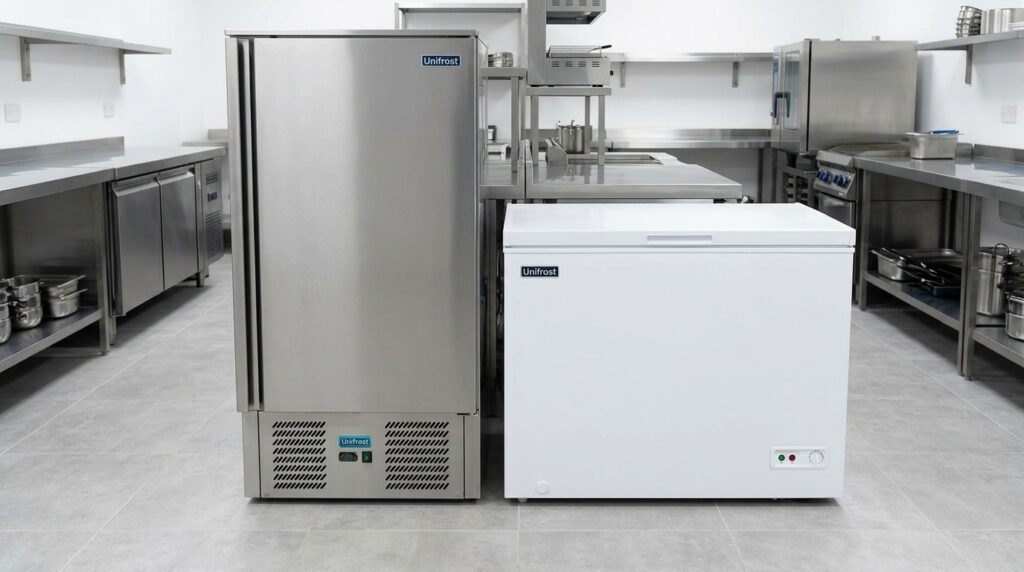
Discover the right Unifrost freezer for Irish kitchens. Compare the F410SS upright and CF500HS chest models for layout and efficiency options.
Unifrost F410SS vs CF500HS: First-Time Buying Layout Guide for Irish Kitchens
If you are buying your first commercial freezer, the biggest decision is not just litres. It is whether an upright like the Unifrost F410SS (Upright Freezers family) or a chest like the Unifrost CF500HS (Chest Freezers family) fits your kitchen layout, service style, and stock habits without creating bottlenecks.
This guide helps you compare the real tradeoffs you will feel day to day: footprint versus access space, door or lid clearance, how quickly staff can pick during service, how easy it is to label and rotate stock, and where each unit can sit without heat issues or blocking routes. You will also learn what to check before you order, including delivery access for a tall upright or a large chest, basic placement and clearance planning, and how to build a staged setup later if you start with only one freezer.
Comparing Freezer Types for First-Time Buyers
Choosing between the Unifrost F410SS upright freezer and the Unifrost CF500HS chest freezer is mainly a layout and workflow decision, not a “which brand is better” question. The real difference is access. The F410SS gives front-on, eye-level organisation for quick picking. The CF500HS is geared towards bulk storage and tends to work out better value per stored item, but it is slower to pick from.
In a busy kitchen, an upright freezer generally suits frequent door openings because stock is visible on shelves. A chest freezer can be very efficient for holding volume, but it can turn into “dig and stack” unless you run baskets, zones and labels properly. Both are commercial frozen storage options. The right choice depends on whether your pressure point is speed during service or capacity and cost in the back store.
How do the Unifrost F410SS and CF500HS compare overall?
For first-time buyers, it helps to think of the F410SS (upright freezer family) as a service freezer and the CF500HS (chest freezer family with stainless lid) as a stock freezer. If your kitchen is tight and the freezer is opened all day, the upright format usually gives better day-to-day control. You can assign shelves (chips, proteins, desserts, allergens), see what is running low at a glance, and make stock counts and rotation less painful.
A chest freezer can be more forgiving on running costs when it is kept full and opened less often, but it punishes sloppy habits. Without dated labels, simple product zones and a rule that nothing goes in loose, older stock ends up buried, ice builds up, and you lose time and margin in small drips.
Plan the footprint properly. The HSA is clear that escape routes need to be kept free of obstructions, which matters when you are fitting bulky equipment into corridors, back doors and tight stores in older premises (HSA guidance on emergency escape and keeping routes clear).
Unifrost F410SS (upright freezer) in real kitchens
An upright freezer is easier to live with where staff need frozen items repeatedly through a shift: cafés doing pastries and desserts, takeaways pulling portioned proteins, pubs running fryer lines, or small restaurants with limited prep cover. Shelves support faster picking and cleaner FIFO, especially if you use labelled crates or shallow gastro containers so items do not get piled and forgotten at the back.
Door clearance is the usual catch. You need proper swing space, and you do not want the door opening into a main route, a pass corner, or a dishwasher unload zone. Otherwise it becomes a bottleneck at the worst possible time.
Also plan for ventilation and cleaning access based on the manufacturer’s installation guidance for the specific unit, rather than guessing. Poor airflow and blocked condenser areas are common reasons for longer run times and avoidable call-outs.
Unifrost CF500HS (chest freezer) in real kitchens
A chest freezer earns its keep when you are buying in bulk and you are not opening it every few minutes: chip shops holding cases, pizzerias storing dough balls and bulk toppings, bakeries with frozen blocks, or gastro pubs using it as a buffer for weekends. A stainless lid suits tougher back-of-house areas where equipment gets leaned on, wiped down often, and sits beside dry stores.
The internal layout is where you either win or lose. Baskets make it workable for “active” items, but the bottom of any chest freezer becomes long-term storage by default. You need a routine that prevents stock being buried: dated labels on outer packs, grouping by product type, and agreement on what belongs in the bottom layer (slow movers) versus what stays in baskets (fast movers).
Defrosting matters more with chests because ice build-up reduces usable space and makes rotation harder. It is also a running cost issue. Irish energy-efficiency advice notes that frost build-up makes fridges and freezers inefficient, so treat defrosting as a scheduled task, not an occasional clean-up job (Energia note that frost build-up makes fridges and freezers inefficient).
Which is best for you?
If you can only afford one freezer to start, decide based on how it will be used on a Friday night, not how you hope it will be used on a quiet Tuesday.
Pick the Unifrost F410SS upright style if speed, visibility and stock rotation are your risk areas, and the freezer will be accessed frequently during service.
Pick the Unifrost CF500HS chest style if budget and bulk capacity matter most, you have a sensible back-of-house spot for it, and you can enforce baskets, labelling and a defrost routine.
If you expect to grow, a common setup is an upright near prep for “today and tomorrow” stock, with a chest in the store for case quantities and seasonal bulk. That keeps rummaging out of the service line.
Once you have the format clear, the next constraint is usually the unglamorous one: the capacity you need for your menu, delivery schedule and the size of your frozen range.
Capacity Needs for Different Business Types
Capacity planning comes down to three things: how often you take deliveries, how many lines you hold frozen, and whether the freezer is used for fast picking during service or bulk holding in the back. From a food safety point of view, you need enough chilled and frozen storage for the volume of food you handle, as referenced in FSAI Guidance Note No. 16. In day-to-day terms, “enough” is not just litres on a spec sheet. A unit that’s packed solid, poorly organised, or opened constantly at peak will cost you time and can undermine stock rotation.
Cafés and coffee shops: small footprint, frequent access
Most cafés don’t need huge frozen volume, but they do need quick access. Typical stock is pastries, par-baked items, ice cream, frozen fruit and a few backup lines for lunch. That points you towards usable, well-organised space rather than chasing the biggest number on paper.
Packaging catches new buyers out. Outer cartons and multipacks take up real room, even when the range is small. If space is tight, prioritise shelves/baskets and clear separation so staff can keep allergens and different product types distinct and close the door quickly.
Pubs and bars: weekend spikes and bulk buying
A pub’s freezer demand is rarely steady. It jumps for weekends, matches, functions and seasonal menu shifts. Frozen stock is often a mix of high-volume favourites (chips, wings, goujons) and ingredients you batch-cook around.
Think in “days of cover”, not just capacity. If you buy in bulk to protect margin, you need enough headroom to take a delivery without tearing through boxes to make it fit. That’s when rotation gets messy and open product sits longer than it should.
Takeaways and chip shops: production-line usage and backup stock
Takeaways tend to have the most predictable frozen demand: chips, coated products, proteins and sometimes prepared items. The freezer is part of the workflow, not just storage, so access and speed matter.
If you’re weighing an upright format (for example, an F410SS-style upright) versus a chest format (for example, a CF500HS-style chest), tie the decision to how staff actually pick stock. Uprights suit frequent access and easier separation near the prep area. Chests tend to suit bulk holding where you refill a smaller “working” freezer from the back.
Restaurants: variety makes organisation the real limiter
Restaurants can look “smaller” than takeaways on volume alone, but the freezer usually carries more variety: multiple proteins, sauces, desserts and prep components. In practice, organisation and rotation become the constraint before litres do.
If your menu changes often or you run specials, build in space so products can be grouped and labelled without stacking different lines on top of each other. You’re buying capacity to stay in control during service, not just to store food.
A practical way to size capacity for your operation (without guessing)
Before choosing between an upright (service-friendly picking) and a chest (bulk holding), run through this:
List your frozen lines and group them by access frequency: every service, daily prep, backup, seasonal.
Confirm your delivery rhythm: weekly, twice weekly, or ad hoc from cash-and-carry, and whether you can physically take a full drop at once.
Decide how many busy days you need to cover (weekday vs weekend vs functions), then sense-check it against supplier lead times.
Allow for packaging and handling: outer cartons, open boxes, labelling, plus enough space to find items quickly and shut the door properly.
Map it to workflow: if staff need regular access, prioritise organised usable space; if it’s mainly reserve stock, prioritise bulk volume and a simple restocking routine.
Once you’re clear whether your frozen stock is mostly “working stock” or “bulk reserve”, the right format, size and placement becomes much easier to judge and you avoid creating a bottleneck at the worst possible time.
Layout and Placement Considerations
Positioning a freezer in a small Irish kitchen is less about “will it fit” and more about whether it will stay out of the way, hold temperature under pressure, and stay serviceable.
Start with your flow of frozen stock from delivery to storage to prep to service. Then choose the format that suits how you actually use frozen food:
Upright (eg F410SS): faster access, easier organisation by shelf, better when you’re in and out during service.
Chest (eg CF500HS): bulk holding, less frequent access, often better deeper in back-of-house where it won’t steal standing room.
If you find yourself tempted to “just squeeze it in”, take that as a warning. Poor access and heat soak are two of the quickest ways to turn a solid freezer into a constant nuisance.
1. Map service flow and decide what “near” really means
In a tight kitchen, “near the pass” can quickly become “in the way”. Be strict about what the freezer needs to support day to day.
A simple check: time your busiest 30 minutes and watch where people stop, turn, and queue. The right spot is where someone can open the unit and pick product without forcing another person into a detour.
2. Plan clearance properly (upright door vs chest lid)
Clearance is not just “can it open”. It is “can it open while someone is carrying a box and someone else is passing behind”.
Use this placement check before committing to a corner:
Upright: confirm the door swing suits your workflow, and that an open door will not block a main walkway, handwash sink, or access to the pass.
Chest: allow vertical lid clearance (watch overhead shelves, pipework, signage), plus enough standing space in front for staff to lean in safely.
Either format: make sure you can remove baskets, trays, or boxes without clashing with prep tables, bins, hot holding, or the dish area.
Also measure for delivery. Uprights get caught on height and tight turns. Chests get caught on width and manoeuvring space. Measure the narrowest point from the street to the final position before you order.
3. Keep it away from hot spots (cookline, wash-up, sun)
Freezers struggle when they’re boxed into warm air. Putting any unit too close to ovens, fryers, griddles, dishwashers, or direct sunlight raises the ambient temperature around it. The usual results are longer run times, slower recovery after openings, and more ice build-up over time.
Common mistakes to avoid:
Upright near service: pushed tight to the end of the cookline because the footprint “works”. One step further from the hottest kit often saves you more hassle than it costs you in walking time.
Chest in a cramped store: surrounded by cardboard with no airflow. Keep the area around it clear so air can move and you can clean properly. Dust and grease build-up around refrigeration components is a predictable reliability problem in busy kitchens.
4. Don’t compromise fire routes or staff safety
A freezer is heavy, effectively fixed once installed, and very good at “accidentally” becoming part of your escape route. In Ireland, emergency routes and exits must be kept clear under the Safety, Health and Welfare at Work (General Application) Regulations 2007, including Regulation 12 on keeping emergency routes to exits and the exits themselves clear at all times:
https://www.irishstatutebook.ie/eli/2007/si/299/made/en/print
Ground rules that hold up in real kitchens:
Don’t place an upright where an open door can block a corridor, back door, or store exit.
Don’t place a chest where an open lid forces staff to step backwards into a main walkway.
Avoid blind corners where the freezer creates a collision point between runners and prep staff.
If the only available position compromises a route, it is usually better to change format, downsize, or plan for a second unit later rather than locking in a bad layout from day one.
5. Installation basics for older Irish buildings (power, floors, cleaning access)
Before the unit arrives, confirm you have a suitable socket so the plug is not stretched, trapped, or routed under the unit. In older premises, also check for uneven floors, awkward skirting, and floor drains that make levelling and cleaning harder than expected.
Finally, leave enough room to clean behind and around the freezer as part of normal HACCP housekeeping. You will appreciate it the first time a box collapses, a bag splits, or there’s a spill mid-service.
Once the location is right, the next decision is capacity: how much frozen storage you actually need for your menu, delivery pattern, and peak trading days.
Energy Efficiency and Running Costs
In day-to-day service, an upright freezer will usually cost more to run than a chest freezer used in the same way. The reason is simple: every time you open an upright door, cold air spills out. With a chest, the cold air largely stays put under the lid. SEAI make the same basic point in their refrigeration energy guidance for Irish businesses: keep door openings short and avoid unnecessary heat gain.
Where you notice it most is in busy cafés, takeaways and pubs where staff are in and out all day. A chest freezer used for bulk storage in the back-of-house tends to have steadier, lower-cost operation because it’s opened less, and for shorter periods.
What actually pushes your electricity bill up
Energy use is less about the name on the front and more about how the freezer is used and where it’s installed. The cost drivers you can control include:
How often, and how long, the door or lid is open (uprights lose cold air quickly; chests lose far less)
Stock organisation (if staff have to rummage, the compressor pays for it)
Putting warm product into the freezer (it drives extra compressor run time)
Poor ventilation or a cramped plant area
Dust and grease on heat-exchange areas (common in kitchens with fryer grease or flour in the air)
Siting near heat sources like cooklines or dishwash areas
These line up with SEAI’s practical advice for reducing refrigeration energy waste in hospitality settings: reduce door opening time, keep units clean, and avoid avoidable heat load (SEAI refrigeration guidance).
The practical implication is straightforward: if the freezer is part of your service loop (chips, toppings, desserts, allergen-only lines), you pay for every extra second the door is open. If it’s bulk storage that’s accessed a few times a day, a chest format tends to suit lower running costs.
The layout trade-off: service freezer vs bulk freezer
An upright placed near prep or the pass can improve service speed, but it typically gets opened more often. That makes running costs more sensitive to staff habits and how well the stock is organised.
A chest in a back store usually reduces the number of openings and stabilises energy use. The trade-off is time: if it’s not organised, staff can spend longer searching, which costs you in labour and can undo some of the energy benefit.
In other words, “running cost” is an operational issue as much as a kWh issue. The cheapest freezer to run is often the one that doesn’t force your team to stand with a door open while they hunt for stock.
Don’t budget on kWh alone: maintenance and failure costs show up quickly
In Irish kitchens, basic housekeeping has a direct impact on both running cost and reliability, especially in older buildings with tight ventilation. SEAI specifically call out cleaning and avoiding heat sources as part of reducing wasted compressor run time (SEAI refrigeration housekeeping guidance).
If you’re starting with one unit, the most expensive mistake is usually layout-led: boxing the freezer into a tight alcove, putting it beside hot equipment, or using a bulk-storage chest as a high-frequency service freezer. Get the location and usage right first, then size the capacity around your menu, delivery pattern, and how often you actually need access during service.
Practical Day-to-Day Usability
For day-to-day use in an Irish hospitality kitchen, the difference is mostly workflow.
An upright freezer (F410SS-style) tends to suit fast picking, clear stock zones, and quick checks during service.
A chest freezer (CF500HS-style) tends to suit bulk frozen storage where the lid is opened less often, and you can take the time to keep it organised.
From a food safety point of view, you are still working to the same baseline: the Food Safety Authority of Ireland (FSAI) notes freezers should be kept at -18°C or colder, with temperatures monitored and recorded as part of your food safety management system. That makes access and checking a practical consideration, not just convenience (FSAI temperature control guidance for caterers).
Internal layout (shelves vs baskets) and picking speed
An upright is built for vertical organisation. In practice, that means you can assign shelves to categories (chips, veg, desserts, allergens, gluten-free) and staff can find what they need without lifting out boxes first. In a busy café or takeaway, that saves seconds that add up, especially when one person is juggling freezer pulls, fryer drops and plating.
A chest is bulk storage by default. Even with baskets, the bottom often becomes the “long-term zone” unless you enforce a system. If you go chest-first, plan a method from day one: same container sizes, consistent labels, and a clear rule for what lives in baskets versus what gets stacked below. Otherwise you get the classic “dig-down” routine, slow service, and drifting stock rotation.
Defrost and what it does to your weekly routine
Without the specific model files in front of us, it is safer not to claim an exact defrost type for either unit. What matters operationally is simple: ice build-up costs you space and time, and it eventually affects seals and temperature stability if it is ignored.
Uprights are usually easier to empty shelf-by-shelf for a planned defrost and clean. They also tend to show problems sooner because ice interferes with shelves, airflow and door closing.
Chests can tolerate mess for longer, but when they do need attention it is often a bigger job because everything has to come out.
If your kitchen already runs tight cleaning routines, an upright format is generally easier to keep in line. If you can schedule a proper stock-down and reset, a chest can work well.
Access, clearance and avoiding kitchen bottlenecks
With an upright, you need clear space in front of the door so staff can open it fully without blocking the pass, wash-up route or a fire exit route. A common mistake in smaller Irish kitchens is putting an upright at the end of a narrow run where the open door becomes a barrier during service. Uprights tend to work best near prep, away from the hot line.
With a chest, you need overhead clearance for the lid and enough space for someone to lean in safely. If it sits under shelving that forces a half-open lid, staff will leave it ajar while rummaging. That is hard on temperature control and makes stock discipline harder than it needs to be.
HACCP and record-keeping under pressure
HACCP lives or dies on consistency during busy periods. The format that supports clear zones and quick visual checks is the one staff actually follow.
An upright makes it easier to keep “known locations” for high-risk items and allergens, and to spot open packaging before it becomes tomorrow’s problem.
A chest can still be HACCP-friendly, but it works best when it is treated like a store-room freezer, not a service freezer: fewer openings per shift, clear labelling, and one person accountable for rotation.
Noise in cafés and open kitchens
Noise is rarely the deciding factor in a back kitchen, but it can matter in small cafés, deli counters or open-kitchen pubs.
Uprights placed near customers are more noticeable because they sit at ear level and tend to be opened more often. Chests are usually kept in a back store, which helps keep them out of the customer experience.
The two-freezer workflow as you grow
If you can only buy one unit now, decide whether you need service speed (upright behaviour) or deep storage (chest behaviour).
A common setup in Irish takeaways, pizzerias and gastro pubs is:
Upright near prep for daily pulls and portioned items.
Chest in back-of-house for reserve stock and deliveries.
You open the chest less often, and you protect service speed by keeping only what you will use in the next day or two in the upright. That simple habit is where most first-time buyers either overspend on capacity or run out of space at the worst possible time.
Common Layout Mistakes and Solutions
Put an upright or chest freezer in the wrong spot and you feel it immediately in service. Doors or lids catch on benches, staff block each other at peak times, and stock stays out longer because it is awkward to get at. That is exactly where HACCP routines come under pressure, even with frozen goods, because you still need controlled handling and traceability (see Food Safety Authority of Ireland guidance).
Door and lid clearance: the mistake that becomes a daily bottleneck
With an upright, the classic error is squeezing it into a gap where the door only opens part-way, or where it swings into a busy route like the pass, potwash lane, or the till-to-kitchen line. The practical impact is half-access to shelves, awkward lifting, and longer door-open time during picks, usually when you are already under pressure.
With a chest freezer, people often plan for floor space and forget vertical clearance. If the lid cannot open fully because of shelving, a low soffit, or pipework, staff end up balancing the lid, leaning in, and loading badly. Organisation falls apart quickly, and then you are digging for product mid-rush.
Treat access space as working space, not wasted space. Site an upright so the door can open fully without cutting across a main walkway. Site a chest freezer so someone can stand square-on and lift straight up and out without twisting.
Blocking safety routes and the compliance issues you only notice later
Another common first install mistake is using “dead space” that is actually an escape route, an access zone for electrics, or an area you need kept clear for cleaning and maintenance. In the short term it creates messy traffic flow and near misses. Longer term, it pushes you into bad habits because the freezer is “too hard to move”. The HSA is clear on keeping routes and access clear for safe work and emergency egress (HSA fire safety guidance).
A useful rule of thumb: if you cannot sweep and mop behind and around the unit without dragging it out, it is the wrong position. In older Irish buildings with narrow back passages, it is often better to accept a slightly longer walk than to create a permanent pinch point beside the cookline or a blocked rear exit.
Heat, ventilation gaps, and the “why is my kitchen so warm?” surprise
Freezers get pushed tight to walls or wedged beside hot kit because the footprint looks fine on paper. In real life, restricted airflow around the condenser area means harder running and more heat dumped into the kitchen. That usually shows up as longer run times, more noise, and higher electricity use when the kitchen is busiest.
Keep freezers away from direct radiant heat and allow the manufacturer-recommended ventilation gaps rather than assuming “stainless beside stainless” will behave the same. If the only viable location is near cooking equipment, plan physical separation and keep the rear area reachable for routine dust removal. Poor airflow and dirty condensers are behind a lot of performance complaints in working kitchens.
Shelves vs baskets: where stock rotation fails first
A costly layout mistake is pairing the wrong freezer format with how your team actually picks stock. Upright freezers generally suit high-frequency access and clear zoning by shelf. Chest freezers generally suit bulk and slower-moving stock, but only if you commit to baskets, labelled zones, and a simple rule: new stock does not sit on top of old stock.
In a busy café or takeaway, a chest freezer placed on the service path can turn into a black hole because everyone is dipping in all day. A better setup is often to use the chest as bulk storage in back-of-house, then decant into an upright for service. You reduce lid-open time, speed up picking, and make rotation easier to manage.
A quick pre-install check that prevents most problems
Before you commit to the final spot, do one slow walk-through with a tape measure and the person who works the busiest shift:
Can the door or lid open fully without hitting anything?
Can one person stand, lift, and turn without twisting or reaching?
Does the unit stay clear of exits and key walkways?
Can you clean behind and around it without moving it?
That last point supports safer day-to-day work and manual-handling risk control (HSA manual handling guidance).
Get the layout right first, and it becomes much easier to answer the question that drives most first-time purchases: how much freezer capacity you actually need for your menu and service volume.
Building a Comprehensive Freezer Setup
A good freezer setup is about how frozen stock moves through your kitchen, not just how many cases you can stack. In Ireland, it also needs to support stock control and traceability as part of your food safety management system, as set out in the FSAI guidance on HACCP-based food safety management. What works for a takeaway with constant “pick pressure” will often frustrate a café that only takes one or two frozen deliveries a week, even if the freezer models are similar.
A practical two-zone setup: upright for access, chest for bulk
If you are building a versatile setup around an upright freezer and a chest freezer, think in two zones:
Upright = service freezer. This is for high-frequency access: portioned items, ingredients you need during service, and products you want clearly separated (including allergens). Place it close enough to prep that it saves steps, but not so close that it sits in heat, steam, or heavy traffic.
Chest = bulk buffer. This suits boxed, slower-moving stock and weekend backup where you open the lid less often. The trade-off is visibility and speed. A chest works best when you treat it like a store freezer, not something your team is diving into every five minutes on a Saturday night.
Layout planning in small Irish kitchens: clearance, bottlenecks, and heat
Most first-time mistakes are layout mistakes. Getting placement right usually does more for day-to-day performance than chasing extra features.
Upright placement: make sure the door can open fully without blocking a walkway or fire exit route. Avoid door swings that collide with the hot pass, dishwasher drop zone, or a tight plating corner.
Chest placement: make sure the lid can lift fully without hitting shelving, pipes, or low ceilings. Leave enough space for someone to stand square-on and lift stock safely without being pushed into a pinch point.
Delivery reality check: older Irish buildings often mean narrow back doors, sharp turns, and steps. Measure the full route before delivery day. Tall uprights and wide chests both tend to “fail” at the last two metres.
Use this checklist before you commit to locations (and before you order):
Measure working space, not just footprint: include door or lid opening, standing room to load, and room for someone to pass behind. Keep a small “no parking” zone so the freezer does not become the tray dump.
Keep units away from sustained heat and steam: cooklines, combi vents, and pot wash areas raise ambient temperature and make the compressor work harder.
Leave proper ventilation gaps: do not box units in tight against walls or shelving. Poor airflow is a common cause of high running costs and nuisance faults.
Plan stock flow: deliveries land at goods-in, bulk goes to the chest, and working stock moves forward into the upright in smaller quantities for the next 24 to 72 hours.
Make cleaning realistic: position units so you can sweep and mop around them, and so spills and debris are visible rather than hidden behind the cabinet.
Stock rotation and labelling: shelves versus “digging” changes behaviour
Internal layout is not a small detail. It shapes what actually happens when you are busy and short-staffed.
Upright freezers support FIFO: shelves make it easier to organise by product group and label clearly. You can keep newer stock behind or below older stock, which is easier to train, quicker to check, and simpler to correct when someone puts a case in the wrong place.
Chest freezers demand discipline: you are managing layers rather than shelves, so rotation can slip quickly. The practical approach is to treat the chest as bulk holding for clearly labelled cases, then decant into smaller, labelled working containers stored in the upright. It is also a safer way to manage allergen separation than relying on “everyone remembers what’s under the chips”.
Building for growth: redundancy, deliveries, and service efficiency
If you can only start with one freezer, many operators lean towards an upright because it protects service: faster access, clearer organisation, and less time spent digging for stock when the pressure is on. When trade grows, adding a chest is a cost-effective way to increase bulk capacity without turning your service freezer into a wall of cardboard.
A two-unit setup also gives you basic resilience. If one unit goes down, you can usually reshuffle short-term by prioritising high-risk and high-value stock into the better-performing freezer while you arrange service. It is not a replacement for proper temperature monitoring, but it can be the difference between “awkward” and “closed” for a small venue.
Once you are thinking in zones and stock flow, it becomes easier to judge the capacity you actually need for your menu, delivery pattern, and peak trading days.
FAQs for choosing between an upright and chest freezer
Should I choose an upright freezer or a chest freezer for my kitchen?
Choose an upright (like the Unifrost F410SS) when you need fast, frequent access during service, clearer organisation, and a smaller footprint in a narrow kitchen line. Choose a chest freezer (like the Unifrost CF500HS) when you want low-cost, high-volume frozen storage and you access stock less often (bulk buying, backup stock, seasonal items).
A practical rule: upright for “grab-and-go”, chest for “store-and-hold.” Many Irish kitchens end up with both over time: an upright near prep and a chest in back-of-house for reserves.
How much freezer capacity do I realistically need for my business?
Work backwards from days of cover and how you buy:
Start with 3 to 7 days of frozen cover for most cafés and smaller takeaways. If you buy in bulk less frequently, push higher.
List your top 20 frozen SKUs and note how many cases you want to hold at peak (weekends, match days, holiday periods).
Add 20% headroom so airflow and stock rotation stay practical.
If you are a first-time buyer deciding between an F410SS upright and a CF500HS chest, treat it like this: pick the unit that supports your daily workflow first (service access vs bulk holding), then plan a second freezer later once you have real usage data from your ordering and waste figures.
How does my kitchen layout and available floor space affect the type of freezer I should buy?
Layout usually decides the upright vs chest question more than the brochure does.
Upright (F410SS style): best when floor space is tight but you can spare front access space for the door swing and staff to stand safely while picking. It suits positioning close to the prep area so the door is opened for short, quick pulls.
Chest (CF500HS style): best when you have a clear “parking bay” where the lid can open fully and staff can work from above without blocking a route. It is often better in stores, basement areas, or back prep where access is periodic.
Before you commit, do a quick tape-measure check of: delivery path (doors, turns, stairs), access clearance for door or lid, and whether opening the freezer will pinch a walkway, fire route, or pass-through at busy times.
See the full commercial freezer options
If you have narrowed it down to an upright for service access or a chest for bulk holding, the next step is comparing real-world formats and availability side by side.
Browse Caterboss’s Frozen Storage category to review commercial freezer types (including upright and chest options) and shortlist the best fit for your kitchen layout and purchasing pattern.
Related Unifrost guides
Compare models, maintenance advice and support information related to this topic.
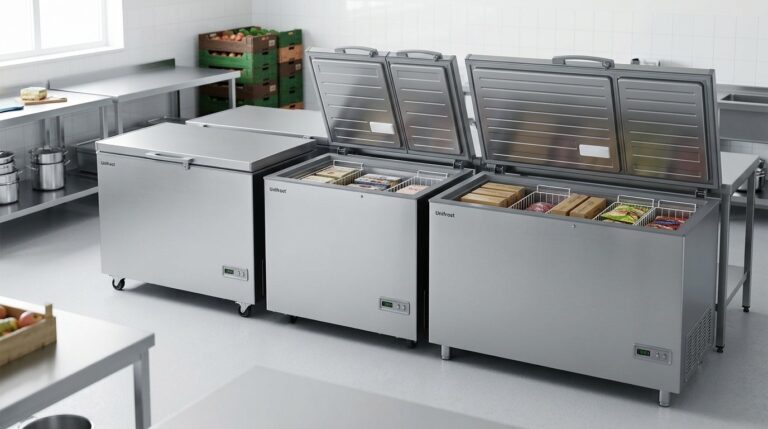
Unifrost CF500HS, CF501 & CF601 Chest Freezers: Model Buying & Setup Guide for Irish Kitchens
Explore Unifrost CF500HS, CF501 & CF601 chest freezers for commercial kitchens. Learn about setup, features, and fit for your business.
Read guide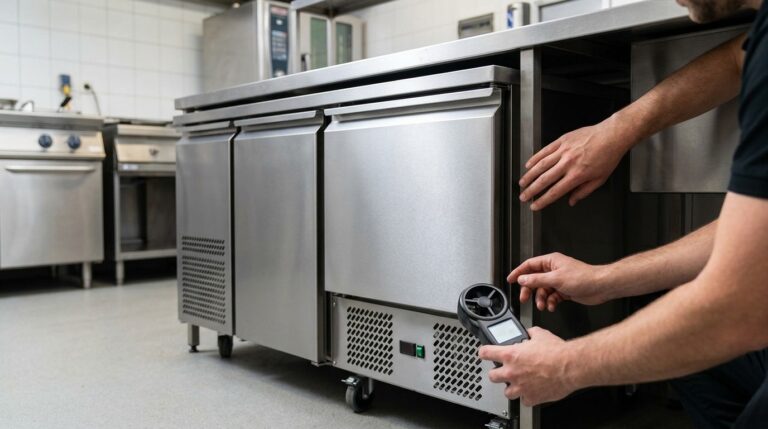
Unifrost Mini Freezer: Compact, Efficient, and User-Friendly
Explore the Unifrost F200SN mini freezer: ideal for compact commercial spaces in Ireland. Perfect for caterers, cafes, and small kitchens.
Read guide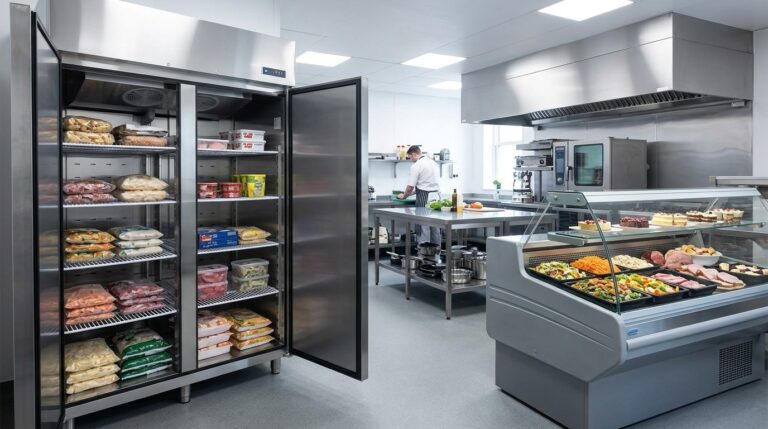
Unifrost Upright Freezer and DCF Deli Counter Workflow Planning for Irish Hotel Kitchens
Efficient planning of Unifrost freezers and deli counters for Irish hotel kitchens. Optimize workflow and service.
Read guideCompare Unifrost freezer options on Caterboss
For current product options, pricing and availability, continue to Caterboss.