
Choosing the Right Unifrost Solution: Under Counter Wine Fridge Alternatives
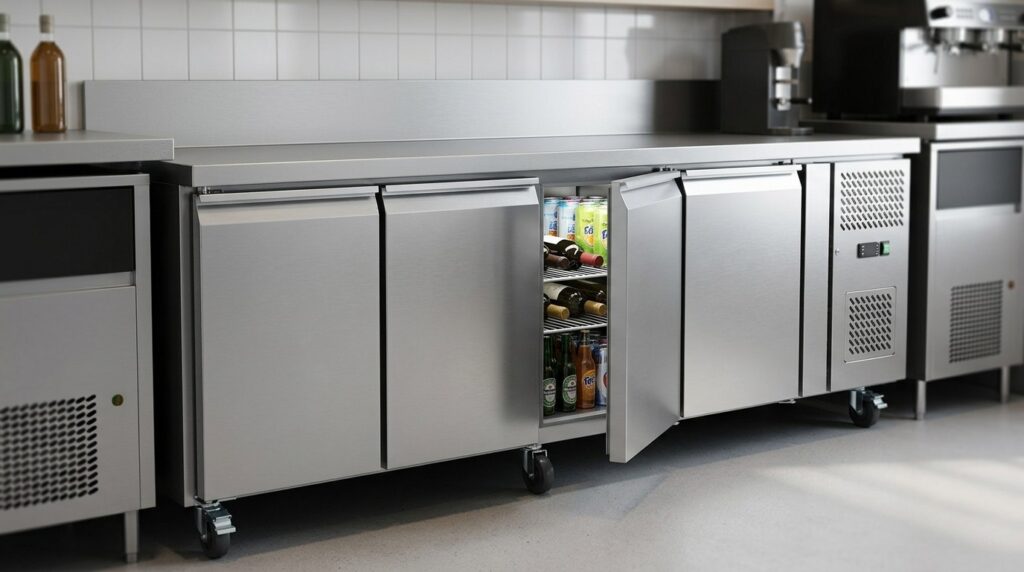
Explore Unifrost's bottle coolers and undercounter fridges as alternatives to under counter wine fridges for bars and restaurants.
Unifrost Under Counter Wine Fridge Alternatives for Hospitality
If you are searching for a Unifrost under counter wine fridge, the key point is that Unifrost does not currently list a dedicated undercounter wine-only model in the core range. In most bars and restaurants, you can still achieve fast, reliable wine-by-the-glass service by choosing the right Unifrost Bottle Cooler or Unifrost Undercounter Fridge and setting it up correctly for how you actually work.
This guide helps you make the commercial decision, including:
When a Unifrost Bottle Cooler (for example BC10HBE, BC20HSE, BC20SBE) or Undercounter Fridge (for example R200SN, R200SV) is enough for mixed drinks and wine storage, and when you should invest in a specialist wine cooler for temperature zoning and wine protection features.
The sizing checks that matter behind a busy counter, including footprint, usable loading, door access, and realistic peak-service demand.
The installation tradeoffs that affect performance and running costs, including ventilation clearances, heat sources under the bar, and maintenance routines that prevent breakdowns.
By the end, you should know which Unifrost family fits your venue, what compromises you are making versus a wine-specific cabinet, and what to verify before you buy and install.
Understanding Bottle Coolers and Undercounter Fridges for Wine Storage
When people search for an “under counter wine fridge”, they’re often looking for a commercial unit that fits under a bar and keeps wine cold and ready for service. In the Unifrost range, that usually means a bottle cooler or an undercounter fridge, rather than a specialist wine cabinet.
The practical point is simple: these are built for busy trading conditions. They prioritise temperature recovery, durability, and fast access over long-term wine conditioning or fine-grained temperature zones.
Bottle coolers vs undercounter fridges: what you’re actually buying
In most Irish bars and restaurants, “under counter wine fridge” maps to two formats:
Bottle coolers (for example BC10HBE, BC20HSE, BC20SBE)
Best where you need quick, frequent access to chilled drinks during service, and you want the layout to suit bar flow.
Undercounter fridges (for example R200SN, R200SV)
Better where the unit is doing mixed duty under a counter or prep run, and wine is sharing space with other chilled stock.
What matters is how the unit behaves in the first hour of a busy Friday. If the door is opening constantly and staff are grabbing and restocking at pace, you’re typically better suited to a bottle cooler. If you need more disciplined storage for a mixed load (wine, garnishes, dairy, juices, opened items), an undercounter fridge is often the more sensible tool.
Using these units for wine in Irish commercial service
For most pubs, casual dining restaurants, hotel bars, and event spaces, undercounter wine storage is about holding a working set at a safe, consistent chill. It’s not about ageing stock.
If the unit is also carrying food or opened ingredients, your HACCP targets still apply. The Food Safety Authority of Ireland advises that fridges should be set so food is held between 0°C and 5°C, typically by setting the thermostat to 3°C or 4°C (FSAI temperature control guidance). That guidance is food-focused, but it’s relevant in real venues because undercounter cabinets often end up as mixed-use storage.
In practice, this setup works well for wine-by-the-glass. Keep whites, rosé and sparkling properly chilled, and bring reds up to serving temperature outside the fridge as needed. It’s usually more reliable than trying to run a domestic-style wine cabinet in a warm bar with frequent door openings.
The limitations (and when a specialist wine fridge makes sense)
A specialist wine fridge is worth considering when wine quality and presentation are the product, not just part of the drinks list.
You’ll feel the compromise with a standard bottle cooler or undercounter fridge if you need:
Different serving temperatures at the same time (for example, whites and sparkling held colder than others)
More consistent control over storage conditions for premium bottles held for longer
Better protection from day-to-day bar realities like constant opening, restocking, and heat load
A quick sense-check:
If the unit will be opened constantly, stocked by multiple staff, and sit under a tight counter beside heat sources, start with a bottle cooler or robust undercounter fridge.
If you’re protecting higher-value bottles or you need multi-temperature storage, plan for a specialist wine cabinet, and treat “under counter” as the installation constraint rather than the product type.
What “under counter” really means behind a busy bar
Undercounter installs often fail for boring reasons: poor ventilation, heat from glasswashers and hot pipework, and joinery that boxes the unit in. Even the right cabinet will struggle if it can’t lose heat properly or if the condenser area can’t be kept clean.
Before you commit, make sure you can allow for:
Airflow around the unit (not sealed into a tight void)
Access for cleaning and servicing
Realistic loading at peak, when room-temperature stock gets shoved in mid-service
In many modern bar setups, a practical approach is a bottle cooler for fast-moving service stock, with an undercounter fridge nearby for overflow and mixed chilled items. That way you’re not asking one cabinet to do everything under pressure.
Key Considerations for Commercial Wine Storage
Sizing, capacity and temperature zones matter more under a commercial counter than they do at home because the job is tougher. You get frequent door openings, higher ambient heat behind the bar, and mixed loads when staff are under pressure. That all affects temperature stability and recovery time.
If you’re also storing any perishable food (for example dairy for coffee, prepared garnishes, desserts), you need a temperature-check routine that holds up in day-to-day HACCP. The FSAI is clear that consistent chilled storage and monitoring is a core part of food safety management, even if the wine itself is more about quality than safety (FSAI temperature control and monitoring guidance). In practice, the “right” unit depends on whether you’re protecting higher-value bottles or simply keeping wine-by-the-glass moving during service.
Sizing and capacity: plan for peak hour, not a quiet Tuesday
Undercounter space in Irish bars is always contested. Wine ends up competing with beer, soft drinks, garnishes and back-up stock. If you size on “bottle count” alone, you often land in one of two problems:
The unit is overloaded, which slows pull-down and makes temperatures harder to hold.
Staff keep extra stock warm behind the bar during a rush, which leads to inconsistent serves and more time spent hunting for cold bottles.
A better approach is to size around service pressure and where bottles sit during the busiest 60 to 90 minutes:
How many bottles of white, sparkling and rosé you need cold at once, plus a small buffer for breakages, mis-pours and replacements.
Whether you need upright space for open bottles (common in wine-by-the-glass service).
Whether the same unit will also be raided for mixers, soft drinks or beer.
If you’re genuinely running mixed drinks storage under the counter, a bottle cooler (fast access and visibility) or an undercounter fridge (mixed loads and back-up stock) is often a better operational fit than trying to make a “wine-only” cabinet do everything. Where space allows, splitting the job is usually easier on staff and kinder to temperatures during a rush.
Temperature zones: what “single-zone vs dual-zone” means in a real bar
Dual or multi-zone wine coolers make sense when you truly need two serving temperatures at the same time, typically whites and sparkling colder, reds less cold. In many venues, though, reds are not being held at classic “cellar” temperature under a counter. The bar area runs warm, doors are opened constantly, and most teams want a predictable pour temperature. In that situation, a single-zone approach can work well if you set expectations and rotate stock properly.
The main trap is mixing goals. A unit that’s opened all night for beer and mixers will never behave like a cabinet intended to hold premium wine steadily. If your priority is speed and throughput for wine-by-the-glass, you’ll often get better results from a robust commercial format (bottle cooler or undercounter fridge) with:
one set temperature you can monitor,
sensible loading,
and disciplined stock rotation.
When you actually need a specialist wine cooler (not a bottle cooler or undercounter fridge)
A specialist wine cooler earns its keep when wine quality is part of what you sell, not just “we need it cold”. That’s typically the case if you:
carry higher-value bottles,
have a wine-led offer,
or need stable, separated temperature bands without the disruption of constant mixed-drinks access.
If wine is only one part of busy bar storage, a commercial bottle cooler or undercounter fridge is usually the pragmatic choice. Be honest about how it’ll be used. If staff will load it with everything during service, choose a unit type that tolerates that reality, make sure it has proper ventilation under the counter, and keep a simple temperature-check routine that stands up during inspections and busy weekends.
Installation and Maintenance for Optimal Performance
Install an undercounter unit properly and it will run steadier, recover faster between door openings, and cost less to keep cold. Get the basics wrong and you will see the usual symptoms in a busy Irish bar or restaurant: warm spots, longer run times, more noise, and avoidable call-outs.
Start by checking the unit suits the location, then set it level with enough airflow to reject heat. Commission it by letting it pull down to temperature before heavy loading, and choose a set point that matches what you are storing and how you record temperatures in HACCP. Finally, put a simple routine in place for doors, ventilation and drainage, because undercounter performance tends to drift gradually rather than fail dramatically.
1. Choose the right location under the counter (before you unpack)
Most undercounter problems come down to placement: trapped heat, tight joinery, or the unit sitting beside equipment that runs hot.
Avoid positioning an undercounter bottle cooler or fridge directly beside glasswashers, coffee machines, hot water boilers, or in direct sun from a front window. If the counter layout forces it, plan a proper heat break and ventilation rather than expecting the unit to cope at peak service when the door is opening constantly.
2. Provide ventilation and service access (do not box it in)
If you are building the unit into joinery, treat ventilation and access as part of the fit-out. The goal is straightforward: cool air in, hot air out, and a clear route for dust to be removed from the intake and condenser area.
If you cannot comfortably reach the front grille or the area that gathers dust, you are effectively choosing higher running costs and more breakdown risk. Allow:
Clearance to open the door fully without snagging on bar legs, bins or an ice well
Practical access for cleaning and basic checks
Removable vent panels where the fit is tight, so staff can clean and a technician can service without dismantling the counter
3. Level, power, and commission it properly
Level the unit so doors seal properly and any condensate drains as intended. Power it from a suitable supply and avoid multi-way adapters inside a damp bar void.
Before it goes into service, let the cabinet pull down to temperature empty. This is especially important where staff will be opening the door repeatedly from the first pour, because you want the cabinet stable before the workload hits.
4. Set temperatures for what you actually store, then verify with probes
If you are storing anything perishable alongside wine, beer, mixers or garnishes, set and manage the cabinet as chilled storage, not as an “ideal” wine temperature. The Food Safety Authority of Ireland notes fridges should be set so food is kept between 0°C and 5°C, with many businesses setting 3°C to 4°C to achieve that in practice (FSAI temperature control guidance).
Do not rely on the cabinet display alone. Use a calibrated probe as part of HACCP and check the warmest point in your real loading pattern. In many undercounter units that tends to be the upper shelves near the door, particularly during busy service.
5. Load for airflow and speed of service (not maximum “bottle count”)
For wine-by-the-glass and bar service, recovery after repeated door openings matters more than squeezing in one extra crate.
Leave gaps so air can circulate and avoid pressing stock hard against interior walls
Keep fastest movers at easy reach
Store backup stock elsewhere so the door is not held open while someone searches for a label
If you run two cabinets, a common workable split is: bottle cooler for high-traffic drinks access, and a separate undercounter fridge for garnishes and perishables. It reduces door-open time on the colder cabinet and usually improves temperature stability during peak hours.
6. Run a simple cleaning and checks routine that protects efficiency
Undercounter units live in dusty bar voids. Performance drops gradually, so you often only notice when temperatures drift or the compressor seems to run non-stop. Keep the routine basic and consistent:
Wipe and inspect door gaskets, and clean spills before they damage seals
Keep the air intake and any accessible condenser area free of dust and fluff (floor mats and high footfall make this worse)
Clean internal surfaces and shelf supports so airflow is not blocked by dried spills
Check condensate drainage is clear, with no standing water or odour
Log a quick temperature spot-check at quiet times and investigate trends early
7. Manage noise and heat in open-plan bars
In an open-plan bar, undercounter noise is more noticeable, particularly if the unit is fighting heat in a sealed counter. If staff are complaining about a “loud fridge”, treat it as a symptom. Unusual or persistent noise often means longer run time caused by heat, poor ventilation, or a dirty condenser.
From a workplace perspective, the HSE notes exposure action values starting at 80 dB and 85 dB in its noise at work guidance (HSE Noise at Work). You do not need to measure everything, but you should take abnormal equipment noise seriously and fix the underlying cause early.
Installed and maintained well, an undercounter bottle cooler or fridge becomes a dependable service tool rather than a recurring small problem.
Choosing the Best Unifrost Model for Your Venue
If you’re searching for an “undercounter wine fridge”, the practical choice in most Irish venues is simpler: do you need a Unifrost bottle cooler (BC range) for fast drinks service, or a Unifrost undercounter fridge (R200 range) for mixed chilled storage that includes wine?
Bottle coolers are geared for speed and visibility behind a bar. Undercounter fridges are geared for organisation and broader storage. Both can hold wine for service, but they suit different realities at peak: how often the door is opened, how quickly staff need to grab stock, and whether you’re storing wine only or a mixed load (dairy, juices, garnishes, open bottles).
How do Unifrost bottle coolers and undercounter fridges compare overall?
As a rule of thumb:
BC bottle coolers suit front-of-house workflow: quick grabs, frequent openings, and being able to see what’s left without rummaging.
R200 undercounter fridges suit controlled storage: more structured shelving, better for stock rotation, and more practical when you’re sharing space between wine and other chilled items.
A common Irish install problem is treating an undercounter “gap” as free space and boxing the unit in. Under bars you’re often dealing with heat from glasswashers and coffee kit, plus tight airflow. In practice, the unit that can be installed with proper ventilation and kept clean will outperform the “perfect” choice on paper.
If you’re storing any perishable food in the same cabinet, set your routine around verified cabinet temperature, not the dial setting. The FSAI advises keeping chilled foods at 5°C or below in refrigeration units (FSAI guidance on chilling food safely).
Unifrost bottle coolers (BC range)
Choose a BC bottle cooler when the job is wine-by-the-glass, beer, mixers and soft drinks under constant service pressure. They’re typically the better fit where the “cost” of slow access is real: longer transactions, more time with doors open, and more temperature fluctuation during a rush.
They also make sense when your wine list is simple and fast-moving. If bottles are being opened and turned over quickly, a hard-working drinks cooler approach usually matches trading better than trying to treat service stock like long-term wine storage.
Unifrost undercounter fridges (R200 range)
Choose an R200 undercounter fridge when you need general-purpose chilled storage that still supports wine service. This is common in restaurants and hotels where the same undercounter space has to cover backup whites and sparkling, open bottles, dairy, juices, garnishes, and occasional prep during peak.
They also tend to suit operations where stock rotation and separation matter. Good internal organisation reduces waste and cuts down the “door open while searching” habit that drags performance in busy, tight service stations.
Which is best for you?
High-volume pub or late bar (fast pours, constant openings): start with a BC bottle cooler for speed and stock visibility. Add an R200 if you need separate space for mixed chilled items.
Restaurant with wine-by-the-glass plus bar prep (garnishes, dairy, juices): lean R200 first, and use a BC where you want quick access for high-turn lines.
Tight counter, poor airflow, or heat sources nearby (glasswasher, coffee machine, hot-hold): prioritise the unit you can install with proper ventilation clearances and easy access for condenser cleaning. A compromised install will show up in temperature stability and call-outs.
Wine-led venue where serving temperature is part of the product: use undercounter refrigeration for high-turn service, but plan a dedicated wine cooler if you genuinely need tighter wine-zone control and longer holding times.
Once you’ve picked the right format and location, the next decisions are how you set operating temperatures for what you actually serve, how you check temperatures during trading, and what “good” commercial wine holding looks like day to day.
Practical Tips for Efficient Use and Management
How you run a unit depends on what it’s doing. A Unifrost bottle cooler or undercounter fridge in a busy bar is about fast recovery and consistent serving temperature. Longer-term wine storage is a different job entirely.
For anything that falls under chilled food control, the Food Safety Authority of Ireland advises holding food between 0°C and 5°C. In practice, many operators set the cabinet to around 3°C to 4°C to stay comfortably inside that range, depending on loading and how often the door is opened, per the FSAI temperature control guidance for caterers. Wine service often sits outside that band, so there isn’t a single “right” setting. It comes down to what you serve, how quickly stock turns, and whether you’re holding opened bottles overnight.
Setting temperatures for wine-by-the-glass without hurting service speed
If you’re using a Unifrost bottle cooler under a counter for wine-by-the-glass (for example BC10HBE, BC20HSE, BC20SBE), prioritise consistency and recovery time over “perfect cellar conditions”. In an Irish bar, the bigger risk is stock warming up during peak service, especially if the door is opened constantly and the unit is tight to other kit.
A workable approach is to set the unit for your fastest-moving white and sparkling, then accept that reds may pour slightly cooler than expected unless you stage a small selection out of the cabinet ahead of service.
If you’re holding mixed loads (wine plus beer and soft drinks), expect variation. Temperature will differ depending on where bottles sit, whether they’re blocking internal airflow, and which section gets opened most. Treat the displayed setpoint as a guide, not a promise.
Monitoring temperatures properly (what to check and what to record)
Two habits will save you hassle:
Check the cabinet display during service.
Verify with an independent thermometer at product level, especially after busy periods.
Cabinet displays can be accurate, but they don’t show you the warmest bottle after repeated door openings, which is what guests notice.
If you need an inspection-friendly record, the FSAI Safe Catering Pack includes a refrigeration temperature log (Recording Form 2) for fridges and freezers, referenced on the FSAI Safe Catering Pack record books page. Even if the unit is mainly for drinks, logging helps you spot patterns, like temperature creep at the same time every Friday, which usually points to loading, airflow or ventilation rather than a sudden failure.
Installation and airflow: getting undercounter performance in a tight bar
A lot of “the fridge isn’t cold” calls in undercounter spaces are really heat and airflow issues. Three common offenders in bar fit-outs:
A glasswasher or dishwasher dumping heat into the same void
A kickboard or tight joinery restricting ventilation
Stock packed in a way that blocks internal vents and stops air circulating
Give the unit the breathing space it was designed for, keep heat sources as far away as the bar layout allows, and avoid turning the void into a warm cupboard.
If it only struggles during busy service, look at workflow before replacing equipment. Split stock so high-turn items are closest to hand, and avoid the classic “door open while chatting” habit that ruins recovery.
Day-to-day practices that reduce running cost and breakdown risk
The goal is boring reliability: stable temperature, clean airflow, and doors that seal properly. If you do one thing, keep the intake and condenser area clear of dust and fluff so the system doesn’t run hot and constantly.
Daily: keep door openings short, avoid loading warm bottles during peak service, wipe spills so shelves don’t become sticky and slow restocking.
Weekly: clean door gaskets, check the door shuts cleanly, reorganise stock so air can move around bottles and cans.
Monthly: clean vents and any accessible condenser areas where safe to do so, check for frost build-up or persistent condensation (often a sign of airflow or door-seal issues).
Ongoing: if you’re using an undercounter fridge like R200SN or R200SV for mixed loads, don’t mix drinks service with raw food storage. Keep drinks units for drinks, and keep food storage in food-rated refrigeration.
These basics matter even more if you’re using a bottle cooler as a stand-in for an undercounter wine fridge. Bar units live in higher ambient heat, get opened more often, and tend to be cleaned last when everyone’s trying to close up.
This day-to-day setup feeds into the bigger decision: what “good storage” looks like for wine in a commercial setting, and when a drinks-focused undercounter unit stops being the right tool.
Connecting to the Unifrost Ecosystem for Further Resources
“Connecting to the Unifrost ecosystem” simply means using the wider Unifrost ranges and guidance to solve the real job behind an “undercounter wine fridge” search. In Irish bars and restaurants that usually comes down to three things: fast wine-by-the-glass service, stable storage temperature during a busy shift, and quick recovery after repeated door openings.
In practice, that often points you towards commercial bottle coolers and undercounter fridges rather than a specialist wine cabinet. Most venues need mixed-drinks flexibility more than cellar-style conditioning. If your offer depends on wine presentation and quality (for example temperature zoning, low vibration, UV protection), you may still need a dedicated wine cooler format, even if a commercial bottle cooler fits the space.
How Unifrost helps when there is no dedicated “undercounter wine fridge” model
Unifrost does not currently list a dedicated undercounter wine fridge model in the supplied Plytix or Katerbay product universe. For most wine service areas, the closest practical fits are:
Bottle coolers for fast access and front-of-house throughput.
Undercounter fridges for chilled holding behind the bar, pass, or service counter.
If you are planning a wine-led station, design around service speed and heat management first, then decide whether you also need specialist wine conditioning for specific bottles.
A common commercial setup is a bottle cooler for “open and moving” stock (white, sparkling, beer, soft drinks) with an undercounter fridge for backup, garnishes, and overflow. It reduces door opening on one unit and helps keep temperatures steadier during peak trading.
Ireland-specific support that keeps you compliant and reduces call-outs
Temperature control is part of day-to-day food safety management in Irish hospitality. HACCP is the system food businesses must have in place, as outlined by the FSAI: https://www.fsai.ie/business-advice/food-safety-management/haccp
For undercounter units built into bar counters, the issues that most often cause problems are practical ones:
Poor ventilation in tight cabinetry.
Heat load from glasswashers, coffee equipment, or hot lines nearby.
Blocked condensers from dust and fluff.
These show up as warmer product, longer pull-down times, and higher running costs. If you are using a bottle cooler or undercounter fridge for mixed loads, the habits that protect stock are straightforward: keep like-with-like together, avoid overfilling, and make temperature checks part of shift handover when the bar is busiest.
Where to go inside Unifrost for the right product and ongoing help
Use Unifrost.ie to compare formats based on how you actually work, rather than trying to force a domestic “built-in wine fridge” spec into a commercial counter.
If you are weighing up bottle coolers vs undercounter fridges for wine service, these are the most useful starting points:
The commercial fridges range pages to compare formats by workflow, not just footprint.
Guidance on bottle coolers and undercounter fridges with an eye on access speed, ventilation needs, and day-to-day cleaning.
Check installation clearances, clean the condenser routinely and monitor temperatures so the unit performs properly through peak service conditions.
That shift in focus helps you move from “will it fit under the counter?” to what matters on a Friday night: keeping service moving and wine consistently cold.
FAQs: choosing a Unifrost under counter wine fridge alternative
What size and bottle capacity under counter wine fridge do I need for my space?
Start with the space you can actually use, not the bottle number on a spec sheet:
Measure the opening: usable width, height and depth, plus room for the door to open and for you to load bottles.
Decide what the unit must hold during peak: count your by-the-glass lines and set a realistic par level (e.g. “2–3 bottles of each white + 1–2 of each red chilled and ready”).
Allow for real-world bottle shapes: Champagne, Burgundy and Prosecco bottles reduce usable capacity versus standard Bordeaux bottles.
Plan for mixed storage: many venues use a Unifrost bottle cooler or undercounter fridge for wine plus mixers and soft drinks. If that is your reality, size for the mixed load, not just wine.
If you tell us your available opening size and your by-the-glass list, we can help you map it to the closest Unifrost bottle cooler (BC series) or undercounter fridge (R200 series) setup.
What is the difference between freestanding, under counter, built-in, and fully integrated wine fridges?
These terms mostly describe ventilation design and how the cabinet is finished:
Freestanding: designed to stand in open air. Many need airflow at the back and sides, so they can overheat if pushed tight into a counter.
Under counter: intended to sit under a worktop height-wise, but may still require specific airflow. In commercial fit-outs, “undercounter” usually means service access and bar workflow as much as physical height.
Built-in: designed to be fitted into joinery with controlled ventilation (often front-vented). This is where clearances matter most.
Fully integrated: meant to disappear behind a matching cabinet door. These are typically domestic-style solutions and are rarely the best choice for high-open/close bar service.
If you are looking for a Unifrost under-counter wine fridge, the closest commercial options are Unifrost bottle coolers and undercounter fridges rather than a dedicated integrated wine cabinet.
Should I choose a single-zone or dual/multi-zone wine cooler?
Choose based on whether you need different wines held at different ready-to-serve temperatures at the same time:
Single-zone makes sense if you mainly chill whites, rosé and sparkling, or if reds are stored elsewhere and only lightly chilled.
Dual/multi-zone is useful if you regularly serve both reds and whites by the glass and you want each held at its ideal serving temperature.
If you are using a Unifrost bottle cooler or undercounter fridge as your “wine fridge”, treat it like a single-zone solution and manage service with process: keep one unit colder for whites/sparkling, or use an ice bucket/rapid-chill method for last-minute changes rather than expecting one cabinet to do everything perfectly.
What temperature should I keep red, white, and sparkling wine at in a wine fridge?
Aim for serving temperatures, not long-term cellaring:
Sparkling: about 5 to 8°C (colder for high-volume pours)
White and rosé: about 7 to 12°C
Red: about 12 to 18°C (lighter reds nearer the lower end)
In busy bars, a practical approach is to keep your main undercounter/bottle cooler set for whites and sparkling, and bring reds to the bar at a stable room temp, then briefly chill lighter reds if needed. Always verify with a liquid thermometer occasionally, as air temperature and bottle temperature can differ during service.
What ventilation and installation clearances are required for an under counter wine cooler?
Ventilation depends on whether the unit is front-vented or rear/side-vented, so the safest rule is: install to the manufacturer’s manual for the exact model.
For commercial undercounter installs (including Unifrost bottle coolers and undercounter fridges), the common failure points are:
Blocking the grille/air path with plinths, kickboards, stock, or bar mats.
Tight boxing-in with no escape route for hot air.
Heat sources beside the unit (glasswasher, coffee machine boiler vents, ice machine condenser exhaust).
If you cannot guarantee airflow, plan a ventilation solution into the joinery (for example, a vented plinth or a louvred panel) and leave the unit accessible for condenser cleaning.
When is a Unifrost bottle cooler or undercounter fridge enough for wine service?
A Unifrost bottle cooler (BC series) or undercounter fridge (R200 series) is usually enough when:
You are focused on wine-by-the-glass turnover rather than long-term aging.
Your list is small to medium, and you mainly need reliable chilling for whites, rosé and sparkling.
The unit will also carry mixers/soft drinks, and speed of access matters more than wine-specific features.
You should consider a specialist wine cooler if:
You need multiple serving temperatures at once (reds and whites held separately).
You are storing higher-value bottles for longer periods and want wine-specific protection features.
The unit will be customer-facing in a quieter space where noise, vibration and presentation are key buying criteria.
How do you plan bar layout to prevent overheating in tight spaces?
Overheating is usually a layout problem first, not a refrigeration problem. Use this checklist:
Keep hot equipment away: avoid placing refrigeration right beside glasswashers, hot water boilers, or tight compressor clusters.
Design the air route: ensure cool air can enter and hot air can leave. Don’t trap the unit in a sealed “cupboard”.
Protect the intake: set up the kick space so staff can’t push boxes, kegs, or towels against vents.
Allow service access: if staff cannot pull the unit out or reach the condenser area, cleaning gets skipped and temperatures drift.
Plan stock flow: put the highest-turn wine lines nearest the pass to reduce door-open time.
If you are fitting out a new counter, it is often better to allocate slightly more ventilation and access up front than to troubleshoot chronic warm cabinets later.
What are the key maintenance steps for Unifrost units in busy bars?
A simple maintenance routine prevents most temperature and reliability issues:
Daily: keep vents/grilles clear; avoid overloading; wipe spills; check doors close cleanly.
Weekly: clean door seals; check for gaps or torn gaskets; confirm the cabinet is holding the temperature you need during peak.
Monthly (or more often in dusty bars): clean the condenser/air intake area so heat can dissipate properly.
Ongoing: don’t store warm stock directly from delivery into a packed cabinet at service time; rotate stock so air can circulate around bottles.
If performance changes suddenly (longer pull-down times, warm spots, excessive icing), stop and address it early. Running a unit while airflow is blocked is the quickest way to shorten its working life.
Next step: match your bar to the right Unifrost setup
If you are searching for a Unifrost under counter wine fridge, the best fit is usually a commercial bottle cooler or undercounter fridge sized around your by-the-glass list, bottle shapes and service peaks.
Browse the Unifrost refrigeration options online, then contact us with your available opening size and your wine menu and we will recommend a practical layout and model family for your venue.
Related Unifrost guides
Compare models, maintenance advice and support information related to this topic.
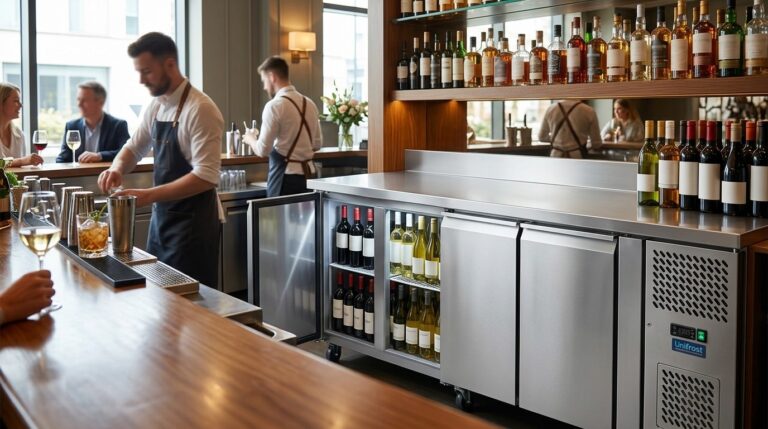
Unifrost Wine Storage Solutions for Hospitality
Explore Unifrost options for wine storage in Irish hospitality venues using Bottle Coolers and Glass Display Fridges.
Read guide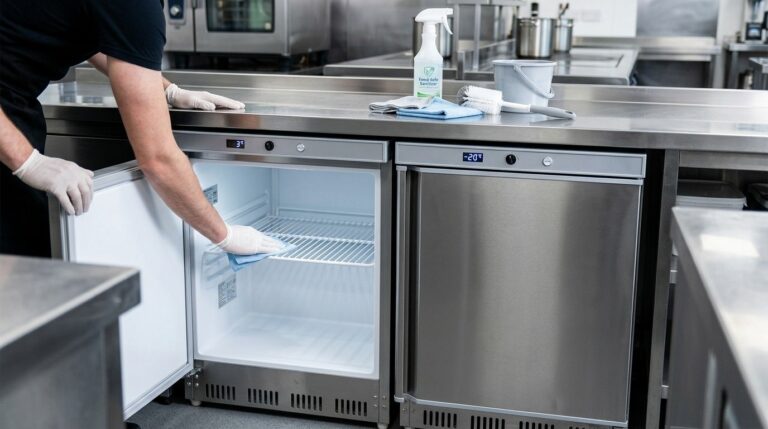
Unifrost Undercounter Fridge & Freezer Cleaning: Best Practices
Explore best practices for Unifrost undercounter fridge/freezer cleaning in Irish commercial kitchens. Ensure hygiene and equipment longevity.
Read guide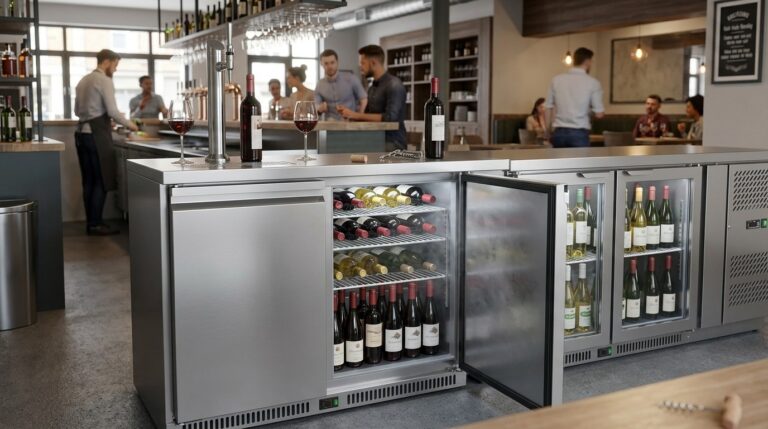
Optimizing Your Small Wine Storage: Unifrost Bottle Coolers in Focus
Discover how Unifrost Bottle Coolers serve as practical alternatives to small wine fridges in Irish hospitality settings.
Read guideView Unifrost bottle coolers at Caterboss
For current product options, pricing and availability, continue to Caterboss.