
Unifrost Upright Freezer and DCF Deli Counter Workflow Planning for Irish Hotel Kitchens
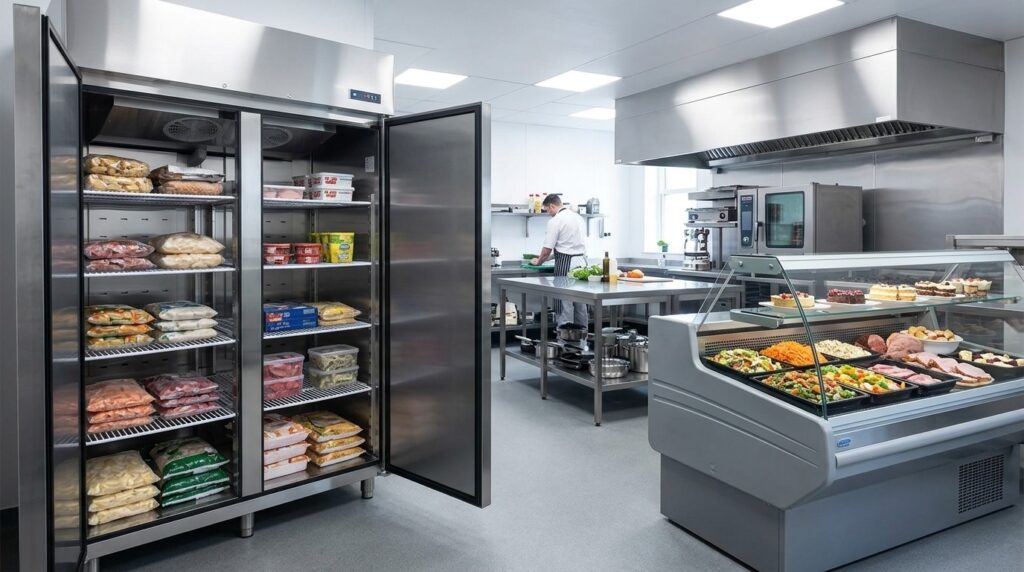
Efficient planning of Unifrost freezers and deli counters for Irish hotel kitchens. Optimize workflow and service.
Unifrost Upright Freezers and DCF Deli Counters: Workflow Planning for Irish Hotel Kitchens
You use Unifrost upright freezers for bulk back-of-house storage and DCF deli counters for guest-facing chilled display and serve-over. The workflow only works if stock moves from delivery to freezer to prep to the DCF line without wasted steps, blocked doors, or temperature risk.
This guide walks you through the practical layout decisions you need to make in an Irish hotel kitchen, including where to place an upright freezer (for example the F1000SV, F1300SVN or F1310SV) in relation to DCF1300 or DCF1600 counters, how to size freezer capacity to match breakfast, carvery and function volumes, and how to separate guest-facing service from noisy, high-traffic storage areas.
You will also cover the common checks that prevent expensive rework later: access routes and door-clearance for deliveries, power and ventilation allowances, zoning to avoid cross-traffic, and simple routines for coordinating HACCP temperature checks between your uprights and the DCF counter. Finally, you will plan a realistic backup approach for busy services if a freezer goes down.
Why Efficient Workflow Planning Matters
In an Irish hotel kitchen, workflow planning is what keeps food in temperature control, service moving, and HACCP checks realistic during peak periods. Your layout decides how long product sits out during replenishment, how many trips staff make between storage and the counter, and whether you can recover quickly when breakfast or functions hit in a rush.
It is also a food safety issue. Chilled food needs to stay under control (typically 0°C to 5°C) and frozen storage should be held at -18°C or colder, in line with FSAI temperature control guidance. There is no single “perfect” workflow. The right setup depends on your menu mix, delivery pattern, and how your deli counter is used in practice, whether that is a breakfast display, a carvery serve-over, or a production pass.
Why workflow shows up first at breakfast, carvery, and banqueting pressure points
Hotels have predictable pressure points, and they expose weak layouts fast. Breakfast comes in waves, carvery service is time-boxed, and functions punish any delay between kitchen and service line. If an upright freezer is positioned so staff have to cross the hot line, squeeze behind the pass, or open doors into a crowded plating area, you will feel it immediately in noise, congestion, and slower top-ups to the deli counter.
When storage, prep and the guest-facing counter are not properly zoned, you end up paying for it in labour. Extra trips become normal, staff hold more “just in case” stock on the counter, and handling gets rushed. That is when temperature checks and cleaning start slipping, not because the team does not care, but because the layout makes good routines harder to follow under pressure.
Why layout decisions protect HACCP routines, not just speed of service
A deli counter sits front of house, but it relies on back-of-house discipline. If replenishment routes are long, blocked, or awkward, staff are more likely to stage food on worktops or trolleys while waiting for space. That increases the time product spends in the danger zone and makes HACCP records harder to keep accurate.
A tighter route makes monitoring achievable. When frozen storage, chilled prep and the counter line up logically, it is easier to do quick probe checks at the right moments and record them without interrupting service. It also reduces the temptation to load chilled storage with warm product during prep, which the FSAI guidance flags as a risk because it can raise cabinet temperatures.
Why inefficient workflow costs you in staff fatigue, injuries, and running costs
Poor placement has a real physical cost. Heavy freezer doors, tight turns with deliveries, and repeated carrying between storage and the service line all increase manual handling risk. The HSA notes that a third of workplace injuries reported to the HSA are caused by manual handling activities, which matters when you are covering absences, onboarding new starters, and trying to keep standards steady in busy weeks.
Running costs creep up too, even if the equipment itself is fine. More trips mean more door openings and longer door-open times during service. Overstocking the counter “to save steps” can also make temperature control and waste harder to manage. You do not need to rebuild your kitchen to improve this, but you do need a workflow that matches how your team actually moves between upright frozen storage and the deli counter during trading. In practice, the best decisions come down to distances, clearances, sensible zoning, and reducing unnecessary hand-offs.
Key Factors to Consider in Workflow Design
Place your upright freezer(s) where they support receiving and prep, and place the DCF deli counter where it supports fast service with minimal back-and-forth. You are managing labour steps and temperature exposure at the same time. For chilled service, set and verify temperatures so food stays between 0°C and 5°C, in line with the FSAI temperature control guidance for fridges and chill storage cabinets: https://www.fsai.ie/business-advice/running-a-food-business/caterers/temperature-control
The “best” layout depends on when stock moves (delivery days, breakfast peaks, banqueting turns) and how long product sits on the counter during service. Design around those pressure points, not the quiet periods.
Freezer placement: reduce steps, protect recovery
In many Irish hotel kitchens, an upright freezer does most of its work on delivery day and during bulk prep, rather than during guest-facing service. If you put it directly behind a busy deli or carvery run, you create cross-traffic between kitchen and service staff, and you increase door openings right when you need stable temperatures and quick pull-down.
A practical rule: keep the upright freezer on the back-of-house “goods-in to storage to prep” route, not on the “service to guest” route. Close enough for efficient top-ups, far enough that the breakfast rush or a function changeover does not turn the freezer door into a bottleneck.
DCF deli counter positioning: serve first, replenish without disrupting
A DCF deli counter (DCF1300 / DCF1600 ranges, including OG variants) works best when it is easy to serve from and easy to replenish without breaking the line. In practice, that means:
a clear guest approach
a clean, workable staff side
a restock route that does not cut through the tightest part of the pass or plate-up
If the counter is used for breakfast, carvery and functions, plan for two rhythms: steady morning service and short, intense spikes around function timings. Position it so you can restock quickly from back-of-house chilled or frozen staging without leaving the counter unattended or forcing staff to squeeze past guests.
Storage capacity planning: match deliveries to service reality
Upright freezers are often chosen when you need a lot of frozen storage in a tight footprint. The workflow question is what stops that storage becoming “out of sight, out of control”. Don’t just ask “how many freezers?”. Ask:
how many days of frozen stock you hold
how often you top up the deli counter from frozen or from chilled prep
who needs access during peak periods
Before adding another cabinet, do a quick capacity check:
Count frozen deliveries per week, the biggest single drop, and how many menu lines rely on frozen backup (breakfast items, desserts, banqueting portions, bar-food standby). Then decide if you need one freezer mainly for holding and one for day-to-day access, so service staff are not constantly opening the same cabinet the kitchen is trying to manage.
Hotels often get caught here: one or two deli counters can shift a surprising amount of product, but freezer capacity needs depend on whether you are portioning daily, holding bulk for functions, or stocking deeper to cover supplier lead times.
Clearances, access, and noise: sort the “boring” bits early
Upright freezers need door swing and working space. Deli counters need enough room on the staff side to serve, wipe down and replenish properly. If you are installing behind a carvery or in a tight breakfast-room servery, measure the real delivery and restock route, not just the footprint on a plan. The usual failure point is a pallet at a fire door, or a cabinet that cannot open fully without blocking the line.
Also think about noise and traffic. A deli counter is part of the guest experience, so keep higher-traffic frozen storage in the kitchen or back corridor where it will not compete with the room.
Temperature checks and HACCP: make the right routine the easy routine
Workflow design is HACCP design. If the probe thermometer, logs, or display readout are awkward to access, checks slip during peak service. That is exactly when counters and freezers are under the most strain from door openings and replenishment.
Build a routine that matches the way you actually work:
Check the deli counter at service start and again during the busiest period.
Tie freezer checks to delivery put-away and end-of-day close.
When the layout supports those moments, compliance becomes part of the shift, not an extra job that only happens when someone has time.
Common Pitfalls in Equipment Layout
When an upright freezer and a deli counter are positioned without a clear staff route between them, you feel it straight away. Staff end up taking extra steps, doors clash, and replenishment slows down. In a hotel setting that usually shows up as queues at breakfast, carvery, or a busy function break.
The bigger issue is temperature control. If access is awkward, people delay restocking or leave doors open longer while they work around the layout. That increases the risk of temperature drift, which is exactly what you are trying to avoid under HACCP routines. The Food Safety Authority of Ireland is clear that chilled and frozen foods need to be kept under temperature control during storage and service, so a layout that encourages “just leave the door open for a minute” is a weak point.
Placement beside hot kit, dishwash areas, or in a tight corner causes a different set of problems: poorer airflow around the unit, heavier icing, and less room to clean, defrost, and check seals. You also tend to see more breakdowns and call-outs because the unit is working harder than it should.
These layout issues often stay hidden until peak load, like a Sunday breakfast rush or a function-room turn. Before you lock in positions, map the workflow: where stock comes from, who is moving it, and how you will keep doors clear and equipment ventilated during service.
Aligning Equipment with Kitchen Needs
How do you match Unifrost upright freezers and DCF deli counters to different Irish hotel service styles (breakfast, bar food, and banqueting) without creating bottlenecks?
Start with your service patterns, not the equipment list. Map each service by time of day, covers, and who handles food, then give every flow a clear route from frozen storage → prep → cook → hot hold/serve. In most hotels, upright freezers belong back-of-house as bulk storage, while DCF deli counters (e.g. DCF1300 / DCF1600) act as the guest-facing serve-over point, topped up from a controlled prep and replenishment area. Before you sign off a layout, walk it at peak pace and check door swings, trolley turns, noise, and cross-traffic.
1. Define the hotel service patterns that actually drive refrigeration demand
Poor refrigeration layout hurts most during the services that compress time and space: breakfast peak, function-room coffee breaks, carvery, and late bar food. The goal is not to “add more cold storage”. It is to place cold equipment where it reduces handling and unnecessary steps during peak.
Practical examples that change the plan:
Breakfast and carvery mean frequent, small top-ups into a DCF counter. That only works if you have nearby chilled prep and a short, clean route back to bulk storage.
Banqueting creates spikes. You need a staging area where frozen items can be portioned, labelled, and moved forward in batches without staff dragging trays through guest-facing areas.
Bar food is typically high-urgency with a small footprint. Protect a short route to frozen convenience lines, but keep that route out of the main kitchen pinch points.
2. Zone the kitchen so DCF counters are replenished fast without mixing with bulk traffic
Treat DCF deli counters as the end of a controlled chain. They should be replenished from a prep and pass-side holding position, not directly from the main freezer. In a typical hotel, the upright freezer sits in the back-of-house storage zone, while the DCF sits on the servery or guest-facing line with a defined replenishment route behind it.
When you sketch the plan, keep to a few rules:
Keep bulk frozen storage on the delivery-to-store path, not on the prep-to-serve path.
Separate guest-facing DCF service from door swings, trolley movements, and the noise of back-of-house storage.
Set one replenishment point for the DCF so staff are not cutting across the hot line or through a breakfast queue with trays.
This zoning prevents the classic hotel problem: everyone is busy, and everyone is in everyone else’s way.
3. Set temperature targets and one HACCP routine that covers both areas
Your layout needs to support the cold chain and make monitoring easy. FSAI guidance notes refrigerated food should be maintained at 0 to 5°C and frozen food at -18°C (see the Food Safety Authority of Ireland guidance on food temperatures: https://www.fsai.ie/News-and-Alerts/Latest-News/Advice-on-the-importance-of-maintaining-food-tempe). Build checks into the shift so you are not relying on “it looked fine” calls under pressure.
Make it workable on real services:
Check the DCF at the start of service and mid-service. Openings and replenishment are when drift tends to happen.
Check upright freezers at handover and after deliveries. Loading and repeated openings are the usual trigger points.
Keep one shared log and assign one named owner per shift. HACCP only works when checks are monitored and recorded (FSAI HACCP principles, monitoring and recording: https://www.fsai.ie/Business-Advice/Running-a-Food-Business/Food-Safety-Management-System-(HACCP)/Principles-of-HACCP).
4. Plan the physical constraints that derail “good on paper” layouts
Hotel kitchens rarely fail on theory. They fail on basics: doors that cannot open fully, units starved of ventilation, and trolley routes that force staff to prop doors open.
Before you commit, check:
Door swing and handle clearance, especially behind carvery or deli lines.
Trolley and tray turns at busy points.
Whether staff can remove product without blocking a fire route, pass, or hot section.
Sort the unglamorous essentials early too: power locations, service access, and cleaning access. If the unit cannot be cleaned properly around and behind, you will pay for it in downtime, pests risk, and labour.
5. Build a failure and surge plan for functions and peak weekends
If a freezer fails mid-function, the wrong move is improvising by overloading the deli counter or stuffing other cabinets. Decide in advance:
where product goes,
who authorises product moves,
and the stop point where you reduce menu or switch to a backup option rather than risking unsafe food.
The same thinking helps with surges. For a 50 to 150-bedroom hotel running one or two DCF counters, freezer capacity should be based on delivery frequency and how much you can safely stage and portion, not headline litre figures alone. Once those constraints are clear, your workflow decisions get much easier, and service becomes more predictable week to week.
Best Practices for Workflow Optimisation
The right workflow for a Unifrost upright freezer feeding a DCF deli counter depends on service style, staffing, and how often you need to top up the display during a rush. In Irish hotel kitchens, it helps to treat temperature control as a workflow issue as much as a food safety one. The Food Safety Authority of Ireland guidance on chilling and cold holding is simply easier to follow when your layout cuts down door-open time and unnecessary handling.
What works for a quiet breakfast buffet can fall apart at carvery volume if the only route from freezer to counter crosses the hot line or the wash-up. Aim for short, repeatable movements that still keep a clear separation between guest-facing service and back-of-house storage.
Zone the kitchen like a production line, not a floor plan
If you’re running a DCF deli counter for breakfast, carvery, or functions, the counter is the “final mile”. The upright freezer is bulk reserve. Problems start when both are treated as general-purpose cold storage and staff end up grabbing stock from wherever is closest.
A practical zoning setup looks like this:
Bulk frozen storage zone: Upright freezer(s) positioned so deliveries can be put away quickly, and chefs can pick for prep without walking through service.
Prep and portioning zone: A stainless prep table between freezer and cook line, so frozen items can be staged, labelled, and moved forward in controlled batches.
Service replenishment zone: A short, direct run from prep to the DCF counter, ideally without crossing the main cooking pass or dish return.
This reduces cross-traffic and makes it easier to train new staff because there is a “correct route” for food, not just a correct temperature.
Put the upright freezer close to prep, not close to the DCF counter
In most hotel layouts, the freezer earns its keep when it supports planned prep rather than reactive service. When it sits right behind the DCF counter, you tend to create three practical issues: noise and heat near a guest-facing area, more door openings during busy periods, and staff congestion at the counter.
A better flow is usually freezer → prep/portion → short replenishment run to the DCF. Replenishment stays quick, but you avoid repeated freezer access at peak times, which helps recovery time and reduces temperature swing.
Reduce steps with par levels and batch replenishment
Fast service from a DCF counter is mostly decided before service starts. Set a par level for each product group (breakfast proteins, desserts, sandwich fillings, carvery sides), then replenish in batches on a timer or at natural lulls rather than topping up constantly.
Why it works:
Fewer trips means fewer chances to break the cold chain during a rush.
Less “orbiting” the counter improves guest flow and reduces mistakes at the serve-over.
Clear role assignment: One person can own replenishment (often KP or commis) while chefs stay on cooking and plating.
If you change one thing, change this: treat replenishment as a scheduled task with a defined route and staging point, not an interruption.
Check clearance, door swing, and delivery access before you fix positions
Upright freezers and deli counters often fail in real kitchens for boring reasons: doors that cannot open fully, trays that cannot turn the corner, and units that block each other during the breakfast rush.
Before you commit to positions, test the movement on the floor with tape, not just on a drawing:
Can the freezer door open fully without hitting a wall, counter, or pass?
Can you lift and carry a gastro tray from freezer to prep without awkward twists?
Can replenishment reach the DCF without crossing the cook line or dish return?
Also plan for safe handling. If you rely on bulk frozen deliveries, you will be moving stock at speed, so it is worth designing a route that avoids tight turns and awkward lifts in line with the HSA guidance on manual handling at work.
Align HACCP checks so they do not interrupt service
Temperature checks work best when they match how you actually trade. A hotel-friendly routine is often:
Record freezer temperatures at open and close.
Record DCF counter temperatures pre-service and mid-service.
Record corrective actions when the counter is heavily replenished or held open for extended periods.
The goal is not paperwork. It’s early warning that a service pattern is causing temperature drift.
Keep your probe, labels, and recording point at the same hand-off location between prep and service. You reduce missed checks and avoid staff trying to take readings while dealing with guests.
Plan for failure, not just best case
If an upright freezer fails on a function day, the risk is not only product loss. It is workflow collapse, because staff start opening every other cold unit looking for space.
Keep the plan simple:
Identify which other cold storage can take temporary overflow.
Decide who makes the call on stock triage.
Keep a small amount of service-critical frozen stock in the least accessed, most reliable unit.
This also helps you decide whether you are better off with one larger upright freezer or two smaller uprights, especially if you need resilience, cleaner segregation, or a clearer split for allergen-sensitive or high-value items.
Integrating Unifrost in the Larger Kitchen Plan
How you place refrigeration should follow how the hotel actually feeds service across the day, not what looks neat on a plan. Start with your cold-chain basics and build out from there. For chilled food, the Food Safety Authority of Ireland sets out standard temperature control expectations, including keeping chilled food between 0°C and 5°C and checking it as part of your routine controls (FSAI temperature control guidance).
From there, placement becomes a workflow decision. The “best” spot for an upright freezer changes depending on whether it’s mainly supporting breakfast, bar food, banqueting, or all three. Door openings, staff routes, and handover points are what drive real-world performance.
Think in zones, not products
Treat a deli counter like the DCF1300 or DCF1600 (including OG variants) as a guest-facing service station first, and chilled storage second. It needs a tidy working area at the front, and a sensible replenishment plan behind the scenes. Otherwise you end up moving frozen stock through queues, or across corridors, at the worst possible times.
An upright freezer is back-of-house bulk storage. In a hotel kitchen it pays for itself when it sits in a short “goods-in → storage → prep” loop that:
suits trolleys,
stays clear of plate return, pot wash and bins,
and is easy to rotate stock in without interrupting service.
Positioning the upright freezer relative to the DCF counter (minimise steps, protect service)
If the deli counter is doing breakfast and carvery, plan a two-stage feed:
Bulk frozen in the upright freezer near goods-in and prep.
Day stock moved forward in controlled pulls to chilled prep or nearby chilled holding, depending on the menu.
Trying to feed a guest-facing counter directly from an upright freezer during service usually creates the same issues: more freezer door openings, longer staff trips, and cross-traffic in front of guests. Use the freezer to support prep, not as part of the pass.
A simple rule that holds up in most Irish hotel layouts: keep bulk storage on the kitchen side of the line between production and guest-facing service. It reduces disruption in front-of-house and gives you better control over who is handling stock and when.
A workflow that suits breakfast, bar food, and banqueting
Hotels rarely have one clean peak. Breakfast is repetitive and high-volume, bar food is spiky, and banqueting is planned but intense. Your layout should reflect that by keeping bulk frozen storage stable, and letting the deli counter do its job: display and fast serve-over.
Aim for a consistent flow across all services:
deliveries in,
stored once,
picked in defined pulls for prep,
moved forward as chilled or cooked product.
That keeps freezer doors shut more often and cuts down on “where is it?” searching, which is a real labour cost in busy kitchens.
Clearance, access, and manual handling realities
A freezer can be “installed correctly” and still be awkward enough that it gets misused within a fortnight. Plan for:
door swing and safe standing room,
access to shelves without twisting with heavy boxes,
and turning space for a trolley without clipping hot equipment or other staff.
Manual handling is not a paperwork exercise. The HSA guidance is clear that employers should avoid manual handling where possible and reduce risk through work organisation and suitable means (HSA manual handling risk management guidance). In practical kitchen terms, that usually means trolley access, sensible shelf heights, and avoiding tight corners where staff have to lift and twist.
Place upright freezers so deliveries and stock rotation can be done with a trolley, not by carrying boxes through service routes. Keep enough clear space in front of the door to unload safely without stepping backwards into traffic.
Coordinating HACCP checks between the DCF counter and upright freezers
A deli counter on the pass will see more temperature variation than a back-room cabinet because it is opened frequently and sits in a higher ambient area. Make checks easy to complete where the work happens, and keep the routine consistent across stations.
Build your HACCP routine around the fact that display and storage are different controls, even when both are chilled. Upright freezers tend to be stable when doors stay closed. Serve-over counters are constantly disturbed. Reflect that difference in how you schedule replenishment and checks, so nobody is trying to do records during the rush.
Planning for failure without derailing service
Refrigeration failures are never convenient, but they are common enough that your layout should allow you to cope without wrecking service. If an upright freezer goes down during a function, the risk is not just stock loss. It’s disruption and lost revenue if critical menu components cannot be accessed or moved quickly.
Plan a practical fallback:
a clearly labelled emergency holding space in another freezer or cold room (where available),
and avoid a setup where one upright freezer is the only storage point for key items needed on a busy weekend.
Small decisions on placement, access and stock movement tend to decide whether the kitchen runs smoothly or feels like constant firefighting.
FAQ: Workflow planning with a Unifrost upright freezer and a DCF deli counter
How should I position a Unifrost upright freezer relative to a DCF deli counter to minimize staff steps in an Irish hotel kitchen?
Position the upright freezer in the same back-of-house zone that feeds the DCF counter, so staff can do one short, predictable run for replenishment rather than weaving through prep and cooking.
Practical placement rules that work well in Irish hotel service:
Aim for “one doorway, one turn” between the freezer and the counter’s back-of-house access point. If staff must pass through the main prep line or hot line, you will create cross-traffic at peak times.
Keep replenishment on the staff side of the DCF. If the DCF is guest-facing (breakfast room, carvery, function corridor), build a staff-only route behind it so refills never go through the queue.
Stage between them, not on the pass: leave space for a small staging area (a clean prep surface or parked GN trolley) close to the DCF so runners can decant stock quickly and close the freezer door again.
Check door swing and clearance early: make sure the freezer door can open fully without blocking the runner route, and keep manufacturer clearance and ventilation requirements unobstructed.
Separate “bulk frozen” from “service chilled”: the freezer should support batch replenishment, while the DCF remains the chilled, short-hold service point.
What is a practical workflow layout for breakfast, bar food, and banqueting when combining Unifrost upright freezers and DCF deli counters?
The simplest way to make the combination work across multiple hotel outlets is to plan three zones and a repeatable “pull, prep, present” routine.
1) Bulk storage zone (back-of-house):
Keep Unifrost upright freezers in the receiving to storage corridor (near goods-in and main kitchen) to reduce time spent moving deliveries.
Use clear shelf labelling by outlet: Breakfast, Bar, Banqueting, plus an Emergency/Par shelf for high-velocity items.
2) Prep and staging zone (kitchen side):
Create a central staging point between frozen storage and each outlet: a prep table or GN trolley parking spot where items can be portioned, dated, and routed.
Set up time-window replenishment rather than constant small runs: one pull for breakfast setup, one pull for bar mise en place, and timed pulls for banqueting waves.
3) Service zone (front-of-house or pass):
Place DCF deli counters where they can be restocked from the rear without crossing guests.
Run the DCF like a “service buffer”: hold only what you expect to sell/serve in the next service window, and keep backup stock in chilled back-up storage where possible.
How it plays out by service type:
Breakfast: pre-stage the bulk of breakfast items in the kitchen, then top up the DCF in larger, less frequent refills to keep guest flow smooth.
Bar food: keep a smaller, dedicated par in the freezer for fast movers and do short, scheduled pulls around peak periods to avoid constant door openings.
Banqueting: treat replenishment as a planned dispatch. Build function-specific kits (labelled GN trays or boxes) so runners can pull once, stage once, then load out in controlled waves.
What backup plan should I have if a Unifrost upright freezer fails during a busy hotel function and I rely on DCF counters for service?
Have a written “cold chain contingency” plan that assumes the DCF counter cannot act as a freezer. A DCF is a chilled, serve-over unit, so the goal is to protect frozen stock and keep service moving without unsafe holding.
A practical hotel-ready backup plan:
Immediate actions (first 10 minutes)
Keep the freezer door closed and assign one person to control access.
Start a simple incident log: time noticed, actions taken, what stock is inside.
Protect product
Move high-risk or high-value items first to an alternative freezer on site (secondary upright, walk-in, or a designated emergency freezer).
If you have no spare freezer capacity, plan in advance for short-term emergency capacity (for example, a small back-up unit or a pre-arranged rental contact). Don’t rely on chilled counters for frozen items.
Keep the function running
Switch the menu to items already in chilled storage or items that can be produced from fresh stock without needing frozen backup.
Use the DCF counter for what it is best at during disruption: safe chilled display and rapid service, with smaller batches and more frequent temperature checks.
Service and recovery
Contact service support as soon as the stock is secure and isolate the unit electrically if advised.
Once resolved, only return stock after you have confirmed the unit is holding temperature again and your HACCP checks are up to date.
In short, resilience comes from spare frozen capacity and a pre-planned menu fallback, not from trying to stretch a chilled deli counter into frozen storage.
Next step: sanity-check your layout and frozen capacity
If you are at the point of choosing equipment, map your replenishment route on a floor plan first and list your “par” levels for breakfast, bar, and banqueting. That will tell you whether you need one upright freezer or multiple units to keep the DCF service line stocked without constant back-and-forth.
To compare frozen storage options and sizes available in Ireland, browse Caterboss’s Frozen Storage category and shortlist the formats that fit your footprint and service pattern.
Related Unifrost guides
Compare models, maintenance advice and support information related to this topic.
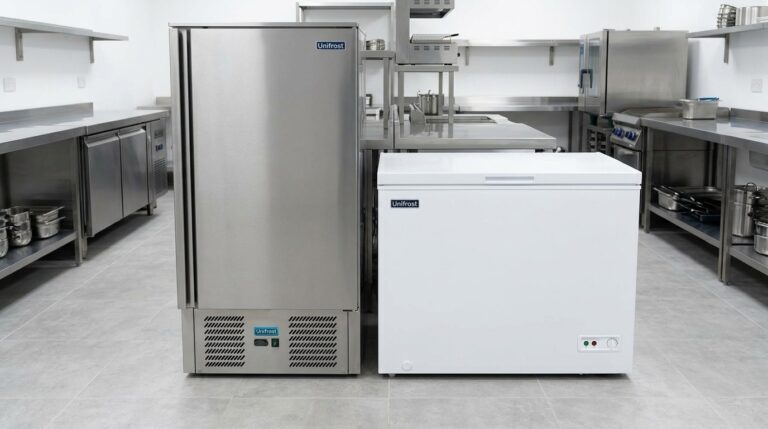
Unifrost F410SS vs CF500HS: First-Time Buying Layout Guide for Irish Kitchens
Discover the right Unifrost freezer for Irish kitchens. Compare the F410SS upright and CF500HS chest models for layout and efficiency options.
Read guide
Unifrost Mini Freezer: Compact, Efficient, and User-Friendly
Explore the Unifrost F200SN mini freezer: ideal for compact commercial spaces in Ireland. Perfect for caterers, cafes, and small kitchens.
Read guide
Unifrost Upright Freezer Manuals & Installation Support
Task-first manual downloads, controller help, startup checks, and troubleshooting routes for Unifrost upright freezers.
Read guideCompare Unifrost freezer options on Caterboss
For current product options, pricing and availability, continue to Caterboss.