
Unifrost Under-Counter Bottle Coolers: A Comprehensive Guide
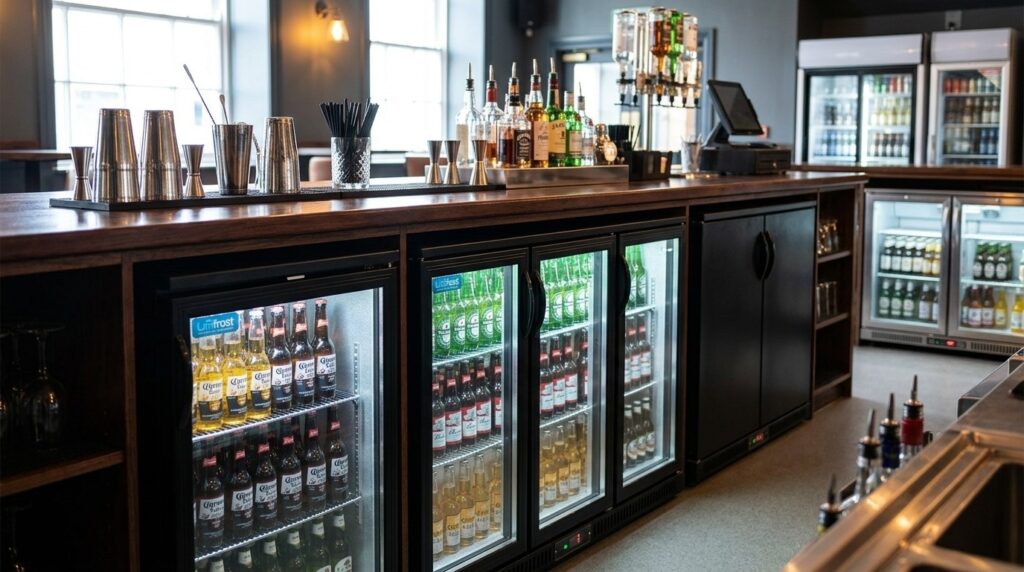
Explore Unifrost under-counter bottle coolers for efficient bar setups in Ireland.
Choosing a Unifrost Under-Counter Bottle Cooler for Your Back Bar (BC10, BC20, BC30)
You use an under-counter bottle cooler to keep best-selling bottles and cans cold, visible, and within arm’s reach during service. Choosing the right Unifrost back-bar unit matters because it affects speed of service, stock turn, energy use, and whether the cooler will actually fit and vent properly under your counter run.
This guide helps you make the real buying decisions: which BC-series model fits your bar volume (including popular options like BC10HBE, BC20, BC20HBE, BC20HSE, BC20SBE and BC30HBE), whether glass or solid doors make more sense, and how hinged versus sliding doors change workflow in a tight back bar. You will also learn what to check before you order, including ventilation clearances, power and positioning, how to set and verify temperature on the controller, and the daily, weekly, and monthly cleaning tasks that keep performance reliable and running costs under control. Finally, it walks through quick troubleshooting checks for common issues like poor cooling, icing, condensation, or fan noise so you can decide when it’s an operator fix and when to call an engineer.
Who Should Consider Unifrost Under-Counter Bottle Coolers
Unifrost under-counter bottle coolers suit venues where you need chilled bottles within arm’s reach for the full service, without giving up bar-top or back-bar workspace. They are built for speed and a tidy station, not for holding all your reserve stock.
If you keep open mixers, dairy for coffees, or prepared garnishes alongside drinks, temperature control matters for HACCP. The FSAI notes chilled foods should be kept at or below 5°C to slow bacterial growth (see its temperature control guidance). In practice, that means your working cooler needs to recover quickly after frequent door openings, and it should be stocked in a way that lets air move around product.
A useful rule of thumb: an under-counter bottle cooler feeds service. A larger cold room or upright fridge carries the back-up stock.
Why pubs and busy bars see the clearest benefit
In an Irish pub or late bar, under-counter cooling is about shaving steps out of service. Shorter reach means faster open-and-pour, and less time with doors open than running to an upright fridge across the floor. It also cuts down on behind-the-bar traffic, which is not a small thing when you’re busy and the bar is tight.
The Unifrost BC-series under-counter/back-bar models (including BC10, BC20 and BC30 variants such as BC10HBE / BC10HBEOG, BC20 / BC20OG, BC20HBE / BC20HBEOG, BC20HSE / BC20HSEOG, BC20SBE, BC30HBE) are the type of format you spec when you want a dedicated, predictable cold zone for bottled beers, soft drinks and premium mixers right where orders land.
Where restaurants and hotels benefit (even if you’re not bar-led)
Restaurants with a small bar, hotel lounges, and function spaces often need chilled bottle capacity that does not dominate front-of-house. An under-counter bottle cooler keeps the bar station self-sufficient during peak covers, without pushing you into a full back-bar wall of refrigeration.
It also helps in mixed service setups: pints, cocktails, softs, zero-alcohol and coffee. Keeping high-turn items close reduces the temptation to overload one fridge “because it fits”. Overloading usually means blocked airflow, slower pull-down and temperatures drifting during a busy run of door openings.
When an under-counter bottle cooler is the wrong tool
If you rely on large volumes of reserve stock, need to chill kegs, or you want strong merchandising visibility from across the room, an upright glass-door bottle fridge is usually the better primary unit. Use under-counter as the working fridge at the station.
Under-counter can also be the wrong call if you cannot provide sensible ventilation in a tight back-bar run. Heat build-up and restricted airflow are common causes of slow cooling performance and louder operation in real installs.
A quick sense-check: is the unit feeding service, or acting as storage? If it’s storage, start with higher-capacity refrigeration and build the back-bar around speed.
Typical venue fits for the Unifrost BC-series ranges
Small back bar or café bar with steady soft drinks, bottled beer and mixers where space is tight: start by looking at BC10 and compact BC20 configurations.
Medium-volume pub or hotel lounge where one station takes most orders: BC20 variants are often the practical “workhorse” size for keeping core lines close.
High-volume back bar or multiple service points: BC30-type capacity, or multiple units across the run, often works better than one large unit because it spreads access and reduces door-open time per fridge.
From there, the next decision is straightforward: what capacity and shelf layout actually matches your service speed and your real stock mix.
Understanding Capacities and Layouts for Bar Efficiency
“Capacity” is the usable amount of chilled stock your undercounter or back-bar bottle cooler can hold at serving temperature. “Storage layout” is how that space is set up in the real world: shelf positions, door type, and clear paths for air to circulate so drinks cool evenly and staff can grab them quickly.
The practical point is this: a unit can look big on paper but still slow you down if the shelf plan creates bottlenecks, forces awkward stacking, or blocks airflow.
Capacity planning in real Irish bar conditions
Size a back-bar cooler around your busiest service window, not the headline litre figure. You want enough cold stock to cover peak trade without constant top-ups from another fridge or the cellar. Repeated warm reloads and heavy door opening are what destabilise temperatures, create condensation on glass, and waste staff time.
A simple check that you have undersized the cooler is “double handling” during service. If staff are regularly moving drinks from an upright fridge into the back-bar just to keep up, the capacity is not matching your trading pattern.
If you are comparing options within a range, keep it general and tie it to your operation:
Smaller units suit low-footfall points and satellite bars.
Mid-size units suit most main bar set-ups.
Larger back-bar runs suit high-volume stations with frequent openings and multiple staff working the same section.
Storage layout: shelves, zones, and visibility
Layout should mirror how you sell. Glass doors make it easier to see stock at a glance and reduce time spent searching. Solid doors can suit staff-only areas where display is irrelevant and you want a tougher, more discreet front.
A reliable layout approach for busy bars:
Put your fastest movers between waist and chest height.
Keep slower lines higher or lower.
Give tall or awkward items (wine bottles, mixers, larger formats) a dedicated bay so you are not pulling shelves out mid-shift.
Avoid packing “one extra row” if it starts blocking air movement. That usually shows up as warm spots near the top or front and heavier condensation on glass doors.
Airflow and temperature control: why layout affects compliance
Bottle coolers are not just cold cupboards. They depend on air circulating around the load, so shelf spacing and how you stack product affects:
Temperature stability during peak opening.
Pull-down time after restocking.
How evenly the cabinet cools from top to bottom.
If you store anything perishable in the same unit (garnishes, open mixers, dairy-based products), treat it like a food fridge from a temperature-control point of view. The FSAI guidance for caterers is a useful reference: fridges should be set so food is held between 0°C and 5°C. See the FSAI temperature control guidance here: https://www.fsai.ie/business-advice/running-a-food-business/caterers/temperature-control
In many bars, the simplest risk-control is separating duties: use a drinks cooler for sealed bottles and cans, and keep food items in a dedicated unit where temperature monitoring is already part of your HACCP routine.
Practical layout rules that genuinely speed up service
Keep your “grab lines” front-facing and easy to reach. Store reserve stock below or behind so staff are not rummaging during peak rounds.
Standardise shelf heights for your top sellers and keep them consistent. It reduces mistakes when you are onboarding new staff before a busy weekend.
Leave intentional space at the back and sides for air to move. Overfilling is one of the quickest ways to create warm patches.
If you run multiple undercounter units, dedicate each one by product type or station (beer and cider, soft drinks, wine). Mixed loading is where shelf plans fall apart fastest under pressure.
Once capacity and layout match your service flow, the next step is checking the unit will “breathe” in its position. Poor ventilation clearances and awkward access for cleaning are what turn a decent back-bar cooler into a constant nuisance.
Key Features That Make a Difference
In an under-counter bottle cooler, the features often matter more than the badge on the door, especially when you are in Friday-night service and the doors are opening constantly. The FSAI temperature-control guidance for caterers is a useful reference because it focuses on holding chilled storage consistently cold, not just starting the shift cold. Real-world performance still comes down to how you load the cabinet, whether it can breathe behind the bar, and the door format you choose (glass or solid, hinged or sliding).
Airflow and recovery time (why fan cooling matters behind a busy bar)
Most back-bar coolers use forced-air circulation to move cold air around the cabinet. That matters when the doors are opened repeatedly and when you load in deliveries that are not fully chilled.
A practical check is: after a rush, does the cabinet pull back to temperature quickly without warm corners, a warm top shelf, or heavy condensation?
Staff habits affect this more than most people expect. If stock is packed tight to the back wall, internal vents get blocked by multipacks, or the base is overfilled, airflow drops. You will see slower recovery and a higher risk of icing. In a tight Irish back bar where every centimetre gets used, it is usually better to build “air gaps” into the routine than to try to fix poor circulation by turning the temperature down.
Temperature control you can actually run during service
A digital controller only helps if it is easy to read at a glance and holds steady under load. Drinks service is a constant trade-off between customer expectation (cold bottles on demand) and the reality that the unit sits in a warm, enclosed counter.
If the cooler is used for anything beyond sealed drinks, temperature discipline matters more. The FSAI guidance notes chilled food should be held between 0°C and 5°C, and that setting around 3°C to 4°C generally achieves this in practice. Even if your cooler is mainly for bottles, the same “prove it with a thermometer” approach makes HACCP checks simpler and more defensible.
Doors, frames, and insulation (service speed versus running costs)
Door choice is a workflow decision first, then an energy one.
Hinged doors usually give full access to shelf width, but need swing space and can clash with staff movement in narrow back-bar runs.
Sliding doors reduce the “door in the elbow” problem, but tracks need regular cleaning and doors should not be forced when stock is protruding.
Glass doors improve visibility and speed up count-and-grab, which helps during busy service. They are also less forgiving in hot, humid bar conditions with frequent opening, so ventilation and good seals matter. Solid doors are often the safer option where the cooler is pure storage, space is tight, or you are trying to keep compressor run time down.
Strong door frames and decent insulation are unglamorous, but they are what keep seals working after years of knocks from crates, bottle bins and general bar wear.
Shelving that supports speed, visibility, and safer loading
Shelving is where an “under-counter bottle cooler” either becomes a proper working tool or a constant nuisance. Adjustable shelves let you set one bay for cans, another for standard bottles, and another for odd-sized stock, without creating dead space that encourages overloading.
In busy pubs and hotel bars, you also want shelves that are quick to lift out and wipe down. Spills happen. When shelves get sticky, staff start avoiding certain bays and cramming others, which slows service and makes temperature holding less consistent.
If you are comparing Unifrost BC-series under-counter options (including BC10, BC20 and BC30 variants), prioritise shelf access and usability as much as the headline “one-door/two-door/three-door” format.
The quick feature check before you choose a Unifrost under-counter/back-bar model
Fan-driven air circulation that recovers temperature quickly after repeated opening
A controller you can read and adjust easily during service, with stable holding under load
A door format that suits your bar layout and staff flow (hinged vs sliding; glass vs solid)
Adjustable shelving that suits your bottle mix and avoids blocked vents
A finish that fits where it will live (black for blending into the back bar; stainless where scuffs and stronger cleaning chemicals are part of daily life)
Ventilation requirements you can meet in the actual counter build, not just on paper
These features only pay off if the cabinet size and internal layout match what you sell and how you restock. That is usually where the final decision is made.
Installation, Maintenance, and Running Costs
Install an undercounter bottle cooler the same way you’d treat any other piece of commercial refrigeration: give it airflow, sit it level, power it safely, and let it reach temperature before it has to perform in service. Day to day, most problems come down to blocked vents, dusty condenser areas, or doors that are not sealing. For running costs, use the unit’s kWh figure (rating label or manual) against your electricity unit rate, then confirm the real number with a plug-in energy meter. Your HACCP reality check is always product temperature, not just what the controller says.
1. Confirm the location and ventilation before it goes into the back-bar
Undercounter bottle coolers are usually bought for tight back-bar runs, and that’s where performance issues tend to start.
Before you commit to the position, check:
How it ventilates (front or rear) and whether the vents/grilles will be left clear in the finished counter.
Nearby heat and humidity sources (glasswasher, coffee machine, direct sun, or anything dumping warm air into the space).
How staff actually work the bar, including whether bar mats, boxes, or spare stock will end up blocking airflow during a busy shift.
If you’re building the unit under a counter, treat it as a ventilated appliance, not a “slot it in and forget it” box. Leave the clearance the manufacturer specifies and avoid sealing it into a dead void. In Irish pubs, this often shows up after a refit: the counter looks the part, but the cooler is quietly starved of air and runs hot.
2. Level, power, and commission it properly
Level the cooler so the doors close cleanly and the seals sit evenly. A cabinet that is slightly twisted can look fine on day one, then turn into condensation, icing, or warm spots because the door is not consistently sealing.
Electrically, use a proper socket and keep the plug accessible so the unit can be isolated quickly. The Health and Safety Authority flags flexible leads and adaptors as items prone to damage and notes the importance of visual checks and avoiding overloading sockets in workplaces (HSA electricity in the workplace guidance).
Once powered:
Let it pull down and stabilise before loading.
Verify with a probe thermometer, ideally in a bottle of water, so you’re checking the cabinet’s ability to control temperature consistently, not just the display.
3. Set the controller and keep a cleaning routine that protects airflow
Back-bar reliability is mostly airflow and door discipline. If you’re storing any chilled food, the Food Safety Authority of Ireland notes fridges should be set so food is held between 0°C and 5°C, and that setting a fridge to 3°C to 4°C will generally achieve this (FSAI temperature control guidance). Even if it’s mainly sealed drinks, applying the same routine keeps you aligned with HACCP habits and avoids “it feels cold” decisions.
Keep the routine simple enough that it survives a busy week:
Daily: wipe door seals and handles, keep vents clear of packaging/bar mats, and watch for temperature drift during peak opening.
Weekly: clean shelves and internals, check the drain is not backing up, and inspect hinges/alignment so doors close decisively.
Monthly: remove dust from accessible condenser areas and grilles (as allowed by the unit design), and check behind/around the unit for anything that has crept into the airflow space.
If you’re seeing condensation on glass doors, treat it as a fault-finding prompt, not “just how it is”. It is usually a mix of humid bar air, frequent opening, doors not closing properly, or restricted ventilation leading to longer run times.
4. Estimate running costs using Irish pricing, then verify with a meter
If you do not have the exact kWh consumption for your specific model, stay honest and go formula-first:
Running cost = kWh (per day or per year) × your unit rate
Get kWh from the rating label, spec sheet/manual, or a plug-in meter. For sense-checking your assumptions, SEAI publishes Irish energy price trend data for business electricity (SEAI energy price trends).
Two real-world factors that drive bills in Irish bars:
Hot stock and heavy restocking (especially straight after deliveries or during peak service) increases compressor run time.
Poor ventilation is hidden energy waste, because the unit runs longer to do the same job.
A plug-in energy meter over a normal trading week will give you a more useful figure than any brochure estimate. It also helps you decide whether you’re better off with one larger cooler or splitting capacity across the back bar to suit your service flow and restocking pattern.
Choosing the Right Unifrost Setup
With Unifrost undercounter bottle coolers, the decision is usually simple: do you need a compact “top-up” unit right at the service point, or an undercounter workhorse that can carry busier trading without constant restocking?
Broadly, BC10 models suit tight back-bars where footprint and quick access matter most. BC20 to BC30 models are better when you need buffer stock under the counter, so staff are not disappearing to the cold room every time the bar gets busy. Your best option depends on service volume, how far staff have to walk for stock, and whether you need clear separation for bottled beer, soft drinks and any bar food items.
How do BC10 and BC20 to BC30 setups compare overall?
A BC10 setup is about making use of the last workable space under the counter and keeping your fastest movers within one step of the pour point. In narrow Irish back-bar runs, that can improve speed of service because staff are not turning around to an upright fridge or stepping past each other to reach stock.
BC20 to BC30 setups shift the focus from “grab-and-go only” to “grab-and-go plus buffer stock”. That matters if you get predictable surges like match days, live music, functions, or a restaurant bar rush. The extra space also makes it easier to keep product grouped properly (mixers together, non-alcoholic together, premium bottles together), so staff are not rummaging and leaving doors open longer than they need to.
Whichever size you choose, treat temperature control as an operating routine, not just a thermostat setting. If you are storing anything that falls under chilled food control in the same unit, your monitoring should align with HACCP and the Food Safety Authority of Ireland guidance that chilled food should be kept between 0°C and 5°C, typically by setting the thermostat around 3°C to 4°C (FSAI temperature control guidance).
BC10HBE / BC10HBEOG (compact back-bar focus)
Choose a BC10 model when space is tight and the cooler’s job is to keep a small core range cold and immediately to hand. This tends to suit cafés with evening trade, small hotel lounges, and compact city-centre bars where giving up extra undercounter width is not realistic.
The real constraint is not just capacity, but restock frequency. If staff are repeatedly restocking from a remote store during peak periods, a bigger unit can pay for itself in reduced walking and fewer service delays, even if it means changing the undercounter layout.
BC20 / BC30 range (higher volume, less restocking pressure)
BC20 and BC30 models suit busier bars where the undercounter cooler is expected to carry service, not just support it. They fit better where you have higher turnover of bottled beer and mixers, more than one staff member working the same section, or you need clear groupings so product is found quickly without thinking.
They are also the safer choice where the back-bar runs warm due to glasswashers, coffee machines, or heat from a pass. More space makes it easier to avoid overpacking and blocking airflow, which is a common cause of warm spots and slower pull-down after restocking.
Which setup is best for your bar size and volume?
Use this as a quick filter, then sanity-check it against your actual service flow and how far staff travel for stock:
Small bar or lounge service: start with BC10HBE or BC10HBEOG if you only need a tight core range undercounter and restocking is easy without leaving the bar.
Medium-volume pub or restaurant bar: look at BC20 variants if you want enough buffer stock to reduce store runs and keep sections organised by category.
High-volume pub, hotel bar, or functions trade: lean towards BC30HBE, or plan multiple undercounter units by station so each bartender has cold stock at their own section.
Mixed-use back-bar: if one unit must hold drinks and any chilled food items, set temperatures and checks around HACCP needs first. If that creates friction with drink service, a separate drinks-only unit can make day-to-day operation easier.
Tight back-bar runs: if ventilation or access is limited, prioritise a layout that allows cleaning access and consistent airflow, rather than squeezing in the biggest unit.
Once the size is right, you will usually get more day-to-day benefit from shelf layout and a sensible restocking routine than from chasing an extra few bottles on a spec sheet.
Frequently asked questions about Unifrost under counter bottle coolers
What size under-counter bottle cooler do I need for my bar?
Start with service volume and how you work the back bar, then choose a BC-series size that matches the job:
Small bar, café bar, or tight back-bar run: a single-door unit (for core SKUs and fast access).
Medium-volume pubs and restaurants: a two-door under-counter/back-bar cooler is usually the sweet spot for day-to-day turnover.
High-volume or multi-station bars: consider three-door capacity or multiple units split by station (for speed of service and better stock rotation).
Practical sizing checks:
Plan for peak service, not quiet periods. If you regularly restock mid-service, you likely need the next size up.
Leave room for kegs/beer lines/other under-counter equipment so you do not end up with a cooler that cannot be placed where staff need it.
If you are choosing between sizes, upsizing often costs less than the labour impact of constant restocking.
In the Unifrost range, common under-counter/back-bar options include BC10, BC20, and BC30 families (e.g., BC10HBE/BC10HBEOG, BC20/BC20OG, BC20HBE/BC20HBEOG, BC20HSE/BC20HSEOG, BC20SBE, BC30HBE).
What’s the ideal temperature range for a bottle cooler?
For most bars, set a bottle cooler to serve drinks cold without freezing or dulling flavour:
Beer, cider, RTDs, soft drinks: typically 3°C to 6°C for ready-to-serve stock.
If you are using the unit mainly as buffer storage (not immediate service), a slightly higher setpoint can reduce icing risk and energy use.
Tips that matter in real service:
Avoid setting unnecessarily low temperatures in a busy bar. It can increase frosting/icing and make the system work harder.
Allow time after loading warm stock for the unit to pull down before expecting “serve cold” temperatures.
Can these bottle coolers be built-in under counters?
They are designed for under-counter/back-bar use, but they still need ventilation.
Treat most commercial under-counter bottle coolers as semi-built-in: they can sit under a counter run, but you should not box them in tightly.
Leave space for airflow around the cabinet and the condenser area and ensure grills are not obstructed.
If you are fitting into cabinetry, plan a route for warm air to escape (and easy access for cleaning the condenser).
Because clearance and airflow requirements can vary by model and install, use the specific installation manual for your exact BC-series model and confirm the counter design before ordering.
What warranty options are available?
Warranty can vary by model and purchase channel, so the safest approach is:
Check the warranty terms shown on the product listing (or your quote/order confirmation) for the specific Unifrost model.
Keep your invoice/serial number and record the installation date.
To protect warranty coverage and reduce call-outs, most operators also:
Ensure the unit is installed with correct ventilation and electrical supply.
Follow a basic maintenance routine, especially condenser cleaning and keeping door seals intact.
If you need written confirmation for a project spec or tender, request the warranty details for the exact model you are considering.
How are door types compared for usability?
Door choice is mainly about speed of service, aisle space, and what customers can see:
Hinged doors:
Usually quickest for one-handed access.
Need clear swing space, so they suit bars with room behind staff.
Sliding doors:
Great where space is tight and doors would clash with staff movement.
Can be slightly slower when multiple staff reach for different sections at once.
Glass doors:
Improve visibility and upsell and reduce door-open time when staff can see stock.
Can show condensation if the bar is humid or doors are opened constantly.
Solid doors:
Better if the unit is purely back-of-house storage or you want a cleaner look.
In Unifrost’s bottle cooler range you will see variants with different door and finish options (for example, glass-door variants on models like BC10HBEOG, BC20OG, BC20HBEOG, BC20HSEOG). Match the door type to how your bar is laid out and how busy the service line gets.
How do I troubleshoot common cooling issues?
Before calling an engineer, these checks resolve most “not cold enough” and icing complaints in busy bars:
Check the controller setpoint
Confirm the temperature is set appropriately (many bars target 3°C to 6°C for service stock).
Make sure airflow is not blocked
Do not pack stock hard against the back wall or vents.
Leave space for air to circulate between shelves.
Clean the condenser and grills
Dust and grease build-up is a common cause of poor cooling and high running cost.
If your site has a fryer or heavy grease in the air, cleaning may need to be more frequent.
Check door seals and door discipline
A twisted gasket, torn seal, or doors left ajar can cause warm spots, condensation, and icing.
Look for overloading with warm stock
Loading a full case of warm bottles at once will temporarily raise cabinet temperature. Stagger loading where possible.
If you see heavy ice
Ice often points to frequent door opening, poor seals, or ventilation issues. Do not chip ice off internal surfaces. Move stock, power down if safe to do so, and let it melt, then fix the underlying cause.
Call service if you notice:
Temperature continues rising after the checks above.
Unusual noises that persist, repeated tripping of electrics, or visible refrigerant/oil residue.
Fans not running or the unit short-cycling.
For the fastest resolution, share the model number (e.g., BC-series), serial number, current setpoint, and a photo of the install space/ventilation area.
Explore the Unifrost under counter bottle cooler range
If you are ready to shortlist a Unifrost under counter bottle cooler by size, door style, and finish, browse the current range and compare the BC-series options side by side.
Explore Bottle Coolers to find the best under-counter/back-bar fit for your bar layout and service volume.
Related Unifrost guides
Compare models, maintenance advice and support information related to this topic.
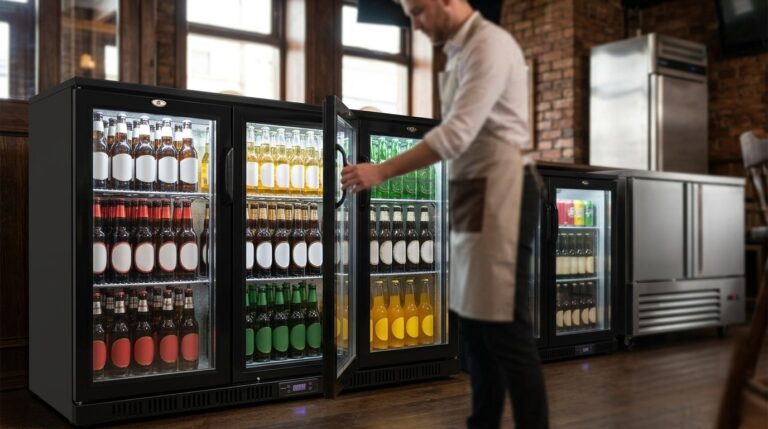
Choosing the Right Unifrost Bottle Cooler for Your Bar or Cafe
Find the perfect Unifrost bottle cooler for your bar or cafe. Explore capacities, door options, and energy efficiency for optimal performance.
Read guide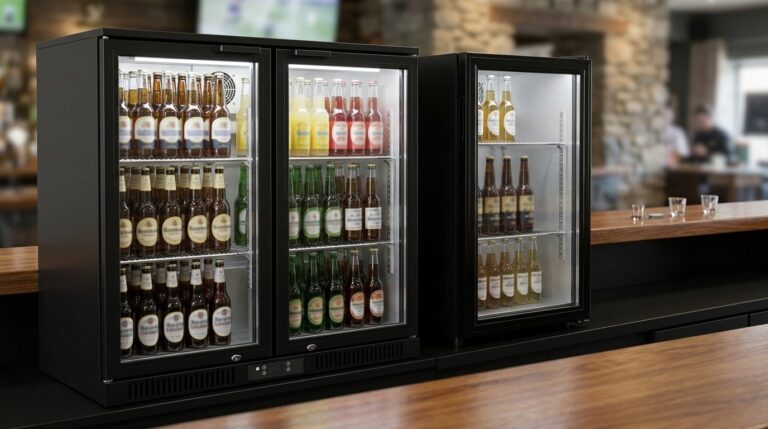
Unifrost Beer Cooler vs Bottle Cooler: How to Choose
Discover the key differences between Unifrost beer and bottle coolers for optimal bar operations.
Read guideView Unifrost bottle coolers at Caterboss
For current product options, pricing and availability, continue to Caterboss.