
Setting Up Unifrost Undercounter Fridge & Freezer with GN Pans
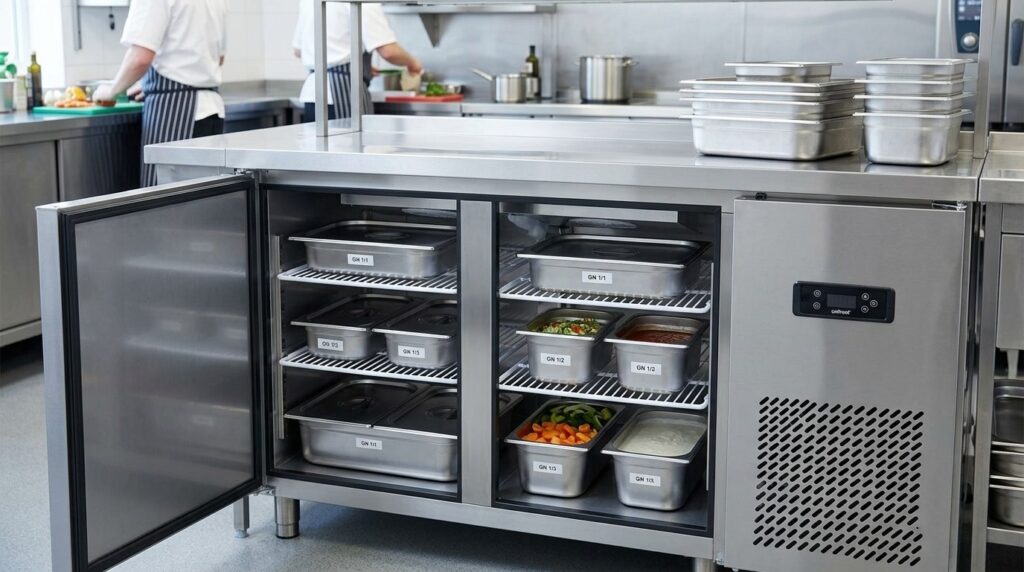
Optimize your Unifrost undercounter fridge/freezer by using GN pans efficiently in Irish kitchens.
Setting Up GN Pans and Shelving in Unifrost Undercounter Fridges and Freezers
You use an undercounter fridge or freezer for speed and convenience, but the wrong GN pan and shelf layout quickly costs you capacity, airflow, and temperature stability. This guide shows you how to set up Unifrost undercounter models like the R200SN, R200SVN and F200SN so you can load more product, keep door-open time down, and still keep food safe.
You will work through the practical choices that actually affect performance in service: which GN sizes and depths make sense in a compact cabinet, how to zone shelves to separate raw and ready-to-eat foods, where to leave clearance for air circulation, and when it is worth switching from standard shelves to GN rails or runners. You will also see the common setup mistakes that lead to warm spots, icing, damaged pans, or poor access, plus the cleaning and repositioning checks that help you stay HACCP-ready in an Irish kitchen.
Why GN Pans in Undercounter Units Matter
GN pans matter in undercounter fridges and freezers because they turn a small cabinet into a repeatable storage system. You can portion and label in advance, load faster during service, and keep airflow more consistent. That supports day-to-day temperature control, where the real aim is holding chilled food safely at 5°C or below, as set out in FSAI guidance for caterers and food businesses (FSAI temperature control guidance, 5°C or below reference).
The caveat: GN only pays off if you load it properly. Overfilled pans and blocked vents can make an undercounter look organised while it struggles to pull temperature back during a busy run of door openings.
How GN pans maximise usable space in compact cabinets
In Irish kitchens, undercounters tend to do high-pressure work: sandwich mise en place in a café, dairy and garnish in a pub kitchen, or toppings beside a pizza oven. Loose tubs, open packs and mixed packaging waste space quickly because you end up with awkward gaps, unstable stacks, and too much handling just to reach one item.
GN pans give you standard, squared-off footprints that stack and zone neatly. Even if you are working with adjustable shelves, organising product into GN containers makes it easier to:
keep like-with-like (dairy together, veg together, cooked items together)
rotate stock cleanly (older pans forward, replenished pans behind)
refill the line without clearing half a shelf to get at one item
Why GN setups help temperature consistency (and what usually breaks it)
Undercounter refrigeration is more sensitive to loading than uprights. You have less internal volume, higher door-open frequency, and less margin for warm product going in.
GN pans help in a simple way: you spend less time with the door open. Pre-portioned, labelled pans mean you are in and out quickly, rather than rummaging through mixed containers. That reduces temperature swings and helps recovery during service.
What usually causes problems is not the cabinet, it’s how it’s used:
pans filled above the rim (lids don’t sit properly, airflow suffers)
containers jammed tight to the back or sides
warm food put in “because there’s space”
ad-hoc items left in the door area, restricting circulation
If chilled holding is part of your HACCP routine, the practical rule is still the same: keep chilled food at 5°C or below (FSAI links above). A tidy GN system makes that target easier to hit consistently, especially at peak periods.
Why GN pans support safer zoning and day-to-day HACCP routines
GN pans make separation more realistic in a small cabinet. You can dedicate a pan (and a shelf zone) to ready-to-eat food, keep raw items contained and leak-resistant, and avoid the common undercounter clutter of split cartons and uncovered packs.
This matters most in mixed-menu operations where one undercounter ends up storing a bit of everything. Once you think in GN “modules”, it becomes easier to keep the same logic across other GN-compatible low-level equipment like saladettes and prep counters, so staff are not relearning the system every time they move section.
Key Setup Considerations
Getting good performance from an undercounter fridge or freezer is mostly down to how you set it up and load it day to day. In a compact cabinet, small mistakes show up fast: blocked air gaps, poor shelf layout, and lots of long door openings will hurt temperature recovery far more than they would in a full-height upright.
From a food safety point of view, build your layout around safe storage and routine checks. The Food Safety Authority of Ireland (FSAI) notes that fridges and chill cabinets should run between 0 °C and 5 °C, and that raw meat, fish and poultry should be stored on the bottom shelf with ready-to-eat foods above to prevent drips and cross-contamination, as set out in their guidance on storing food safely. That same thinking applies to undercounter units, even when space is tight.
GN pan sizes: what “GN-compatible” means in real kitchens
“GN-compatible” only helps you if your pans, lids and workflow match the way the cabinet is supported inside.
If you’re storing mise en place for service, shallower pans and more frequent top-ups often work better than loading deep pans to the brim. Overfilled pans can reduce air movement and slow pull-down after a rush.
Keep formats consistent where you can. If one station runs GN containers and another relies on different tubs, you end up decanting mid-shift, which adds handling time and increases the chance of spills and cross-contact.
Shelves suit storage. A shelf-led setup is usually best for lidded GN containers, dairy, prep tubs and labelled items you want stable and stacked neatly.
Runners suit speed. A runner-led setup makes sense when the aim is quick assembly, portion control and minimal handling.
If you already use GN prep counters or saladettes in the line, it is worth standardising pan sizes across stations. It keeps the service flow smooth and avoids the “wrong lid, wrong pan” problem when it is busy.
Shelving adjustability: zoning beats “just fit more in”
Adjustable shelving is how you keep an undercounter unit organised, safe, and quick to use. The goal is not maximum packing. It is a layout that reduces door-open time and stops staff rummaging.
A simple, workable zoning approach:
Bottom shelf: raw proteins in sealed, drip-safe containers (aligned with FSAI shelf-order guidance).
Upper shelves: ready-to-eat foods, prepared ingredients, dairy, garnishes.
Most accessible shelf height: the items that cause the most door openings during service.
In smaller but high-turnover sites (cafés, takeaways, pub kitchens), this is where you win time. Set shelf heights so containers slide in and out cleanly without tilting, snagging labels, or forcing staff to stack items just to close the door.
Airflow and loading: the mistakes that quietly cost you money
Undercounter refrigeration is less forgiving because the air path is tighter and the door tends to be opened more often. If the cabinet struggles to circulate cold air, you get longer compressor run time and bigger temperature swings.
Common loading problems to avoid:
Packing containers tight to the back or sides where it blocks cold air movement.
Stacking pans so close together that there’s no clearance above the food, especially with domed or flexible lids.
Dumping warm stock onto the “service shelf”. Spread deliveries and fresh prep across shelves so the unit can pull down evenly.
Letting the cabinet become half-organised. If staff are hunting for items, you pay for it in time, temperature stability, and wear on the unit.
Shelf-to-runner decisions: what to change, and what to confirm first
It is tempting to convert an undercounter into a mini prep station by swapping shelves for GN runners. Sometimes it works well, but only if the cabinet is designed for that setup and you can still load pans safely with usable clearance for lids.
Before you plan any runner change, confirm what the unit actually supports in terms of mounting points, clips and OEM accessories. Don’t assume “GN is GN”. Small differences in runner spacing and fixing points can turn into ongoing headaches in service.
If you need a fast prep line, a more reliable approach is often to use undercounter fridges/freezers for bulk and backup, and keep open-pan work on dedicated GN prep counters/saladettes. That reduces door-open time on the undercounter unit and keeps mise en place where it is used, not buried behind other stock.
Common Mistakes in GN Pan Setup
If GN pans, trays, or shelves block the cabinet’s internal air path, you end up with uneven temperatures. That shows up as warm spots, slower recovery after door openings, and shorter shelf life. The Food Safety Authority of Ireland also flags that overloading a fridge, particularly with warm food, can raise the overall temperature and increase the chance of bacteria growing. In a busy Irish kitchen, the problem usually appears at peak prep and peak service when the door is opening constantly and the unit cannot pull down quickly enough.
Blocking vents and the back wall with GN pans
A common undercounter mistake is pushing GN pans hard against the back wall, or storing packaging, cloths, or spare lids where cold air needs to circulate. The result is temperature stratification: the front and top run warmer while the evaporator area runs colder and may start icing. Once icing starts, recovery gets worse, not better.
Keep a small gap behind pans and boxes, and do not use the space around fans or ducting for storage, even when you are tight on room.
Over-stacking pans and creating a “solid block” of food
When GN pans are stacked too high or packed tightly, air cannot move between levels. The cabinet might still display a safe air temperature, but the food itself can chill slowly, especially in deep pans and dense product.
This catches out cafés and pubs doing batch prep. You put items in “a bit warm”, assume the fridge will sort it, and then wonder why the next check feels borderline. Use shallower pans where you can, avoid overfilling, keep lids on for protection, and leave small “air lanes” between pans instead of building one packed mass across a shelf.
Mixing raw and ready-to-eat on the same level
If raw chicken, meat, or fish sits above ready-to-eat food, one drip or a contaminated handle can create cross-contamination that is easy to miss during service. FSAI guidance is clear that raw meat, fish and poultry should be stored on the bottom shelf, with cooked foods above, to reduce drip risk (FSAI advice on storing food safely).
Undercounter setups in pizzerias and busy restaurants are particularly exposed because the same unit often holds proteins, sauces, cheese, and garnishes under time pressure.
Removing shelves for access, then overloading what’s left
It is common to remove a shelf to fit tall GN pans, then overload the remaining levels. That usually means poorer airflow, more handling damage, and a messier service flow.
Treat shelf changes as a workflow decision, not just a space decision. Set heights so your most-used pans are at hand level, but keep enough levels to avoid heavy stacking and crushed lids. Quick checks that prevent most day-to-day problems:
Leave a clear gap at the back for airflow
Store raw on the bottom
Avoid loading the cabinet heavily with warm product
Keep pans short of the door so the gasket can seal properly
These issues are usually easy to fix without buying anything, but they should shape how you choose shelf heights, pan depths, and zoning before you settle on a “final” layout.
Tailoring Setup to Irish Kitchen Types
Set up shelving and GN pans around what your team grabs during service, not what looks tidy on a stocktake sheet. Give each shelf height and GN position a purpose, leave space for airflow, and keep a clear separation between raw and ready-to-eat based on your HACCP plan. Consistency matters more than clever accessories, especially when staff rotate.
1. Build your layout around service pressure and door-open time
The quickest win in a busy Irish kitchen is reducing time spent with the door open. Identify what needs to be “one grab” at peak and put it front and centre. Slower-moving prep can sit higher or lower.
Café: keep milk, cream, desserts, sandwich fillings and prepped salad components closest to the door so baristas and floor staff are not standing there with it open.
Pub kitchen: prioritise burger build items, portioned chicken, sauces, slaws and garnish tubs so the pass keeps moving.
If you use GN pans, treat each one as a station: one pan equals one job, and it lives in the same spot every day. That simple habit cuts rummaging and reduces temperature swings.
2. Zone by how you work, not a generic template
Your shelf plan should match whether you do lots of quick grabs (café), repeated assemblies (pub/pizzeria), or batch prep with stricter separation (hotel, carvery, catering).
Use this as a starting point and adapt it to your menu and HACCP flow:
Café: a front “grab zone” for high-frequency items, with sealed backup behind it so staff are not moving tubs to reach cartons.
Pub: one shelf for “build and finish” (sauces, slaws, sliced cheese), one shelf for portion-ready proteins in sealed containers. Keep gaps so containers do not block circulation.
Pizzeria: a predictable run for toppings and portioned proteins. Avoid over-deep pans if they tend to be overfilled, because that slows recovery after repeated door openings.
Hotel/carvery: separate by risk and task, not convenience. Keep ready-to-eat items physically away from raw food, in line with FSAI guidance on preventing cross-contamination: https://www.fsai.ie/business-advice/food-safety-controls/food-safety-and-haccp
A useful test: if staff regularly have to move one GN pan to access another, you have built delay and unnecessary door-open time into the day. Re-zone until the common actions are “open, lift, close”.
3. Set shelf heights and pan positions for handling speed and airflow
With undercounter cabinets, the constraint is usually not “does it fit?” but “can someone lift it out cleanly, quickly, and without disturbing other food?”
Set shelf heights so pans lift straight up and out, not at an angle. Tilt-lifting is where lids pop, liquids spill, and hands end up on food-contact surfaces.
Leave deliberate air space around the back and sides of pans and containers. Packing tight to the walls is a common cause of warm spots and slower recovery in compact cabinets.
For undercounter freezers, avoid creating a solid block at the front that staff have to dig through. Freezers run better day-to-day when portions are easy to identify and remove quickly, so grouping by day-part or menu section usually beats one deep stack.
4. Match undercounter storage to your prep line to cut double-handling
In most Irish kitchens, undercounter refrigeration works best as support for a prep point, not as general storage. If you are running GN-friendly prep equipment (such as saladettes or prep counters), keep your “active service pans” at the prep position and use the undercounter unit for backups and refills.
That typically means:
Undercounter shelves set for sealed refills, labelled portions and backup pans
Fewer open pans travelling between stations
Less mess, fewer spills, fewer door openings, and easier cleaning
GN discipline pays for itself here. Standard pan sizes and fixed positions make restocking faster and reduce the “mystery tubs” problem that creeps in during busy weeks.
5. Keep the layout stable with a reset routine that works in real trading hours
Shelving plans drift, especially with frequent deliveries and staff changeover. A simple weekly reset prevents the slow slide into chaos: remove and wash shelves or runners, wipe supports, and put everything back to the agreed positions.
If the setup only works when your best person is on shift, it is not a working setup. Aim for a layout that any trained staff member can follow, with HACCP rules deciding the final placement when convenience and safety compete.
Integrating Undercounter Units into GN-Based Prep Lines
Integrating an undercounter fridge or freezer into a GN-based line is mostly a workflow decision. It should match how your team plates, replenishes and keeps food safe at peak, not a race for “maximum litres”. In most Irish kitchens, the cold line ends up shaped by HACCP separation and service flow. The right layout still depends on your menu, distance to the pass, and how often the doors are opened. A pub carvery holding sauces and garnish has very different access pressure to a pizzeria pulling cheese and toppings every 30 seconds.
The practical aim is simple: decide what lives in the undercounter, what stays in the top-of-line saladette or prep counter, and how you restock without turning service into a rummage.
Build the cold line around HACCP zoning, not just “what fits”
If your undercounter unit becomes the default home for “everything cold”, it usually becomes the weak link during service. Door-open time climbs, recovery gets slower, and you see bigger swings in product temperature across shelves.
A more reliable approach is to zone by risk and frequency of use, and use the undercounter as a controlled buffer behind the busy top line. That aligns with day-to-day audit reality: separate raw and ready-to-eat foods to reduce cross-contamination risk, as set out in FSAI guidance on HACCP and food safety controls. In practical terms, decide in advance which shelves or GN positions are ready-to-eat only (garnish, cooked meats, desserts) and which are raw only (raw poultry, raw mince), rather than letting it drift during a Saturday night rush.
Use the undercounter as reserve stock, and the prep top as “hands-on” stock
In a GN-focused prep station, an undercounter fridge or freezer tends to work best as the close-at-hand reserve, not the main service interface. If you are running a saladette or prep counter fridge, keep the top section for active GN pans during service, and store reload stock underneath in sealed, labelled containers.
This split reduces door-open time on the undercounter and keeps the most frequently handled ingredients at a comfortable working height. It also supports cleaner rotation and labelling, because staff are not constantly shifting shelves to find items mid-service.
Where an undercounter freezer earns its place in a GN prep line
An undercounter freezer integrates best when it holds predictable, portion-controlled items you pull on a routine, not a mixed freezer where stock gets buried.
In Irish service, that often means section-specific backup such as portioned proteins, allergen-managed portions, dessert components, or chips backup in smaller venues where a trip to the main frozen store is a time sink. What usually does not work is a workflow where staff open the freezer repeatedly to “browse” during peak. If that is happening, the fix is nearly always clearer containerisation and prep discipline, not more shelves.
Practical line layouts that work in Irish venues (without choking airflow)
Café or deli lunch trade: Prep top holds active GN pans (fillings, garnish, proteins). Undercounter fridge holds sealed backup and dairy. Undercounter freezer holds portioned bakes or allergen-managed backups so you are not cross-handling during a rush.
Pub food with short peaks: Undercounter fridge near the pass for sauces, cooked meats and desserts. Keep raw storage elsewhere so the busiest area is not your raw handling zone.
Pizzeria: Prep counter is the main toppings line. Undercounter fridge is the “next tray” reload for cheese and cooked toppings. Undercounter freezer suits portioned dough balls or pre-prepped items if you are not running a separate dough system.
Hotel banqueting or high-volume prep: Use undercounter units as station-specific support (one per section where possible) rather than one shared unit. Shared fridges become a bottleneck when multiple chefs hit them at once.
Keep GN flexibility, but standardise it across stations
GN compatibility only pays off if your team can move product between prep counter, undercounter and storage without repacking during service. Standardise the containers and labels you use per station, then set shelf heights and GN positions to suit. If GN depths and container types change week to week, staff will “make it fit”. That is when lids stop sealing, pans get stacked, and airflow and temperature stability suffer.
Once the line is mapped, the remaining decisions are straightforward but important: shelf heights, pan depths, which way doors open, and the small setup details that keep the unit working with you during a busy service.
Maintaining Compliance and Optimal Performance
How do you reposition and clean GN pans and shelves in Unifrost undercounter fridges (R200SN/R200SVN) and freezers (F200SN) to support HACCP routines in Irish kitchens?
Set a documented routine for removing GN pans and shelves, cleaning them in a consistent sequence, and refitting them without restricting airflow. When you reload, keep raw and ready-to-eat foods physically separated, and organise the layout so staff can work quickly with minimal door-open time. After any change to shelf height or GN layout, check temperatures during normal trading. If the cabinet struggles to keep food within 0°C to 5°C, your setup is part of the problem and needs adjusting, not just more cleaning, as outlined in the FSAI temperature control guidance for caterers.
1. Use a written cleaning and repositioning schedule (and keep the records)
HACCP is as much about consistency and proof as it is about the cleaning itself. A simple schedule with sign-off makes it easier to show what you do, how often you do it, and who completed it. Build the routine around real service patterns: deliveries, prep peaks, weekend trade, and the quieter window when you can leave doors open long enough to do the job properly.
A baseline most kitchens can maintain:
Per shift: quick tidy and wipe spills, especially under GN pans where liquid collects.
Daily: remove and wash GN pans used for open or ready-to-eat foods, wipe shelf surfaces, and clean handles and seals.
Weekly: remove shelves, clean rails/clips, and wash and sanitise the cabinet interior.
Monthly: empty fully, inspect for damage, and re-zone shelves to match how the station is actually used.
If you need to justify frequency, it helps that the FSAI explicitly notes that a cleaning schedule and cleaning records are useful tools to help you clean effectively.
2. Clean shelves and GN pans the same way every time
Most slip-ups happen when cleaning is rushed: corners missed, disinfectant contact time cut short, or parts put back wet into a cold cabinet. A set method reduces improvisation and makes it faster for staff to do correctly, following the FSAI’s 6 stages of effective cleaning (preclean, detergent, rinse, disinfect, rinse, air dry).
Treat these as separate items, not “one job”:
GN pans and lids: wash, sanitise, and air dry fully. Replace pans that are cracked, warped, or no longer seal properly.
Shelves and shelf clips: remove, wash, sanitise, air dry. Before refitting, check clips seat firmly and aren’t damaged or loose.
Cabinet interior and door seals: clean and sanitise with attention to the bottom edges and corners where residue builds up.
Handles and touch points: sanitise daily. In a busy café or pub kitchen, these are high-risk contact points.
A predictable routine also reduces long door-open periods, which helps temperature stability.
3. Refit shelves and GN pans to protect airflow and temperature recovery
Once everything is clean and dry, reload with airflow in mind. Undercounter cabinets are compact. A small blockage can slow recovery and cause temperature swings during service.
Practical rules that usually hold up:
Leave clearance above pans so cold air can circulate. If lids touch the shelf above, you’re inviting warm spots and spills.
Keep heavier items lower for safer handling and less strain on shelf supports.
Avoid packing pan-to-pan with no gaps. Where possible, leave a small space at the back and sides to help air move.
Zone by risk and workflow. Raw below ready-to-eat is simple, defensible, and tends to match service reality.
If staff are constantly re-stacking just to close the door, that’s not a “staff problem”. It’s a capacity or layout problem. You may need a different shelf-height setup, smaller GN pans for specific items, or a second undercounter unit dedicated to either raw or ready-to-eat storage.
4. Make the layout service-proof and keep temperature checks meaningful
Compliance is easier when the setup works during a rush. Put the highest-use items at the most accessible shelf height and towards the front. Keep slower-moving stock further back so the door isn’t open longer than necessary.
Cleaning is only half the picture. Your HACCP routine also needs temperature control and records. The FSAI guidance is that chilled food should be kept between 0°C and 5°C, with fridges commonly set around 3°C to 4°C to achieve that in day-to-day use, per the FSAI guidance on refrigeration temperatures. Any time you change shelf heights or GN layouts, treat it like a small process change: monitor temperatures more closely for a day or two during normal trading, then keep the layout stable so your records reflect real performance.
FAQs on Unifrost undercounter shelving and GN pan setup
Can GN pans be used in both fridge and freezer compartments?
Yes, standard GN pans can be used in both chilled and frozen storage, as long as the pan material and lid style suit the temperature and the way you load the cabinet.
For freezers, choose pans that handle low temperatures and handling knocks. Stainless steel GN pans are a safe default. Some plastics can become brittle when frozen.
Leave headspace for liquids, sauces, and stews because product expands as it freezes.
Use tight-fitting lids where appropriate to reduce dehydration and cross-contamination, but avoid sealing items while still hot.
In both fridge and freezer compartments, keep pans and shelves arranged so you do not block airflow inside the cabinet.
Do I need specific tools to adjust shelving in Unifrost units?
In most cases, no special tools are needed.
Unifrost GN-compatible cabinets and low-level units typically use shelf supports, clips, or rails that can be moved by hand once the shelf is unloaded.
If your unit uses a fixed bracket or runner that is secured, you may only need a basic screwdriver or Allen key, but do not force parts.
Practical tip: take everything off the shelf first, adjust one side at a time, and ensure all clips are seated evenly so the shelf stays level and the door seals properly.
Are there predefined GN configurations recommended by Unifrost?
There is not one universal, predefined GN layout that suits every Unifrost undercounter model and workflow. The right configuration depends on the cabinet’s internal fittings (shelves vs GN rails), the GN depths you use, and what you’re storing.
What works well in most Irish service kitchens:
Start with a 1/1 GN footprint as your base, then subdivide for speed (for example 2× 1/2 or 3× 1/3) for mise en place.
Keep a small air gap around pans and avoid packing right up to the back or sides.
Zone shelves so higher-risk foods are stored safely and spills cannot drip onto ready-to-eat items.
If you want a confirmed, model-specific setup for R200SN, R200SVN, or F200SN, the most reliable approach is to match accessories using the exact model code and the fittings supplied in your unit (shelves, clips, runners, or rails).
Next step: choose GN pans that actually fit your workflow
Once your shelf heights are set, the biggest capacity and speed gains usually come from standardising your container footprint and lids. Browse compatible GN pans and gastronorm accessories to build a consistent setup that makes service faster and cleaning simpler.
If you are unsure which pan depths or lid types make sense for an undercounter fridge versus an undercounter freezer, note your Unifrost model code and plan your layout around what you access most often, while keeping clear airflow paths.
Related Unifrost guides
Compare models, maintenance advice and support information related to this topic.
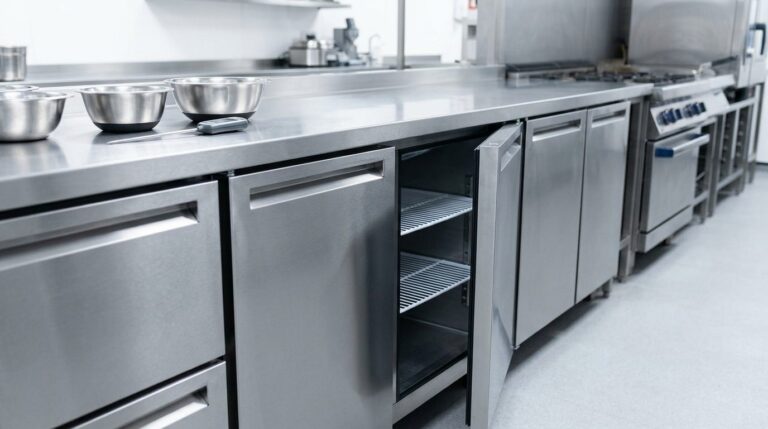
Understanding Ambient Temperature Conditions for Unifrost Undercounter Fridge/Freezer Use in Commercial Kitchens
Learn how to position Unifrost undercounter fridges/freezers for best performance under typical Irish kitchen conditions.
Read guide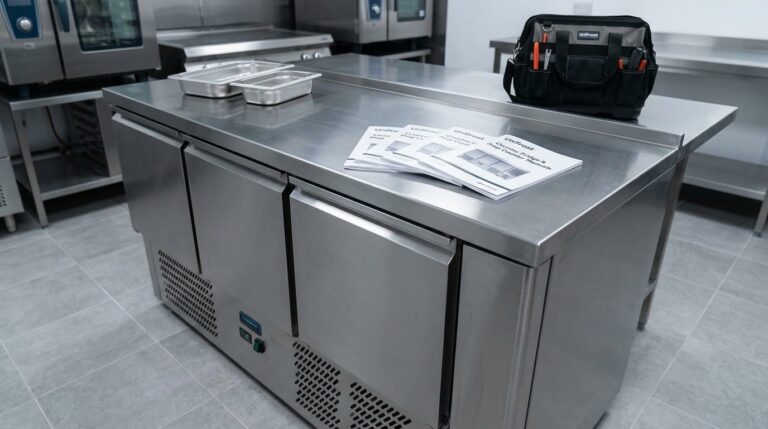
Unifrost Counter Fridge Prep Counter Saladette Manuals and Installation Support
Manuals, controller guidance, setup checks and troubleshooting help for Unifrost counter fridges, prep counters and saladettes.
Read guideCompare Unifrost freezer options on Caterboss
For current product options, pricing and availability, continue to Caterboss.