
Unifrost Cold Topper Daily Opening & Closing Checklist for Irish Prep Lines
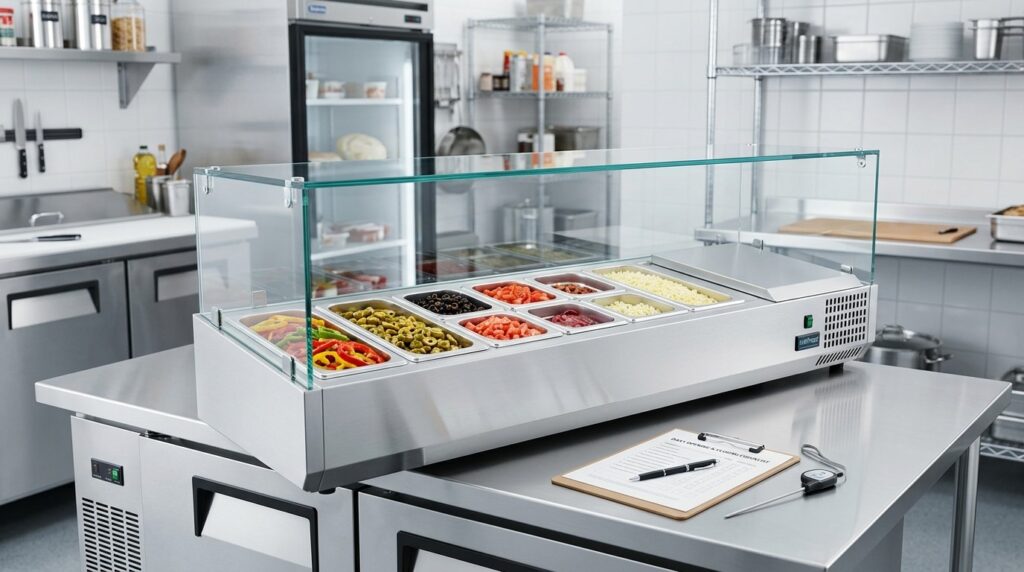
Optimize daily ops with Unifrost CTG/CTS cold toppers. Essential opening/closing steps for Irish kitchens. Practical, efficient, compliant.
Unifrost CTG/CTS Cold Topper Daily Opening and Closing Checklist for Irish Prep Lines
You rely on your Unifrost CTG or CTS cold topper to keep pizza and salad ingredients service ready, but daily habits decide whether it holds safe temperatures, recovers fast during peak, and stays inspection proof. This page gives you a practical opening and closing checklist you can hand to staff so the unit starts the day at the right temperature, gets loaded correctly without blocking airflow, and is cleaned and shut down safely at close.
You will work through the key checks that prevent common failures in busy prep lines: verifying the unit is running in its typical chilled range, confirming pans and covers are fitted properly, spotting early signs of icing or blocked vents, and recording temperatures and hygiene actions for your HACCP file. You will also see what to do differently on glass top versus stainless top units, and when a quick adjustment is enough versus when you should log it and book service before it affects service.
The Importance of Daily Checks for Cold Toppers
Daily opening and closing checks matter because cold toppers sit on the busiest part of the prep line. Small issues like blocked airflow, overfilled pans, or a lid left ajar quickly show up as ingredient temperatures drifting and a messy service slowdown.
The Food Safety Authority of Ireland (FSAI) is clear that chilled food should be controlled to stay out of the danger zone, with fridges set to ensure food is held between 0°C and 5°C, and that you should measure and record temperatures as part of HACCP using a calibrated probe thermometer (FSAI temperature control guidance). A cold topper is mainly for holding pre-chilled ingredients during service, so your checks need to cover both the unit’s display temperature and the actual food temperature, especially after deliveries, prep, or a hard lunch rush.
Why checks protect HACCP compliance in real kitchens
On an Irish pizza, deli, or salad line, the topper is opened constantly, containers are swapped, and someone will always try to squeeze in “one more pan” when tickets are flying. That is when HACCP slips in practice: temperatures drift, nobody spots it, and there’s nothing written down if you get an EHO visit or need to review a complaint.
Keep the routine simple and defensible:
confirm the unit is running normally
check it’s holding within your site limits
probe a high-risk pan (not just the air)
record it, and note any corrective action
If you cannot show consistent monitoring and what you did when results were off, it is difficult to stand over your controls, even if the equipment itself is fine.
Why checks improve service speed and reduce waste
Cold toppers tend to fail during service, not quietly overnight. If the air intake is blocked by packaging, pans are filled above the intended line, or the cover is not closing properly, you’ll usually see it first as slow temperature recovery and wetter ingredients with a shorter shelf life.
Opening checks catch issues before you load the line. Closing checks help stop product being left overnight in a unit that’s designed for service holding, not long-term storage. That reduces end-of-night waste and the next-day “is this still ok?” debate at the pass.
Why daily checks prevent common failure modes (and avoid early call-outs)
Most day-to-day problems on prep-line cold toppers are operational rather than a genuine breakdown: vents blocked by GN lids, food debris pulled towards fan paths, worn lid tracks or hinges, and cleaning that misses the awkward corners.
A quick daily look also helps you spot what needs escalation before it becomes an emergency: a frayed power lead, damaged seals, a loose control, unusual noise, or persistent ice build-up. Log it and deal with it early, rather than losing a full rail of toppings mid-shift.
That’s the thinking behind the checklist below. It’s designed to fit a busy Irish prep line, while still giving you solid HACCP records and more predictable service.
Daily Opening Checklist for Unifrost CTG/CTS
Power up the cold topper early, confirm it is set for chilled holding, and check it has reached temperature before any food goes in. Clean and sanitise food contact areas, make sure vents are clear, and inspect lids, glass, seals and the power lead for damage. Load only pre-chilled ingredients into suitable GN pans, keeping fill levels and airflow in mind so recovery stays strong during service.
If something is off, treat it as both a food safety and service issue and sort it before prep ramps up. A cold topper is for holding product cold, not pulling warm food down quickly.
1. Power up and do a quick safety check
Check the plug is seated properly and the socket is switched on.
Make sure the power lead is not trapped or pinched under the counter edge.
Confirm the controller is on and responding.
Common causes of “it’s not cold this morning” are basic: a switched socket left off overnight, a loose extension lead, or the unit pushed back so tight that ventilation is restricted.
If the CTG/CTS is tight to a wall, run your hand behind and around it and make sure you are not blocking airflow. Poor ventilation usually shows up as longer run times and slower recovery once lids are opened repeatedly.
2. Set the target temperature and allow stabilisation time
Confirm the thermostat is set for chilled holding. In day-to-day Irish prep lines, cold toppers are typically used in the chilled range for ingredients, so you want it operating steadily before you load pans.
Allow time for the unit to stabilise after power-up, especially if the kitchen is already heating up from grills, ovens or a busy pass. Loading while the unit is still pulling down can hide problems early and then cause drift when service pressure hits.
3. Verify temperature properly and record it for HACCP
Do not rely on the display alone. Use a calibrated probe thermometer to check a representative point and log it as part of your daily HACCP routine. Irish food businesses are expected to base controls on HACCP principles, including monitoring and record keeping, as outlined in the Food Safety Authority of Ireland (FSAI) HACCP guidance.
On your log sheet, record the time, reading, initials, and any corrective action. If morning readings are consistently warmer than normal, take it as an early warning. The cause is often loading practice, blocked airflow, high ambient heat, or a developing fault.
4. Clean and sanitise the topper before food goes in
Wipe down stainless surfaces, the GN well, and any sliding covers or lid contact points using your approved chemicals and contact times. Focus on the areas that build up residue quickly in service: around mayo-based salads, cheese, sliced meats, and pizza toppings.
Glass top: clean while it is cool and dry to avoid smears and haze.
Stainless lids/covers: check they open and close cleanly. A lid that sticks or scrapes tends to get left ajar, which drives heat gain all day.
5. Load only pre-chilled ingredients and keep airflow clear
A cold topper is for holding chilled product during prep and service. Load only ingredients already at chilled temperature from your main fridge or prep counter.
Keep fill levels sensible so cold air can move across the top of the pans. Two common problems that show up during a rush:
Overfilled pans where product sits above the cooled zone.
Blocked air paths around GN openings from packaging, cloths, labels, or poor pan fit.
If you need to top up mid-service, swap in a fresh pre-chilled pan rather than tipping warmer product into a cold pan.
6. Do a “ready for service” function check in the line
Open and close the lid or glass a few times and listen for consistent fan noise. Confirm the unit sits level and stable on the counter. Even a slight twist can stop lids seating properly and increases the chance of knocks and cracks in a busy line.
If you are running a matching base prep counter or saladette, keep the roles clear: the topper is for what’s in active use, and the base is back-up stock. When staff treat the topper like bulk storage, you get more lid opening, more heat gain, and more temperature drift right when tickets start landing.
Daily Closing Checklist for Unifrost CTG/CTS
A solid close is simple: remove food safely, clean and sanitise the pans and pan well, keep airflow clear, and leave the unit ready to pull temperature again in the morning. Log the checks in your HACCP records. If it is slow to recover, icing up, or damaged, treat it as a maintenance issue, not “tomorrow’s problem”.
1. Remove food correctly and protect the cold chain
In most Irish kitchens, a cold topper is for holding pre-chilled ingredients during service, not for pulling down warm product.
Remove all GN inserts at close.
Cover, label, and move them straight into a suitable fridge so food stays within safe chilled limits, in line with FSAI guidance on keeping chilled food at 5°C or below.
If the topper sits above a prep counter or saladette, close down in a clean sequence: clear the topper first, then consolidate and rotate stock in the base unit. It avoids pans being left on the counter while the rest of the kitchen is being cleaned.
2. Wash, sanitise, and dry the GN pans and pan support area
Remove GN pans, dividers, and any removable rails. Wash, rinse, sanitise, and air-dry before reassembling.
Pay attention to the inside lip where pans sit. Spills here are a common cause of smells and sticky lids the next day.
Keep the process repeatable for busy night shifts:
Detergent first (removes grease and protein)
Sanitiser second (controls bacteria)
If you use a chemical sanitiser, follow the label contact time. “Spray and immediately wipe” often achieves very little.
3. Clean tops, lids, and controls without causing damage (glass-top vs stainless-top)
For stainless steel, use a non-abrasive cloth. Avoid scouring pads that scratch and then hold grime.
For glass-top units, clean the glass last with a suitable glass cleaner and a soft cloth. Check hinges, runners, or sliding tracks for food debris so the lid closes properly and doesn’t jar or chip.
On the control area, wipe carefully and don’t flood switches or seams. If benches are hosed down, make it a rule that the cold topper is never sprayed directly.
4. Prevent the usual performance problems: airflow, icing, and blocked vents
Before you leave, make sure nothing is left in the well that blocks airflow around the pans. These units rely on consistent air circulation, and blocked paths are a quick route to slow recovery at the next lunch rush.
If you see ice build-up, don’t chip it with sharp tools. Note it in the log, check that lids are being kept closed during service, and schedule a controlled defrost/clean when the unit can be fully emptied. That is how you avoid water ingress and accidental damage.
5. Do a quick safety and condition check, then log it for HACCP and EHO
Check the usual failure points:
Power lead and plug condition
On/off switch and thermostat response
Lid alignment and seals/closing action
Loose fixings or anything rattling
If the unit sits in a tight prep line, also confirm it hasn’t been pushed back against a wall or splashback where ventilation could be restricted.
Record end-of-day temperature (where you monitor it) and any corrective actions in your HACCP records. The FSAI notes you should monitor and keep records where necessary to show food is kept at safe temperatures (HACCP-based procedures). A short entry like “CTG/CTS cleaned, airflow clear, no icing, temp OK” is fine, but repeated issues should trigger a maintenance call before you lose stock.
6. Leave it ready for morning: power, covers, and set-up discipline
Follow your site policy on whether the cold topper stays powered overnight, and keep it consistent so staff aren’t guessing.
If it stays on: close lids fully and leave the pan area correctly assembled so it holds temperature.
If it is powered down: leave it clean and dry. Where appropriate, leave it slightly aired to prevent odours, and leave a clear note for the opener.
A disciplined close makes the morning set-up quicker, especially when you need toppings, salads, or sandwich mise en place ready without waiting on temperature recovery.
Temperature & Hygiene Documentation Best Practices
Maintain a simple, repeatable log routine for your CTG/CTS cold topper: check temperatures at opening, once during peak service, and at close. Record a clear corrective action any time you are outside your limit, and log cleaning and handling checks in the same place. EHOs are looking for evidence of control, not tidy paperwork, so make sure staff know what to do when the unit is running warm, not just what to write down.
1. Set your HACCP logging standard for the cold topper
Your records only stand up if they match how you actually run the prep line. Agree these three points and write them into your HACCP paperwork:
When you check (opening, peak service, close)
What you check (display temperature plus a product probe)
What you do if it’s not right (immediate action, recheck, escalation)
Food businesses must maintain procedures based on HACCP principles under Regulation (EC) No 852/2004. For pizza, deli, sandwich and salad lines, the busiest service period is usually where temperatures drift, because lids are opened repeatedly and pans get topped up.
2. Standardise what you record for each temperature check
Use one consistent sheet or digital form for every CTG/CTS station and every shift. It should be detailed enough that an EHO can see you’re managing the risk, not taking occasional readings.
If you’re holding chilled ingredients for service, align your internal limit with Irish guidance such as FSAI advice to keep chilled food at 5°C or colder, and set a clear trigger point for when staff must act.
At each check, record:
Date and time
Unit ID/location (for example, “pizza pass cold topper”)
Displayed temperature
One probed product temperature (choose a higher-risk, frequently handled pan)
Initials/signature
Corrective action taken and time of recheck
Keep the probe routine consistent. Pick the same “warmest risk” item each time where possible, so you can spot patterns rather than noise.
3. Record corrective actions that show control (and recovery)
When a cold topper is above your limit, a note like “monitor” will not help you in an inspection. The record needs to show:
What you did immediately
What you changed to prevent repeat
That you rechecked and the unit recovered
This is where HACCP records typically pass or fail, because HACCP is about control measures, not filling forms, as reflected in FSAI guidance on HACCP-based procedures.
Examples of practical, testable corrective actions on a prep line:
Reduce pan fill height and stop overloading the well
Keep lids closed between tickets and avoid leaving them propped open
Don’t block airflow slots around pans
Move backup stock to the fridge below rather than “stacking high” on the topper
Recheck after a defined interval and record the new reading
If the unit isn’t recovering in a reasonable time for your operation, your log should show escalation (for example, moving food to safe storage and reporting the issue).
4. Log hygiene checks that actually matter for cold toppers
Temperature records on their own do not show you’re controlling cross-contamination risks. Add a short hygiene tick-and-sign section that reflects how these units get used in Irish prep lines: spills in the well, sauce and cheese build-up, and constant hand contact on lids or glass.
This supports the requirement to keep equipment clean and maintained under Regulation (EC) No 852/2004.
Keep it practical:
Unit cleaned at close (including the well area)
Food-contact edges and touch points sanitised
Pans removed and stored safely
If glass-top: glass and handles cleaned with a food-safe method (and kept clear for service visibility)
5. Store records so you can produce them quickly, and train staff to act
Pick one storage method and stick with it: a clipboard at the station collected weekly, or a digital log that is backed up and easy to retrieve. In practice, being able to produce the last few weeks quickly matters during inspections, in line with the enforcement focus described by the HSE Environmental Health Service.
Train staff on two things:
How to take a consistent reading (display plus probe)
What they’re authorised to do when the cold topper is running warm during service
Once that routine is agreed, it becomes part of your opening and closing checks for CTG/CTS stations, without adding unnecessary admin at the pass.
Common Daily Maintenance Pitfalls and Solutions
If daily habits around loading, cleaning, and temperature checks slip on a Unifrost CTG/CTS cold topper, you’ll usually notice it first as slow temperature recovery and uneven holding across pans. It shows up in service as “warm corners”, soft salad, or dairy that will not stay properly chilled once lids are opening all day.
Irish food businesses are expected to control and verify chilled holding as part of HACCP-based food safety management. In an inspection, what matters is practical evidence: checks that make sense, and clear corrective actions when something is off (see HSE guidance for food businesses). In reality, most cold-topper issues start as service disruption and waste long before they become a compliance headache, especially on pizza lines, delis, and starters where the top is constantly in use.
Airflow blocked by overfilled pans or poor loading
Cold toppers are for holding pre-chilled ingredients during service, not for pulling down warm product quickly. If pans are heaped above the cold-air line, or you pack bags and containers around the well, recovery slows every time the lid opens.
What works in practice:
Keep ingredients level in the pan and avoid blocking vents or air paths.
Pre-chill pans and product in a fridge before service.
Train staff not to “top up” a pan with warm product mid-service and expect the unit to catch up.
This aligns with HACCP control, which is about managing time and temperature rather than hoping equipment will recover under load (see FSAI HACCP information for food businesses).
Lid left open, or cover not sealing properly
An open lid, or a sliding cover that no longer sits square, means constant warm air ingress. The usual results are longer compressor run time, condensation on pan rims, and bigger temperature swings.
Common day-to-day fixes:
Close the lid between picks. Propping glass open for “speed” is usually false economy once fogging and temperature swing kick in.
Make lid alignment and runners part of a daily visual check.
If the cover is sticking, don’t force it. Clean the tracks properly and report damage early.
Cleaning only what you can see
A quick wipe that misses pan rims, sliding tracks, corners, and the underside of the lid tends to create odours and sticky lids. It also makes your deeper weekly clean harder, because residue builds up in exactly the places that are awkward to reach.
Aim your daily clean at the high-risk zones, not the shiny stainless:
Pan rims and well edges
Lid underside and handles
Sliding tracks and corners
Irish guidance is clear that cleaning needs to be effective and focused on food-contact and higher-risk areas, with records where appropriate (HSE safe food handling and food premises hygiene guidance at HSE.ie).
No temperature record, or checking the wrong thing
A common failure is writing down a single number without being clear what you measured, then discovering mid-service that the top pans are warm because you were reading cabinet air, not product.
A more defensible routine:
Check the product temperature in a representative pan (not just the air).
Record a corrective action when it’s out of range, for example moving product to a fridge, reducing load, or switching pans.
HACCP records are about demonstrating control, not producing perfect-looking sheets (see FSAI HACCP advice).
Ice build-up and “mystery” cooling complaints from end-of-day habits
If the unit is left loaded overnight with spills, wet cloths, or uncovered product, you can end up with ice build-up, restricted airflow, and strong smells next shift. That often turns into “it’s not cold enough” right when prep time is tight.
Prevent the pattern:
Finish each day with clean, dry surfaces and sensible loading.
Don’t leave wet cloths or open containers in the well.
Act early if you see repeated frosting or standing water, rather than waiting for a breakdown.
Small daily issues have a habit of becoming peak-time failures in kitchens with limited back-up space.
When to stop and call maintenance before it costs you service
Some “minor” faults are early warnings for downtime: repeated temperature drift, unusual noise, cracked power leads, damaged controls, or a lid that will not sit correctly.
Treat them as reportable faults:
Log the issue and tag it for follow-up.
Avoid multiple staff adjusting settings as a workaround. It hides the pattern you need to diagnose the real cause.
Once you get these pitfalls under control, it’s much easier to standardise an opening and closing routine that staff can follow under pressure.
Training Staff for Effective Use of Unifrost CTG/CTS Cold Toppers
Train staff around a simple, repeatable routine: pre-chill the unit, load chilled ingredients only, keep within the pan fill line, keep the air path clear, and keep lids closed unless you are actively building orders. Tie the routine back to your HACCP checks. A cold topper is for holding and portioning, not for pulling down warm product safely during service.
1. Set the standard for safe holding, not “it feels cold”
Make this non-negotiable in training: ingredients go into the topper already chilled, and you verify holding temperatures with checks.
The Food Safety Authority of Ireland advises fridge settings that keep food held between 0°C and 5°C, typically by setting fridges around 3°C to 4°C, to stay out of the danger zone and slow bacterial growth (FSAI temperature control guidance).
Keep it consistent on the line:
Use one agreed method (for example, probing a “sacrificial” pan that’s easy to stir).
Record results the same way each shift, rather than relying on the display alone.
2. Teach loading discipline: cold product in, correct fill level, no heaped pans
Most temperature issues on busy prep lines come from how the pans are loaded, not from the unit itself.
Train staff to:
Load from chilled storage, not from bench work or recently prepped ambient product.
Stay at or below the pan rim. Heaped pans and tightly packed product reduce cold air contact, so the top layer warms first.
Keep the same pan layout shift to shift where possible. Consistency helps temperature recovery and makes checks meaningful.
3. Protect airflow: show where it breathes and what “blocked” looks like
Cold toppers rely on airflow to hold temperature across the pan run. Build a quick hands-on demo into onboarding:
Point out where air is drawn in and where it returns.
Show common blockers: pan lips sitting proud, cling film, labels, squeeze bottles parked too close, and bits of garnish.
A useful rule for service: if you cannot see a clear air path along the pan line, expect poorer recovery. This matters most during peak, when lids are constantly opened and kitchen ambient temperatures rise.
4. Lid and cover habits: open only when building
Train staff to treat the lid like an oven door: open only when hands are in the pans, then close it again. In day-to-day Irish service, this reduces warm air ingress and helps cut down condensation, mess, and icing.
Adapt the detail to what you have:
Glass-top units: clean with a non-scratch approach so visibility stays good, and don’t let the glass become a shelf for tickets, tongs, or bottles.
Stainless/solid covers: make sure it closes fully, and don’t force hinges or sliders if pans are sitting above the rim.
5. Fit the topper into your workflow so it doesn’t become a bottleneck
Training lands better when staff understand where the topper sits in the process.
Typical patterns:
Pizza shop: portioning point between main chilled storage and the make line.
Café: quick-access rail for peak sandwich and salad builds.
Hotel/banqueting pass: controlled holding for short service windows, not storage between services.
If you replenish from chilled storage underneath (or from a main fridge), train staff to do smaller, more frequent top-ups instead of overfilling at the start of shift. It improves recovery and reduces end-of-service waste.
6. Teach early warning checks so issues are raised before service is compromised
Give staff a short list of “raise it now” signs:
Unusual fan noise
Persistent pooling water
Icing that returns quickly after cleaning
Misaligned lids/covers or damaged seals
Cracked glass, stiff sliders, or anything forced
Damaged plug or power lead
The action matters as much as the sign: stop loading more product, move ingredients back to compliant cold storage, and report the issue with a time and a temperature reading, not “it’s not cold”.
Run this well and you get a calmer opening routine, cleaner changeovers, and fewer last-minute food safety headaches under pressure.
Integrating Cold Topper Checks with Related Equipment
If your Unifrost CTG/CTS cold topper sits above a prep counter or saladette, treat them as one prep line. The day runs smoother when one person owns the open and close checks, and everyone follows the same order: base fridge first, then topper, then pans and utensils. That keeps temperatures stable, records clean, and avoids the usual “it’s not cold” callouts caused by loading and airflow mistakes.
1. Put one person in charge and keep the check order consistent
Shared responsibility is where standards slip, especially at busy handovers.
Nominate one person per shift to own the full line at open and close.
Use the same sequence every day so checks become routine, not a debate.
Set the order to match how you work. In a pizza or deli line, it usually makes sense to confirm the base is cold first, then set up the topper and pans. Your toppings are the last thing you want sitting out while you wait for refrigeration to settle.
2. Get the base unit to temperature before you load the topper
A cold topper is there to hold chilled ingredients during service, not to pull down warm product quickly. You’ll get far better stability if:
the base fridge is already at working temperature,
pans and ingredients are pre-chilled,
the topper is loaded just before service, not during set-up with warm kitchen air around it.
For HACCP, log the base and the topper separately. They’re different compartments with different exposure to warm air during service. If you want your routine to stand up in an inspection, align it with the Food Safety Authority of Ireland’s HACCP approach to monitoring and records: https://www.fsai.ie/business-advice/food-safety-controls/haccp
3. Check airflow and loading across both units (this prevents most issues)
Most prep line performance problems come back to airflow and loading, not faulty refrigeration.
Build these into your daily checks:
Keep the topper’s air inlets and outlets clear. Don’t let containers, labels, wrap, or overhanging product sit in the airflow path.
Don’t mound ingredients above the pan lip. When lids open, anything above the lip sits in warmer air and heats quickly.
Use the base fridge for backup and refills, not as an overflow because the topper “has space”.
If you’re choosing between glass-top and stainless-top layouts, think about service behaviour. Glass helps visibility, but it also shows smears. When the top is hard to see through, staff tend to leave it open longer while searching, and that heat load hits the topper first.
4. Match temperature checks to your service pattern, not a “perfect” schedule
A practical routine in an Irish kitchen is often:
one check before service,
one during a quieter window,
one at close,
but only if you also control how long pans sit exposed during refills and cleaning.
Keep it simple and enforceable: swap pans quickly and close the lid. Avoid “I’ll just portion these first” with the topper open. If you have a prep counter below, use it as your recovery space and refill little and often, rather than tipping larger warm loads into the topper and waiting for it to recover.
5. Close down in a way that protects tomorrow’s opening checks
Closing is where good coordination pays back. If you clean the topper but keep the base open for “one last refill”, you warm both compartments and increase moisture. That usually means more condensation and slower pull-down the next day.
A cleaner handover in most kitchens looks like:
Remove food safely or cover and store correctly.
Wipe and sanitise the topper, then close it.
Finish the base unit clean-down and make sure doors are properly shut before leaving the line.
Do it the same way every night and your opening checks get quicker, your temperatures are more consistent, and your HACCP records are easier to stand over.
Recognising Signs of Wear and Maintenance Needs
If your Unifrost CTG/CTS cold topper starts struggling to hold safe chilled temperatures, recovers slowly after loading, or shows damage to seals, lids or electrics, treat it as a maintenance job before you hit peak service. In practice, these issues usually show up first in your checks. The Food Safety Authority of Ireland is clear that chilled temperatures should be monitored with a calibrated probe thermometer and recorded as part of HACCP (FSAI temperature control guidance). That routine is often where you catch “it’s starting to slip” before it becomes a breakdown.
One thing to watch with cold toppers is the gap between what the display shows and what’s happening in the food. You can see an acceptable air temperature while product in the top pans drifts, especially if airflow is blocked, pans are overfilled, or lids are left open during a rush.
Temperature and performance symptoms that usually mean “call it in”
The display temperature is unstable, drifts, or you find yourself changing the set point more often than usual to keep it on track.
GN pans are not holding temperature evenly across the line, for example end pans warming faster than the centre, even though the unit is running.
Slow pull-down at start-up, or slow recovery after restocking, particularly on a hot pass or beside an oven.
Fan noise changes (rattling, scraping, buzzing), or the fan seems to run but airflow at pan level feels weak.
Ice where you never used to get it, or frost build-up that returns quickly after cleaning, often linked to airflow restriction or a cover not sealing properly.
Persistent condensation, pooling water, or dampness around the pan rail and counter. This can point to drain or defrost problems and becomes a hygiene issue quickly.
Physical wear that affects food safety and day-to-day use
On a toppings line, “small” damage quickly turns into service friction. Check anything that affects sealing, cleaning, and safe handling: bent lid tracks, cracked or loose covers, worn hinges, and sharp edges that make cleaning slower or less thorough.
If you can see gaps where the cover meets the body, or the unit no longer closes cleanly, it’s not cosmetic. It lets warm kitchen air in, drives condensation, and forces the cold topper to work harder for the same result.
Electrical and control warning signs you should not ignore
Loose plugs, damaged power leads, scorch marks, or an intermittent display are stop-and-check issues in any Irish commercial kitchen. If it looks unsafe, isolate it and get it assessed. A small electrical fault has a habit of turning into downtime right when you cannot afford it.
Unresponsive controls, alarms appearing more often, or a unit that trips the socket are also strong signs you’re past “operator error” and into a repair job.
Hygiene red flags that point to maintenance rather than “more cleaning”
If you cannot get the unit back to a clean, odour-free state with normal daily cleaning, assume there’s a trapped-food or drainage issue. Recurring slime, odours, or staining around joints and pan areas usually means moisture is being held somewhere it should not be. At that point, you’re better off getting it checked and restored to a hygienic baseline than fighting it at every close.
This is also where glass-top versus stainless-top day-to-day use matters. Glass and lid hardware can show wear sooner simply because they take constant wiping, sliding, and knocks from GN pans. A quick visual check before service is time well spent.
FAQs on Unifrost cold topper daily checks
Are gastronorm containers included with Unifrost cold toppers?
Usually no. Unifrost cold toppers are commonly supplied as the refrigerated well and lid or cover, with GN pans and lids purchased separately so you can choose the GN size and depth that suits your menu and portioning.
If you are ordering for a new line, confirm what is included on the product listing or quote, and order the matching GN pans at the same time to avoid opening-day delays.
What is the suitable temperature range for Unifrost CTG/CTS units?
For chilled prep items like pizza toppings and salad ingredients, Unifrost CTG and CTS cold toppers are typically used around +2°C to +8°C.
For day-to-day operation, treat the controller display as a guide and verify with a sanitised probe in a product sample (or glycol test bottle) as part of your opening checks, especially after restocking or a busy service.
How can I ensure staff are using the cold toppers correctly every day?
Make it part of the shift routine with a simple unifrost cold topper daily opening closing checklist that is easy to follow and easy to audit:
Assign ownership per shift (named opener and closer).
Standardise loading rules: pre-chill ingredients, keep pans within the fill line, do not block air slots or vents, keep lids closed between grabs.
Temperature discipline: log a start-of-shift and mid-service check using a probe, and record any corrective action.
Close-down routine: remove food, wipe and sanitise, check for spills into the well, and leave it clean and dry for next day.
Visual prompts: laminate the checklist at eye level beside the unit, and train new starters on it during their first service.
If the same issue repeats (slow pull-down, icing, warm pans), treat it as a process problem first (loading, lids, cleaning), then escalate to maintenance if it persists.
Next step: match your cold topper with the right refrigeration
If you are building or upgrading a prep line, it helps to spec the storage below and the service-top equipment together so you get reliable temperature recovery during peak periods.
Browse Unifrost Commercial Fridges to shortlist refrigerator models that pair well with your prep workflow and space.
View Unifrost fridges at Caterboss
For current product options, pricing and availability, continue to Caterboss.