What does a high-temperature alarm or flashing temperature display mean?
 FAQ
FAQ
A high-temperature alarm or a flashing temperature display usually means the controller is reading cabinet air temperature above its alarm threshold for long enough to trigger an alert. After start-up, this can be normal
Need more detail? For model comparisons, setup steps and troubleshooting, see the related guides below.
A high-temperature alarm or a flashing temperature display usually means the controller is reading cabinet air temperature above its alarm threshold for long enough to trigger an alert. After start-up, this can be normal for a short period, but it should trend down steadily.
Practical checks that often explain a genuine high-temp alarm:
Wait and watch the trend: if the displayed temperature is dropping consistently over 10 to 30 minutes, it is often just “catching up” after power-on.
Confirm the door is sealing: check the door is fully closing, nothing is preventing closure, and the gasket is clean and seated.
Airflow and loading: don’t block internal air vents, avoid overpacking shelves, and avoid putting hot pans straight into the cabinet.
Ventilation around the unit: ensure there is breathing space around the cabinet and it is not pushed tight against walls or surrounded by hot equipment.
If the temperature does not reduce or it climbs, treat it as a real cooling issue and move to escalation checks (see next FAQ).
Read the full guide: Troubleshooting Unifrost Commercial Fridge Controller Beeping & Flashing.
More help with this question
Compare models, maintenance advice and support information related to this topic.
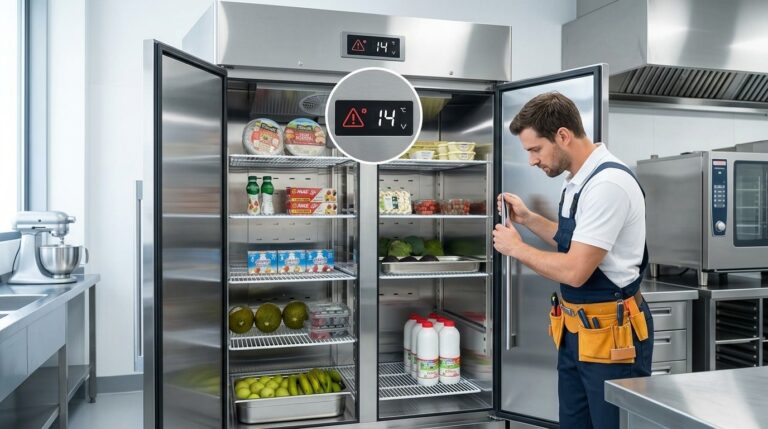
Troubleshooting Unifrost Commercial Fridge Controller Beeping & Flashing
Quick guide to fixing Unifrost fridge beeping/flashing issues for Irish caterers.
Read guide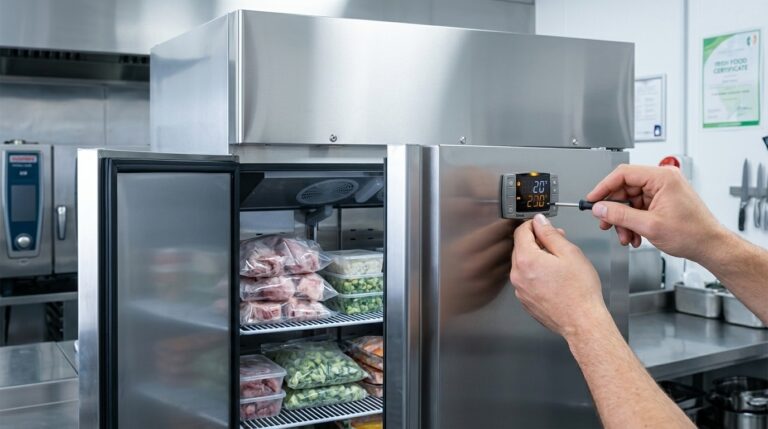
Understanding the Unifrost F410SS Upright Freezer: Temperature Alarm Basics for New Owners
Discover the essentials of managing temperature alarms on your Unifrost F410SS upright freezer for optimal performance in Irish kitchens.
Read guide