
Unifrost F410SS Upright Freezer Ambient Heat & Ventilation Troubleshooting
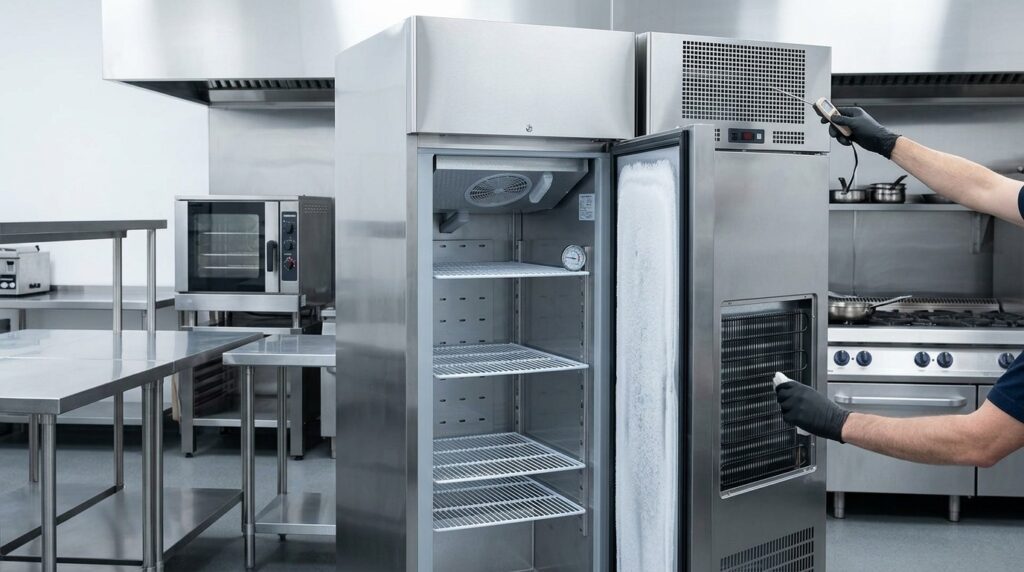
Troubleshoot Unifrost F410SS freezer temperature issues. Learn how ambient heat and ventilation affect performance in Irish kitchens.
Unifrost F410SS Upright Freezer Not Reaching Set Temperature: Ambient Heat and Ventilation Checks
If your Unifrost F410SS upright freezer is not reaching or holding its set temperature, the cause is often ambient heat, poor ventilation, or heat load from how you are using it, not a failed controller.
This guide helps you make the practical checks that matter in Irish kitchens, so you can decide whether you are dealing with a site and operation issue or a genuine breakdown. You will work through:
How room temperature, nearby heat sources, and boxed-in installs stop the cabinet rejecting heat properly
What clearance and airflow points to confirm, plus when a dirty condenser becomes the real problem
Quick user checks on door closure and seals, stock loading, internal airflow blockages, and normal defrost behaviour
What a high-temperature alarm or flashing display usually means after start-up, loading, or defrost
When to escalate to service, and what to do in the meantime to protect stock and keep your temperature records credible
Understanding Temperature Issues in the F410SS
If your Unifrost F410SS upright freezer is not reaching set temperature in a hot, busy Irish kitchen, it is often down to heat load and airflow, not a failed controller. The usual pattern is simple: the freezer is being asked to pull down faster than it physically can, or it cannot shift heat out of the unit properly because air can’t circulate.
The key is separating a temporary dip (normal after loading, heavy use, or defrost) from a cabinet that never properly recovers.
Heat load: the freezer can only pull down so fast
If you load the cabinet with warm product, or product that is only chilled (not frozen solid), you are adding a large heat load. In real kitchens this happens when deliveries land mid-prep, or when the freezer is used to “quick-freeze” because space is tight elsewhere.
What to look for:
Improving slowly over time usually means the cabinet is recovering from heat load.
Not improving at all points more towards airflow, ventilation, maintenance, or a genuine fault.
Door openings and seals: warm air gets in quickly during service
Uprights lose temperature fastest at the door. Frequent openings, doors not fully closing, worn gaskets, or overfilled shelves that stop the door seating properly will pull warm, moist air into the cabinet. That pushes temperatures up and increases frosting, especially on a hot line.
A practical check: if the freezer is fine overnight but struggles during service, the issue is often usage and loading, not the electronics.
Internal airflow: you can block cooling without noticing
Even with a healthy refrigeration system, the cabinet needs clear air paths to circulate cold air and return it back to the evaporator. Common causes of poor internal airflow include:
stock pushed tight to the back wall so air can’t move
cartons or bags bridging across vents and creating dead spots
product stored on the base/floor area, restricting return airflow and leaving the bottom warm
This is why two identical cabinets on the same site can behave differently. One is packed with airflow in mind. The other is effectively insulated by its own stock.
Defrost behaviour: a temporary lift is not always a fault
Commercial uprights run defrost cycles. During defrost, temperatures can rise and alarms can trigger, especially if the kitchen is warm or the door has been opened a lot.
What matters is recovery:
Consistent pull-down after defrost is normal.
Getting a little warmer after each cycle suggests you need to look harder at airflow, condenser condition, and where the unit is sited.
Alarms and flashing displays: often a “recovering” warning
A high-temperature alarm usually means the sensor has been above the alarm threshold for long enough to matter. That can be expected after start-up, a heavy load-in, or an extended open door during service. Treat it as a prompt to check the basics first, then escalate if the cabinet cannot pull back down within a reasonable time.
From a food safety point of view, the important piece is having monitoring and corrective actions in place, as set out in the FSAI’s Principles of HACCP/principles-of-haccp), rather than relying on a quick glance at the display.
Why the same F410SS struggles more in some kitchens than others
In Ireland, “not cold enough” callouts commonly trace back to siting: the freezer is placed beside ovens, fryers, hot passes, or a dishwasher, or it is pushed into a tight alcove where heat cannot escape. In those layouts, the cabinet is trying to reject heat into already hot, trapped air. Performance drops, run time climbs, and recovery after door openings gets slower.
If it “worked fine in the old place” but struggles now, start with ambient heat and ventilation around the cabinet before assuming a component failure.
Impact of Ambient Heat and Ventilation on Freezer Performance
A commercial upright freezer can struggle to reach set temperature in a hot, poorly ventilated kitchen even when there is no parts failure. The reason is simple: it can only remove heat from the cabinet if it can also get rid of that heat into the room through the condenser. If the room is too hot, or the hot air can’t clear away from the unit, performance drops and run time goes up.
This is basic site practice as much as it is refrigeration theory. Irish business energy guidance regularly highlights keeping refrigeration away from heat sources and keeping airflow paths clear as key efficiency and performance steps (see SSE Airtricity’s refrigeration tips for businesses).
How ambient heat slows pull-down and makes temperatures “stick”
In service, your freezer is dealing with two loads:
Heat you add: warm stock going in, frequent door openings, rushed loading during prep.
Heat the room adds: heat pushing in through the cabinet and door area, made worse by high kitchen temperatures.
When ambient temperature rises, the refrigeration system has a harder job rejecting heat. In practical terms, you often see the freezer hovering in a too-warm band during peak service, then recovering later when the kitchen cools down and the door stays shut.
Even if the room feels “fine” overall, local hot spots matter. Siting a freezer beside a hot pass, combi oven, dishwasher outlet, or in direct sun at a back door can raise the temperature around the condenser enough to knock performance. Many “not reaching set temp” call-outs end up being about layout and heat management, not controls.
What poor ventilation looks like in real back-of-house installs
Ventilation issues are usually created by the fit-out:
pushed tight into an alcove
boxed in by joinery
jammed between warm appliances
no clear route for hot condenser air to escape
When the unit recirculates its own warm exhaust air, it effectively runs in a hotter environment than the rest of the kitchen. You’ll typically see longer compressor run times, slower pull-down, and more nuisance high-temperature alarms.
A dirty condenser makes this worse. Grease and dust act like insulation on the coil, so the system needs more airflow to do the same job. In kitchens with frying, baking, or lots of airborne flour, condensers clog faster than people expect, particularly in summer when extract can already be under pressure.
Signs it’s ambient heat and airflow, not an obvious fault
Before assuming a thermostat, probe, or controller issue, look for patterns that point to heat load and ventilation:
Better performance overnight or on cooler days: more likely ambient, door discipline, or ventilation.
Worse during peak cooking and warewashing: likely nearby heat sources or hot air building up around the condenser.
Hot air trapped around the back/top of the unit: likely restricted clearance or an alcove install.
Gradual decline over weeks in a greasy kitchen: often a condenser that needs cleaning.
Uneven temperatures inside plus tightly packed stock: internal airflow is being blocked, which becomes much more noticeable in a hot room.
If those signs match what you’re seeing, the fix is usually practical: improve siting and clearance, reduce local heat exposure, and keep condenser cleaning in your routine. That tends to solve more “won’t hit temperature” complaints than chasing electronics.
Basic Troubleshooting Steps Before Calling an Engineer
If your Unifrost F410SS upright freezer is not reaching set temperature, work through a simple sequence before you book a call-out: confirm it is a real temperature issue (not a temporary swing after loading or defrost), then check the door and seals, loading and airflow, and finally the condenser and ventilation. Change one thing at a time and give the cabinet time to respond.
If you are holding frozen stock for service, treat anything consistently warmer than your normal operating range as a HACCP risk and manage it accordingly, rather than waiting to see if it “comes back”.
1. Confirm what “too warm” means on your site
Start by separating display temperature from product temperature. They can differ after heavy loading, frequent door openings, or a defrost cycle.
If you have a calibrated probe, check between packs (or core temperature where practical).
As a baseline, freezers should be kept at -18°C or colder. See the FSAI’s temperature control guidance for caterers: https://www.fsai.ie/business-advice/running-a-food-business/caterers/temperature-control
If the unit has just been switched on, moved, or refilled, allow for a longer pull-down time in a busy kitchen than in a quiet storeroom. A very common “fault” report is simply heat load plus door traffic.
2. Quick checks: door seal, loading, and airflow
Do one pass through these before you touch settings or assume a component has failed:
Door and seal: make sure the door closes cleanly and the gasket is seated all the way around. Look for anything stopping closure (ice on the frame, a crate corner, a shelf not seated properly).
Loading: avoid loading warm product in one go. Do not pack product hard against the back or sides where air needs to circulate.
Internal airflow: keep vents and fan air paths clear. Cardboard, liners, bags, and overfilled shelves can block circulation quickly.
Service pressure: watch what happens during a rush. Repeated short openings and “door held open while searching” can stop an upright freezer ever catching up.
Obvious icing: heavy ice build-up is usually an airflow issue first. Treat it as a restriction problem before you blame controls.
3. Check ventilation and remove hidden heat traps
Before you clean anything, look at the conditions around the freezer. If it is pushed tight into an alcove, boxed in by joinery, or sitting beside hot equipment (cookline, dishwasher, etc.), it may struggle to reject heat and sit stubbornly above setpoint.
A practical test is to pull the unit forward and give it breathing space for a few hours, then see if temperature starts trending down. If performance improves when it is pulled out, you are likely dealing with ventilation and ambient heat rather than a controller issue.
4. Clean the condenser safely (often the fix)
A condenser clogged with grease and dust is a common cause of poor cooling in Irish kitchens, especially where there is frying, flour, or high lint.
Isolate power.
Access the condenser intake area using your site’s safe procedure.
Remove dust with a soft brush and vacuum, taking care not to bend fins or snag wiring.
Power back on and allow time for recovery before judging the result. If the cabinet pulls down normally afterwards, put condenser cleaning on a schedule that matches your kitchen, not a once-a-year assumption.
5. Know when to stop and book service
If the door is sealing, loading and airflow are sensible, ventilation is not restricted, and the condenser is clean, but the freezer still does not trend down over several hours, you are into genuine fault territory. Avoid repeated power cycling or constant setpoint changes. It can mask symptoms and wastes engineer time.
Log what you observed (when it was loaded, ambient conditions, any alarms, probe readings if available) and manage stock risk in the meantime. Ambient heat and ventilation details matter, because the same cabinet can behave very differently between a cool store and a tight, hot back-of-house.
Installation and Positioning Recommendations
Place the F410SS in a cool, well-ventilated spot, level it properly, and give the condenser enough space to dump heat into the room. Commission it empty, let it pull down to set temperature, then load in stages so you are not asking it to freeze a warm delivery in one go. Finish by checking the door closes cleanly and that internal vents are not blocked, as both can look like a “not cooling” fault.
If the room is running hot or the freezer is squeezed into a tight recess, expect slower pull-down and more high-temperature alarms even when the unit itself is fine.
1. Choose the coolest practical location in the kitchen
Start with siting, because you cannot fix a hot location with settings. Keep the freezer away from ovens, grills, fryers, hot passes, dishwashers and glasswashers. Avoid spots where sun hits the cabinet through a window or open doorway during summer service.
Common problem locations in Irish kitchens include:
Right beside the cook line (radiant heat)
Small prep rooms with poor extraction (high ambient)
Back corridors with constant door traffic (warm air ingress)
If space is tight, prioritise stable room temperature and decent airflow over convenience for staff. Convenience costs you in recovery time and running hours.
2. Avoid alcoves and boxed-in joinery unless airflow is designed in
An upright freezer rejects heat through its condenser into the room. If you push it tight to walls, trap it in an alcove, or wrap it in joinery with no airflow path, you make heat rejection harder and performance drops.
Do not treat “it fits” as “it is installed correctly”. If you must place it in a recess, ensure there is a clear route for cool air in and warm air out of the condenser area, and that hot air cannot simply recirculate in the cavity.
3. Level the cabinet so the door closes properly every time
Levelling is about sealing and temperature stability, not looks. A cabinet that is slightly twisted or leaning can leave the door sitting just off the gasket. In busy service, that becomes “it was shut” when it was not.
After positioning:
Check the door closes from a small open angle
Check it does not bounce back open
If it is borderline, fix levelling first before blaming gaskets or controls
4. Leave ventilation space and keep the condenser area clear
Your aim is simple: stop heat building up around the condenser and stop dust and grease acting like insulation. Before you sign off the install:
Leave clearance around the cabinet in line with the unit’s instructions. If you do not have the manual to hand, err on the side of more space rather than less.
Do not store cardboard, trays, or chemicals behind or on top of the unit where they restrict airflow.
Avoid tight corners where heat pools, especially in small back-of-house rooms with poor extraction.
Build condenser cleaning into your routine. In a working Irish kitchen, airborne grease and dust can clog coils quickly and you will see it first as slow pull-down and temperature alarms.
5. Commission properly: first pull-down, then staged loading
On first install, run the freezer empty until it stabilises at set temperature. Then load in stages, starting with already-frozen product. Putting warm deliveries straight into an upright is a reliable way to sit above setpoint for hours.
For HACCP sign-off, check cabinet temperature with a separate probe rather than relying on the display alone. For your procedures and monitoring approach, align your temperature controls with FSAI guidance on chilled storage (5°C or below for chilled food) as part of your overall food safety system: https://www.fsai.ie/business-advice/food-safety-controls/temperature-control
6. Keep internal airflow paths open
Even with perfect siting, poor loading can create performance issues. Do not pack product tightly against internal air outlets or vents, and avoid lining shelves with solid mats that block airflow.
In practice, the easiest rule in busy kitchens is to leave some breathing space at the back and sides of shelves, especially during peak periods when the door is opening frequently and warm air is constantly being pulled in.
Done properly, installation reduces false alarms and slow pull-down. It also makes genuine faults easier to spot, particularly in real-world sites where ambient heat and restricted ventilation are part of daily trading.
Managing High-Temperature Alarms and Signals
High-temperature alarms or a flashing temperature display are the cabinet’s way of telling you the internal air temperature has been above its limit for long enough that performance and food safety could be affected.
On an upright freezer like the Unifrost F410SS, this is most often caused by a site and usage issue rather than a failed controller, for example:
Warm or only partly frozen stock being loaded
Heavy door traffic during service or stock take
Poor ventilation around the unit (boxed-in, tight to a wall, grille obstructed)
A dirty condenser reducing heat rejection
You’ll also commonly see an alarm during first pull-down after installation, after a defrost phase, or after a power cut. One key point: the display is typically showing cabinet air temperature, not the core temperature of your product. If the alarm is on, do a probe check before making any stock decisions.
Why it happens in real Irish kitchens
In most Irish back-of-house setups, the alarm shows up when the freezer is taking on more heat than it can get rid of. Typical examples include:
A delivery arriving “frozen” but already soft
A full shelf loaded at once (especially uncovered trays)
The freezer sited beside a dishwasher, oven line, or in a tight, warm store where ambient temperatures stay high for hours
Treat the alarm as a prompt to check the basics that limit cooling capacity: airflow in and out of the condenser area, clear internal air paths, and realistic loading for how the kitchen actually trades.
When it’s normal, and when you need to intervene
Normal and expected
First start-up/pull-down after installation
After an automatic defrost
After a long door-open event (stock take, cleaning, reorganisation)
Shortly after loading a significant volume of product, especially if it is not hard-frozen
Not normal
Alarm persists for hours during steady trading with minimal door openings
Temperature climbs every service period and does not recover overnight
Visible ice build-up or blocked internal vents
Door not sealing cleanly (gasket damage, shelves or product holding it open)
Little or no airflow around the condenser area, or the area feels excessively hot
What it means for HACCP and stock safety in Ireland
For food businesses, you are generally aiming to hold frozen storage at -18°C or colder. FSAI guidance on temperature control is a useful reference: https://www.fsai.ie/business-advice/running-a-food-business/caterers/temperature-control
If the F410SS alarms, do not rely on the display alone. Check product temperatures where practical (for example, between packs or a core check on higher-risk items), record your findings, and reduce heat load straight away:
Pause loading
Keep door openings to a minimum
Make sure vents and airflow paths are clear
Check the unit has proper ventilation space and the condenser area is clean
If you cannot pull the temperature back down within a reasonable time after addressing the obvious site causes, treat it as an operational risk and book service. In practice, the difference between a nuisance alarm and a genuine problem is often down to installation space, room conditions, and day-to-day door discipline rather than a single “failed part”.
Connecting to the Unifrost Support Ecosystem
How you respond depends on whether your F410SS is under pressure from site conditions, or whether something has actually failed. In Irish kitchens, Environmental Health Officers and HACCP checks tend to focus on evidence of temperature control and corrective action. That means your notes and readings matter almost as much as the repair.
Freezers can also look “broken” when they are simply dealing with heat load, poor ventilation, or a normal defrost cycle, especially in a hot back-of-house.
Use Unifrost support resources to avoid guesswork (and the wrong call-out)
If the F410SS is not reaching set temperature, start with the same basics an engineer will ask for: the user manual, any alarm guidance (where applicable), and the cleaning and ventilation notes for upright cabinets. The aim is to separate an installation or usage issue from a likely fault before you book a visit.
Focus on three areas that make or break performance on busy Irish sites:
Heat rejection: where the cabinet dumps heat, and whether that area has enough airflow.
Air movement inside the cabinet: blocked vents, overloading, and product pushed hard against air paths.
What the controller is doing: pull-down behaviour, defrost cycles, and any alarms or unusual patterns.
Use this guide for first triage, then check the Unifrost documentation for your exact model so you can confirm what “normal” looks like, including commissioning after delivery, positioning and levelling, and safe cleaning around the condenser area. If you run multiple sites, standardising this step avoids repeat issues caused by the same layout mistake turning up in different kitchens.
What to capture before you call service (so it gets resolved faster)
An engineer can replace a component, but they cannot fix a cabinet that is boxed into a hot alcove beside a dishwasher. If you capture the right information once, you avoid the common loop where a unit is logged as “not cooling” when the real issue is ambient heat, restricted airflow, loading pattern, or door discipline.
Room conditions: note the room temperature and whether the cabinet is beside heat or steam sources (oven line, hot pass, dishwasher, combi exhaust).
What changed recently: delivery just loaded in, heavy service with frequent door openings, power interruption, deep clean, or the unit moved into a tighter space.
Installation photos: rear and top clearances, anything blocking vents, and whether the unit is boxed-in.
Controller behaviour: steady high temperature, flashing values, alarm condition, or recovery after defrost.
Temperature check method: use a calibrated probe in product or an appropriate medium, not just the air display, and record times. For chilled food control expectations in Ireland, FSAI guidance that chilled foods should be kept at 5°C or below is a common HACCP benchmark operators work to: https://www.fsai.ie/business-advice/running-a-food-business/food-safety-and-hygiene/temperature-control
That bundle of evidence helps support quickly judge whether you are dealing with site heat and ventilation, a dirty condenser, a door seal or alignment issue, or a genuine refrigeration fault that needs parts.
When Unifrost troubleshooting stops and a site decision starts
A lot of “not reaching set temperature” calls on upright cabinets are not solved by a controller tweak. They are solved by reducing heat load and improving heat rejection, which affects both running cost and reliability during service when ambient temperatures spike.
If the cabinet struggles during hot service, recovers overnight, and shows no persistent alarm once the kitchen cools, treat that as a cue to review placement, ventilation space, and condenser cleanliness before assuming a control or refrigeration failure.
The practical thread running through most of these cases is simple: ambient heat and ventilation decide whether the F410SS can reject heat fast enough to pull down, recover after door openings, and hold temperature under pressure.
F410SS troubleshooting FAQs
Why is my F410SS not reaching the set temperature?
In most cases it is heat load or airflow, not a failed controller.
Check these common non-fault causes first:
Warm stock just loaded: an upright freezer can take hours to pull newly loaded product down, especially if items were delivered above freezer temperature. Load in stages where possible.
Door not fully closing: door being held open by a shelf edge, cartons, or a worn/dirty gasket lets humid kitchen air in and can keep the cabinet stuck around a warmer plateau.
Airflow blocked inside: over-packing, bags pressed against the air outlets/returns, or product stacked tight to the back wall can prevent cold air circulation.
Normal defrost behaviour: temperatures can rise temporarily during/after defrost and then recover.
Site heat and poor ventilation: if the room is hot or the unit is boxed-in, the refrigeration system cannot reject heat efficiently, so pull-down to setpoint slows dramatically.
If the cabinet is running continuously but not improving after you correct loading/door/airflow and give it recovery time, move to the pre-service checks below.
How does ambient room temperature affect freezer performance?
Ambient temperature sets the starting point for how hard the freezer must work to reject heat.
Practical impacts in busy Irish kitchens:
Higher room temperature and nearby heat sources (ovens, hot pass, dishwasher exhaust) reduce cooling capacity, so the cabinet may take much longer to reach setpoint or may not hold it during peak service.
Poor ventilation around the condenser traps hot air, effectively raising the “ambient” the freezer is breathing, even if the room itself is not extreme.
More humidity and door openings add extra heat and moisture load, increasing frost and recovery time.
If performance issues appear mainly during hot shifts and improve overnight, that pattern strongly suggests an ambient heat or ventilation constraint rather than a control fault.
What are the essential checks for an F410SS freezer before calling service?
Do these checks in order to rule out the most common site and usage issues:
Confirm the cabinet actually has power and is running: lights/display on, compressor sound/vibration, and fans running (where visible).
Verify the door is sealing: close on a strip of paper and gently pull. Easy pull-out points to gasket or alignment issues. Clean the gasket and check the door is not “sprung” by overloading.
Check internal loading and airflow: remove any product blocking vents, avoid pressing stock hard against the back, and leave space for air to circulate.
Allow recovery time after loading/defrost: if you have just loaded warm stock or the unit has recently been off, give it time to pull down before assuming a fault.
Check the install environment: ensure it is not boxed in, and that hot equipment is not blasting heat at the unit.
Condenser cleanliness: if the condenser is accessible, isolate power and carefully remove dust and grease build-up. A dirty condenser is one of the fastest ways to cause persistent warm temperatures.
Temperature verification for HACCP: cross-check with a calibrated probe between packs, and record what you see (time, reading, room conditions).
If the unit is still running warm after these checks, note any error codes/alarms and contact service with your observations. It speeds diagnosis and reduces avoidable call-outs.
Need step-by-step help?
For model-specific troubleshooting flows, cleaning guidance, and what to check before booking an engineer, visit the Unifrost Support Center. It is the quickest way to match symptoms like slow pull-down, hot-kitchen performance, and airflow issues to the right next action.
Related Unifrost guides
Compare models, maintenance advice and support information related to this topic.
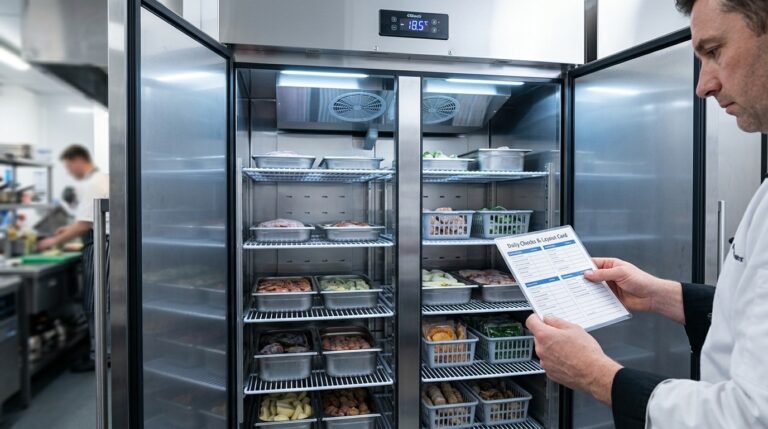
Unifrost F410SS Upright Freezer: Quick Start Guide for Hotels
Get started with the Unifrost F410SS in your Irish hotel. Temperature setup, layout guidance, and quick checks for optimal freezer use.
Read guide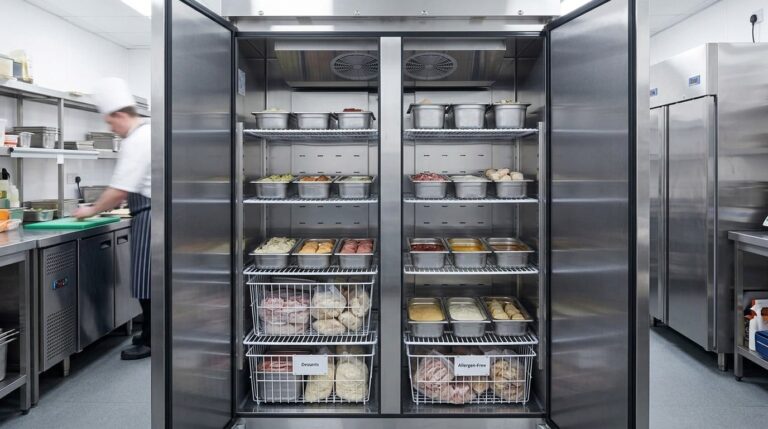
Unifrost F410SS Upright Freezer Planning Guide for Irish Hotel Banqueting Kitchens
Plan your F410SS freezer layout for efficient high-volume banqueting in Irish hotels. Optimize GN pans and workflow.
Read guide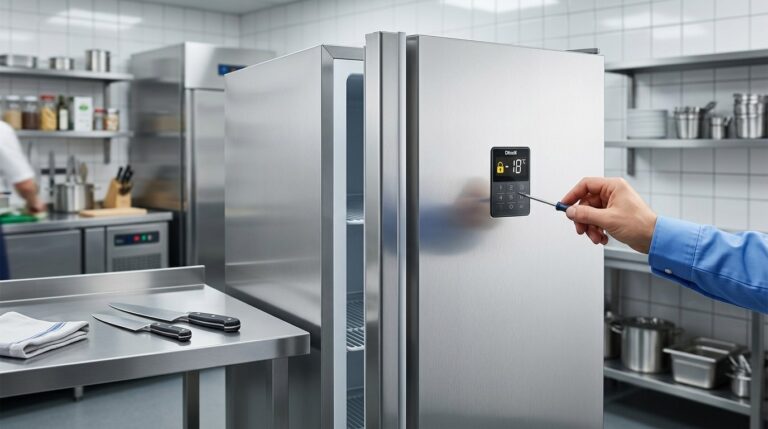
Unifrost F410SS Upright Freezer: Door Controller Locking Troubleshooting Guide
Find solutions for Unifrost F410SS freezer door controller lock issues in busy Irish kitchens. Unlock guidance, common safety checks, and service tips.
Read guideCompare Unifrost freezer options on Caterboss
For current product options, pricing and availability, continue to Caterboss.