
Unifrost CTG/CTS Cold Topper vs Upright Fridge: A Chilled Prep vs Bulk Storage Planning Guide for Irish Kitchens
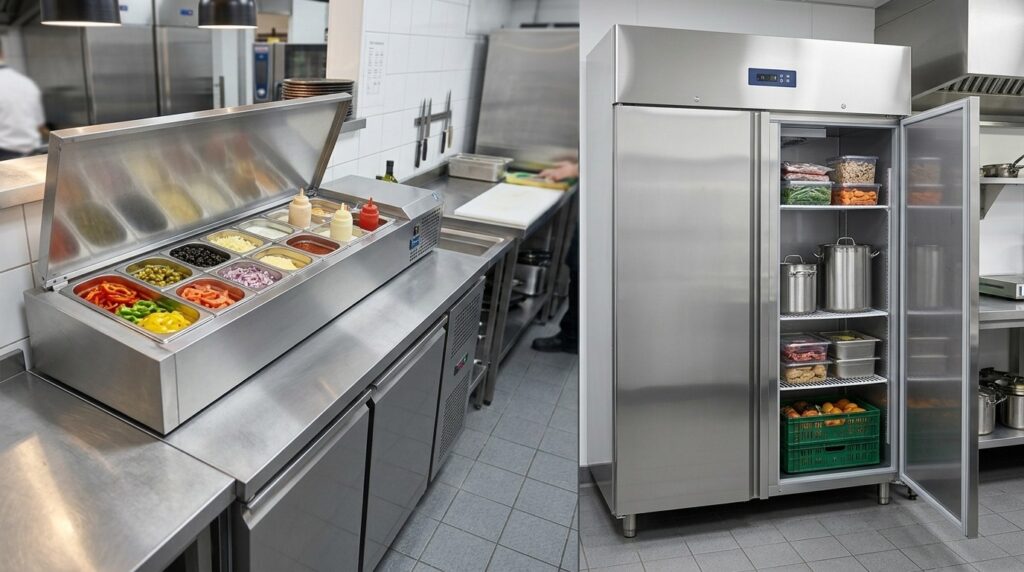
Explore Unifrost cold toppers vs upright fridges for Irish kitchens. Ideal for informed commercial refrigeration choices.
Unifrost Cold Topper (CTS1200/CTG1400) vs Upright Fridge (R-Series/CR-Series): Prep Speed vs Bulk Storage in Irish Kitchens
If you are planning chilled storage for service in an Irish kitchen, the real question is whether you need ingredients open and at-hand on the line or maximum sealed capacity for back-of-house stock. Unifrost CTS1200 and CTG1400 cold toppers are built for chilled prep at the pass, holding GN pans of ready-to-use toppings and mise en place. Unifrost upright fridges in the R-series and CR-series are typically the better fit for bulk chilled storage, organised on shelves for fast loading and stock rotation.
This guide helps you decide what to buy and how to pair units without wasting space or budget. You will compare cold toppers, prep-style refrigeration, and uprights on the checks that matter in practice: how much “at-hand” GN pan capacity you need during peak service, how much bulk storage you need between deliveries, how workflow and door-opening affects temperature stability, and what hygiene and HACCP habits push you towards open-top prep vs enclosed storage. You will also get planning rules of thumb for common Irish venue types like pizzerias, cafés, and hotel kitchens, including when a cold topper plus undercounter or prep fridge beats relying on a single upright.
Understanding Cold Toppers and Upright Fridges
A Unifrost CTG/CTS cold topper is a countertop chilled topping shelf for holding GN pans of ready-to-use ingredients at the pass or prep station. It lets staff build orders without repeatedly opening your main fridge. A Unifrost CR-series or R-series upright fridge is a full-height chilled cabinet for bulk storage, organised shelving, and keeping larger volumes of stock safely cold through deliveries, prep, and quieter periods.
In day-to-day terms, a cold topper is about speed and portion control. An upright is about capacity and temperature stability. The trade-off is that open, frequently accessed prep refrigeration needs tighter discipline around loading, covering and rotation. Warm kitchens and busy service will punish exposed ingredients faster than an enclosed cabinet will.
Cold toppers (Unifrost CTG/CTS): what they are for in an Irish kitchen
In a café, takeaway, deli counter, or pizzeria line, the cold topper’s job is “at-hand” chilled ingredients: the items you reach for on every order. GN pans suit this setup because they are standard in Irish catering, and they make it easier to swap, label, rotate and clean down as part of your HACCP routine.
Cold toppers earn their space when service pressure is high and staff flow matters. If you are building pizzas, wraps, salads, toasties, or garnish-heavy dishes, a chilled GN layout reduces time stepping away from the bench, waiting for an upright door, and letting warm air into your main cabinet.
Upright fridges (Unifrost CR-series/R-series): what they are for in daily operation
An upright fridge is your back-of-house capacity. It is where you keep sealed prep, dairy, cooked meats, prepped veg, sauces and deliveries in a more controlled environment, with better protection from kitchen heat and day-to-day splash and exposure than a prep station can offer.
Operationally, uprights suit batch prep and restocking. You load and organise by shelf, then replenish the prep station as needed. That approach is often easier to manage in Irish kitchens where space is tight and deliveries might only be a few times a week.
The practical distinction that affects food safety and running costs
Cold toppers cut steps and keep ingredients visible, but they are more exposed to warm ambient air and “lid left off” habits. You get the best results when you avoid overfilling pans, keep product covered where possible, and restock little and often rather than loading the unit for the full day.
Uprights are slower to work from per order, but they generally hold temperature more consistently because the cold air is enclosed behind a door. That tends to matter most during quieter periods and overnight.
Your HACCP plan should reflect the difference. Chilled foods need to be held under safe control and monitored, and Irish guidance commonly references holding chilled food at 5°C or below, per the Food Safety Authority of Ireland (FSAI) temperature control guidance. This is why many busy kitchens use an upright for storage and a cold topper for short-duration service, rather than expecting one unit type to cover both jobs all day.
Key Differences Between Cold Topper and Upright Fridge
A Unifrost CTG/CTS cold topper and a Unifrost upright fridge do different jobs in an Irish kitchen. One supports speed on the line, the other gives you reliable chilled capacity in reserve.
A cold topper is a GN pan rail built to keep frequently used ingredients within easy reach during service. An upright fridge is enclosed storage designed for higher volume, better separation, and more consistent temperature control across a full load. In most operations, a cold topper speeds up assembly, but it does not replace your main chilled storage. An upright fridge protects stock and supports prep and deliveries, but it is slower for fast build when you are under pressure.
How they compare in day-to-day Irish service
Think of the cold topper as at-hand chilled prep and the upright as back-of-house chilled capacity.
A Unifrost CTS1200 or CTG1400 is typically placed on a counter at the pass or prep station, holding GN pans of ready-to-use ingredients so staff can build orders without constant trips to a fridge. Unifrost upright fridges (often bought in Ireland in the R-series and CR-series) are usually chosen when you need more chilled volume, adjustable shelving, and straightforward loading for deliveries, batch prep, and sealed containers.
From a HACCP point of view, the aim is stable chilled holding and controlled time out of refrigeration. The Food Safety Authority of Ireland notes chilled food should be kept with the food temperature between 0°C and 5°C. You will generally find that easier to maintain in an enclosed upright than on an open-top rail if the kitchen is hot, the rail is overfilled, or pans are left open for long periods.
Cold topper (Unifrost CTS1200 / CTG1400): where it works best, and the trade-offs
A cold topper earns its place when speed, portion control, and consistency matter more than litres. In a pizzeria, café sandwich station, or garnish section, having GN pans chilled and ready reduces steps and helps standardise builds across staff.
The trade-off is exposure. Open pans are more affected by warm kitchen air, frequent handling, and splash zones. Operationally, that means you need tighter habits: pre-chill product before loading, avoid overfilling, use lids where appropriate, and swap pans rather than topping up endlessly. You also need a separate chilled unit nearby for backup stock, because a rail is not designed for bulk holding.
Upright fridge (Unifrost R-series / CR-series): where it suits, and where it can slow you down
An upright fridge is the workhorse for volume and organisation. It is the better home for dairy, cooked meats, prepped trays, boxed produce, and sealed containers because storage is enclosed, separated, and less exposed to the heat and traffic at the line.
Where uprights frustrate is workflow during a rush. If the same upright is doing double duty as both “grab fridge” and bulk storage, the door gets opened constantly, shelves get rummaged mid-service, and recovery time becomes part of your daily risk. In smaller kitchens, this is exactly when doors get left ajar and items end up on counters “for a minute”, which is when chilled control slips.
Which setup is best for you (layout and storage planning)
Choose based on where your bottleneck is:
If service pressure is on assembly speed, a CTG/CTS cold topper paired with undercounter or nearby chilled storage usually runs cleaner than one upright that everyone raids all night.
If pressure is deliveries, batch prep, and limited storage space, an upright fridge with a well-organised prep system and tight portioning is often the simpler, safer setup.
A practical approach that suits many Irish operations is to keep only the next service window’s ingredients in the topper (in GN pans), with at least one full refill set stored sealed in the upright. That way you replenish fast without extended door-open searching during peak service.
Once you decide whether you are designing around station speed or bulk capacity, you can map chilled zones so staff flow stays tidy and you are not fighting the fridge door during the rush.
Performance in Various Kitchen Operations
Pick the wrong format and you pay for it in staff time and temperature control. Use a cold topper for bulk storage and you are constantly decanting and refilling, with more chance of pans warming during a rush. Use an upright fridge for live prep and every garnish or topping becomes a door-open, step-away job, which slows the line and invites portion drift.
In most Irish kitchens, the division is simple:
Cold toppers (for example, Unifrost CTS1200/CTG1400 GN-pan topping shelves) suit speed at the pass and repeat assembly.
Upright fridges (such as Unifrost R-series/CR-series bulk fridges) suit stable, higher-capacity holding with clearer stock control.
In a quiet café you can get away with compromises. In pizzerias, hotels, and anywhere building the same items repeatedly at peak, the cost shows up fast.
Pizzerias and takeaway lines: speed matters more than volume at the pass
If you are building pizzas, wraps, salads, or bowls to order, a cold topper earns its footprint because it keeps core ingredients visible, portionable, and within one reach.
Relying on an upright as your only chilled point usually leads to stop-start service: more door opening, more steps, and the temptation to overstock the make area “just in case”, which then becomes a waste problem at close.
From a hygiene and HACCP point of view, open pans can work, but only if you run the station as high-turnover, keep lids/covers in use when you can, and keep handling tight. FSAI guidance on controlling contamination is a useful reference point here: https://www.fsai.ie/business-advice/food-safety-controls/food-safety-and-hygiene
Cafés and delis: tight space, mixed prep, constant interruptions
In smaller cafés, the pressure is often interruptions and traffic. Someone nips in for one item, the route gets blocked, and the fridge door gets left open longer than anyone admits.
An upright fridge often works best as the “single source of truth” for chilled stock, prepped components, and date labelling. But if you are repeatedly assembling sandwiches, salads, or brunch plates, a cold topper reduces steps and helps portion control stay consistent.
The common mistake is asking a cold topper to act like storage. Once you start keeping backup tubs on the counter “for speed”, you lose both speed and control.
Hotels and large restaurants: separate “line” from “store” or you will feel it at peak
In hotels, carvery kitchens, and larger restaurants, the real penalty for mixing bulk storage and line access is traffic. Too many people need the same chilled space during service.
A cold topper supports a dedicated prep section, while one or more uprights handle labelled, dated bulk holding and planned replenishment. If you try to run the line directly off uprights, doors open constantly and trays end up parked on counters, increasing handling and the risk of temperature abuse for ready-to-eat items. FSAI’s HACCP guidance is relevant here: https://www.fsai.ie/business-advice/haccp-and-food-safety-management/haccp
When one upright fridge is enough (and when it is not)
A single-door upright can cover chilled prep and storage in a low-volume operation with a simple menu, especially if you portion off-peak and only access the fridge at set times.
It usually stops being enough when you have repeat assembly during a defined rush. The “walk to fridge, open, pick, close” cycle becomes the bottleneck, and teams start compensating with risky or messy workarounds like staging ingredients unrefrigerated or leaving the door cracked. If service depends on speed and repetition, the upright should feed the line, not be the line.
Efficiency and running costs: door-opening is the hidden tax
Constant door opening is a quiet drain on temperature stability and recovery, particularly during busy service. A cold topper can help by reducing trips to the upright, but only if you treat it as at-hand quantities and replenish from bulk in a controlled routine.
Use a cold topper as storage and you often get the opposite outcome: more exposed surface area chilled for longer, more rummaging, and more waste and labour before you ever notice it on the ESB bill.
The clean split holds up in practice: cold topper for rapid access during active prep, upright for disciplined holding, labelling, and recovery.
These differences are easier to judge once you compare the two formats directly for access speed, food safety control, capacity, and how they cope under Irish service pressure.
Practical Considerations for Day-to-Day Use
Plan the workflow first, then choose the format that supports it. A cold topper (CTG/CTS) is for fast access to small volumes at the pass. An upright (R-series/CR-series) is for bulk, enclosed storage. A chilled prep counter sits between the two, giving you a work surface with refrigerated storage underneath.
Whatever you choose, leave enough space for airflow, cleaning access, and the way staff actually move during service. If a unit is awkward to reach, it will not be cleaned properly, and if it is wedged into a hot corner, it will not hold temperature as well.
1. Match the kit to how staff really work on the line
Cold toppers are for “at-hand” ingredients in GN pans. They suit pizzerias, sandwich lines, carveries, and banqueting prep where several people need to grab toppings or garnishes quickly without queuing at an upright door. The trade-off is that you are managing open ingredients in a busy area, so you need tighter habits around loading, covers and rotation.
Upright fridges work best when one person can batch-load shelves and the rest of the team pulls what they need to a prep station. If you try to use one upright as both bulk storage and a constant-access prep point, it becomes a bottleneck: more door opening, more heat gain, more interruptions.
Chilled prep counters are often the practical middle ground when you want the worktop and storage in the same place. They reduce footfall to the upright and keep your mise en place closer to the station, but they still need decent ventilation and a realistic cleaning routine.
2. Give each format the ventilation and siting it needs in an Irish kitchen
Cold toppers tend to sit beside ovens, grills and hot lights, which is where refrigeration struggles most. Keep them out of direct radiant heat where you can, avoid placing them under pass lamps, and do not block any vents. The aim is simple: steadier temperatures and less compressor run time in a kitchen that is already warm.
Uprights reject heat into the room and are often squeezed into corners near the dishwash or the cookline. That costs you twice: the unit works harder, and the corner becomes a cleaning blind spot. If an upright has to sit near the line, check door swing and walkway clearance so staff are not blocking traffic while carrying hot trays, bins or deliveries.
3. Build HACCP controls around open ingredients versus enclosed storage
For enclosed fridges and chill cabinets, set and monitor temperatures so chilled food stays within safe limits. The FSAI guidance for caterers references keeping chilled food between 0°C and 5°C as part of temperature control routines (FSAI temperature control guidance).
With cold toppers and open prep, the bigger daily risk is exposure rather than the setpoint: frequent access, lids left off, and hands moving between tasks. Your controls should reflect that reality:
Keep ready-to-eat items protected and separated from raw foods.
Only load what you expect to use in the service window, then top up from enclosed storage.
Use covers where practical and rotate pans rather than “topping up on top”.
Separation matters. The FSAI stresses keeping raw and ready-to-eat foods apart to reduce the risk of bacteria spreading by contact or drips during storage and handling (FSAI requirements guidance).
4. Set a maintenance and energy routine that survives a busy week
Cold toppers and prep stations live in the spill zone, so they need frequent wipe-downs and a proper clean of the pan area, edges and seals where debris builds up. If that detail cleaning does not happen, you will see the knock-on effects quickly: odours, blocked airflow and poorer holding performance.
Uprights are usually easier to keep tidy day-to-day, but they punish bad habits. Doors propped open while portioning, or repeated “quick checks”, hurt temperature stability and running costs. A simple operational rule that works in real kitchens: portion and label on the bench, not with the fridge door held open, and organise shelves so the most-used items are visible and quick to grab.
These are the day-to-day differences that matter in practice. Once you are clear on workflow, access, and HACCP routine, it is much easier to choose between a cold topper, a chilled prep counter and an upright from the Unifrost range.
Decision Guide for Different Irish Venue Types
Venue type and service style matter because you are usually optimising for one of two jobs:
Fast, repeated access at the prep bench (lots of small grabs, minimal turning away from the station).
Safe, stable bulk holding (fewer door openings, better temperature stability, clearer stock rotation).
In Irish kitchens, temperature control is not optional. The FSAI guidance to keep chilled food at 5°C or below is a good baseline, and it’s a useful reminder that open, frequently accessed prep zones need more day-to-day discipline than closed storage. Layout and service rhythm can also flip the “right” answer, even with the same menu, because staff flow and door opening patterns can make or break temperature stability.
Pizzerias and takeaways: make-line speed, with bulk storage close by
If you’re building pizzas, wraps or salads to order, a Unifrost cold topper (CTG/CTS) earns its keep when service is continuous and you need GN pans at the prep edge without staff stepping away from the bench. The topper covers your “active” ingredients.
An upright fridge (Unifrost R-series or CR-series) then takes care of bulk cheese, meats, sauces and prepped veg, so you’re not forced to overload the topper just to get through a rush.
The common mistake is asking an upright to do both jobs, then living with constant door opening, product left out “for speed”, and a cluttered bench because there’s nowhere for GN pans to sit properly. If space allows, the cleanest split is usually:
Cold topper for at-hand ingredients
Upright for replenishment
A restock routine that tops up little and often, rather than cramming the pans.
Cafés and delis: decide based on how you assemble food during service
In cafés, the decision is often less about a big evening push and more about how often staff need small amounts, quickly and neatly, while keeping the counter under control.
A cold topper suits you if you have a defined assembly point for sandwiches, salads and brunch plates, and you want portion-controlled, labelled GN pans as part of your HACCP routine.
If your chilled offer is simpler, or you’re mainly storing sealed packs, dairy and pre-prepped items, an upright fridge can be the tidier option, especially where back-of-house space is tight and you need vertical capacity and predictable organisation.
A practical tell: if you’re repeatedly opening a fridge for “a pinch of this and that” during service, you’re using it in a way a cold topper (or prep-style station) is designed to handle.
Hotels and high-volume kitchens: split production storage from service access
In hotels, carveries and busy multi-outlet kitchens, bulk capacity and stock rotation usually dominate. You are feeding breakfast, lunch, banqueting and room service off the same cold chain. Upright fridges (Unifrost R-series and CR-series) suit that role because they support bulk loading, shelf organisation and safer holding between deliveries, prep and service.
Cold toppers still have a place, but more as a controlled satellite at specific passes (pizza, garde manger, plating) rather than a substitute for bulk storage.
If you’re deciding where to spend first, prioritise enough upright space to avoid overfilling and warm-loading issues. Then add cold toppers where they clearly reduce staff steps and keep doors shut during the busiest 60 to 120 minutes.
These venue patterns make the differences between a cold topper and an upright fridge easier to judge in day-to-day use, not just on a spec sheet.
FAQs: Choosing Unifrost chilled prep vs bulk storage in Ireland
How do I choose between a prep counter and an upright fridge for my kitchen?
Choose based on workflow first, then space.
Pick a prep counter (or prep setup) when speed at the line matters: you need ingredients within arm’s reach during service (sandwich, deli, pizza, salad assembly) and you want to reduce trips to the fridge.
Pick an upright fridge when storage and flexibility matter: you need bulk chilled capacity, mixed product storage, and easy re-configuration with shelving (typical for back-of-house, hotels, catering kitchens).
A practical rule: if staff are opening the fridge repeatedly during peak service to grab toppings or garnishes, you will usually benefit from a dedicated prep station plus separate bulk storage. If service is lighter and you can batch-prep, an upright fridge plus a clean prep bench can be enough.
What are cold toppers used for in a commercial kitchen?
Cold toppers (including Unifrost CTS1200 and CTG1400) are countertop chilled topping shelves designed to hold GN pans of ready-to-use ingredients at the pass or prep station.
They are most commonly used for:
Pizza lines: sauces, cheese, cooked meats, veg toppings
Cafes and delis: salad components, sandwich fillings, garnishes
Service efficiency: keep “high-touch” ingredients chilled and visible so staff are not constantly opening an upright fridge
They are not a replacement for bulk refrigeration. Think of a cold topper as the front-of-house or line-facing ingredient bay, supported by an upright fridge for backup stock.
How much storage capacity do I gain with an upright fridge compared to a cold topper?
An upright fridge typically gives you bulk storage volume across multiple shelves, while a cold topper provides shallow, immediate-access capacity only for the ingredients you want to keep “at hand”.
In practical planning terms:
A cold topper holds a service selection of chilled ingredients in GN pans (ideal for fast build speed).
An upright fridge holds backup stock and larger packs (ideal for fewer deliveries, less decanting, and better organisation).
If your team is frequently refilling GN pans during service, that’s usually a sign you need more upright fridge capacity (or better shelf layout) behind the line, rather than a larger topper.
Next step: match the right Unifrost setup to your menu and service speed
If you tell us what you serve (pizza, sandwiches, salads, hotel prep), how many covers you do at peak, and what space you have on the line, it’s straightforward to map out whether you need a cold topper for at-hand ingredients, an upright fridge for bulk storage, or a combination of both.
Browse the current Unifrost upright options here: Explore Unifrost Commercial Fridges.
View Unifrost fridges at Caterboss
For current product options, pricing and availability, continue to Caterboss.