What running costs and energy efficiency should I expect from a commercial chest freezer?
 FAQ
FAQ
Running cost depends less on the badge and more on how it is used and where it sits.
Need more detail? For model comparisons, setup steps and troubleshooting, see the related guides below.
Running cost depends less on the badge and more on how it is used and where it sits.
To estimate and control costs:
Check the product energy data (where provided) and use it to calculate: kWh per day × your electricity rate × 365. If only annual consumption is listed, use that directly.
Site it correctly: avoid placing it beside cooklines, dishwashers, or in direct sun. Higher ambient heat makes the compressor run longer.
Loading habits matter: letting hot food cool first, keeping stock in sealed packaging, and avoiding “lid open while deciding” all reduce runtime.
Defrosting and seals are big hitters: excess ice build-up and damaged lid seals both increase energy use. A simple routine defrost and a quick gasket wipe can pay back fast.
If you want a like-for-like comparison between CF500HS, CF501 and CF601, use the published energy consumption figure (when available) rather than capacity alone. Bigger freezers can cost more to run, but they can also reduce waste and emergency top-up deliveries when they are properly organised.
Read the full guide: Unifrost CF500HS, CF501 & CF601 Chest Freezers: Model Buying & Setup Guide for Irish Kitchens.
More help with this question
Compare models, maintenance advice and support information related to this topic.
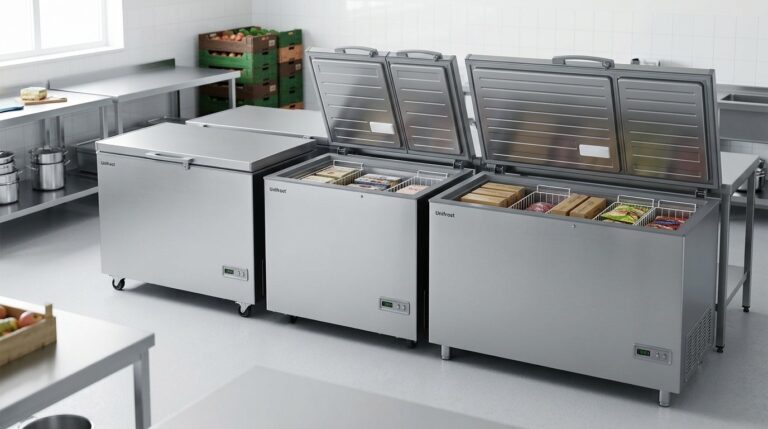
Unifrost CF500HS, CF501 & CF601 Chest Freezers: Model Buying & Setup Guide for Irish Kitchens
Explore Unifrost CF500HS, CF501 & CF601 chest freezers for commercial kitchens. Learn about setup, features, and fit for your business.
Read guide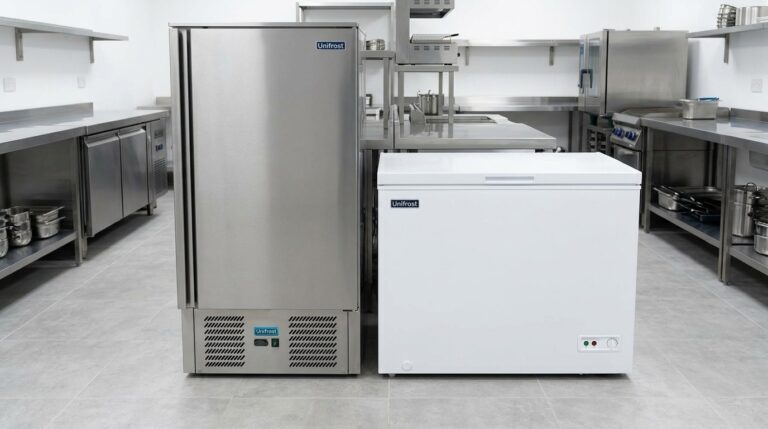
Unifrost F410SS vs CF500HS: First-Time Buying Layout Guide for Irish Kitchens
Discover the right Unifrost freezer for Irish kitchens. Compare the F410SS upright and CF500HS chest models for layout and efficiency options.
Read guide