What’s the difference between an undercounter ice machine and a countertop or modular head unit?
 FAQ
FAQ
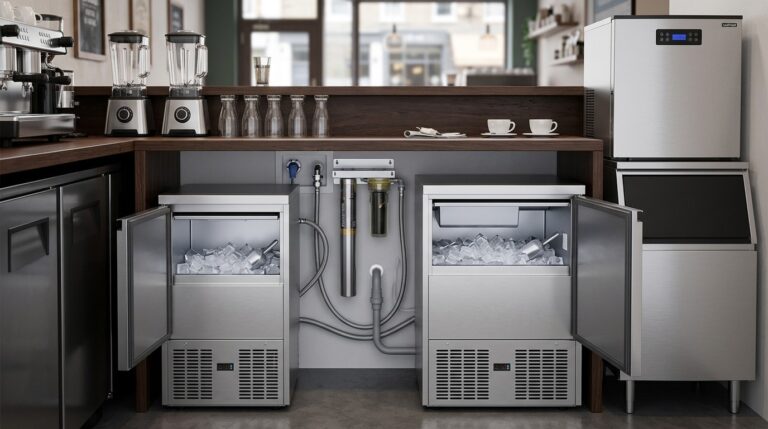
Undercounter (self-contained) ice machine: the ice maker and storage are in one compact unit designed to sit under a counter. It is the simplest option for cafés and small bars, but storage is limited and it needs good v
Need more detail? For model comparisons, setup steps and troubleshooting, see the related guides below.
Undercounter (self-contained) ice machine: the ice maker and storage are in one compact unit designed to sit under a counter. It is the simplest option for cafés and small bars, but storage is limited and it needs good ventilation around the cabinet.
Countertop unit: sits on a counter and is usually chosen where there is no undercounter space available. It can be handy for front-of-house, but you sacrifice prep space and you still need proper drainage and ventilation.
Modular head unit plus bin: the ice-making head sits on a separate storage bin. This is the normal step up when you need more output and much more storage without filling your undercounter. Examples in the Unifrost compact ecosystem include pairing U165‑125 or U230‑175 with bins like B175 or B375.
Noise expectation in a café: small commercial ice machines cycle on and off, so you will hear a compressor fan and the ice drop cycle. In practice, they are usually fine behind a bar or in a back counter run, but if the unit will be right beside seating or a quiet counter, plan for a location with a bit of separation and avoid boxing it in, as poor airflow can make it run longer and sound louder.
Read the full guide: Unifrost Small Ice Machine Model Comparison for Irish Bars & Cafes.
More help with this question
Compare models, maintenance advice and support information related to this topic.
Unifrost Small Ice Machine Model Comparison for Irish Bars & Cafes
Compare compact Unifrost ice machines for Irish bars & cafes. Evaluate model size, output, and energy efficiency.
Read guide