
Unifrost F410SS Upright Freezer Upgrade or Replacement Guide
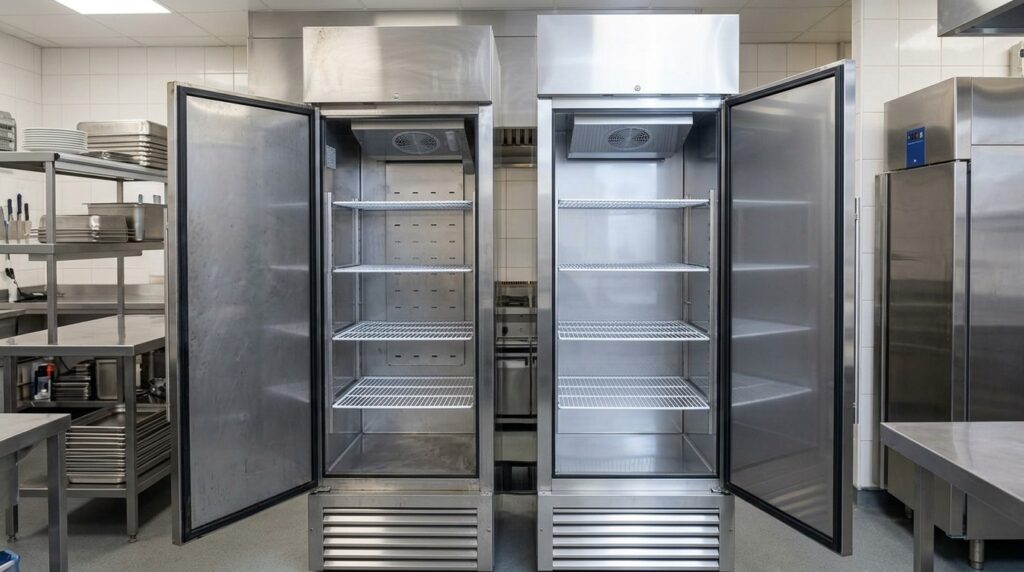
Explore when to replace or upgrade your Unifrost F410SS upright freezer for optimal performance in Irish kitchens.
Unifrost F410SS Upright Freezer: When to Upgrade or Replace
If you run a Unifrost F410SS single-door upright freezer as your day-to-day storage cabinet, you need to know when it is still a sensible workhorse and when it has become a cost and compliance risk. In a busy Irish kitchen, the real issue is not just the next repair bill. It is temperature stability, downtime, stock loss, and whether the unit can still support your HACCP controls.
This guide helps you make the call to repair, extend, or replace your F410SS. You will learn what warning signs matter most, what checks to do before you book a service call, and when repeated faults or parts availability push you toward a replacement.
You will also see how to:
Compare like-for-like replacement options in the current Unifrost Upright Freezers range without guessing specs
Run a simple total cost of ownership comparison using energy, callouts, and disruption risk
Apply interim life-extension steps, such as door seal discipline, airflow and loading checks, and controller and defrost basics
Plan a clean changeover with a practical ordering and installation checklist, including access, ventilation, power, and commissioning
Decide if an older F410SS can be repurposed for non-critical storage and what conditions must be met
Importance of Managing Freezer Performance
Monitoring freezer performance matters because a storage freezer that drifts out of range becomes a food-safety risk and a trading risk. In a busy Irish café, deli or restaurant back kitchen, doors open all day, deliveries land at awkward times, and “it looks frozen” is not a control measure. HACCP depends on simple monitoring at critical control points, keeping records, and taking corrective action when control is lost, including equipment repair and decisions on what happens to affected food (FSAI Principles of HACCP/principles-of-haccp)).
Short temperature rises can come from warm air ingress, overloading, poor airflow, or worn door seals. You often only notice the impact later, when quality drops or you are asked for records.
What “good performance” looks like in a working Irish kitchen
In service conditions, performance is not just “it’s cold”. It’s whether the cabinet:
Recovers quickly after repeated door openings
Holds a steady temperature overnight when the kitchen is quieter
Cools evenly top to bottom, not just near the sensor
Small day-to-day issues usually show up first as soft corners on product, heavier frost around the door line, or a cabinet that seems to run constantly. These are often loading, airflow or seal problems before they are “a breakdown”.
The practical aim is consistency you can prove, not perfection you can argue about.
Monitoring protects HACCP, stock value, and your paperwork burden
Freezer failures are expensive because you tend to discover them late, when a full load is at risk and you are making judgement calls under pressure. A simple routine helps you spot drift early, isolate questionable stock quickly, and maintain a cleaner due-diligence trail if you are ever queried.
A workable routine for most sites:
Record the cabinet temperature at a set time daily (more often in high-volume sites or hot kitchens).
Sanity-check against a separate thermometer.
Note unusual events like large deliveries, prolonged door opening, defrost issues, or heavy icing.
Performance issues cost money before the freezer actually fails
A freezer that is icing up, short-cycling, or pulling warm air through worn door seals will run longer than it should. That shows up in electricity use and nuisance call-outs. SEAI’s SME energy-efficiency guidance flags door seals and icing as high-impact maintenance items because they drive warm air ingress and inefficient running (SEAI SME Guide to Energy Efficiency).
The commercial knock-on is often bigger than the power bill. Unreliable performance forces you to carry buffer stock, shuffle product into other freezers, or refuse deliveries. Once you start recording issues, repair-versus-replace decisions usually become a lot clearer.
Key Indicators for Replacement vs. Repair
If you’re deciding whether to repair or replace an upright freezer like the Unifrost F410SS, start with evidence, not guesswork. Prove whether it can hold safe frozen temperatures in real trading conditions, rule out the common fixable causes, then compare the cost and risk of keeping it going against a planned replacement that suits your kitchen and service pressure. If you cannot demonstrate stable product temperatures at -18°C or colder in normal use, treat it as a food safety and operational risk, not just an inconvenience.
1. Prove it’s holding safe temperature in your kitchen (not just on the display)
Don’t decide based on the controller reading alone. Over 3 to 7 trading days, log product temperatures at least twice daily using a calibrated probe (a quiet period and a peak period). HACCP is about what the food is doing, not what the screen says.
For Irish food businesses, a practical benchmark is maintaining freezers at -18°C or colder, as set out in the FSAI temperature control guidance for caterers:
https://www.fsai.ie/business-advice/running-a-food-business/caterers/temperature-control
If your logged temperatures regularly drift warmer than your HACCP limit, or swing widely without an obvious cause (like loading warm product), you’re already into “plan replacement” territory.
2. Spot the symptoms that usually mean you’re beyond light repairs
A repair is often worth doing when the cabinet is fundamentally sound and you can point to one clear fault. Replacement becomes more likely when issues are repeated or suggest the unit is struggling for capacity.
Watch for patterns like:
Heavy ice build-up, especially around air paths or the evaporator area
Door not closing cleanly or needing a “lift and shove” to seal
Warm spots (one shelf or corner consistently softer)
Long run times where the unit appears to be working constantly
Stock softening at the top during busy service
In a typical Irish café, deli, or pub kitchen with frequent door openings, problems often show up at peak times. That’s also when you’ve the least time to babysit a freezer.
3. Do the “cheap fixes” first (they affect performance and running cost)
Before you write the freezer off, do a quick, focused check of the items you can control without tools:
Door gasket condition (splits, hardening, gaps)
Hinges and alignment (door dropping, not pulling in)
Airflow clearance inside (don’t pack tight against air outlets/returns)
Ventilation space around the cabinet (avoid boxing it in)
Door seals are a common culprit. SEAI specifically recommends checking and cleaning door seals regularly and repairing them when needed to prevent warm air entering refrigerated spaces:
https://www.seai.ie/sites/default/files/publications/Energy-Efficiency-Guide.pdf
If the seal is torn, hardened, or the door “bounces” back open, you can end up paying for electricity while still losing temperature stability.
4. Use a repair-vs-replace test that reflects trading reality
A simple decision test helps keep emotion out of it. Be honest about service pressure, storage constraints, and how much frozen stock you carry week to week.
Plan replacement if probe logs show temperature instability you can’t fix with seals, cleaning, ventilation, and better loading habits.
Plan replacement if you’re getting repeated call-outs for different faults in a short period. Reliability is already moving the wrong way.
Lean towards replacement if there’s persistent ice build-up affecting airflow, or recurring “warm after defrost” complaints, unless a technician can identify one root cause with confidence.
Plan replacement if parts availability is uncertain or lead times are long. A breakdown can quickly turn into lost stock, emergency hire, or disruption to service.
The logic is total cost of ownership, not the next invoice. Even a stainless upright in this size class stops being good value if your team is spending time monitoring temperatures, shifting stock, and working around the unit.
5. Let HACCP risk and downtime decide, not the age of the cabinet
Age on its own isn’t the deciding factor. What matters is whether the freezer can consistently control temperature in real conditions: frequent door openings, warm back-of-house ambients, and deliveries landing mid-service.
A strong warning sign is when you’ve had to change your routine to “make the freezer cope”, for example:
holding product out longer to cool before loading
avoiding loading at certain times of day
moving higher-risk stock to another freezer “just in case”
At that point, planning an orderly upgrade is usually safer and cheaper than waiting for a failure that forces an emergency decision.
Evaluation of New Unifrost Upright Models
If you’re replacing an older Unifrost F410SS, start with one practical decision: do you want a like-for-like single-door upright in the same “400L class” footprint, or do you need a bigger cabinet to take pressure off stock?
A like-for-like swap is usually the cleanest option in Irish kitchens where access is tight and the freezer lives in a corner that was never designed around modern equipment. A step-up cabinet (larger single-door or double-door) can make service calmer, but only if you have the floor space and ventilation clearance to run it properly.
How do like-for-like and step-up Unifrost uprights compare overall?
Like-for-like (single-door, similar footprint) is about reducing disruption. It’s the closest match for footprint, loading habits, and day-to-day workflow, so you’re less likely to trigger knock-on changes like moving racking, losing a delivery route through the kitchen, or discovering the unit can’t physically get into position.
Irish sites tend to choose this route when the freezer sits:
in a narrow back corridor
behind the counter
in a compact prep kitchen where door swing and clearances matter as much as litres
Step-up (larger cabinet) is about removing the slow creep into “freezer Tetris”. More usable space means fewer overstuffed shelves, fewer stock moves, and less time with the door open during busy periods. The trade-off is placement discipline. Larger uprights are less forgiving if they’re jammed against a wall or parked in a hot corner, so ventilation space and cleaning access become non-negotiable.
Option A: Like-for-like Unifrost single-door stainless upright (F410SS-style footprint)
This is the lowest-risk upgrade for most cafés, delis, and takeaways that need dependable frozen storage but don’t have spare back-of-house space. One door, familiar access, and a cabinet size that often works with typical internal door widths, provided you measure properly before delivery.
It’s also the easier changeover when downtime matters. You reduce the chance of arriving at install day and having to remove a door frame, re-route a delivery path, or rework storage just to get back trading.
Model codes and availability can change, so don’t guess. Use the current range as your reference point: see the Unifrost upright freezers range on Unifrost.ie.
Option B: Step-up Unifrost upright freezer (larger single-door or double-door)
This is the commercial choice when the F410SS isn’t failing on temperature, but is failing on capacity. Typical reasons in Irish operations include expanding dessert and ice-cream lines, moving to more batch prep, or buying in bulk to smooth labour and deliveries.
The operational upside is simple: you can organise stock by section rather than stacking deep, which reduces stock-outs and cuts down door openings during peak service. The operational cost is also simple: you need the footprint, door swing clearance, and a stock system that stops older product getting buried.
If running costs are part of your replacement case, don’t overlook basics. SEAI highlights that checking and replacing worn fridge and freezer door seals helps reduce energy waste, which can be the difference between a cabinet that constantly ices up and one that runs steadily in a real working kitchen:
https://www.seai.ie/business-and-public-sector/energy-management-resources/energy-savings-checklists/catering/
Which is best for you?
Choose a like-for-like single-door upright when access is awkward, space is tight, and you want the most predictable replacement with the least install risk.
Choose a step-up cabinet when capacity is the real constraint and you’re spending time repacking, overfilling shelves, or buying little-and-often because you can’t hold stock, as long as you can place the unit with proper clearance and manage rotation.
Either way, make the decision based on what’s actually driving the change: footprint, capacity, or performance. That same thinking also makes it easier to call time on repeated repairs and move to a planned replacement instead.
Cost-Benefit Analysis: Keeping vs. Replacing
Whether you keep or replace an ageing Unifrost F410SS should come down to total cost of ownership, not the fact it still powers on. SEAI specifically highlights damaged fridge and freezer door seals as a source of wasted energy because doors that do not close properly cost money to run (SEAI SME Guide to Energy Efficiency). In a working Irish kitchen, the bigger issue is often risk: if that one upright is your main frozen holding, a “mostly fine” freezer can create downtime and HACCP headaches at the worst possible time.
What “total cost of ownership” really means in a busy Irish kitchen
For a single-door upright storage freezer, the cost is not just the repair invoice versus the replacement price. It usually sits in four areas that affect each other:
Energy: often rises gradually as door seals flatten, airflow is restricted, or the cabinet takes longer to pull back down after loading and heavy door opening.
Maintenance and callouts: one big repair is manageable; recurring smaller faults add up quickly.
Food loss risk: temperature drift and poor recovery can turn into stock write-offs, even without a full breakdown.
Disruption: decanting stock, changing prep plans, emergency ice, last-minute deliveries, and staff time spent firefighting.
A unit that needs “one more callout” every few months can cost more than a planned changeover, before you factor in the Friday-afternoon failure scenario.
A quick TCO comparison you can do without guessing specs
You do not need the exact kWh rating of the existing cabinet to make a sensible decision. You need your own operating pattern and real costs.
Step 1: Measure what it costs to run now. Use a suitable plug-in energy meter for 7 days (or have an electrician meter it safely) and calculate €/week using your electricity unit rate.
Step 2: Add the maintenance you already know about. Total the last 12 to 24 months of callouts, parts, and labour. Flag repeat issues like icing up, controller alarms, door not sealing, or a noisy fan.
Step 3: Price the disruption. Note how often you have had to move stock into other units, scrap product, buy emergency ice, or change production because the freezer was struggling.
Step 4: Compare against a new upright you would actually buy. Use the quoted purchase price plus expected install costs (access, electrical works if needed, removal of the old unit), and the energy figure supplied with the new model by Unifrost.ie or the manufacturer documentation.
Step 5: Use a payback rule that matches your cashflow. Many SMEs use a simple test such as “does it pay back in energy plus avoided callouts within a sensible period?”, then sanity-check it against operational risk.
This stays honest because it is based on your kitchen, your tariff, and your door-opening habits.
Worked example (swap in your numbers)
If the older freezer costs €X per week to run (from your 7‑day meter reading), and you have spent €Y in the last year on callouts and parts, you have a baseline.
If a replacement unit is expected to cost €(X − A) per week to run at your tariff, then the rough annual energy saving is A × 52. Add what you are likely to avoid in practice: repeat callouts, time spent decanting stock, and the cost of even one stock-loss incident. That combined figure is what you compare against the net replacement cost (unit, delivery, installation, and removal/disposal).
The goal is not a perfect spreadsheet. It is avoiding the common mistake of under-counting the real cost of a freezer that fails in small, expensive ways.
When repairing still makes financial sense (and what to prioritise)
Repair can be the right call if the cabinet is structurally sound and generally stable on temperature, especially if you need time to plan access, budget, and a controlled changeover.
Prioritise fixes that reduce heat ingress and improve airflow:
Door seals and closure: high impact on running cost and ice build-up, and specifically flagged by SEAI as an energy-waste issue (SEAI SME Guide to Energy Efficiency).
Cleaning for heat exchange and airflow: keep the system breathing so it does not have to run longer to recover temperature.
Loading discipline: avoid blocking internal air circulation and minimise door-open time during service.
These steps will not make an old cabinet new, but they can reduce running costs and stabilise performance while you plan a replacement properly.
The hidden cost in HACCP kitchens: living in the grey zone
From a HACCP point of view, the costly failures are not always dramatic. They are the borderline days: slow recovery after loading, running warm during peak door opening, or intermittent alarms that staff start to ignore. That creates pressure on temperature records, increases the chance of product quality issues, and forces awkward judgement calls on stock safety.
If the freezer is critical to service, price in the value of confidence. A planned replacement is often cheaper than operating in a constant grey zone where you are compensating with extra checks, extra decanting, and extra staff time.
Interim Solutions & Life Extension Options
If you need to keep an ageing Unifrost F410SS upright freezer trading while you plan a replacement, treat this as a short-term risk management job. First, confirm it’s genuinely holding temperature with an independent probe. Then focus on the common performance killers in Irish commercial kitchens: poor door sealing, restricted airflow, and a dirty condenser. After that, reduce service stress (loading and door time), and log any changes so your HACCP records match reality. If you still see repeated drift, bring in a competent refrigeration technician before you lose stock. Food safety comes first, repairs second.
1. Verify temperature properly and tighten HACCP monitoring
Don’t rely on the controller display alone. It can look “about right” while product temperature isn’t, especially if the unit is short-cycling, icing up, or recovering slowly after door openings.
Use a calibrated probe and check where it matters: between packs or in a product-simulating position, not in the air stream.
Take readings at quiet times and during peak open-and-close periods.
If you’re outside your own limits, record a clear corrective action and the follow-up result.
HACCP requires you to monitor critical points, act when they’re not under control, and keep appropriate records, as set out in the Food Safety Authority of Ireland HACCP principles/principles-of-haccp).
2. Restore door sealing and alignment (often the quickest performance win)
On older uprights, a tired gasket or a door that’s dropped slightly pulls warm, moist kitchen air into the cabinet. That moisture becomes ice, run times creep up, and temperature swings tend to show up mid-service.
Clean the gasket and the frame it seals against.
Check for splits, gaps, or hardened sections.
Make sure the door closes cleanly without needing a shove.
If the door is out of alignment, deal with hinges and closure first. A new or clean gasket won’t seal properly on a poorly hanging door.
3. Improve ventilation and reduce ambient heat load
An upright freezer needs space to reject heat. If it’s boxed in, pushed tight to a wall, or sitting beside cooking equipment, you’re asking it to do more work for every degree of pull-down.
Leave a sensible air gap and keep the grille area clear.
Don’t store cardboard, trays, or dry goods around the motor compartment.
If possible, move it away from hot corners like fryer lines, pass areas, or anything with a constant heat plume.
Even a small change in placement can reduce nuisance alarms and buy you time while you price and plan a replacement.
4. Clean the condenser and clear airflow paths (cuts run time and failure risk)
A condenser clogged with flour dust, grease, or lint is a common reason for higher running costs and poor recovery after door openings.
Isolate power before cleaning.
Use a soft brush and careful vacuuming.
Avoid bending fins.
Inside the cabinet, keep vents and fan areas clear. Don’t stack product hard against the back wall or overhang boxes in a way that blocks circulation. Fan-cooled freezers rely on steady airflow. Restrict it and a “mostly fine” freezer can become unreliable quickly.
5. Manage icing and defrost behaviour before it becomes a breakdown
Heavy ice around the door area or back panel usually points to air ingress, loading habits, or a defrost system that isn’t completing properly.
Don’t chip ice aggressively. It’s an easy way to damage liners or evaporator areas.
If you can manage it operationally, plan a controlled defrost window, move stock to temporary frozen storage, and restart only when the cabinet is dry and stable.
If the controller shows “dEF”, treat it as a defrost status message, not automatic proof of a fault. What matters is whether the freezer returns to temperature promptly afterwards.
6. Reduce service stress with loading discipline and a “door-time” routine
Older freezers often fail under service pressure, not on quiet Tuesdays. Long door openings, disorganised storage, and hot-loading turn an upright freezer into a job it was never designed to do.
Keep high-pick items within easy reach so staff aren’t standing with the door open.
Don’t overfill to the point that air can’t circulate.
Avoid using the freezer as a landing spot for warm prep or deliveries that haven’t cooled.
These habits reduce temperature swings, improve recovery time, and make it clearer whether you’re looking at a manageable maintenance issue or a straightforward replace decision.
HACCP and Safety Risks of Faulty Freezers
When an upright freezer starts drifting warm or cycling unpredictably, you risk partially thawed stock being refrozen. That is a quiet HACCP problem, and it also hits quality, especially with ice cream, sauces, seafood and high-fat products where texture and yield matter.
Under HACCP, frozen storage is a control point you need to monitor. If it goes out of control, you are expected to take corrective action based on your own limits and records, as set out in Food Safety Authority of Ireland guidance on HACCP monitoring and corrective actions.
The damage can happen in one busy service with constant door opening. It can also build over days when a cabinet “seems fine” but takes too long to pull down after loading or struggles to recover after routine access.
Where the risk shows up in a real Irish kitchen
The issue is not simply “food gets warmer”. It’s loss of control:
Temperature variation across shelves
Slow pull-down after deliveries or batch prep
Warm spots near the door and top of the cabinet during busy prep
Stock packed tight against vents, reducing airflow and recovery
When this starts happening, your HACCP record becomes your decision tool. Without a consistent log, you cannot show that stock stayed within your limits, and you cannot justify keeping it if something looks off. Even if nobody gets sick, the knock-on effects are predictable: avoidable waste, customer complaints, and an awkward inspection conversation if there’s no evidence of monitoring.
What you need to monitor and record (and what to do when it fails)
FSAI’s HACCP principles are clear: monitoring should be simple, consistent, and linked to corrective action when a critical limit is breached. See the Food Safety Authority of Ireland’s HACCP principles guidance/principles-of-haccp).
Practically, that means one routine your team will actually keep during peak trading:
Check and log temperatures at a set frequency that fits your risk and workload. Increase checks if you see warning signs such as slow recovery, excessive icing, unusual noise, or long compressor run times.
Verify any “odd” reading with a secondary method, such as a calibrated probe between packs or a known-good reference thermometer. Note that verification in the record.
Record corrective action immediately if you are out of limit: quarantine affected stock, move it to confirmed cold storage, and document disposal if you cannot demonstrate it stayed within your limits.
Write down the likely cause alongside the reading (delivery loading, blocked airflow, door left ajar, damaged seal). Patterns in the notes are often the first sign a unit is becoming a cost and compliance risk.
This is where replacement decisions stop being guesswork. If your monitoring shows repeated loss of control, repeated corrective actions, or increasing time spent “managing around” the freezer, you have a clear and defensible reason to repair properly or replace before it costs you stock and sleep.
Planning and Executing a Replacement
Replacing an upright freezer is mostly logistics. Get the spec and measurements right, plan the delivery route, organise temporary frozen storage, and book a clean changeover window so you are not shifting stock mid-service. Prepare the site (power, ventilation clearance, level floor), then commission and verify temperatures for HACCP before you load product. Arrange compliant disposal for the old unit and keep a simple record of setpoints and checks from day one. If anything is tight or unclear (doorways, stairs, electrics, heat build-up), sort it before you order. A failed delivery is an expensive way to learn your measurements were “close enough”.
1. Lock down the replacement spec (before you measure anything else)
Before you start shopping, write down what you’re actually replacing in operational terms, not just “an F410SS”:
Upright, single-door freezer
Preferred finish (often stainless in busy kitchens)
Storage behaviour: do you need the same airflow and recovery style as your current cabinet?
Then decide whether you’re replacing like-for-like, or solving a problem that the old unit highlighted, for example:
Stock overflow at peak periods
Slow pull-down after deliveries
Ice build-up from heavy door openings and poor habits around loading
If you’re unsure, keep the decision at range level rather than getting stuck on one model. Like-for-like usually means another single-door upright freezer from the Unifrost upright freezer range. If the real issue is process (batch cooking, cook-chill, tight prep windows), a blast chiller plus a smaller holding freezer can make more sense, but it is a workflow change, not a straight swap.
2. Measure properly and map the delivery route (Irish premises reality check)
Don’t rely on “it fitted before”. Measure the space you can spare including:
Cabinet footprint
Door swing
Front clearance for loading trays or baskets
Then measure the full delivery route from truck to final position: gates, kerbs, corridors, door widths, and any turns where the cabinet needs to pivot.
If there are steps, tight turns, or manual handling risk, plan it properly and staff it properly, in line with the HSA manual handling guidance. Paying for the right handling plan is usually cheaper than repairing a dented cabinet, a damaged door frame, or someone’s back.
3. Confirm electrics, ventilation, and where the heat will go
In most Irish SME kitchens, the practical goal is simple: a safe supply, adequate airflow, and a position where condenser heat won’t make an already warm back-of-house worse during service.
If the current freezer is squeezed beside a combi, dishwasher, or into a dead-end alcove, expect higher running costs and more nuisance faults even with a new cabinet. A better unit cannot compensate for poor airflow and high ambient temperatures.
If any electrical work is needed, use a registered contractor and document it, in line with Safe Electric guidance on using a Registered Electrical Contractor. Even if “the plug fits”, the circuit capacity and isolation still need to suit a commercial kitchen.
4. Plan stock run-down and temporary frozen storage (so you’re not gambling with food safety)
Pick a low-pressure changeover time and run down frozen stock in the days beforehand, ideally around your delivery cycle. If you can’t run it down enough, arrange temporary holding that’s realistic:
A spare freezer on-site
A nearby sister site with capacity
Insulated boxes with plenty of gel packs for short transfers
Avoid “short-term solutions” that turn into unknown time-at-temperature, like loose stock in bin bags on the loading bay.
From a HACCP point of view, you’re trying to avoid gaps in control and keep checks consistent with FSAI HACCP guidance. “We moved it quickly” is not the same as “we can show it stayed safe”.
5. Changeover day: isolate, move, position, and commission before loading
Treat the changeover like a small job, not a casual appliance swap. Clear the area, protect floors, and keep exits and walkways clear while you’re unpacking and positioning.
Use one tight checklist:
Confirm it can be brought into position without removing doors or frames. If anything must come off, agree it before the truck arrives.
Switch off and empty the old freezer. Transfer stock to temporary holding with clear labelling so nothing gets lost during service.
Position the new cabinet level, allow ventilation space, and don’t push it tight against heat sources.
Power on, set the controller, and let it stabilise before loading. Record an initial temperature check for your HACCP file.
Load to allow airflow. Don’t pack solid to the ceiling. Put higher-risk items back into stable storage first.
6. Dispose of the old unit legally, and keep the paperwork simple
A commercial freezer is WEEE waste. Arrange compliant collection through your waste provider or an approved scheme. Don’t leave it “out the back for parts” unless you genuinely have the plan and space, as outlined in MyWaste.ie guidance on WEEE disposal.
If you repurpose the old unit for non-critical storage, label it clearly and take it out of your main HACCP monitoring so nobody assumes it’s still your primary freezer.
Once the new cabinet is running steadily, you’ll quickly see whether the old unit was simply at end of life, or whether layout, ventilation, and loading habits were doing the damage all along.
Repurposing an Old Freezer Unit
Whether it’s worth keeping an older cabinet comes down to two things: can it reliably hold temperature, and what job you’re asking it to do. The Food Safety Authority of Ireland is clear that food freezers in a food business should be maintained at -18°C or colder, so any repurposed unit still needs to meet that standard if it’s storing food at all (FSAI temperature control guidance).
In practice, if an older unit has been replaced because it struggles during busy trading, it can still earn its keep, but only if you downgrade its role and monitor it as if it might let you down.
What “non-critical storage” means in a working Irish kitchen
If a freezer is no longer dependable at peak load, it should not be your main HACCP freezer for high-risk or high-value stock. “Non-critical” typically means stock where a short temperature drift is less likely to stop service or trigger a costly disposal decision.
A sensible setup is:
Keep your best-performing freezer for anything that would hurt you if it’s compromised.
Use the older cabinet for second-line, low-impact storage where door openings are limited and you can empty it quickly if needed.
Examples that often fit the bill include overflow during quieter trading, boxed stock that isn’t constantly accessed mid-service, or non-food items you still want kept cold and dry (for example, ice packs for deliveries). If you store food in it, treat it as a monitored freezer and prove it’s holding temperature. “Still freezing” is not the same as holding -18°C or colder consistently.
When repurposing is not worth it (even as a backup)
Some faults turn an old freezer into a recurring problem rather than a safety net. If you’re seeing any of the following, you’re usually better off moving on:
Door seal gaps or damaged gaskets
Heavy ice build-up that keeps coming back
Noisy or inconsistent fan operation
Controller alarms or unexplained temperature swings
These units tend to cost twice: higher electricity use, plus staff time lost to defrosting, stock moves and last-minute callouts. And it’s worth saying plainly: a cabinet that won’t reliably hold temperature is not a “backup”. It’s a risk you only notice when the kitchen is under pressure.
Basic fixes can be worth trying if the cabinet is otherwise sound. SEAI notes that damaged door seals should be repaired or replaced because poor sealing wastes energy (SEAI SME Guide to Energy Efficiency). If it still can’t hold set temperature after the basics, repurposing is hard to justify.
Repurpose options that tend to work day-to-day
Older freezers behave better when you reduce door openings and avoid peak-load stress. One tight list is enough:
Overflow storage for low-turn items, ideally kept in full boxes to minimise “in and out” traffic
Non-service stock (backup chips, frozen bakery, bulk pre-portioned items) where a failure won’t sink tonight’s service
Bagged ice only if you can verify it’s staying properly frozen, as clumping and meltwater quickly expose performance issues
Non-food cold storage such as freezer blocks or insulated delivery aids, where compliance sensitivity is lower than food HACCP
Short-term “quarantine” space for deliveries while you reorganise your main freezer, provided you log temperatures and move stock promptly
If it holds any food, label it internally as a secondary freezer and build one simple routine: a daily temperature check and record as part of HACCP.
Placement, handling, and end-of-life disposal in Ireland
Repurposing often means moving the cabinet into a store, corridor or tight prep space, and that’s where airflow and handling mistakes creep in. Freezers are awkward, heavy loads. Don’t chance it with an improvised lift if there are steps, ramps or tight turns. The HSA guidance focuses on avoiding manual handling where possible and using mechanical means to reduce risk (HSA manual handling risk management).
If you decide it’s not worth keeping, dispose of it correctly as WEEE. The EPA includes “temperature exchange equipment (e.g. fridges, freezers)” within WEEE categories, and it should not be treated as general waste (EPA WEEE statistics and categories). Refrigeration equipment can contain hazardous components and needs controlled treatment.
Repurposing can make sense, but only if you’re honest about why the unit was replaced and you match its new role to the risk you’re prepared to manage.
FAQs: Upgrading from the Unifrost F410SS
What new models replace the F410SS in size and functionality?
Because the F410SS is an older “tall / 400L-class” single-door upright, the closest like-for-like replacements are typically found in the current Unifrost Upright Freezers family in the same footprint and capacity bracket.
To pick the right successor without guesswork, match these practical points when you shortlist current models:
Single-door, upright cabinet format (not a counter or chest)
Similar usable capacity class (often marketed as “400L-class”)
Stainless exterior if you need the same durability and easy wipe-down finish
Fan-cooled operation if you want similar recovery and temperature uniformity
Door swing and handle style that works in your pass and prep flow
If you share your available width, depth, height, and door swing constraints, you can usually narrow it down to one or two current equivalents quickly.
What are simple fixes I can perform to extend my F410SS’s life?
If your F410SS is still holding temperature but feels tired, these low-cost checks often buy time and reduce call-outs:
Clean the condenser area: Dust and grease build-up forces longer run-times. Power down safely, then vacuum and brush the condenser intake/outlet area.
Check the door gasket and closure: Clean the seal, look for splits or flattened sections, and confirm the door self-closes and latches evenly. A poor seal is a common cause of ice build-up and temperature drift.
Reduce overloading and improve air gaps: Avoid packing product tight against the back wall and fan outlets. Leave clear channels so cold air can circulate.
Defrost and reset if icing is recurring: If ice is restricting airflow, schedule a controlled defrost, fully dry the cabinet, then restart and monitor pull-down time.
Simple controller sanity checks: Confirm the setpoint hasn’t been changed, and don’t ignore warning messages. If you see repeated alarms after basic checks, it’s time for a service visit.
If you notice rising ice build-up, the compressor running constantly, or large temperature swings, treat that as a planning signal for replacement rather than repeated minor fixes.
How can I ensure my new freezer aligns with HACCP standards?
HACCP alignment is mainly about temperature control you can verify and document, plus hygienic installation and day-to-day discipline. When specifying and commissioning a replacement:
Build temperature verification into your routine: Use a calibrated probe and log checks at the frequencies your plan requires. Don’t rely solely on the display.
Confirm stable holding performance under real loading: After installation, run the freezer with typical product load and record temperatures over the first few days.
Keep a clear separation of raw and ready-to-eat: Even in a freezer, cross-contamination risks still exist. Use labelled shelves/bins and keep allergens controlled.
Plan for cleaning access: Make sure you can clean around and behind the cabinet, and that shelves and liners can be cleaned without damaging surfaces.
Document commissioning details: Record model/serial, install date, setpoint, and your first verification readings. This makes future audits and troubleshooting much easier.
If your HACCP plan requires it, consider adding an independent temperature logger so you have continuous records for audits and incident reviews.
Next step: shortlist today’s like-for-like Unifrost uprights
If you’re at the stage of comparing footprint, finish, and day-to-day usability, it’s worth browsing the current Unifrost upright freezer range and shortlisting a couple of like-for-like options before you measure up and plan delivery.
Use Browse Unifrost Upright Freezers to view the latest cabinets and narrow your choice by format, capacity class, and kitchen constraints.
Related Unifrost guides
Compare models, maintenance advice and support information related to this topic.
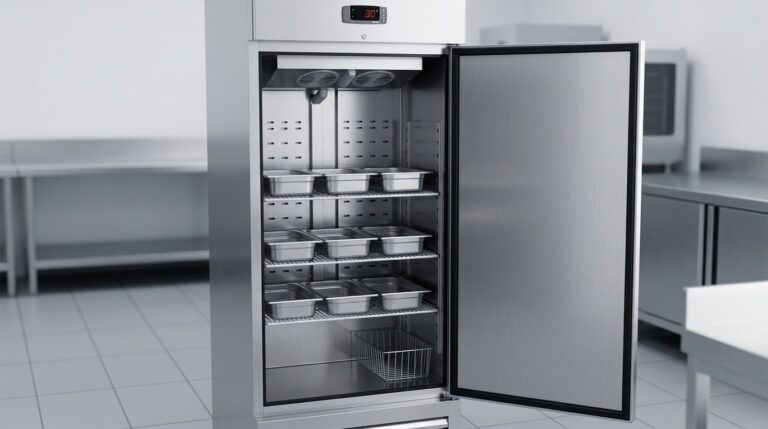
Unifrost F410SS Upright Freezer Shelf and GN Pan Setup Guide for New Owners
Guide Irish kitchens in setting up and using shelves, GN pans, and baskets in the Unifrost F410SS upright freezer efficiently.
Read guide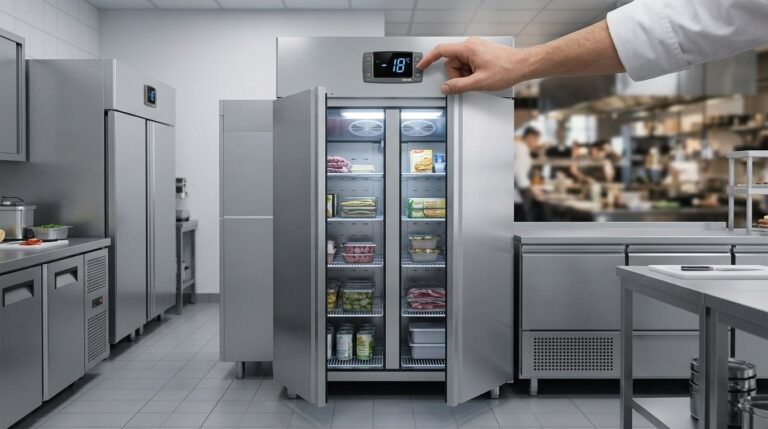
Unifrost Upright Freezer Temperature Controller Deep Dive Owner Hub
Explore Unifrost upright freezer controllers for optimal settings and food safety in Irish kitchens.
Read guideCompare Unifrost freezer options on Caterboss
For current product options, pricing and availability, continue to Caterboss.